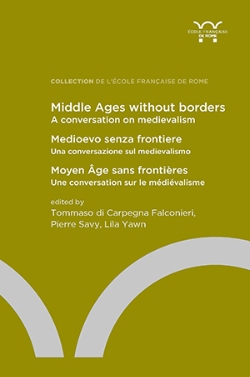
This book presents the proceedings of the international conference “The Middle Ages in the Modern World,” held in Rome November 21-24, 2018. Attended by more than a hundred participants of different ages, educational backgrounds, and places of origin, the conference constituted a landmark in the study of medievalism: the historical discipline, now in full bloom, that investigates the ways in which the thousand-year period between 500 and 1500 was, and continues to be, presented, reconstructed, and imagined in successive eras. The book opens with a substantial bibliography drawn from all of its components, followed by the seven keynote lectures and ninety-three shorter texts – abstracts of the individual conference papers – organized along eight thematic pathways, which together provide a vivid image of the current state of the field.
Tommaso di Carpegna Falconieri is Associate Professor of Medieval History at the University of Urbino. He works on the history of central Italy, political medievalism, and historical method.
Pierre Savy is Director of Medieval Studies at the École française de Rome. His research focuses on Northern Italy in the late Middle Ages (political society, Jewish communities).
Lila Yawn is Associate Professor and Director of the Master of Arts in Art History at John Cabot University. She researches illuminated manuscripts and Rome in the Middle Ages.
Informations pratiques :
Middle Ages without borders: a conversation on medievalism, dir. Tommaso di Carpegna Falconieri, Pierre Savy et Lila Yawn, Rome, École française de Rome (Collection de l’École française de Rome, 586). 232 p., ill. coul. ISBN: 978-2-7283-1493-5. Prix: € 25.
À l’occasion du centenaire de la publication du deuxième volume de la Sigil·lografia catalana de Ferran de Sagarra, membre de l’Institut d’Estudis Catalans
BARCELONE (INSTITUT D’ESTUDIS CATALANS), 9-11 NOVEMBRE 2022
LA SIGILLOGRAPHIE MEDIEVALE EN CATALOGNE ET DANS LES TERRITOIRES DE LA COURONNE CATALANO-ARAGONAISE DANS UN CONTEXTE EUROPEEN
NAPLES (UNIVERSITÀ DEGLI STUDI FEDERICO II), 23-24 NOVEMBRE 2022
LA SIGILLOGRAPHIE FEMININE DANS L’EUROPE MEDITERRANEENNE CATALANO-ARAGONAISE ET ANGEVINE
Appel à comunications / Call for papers
Entre 1916 et 1932 étaient publiés les 5 volumes d’un ouvrage fondamental de l’historiographie catalane et de la sigillographie du premier tiers du XXe siècle : Sigil.lografia catalana. Inventari, descripció i estudi dels segells de Catalunya de Ferran de Sagarra i de Siscar (1853-1939), membre de l’Institut d’Estudis Catalans. Le deuxième volume vit le jour en 1922. À cette occasion, l’Institut d’Estudis Catalans, sous la direction de Xavier Barral i Altet, et l’Université de Naples Federico II, sous la direction de Vinni Lucherini, organisent deux colloques internationaux de sigillographie médiévale. Le cadre géographique n’est pas limité à la Catalogne ; il s’étend à l’Europe méridionale méditerranéenne et aux territoires de l’ancienne Couronne catalano-aragonaise, ainsi qu’aux échanges européens. Les colloques seront ouverts à tous les aspects de la sigillographie, royale, nobiliaire, ecclésiastique, urbaine, etc. Par Études comparatives on comprend aussi bien les relations entre la Catalogne, l’espace méditerranéen et l’Europe, que les études comparatives entre disciplines, sigillographie, histoire, histoire de l’art, littérature, liturgie, archéologie ou numismatique. On accueillera avec plaisir les contributions sur les collections ou les personnalités du collectionnisme de sceaux médiévaux, depuis le Moyen Âge jusqu’à aujourd’hui. À Barcelone seront présentées les questions générales, monographiques ou comparatives, tandis qu’à Naples on se concentrera sur les sceaux féminins. Les colloques produiront deux publications complémentaires à Barcelone et à Naples. Le présent appel à communications demeurera ouvert jusqu’au 30 janvier 2022. Les candidats sont priés d’envoyer à l’adresse de courriel congressegells2022@gmail.com un titre et un résumé de la communication proposée ensemble avec un bref curriculum vitæ. Les frais de voyage et de logement seront à la charge des communicants acceptés. L’organisation prendra à sa charge, en revanche, tous les frais collectifs, repas et pause-café, les publications issues des colloques, ainsi qu’un ensemble de publications qui seront offertes aux participants.
English version
Between 1916 and 1932 a fundamental work in Catalan historiography and sigillography of the first quarter of the 20th century was published: Sigil·lografia catalana. Inventari, descripció i estudi dels segells de Catalunya in five volumes by Ferran de Sagarra i de Siscar (1853-1939), member of the Institut d’Estudis Catalans. The second volume appeared in 1922. To mark the centenary of this publication, the Institut d’Estudis Catalans, under the direction of Xavier Barral i Altet, and the University of Naples Federico II, under the direction of Vinni Lucherini, are organizing two international conferences on medieval sigillography. The geographical framework is not limited to Catalonia but extends to southern Mediterranean Europe and the territories of the ancient Catalan-Aragonese Crown, as well as their European connections. The conferences will be open to all aspects of sigillography: royal, noble, ecclesiastical, urban, etc. For Comparative Studies we understand the relationships of Catalonia with the Mediterranean area and Europe, as well as the disciplinary relations between sigillography and history, art history, literature, liturgy, archaeology, and numismatics. Contributions on collections and collectors of medieval seals from the Middle Ages to the present day will also be considered. This call for papers will remain open until January 30th, 2022. Applicants are kindly requested to send a title and a summary of the proposed paper, together with a short curriculum vitae, to the e-mail address: congressegells2022@gmail.com. The proposals will be evaluated, and the applicants will receive an answer by February 2022. Travel and accommodation expenses will be at the charge of the participants. The organization will cover lunches and coffee breaks, as well as the final publications and a series of books that will be offered to the participants.
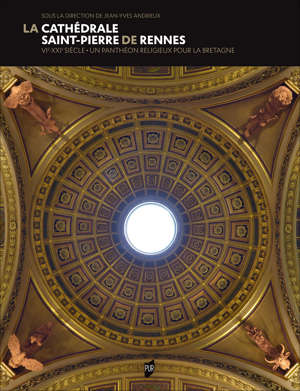
Dans la brillance de ses ors restitués en 2014, la cathédrale Saint-Pierre de Rennes abrite une sublime lumière eucharistique. Nouvelle basilique paléochrétienne, elle conserve un discret air d’Italie qui porte sur ses murs la mémoire de la dévotion mariale au temps de Vatican I. La litanie de ses saints, le culte voué à sainte Anne sont les chapitres d’un livre ouvert sur l’histoire de la Bretagne. Après l’inauguration en 2019 de son trésor dont la pièce maîtresse est un exceptionnel retable anversois, elle est aussi un grand musée de l’art français et flamand.
Avec le soutien de la région Bretagne, de la ville de Rennes, du ministère de la Culture, de l’Association diocésaine de Rennes et de la SAHIV.
Table des matières :
La cathédrale des premiers temps (VIe-XIIe siècle)
La cathédrale gothique (1180-1533)
La cathédrale des temps classiques (1541-1704)
La cathédrale reconstruite (1704-1816)
La cathédrale palladienne (1816-1846)
La cathédrale romaine (1847-1891)
La cathédrale des temps modernes (1881-1995)
La cathédrale restaurée (1995-2019)
Informations pratiques :
La cathédrale Saint-Pierre de Rennes. VIe-XXIe siècle. Un panthéon religieux pour la Bretagne, dir. Jean-Yves Andrieux, Rennes, Presses universitaires de Rennes 2021. 480 p. ISBN : 9782753517738. Prix : 69 euros.
Includes a CD with a compilation of representative fifteenth-century musical pieces performed on reconstructed versions of the instruments shown in Memling’s panels.
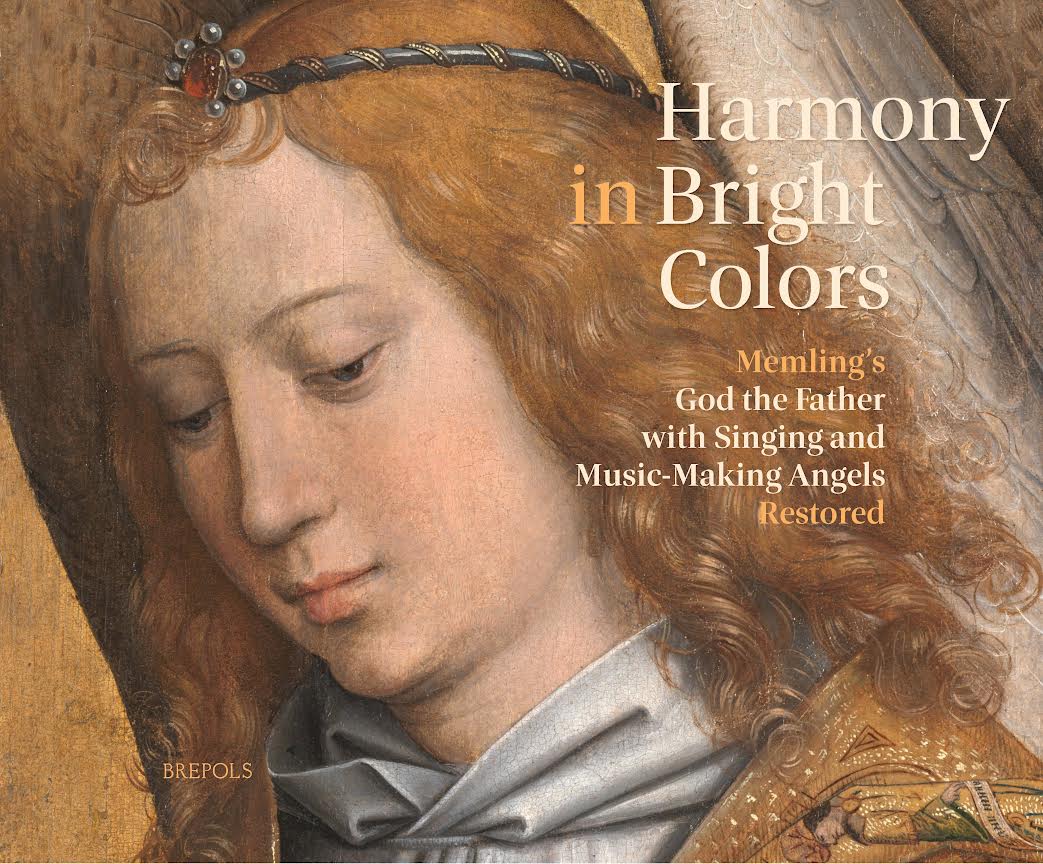
Hans Memling’s God the Father with Singing and Music-making Angels formed the upper register of an enormous polyptych painted for the Benedictine monastery of Santa Maria la Real in Nájera, Spain. The three large panel paintings are undoubtedly among the most monumental works of early Netherlandish painting. Since 1895 they have belonged to the collection of the Royal Museum of Fine Arts Antwerp (KMSKA), where a team of conservators and scholars have devoted themselves in recent years to their complex conservation.
To mark the completion of this project, the KMSKA organized a symposium in March 2017 in cooperation with the University of Antwerp. This latest volume in the Me Fecit series publishes the contributions presented on that occasion. Their wide-ranging themes include the commissioning and iconography of the panels, their acquisition by the museum, the depicted vestments and what the work has to tell us about fifteenth-century musical practice. Close attention is paid to technical aspects such as the materials and the painting technique used for the panels, Memling’s underdrawing, the frames, and the conservation treatment – not least the oxalate-containing layer that posed the greatest challenge. There is a musical aspect to the project too: precise replicas have been made of the depicted instruments, which were then used to perform fifteenth-century compositions with playing techniques inferred from the paintings.
The book features contributions by Maryan Ainsworth, Wim Becu, Till-Holger Borchert, Bart Fransen, Ingrid Goddeeris, Catherine Higgitt, Lizet Klaassen, Louise Longneaux, Karel Moens, Lisa Monnas, Keith Polk, Marie Postec, Marika Spring and Geert Van der Snickt.
Table des matières :
Introduction Elsje Janssen
Chapter 1 The Conservation and Restoration of Memling’s God the Father with Singing and Music-Making Angels Lizet Klaassen and Marie Postec
Chapter 2 Hans Memling’s Altarpiece for the Benedictine Abbey Church of Nájera Bart Fransen and Louise Longneaux Appendix: Libro Segundo de Censos, Nájera
Chapter 3 From Nájera to Antwerp: How Memling’s God the Father with Singing and Music-Making Angels Ended Up in Belgium Ingrid Goddeeris
Chapter 4 Materials and Painting Technique of Memling’s Nájera Panels Lizet Klaassen, Marie Postec, Geert Van der Snickt, Marika Spring
Chapter 5 The Frames and Framing of Memling’s Nájera Panels Marie Postec and Lizet Klaassen
Chapter 6 Memling’s Preliminary Working Stages: The Nájera Panels in Context Maryan W. Ainsworth Appendix: Characterizing the Underdrawing Material in the Virgin and Child with Saints Catherine of Alexandria and Barbara Sophie Scully and Silvia A. Centeno
Chapter 7 Memling’s Workshop Till-Holger Borchert
Chapter 8 Memling’s God the Father with Singing and Music-Making Angels: Oxalate Formation in Old Master Paintings Catherine Higgitt
Chapter 9 Vestments and Textiles in Memling’s Nájera Panels in Context Lisa Monnas
Chapter 10 Music and Musical Instruments in Memling’s God the Father with Singing and Music-Making Angels Karel Moens
Chapter 11 Memling and the Bruges Civic Ensemble circa 1480 Keith Polk
Chapter 12 The Musical Experience of the Nájera Panels. Paradisi porte : Memling’s Angelic Concert circa 1480 Wim Becu
Bibliography Photographic Acknowledgments
Informations pratiques :
Harmony in Bright Colors. Memling’s God the Father with Singing and Music-Making Angels Restored, éd. Lizet Klaassen et Dieter Lampens, Turnhout, Brepols, 2021 (Me Fecit, 12). 287 p., 30 b/w ill. + 220 colour ill., Music CD, 300 x 240 mm. ISBN: 978-2-503-58028-9. Prix ; 100 euros.
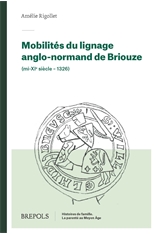
La famille de Briouze se désigne elle-même, depuis le milieu du xie siècle, par un toponyme, en référence au centre originel de sa puissance territoriale. Le qualificatif d’« anglo-normand » employé pour désigner le lignage de Briouze permet d’évoquer sa double appartenance culturelle. Le lignage dépasse cette acception binaire en s’implantant dans les régions annexées par la couronne anglaise. Les Briouze sont des seigneurs transrégionaux, puisqu’au gré des conquêtes, ils construisent un vaste patrimoine transmaritime, morcelé à l’intérieur du monde anglo-normand.
Relier les parcours individuels et les stratégies lignagères aux évolutions d’ensemble : cette démarche permet de saisir la complémentarité des phénomènes à des échelles variées pour discerner les particularismes propres aux Briouze. L’interconnexion entre expansion territoriale, ascension sociale et loyauté envers la royauté est l’une des caractéristiques de leur histoire. Cette dernière est écrite par le recoupement d’actes collectés dans les fonds ecclésiastiques et les archives du pouvoir souverain, croisés aux discours produits par l’historiographie médiévale. Les discontinuités coïncident avec l’évolution de la structure du lignage et des rapports entre la famille et le pouvoir.La capacité d’adaptation – ou l’inadaptation – du lignage de Briouze aux différentes formes de mobilités, question centrale de cet ouvrage, transparaît dans leur aptitude à affronter et surmonter les situations de crise. À l’intersection des formes de mobilités aux évolutions distinctes – politique, sociale, culturelle et économique – se trouve la mobilité géographique, trait d’union entre ces transformations différenciées ainsi imbriquées. Chaque rupture, chaque chute du lignage éclate sous la pression du pouvoir politique mais survient lorsque les possibilités d’expansions territoriales sont contrariées ou empêchées.
Table des matières :
Remerciements Abréviations Préface
Remerciements Table des matières Abréviations Préface
Introduction. Sur les traces des Briouze
Première partie : 1066-1175
Des seigneurs pionniers Briouze, du toponyme à la topolignée La seigneurie nouvelle de Briouze aux confins du duché Guillaume Ier de Briouze (c. 1030-c. 1095), de Briouze à Bramber, gardien des frontières du monde anglo-normand La fidélité des Briouze face à l’instabilité du pouvoir (1087-1154) Conclusion : Distance entre les Briouze et le pouvoir royal
Tripolarité castrale Briouze, en bordure du marais du Grand Hazé Bramber, dans l’estuaire de l’Adur Radnor, sur un éperon rocheux de la Radnor Forest Conclusion : À la conquête de l’ouest
Fondations bénédictines Le fief de Briouze, entre idéal aristocratique et réalité monastique La seigneurie de Bramber, un nouvel enjeu très attractif Conclusion : Décentrement du dominium
Polarisation des affinités Une topolignée mobile au gré des stratégies matrimoniales La parenté de Briouze, un réseau égocentré Identifier les réseaux de fidélité dans l’entourage seigneurial Conclusion : Typologie de la polarisation des affinités
Gérer la dispersion des richesses foncières Le capital : les terres recensées par les enquêtes royales Les ressources : profits complémentaires issus du domaine Le personnel : délégation de la gestion des terres éparses Les charges : indices d’une stratégie d’extension territoriale Conclusion : Gérer le polycentrisme territorial
Deuxième partie : 1175-1211
De pionnier à occupant, expansion castrale dans la marche de Galles Densification de l’implantation galloise Les Briouze, gardiens et protecteurs de châteaux de la marche Conclusion : Être seigneur dans une région frontalière hybride
Portrait historiographique de Guillaume III, seigneur de la marche Un guerrier cruel Un chevalier pieux, protecteur de l’Église galloise Conclusion : Portrait ambivalent d’un seigneur de la marche
Guillaume III de Briouze, « favori » du roi Jean (1199-1207) Les étapes de la faveur royale Guillaume III a-t-il les moyens de ses ambitions ? Conclusion : Les prémices de la disgrâce
Prévalence de la parentèle dans l’entourage de Guillaume III de Briouze Importance des Saint-Valéry Placer ses parents Conclusion : Un réseau familial en clair-obscur
L’obsession irlandaise La mémoire d’un échec familial (1177) Guillaume III de Briouze obnubilé par Limerick Les absents ont toujours tort Conclusion : « Risquer les périls de la Fortune »
La Fortune destructrice : récits d’un déclin Les motifs narratifs de la chute Les récits de la chute, critiques voilées du pouvoir royal Mathilde de Briouze, cible de la disgrâce Guillaume IV le Jeune, l’oublié des récits Dualité des contestations de Gilles de Briouze, évêque rebelle Conclusion : Une vérité insaisissable
Troisième partie : 1211-1326
Altérités (1211-1232) Quand le parent devient Autre Altération de l’autorité familiale divisée Quand l’Autre devient parent Conclusion : Un patronyme, deux sous-lignées
Ève de Briouze et ses filles (1230-1246) Ève, épouse de Guillaume V de Briouze et dame de la Marche Les quatre filles d’Ève, objets de convoitise Ève, une jeune veuve dynamique et autonome Conclusion : Extinction de la sous-lignée cadette
Chevaliers au lion (mi-XIIIe siècle-1326) La figure du chef : expression de la domination seigneuriale Guillaume VI, un loyal partisan du roi Le lion combattant pour la lutte du Bien contre le Mal Emblème du chevalier chrétien Conclusion : Identité et mémoire familiale
L’attachement des vassaux Implantation des lignées vassaliques Servir les seigneurs de Briouze Conclusion : Des liens d’affection durables
Dislocation de la puissance seigneuriale Jean de Montbray, le substitut Le Gower et la remise en cause de l’autorité des Briouze La réaction des Briouze Conclusion : Collision de trajectoires
Conclusion : Progressions du lignage de Briouze
Annexe 1: Actes émis par les seigneurs de Briouze Annexe 2: Les possessions anglaises de Guillaume Ier de Briouze selon le Domesday Book Annexe 3: Itinéraire de Guillaume III de Briouze, témoin royal (1194-1207) Annexe 4: Enquête menée en 1319 sur les terres de Guillaume VII de Briouze, seigneur de Gower
Sources et Bibliographie
Table des figures
Informations pratiques :
Amélie Rigollet, Mobilités du lignage anglo-normand de Briouze (mi-XIe siècle – 1326), Turnhout, Brepols, 2021 (Histoires de famille. La parenté au Moyen Age, 22). 519 p., 18 b/w ill. + 27 colour ill., 9 b/w tables + 6 colour tables, 156 x 234 mm. ISBN: 978-2-503-59248-0. Prix : 79 euros.
Scribes played complex, often overlooked roles in the production of hand-written texts across Antiquity, the Middle Ages, and the Renaissance. Some scribes simply copied the exemplar; other scribes participated with authors and decorators in establishing the mise-en-page and overall appearance of a text. Many decisions needed to be made regarding the selection of text script; the style of rubrication, display scripts, and initials; the placement and execution of potentially elaborate illuminated images. What was the role of the scribe in contributing to the decision-making process or in determining the final format and material appearance of a document, scroll or codex?
This volume explores many of the choices that a single scribe or groups of scribes would need to make when writing and presenting a text, whether in a monastic, cathedral or lay setting. The articles in the volume range from case studies of a single artifact to the analysis of multiple copies and versions of a particular text.The authors include eminent specialists in the field of manuscript studies as well as mid- and early career scholars.
Dr. Barbara A. Shailor became the Director of the Beinecke Rare Book and Manuscript Library at Yale University in 2001; she then assumed the position of Deputy Provost for the Arts. Her award-winning volume “The Medieval Book”, published by the University of Toronto Press, is in its 6th printing; among her other multiple publications is the Catalogue of Medieval and Renaissance Manuscripts in the Beinecke Rare Book and Manuscript Library (3 vols.).
Dr. Consuelo W. Dutschke, recently retired Curator of Medieval and Renaissance Collections at Columbia University, has worked with medieval manuscripts since graduate school days: from checking typed texts against microfilms of manuscripts; from paleography classes; from preparing first-level entries for UCLA’s catalogue of medieval manuscripts, up through writing catalogues of the manuscripts held by the Claremont Colleges and by the Huntington Library; as Curator at Columbia she was responsible for adding to the collection, for teaching paleography from this collection, as well as beginning the online Digital Scriptorium database.
Table des matières :
Keynote Stefano ZAMPONI (Università di Firenze Italia), The Papyri of Dura Europos in the History of Latin Script I papiri di Dura Europos nella storia della scrittura latina (In Italian, accompanied by an English translation)
I. Tradition and Innovation: Classical Traditions and Medieval Innovations
Serena AMMIRATI, (Università degli Studi Roma Tre), Il manoscritto latino di contenuto giuridico tra Antichità e Medioevo: strategie distintive e conservatorismo grafico da Oriente a Occidente Marilena MANIACI & Giulia OROFINO, (Università di Cassino e del Lazio meridionale), Making, Writing and Decorating the Bible: Montecassino, a CaseStudy Irene CECCHERINI (University of Oxford), The Shaping of the Latin Classics in 14th-Century Italy Julia MARVIN ( University of Notre Dame), The Rhetoric of Textual Presentation in Manuscripts of the Anglo-Norman Prose Brut Chronicle: When Foundation Stories Collide
II. Decision Making and Workflow: Patrons, Authors And Scribes
Jesús ALTURO & Tània ALAIX (Universitat Autònoma de Barcelona), Categories of Promoters and Categories of Writings: The Free Will of the Scribes, Cause of Formal Graphic Differences Francisco ÁLVAREZ LÓPEZ & Julia CRICK (King’s College London), Decision-Making and Workflow in the Making of Exon Domesday Laura PANI (Università degli Studi di Udine), Lay Scribes before c. 1100: Books, Texts, Scripts Sébastien BARRET (IRHT-CNRS: Institut de recherche et d’histoire des textes – Centre national de la recherche scientifique, Paris), Présentation des textes, discours diplomatique et ‘responsables de la transcription des actes’ aux Xe et XIe siècles: quelques chartes clunisiennes Eef OVERGAAUW (Staatsbibliothek zu Berlin), Authors, Scribes and Librarians. Literary Estates in Germany in the Fifteenth and early Sixteenth Century
III. Text and Paratext: Structuring Texts, Structuring Books
David GANZ (University College London, retired) Half-Uncial Scripts: a Way of Presenting Texts Andrew J. M. IRVING (Rijksuniversiteit Groningen), Mass by Design: Design Elements in Early Italian Mass Books Elena RODRÍGUEZ DÍAZ (Universidad de Huelva), Las rúbricas en los códices medievales de los reinos de León y Castilla (siglos XII-XV) Thomas FALMAGNE (Bibliothèque nationale de Luxembourg), L’ordinatio dans les manuscrits de compilation Patrizia CARMASSI (Herzog August Bibliothek), Il prologo tra autore, scriba e manoscritto. Indagini su uso e funzione di un particolare paratesto in codici della Herzog August Bibliothek Wolfenbüttel, e della Niedersächsische Staats- und Universitätsbibliothek, Göttingen Dominique STUTZMANN (IRHT-CNRS: Institut de recherche et d’histoire des textes – Centre national de la recherche scientifique, Paris), Du Roman de la Rose aux livres d’heures : étudier et comprendre les écritures de colophons
Beyond Words: Visual Representations of Meaning
Gabriella POMARO (SISMEL: Società Internaionale per lo Studio del Medioevo Latino, Firenze), Dall’ars scripta all’Ars figurata: Raimondo Lullo (1232-1316) e la tradizione figurata dell’arscombinatoria Marigold Anne NORBYE (University College London), The manifold manifestations of A tous nobles: decoration and diversity in a French genealogical chronicle Maria THEISEN (Österreichische Akademie der Wissenschaften, Wien), God Speaks Czech. Some reflection on layout, script and image in Czech Bibles of the 15th Century
IV. APICES Session
Evina STEINOVÁ (Pontifical Institute of Mediaeval Studies, Toronto) Nota and Require: The Oldest Western Annotation Symbols and Their Dissemination in the Early Middle Ages Anna DOROFEEVA (University of Frankfurt), Reading Early Medieval Miscellanies Manuel MUÑOZ GARCÍA (King’s College London), The Script of Matthew Paris and His Collaborators (c. 1200-1259): A Multi-Methodological Approach Adrián ARES LEGASPI (Universidad de Sevilla), La presentación de los textos en las profesiones religiosas del monasterio de San Martín Pinario (Santiagode Compostela), en la primera mitad del siglo XVI Agnieszka REC (Boston, Massachusetts Historical Society), The Archaeology of the Book and the Alchemy of Cracow
Index of Manuscripts and Documents Index of Private Collections Index of Papyri and Tablets Index of Names Index of Scribes and Decorators
Informations pratiques :
Scribes and the Presentation of Texts (from Antiquity to c. 1550). Proceedings of the 20th Colloquium of the Comité international de paléographie latine. Beinecke Rare Book & Manuscript Library, Yale University (New Haven, September 6-8, 2017), dir. Barbara A. Shailor et Consuelo W. Dutschke , Turnhout, Brepols, 2021 (Bibliologia, 65). 604 p., 193 b/w ill. + 37 colour ill., 27 b/w tables, 216 x 280 mm. ISBN: 978-2-503-59516-0 . Prix : 90 euros.
We are delighted to announce the Beyond Exceptionalism II conference which will take place on 12-14 July 2022 at John Rylands Library in Manchester, UK. The conference will adopt a hybrid format that simultaneously offers sessions both in-person and via Zoom.
In 2015, Beyond Exceptionalism I addressed the troubling situation that after over fifty years of intense research and publication, the study of medieval European women had not reversed the entrenched notion that elite woman with the authority and ability to influence their families, communities, and realms were somehow all exceptions to the normal situation of female powerlessness and passivity. The conference centered on a rhetorical question: how many ‘exceptional’ women in positions of authority does it take before active females become the rule? Hosted by Heather Tanner at the Ohio State University, the ‘Beyond Exceptionalism’ conference resulted in new avenues of research, fresh approaches to medieval women’s experiences and an edited volume: Medieval Elite Women and the Exercise of Power, 1100–1400: Moving beyond the Exceptionalist Debate (Palgrave 2018).
Six years and one global pandemic later, the question still resonates. The assumption that medieval women were marginalized remains at the center of medieval studies. Beyond Exceptionalism II will be an interdisciplinary conference that continues to address this misapprehension by fostering new avenues and interpretations of medieval women– elite and non-elite, secular and religious – and exploring new methodologies. We encourage papers that draw upon material culture, network analysis, gender, and space. Presentations that address a non-European perspective are most welcome. Papers that utilize items in the JRL collection are especially welcome. We also welcome submissions from scholars at all levels, from doctoral students to senior scholars.
Keynote Speakers: Valerie Garver, History Department Chair, Northern Illinois University Amy Livingstone, Head of School of History and Heritage, University of Lincoln Talia Zajac, Mellon Post-Doctoral Fellow at Pontifical Institute of Medieval Studies.
Abstracts & Panels:
Possible topics include but are not limited to: lordship, manorialism, monasticism, crusades, literacy, monarchy, guilds, pilgrimage, warfare, towns, castles & manors, networks and alliances, medicine, patronage, lay religious life, law and custom
Types of sessions: traditional (3 speakers & chair), roundtable, “flash” presentations by graduate students (5-10 minute presentation & informal discussion after)
Please attach your abstract to your email as a Microsoft Word or PDF file. Included with 250-word abstracts or session proposals (including individual abstracts) should be the following information:
•name of presenter(s) •participant category (faculty, graduate student, or independent scholar) •college/university affiliation •mailing address •email address •audio/visual requirements and any other special requests
Abstract deadline: 1 February 2022. Session chairs and individual presenters will be informed of acceptance no later than 1 March 2022.
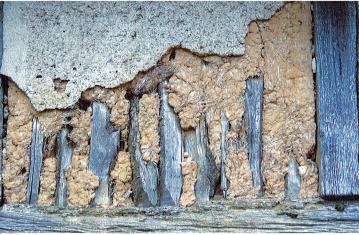
Approche du système économique productif des établissements ruraux /// Le village de Courtisigny dans la plaine de Caen
Coord. : Cl. Hanusse (Unicaen, Craham)
Julie CHARMOILLAUX (SRA, Drac Auvergne – Rhône-Alpes, Ciham · UMR 5648), Sébastien GAIME (Inrap, Ciham · UMR 5648), Approche du système économique productif des établissements ruraux du Moyen Âge à partir des traces matérielles. L’exemple de l’Auvergne
Claire HANUSSE (Unicaen, Craham), Le village de Courtisigny dans la plaine de Caen. Les modestes marqueurs archéologiques d’un espace économique
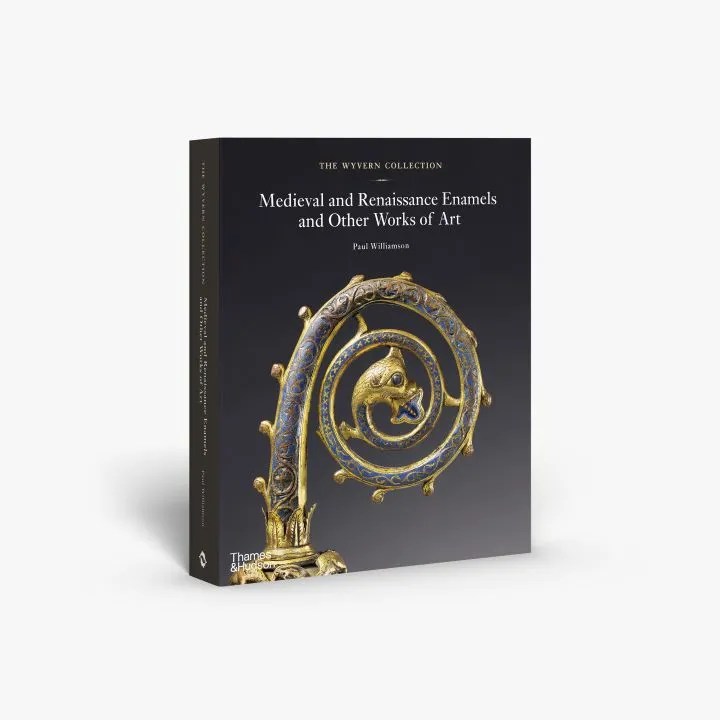
Works of art in enamel are among the most attractive, colourful and revealing objects of the Middle Ages and Renaissance. Enamel was employed to embellish a broad array of objects, including reliquary caskets, crosses, book-covers, croziers, censers and pyxes for the church and a wide range of tableware for the secular market. The Wyvern Collection comprises many pieces of prime importance from the twelfth to the sixteenth centuries.
Among the highlights in this volume are two extremely rare Romanesque enamels of c. 1160-70 from the Meuse Valley: the celebrated reliquary triptych probably originally belonging to the Bishop of Liège, and a beautiful phylactery (a reliquary designed to be suspended) with scenes from the story of the True Cross, said to have come from the famous abbey of Lobbes. Limoges enamels of the twelfth and thirteenth centuries are particularly well represented, the 65 pieces making up what is undoubtedly now the finest and most comprehensive collection in private hands. The later painted enamels of Limoges, from the fifteenth and sixteenth centuries, include remarkable examples of the work of the principal enamellers, most notably Pierre Reymond, and the spectacular horn of St Hubert, dated 1538 and signed by Léonard Limosin, which once belonged to Horace Walpole at Strawberry Hill.
The catalogue additionally includes other outstanding works of art such as an important Anglo-Carolingian chrismatory of the ninth century, a small group of enigmatic twelfth-century drinking-cups and sumptuous examples of German late medieval goldsmiths’ work. Stained and painted glass roundels, Italian Renaissance ceramics, luxurious textiles and tapestries, and German and Italian armour are also catalogued. An appendix presents several important pieces, recently acquired, which supplement those published in the first two volumes.
With more than 250 objects, all specially photographed, this is more than a handbook to an especially rich part of one of the greatest private collections. It is a detailed and authoritative guide to medieval and Renaissance enamels and other works of art, a stimulus to further research and a feast for the eyes.
Informations pratiques :
Paul Williamson, The Wyvern Collection. Medieval and Renaissance Enamels and Other Works of Art, Thams & Hudson, 2021. Prix : GBP 65.
Der Workshop möchte Doktorand:innen die Möglichkeit bieten, ihre aktuellen Forschungsprojekte einem größeren Publikum zu präsentieren und zur Diskussion zu stellen.
Der Schwerpunkt liegt auf dem Spätmittelalter, es kommen Themen nördlich und südlich der Alpen zur Sprache und es werden verschiedene methodische Ansätze, von den „gender studies“ bis zur „new philology“, vorgestellt.
Programme :
14:30 Uhr Begrüßung
14:45 Uhr : Simon Götz (Universität Konstanz) – Verwaltung als Reformmedium? – Die späte Reform eines Dominikanerinnenkonventes in Konstanz
15:35 Uhr Pause
15:50 Uhr : Adrian Kammerer (Universität zu Köln): Drittordensleute in dominikanischen Konventen
16:40 Uhr Pause
17:00 Uhr : Maria Chiara Levorato (Universität Würzburg): „Io Caterina scrivo a voi“: Zur Redekunst in den Briefen der mantellata Katharina von Siena
Kontakt
Bitte melden Sie sich per Mail an bei sekretariat-svh@uni-koeln.de, (Betreff: Workshop Dominikanerstudien), Sie erhalten zeitnah den Zoom-link
Avec le soutien du FNRS, du CRHiDI (UCLouvain – Saint-Louis, Bruxelles), d'INCAL (UCLouvain), de PraME (UNamur), de sociAMM (ULB) et de Transitions (ULiège)








Vous devez être connecté pour poster un commentaire.