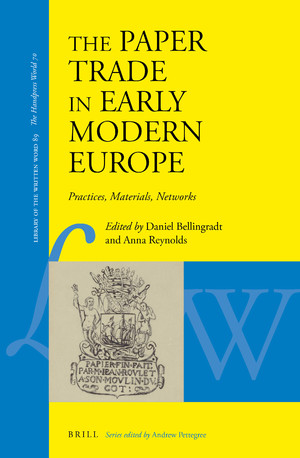
This book attends to the most essential, lucrative, and overlooked business activity of early modern Europe: the trade of paper. Despite the well-known fact that paper was crucial to the success of printing and record-keeping alike, paper remains one of the least studied areas of early modern history. Organised into three sections, ‘Hotspots and Trade Routes’, ‘Usual Dealings’, and ‘Recycling Economies’, the chapters in the collection shed light on the practices, materials, and networks of the paper trade. Altogether, the collection uncovers the actors involved in the networks of paper production, transportation, purchase, and reuse, between the thirteenth and nineteenth centuries and across the central and peripheral papermaking regions of Europe.
The Paper Trade in Early Modern Europe. Practices, Materials, Networks, éd. Daniel Bellingradt et Anna Reynolds, Leyde–Boston, 2021 (Library of the Written Word, 89). ISBN : 978-90-04-42400-5. Prix : 160 euros.
Au mitan du XIIIe siècle, la dynastie ayyoubide quittait le pouvoir en Égypte et bientôt en Syrie. Le sultanat de Saladin avait été caractérisé par une forte présence kurde à la fois au sein des armées du royaume et dans les plus hautes fonctions civiles politiques et judiciaires. Sa chute, au profit d’un groupe de militaires turcs d’origine servile, les Mamelouks, entraîna la marginalisation progressive des émirs et des notables kurdes. L’influence des Kurdes au sein de l’État mamelouk naissant fut bien réelle mais, au fur et à mesure qu’elle s’éteignait, elle se muait en une faible capacité de nuisance menant à de vaines conjurations. Les Kurdes n’eurent plus qu’une place politique périphérique dans l’Égypte et la Syrie du début du XIVe siècle.
Que devenait alors la ʿasabiyya kurde (« l’esprit de corps ») qui avait soutenu la dynastie ayyoubide ? La phase historique qui s’ouvrait marquait les débuts d’une reconfiguration de la place des Kurdes au Levant ainsi qu’aux marges des empires, au Kurdistan. Cet ouvrage a pour objet l’étude du processus pluriel de construction d’un territoire des Kurdes, entre l’Anatolie et le plateau iranien. Des tribus belliqueuses ont ancré leur histoire dans les montagnes de ce lieu refuge. Elles y ont établi l’ordre intra- et intertribal, matrice de leur autonomie. Les grands États du Moyen-Orient (Mamelouks et Ilkhanides mongols), quant à eux, ont entériné cet édifice et contribué de manière décisive aux transformations spatiales, par le pouvoir de nommer les lieux et de coopter les hommes. La convergence paradoxale de leurs politiques impériales rivales s’impose comme le facteur crucial d’une autochtonisation des Kurdes.
Boris James, Genèse du Kurdistan. Les Kurdes dans l’orient mamelouk et mongol (1250-1340), Paris, Éditions de La Sorbonne, 2021 (Bibliothèque historique des pays d’Islam). 472 p., 16 x 24 cm. ISBN : 979-10-351-0572-3. Prix : 40 euros.
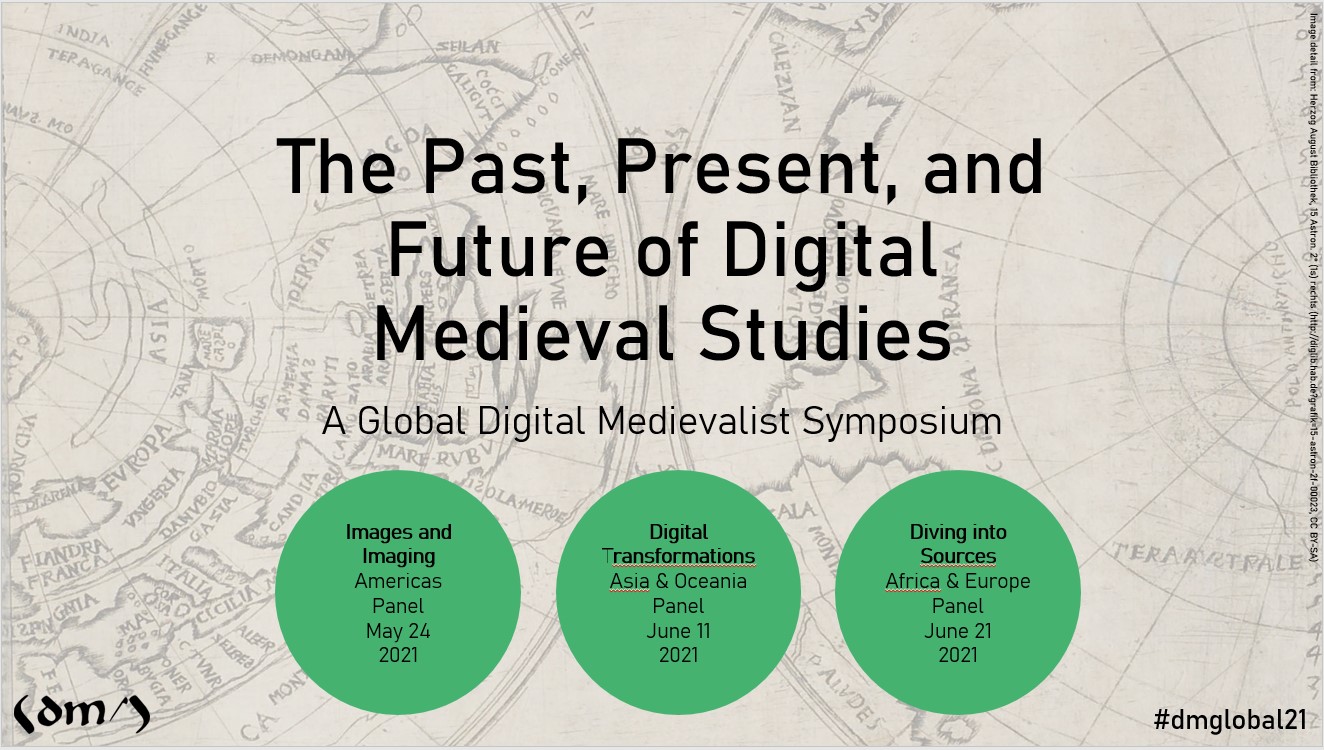
The era of COVID-19 has been transformational for medieval digital humanities. Medievalists have come to learn the limits and possibilities of online scholarship, whether in the virtual classroom or in the transfer of knowledge among specialists. Although direct access to material sources and the easy face-to-face exchanges with colleagues are deeply missed, we have come to understand that digitally-inflected scholarship can be more economical, more global, and –in limited ways– more equitable for many medievalists. And because we have come to this inflection point, members of the Digital Medievalist Board are launching a conference series that marks this turn and aims to build upon what we have learned. Our theme, The Past, Present and Future of Medieval Digital Studies is both retrospective and prospective in scope, bringing digital medievalist practitioners into conversation with each other as we step into a new scholarly environment where digital methods take on a new importance.
Our new global awareness has inspired us to plan three conference dates, each of which is aligned with a geographic space and accommodates scholars from three time zones grouped as The Americas, Asia & Oceania, and Europe & Africa. The Americas conversation will take place on Monday, 24 May 2021, Asia & Oceania on Friday, June 11, and Europe & Africa on Monday, June 21. See individual panel dates for timing.
Americas: Images and Imaging – Monday May 24, 2021
Title
EDT
BST
UTC +10
“Past”
11:00 – 12:00
04:00 – 05:00
01:00 – 02:00
“Present”
12:30 – 01:30
05:30 – 06:30
02:30 – 03:30
“Future,” and Conference Wrap-up Discussion
02:00 – 03:30
07:00 – 08:30
04:00 – 05:30
Preliminary Program of the Americas Part
For medievalists working in the Americas, increased access to high-quality images of manuscripts and other medieval resources has changed the way we work, whether we consider ourselves digital humanities scholars or not. The ready availability of these resources has opened new ways of thinking about practices that are fundamental to our field, such as textual editing, image description and analysis, or manuscript collation, for example. Yet the instantaneous access we now have to facsimiles of the materials that were previously so difficult or arduous to view masks the enormous amount of expertise needed to bring these images so effortlessly to our desktops. Librarians, curators, cataloguers and information technologists bring their skills and knowledge to the task of image delivery in ways that remain invisible to most subject-area specialists, but have become critical to the way most medievalists now work.
The goal of this conference is to reflect on how access to images — whether limited or open — has shaped how medievalists in the Americas have worked in the past and the present, as well as how they may do so in the future. Topics may include the following: a discussion of how resource professionals take material objects in a collection and create properly catalogued digital objects; IIIF, scanning, metadata, 3D-imaging, and 3D-printing; the relationship between image and material object and the implications for textual scholarship or pedagogy.
Organized by Nathan Daniels, Lisa Fagin Davis, James Harr III, Aylin Malcolm, and Laura Morreale. Co-sponsored by the Medieval Academy of America
Asia & Oceania: Digital Transformations – Friday, June 11, 2021
Title
EDT
CEST
AEST
BST
Archiving indigenous Australia
23:00 – 23:45
05:00 – 05:45
13:00 – 13:45
04:00 – 04:45
Engaging Chinese literature
24:00 – 01:00
06:00 – 07:00
14:00 – 15:00
05:00 – 06:00
Reading Indian and Japanese scripts
01:30 – 02:30
07:30 – 08:30
15:30 – 16:30
06:30 – 07:30
Virtual reconstructions & Discussion
03:00 – 04:30
09:00 – 10:30
17:00 – 18:30
08:00 – 09:30
Preliminary Program of the Asia & Oceania Part
Languages, Texts, Environments: Digital Transformations in our Past, Present and Future
The Asia and Oceania panel offers a fresh perspective for digital medievalists, since the Middle Ages and the scheme of historical periodisation that applies to Europe has little relevance to the historical timelines which unfolded in Asia and the region of Oceania. Spanning the eastern and western hemispheres, the nations of Asia and the islands of Oceania have divergent histories and encompass an incredibly diverse mix of cultures. This panel seeks to offer a small taste of activities undertaken in the sphere of scholarship broadly termed digital humanities, and to introduce new topics and questions to our Digital Medievalist audience.
Africa & Europe: Diving Into Sources – Monday, June 21, 2021
Title
EDT (AM)
BST
AEST (PM)
Welcome/Introduction
07:00-07:15
12:00-12:15
09:00-09:15
Digital Medieval Studies in Transition
07:15-08:15
12:15-13:15
09:15-10:15
Linked Open Data in Medieval Studies
08:45-09:45
13:45-14:45
10:45-11:45
Non-Western Languages and Cultures
10:15-11:15
15:15-16:15
12:15-01:15
Closing remarks
11:15-11:30
16:15-16:30
01:15-01:30
Preliminary Program of the Africa & Europe Part
For medievalists worldwide, digital media has fundamentally changed the way how we access our sources and work with them: digital editing, digital imaging, databases, text mining and visualisation are but some keywords that have gained relevance over the last decades and have influenced and inspired new research directions in the field. Other methodologies, such as Linked Open Data and Machine Learning, are emerging as key approaches for current and future research, driven by the huge amount of digital research data that is being produced by hundreds of medieval research projects every year.
This conference is dedicated to reflecting on the past, present and future of medieval studies and its transformation thanks to these methodologies. When we think about the future, we should also be conscious of areas in medieval studies that have been underexplored and underappreciated by the field at large. Using a visionary perspective, the first panel will discuss developments in how medieval source data are represented, analysed and interpreted. The second panel focuses on Linked Open Data and its application to medieval studies. The final panel brings together scholars working with textual and material data from various manuscript traditions and cultures to discuss how DH methodologies impact on their research.
Organized by Roman Bleier, Hannah Busch, Els De Paermentier, Tessa Gengnagel, and Daniela Schulz.
Si l’étude du transport de biens patrimoniaux a donné lieu à une littérature spécialisée conséquente et demeure un enjeu capital pour les institutions qui les préservent, une historiographie du développement et de la normalisation de ses pratiques reste à envisager. À l’inverse, l’histoire de l’art, dans laquelle les phénomènes de circulations et de transferts artistiques constituent un champ de recherche bien établi, délaisse trop souvent les aspects les plus pragmatiques de l’acheminement physique des objets.Outre son ancrage dans la vie matérielle des choses, la thématique du transport guide également vers une histoire alternative de la production artistique, comme le propose Jennifer L. Roberts dans son ouvrage Transporting Visions. The Movement of Images in Early America (Berkeley, University of California Press, 2014), en évoquant le cas d’artistes travaillant dans la pleine conscience des déplacements futurs de leurs œuvres.
Au croisement de ces problématiques professionnelles, techniques, scientifiques et méthodologiques, cette livraison entend mettre en perspective les manières dont les archéologues, les historiens de l’art, les conservateurs, et l’ensemble des chercheurs en sciences humaines, s’emparent de cette question du transport des objets et des œuvres d’art et en déploient les multiples et fécondes implications.
Les propositions devront s’inscrire dans la ligne éditoriale de la revue : sans jamais se limiter à de simples études de cas, les contributions veilleront à mettre en évidence des enjeux historiographiques précis et une réflexion sur la manière dont l’histoire de l’art, l’histoire du patrimoine et l’archéologie se saisissent de la notion de transport pour penser leurs méthodes et leurs cadres scientifiques.
Prière de faire parvenir vos propositions (un résumé de 2 000 à 3 000 signes, avec un titre provisoire, une bibliographie succincte sur le sujet, et une biographie de 2 ou 3 lignes) à l’adresse de la rédaction (revue-perspective@inha.fr) avant le 12 mai 2021. Les auteurs des articles retenus seront informés de la décision du comité au mois de juin 2021, tandis que les articles seront à remettre le 1er octobre 2021 pour une parution en juin 2022. Les articles soumis seront définitivement acceptés à l’issue d’un processus anonyme d’évaluation par les pairs.
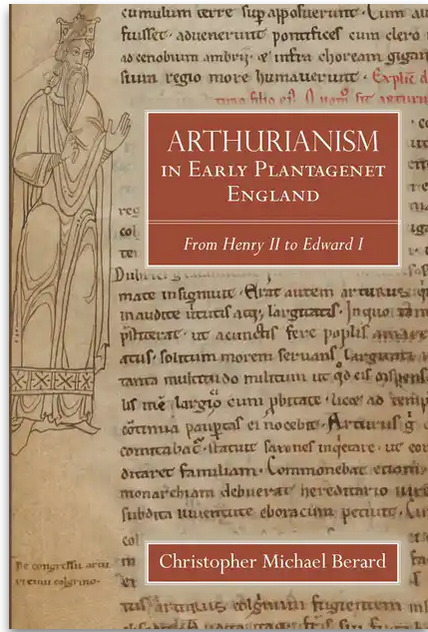
The precedent of empire and the promise of return lay at the heart of King Arthur’s appeal in the Middle Ages. Both ideas found fullness of expression in the twelfth century: monarchs and magnates sought to recreate an Arthurian golden age that was as wondrous as the biblical and classical worlds, but less remote. Arthurianism, the practice of invoking and emulating the legendary Arthur of post-Roman Britain, was thus an instance of medieval medievalism.
This book provides a comprehensive history of the first 150 years of Arthurianism, from its beginnings under Henry II of England to a highpoint under Edward I. It contends that the Plantagenet kings of England mockingly ascribed a literal understanding of the myth of King Arthur’s return to the Brittonic Celts whilst adopting for themselves a figurative and typological interpretation of the myth. A central figure in this work is Arthur of Brittany (1187-1203), who, for more than a generation, was the focus of Arthurian hopes and their disappointment.
CHRISTOPHER MICHAEL BERARD is a Visiting Assistant Professor of English at Providence College. He completed his PhD at the University of Toronto’s Centre for Medieval Studies.
Table des matières :
Introduction Arthurianism during the reign of Henry II, 1154-1189 Arthurianism during the reign of Richard I, 1189-1199 Arthurianism during the reign of King John, 1199-1216 Arthurianism during the reign of Henry III, 1216-1272 Arthurianism during the reign of Edward I, 1272-1307 Conclusion Bibliography
Informations pratiques :
Christopher Michael Berard, Arthurianism in Early Plantagenet England from Henry II to Edward I, Boydell&Brewer, 2021 (Arthurian Studies). 378 Pages, 23.4 x 15.6 cm, 1 line. Illustrations. ISBN : 9781783273744. Prix : GBP 60.
This volume is an introduction to eleven of the main medieval Eastern Christian historians used by modern scholars to reconstruct the events and personalities of the crusading period in the Levant. Each of the chapters examines one historian and their work(s), and first contains an introductory examination of their life, background and influences. This is then followed by a study of their work(s) relevant to the Crusades, including the reasons for writing, themes, and methodology. Such an approach will allow modern researchers to better understand the background and contexts to these texts, and thus to reconstruct the past in a more nuanced and detailed way. Written by eleven eminent scholars in their fields, and examining chronicles written in Armenian, Greek, Syriac, and Arabic, this book will be essential reading for anybody engaged in research on the Crusades, as well as Eastern Christian and Islamic history, and medieval historiography.
Alex Mallett is Assistant Professor at the Waseda Institute for Advanced Study, Waseda University, Tokyo
Table des matières :
Introduction – Alex Mallett
Greek Texts: Anna Comnena – Jonathan Shepard John Kinnamos – Chris Hobbs Niketas Choniates – Alicia Simpson George Akropolites – Ruth Macrides and Jeff Brubaker
Armenian Texts: Matthew of Edessa – Tara Andrews Smbat – Sergio La Porta
Syriac Texts: Michael the Syrian – Dorothea Weltecke Anonymous Chronicle to 1234 – Herman Teule Bar Hebraeus – Marianna Mazzola
Copto-Arabic Texts: Al-Makin Ibn al-Amid – Anne-Marie Eddé History of the Patriarchs of the Egyptian Church – Alex Mallett and Johannes Den Heijer
Index
Informations pratiques :
Franks and Crusades in Medieval Eastern Christian Historiography, éd. Alex Mallett, Turnhout, Brepols, 2021 (Outremer. Studies in the Crusades and the Latin East, 10). 351 p., 1 b/w ill., 156 x 234 mm. ISBN: 978-2-503-56581-1. Prix : 84 euros.
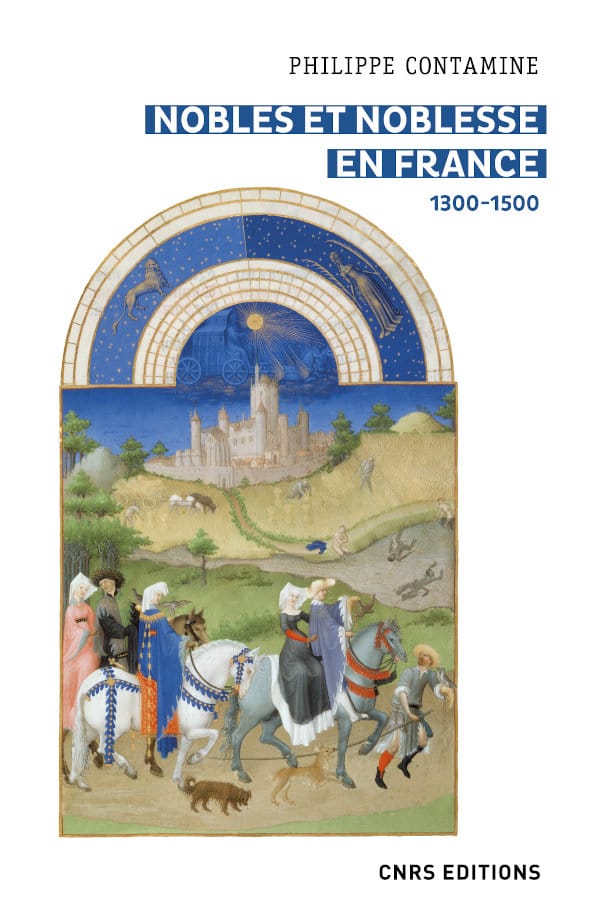
De l’an mil à 1789, la noblesse fut en France une qualité transmise par le sang, dans le cadre, prépondérant sinon exclusif, du mariage chrétien. Spécifiquement, son histoire visait à s’inscrire sous le signe de la reproduction sociale. De 1300 à 1500, le fort sentiment d’identité de ses membres se trouva encore renforcé par l’intervention des hérauts d’armes. Quoique très minoritaires, les nobles persistèrent alors à jouer un rôle central, malgré les crises auxquelles ils furent confrontés et les contestations dont ils furent l’objet. Les études ici réunies traitent de ce vaste sujet, l’accent étant mis sur le château, vu de l’intérieur et de l’extérieur, la seigneurie comme source de pouvoir et de revenus et les chevaux « de nom ». Parmi les activités propres à ce milieu – telle la chasse avec chiens ou oiseaux et plus encore les armes –, les joutes et les tournois, ce sport aristocratique pratiqué dans le cadre de la vie de cour, ne sont pas oubliés.
Certes, juridiquement et idéologiquement, on est en présence d’une société d’ordres, ce qui aurait dû conduire à un immobilisme structurel. Mais la réalité est plus complexe, comme le montre, au sein des « bonnes villes », la place des nobles face aux notables. La noblesse ? Une « élite » parmi d’autres, qui, de facto sinon de jure, se renouvelait régulièrement. Ici comme ailleurs, la vie l’emportait sur les principes.
Philippe Contamine, membre de l’Institut et professeur émérite à l’université Paris-Sorbonne, est un historien spécialiste de la guerre, des pouvoirs et de la noblesse à la fin du Moyen Âge.
Informations pratiques :
Philippe Contamine, Nobles et noblesse en France (1300 – 1500), Paris, CNRS Éditions, 2021. 400 p., 15 x 23 cm. ISBN : 9782271136671. Prix : 25 euros.
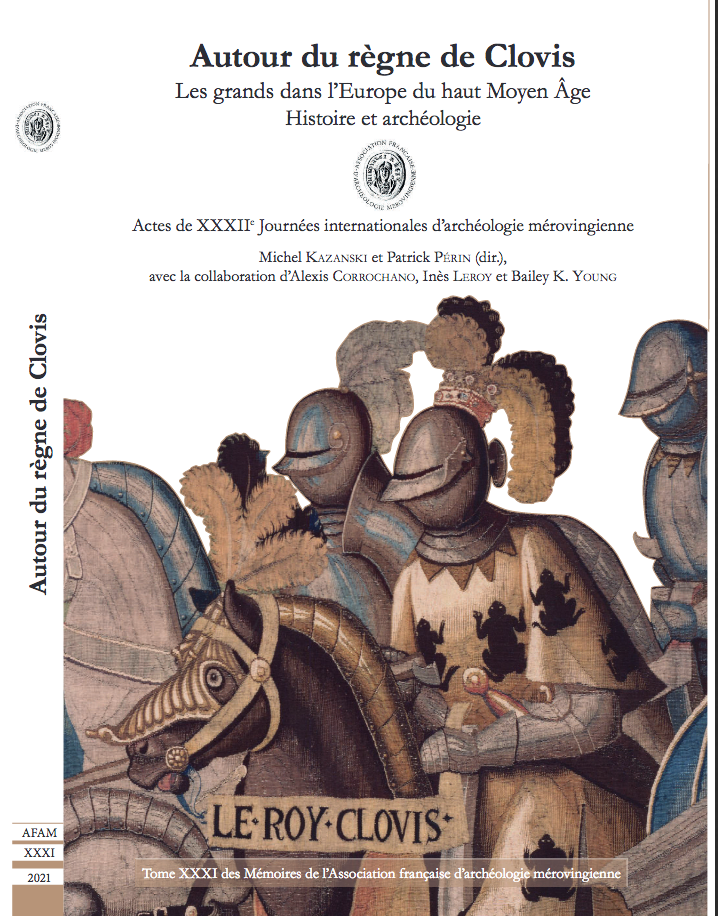
C’est à l’initiative de l’Association française d’archéologie mérovingienne (AFAM) et de l’Université de Paris Ouest Nanterre – La Défense que les XXXIIe Journées internationales d’archéologie mérovingienne de 2011 ont été consacrées à la commémoration du 1500e anniversaire de la mort de Clovis Ier, en novembre 511. Elles furent organisées en deux parties complémentaires. La première, à dominante historique et tenue à l’École normale supérieure, fut coordonnée par Sylvie Joye (Université de Reims) et Bruno Dumézil (Université de Paris Ouest Nanterre – La Défense). La seconde regroupant les synthèses et études de cas archéologiques, fut accueillie au Musée d’Archéologie nationale – Domaine national de Saint-Germain-en-Laye sous la houlette de Michel Kazanski (CNRS) et Patrick Périn (MAN). Dix-huit de ces contributions avaient été réunies, dont plusieurs récemment revues et actualisées sous la supervision de Michel Kazanski et de Patrick Périn. Le comité éditorial remis sur pied en 2016 vous les présente désormais, grâce au concours conjoint du secrétariat de l’AFAM et du Centre de recherches d’archéologie nationale de l’UCLouvain.
Autour du règne de Clovis. L’intérêt de ce volume demeure entier, par l’approche transversale du thème débattu il y a dix ans et qu’il nourrit encore indéniablement. En cinq sections successives, le lecteur se penchera en premier lieu sur les fondements des identités, leur mode d’expression et la représentation des élites barbares (les nouvelles identités et les nouveaux princes). Les origines des premiers royaumes francs et leur héritage voient ensuite leur cadre territorial et législatif, l’ancrage parisien encore, puis les aspects matrimoniaux et familiaux des élites royales et sénatoriales être diversement abordés dans la section consacrée aux débuts du royaume franc.
Les grands dans l’Europe du haut Moyen Âge. Par-delà les frontières du monde mérovingien, plusieurs études thématiques se penchent sur les contextes funéraires et les mobiliers de distinction des élites du royaume burgonde à celles des Aesii sur la côte sud de la mer Baltique. Prolongeant ce thème, les puissances émergentes de l’Est européen sont à leur tour mises en lumière tant par l’étude des sépultures que des attributs princiers. En contrepoint conclusif de ce voyage de la Mer du Nord à la mer Baltique et à la mer Noire, au-delà des horizons européens cette fois, une ultime étude comparative nous conduit à découvrir les traditions funéraires et dynamiques de pouvoir dans le Nouveau Monde.
KAZANSKI Michel et PERIN Patrick (éd.) avec la coll. d’A. CORROCHANO, I. LEROY, B. Y. YOUNG, Autour du règne de Clovis. La mort des grands dans l’Europe du premier Moyen Âge. Actes des XXXIIe Journées internationales d’archéologie mérovingienne de Paris et Saint-Germain-en-Laye, 3-5 novembre 2011, Saint-Germain-en-Laye, 2021.
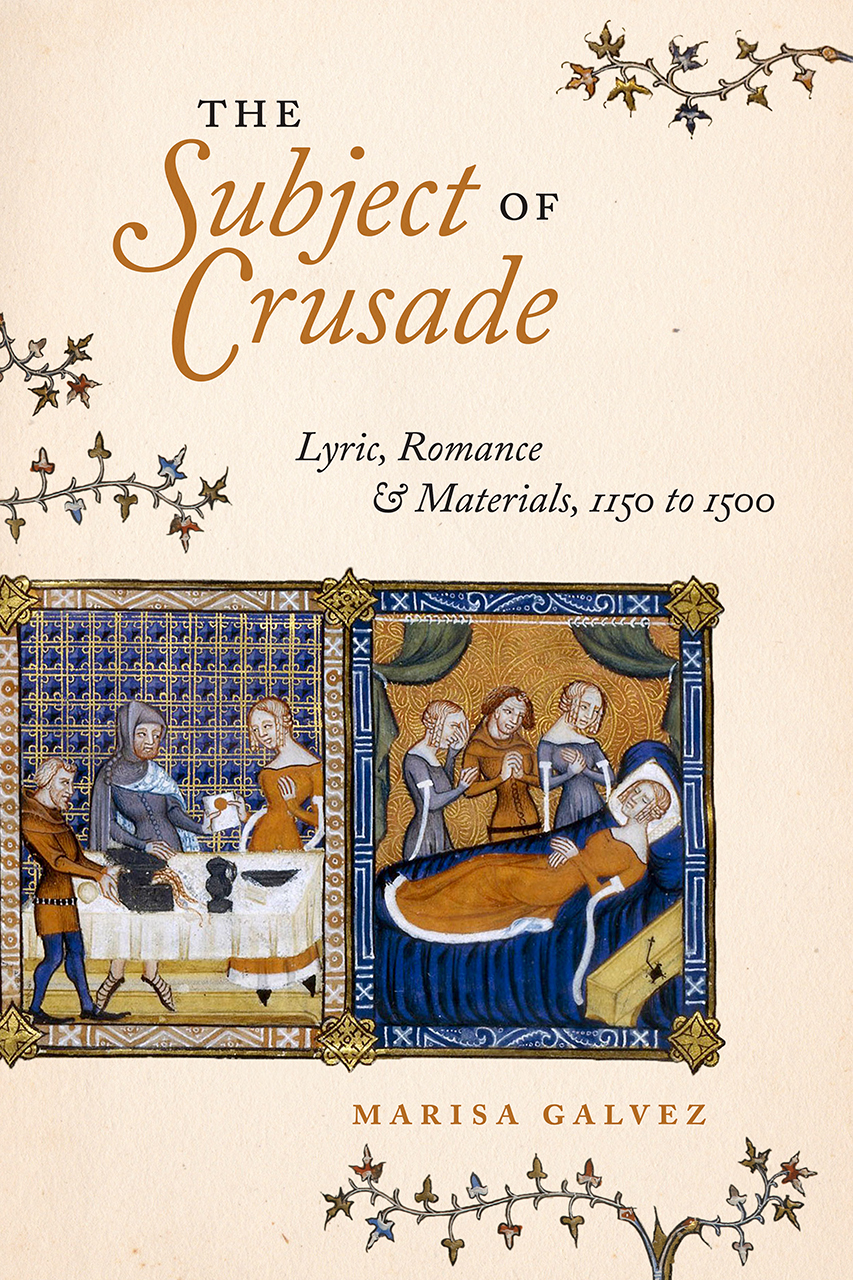
In the Middle Ages, religious crusaders took up arms, prayed, bade farewell to their families, and marched off to fight in holy wars. These Christian soldiers also created accounts of their lives in lyric poetry, putting words to the experience of personal sacrifice and the pious struggle associated with holy war. The crusaders affirmed their commitment to fighting to claim a distant land while revealing their feelings as they left behind their loved ones, homes, and earthly duties. Their poems and related visual works offer us insight into the crusaders’ lives and values at the boundaries of earthly and spiritual duties, body and soul, holy devotion and courtly love.
In The Subject of Crusade, Marisa Galvez offers a nuanced view of holy war and crusade poetry, reading these lyric works within a wider conversation with religion and culture. Arguing for an interdisciplinary treatment of crusade lyric, she shows how such poems are crucial for understanding the crusades as a complex cultural and historical phenomenon. Placing them in conversation with chronicles, knightly handbooks, artworks, and confessional and pastoral texts, she identifies a particular “crusade idiom” that emerged out of the conflict between pious and earthly duties. Galvez fashions an expanded understanding of the creative works made by crusaders to reveal their experiences, desires, ideologies, and reasons for taking up the cross.
Table des matières :
List of Illustrations
Introduction The Courtly Crusade Idiom
Chapter One The Unrepentant Crusader: The Figure of the Separated Heart Chapter Two Idiomatic Movement and Separation in Middle High German and Occitan Crusade Departure Lyric Chapter Three The Heart as Witness: Lyric and Romance Chapter Four Lancelot as Unrepentant Crusader in the Perlesvaus Chapter Five Three Ways of Describing a Crusader-Poet: Adjacency, Genre-Existence, and Performative Reconfigurations Chapter Six The Feast of the Pheasant as Courtly Crusade Idiom Conclusion Toward a More Complex View of Crusade
Acknowledgments
Notes Index
Informations pratiques :
Marisa Galvez, The Subject of Crusade. Lyric, Romance, and Materials, 1150 to 1500, Chicago, The University of Chicago Press, 2021. 280 pages | 14 color plates, 12 halftones | 5-1/2 x 8-1/2.
Avec le soutien du FNRS, du CRHiDI (UCLouvain – Saint-Louis, Bruxelles), d'INCAL (UCLouvain), de PraME (UNamur), de sociAMM (ULB) et de Transitions (ULiège)







Vous devez être connecté pour poster un commentaire.