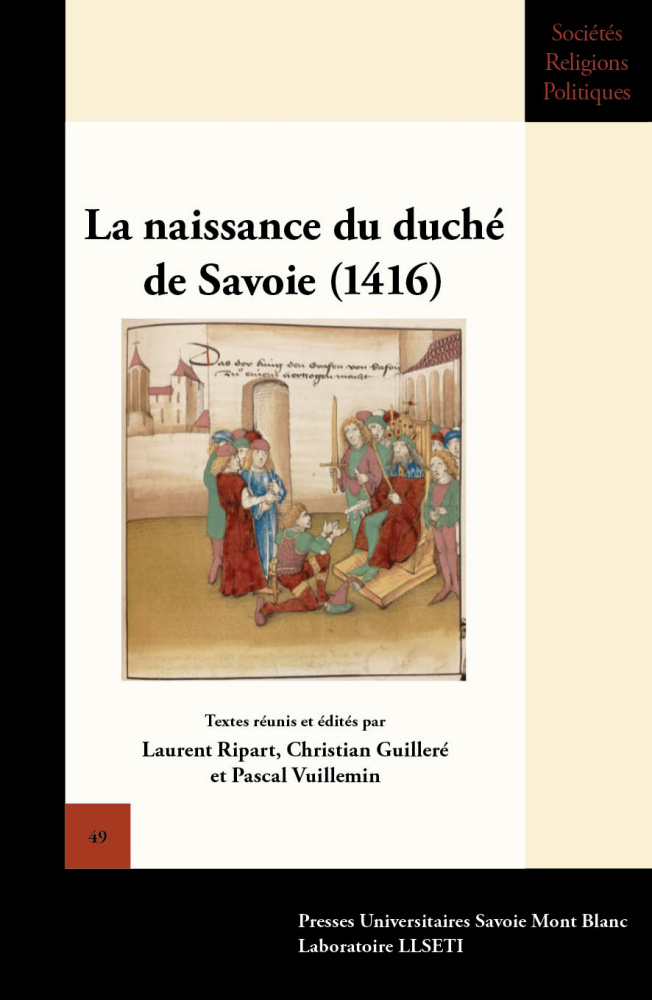
Le 9 février 1416, Sigismond, souverain du Saint-Empire, vint à Chambéry où il éleva le comte Amédée VIII de Savoie au titre ducal. Ce passage du comté au duché constitua une reconnaissance de l’importance croissante que la principauté savoyarde jouait à l’échelle de l’Europe médiévale. Ce livre, qui réunit les actes du colloque international tenu du 18 au 20 février 2016 dans le château de Chambéry, sur les lieux même où Amédée VIII avait été fait duc, offre une histoire renouvelée de cet événement. Il vise aussi à en étudier la signification, en se demandant dans quelle mesure la promotion ducale concrétisait la transformation du vieux pouvoir féodal des comtes de Savoie en un véritable État moderne. Il s’attache ainsi à déterminer si l’essor notable que la principauté savoyarde avait pu connaître au temps d’Amédée VIII s’était accompagné d’une mutation de ses institutions juridiques, militaires, financières et monétaires.
Cet ouvrage est aussi l’occasion de présenter le renouvellement récent de l’historiographie savoyarde, dont on trouvera l’expression dans les contributions d’une vingtaine de spécialistes actuels de la question, venus d’Allemagne, de Suisse, d’Italie et de France. Il cherche ainsi à mettre en évidence le renouveau que l’historiographie savoyarde a pu connaître depuis une trentaine d’années, en raison des programmes de recherche menés désormais dans une perspective transfrontalière et européenne, au sein des dépôts d’archives des anciens États de Savoie, une principauté qui s’étendait au temps d’Amédée VIII du lac de Neufchâtel à la Méditerranée et de la vallée de la Saône jusqu’au pays de Verceil.
Table des matières :
Hervé Gaymard – Avant-Propos
Denis Varaschin – La promotion ducale de 1416 : un événement fondateur pour les états de Savoie? Laurent Ripart, Christian Guilleré et Pascal Vuillemin – Présence lointaine, médiation et réalités difficiles?: la politique extérieure de Sigismond de Luxembourg (1368-1437) Gisela Naegle – Les rapports entre l’empereur Sigismond de Luxembourg et le comte Amédée VIII de Savoie Daniel Cereia – Des voyages pour un duché. L’accueil de Sigismond de Luxembourg à Chambéry pour l’investiture d’Amédée VIII, entre préparation et cérémonial (1414-1416) Eva Pibiri – I Visconti ed il titolo ducale: qualche riflessione Federica Cengarle – Piémont, 1418?: les enjeux documentaires d’une transition dynastique Paolo Buffo – Les « bonnes épouses » : mariages et liens politiques avec les marquis de Montferrat au temps d’Amédée VIII Beatrice Del Bo – Comment opérait-on une annexion territoriale?? Officiers ducaux et administration financière à Verceil avant et après 1427 Alessandro Barbero – Amédée VIII et les guerres génoises Fabien Lévy – Le règne d’Amédée VIII : un îlot de paix Roberto Biolzi – La répression du crime au service du duc: d’une justice de concorde à une justice d’état Lionel Dorthe – Les finances d’Amédée VIII (1391-1416) Christian Guilleré – Le duc Amédée VIII de Savoie et sa monnaie (vers 1420-vers 1434) Franco Morenzoni – Architectures et politiques territoriales à la naissance du duché de Savoie : châteaux et palais au sud des Alpes Andrea Longhi – Les communautés paysannes savoyardes au temps d’Amédée VIII Nicolas Carrier et Fabrice Mouthon – La mue d’une principauté: essai de conclusion Guido Castelnuovo – Investiture faite à Amédée VIII du duché de Savoie par le roi des Romains, Sigismond (9 février 1416) Christian Guilleré et Laurent Ripart – Index
Informations pratiques :
La naissance du duché de Savoie (1416), éd. Laurent Ripart, Christian Guilleré, Pascal Vuillemin, presses universitaires Savoie Mont-Blanc, 2021. 400 p., 8 ill., 15 x 23 cm. ISBN : 9782377410521. Prix : 25 euros.
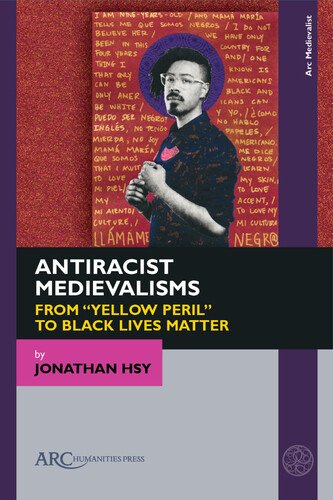
How do marginalized communities across the globe use the medieval past to combat racism, educate the public, and create a just world? Jonathan Hsy advances urgent academic and public conversations about race and appropriations of the medieval past in popular culture and the arts. Examining poetry, fiction, journalism, and performances, Hsy shows how cultural icons such as Frederick Douglass, Wong Chin Foo, Alice Dunbar-Nelson, and Sui Sin Far reinvented medieval traditions to promote social change. Contemporary Asian, Black, Indigenous, Latinx, and multiracial artists embrace diverse pasts to build better futures.
“Makes the crucial move of tying medievalism studies readings to social and racial justice work explicitly … innovative and greatly needed in the field.” – Seeta Chaganti, author of Strange Footing
“A major accomplishment that belongs on the shelves of every person who believes in antiracism.” – Geraldine Heng, author of The Invention of Race in the European Middle Ages
Informations pratiques :
Jonathan Hsy, Antiracist Medievalisms: From “Yellow Peril » to Black Lives Matter, ARC Humanities Press, 2021. 156 p., 23 x 15 cm. ISBN-13: 9781641893145. Prix : 85 euros.
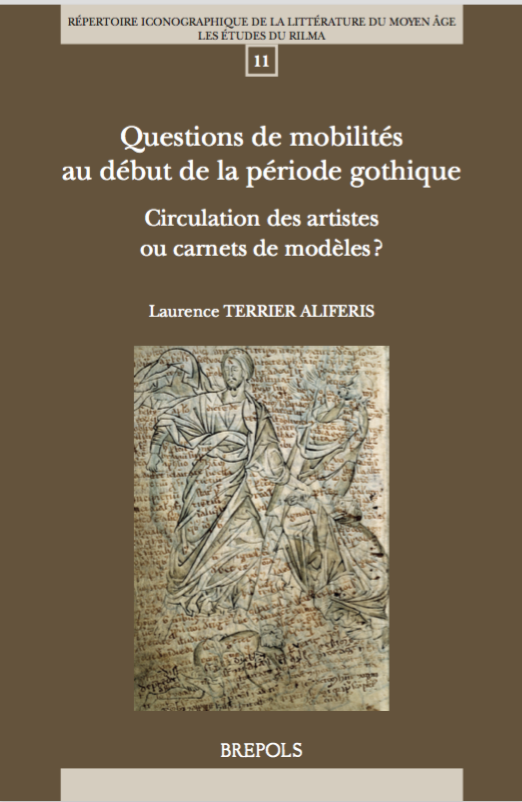
L’intensité des mouvements des artistes, des œuvres et des objets durant le Moyen Âge, son rôle dans la diffusion des formes et des iconographies à travers le monde occidental et l’importance des échanges avec la sphère byzantine sont bien connus et ont été précisés à de nombreuses reprises dans des études stimulantes. En revanche, les modalités de ces mobilités artistiques n’ont pas encore trouvé de définition convaincante. En ancrant la réflexion dans le domaine des transferts artistiques au moment de la genèse de l’art gothique, cet ouvrage tente de mesurer l’impact du déplacement des artistes sur une région donnée. Quels itinéraires ceux-ci suivaient-ils ; quelles distances parcouraient-ils, quels étaient les réseaux de diffusion ? Durant combien de temps un modèle était-il imité ? Quels effets exerçait la mobilité des hommes ou des œuvres sur la production d’une région ? En outre, alors que l’importance accordée aux carnets de modèles en tant que vecteurs de transmission a maintes fois été soulignée par les chercheurs, leur rôle effectif n’a jamais été évalué ni remis en question. Ces problématiques sont traitées par des études de cas bien distincts. Un aperçu des réseaux de circulation connus est dressé et leur étendue est envisagée en considérant à la fois les critères stylistiques et iconographiques. La question de la mobilité est abordée à travers des personnalités connues par leur signature permettant de retracer quelques itinéraires artistiques précis. Le chantier de la façade occidentale de la cathédrale de Chartres, nœud d’un réseau de circulation de sculpteurs, est utilisé pour tenter de cerner la dynamique des centres artistiques dans la diffusion d’innovations techniques et formelles. Un intérêt particulier est en outre porté aux dits carnets de modèles. Les dessins médiévaux conservés, leur utilisation et leur possible circulation sont examinés à la lumière de leur rôle supposé dans la transmission des formes artistiques. Pour certains d’entre eux, de nouvelles hypothèses sont proposées sur l’agencement originel des feuillets, sur la cohérence de leurs représentations ou encore sur leur fonction initiale.
Docteure ès Lettres de l’université de Genève, Laurence Terrier Aliferis dirige actuellement un projet sur le cadre de la statue monumentale médiévale à l’université de Neuchâtel. Auteure de plusieurs articles et de deux ouvrages portant sur Guibert de Nogent et l’eucharistie (Vrin, Paris, 2013) et sur l’imitation de l’Antiquité autour des années 1200 (Brepols, Turnhout, 2016), elle a initié ses recherches postdoctorales au Centre André Chastel à Paris sur la mobilité artistique aux XIIe et XIIIe siècles qu’elle a poursuivies à l’université de Genève.
Table des matières :
Introduction
Magistri multi de diversis nationibus …accitis fusoribus et electibus sculptoribus Misit exemplar altaris et similitudinem juxta omne opus eius extruxit… Mobilités
Chapitre 1 Ampleur des transferts artistiques
Citations d’oeuvres contemporaines Les réseaux de circulation La diffusion de l’opus francigenum et la géographisation des savoir-faire Mobilités iconographiques à travers deux études de cas : la Fuite en Egypte et la Cène
Chapitre 2 Itinéraires d’artistes à travers les oeuvres signées
Les itinéraires et leurs calculs Nicolas de Verdun Hugues d’Oignies Villard de Honnecourt
Chapitre 3 Mobilités et innovations : l’exemple de la cathédrale de Chartres
La façade occidentale de Chartres et son impact Le maître bourguignon Le maître étampois Le maître dionysien Le maître de Bourges Le maître parisien Le maître du linteau nord
Chapitre 4 Les carnets de modèles
L’histoire d’une hypothèse Les supposés carnets de modèles conservés Mythe ou réalité historique? Capacités mémorielles
Conclusion
Informations pratiques :
Laurence Terrier Aliferis, Questions de mobilités au début de la période gothique. Circulation des artistes ou carnets de modèles ?, Turnhout, Brepols, 2021 (Les Études du RILMA, 11). 164 p., 124 colour ill., 210 x 297 mm. ISBN: 978-2-503-59141-4. Prix : 75 euros.
The NWO-funded research project ‘The Multilingual Dynamics of the Literary Culture of Medieval Flanders, c. 1200- c. 1500’ is hosting a series of e-workshops on the topic of ‘Multilingual Literary Cultures in the Middle Ages’. Each meeting will be devoted to a theme in multilingualism, approached from a particular disciplinary perspective. They will take place on Zoom every two weeks and will consist of a short, informal presentation (max. 20 minutes), an invited response (max. 10 minutes), and a general discussion designed to invite multidisciplinary perspectives (max. 20 minutes). The sessions will be scheduled on Thursdays, starting at 4 p.m. (CET).
Register for these e-workshops by sending an email to
multilingualdynamics@gmail.com More information on the project website: HTTPS://MULTILINGUALDYNAMICS.SITES.UU.NL/
Programme :
APRIL
Thursday 8 April , 4 p.m. (CET) – Multilingual Urban Reading Culture Margriet Hoogvliet (University of Groningen): Middle French in « les anciens Pays-Bas »: Language of the Elites? Respondent: Jan Dumolyn (Ghent University)
Thursday 22 April, 4 p.m. (CET) – Multilingual Translation Culture Peter Toth (British Library): Visions of the Afterlife between East and West: An Unknown Latin Translation of the Apocalypse of the Virgin Mary Respondent: Margaret Dimitrova (Sofia University)
MAY
Thursday 6 May, 4 p.m. (CET) – Multilingual History Writing Jeff Rider (Wesleyan University, CT): The Historia et genealogia comitum Flandrensium (or Ancienne Chronique or Flandria Generosa B) and the history of Flanders and Hainaut (1071-1202) Respondent: Lisa Demets (Utrecht University)
Thursday 20 May, 4 p.m. (CET) – The Role of Linguistic Context Ad Putter (University of Bristol): The English of Flanders: Caxton’s Burgundian romances Respondent: Elisabeth de Bruijn (University of Antwerp)
JUNE
Thursday 3 June, 4 p.m. (CET) –Multilingualism and Genre Mary Channen Caldwell (University of Pennsylvania): Composing Model Letters and Lyrics in Latin, French, and Greek in 13th-Century Île-de-France Respondent: Anne-Zoé Rillon-Marne (Université Catholique de l’Ouest, Angers)
Thursday 17 June, 4 p.m. (CET) – Multilingual Patronage Václav Žůrek (Charles University, Prague): Charles IV and The Patronage of Multilingual Literature at his Court and Beyond Respondent: David Wallace (University of Pennsylvania)
JULY
Thursday 1 July, 4 p.m. (CET) – Musical Multilingualism Cécile de Morrée (Radboud University, Nijmegen) & Timothée Premat (Université Paris VIII): Multilingualism in Music: A Multidisciplinary Analysis of the Codex Reina and its Franco-Dutch repertoire (c. 1400) Respondent: Jelmar Hugen (Utrecht University)
Thursday 8 July, 4 p.m. (CET) – Mutlilingualism and Literary Histories Zubair Khalid (Jawaharlal Nehru University, New Delhi): Between Sanskritic and Islamicate: Literary Dynamics of Persian Textual Tradition of Medieval Kashmir Respondents: tba
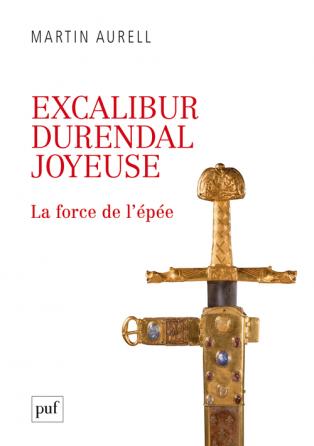
Le halo de mystère qui entoure au Moyen Âge l’épée du chevalier répond à une mythologie ancienne dont se font écho les chansons de geste, les romans arthuriens et les sagas scandinaves, tout comme l’iconographie et l’archéologie. L’épée est certes un outil fonctionnel, une prouesse technique et un objet d’art, mais aussi un artefact animé qui, dégageant une force surnaturelle, rend le chevalier invincible.
Le combattant, le forgeron et les fées aimantes transmettant leurs épées sont au cœur de ce livre, qui explore les mentalités d’une époque révolue dont les récits continuent d’inspirer de nos jours l’heroic fantasy. L’épée est aussi le signe de la prépondérance sociale du chevalier et le symbole de la guerre dont il se réserve en exclusif l’exercice. Elle concrétise toutes les abstractions intellectuelles autour de l’usage de la violence légitime en société.
Informations pratiques :
Martin Aurell, Excalibur, Durendal, Joyeuse : la force de l’épée, Paris, PUF, 2021. 324 p., 21,5 x 13,5 cm. ISBN : 978-2-13-082956-0. Prix : 17,99 €.
2nd International Contest Webinar edition, Saturday 17 April 2021 – Google Meet platform: meet.google.com/crj-vjow-zbs
Programme :
9.15-9.30 : Welcome address
9.30-10.00 : Innocent Smith (Universität Regensburg, Fakultät für Katholische Theologie) — Bible Missals: Codicology and Contents 10.00-10.30 : Nicolas Michel (Université de Namur) – Du texte au paratexte: étude des marginalia dans les manuscrits des Variae de Cassiodore (XIIe-XVe siècle) 10.30-11.00 : Brianda Otero Moreira (Universidad de Santiago de Compostela – Galician School of Conservation and Restoration of Cultural Heritage) – Ovid as Magister: the Illuminated Manuscripts of the Metamorphoses in the 14th Century
11.00-11.30 : (Coffee) break
11.30-12.00 : Philippa Sissis (Technische Universität Berlin, Institut für Kunstwissenschaft und Historische Urbanistik) — Between Artefact and Product – Aesthetics of the Humanistic Book (around 1400) 12.00-12.30 : Jorge Jiménez López (Universidad de Zaragoza) – La materialización del Comentario a las Tragedias de Nicholas Trevet (Salamanca, BGH, Ms. 2703). Entre la Nápoles prehumanista y la Roma ponti cia 12.30-13.00 : Dominica Kovács (Eötvös Loránd University) — Andreas Capellanus and Enea Silvio Piccolomini: In uence of the Medieval Treatise
13.00-13.30 : Selection of the best presentation and announcement of results
For further information please contact: Antonia Cerullo (antonia.cerullo@studentmail.unicas.it)
Sponsored by:
CIPL – Comité International de Paléographie Latine APICES – Association Paléographique Internationale Culture Écriture Société IRHT – Institut de Recherche et d’Histoire des Textes AIMD – Associazione Italiana Manoscritti Datati AIPD – Associazione Italiana dei Paleogra e Diplomatisti Società Internazionale di Storia della Miniatura Lamemoli, Academy of Finland – University of Jyväskylä Università degli Studi di Cassino e del Lazio meridionale, Laboratorio LIBeR – Libro e ricerca
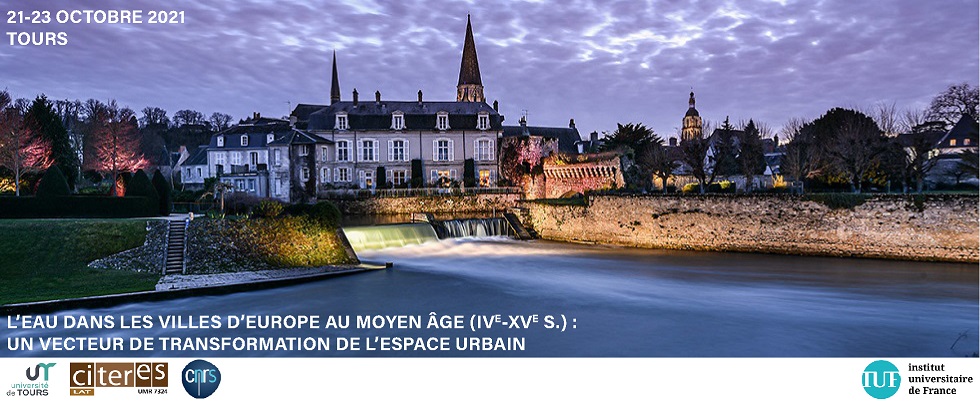
Colloque organisé par l’université de Tours 21-23 Octobre 2021 UMR 7324 CITERES − Laboratoire Archéologie et Territoires
2e Appel à communication
A la suite des propositions reçues lors du premier appel à communication, les organisateurs du colloque élargissent l’aire géographique d’étude à l’Europe et étendent la chronologie retenue à la fin du Moyen Âge.
Les propositions sont attendues avant le 30 avril 2021 sur le site https : //eauvillehma.sciencesconf.org/.
Les villes, ou plutôt les sociétés urbaines, entretiennent et ont entretenu, avec l’eau des relations multiples et complexes. Sous toutes ses formes (eau stagnante et zone humide, eau dynamique, souterraine ou de surface), l’eau est un préalable à l’installation d’une communauté humaine et presque toutes les villes s’accrochent aux rives d’un cours d’eau utilisé à des fins diverses (alimentaire, artisanale, source d’énergie, moyen de défense, transport…). Peut-être plus que n’importe quelle ville, l’agglomération médiévale est une ville où l’eau est omniprésente ce qui en fait un thème de prédilection des chercheurs comme l’illustrent les nombreux travaux publiés sur le sujet (Leguay 2002, Guillerme 1983). Parmi les colloques organisés jusqu’à présent sur l’eau à l’époque médiévale, la grande majorité des communications concernent la fin de la période pour laquelle les sources textuelles sont plus nombreuses et moins lacunaires. Parallèlement dans les colloques et publications portant sur la ville du haut Moyen Âge, le rôle de l’eau reste peu étudié ou en tout cas abordé de manière marginale (Hodges, Hobley 1988), même si certains exemples sont bien connus pour cette période comme la ville portuaire de Dorestad (Van Es, Verwers 1980) ou encore Douai (Louis, Demolon, Louis-Vanbauce 1990). En 2004 la publication d’un colloque du CTHS sur les fleuves et marais a renouvelé les approches relatives à l’anthropisation des fleuves et à la gestion des zones humides avec des exemples urbains comme Tours (Burnouf et Leveau 2004).
Partant du postulat qu’il existe une multitude de types de ville au Moyen Âge tant par leurs origines que par leurs fonctions (villes d’origine antique ou établies autour d’établissements monastiques, de sites castraux ou de pôles économiques…), nous proposons de réévaluer le rôle de l’eau dans ces villes selon trois échelles d’analyse de taille croissante : l’usage de l’eau en ville, l’eau à l’échelle de la ville et enfin l’eau et la constitution des réseaux de villes, en mettant en relief les différents rôles de l’eau à partir des découvertes archéologiques réalisées lors d’opérations préventives et programmées comme de l’analyse des sources textuelles.
1 – Vivre de l’eau, vivre avec l’eau en ville au Moyen Âge
Dans cette thématique nous nous interrogerons sur les utilisations de l’eau dans un cadre quotidien mais aussi dans le cadre productif en insistant sur les structures et infrastructures répondant à ces besoins à l’échelle des acteurs de l’espace urbain.
Utiliser quotidiennement l’eau
L’approvisionnement et l’évacuation de l’eau en ville constituent un premier thème. Pour les besoins quotidiens, l’accès à l’eau s’effectuait de deux manières : soit par un approvisionnement sur place (pompage et prélèvement de l’eau des rivières, captage des eaux souterraines ou encore récupération des eaux de pluie dans des citernes), soit par acheminement de l’eau venant d’une source plus lointaine (maintien des aqueducs antiques ou nouveaux aménagements). On pourra donc s’interroger à partir des vestiges archéologiques retrouvés (puits, citerne, système d’adduction, aqueduc) sur les niveaux de connaissance technologique des sociétés du Moyen Âge mais également sur l’apport des villes d’origine antique et le degré de continuité d’utilisation des systèmes hérités. Les propositions pourront également concerner les aspects hygiéniques de l’eau (bains, étuves), liturgiques ou rituels (baptistères, mikvés…).
Produire grâce à l’eau dans l’espace urbain
Cette thématique concerne les activités de production et de transformation en lien avec l’eau. On s’intéressera notamment aux activités halieutiques, aux pêcheries mentionnées dans les sources écrites et dont les vestiges constitués de pieux de bois sont parfois découverts dans les rivières. Vingt ans après les Rencontres internationales de Liessis sur la pêche en eau douce au Moyen Âge et à l’époque moderne, ce sera l’occasion de faire le point sur les nouvelles découvertes. Une place importante sera accordée aux contributions portant sur les moulins hydrauliques (à roue verticale ou horizontale) qui étaient souvent associés aux activités de pêche dans les villes médiévales. Avec le développement de l’archéologie préventive ces vingt dernières années, de nombreux sites ont pu être fouillés à l’échelle de l’Europe ; nous souhaiterions accueillir ici des exemples à caractère urbain ou périurbain. Enfin, ce sera également l’occasion d’évoquer les activités industrielles qui nécessitent un accès à l’eau comme les tanneries ou les draperies dont l’existence est parfois difficile à appréhender.
Transporter et franchir
L’archéologie des lits mineurs des fleuves en plein développement depuis une vingtaine d’années montre la richesse de ces espaces en ce qui concerne les aménagements liés au transport et à la circulation sur l’eau (ports, quai), ou à sa traversée (ponts, bacs). L’évolution de la Waterfront Archaeology et de l’archéologie préventive a notamment permis la fouille de structures portuaires en milieu urbain comme à Namur en Belgique, Bordeaux ou Lyon en France. Dans la vallée de la Loire certains sites sont toujours en cours d’étude comme le port d’origine antique de Rezé près de Nantes qui perdura jusqu’au haut Moyen Âge ou encore la ville de Blois avec ses ponts et pêcheries médiévales. L’attention sera portée à la présentation de cas de figures spécifiques liés à la découverte de vestiges archéologiques.
2 – L’eau en ville
A travers cette deuxième thématique nous chercherons à élargir le champ en ne nous intéressant plus aux structures archéologiques proprement dites mais à leur inscription dans le paysage urbain. Depuis les travaux d’André Guillerme, on sait qu’il se constitue dans les villes du haut Moyen Âge un réseau hydrographique de surface parfois très dense résultant essentiellement de deux phénomènes : les mises en défense successives et l’utilisation de l’eau à des fins artisanales tant intra qu’extra muros. C’est le temps de l’eau dynamique qui s’achèvera au milieu du 14e s. par l’apparition d’eau de plus en plus stagnante en raison des progrès de l’armement nécessitant de larges fossés de défense ouvrant une nouvelle ère de la relation entre société urbaine et eaux. Ce constat amène deux types d’interrogations aux temporalités différentes : une première sur la création et le fonctionnement de ces systèmes hydrographiques et une seconde sur le poids de ces aménagements dans la fabrique de la ville médiévale.
Comprendre le système hydrographique par les activités/jeux d’acteurs/ objectifs des habitants
Ces “petites Venise”, qui nous sont révélées par la documentation textuelle au mieux au 11e s. mais souvent à partir du 12e s., sont le résultat de plusieurs siècles de projets d’aménagements répondant à des besoins très variés. Si l’on peut s’interroger sur la reconnaissance des projets initiaux, leur ampleur, leurs commanditaires, les savoir-faire mis en œuvre…, il est tout aussi intéressant de s’intéresser à leur transformation qui ne se fait jamais sans heurts. L’installation d’un nouveau moulin ou d’un quartier de tanneurs nécessite une nouvelle dérivation qui vient perturber le système hydrographique antérieur reposant sur un savant compromis. Ainsi cette thématique cherchera à comprendre, derrière le réseau hydrographique, ce qui se joue à différents moments de l’histoire de la ville. Il s’agira de reconstituer, à partir des structures subsistantes, “un système hydraulique”, qui implique la reconnaissance de la démarche de ses créateurs : choix du site en fonction des potentialités topographiques (marais, zone humide), des opportunités foncières, des ressources hydrologiques, de leur aptitude à être organisées en flux de distribution destinés à desservir de multiples activités (meunerie, pisciculture, force motrice à l’usage d’artisanat comme le textile…) mais aussi à la défense. Même si la plupart des réponses sont certainement de l’ordre de l’hypothèse, elles permettent néanmoins de poser des éléments de réflexion comme la possibilité de lire la croissance urbaine par l’analyse de la formation du réseau hydrographique.
Mesurer le rôle de l’eau au Moyen Âge dans la fabrique de la ville
Une fois abordée la chronologie de la mise en place du réseau hydrographique et les buts poursuivis par les acteurs repérés, il est possible de s’interroger sur le rôle de l’eau non plus dans la vie des habitants mais comme élément structurant de l’espace urbain sur le temps long. Dans cette thématique nous nous proposons de réinterroger le poids du Moyen Âge dans la construction des réseaux hydrographiques des “petites Venise”. Mais aussi le poids du site (marais, paléo-chenaux) dans la construction de la forme urbaine (morphogène). Est-il possible de discerner une chronologie préférentielle dans les usages des canaux au cours du temps : rôle défensif, utilisation comme bief, assainissement de marais ?
3- L’eau et le réseau de villes en Europe du Nord-Ouest
Une dernière échelle pourra être abordée dans ce colloque, celle des réseaux de villes. En effet, la persistance et la croissance des villes d’origine antique comme les fondations de villes nouvelles sont souvent liées dans l’historiographie traditionnelle à un essor économique dont l’origine est encore discutée. Dans les deux cas, la localisation géographique proche de l’eau (rivage d’un fleuve ou d’une rivière, côte, estuaire…) et donc la possibilité d’un transport fluvial et/ou maritime aisé est certainement la cause de cet essor. On pourra donc s’interroger sur le rôle de l’eau dans ces systèmes de ville, leur origine, leur développement mais aussi sur les acteurs de ce commerce (grandes abbayes, grands laïcs…) qui ont pu mettre en place de véritables réseaux inter régionaux.
Les propositions de communication ou de poster en français ou en anglais sont attendues avant le 30 avril 2021. Elles devront inclure un titre, un résumé d’environ 300 mots en français ou en anglais ainsi que le rattachement institutionnel de l’auteur. Elles sont à déposer sur https://eauvillehma.sciencesconf.org/.
Il est prévu de publier les actes de ce colloque.
L’inscription au colloque s’élève à 20 €. Elle est gratuite pour les étudiants sous condition d’inscription. Un buffet est prévu au déjeuner durant les deux jours du colloque (15 € de participation). Le troisième jour, une visite de la ville de Vendôme sera proposée aux participants du colloque. L’aller-retour sera effectué en bus depuis Tours.
Pour tout complément d’information, vous pouvez consulter le site dédié à cette manifestation scientifique sur https://eauvillehma.sciencesconf.org/.
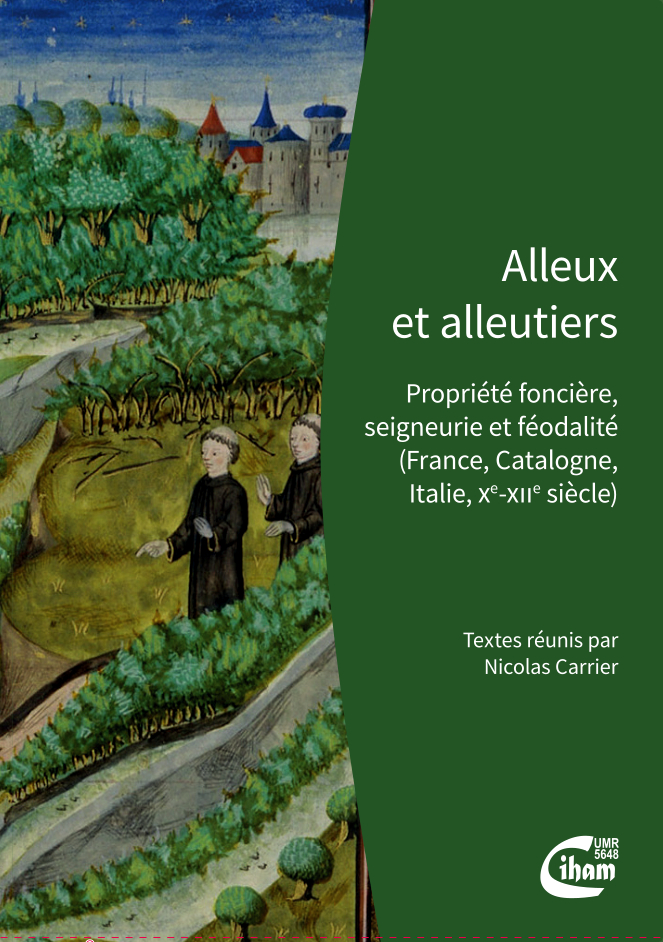
« Alleu » est l’un des termes les plus employés pour désigner la propriété foncière au Moyen Âge central. Quant à l’« alleutier», petit ou grand propriétaire libre, il est une figure traditionnelle de l’historiographie, classiquement opposée au vassal, au tenancier et au serf. Les alleux sont le plus souvent documentés au moment où ils sont absorbés par une seigneurie ; les alleutiers semblent donc chroniquement menacés de tomber sous la coupe de plus puissants qu’eux. Ils continuent pourtant d’apparaître dans les sources, ce qui est généralement interprété en termes de résistance. Les auteurs de ce livre réévaluent les rapports de l’alleu avec la seigneurie et la féodalité dans la France, l’Italie et la Catalogne des Xe-XIIe siècles, c’est-à-dire avant la redécouverte du droit romain et la formation de la doctrine dite du « domaine divisé » qui a défini les droits respectifs des seigneurs et des tenanciers. À la lumière des recherches récentes sur les évolutions socio-juridiques propres à cette période – dont l’interprétation a été profondément renouvelée depuis vingt ans — il apparaît que l’alleu n’est pas une butte-témoin de la propriété romaine, un îlot de liberté qui résisterait au féodalisme avec plus ou moins de succès. Il se distingue de la tenure ou du fief, mais imparfaitement, inégalement selon les régions considérées. Il désigne une terre librement conservable, transmissible et aliénable et, en ce sens, il est bien une propriété foncière. Mais la propriété de ce temps — comme déjà, à certains égards, celle de Rome – doit être comprise comme relative, dépendante de la condition personnelle du propriétaire et de sa situation par rapport aux pouvoirs supérieurs. C’est ainsi que peuvent être résolues les apparentes contradictions que présente la documentation et notamment celle-ci : que l’alleu soit par excellence la terre du noble mais qu’il puisse pourtant appartenir à un serf.
Contributeurs : avec les contributions de Dominique Barthélemy, Olivier Bruand, Nicolas Carrier, François Demotz, Sébastien Fray, Emmanuel Huertas, Cédric Jeanneau, Philippe Lefeuvre, Christophe Maneuvrier, Didier Panfili, Flocel Sabaté.
Informations pratiques :
Alleux et alleutiers. Propriété foncière, seigneurie et féodalité (France, Catalogne, Italie, Xe-XIIe siècle), éd. Nicolas Carrier, Paris, De Boccard, 2021. ISBN : 978-2-9568426-3-7. Prix : 35 euros.
On 27-29 October 2021, the ERC Project PASSIM (Patristic Sermons in the Middle Ages, Radboud University Nijmegen) will organize the International Workshop On the Way to the Future of Digital Manuscript Studies.
The Workshop
Over the last decades, the ability to exploit digital potential has radically impacted research in the field of manuscript studies. From the most basic facilities, such as the increasing availability of digitized images and documents, to sophisticated attempts at automatizing the entire process of critical editing, the development of digital tools is extraordinary: it has created unprecedented opportunities to mine the data, achieve innovative results, and display them, in ways which previously could only be imagined.In such a dynamic context, the number of valuable enterprises continues to grow: the time is ripe for a consideration of the achievements already obtained, and of the foundations that our current work is laying for long-term development of the field. Through the organization of this workshop, the ERC Project PASSIM seeks to provide an occasion to pursue this goal.
The meeting aims at gathering scholars who engage in groundbreaking projects in the field of digital manuscript studies. We want to bring together colleagues who work from methodological and theoretical perspectives with those who apply digital techniques to specific subjects, and thus to facilitate fruitful interactions between bottom-up and top-down approaches. The conference environment will be designed to stimulate dialogue and knowledge exchange: we consider cooperation, interoperability and integration at the largest scale as essential to realize the potential of digital manuscript studies, and to help each other in the search for a dynamic, secure and cooperative future for the field.
Early career scholars and scientists (Ph.D. and Post-Doc) are particularly encouraged to apply, as we will reserve some lecture-spots specifically for this group.
Confirmed Speakers include Marjorie Burghart, Mike Kestemont, Thomas Köntges, Inka Moilanen, Elena Pierazzo, Matthieu Pignot, Philipp Roelli, Dominique Stutzmann, Mariken Teeuwen, Anne-Marie Turcan-Verkerk, Martin Wallraff.
The Papers: Scientific issues involved
Among many others, three key areas are crucial for the advancement of digital manuscript studies: 1) the contribution of research projects with a specific goal to the field as a whole; 2) the capacity to expand their (web)application(s) to other disciplines rooted in textual source-material (such as history, philology, cultural studies, and more), and vice-versa; 3) the challenges entailed in developing and implementing common/universal standards and data models (e.g. for data structuring, storage, and interoperability), which is a need becoming more and more crucial within such a quickly evolving domain.
We welcome papers that, taking into account this overall framework, engage in the manifold challenges launched by Digital Manuscript Studies through a wide range of perspectives, methods and approaches. The main focus of the contributions can be on the scholarly problems, as well as on the technical issues involved.
Possible topics include (without being limited to):
Digital approaches to historical phenomena: evaluation of the social impact of a given literary corpus; the reconstruction of disintegrated manuscripts; the digital restoration of dispersed medieval libraries; how digital frameworks enhance the study of the interaction between the materiality of manuscript objects and intellectual concepts like content and organization.
Data management, sustainability, interoperability: construction of big repositories of searchable metadata; the building of shared standards to encode metadata on manuscripts; networking, sustainability of structuring standards, interoperability and reusability of the data accumulated.
Digital stemmatology: translation of stemmatic principles into reception studies; approaches to stemmatology from a digital point of view; automatic grouping of manuscripts; approaches to overabundant manuscript traditions by means of automatic collation tools.
Computational approaches: deep learning and/or machine learning techniques for computational analysis (script identification, full-text analysis, authorship attribution, …); search for a balance between accuracy, exhaustivity, and serendipity, while programming and processing computational-statistical analysis; development and employment of OCR transcription tools.
Interaction between the machine and the human scholar: harmonization of (digital) phylogenetics with the exigency of a not (too) mechanic evaluation of the data; strategies to evaluate and classify the results obtained by launching queries on huge amounts of data.
Visualization strategies and tools: interpretation of the results of overarching queries; representation of connections between complex objects such as collections of texts; innovative digital editions.
Practical information
Abstract submission. Presentations will be approx. 25 minutes long, followed by discussion. Please send your paper proposal, consisting of an abstract of ca. 350 words and a concise CV (max. 1 page), to Riccardo Macchioro (r.macchioro@let.ru.nl) and Gleb Schmidt (gleb.schmidt@ru.nl) before 10 May 2021. Acceptance will be communicated by 15 May 2021. More practical information will follow when your abstract is accepted.
The workshop will be held on 27-29 October 2021, either on location in Nijmegen (ideally), in a hybrid form, or online depending on the development of the Covid-emergency. Board and lodging expenses will be borne by the Organization; unfortunately, we are unable to guarantee coverage of travel costs at this time.
Proceedings. We plan to publish the Proceedings as quickly as possible after the workshop as a volume or special issue of a relevant journal; they are intended as a state-of-the-art portrait of current achievements and potential, as well as a valuable tool for those trying to find their way in the field.
Please do not hesitate to contact us for any questions and further information:
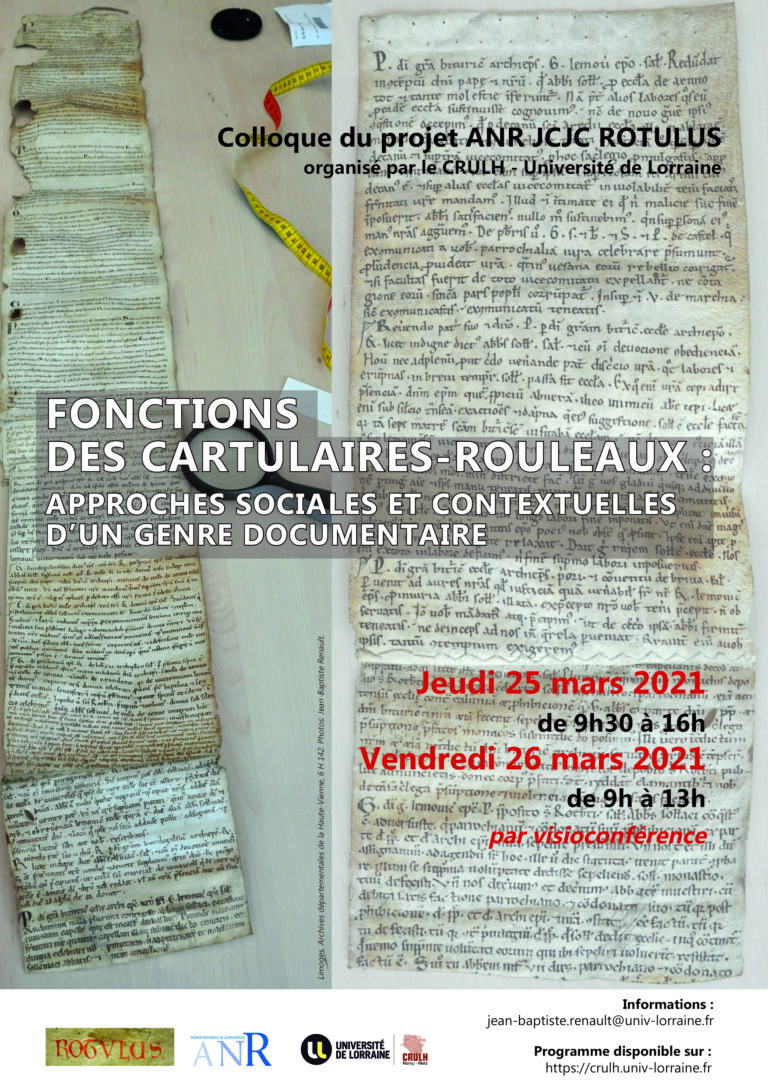
Le fait qu’on ait parfois choisi la forme en rouleau pour rédiger des cartulaires interroge les médiévistes. Le choix de cette forme matérielle se faisait-il en fonction de possibles vocations ou missions spécifiques pour ces recueils ?
Au cours du travail d’inventaire des cartulaires-rouleaux médiévaux conservés en France, mené dans le cadre du projet ANR ROTULUS, l’examen statistiques a permis de commencer l’exploration de premières hypothèses en ce sens. Après Poitiers (mai 2019) puis Angers (nov. 2019), cette troisième rencontre du projet est l’occasion d’examiner, à travers des approches multiples, deux possibles usages spécifiques.
Un usage récurrent, qui fera l’objet de la première session du colloque, consiste en la compilation de documents par les établissements monastiques, dans le cadre de la gestion domaniale ou l’organisation d’un réseau institutionnel monastique. En effet, de nombreux cartulaires-rouleaux sont relatifs à des dépendances, des unités domaniales voire parfois des offices monastiques. En articulation avec la production et la conservation des autres écrits (chartes et cartulaires-codices) et leur localisation, une réflexion sera menée sur le lieu de production du cartulaire-rouleau, ses potentiels usages qu’il conviendrait de localiser ou contextualiser et sur de possibles envois documentaires qui auraient été réalisés par le truchement d’une compilation en rouleau.
Le second usage souvent privilégié mis en évidence est d’avoir recours à la forme en rouleau pour constituer des dossiers plus ou moins importants en lien avec des conflits ou des situations qui nécessitent de l’institution commanditaire du recueil un effort en vue d’une défense particulière. La forme en rouleau, en ce cas, aurait pu être choisie en vertu des possibilités qu’elle présentait : une possible lecture performative, s’accompagnant de gestes précis (dérouler d’une main, ré-enrouler de l’autre…) ou la perspective d’un déroulement complet, en certains cas, pour procéder à l’ostension d’une série de documents ou, encore, une fonction d’aide-mémoire à usage interne.
Programme :
Jeudi 25 mars
9h30-10H15
Mot d’accueil par Christine BARRALIS (MCF Université de Lorraine – CRULH)
Jean-Baptiste RENAULT (IE CRULH – Université de Lorraine), L’usage du rouleau dans le monde monastique et canonial : premiers résultats de l’inventaire des cartulaires-rouleaux conservés en France.
Les cartulaires-rouleaux des établissements réguliers : gestion domaniale et organisation des réseaux institutionnels
Paul-Henri LÉCUYER (chargé d’études documentaires, Archives départementales de Maine-et-Loire), Les cartulaires-rouleaux de l’abbaye Saint-Florent de Saumur et ses prieurés (XIe-XVe siècles).
Chantal SENSÉBY (MCF HDR, Université d’Orléans), Codex, pancartes et rouleaux : choix documentaires en Val de Loire (XIe-XIIIe siècles).
Tamiko FOURNIER-FUJIMOTO (docteur, Université de Caen – CRAHAM), Le rouleau de Saint-Etienne de Caen relatif à Cambes et Hérouville (XIIe siècle).
Après-midi : présidence : Timothy SALEMME (maître-assistant, Université de Luxembourg)
13h30-14h30
Yingxin LUAN (doctorante, EHESS), L’inventaire-rouleau des franciscains de Rouen (XIIIe siècle) : un outil de gestion interne.
Louise GENTIL (doctorante, Université Paris 1 Panthéon-Sorbonne – Università degli studi di Milano), Tracer un territoire : rouleaux et codex cisterciens de l’abbaye de Chiaravalle milanese.
14h45-15h45
Hubert FLAMMARION (chercheur associé CRULH – Université de Lorraine), Les rouleaux-dossiers des abbayes d’Auberive et de Septfontaines.
Marlène HELIAS-BARON (IR, IRHT-CNRS), Les rouleaux de Chaalis : des documents polymorphes pour des usages multiples (XIIIe –XVe siècle).
Vendredi 26 mars
Le rouleau, dossier de défense ou dossier relatif à un conflit
Simone ALLEGRIA (professeur associé SAF – Istituto centrale per la patologia degli archivi et del libro, Roma), Il rotolo 3 dell’archivio capitolare di Arezzo: tra testo e contesto.
Stéphane LAFAYE (chercheur associé CRIHAM – Université de Limoges), Affaires limousines de la fin du XIe siècle : un fragment de rouleau à charge extrait des archives de Cluny.
Cécile TREFFORT (PR Université de Poitiers – CESCM), Chanoines contre religieuses : un cartulaire-dossier en rouleau, le « Testament de sainte Radegonde » (XIIe siècle).
Sébastien FRAY (MCF Université de Saint-Étienne – IRHIM), Entre enquête et recueil de documents, le cas du rouleau d’Aurillac (XIIIe siècle).
Nicolas RUFFINI-RONZANI (UCLouvain / UNamur), Les rouleaux dans la procédure judiciaire : les « dossiers » de l’abbaye Saint-Aubert de Cambrai (XIIIe – XVe siècles).
Conclusions, par Sébastien BARRET (chargé de recherches, CNRS – IRHT)
Avec le soutien du FNRS, du CRHiDI (UCLouvain – Saint-Louis, Bruxelles), d'INCAL (UCLouvain), de PraME (UNamur), de sociAMM (ULB) et de Transitions (ULiège)







Vous devez être connecté pour poster un commentaire.