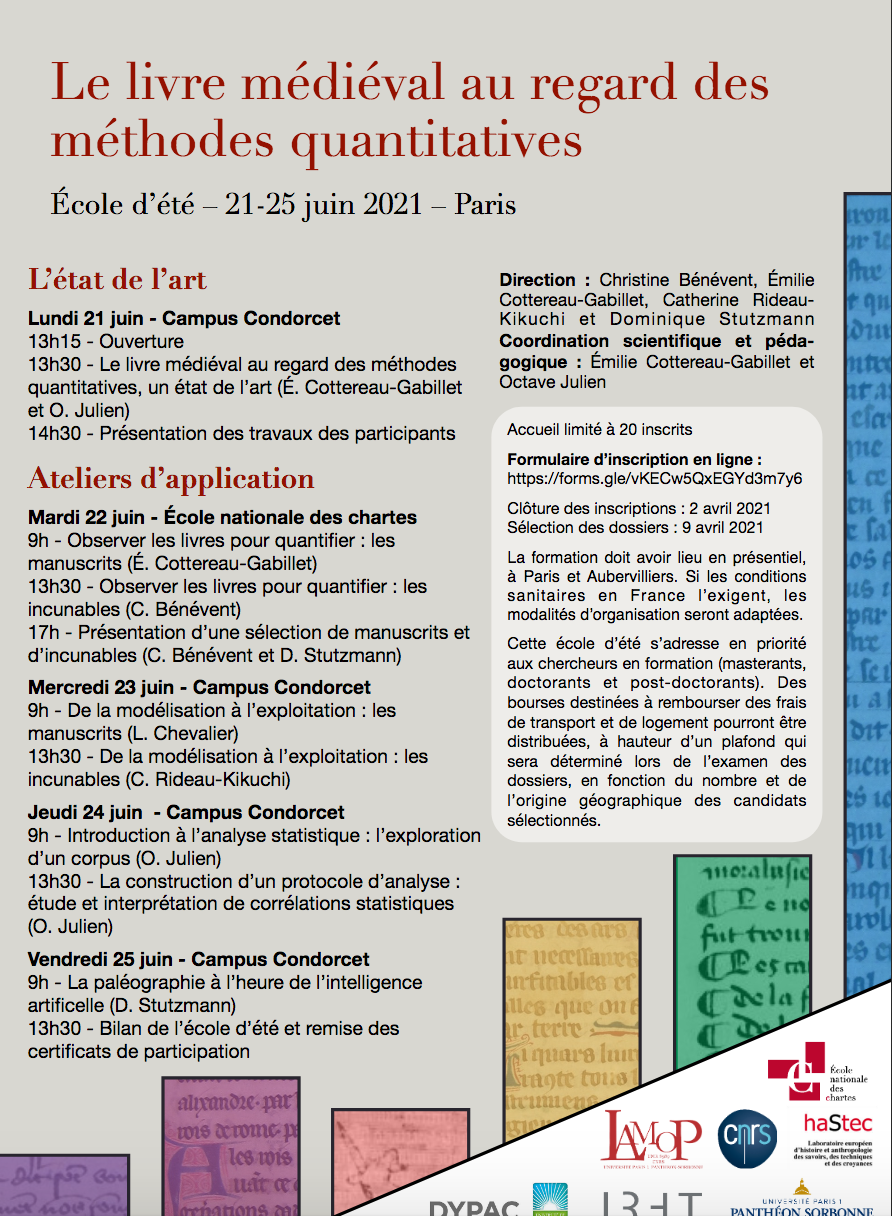
Cette école d’été propose une formation à l’étude du livre médiéval, manuscrit ou imprimé, à travers l’utilisation de méthodes statistiques et informatiques, sous forme d’ateliers orientées vers la pratique.
Elle est organisée par le Lamop, l’IRHT, l’École nationale des chartes et le laboratoire Dypac, avec le soutien du Labex Hastec.
Direction : Christine Bénévent, Émilie Cottereau-Gabillet, Catherine Rideau-Kikuchi et Dominique Stutzmann. Coordination scientifique et pédagogique : Émilie Cottereau-Gabillet et Octave Julien
Cette école d’été s’adresse en priorité aux chercheurs en formation (mastérants, doctorants et post-doctorants). Des bourses sont prévues afin de financer les frais de transport et de logement. L’accueil est limité à 20 inscrits.
La formation doit avoir lieu en présentiel, à Paris et Aubervilliers (campus Condorcet). Si les conditions sanitaires en France l’exigent, les modalités d’organisation seront adaptées.
Programme :
L’état de l’art Lundi 21 juin – Campus Condorcet
13h15 – Ouverture 13h30 – Le livre médiéval au regard des méthodes quantitatives, un état de l’art (É. Cottereau-Gabillet et O. Julien) 14h30 – Présentation des travaux des participants
Ateliers d’application Mardi 22 juin – École nationale des chartes
9h – Observer les livres pour quantifier : les manuscrits (É. Cottereau-Gabillet) 13h30 – Observer les livres pour quantifier : les incunables (C. Bénévent)
17h – Présentation d’une sélection de manuscrits et d’incunables (C. Bénévent et D. Stutzmann)
Mercredi 23 juin – Campus Condorcet
9h – De la modélisation à l’exploitation : les manuscrits (L. Chevalier) 13h30 – De la modélisation à l’exploitation : les incunables (C. Rideau-Kikuchi)
Jeudi 24 juin – Campus Condorcet
9h – Introduction à l’analyse statistique : l’exploration d’un corpus (O. Julien) 13h30 – La construction d’un protocole d’analyse : étude et interprétation de corrélations statistiques (O. Julien)
Vendredi 25 juin – Campus Condorcet
9h – La paléographie à l’heure de l’intelligence artificelle (D. Stutzmann) 13h30 – Bilan de l’école d’été et remise des certificats de participation
Direction : Christine Bénévent, Émilie Cottereau-Gabillet, Catherine Rideau- Kikuchi et Dominique Stutzmann Coordination scientifique et péda- gogique : Émilie Cottereau-Gabillet et Octave Julien
Funerals were among the most extravagant princely ceremonies in Europe. At the end of the Middle Ages, they were grandiose affairs, carefully recorded, bringing together the emotions of both Court and People. The Renaissance heightened their effect, adding surprising elements borrowed from an Antiquity which was largely re-invented. The seventeenth century introduced ephemeral displays, elaborately constructed castrum doloris, dressed up with lavish facades and interior designs which transformed these sanctuaries into theatrical funeral pyres.
Historians, anthropologists, and political scientists have long been interested in this subject, as can be seen from Ralph Giesey’s celebrated work Le Roi est mort. Art historians have been attracted to the surviving decorations of tombs and funerary chapels. Yet historians of spectacle and of its ephemera have, hitherto, somewhat neglected a topic which is — nonetheless — at the heart of their concerns: with their elaborate settings, their costumes and decors, princely funerals challenge theatre and opera.
It is within this context that experts from many disciplines attempt to trace the evolution of funeral ceremonies, which were much less static than is generally believed; to expose the gifts of the masters of these solemn occasions (and, indeed, of their predecessors, the heralds) who constantly devised subtle ways of capturing the attention of spectators and moving their emotions. These essays have tried to cover not only a wide time spectrum but also to reveal the variety and range of such ceremonies devised in diverse European Courts as well as unravelling the innovations which underlay fashions which had multiple international repercussions.
Monique Chatenet (Docteur HDR in History of Art, conservateur en chef honoraire du Patrimoine)is the author of numerous books and articles on the topics of French architecture of the Renaissance and the life of the court in the Sixteenth Century, including Chambord (2001) and La cour de France au XVIe siècle. Vie sociale et architecture (2002). She has edited many studies on these subjects and published numerous articles on sixteenth-century royal and princely funerals.
Murielle Gaude Ferragu (Agrégée en histoire et docteur ès lettres, is maître de conférences à l’université Paris – XIIIe, Sorbonne-Paris-Cité, and junior member of the Institut Universitaire de France). She is a specialist on princely funerals in Europe, having published her thesis on the topic in 2005, D’or et de cendres. La mort et les funérailles des princes dans le royaume de France au bas Moyen Age. She also works on women in power, (La Reine au Moyen Age, XIV-XVe siècle, 201
Gérard Sabatier (Docteur d’Etat, professeur émérite des Universités – ancien professeur d’histoire moderne à l’Université Pierre Mendès France Grenoble II – président du comité scientifique du Centre de Recherche du Château de Versailles) has participated in the Research programme Genèse de l’Etat moderne (Centre national de la recherche scientifique, 1985-1986, which became the Fondation Européenne de la Science, 1989-1992). His principal publications are Versailles ou la figure du roi (1999); Le Prince et les arts. Stratégies figuratives de la monarchie française de la Renaissance aux Lumières (2010); as editor, Claude-François Ménestrier. Les jésuites et le monde des images (2009); and with M. Torrione, Louis XIV espagnol? Madrid et Versailles: Images et modèles (2009); with J. Chroscicki and M. Hengerer, Les Funérailles princières en Europe XVIe-XVIIIe siècle: vol. 1, Le Grand Théâtre de la mort (2012); vol. 2, Apothéoses monumentales (2013); vol. 3, La mémoire, le deuil et la politique (2015). With Beatrix Saule, he was the organiser of the exhibition at Versailles of Le roi est mort, 26 oct. 2015 – 21 feb. 2016.
Table des matières :
Acknowledgements, List of Illustrations, Editors and Contributors
Introduction. The Changing Face of Funerals (1400–1700) — Monique Chatenet, Murielle Gaude-Ferragu, and Gérard Sabatier
Part I. Fifteenth Century, edited by Murielle Gaude-Ferragu
Chapter 1. The Funerary Rite of the Papacy at the End of the Middle Ages—Agostino Paravicini Bagliani Chapter 2. ‘The Body of the Prince’: Royal and Princely Funerals in Fifteenth-Century France—Murielle Gaude-Ferragu Chapter 3. The Funerals of the Dukes of Burgundy in the Fifteenth Century — Alain Marchandisse Chapter 4. English Royal Funerals in the Fifteenth Century —Joel Burden Chapter 5. Death and Funerals of German Emperors, Kings, and Princes in the Fifteenth Century — Mikhail Boytsov Chapter 6. Between Visconti and Sforza: Notes on the Funeral Ceremonies of the Dukes of Milan in the Fifteenth Century — Maria Nadia Covini Chapter 7. The Funerals of the Dukes of Savoy in the Fifteenth Century: Between Austerity and Splendour —Eva Pibiri
Part II. Sixteenth Century, edited by Monique Chatenet
Chapter 8. Funerary Rites and Mysteries held in connection with Treatises on Ancient Funerals in Sixteenth-Century France —Marie Madeleine Fontaine Chapter 9. Royal and Princely French Funerals in the Sixteenth Century —Monique Chatenet Chapter 10. Double Funerals and Funeral Effigies in Italian States—Giovanni Ricci Chapter 11. The Funeral of Charles V — Alain Marchandisse
Part III. Seventeenth Century, edited by Gérard Sabatier
Chapter 12. The Funerals of Louis XIII and Louis XIV —Gérard Sabatier Chapter 13. Great Funerals in a Little State: Francesco I and Alfonso IV d’Este at Modena (1659 and 1663) —Giovanni Ricci Chapter 14. Philip IV of Spain: Projecting Royal Majesty through Funeral Ceremonial — Maria Adelaida Allo Manero Chapter 15. The Funeral of Maurice of Hesse-Kassel (1632): Dynastic or Denominational Theatre?—Naïma Ghermani Chapter 16. Staging the Queen’s Funeral in Seventeenth-Century Denmark: The Case of Sophie Amalie of Brunswick-Lüneburg — Birgitte B. Johannsen Index
Informations pratiques :
Princely Funerals in Europe, 1400-1700. Commemoration, Diplomacy, and Political Propaganda, éd. Monique Chatenet, Murielle Gaude-Ferragu, Gérard Sabatier, Turnhout, Brepols, 2020 (European Festival Studies: 1450-1700). 365 p., 60 b/w ill. + 21 colour ill., 178 x 254 mm. ISBN : 978-2-503-58743-1. Prix : 90 euros.
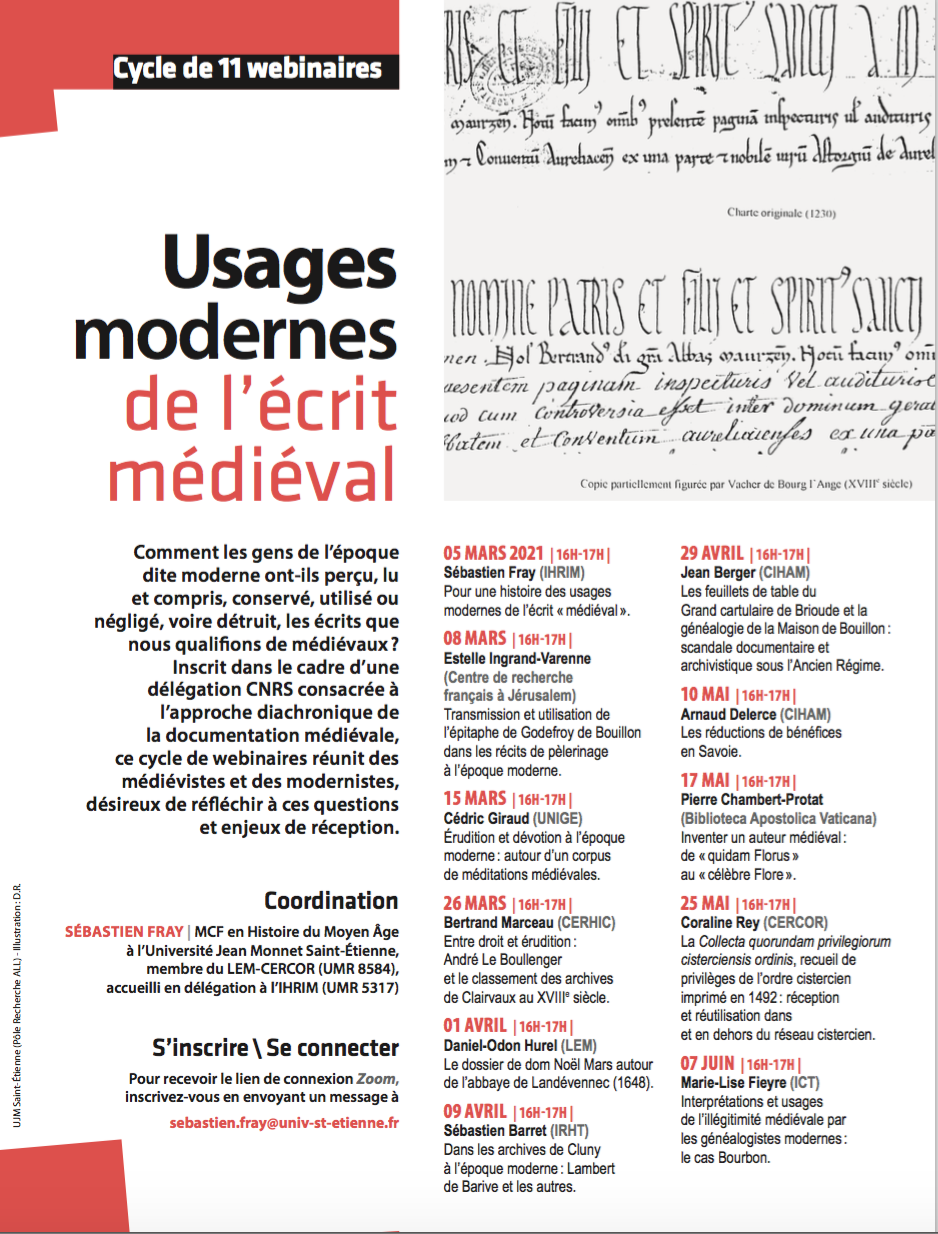
Comment les gens de l’époque dite moderne ont-ils perçu, lu et compris, conservé, utilisé ou négligé, voire détruit, les écrits que nous qualifions de médiévaux ? Inscrit dans le cadre d’une délégation CNRS consacrée à l’approche diachronique de la documentation médiévale, ce cycle de webinaires réunit des médiévistes et des modernistes, désireux de réfléchir à ces questions et enjeux de réception.
Programme :
05 MARS 2021 | 16H-17H | Sébastien Fray (IHRIM) Pour une histoire des usages modernes de l’écrit « médiéval ».
08 MARS | 16H-17H | Estelle Ingrand-Varenne(Centre de recherche français à Jérusalem) Transmission et utilisation de l’épitaphe de Godefroy de Bouillon dans les récits de pèlerinage à l’époque moderne.
15 MARS | 16H-17H | Cédric Giraud (UNIGE) Érudition et dévotion à l’époque moderne : autour d’un corpus de méditations médiévales.
26 MARS | 16H-17H | Bertrand Marceau (CERHIC) Entre droit et érudition : André Le Boullenger et le classement des archives de Clairvaux au XVIIIe siècle.
01 AVRIL | 16H-17H | Daniel-Odon Hurel (LEM) Le dossier de dom Noël Mars autour de l’abbaye de Landévennec (1648).
09 AVRIL | 16H-17H | Sébastien Barret (IRHT) Dans les archives de Cluny à l’époque moderne : Lambert de Barive et les autres.
29 AVRIL | 16H-17H | Jean Berger (CIHAM) Les feuillets de table du Grand cartulaire de Brioude et la généalogie de la Maison de Bouillon : scandale documentaire et archivistique sous l’Ancien Régime.
10 MAI | 16H-17H | Arnaud Delerce (CIHAM) Les réductions de bénéfices en Savoie.
17 MAI | 16H-17H | Pierre Chambert-Protat(Biblioteca Apostolica Vaticana) Inventer un auteur médiéval : de « quidam Florus » au « célèbre Flore ».
25 MAI | 16H-17H | Coraline Rey (CERCOR) La Collecta quorundam privilegiorum cisterciensis ordinis, recueil de privilèges de l’ordre cistercien imprimé en 1492 : réception et réutilisation dans et en dehors du réseau cistercien.
07 JUIN | 16H-17H | Marie-Lise Fieyre (ICT) Interprétations et usages de l’illégitimité médiévale par les généalogistes modernes : le cas Bourbon.
Informations pratiques :
Coordination
SÉBASTIEN FRAY | MCF en Histoire du Moyen Âge à l’Université Jean Monnet Saint-Étienne, membre du LEM-CERCOR (UMR 8584), accueilli en délégation à l’IHRIM (UMR 5317)
S’inscrire \ Se connecter
Pour recevoir le lien de connexion Zoom, inscrivez-vous en envoyant un message à
Forgery and Memory at the End of the First Millennium takes a fresh look at documentary forgery and historical memory in the Middle Ages. In the tenth and eleventh centuries, religious houses across Europe began falsifying texts to improve local documentary records on an unprecedented scale. As Levi Roach illustrates, the resulting wave of forgery signaled major shifts in society and political culture, shifts which would lay the foundations for the European ancien régime.
Spanning documentary traditions across France, England, Germany and northern Italy, Roach examines five sets of falsified texts to demonstrate how forged records produced in this period gave voice to new collective identities within and beyond the Church. Above all, he indicates how this fad for falsification points to new attitudes toward past and present—a developing fascination with the signs of antiquity. These conclusions revise traditional master narratives about the development of antiquarianism in the modern era, showing that medieval forgers were every bit as sophisticated as their Renaissance successors. Medieval forgers were simply interested in different subjects—the history of the Church and their local realms, rather than the literary world of classical antiquity.
A comparative history of falsified records at a crucial turning point in the Middle Ages, Forgery and Memory at the End of the First Millennium offers valuable insights into how institutions and individuals rewrote and reimagined the past.
Levi Roach is associate professor of medieval history at the University of Exeter. He is the author of Kingship and Consent in Anglo-Saxon England and Æthelred the Unready. Twitter @DrLRoach
Informations pratiques :
Levi Roach, Forgery and Memory at the End of the First Millennium, Princeton, Princeton University Press, 2021. 360 p. ISBN : 9780691181660. Prix : $45.00 / £38.00.
Au sortir de la guerre civile catalane de 1462-1472, Barcelone, principale cité de Catalogne et grand port méditerranéen, entre dans une phase de reconstruction. Le roi Ferdinand le Catholique transforme les modalités d’entrée au gouvernement municipal, formalise l’accès à la noblesse et implante dans la ville une nouvelle Inquisition sous contrôle royal. Affecté également, le haut clergé cherche sa place, et les chanoines de la cathédrale en particulier tâchent d’assurer leur implantation au sein des pouvoirs urbains en recomposition. Au croisement de l’histoire canoniale et de l’histoire urbaine, cette étude montre comment, au-delà de leurs attributions religieuses, évêques et chanoines, pleinement intégrés à l’élite dirigeante de la ville, sont amenés à jouer un véritable rôle dans la vie publique d’une cité en pleine mutation.
Table des matières :
Préface d’Élisabeth Crouzet-Pavan et Denis Menjot
Introduction
PREMIÈRE PARTIE. LE CHAPITRE DANS LA VILLE
Chapitre premier. — La cathédrale un centre de pouvoir au sortir de la guerre Chapitre II. — La cathédrale et les institutions municipales
DEUXIÈME PARTIE. LES CHANOINES DANS LA VILLE
Chapitre III. — Être chanoine à Barcelone Chapitre IV. — Contrôler le canonicat
TROISIÈME PARTIE. LES CHANOINES ET LES RÉSEAUX DE POUVOIR
Chapitre V. — Les chanoines à la croisée des réseaux Chapitre VI. — Un pouvoir informel dans la ville
Conclusion. — Les chanoines entre l’Église et la ville
Annexe Sources et bibliographie
Informations pratiques :
Julia Conesa Soriano, Entre l’Église et la ville. Pouvoirs et réseaux des chanoines de Barcelone (1472-1516), Madrid, Casa de Velazquez, 2021 (Bibliothèque de la Casa de Velázquez, n° 80). XVIII-347 p., 17 x 24 cms. ISBN 9788490963074. Prix : 25 euros.
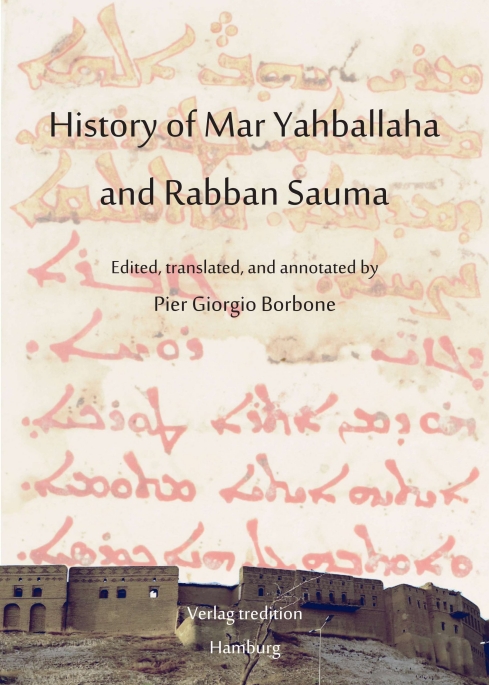
This book tells a story of serendipity. Two Christian monks left China about 1274, headed to Jerusalem. Travelling on an itinerary similar to that of Marco Polo, they reached Iran, ruled by a Mongol dynasty, the Ilkhans. There, what they never had expected happened: one of them, Mark by name, was elected Patriarch of the Church of the East (with the name Yahballaha), while the other, Rabban Sauma, was sent as ambassador to the pope and to the courts of France and England by the Ilkhan Arghun. From Rabban Sauma’s report of his embassy, and the two monk’s memories of their journey from China to Mesopotamia, an anonymous author compiled a biography of Sauma and Mark. He interspersed their report and memories with a narrative about “the occurrences of their time – what happened to them, through them or because of them, relating everything just as it happened”.
The result was a chronicle titled “History of Mar Yahballaha and Rabban Sauma”, of which a single manuscript was discovered in the late nineteenth century in the remote mountains of Hakkari (Eastern Turkey). The “History” is one of the more recent examples of classical Syriac literature, a major Christian literary tradition of the Near East.
While the encounter with two Asian “Marco Polos” of sorts constitutes the “History”’s most immediate element of appeal for present-day readers, the work deserves to be read in its entirety, as a rich and lively testimony of a time of unprecedented interconnectedness in the history of Eurasia in the time of the Mongol Empire.
Informations pratiques :
History of Mar Yahballaha and Rabban Sauma, éd. et trad. Pier Giorgio Borbone, terdition, 2020. 17 x 24 cm, 424 p. ISBN : 978-3-7497-1296-0. Prix : 26 euros.
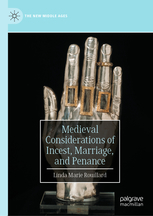
Medieval Considerations of Incest, Marriage, and Penance focuses on the incest motif as used in numerous medieval narratives. Explaining the weakness of great rulers, such as Charlemagne, or the fall of legendary heroes, such as Arthur, incest stories also reflect on changes to the sacramental regulations and practices related to marriage and penance. Such changes demonstrate the Church’s increasing authority over the daily lives and relationships of the laity. Treated here are a wide variety of medieval texts, using as a central reference point Philippe de Rémi’s thirteenth-century La Manekine, which presents one lay author’s reflections on the role of consent in marriage, the nature of contrition and forgiveness, and even the meaning of relics. Studying a variety of genres including medieval romance, epic, miracles, and drama along with modern memoirs, films, and novels, Linda Rouillard emphasizes connections between medieval and modern social concerns. Rouillard concludes with a consideration of the legacy of the incest motif for the twenty-first century, including survivor narratives, and new incest anxieties associated with assisted reproductive technology.
Linda Marie Rouillard is Professor of French, Chair of World Languages and Cultures, University of Toledo, USA.
Informations pratiques :
Linda Marie Rouillard, Medieval Considerations of Incest, Marriage, and Penance, Palgrave MacMillan, 2020. VIII + 303 p., ISBN : 978-3-030-35602-6. Prix : 79,49 euros.
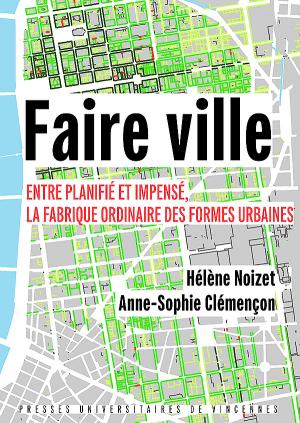
Comment se « fabriquent » les formes urbaines ? Loin de se focaliser sur les grands projets, l’ouvrage est centré sur les processus de production de la ville ordinaire, à l’origine de la grande majorité des tissus anciens et contemporains.
De quoi est fait ce que l’on appelle communément « la ville » ? Comment se construit dans la longue durée l’espace urbain ? Quels sont les rapports entre morphologie urbaine et fonctionnement social ? Cet ouvrage propose de répondre à ces questions en explorant les mécanismes de la fabrique urbaine. Les formes urbaines sont ici analysées dans une double perspective : celle de leur fabrication par des pratiques sociales qui varient sans cesse et, en retour, celle de leur influence sur le fonctionnement social.
Ouvrage publié avec le soutien du Laboratoire de Médiévistique Occidentale de Paris (LaMOP, UMR 8589, Université Paris 1 Panthéon-Sorbonne) et du Laboratoire Environnement-Ville-Société (UMR 5600, Université de Lyon).
Informations pratiques :
Faire ville. Entre planifié et impensé, la fabrique ordinaire des formes urbaines, par Anne-Sophie Clémençon et Hélène Noizet, Paris, Presses universitaires de Vincennes, 2021. 464 p. ISBN : 9782379241345. Prix : 29 euros.
Early Book Society, Bangor University (12-16 July 2021) Deadline 15 March 2021
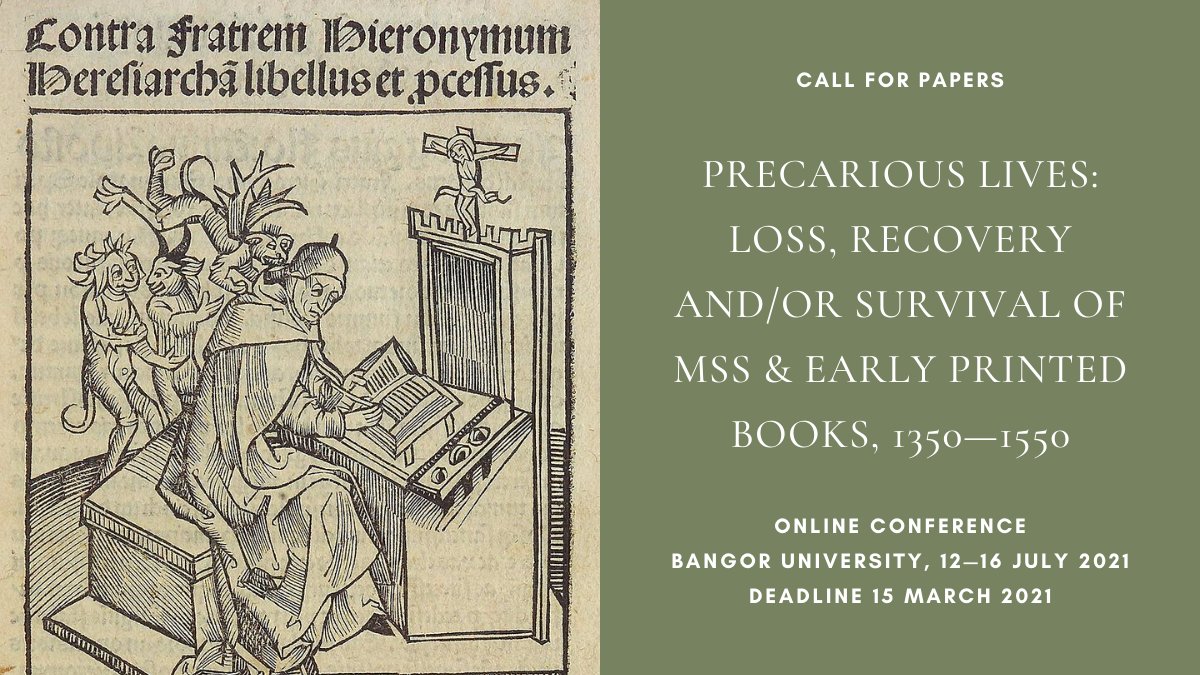
This conference theme may be as narrowly or broadly interpreted as necessary, though always with reference to the history of MSS and books from 1350 to 1550 and their material culture. Why do some texts survive? Who are their readers or makers? Topics might include evidence of borrowed books or lost books, books or libraries reconstructed from mentions in wills, and MSS and books that clearly derive from a lost original, as well as medieval libraries that are still in existence. Other subjects for consideration are texts that exist only in a singular form but seem to refer to a lost source (lost and found?) or the examination of fragments in bindings or elsewhere. Images are also considered texts, and pictures copied from models no longer extant are another theme to be discussed. Scribes, printers and illustrators who survive shifts in the book trade might also be discussed.
Theoretical approaches that engage directly with MSS and books are welcome. Proposals for papers that describe MSS and books owned, made or read by women, along with abstracts that engage with MSS and books from outside Western Europe and/or which place Western European MSS and books in dialogue with those from other parts of the globe and other cultures are especially encouraged.
Proposals for lectures of not more than 15 minutes or groupings of lectures on a similar theme (bring your friends!) are welcome. Topics that consider the transition from script to print, bibliographic issues, or the movement of books within or into Wales are of particular interest.
Because this conference will be online and in order to accommodate scholars in differing time zones, we are extending the number of days (with shorter time slots). Some papers will be pre-recorded with live session times used to discuss the ideas put forward in a paper or a cluster of papers that have been viewed previously by participants. There will also be informal gatherings where scholars can discuss specific topics as well as wine hours and virtual visits to collections of interest. We will attempt to accommodate all time zones as much as possible.
Please send your title and abstract (350 words) to the program committee by March 15 2021. These are: Martha Driver at mdriver@pace.edu, Raluca Radulescu, r.radulescu@bangor.ac.uk, Niamh Pattwell at niamh.pattwell@ucd.ie, and Margaret Connolly at mc29@st-andrews.ac.uk (Please include EBS Conference Abstract VIRTUAL WALES 2021 in the subject line of your email). Those who wish to chair a panel or run an informal discussion are invited to volunteer.
The conference is free to all paid EBS members, but donations of any amount to support graduate student help with IT issues are most welcome. Please send your membership dues or your donation either to Martha Driver (333 East 53 St Apt 12B NY, NY 10022) or to Margaret Connolly (Lauderdale, Cupar Road, Ceres, Fife Scotland, KY15 5LP UK).
Avec le soutien du FNRS, du CRHiDI (UCLouvain – Saint-Louis, Bruxelles), d'INCAL (UCLouvain), de PraME (UNamur), de sociAMM (ULB) et de Transitions (ULiège)









Vous devez être connecté pour poster un commentaire.