Podcasts – British Art Talks, Paul Mellon Centre

The Paul Mellon Centre has now released seven episodes of a new podcast series, British Art Talks, which are permanently available across our website, Spotify and Apple Podcasts. Each episode features new research and aims to enhance and expand knowledge of British art and architecture. Please see the full list of episodes below.

Medieval related podcasts include:

“What Will Survive Of Us Is Love”: Memory And Emotion In Late-Medieval England, Jessica Barker 

Jessica Barker explores the gesture of joined hands on medieval tomb monuments. Medieval tombs often depict husband and wife lying hand-in-hand, immortalised in elegantly carved stone: what Philip Larkin would later describe in his celebrated poem, An Arundel Tomb, as their ‘stone fidelity’.
These gestural monuments seem to belong to a broader tendency towards ‘expressivity’ in late-medieval sculpture. Whereas the figures on Romanesque portals stare back at the viewer impassively, their Gothic counterparts beam with radiant smiles, wipe away bitter tears or grimace and gurney with uncontrolled rage. The nature and significance of this shift has been much debated in recent years, in particular the extent to which the heightened representation of emotion was designed to provoke an equivalent emotional response.

This talk explores these ideas through the gesture of joined hands on medieval tomb monuments. I first address the issue of why hand-joining tombs are almost entirely restricted to a fifty-year period in England, before going on to place these amorous effigies in dialogue with wedding rings and dresses, changes to matrimonial ritual, and the new economic opportunities offered to widows. What emerges is the careful artifice beneath their seductive emotional surfaces: the artistic, religious, political and legal agendas underlying the medieval rhetoric of married love.  

Listen the podcast to here.

The English Carthusians And The Art Of Abstinence, Julian Luxford 

May 27, 1:00 PMFacebookTwitter Headliner Embed

Julian Luxford discusses the art and architectural dimensions of Carthusian life. The Carthusian order was founded in the late eleventh century in France. It spread rapidly and widely, and experienced great popularity during the later Middle Ages, when dozens of new charterhouses were founded against a background of sharp decline in monastic foundation in general. The main reason for Carthusian popularity was the order’s consistent adherence to the eremitic precepts and form of living established by its founding fathers. Manifest holiness generated a powerful reputation and patronage to match. The Carthusians also proved adaptable, managing to integrate into urban environments from the thirteenth century onwards without seriously compromising their principles.

This talk covers the art and architectural dimensions of Carthusian life with particular reference to the ten foundations of the order’s English Province. While these monasteries are all largely destroyed, enough survives to give a clear picture of the distinctive layout and elevation of their essential buildings and the sorts of embellishment they received. A fairy large number of Carthusian books and documents has also come down to us, some containing illumination, drawings and seals. Examples of this material that illustrate Carthusian ritual, customs and spirituality will be selected for discussion.

Listen to the podcast here.

Source : Medieval Art Research

Publié dans Podcast | Laisser un commentaire

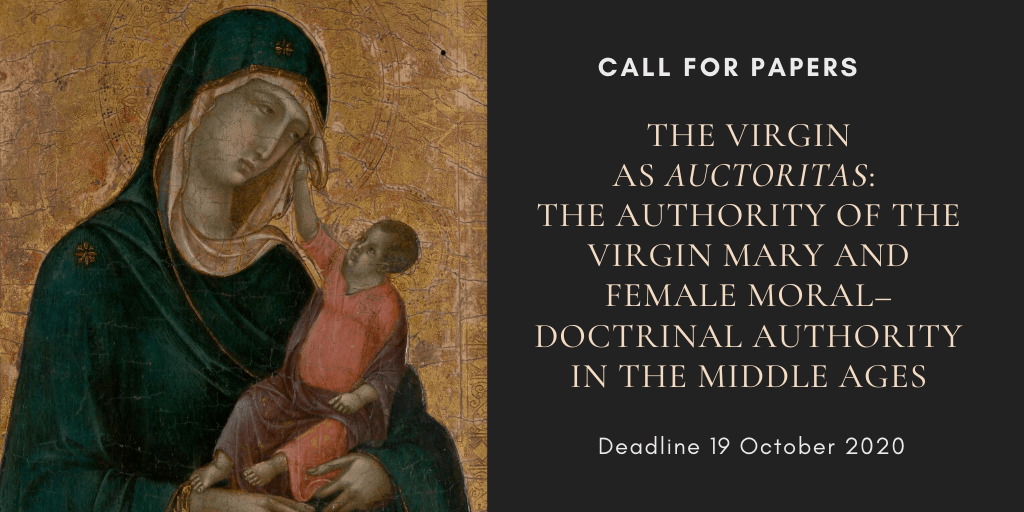
Appel à contribution – The Virgin as Auctoritas: The Authority of the Virgin Mary and female moral–doctrinal authority in the Middle Ages

Annual Association for Art History Conference, Birmingham 14 – 17 April 2021
Deadline 19 October 2020

This session aims at exploring a fundamental issue: female authority through the lens of visual/material culture. It involves prominently the Virgin Mary – as well as figures of female authority in the medieval world – because in the late decades of the 20th century, feminist thinkers pointed at the ‘negative model’ offered by the Virgin Mary since for centuries she had been branded by the Catholic Church as a role model for modesty, submission and virginity. However, between late Antiquity and the Middle Ages, the Virgin Mary emerged as Queen of Heaven through preaching and liturgical texts, visual arts and public assemblies – that is, the ‘mass media’ of that time. Mary was pictured as a very strong, authoritative figure, rather than weak and compliant.

Already during late Antiquity, Mary was commonly perceived as the mighty protector and spiritual stronghold of capital cities in the Mediterranean. Between the 8th and the 11th centuries, the role of royal women came to the fore, especially in Byzantium and in Ottonian Germany. Very striking is also the case of a number of major Italian city-states between the 12th and the 15th centuries where the Virgin Mary came to be identified with political and economic supremacy. But how did the preaching and missions of mendicant orders affect her image? How has a prominent role for female authorities been transmitted through visual arts and material culture? And what about the roles that women held in Africa and Asia and in other religious traditions?

In sum, this session can help understand what bearing the figure of the humble Virgin Mary eventually had on female leadership, and also how female leadership evolved or not. Topics may include but are not limited to:

  • The Virgin Mary as a figure of authority and wisdom in texts and images
  • The Virgin Mary in medieval preaching/arts: ‘only’ a model for humility and mercy?
  • Female political authority and the Virgin Mary as a role model in texts and images
  • Female moral, doctrinal, political and religious authority within and without the Christian oecumene in texts and images
  • Women and power: a difficult relationship.

Email abstracts to: Francesca Dell’Acqua, Università degli studi di Salerno, fdellacqua@unisa.it

Source : Medieval Art Research

Publié dans Appel à contributions | Laisser un commentaire

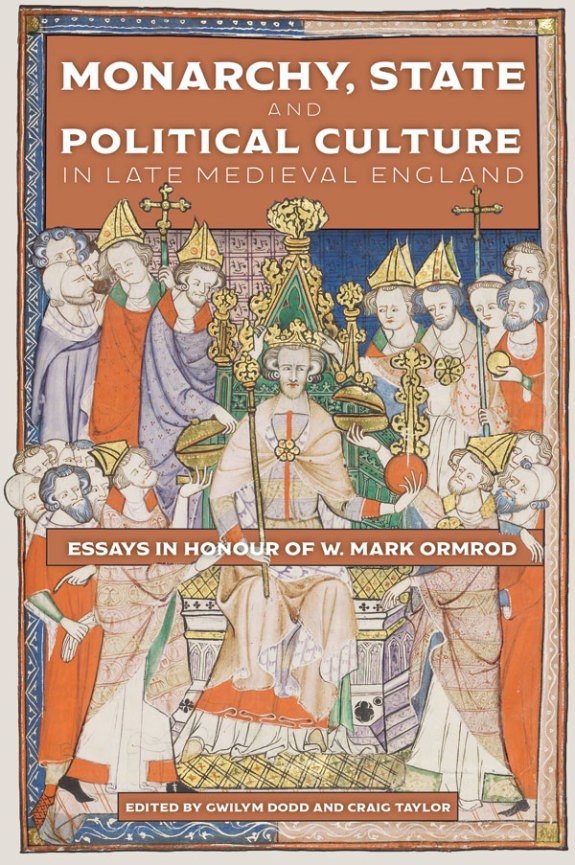
Publication – « Monarchy, State and Political Culture in Late Medieval England. Essays in Honour of W. Mark Ormrod », dir. Gwilym Dodd, Craig Taylor

The essays collected here celebrate mark the distinguished career of Professor W. Mark Ormrod, reflecting the vibrancy and range of his scholarship on the structures, personalities and culture of ruling late medieval England. Encompassing political, administrative, Church and social history, the volume focusses on three main themes: monarchy, state and political culture. For the first, it explores Edward III’s reactions to the deaths of his kinfolk and cases of political defamation across the fourteenth century. The workings of the « state » are examined through studies of tax and ecclesiastical records, the Court of Chivalry, fifteenth-century legislation, and the working practices of the privy seal clerk, Thomas Hoccleve. Finally, separate discussions of collegiate statutes and the household ordinances of Cecily, duchess of York consider the political culture of regulation and code-making.

GWILYM DODD is Associate Professor of History, University of Nottingham; CRAIG TAYLOR is a Reader in Medieval History at the University of York.

Contributors: Elizabeth Biggs, James Bothwell, Gwilym Dodd, Helen Killick, Helen Lacey, Joanna Laynesmith, Jonathan Mackman, Anthony Musson, Sarah Rees Jones, E.H. Watt.

Table des matières :

Professor W. Mark Ormrod: A Personal Appreciation – Sarah Rees Jones
The ‘Unfortunate’ Fraudster: Thomas de Boulton and the East Riding Lay Subsidy of 1332 – Jonathan Mackman
Negotiating and Creating Collegiate Statutes in the Fourteenth Century – Elizabeth Biggs
An Emotional Pragmatism: Edward III and Death – J. S. Bothwell
Defaming the King: Reporting Disloyal Speech in Fourteenth-Century England – Helen Lacey
Law and Arms: the Politics of Chivalry in Late Medieval England – Anthony Musson
‘Nother by addicions, nother by diminucions’: the Parliament of April 1414 and the Drafting of Late Medieval English Legislation – Gwilym Dodd
The Medieval ‘Side-Hustler’: Thomas Hoccleve’s Career in, and out, of the Privy Seal – Helen Killick
The Order, Rules and Constructions of the House of the Most Excellent Princess Cecily, Duchess of York – Joanna Laynesmith
Archbishops’ Registers Revealed: Church, State and Society in the Registers of the Archbishops of York, 1225-c. 1650 – Helen Watt

Informations pratiques :

Monarchy, State and Political Culture in Late Medieval England. Essays in Honour of W. Mark Ormrod, dir. Gwilym Dodd, Craig Taylor, York Medieval Press, 2020. 2 colour, 10 black and white illustrations, 224 pages. 23.4×15.6 cm. ISBN : 9781903153956. Prix : 60 £.

Source : Boydell & Brewer

Publié dans Publications | Laisser un commentaire

Publication – Francesco Robortello, « Réception des Anciens et construction de la modernité », dir. Monique Bouquet, Sergio Cappello, Claire Lesage et Michel Magnien

Cet ouvrage présente d’une façon toute nouvelle l’humaniste italien Francesco Robortello (1516- 1567), réputé pour avoir, le premier, commenté intégralement la Poétique d’Aristote. Les contributions insistent sur le pédagogue, éditeur, philologue et philosophe qu’il a été, ainsi que sur le rôle prépondérant qu’il a joué dans l’instauration de la critique textuelle, le renouvellement éthique et méthodique de la lecture des Anciens, la (re)définition des genres littéraires. Elles mettent en évidence sa démarche exégétique, fondée sur une éthique singulière, et son goût prononcé pour une méthode « ouverte ».

Table des matières : ici

Informations pratiques :

Francesco Robortello, Réception des Anciens et construction de la modernité, dir. Monique Bouquet, Sergio Cappello, Claire Lesage et Michel Magnien, Rennes, Presses universitaires de Rennes, 2020. 15,5 x 24 cm. 510 p. ISBN : 978-2-7535-7825-8. Prix : 45 euros.

Source : Presses universitaires de Rennes

Publié dans Publications | Laisser un commentaire

Publication – « The Oxford Handbook of Latin Palaeography », éd. Frank Coulson et Robert Babcock

Latin books are among the most numerous surviving artifacts of the Late Antique, Mediaeval, and Renaissance periods in European history; written in a variety of formats and scripts, they preserve the literary, philosophical, scientific, and religious heritage of the West. The Oxford Handbook of Latin Palaeography surveys these books, with special emphasis on the variety of scripts in which they were written. Palaeography, in the strictest sense, examines how the changing styles of script and the fluctuating shapes of individual letters allow the date and the place of production of books to be determined. More broadly conceived, palaeography examines the totality of early book production, ownership, dissemination, and use. The Oxford Handbook of Latin Palaeography includes essays on major types of script (Uncial, Insular, Beneventan, Visigothic, Gothic, etc.), describing what defines these distinct script types, and outlining when and where they were used. It expands on previous handbooks of the subject by incorporating select essays on less well-studied periods and regions, in particular late mediaeval Eastern Europe. The Oxford Handbook of Latin Palaeography is also distinguished from prior handbooks by its extensive focus on codicology and on the cultural settings and contexts of mediaeval books. Essays treat of various important features, formats, styles, and genres of mediaeval books, and of representative mediaeval libraries as intellectual centers. Additional studies explore questions of orality and the written word, the book trade, glossing and glossaries, and manuscript cataloguing. The extensive plates and figures in the volume will provide readers wtih clear illustrations of the major points, and the succinct bibliographies in each essay will direct them to more detailed works in the field.

Edited by Frank Coulson, Distinguished Professor of Classics, University of North Carolina at Chapel Hill, and Edited by Robert Babcock, Alumni Distinguished Professor, University of North Carolina at Chapel Hill

Robert G. Babcock teaches Classics at the University of North Carolina at Chapel Hill. He is a Fellow of the Flemish Royal Academy of Belgium, Korrespondierendes Mitglied der Zentraldirektion of Monumenta Germaniae Historica, and has held fellowships from the Alexander von Humboldt-Stiftung and the Belgian Institute for Advanced Studies. His publications focus on Latin manuscripts, Medieval Latin, and the transmission of Classical, Patristic, and Medieval Latin literature. Frank T. Coulson is Distinguished Professor of Classics in the Department of Classics at the Ohio State University. He has published widely on the reception of Ovid in the Medieval Ages and is currently finishing a volume for the Catalogus translationum et commentariorum on Ovid’s Metamorphoses. He also serves as the Director of Palaeography for the Center for Epigraphical and Palaeographical Studies.

Table des matières :

Forward and Acknowledgements
Introduction: Frank T. Coulson, Department of Classics, The Ohio State University
A. SCRIPT
A.1 Organizing Script
1. Punctuation: Frank T. Coulson, Department of Classics, The Ohio State University
2. Abbreviations: Olaf Pluta, Institut für Philosophie, Ruhr-Universität Bochum
3. Numerals: Charles Burnett, Professor of the History of Islamic Influences on Europe, Warburg Institute
A.2 Greco-Roman Heritage
4. Old Roman Cursive: Teresa De Robertis, Dipartimento di Storia,
Archeologia, Geografia, Arte, Spettacolo – Università di Firenze (Translated from the Italian by Consuelo Dutschke)
5. New Roman Cursive: Teresa De Robertis, Dipartimento di Storia,
Archeologia, Geografia, Arte, Spettacolo – Università di Firenze (Translated from the Italian by Consuelo Dutschke)
6. Square and Rustic Capital: David Wright, The University of California, Berkeley
7. Uncial: Robert G. Babcock, University of North Carolina at Chapel Hill
8. Semi-Uncial: Robert G. Babcock, University of North Carolina at Chapel Hill
9. Greek Scripts in Latin Manuscripts: Walter Berschin, Universität Heidelberg
A.3 Early Medieval Hands
10. Beneventan: Francis Newton, Professor of Latin Emeritus, Duke University
11. Visigothic: Jesus Alturo i Perucho, Universitat Autonoma di Barcelona
12. Luxeuil: Paolo Cherubini, Professore ordinario, Università degli Studi di Milano – Bicocca
13. Merovingian Gaul: David Ganz, Visiting Professor of Palaeography, The Medieval Institute, The University of Notre Dame
14. St. Gall and Alemannic: Anna A. Grotans, Department of Germanic Languages and Literatures, The Ohio State University
15. Insular Script: Peter Stokes, King’s College, University of London
A.4 Carolingian Minuscule
16. Carolingian Minuscule in France and Germany: David Ganz, Visiting Professor of Palaeography, The Medieval Institute, The University of Notre Dame
17. Early Carolingian Minuscule in Italy: Simona Gavinelli, Università Cattolica del S. Cuore, Milano
18. Late Carolingian Minuscule in Italy: Mirella Ferrari, Università Cattolica del S. Cuore, Milano
19. Tironian Notes: David Ganz, Visiting Professor of Palaeography, The Medieval Institute, The University of Notre Dame
A.5 Gothic
20. Nomenclature of Gothic Scripts: Albert Derolez Emeritus Professor at the Free Universities of Brussels
21. French Gothic: Marie-Hélène Tesnière, Conservateur général au département des Manuscrits de La Bibliothèque nationale de France (Translated from the French by Frank T. Coulson)
22. Early English Gothic: Richard Gameson, Durham University
23. Later English Gothic: Pamela Robinson, University of London
24. German Gothic: Karl-Georg Pfaendtner, Bayerische Staatsbibliothek, München
25. Early Italian Gothic: Stefano Zamponi, Università di Firenze (Translated from the Italian by Consuelo Dutschke)
26. Late Italian Gothic: Stefano Zamponi, Università di Firenze (Translated from the Italian by Consuelo Dutschke)
27. Late Dutch Gothic: J.P. Gumbert, Professor Emeritus, Leiden University
28. Czech Republic: Hana Patkova, Charles University, Prague
29. Hungary and Slovakia: Juraj Sedivý, Comenius-University in Bratislava / Faculty of Arts (Translated from the German by Anna A. Grotans and Robert G. Babcock)
30. Interaction of Script and Print: Paul Needham, Scheide Librarian, Princeton University
A.6 Humanist
31. Origins of Humanist Script: Teresa De Robertis, Dipartimento di Storia,
Archeologia, Geografia, Arte, Spettacolo – Università di Firenze (Translated from the Italian by Consuelo Dutschke)
32. Italian Humanist: Teresa De Robertis, Dipartimento di Storia, Archeologia,
Geografia, Arte, Spettacolo – Università di Firenze (Translated from the Italian by Consuelo Dutschke)
33. Byzantium and the West: Marianne Pade, Director, Danish Academy in Rome
A.7
34. The Waning of Manuscript Production: B. Gregory Hays, Department of Classics, University of Virginia
B. MATERIAL EMBODIMENT AND TECHNIQUES
35. Stages of Manuscript Production: Lucien Reynhout, Curator at the Department of Manuscripts Royal Library of Belgium, Brussels, Belgium
36. Stages in Diplomatic Production: Olivier Guyotjeannin, Directeur d’études à l’École nationale des chartes, Paris (Translated from the French by Robert G. Babcock and Frank T. Coulson)
37. Mise-en-page: Marie Hélène Tesnière, Conservateur général au département des Manuscrits de La Bibliothèque nationale de France (Translated from the French by Frank T. Coulson)
38. Format of Books: J.P. Gumbert, Professor Emeritus, Leiden University
39. Format of Documents: Olivier Guyotjeannin, Directeur d’études à l’École nationale des chartes (Paris) (Translated from the French by Robert G. Babcock and Frank T. Coulson)
40. Quantitative Codicology: Ezio Ornato, CNRS, Paris (Translated from the French by Robert G. Babcock and Frank T. Coulson)
41. Comparative Codicology: Malachi Beit-Arié, Professor Emeritus of Codicology and Palaeography, The Hebrew University of Jerusalem
42. Pen Flourishing: Alison Stones, Professor Emeritus, University of Pittsburgh
C. CULTURAL SETTING
43. Orality and Visible Culture: Paul Saenger, Newberry Library, Chicago
44. Who Were the Scribes: Alison Beach, Department of History, The Ohio State University
45. Book Trade: Antiquity and the Early Middle Ages: Guglielmo Cavallo, Accademia Nazionale dei Lincei, Roma
46. Book Trade: Central, High and Late Middle Ages: Kouky Fianu, Université d’Ottawa/University of Ottawa
D. SELECTED SCRIPTORIA AND LIBRARIES
47. An Overview: Donatella Nebbiai, Institut de recherche et d’histoire des textes, Paris (Translated from the French by Frank T. Coulson)
48. Lindisfarne: Michelle P. Brown FSA, Professor Emerita, SAS, University of London
49. Northern Italy in the 7th and 8th Centuries: Paolo Cherubini, Professore ordinario, Università degli Studi di Milano – Bicocca
50. Insular Script in its Cultural Context: Michelle P. Brown, FSA, Professor Emerita, SAS, University of London
51. Montecassino: Francis Newton, Professor of Latin Emeritus, Duke University
52. St. Gall: Anna A. Grotans, Department of Germanic Languages and Literatures, The Ohio State University
53. University of Paris: Richard and Mary Rouse, University of California, Los Angeles
54. Salisbury Cathedral Library: Teresa Webber, Trinity College, Cambridge
55. Florence: Xavier van Binnebeke, Bodleian Library, Oxford
E. VARIETIES OF BOOK USAGE
56. Books of Hours: Rowan Watson. Senior Curator, National Art Library, Word & Image Department, Victoria and Albert Museum
57. Law: Susan L’Engle, Center for Medieval and Renaissance Studies, St. Louis University
58. The Manuscript Miscellany: George Rigg, Professor Emeritus, University of Toronto
59. Florilegia: Jacqueline Hamesse, Professor Emerita, L’Université catholique de Louvain
60. Theological Texts: Lesley Smith, Professor of Medieval Intellectual History, University of Oxford, Fellow in Politics and Senior Tutor, Harris Manchester College
61. Gloss and Text: Greti Dinkova-Bruun, Pontifical Institute of Mediaeval Studies, Toronto
62. Glossaries and Grammars: Patrizia Lendinara, Dipartimento Culture e Società, Università di Palermo
63. The History of Manuscripts since 1500: B. Gregory Hays, Department of Classics, University of Virginia
64. Manuscript Cataloguing: Consuelo Dutschke, Columbia University

Informations pratiques :

The Oxford Handbook of Latin Palaeography, éd. Frank Coulson et Robert Babcock, Oxford, Oxford University Press, 2020. 1072 p. ISBN: 9780195336948. Prix : 125 £.

Source : Oxford University Press

Publié dans Publications | Laisser un commentaire

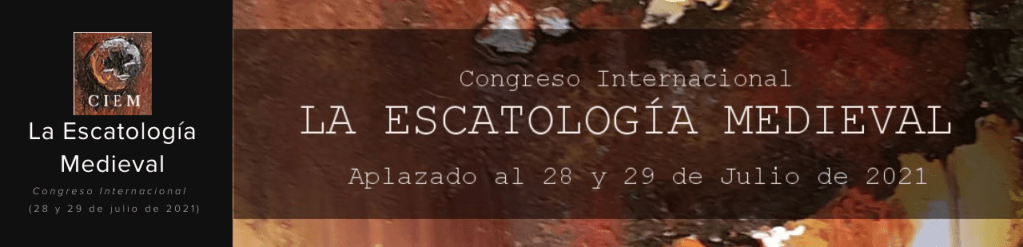
Appel à contribution – The Medieval Eschatology

Santiago de Compostela
July 28-29th, 2021

Eschatology is one of the central components of medieval Christian culture. The end of the world, the Last Judgment, salvation, Messianism, the Antichrist, the Apocalypticism and millenarianism are inescapable elements in what we may generally describe as “Medieval eschatology”. In this universe, the coming of the Antichrist antedated the Last Judgment and the end of the world. This favoured the appearance of prophecies and contributed to the shaping of a present “on standby” on the basis of a future of salvation or damnation with the Last Judgment on the horizon. This medieval eschatological scenario can be found across events, authors, texts, social movements or cultural and artistic representations.

A far as events are concerned, the early medieval fears crystallized in the “fear of the year 1000”, the expectations of the end of the world during the 11th century, the “Investiture Controversy”, the catastrophes associated sometimes to the Antichrist of the last emperor, the Great Schism of 1378, not to mention many other events of different nature that we can identify in a variety of settings of the Medieval Western world and which have been interpreted in eschatological terms.

In other sense, eschatological mechanisms can also be found in medieval texts, authors and thinkers. This end-of-the-world traces can be identified in Beatus of Liébana and the Asturian Chronica Prophetica but also in De Liutprand, Raoul Glaber, Adémar de Chabannes or Helgaud. After the 12th century, the speculations on the future grew more developed. Particular mention deserve Gerhoh de Reichersberg, Hildegarda de Bingen and, most particularly, Joachim of Fiore, who in the 13th century, had a lot of influence in the Franciscan order in such authors as Pedro Olivi, Ubertino of Casale, Ramón Llull, Arnaldus de Vilanova or Jean de Roquetaillade. Later, they would be joined by such figures as Vicente Ferrer, Mamfred de Verceil or Bernardino de Siena, to cite but a few. There are even some authors and texts that include eschatological principles without this being their main purpose. Such is the case of some Chronicles, Histories, Annals and other text types (treaties, mirrors for princes, travel books, etc.).

As to social movements, from the 13th century, fundamentally, a number of heretic agitation and revolts where eschatological ideas emerge have been identified. These include, for instance, the apostolici, the Beguines and Beghards, or the Hussites, among others. Lastly, the representation of eschatological images in the Beati or in illuminated texts and the representation of the Last Judgments in architecture are just the artistic manifestation of the problem that is the subject of study of this Conference.

It is therefore the intention of the International Conference “The Medieval Eschatology” to provide a venue for reflecting on these as well as other eschatological issues that may be proposed. This can be done analytically or descriptively from both a practical and theoretical approach. Starting there, we can look at what their purpose was and at what meanings they have been given in different contexts and spaces. The Conference welcomes multidisciplinarity and encourages the participation of researchers from the fields of history, history of the art, literary studies, philosophy and political sciences. It is our aim to bring together different views in order to encourage a theoretical and practical reflection on eschatological concepts, their meaning and uses.

On the basis of the above, the following will be the main pillars on which this Conference will be built:

  • The study of events (and/or their interpretations) with an eschatological component.
  • Reflecting on authors who have eschatological thinking or where eschatology is present.
  • Research into eschatological texts (Chronicles, Annals, apocalyptic treaties, sermons, commentaries, etc.), their dissemination and sources.
  • The study of the social and mental involvement of eschatology in the medieval social movements and revolts.
  • The study of medieval eschatological concepts such as time, space, salvation, fear, prophetism or Messianism, among others.
  • In-depth theoretical or historiographical research into the variety of issues mentioned above.
  • The interpretation of all things eschatological after the medieval times and in the near present (cinema, series, novel, comic and videogames).
  • The analysis of medieval plagues and of medieval plagues and their connection to the present.

PAPERS

Proposals for papers should be sent to the Organizing Committee before 1 April 2021. Once the proposal has been received, the scientific committee will assess it and will communicate whether it has been accepted within a week. Contributors may then register and, if they so desire, book their lodging with the University Hospitality Service of the University of Santiago de Compostela.

The submission of papers will be via email to: israel.sanmartin@usc.es by attaching a document in Word format that must include:

  • Title
  • Author
  • Abstract (no more than one sheet)
  • Brief CV (no more than ten lines)

Papers may be submitted in Galician, Spanish, Catalan, Portuguese, French, English and Italian.

REGISTRATION FEES

  • Speakers: €40
  • Attendants (with certificate): €10
  • Attendants (no certificate): free

PUBLISHING

The papers will be published in a book. All its chapters will be subjected to blind peer review.

DATES AND DEADLINES

  • Deadline for submission of proposals: 1 April 2021
  • Deadline for registration: 1 June 2021
  • Date of the conference: 28 & 29 July 2021

VENUE

The Conference will be held at the School of Geography & History on 28th – 29th July 2021.

ACCOMMODATION

The Organising Committee has arranged with the University Hospitality Service the reservation of rooms. The price will be €33 for an individual room and €53 for a shared room. Information on how to book and pay for your room will be provided at a later date.

Deadline for submission of proposals is open to April 1, 2021. More info at: https://escatologiamedievalciem.webnode.es/call-for-papers-english/

Source : Medieval Art Research

Publié dans Appel à contributions | Laisser un commentaire

Bourse – Grants: Association for Art History

To further our mission to advance the study and practice of art history, the Association for Art History offer grants of up to £1,000 which provide support to aid scholarly research, to develop professional practice and to further the teaching and learning of art history at all education levels.

We are delighted to announce our first round of recipients of grants for art history.

What we fund

Grants to aid scholarly research include support for:

-Organisation of symposia, conferences and workshops
-Travel to libraries, archives and collections
-Delivery of research findings at conferences
-Catalogues and public engagement programmes for exhibitions
-Access to images controlled by third party rights holders

Grants to develop professional practice within art history include:

-Participation in museum and gallery training programmes in curatorial and public engagement areas

Grants to support the teaching and learning of art history in schools include:

-Teachers’ continuing professional development

-Formal and informal learning opportunities for students

Bursaries

Alongside our grants programme, the Association awards bursaries for doctoral students and early career researchers to attend our Annual Conference.

These competitive bursary tickets are available to those who would benefit from attending our Annual Conference. Information on how to apply for bursaries for the 2020 conference will be available online from November 2019.

Priorities

Within our grants categories, we look particularly favourably on:

-Projects from a wide geographic distribution throughout the UK and those that will reach broad audiences
-Projects that promote the participation of diverse audiences and encourage new perspectives within art and art history
-Supporting research and practice where the applicant is without institutional affiliation or the access to funding that such association would provide

Outcomes

We expect that the outcomes of projects we fund will include:

-Expanding the knowledge base of art history
-Enabling more researchers and professionals in the field, particularly those who do not have other means of support, to access essential career development opportunities
-Helping art historians and those in related professions to build and extend their networks to facilitate their work and professional development
-Introducing wider audiences to art history through exhibitions, publications and other public programming
-Facilitating the teaching and learning of art history in secondary schools and thereby increasing the engagement of students at all levels with the subject

Eligibility

Grants are open to members of the Association who may be:

-Academics
-Students
-Independent researchers
-Teachers
-Museum and gallery professionals
-Artists

If you are not a member of the Association for Art History and would like further information on member benefits and how to join us, please see here for details.

What we do not fund

Grants from the Association for Art History cannot fund further or higher education (university fees, course books etc), student living expenses or unpaid internships.

Staff members and trustees of the Association for Art History and their relatives and partners are not eligible for our grants.

Criteria

Research grants will be assessed according to their contribution to scholarship in art history, their academic rigour, and the relevance and need for the research in the specific area described.

Practice grants should demonstrate how the skills and experience obtained will contribute to professional development and, ultimately, to the public understanding of art history.

For all grants, the demonstrable financial need of the applicant as well as the availability of other grants to support the project or activity applied for will be considered.

Grants which leverage and help to attract additional funding are encouraged.

Source : Medieval Art Research

Publié dans Bourse | Laisser un commentaire

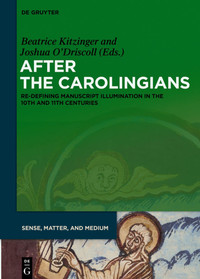
Publication – « After the Carolingians. Re-defining Manuscript Illumination in the 10th and 11th Centuries », éd. Beatrice Kitzinger and Joshua O’Driscoll

A volume that introduces new sources and offers fresh perspectives on a key era of transition, this book is of value to art historians and historians alike. From the dissolution of the Carolingian empire to the onset of the so-called 12th-century Renaissance, the transformative 10th–11th centuries witnessed the production of a significant number of illuminated manuscripts from present-day France, Belgium, Spain, and Italy, alongside the better-known works from Anglo-Saxon England and the Holy Roman Empire. While the hybrid styles evident in book painting reflect the movement and re-organization of people and codices, many of the manuscripts also display a highly creative engagement with the art of the past. Likewise, their handling of subject matter—whether common or new for book illumination—attests to vibrant artistic energy and innovation. On the basis of rarely studied scientific, religious, and literary manuscripts, the contributions in this volume address a range of issues, including the engagement of 10th–11th century bookmakers with their Carolingian and Antique legacies, the interwoven geographies of book production, and matters of modern politics and historiography that have shaped the study of this complex period.

Table des matières : ici

Informations pratiques :

After the Carolingians. Re-defining Manuscript Illumination in the 10th and 11th Centuries, éd. Beatrice Kitzinger and Joshua O’Driscoll, De Gruyter, 2020 (Sense, Matter, and Medium, 2). 24.0 x 17.0 cm, 228 ill., 482 p. ISBN: 978-3-11-057467-8. Prix : 61,95 euros.

Source : De Gruyter

Publié dans Publications | Laisser un commentaire

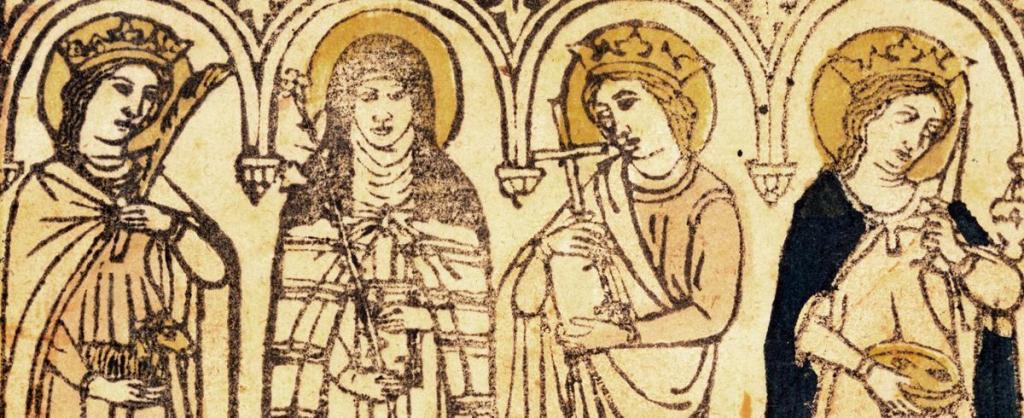
Web – Atlante delle Xilografie italiane del Rinascimento

Accès : ici

L’Atlante delle xilografie italiane del Rinascimento è frutto di un progetto di ricerca inteso a studiare e catalogare il materiale grafico xilografico e le matrici lignee realizzati in Italia dai primi esemplari noti fino al 1550 circa. Vengono prese in esame le stampe sciolte e le matrici conservate nelle collezioni pubbliche e private e nei luoghi d’origine che ancora ne conservano, come le chiese e i conventi. L’archivio digitaleè consultabile attraverso diverse chiavi di ricerca, corredato da immagini e schede in costante aggiornamento, e in collegamento con i maggiori database internazionali del settore.
Scopo del progetto e dell’Archivio digitale è anche quello di essere punto di riferimento per lo studio della xilografia italiana, creando un network attivo e in aggiornamento che coinvolga gli storici dell’arte, gli studiosi della materia e le istituzioni che possiedono i materiali censiti. Invitiamo a contattarci via mail a italianwoodcuts.census@cini.it per segnalarci nuovi esemplari da catalogare, per integrare e correggere le informazioni che forniamo nelle schede, approfondire insieme argomenti, comunicarci l’uscita di nuove pubblicazioni.

Source : Fondazione Giorgio Cini

Publié dans Le réseau | Laisser un commentaire

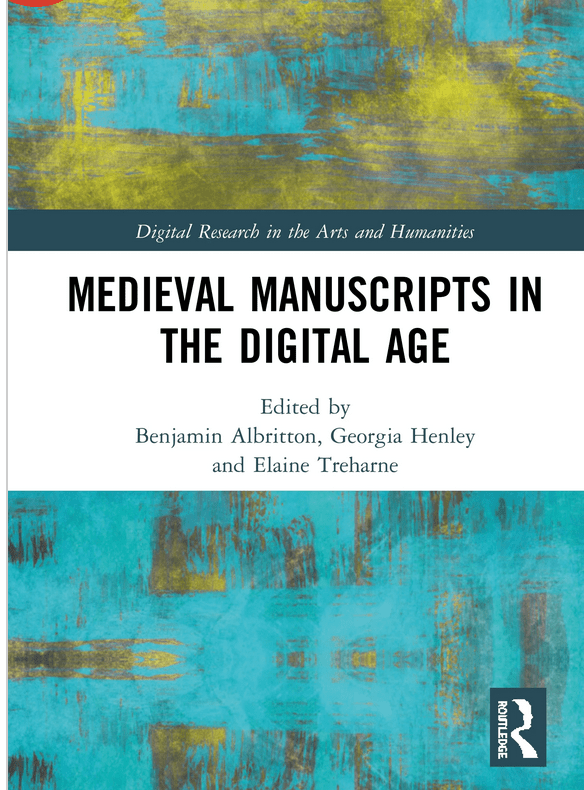
Publication – « Medieval Manuscripts in the Digital Age », éd. Benjamin Albritton, Georgia Henley, Elaine Treharne

Medieval Manuscripts in the Digital Age explores one major manuscript repository’s digital presence and poses timely questions about studying books from a temporal and spatial distance via the online environment.

Through contributions from a large group of distinguished international scholars, the volume assesses the impact of being able to access and interpret these early manuscripts in new ways. The focus on Parker on the Web, a world-class digital repository of diverse medieval manuscripts, comes as that site made its contents Open Access. Exploring the uses of digital representations of medieval texts and their contexts, contributors consider manuscripts from multiple perspectives including production, materiality, and reception. In addition, the volume explicates new interdisciplinary frameworks of analysis for the study of the relationship between texts and their physical contexts, while centring on an appreciation of the opportunities and challenges effected by the digital representation of a tangible object. Approaches extend from the codicological, palaeographical, linguistic, and cultural to considerations of reader reception, image production, and the implications of new technologies for future discoveries.

Medieval Manuscripts in the Digital Age advances the debate in manuscript studies about the role of digital and computational sources and tools. As such, the book will appeal to scholars and students working in the disciplines of Digital Humanities, Medieval Studies, Literary Studies, Library and Information Science, and Book History.

Table des matières :

1. Introduction – Benjamin Albritton and Elaine Treharne

Part I. Theory and Practice

2. What it is to be a Digitization Specialist: Chasing Medieval Materials in a Sea of Pixels – Astrid J. Smith
3. From the Divine to the Digital: Digitization as Resurrection and reconstruction – Keri Thomas
4. A Note on Technology and Functionality in Digital Manuscript Studies – Abigail G. Robertson
5. Ways of Seeing Manuscripts: Exploring Parker 2.0 – Andrew Prescott

Part II. Materialities

6. A Note on Cambridge, Corpus Christi College, 210 – Orietta Da Rold
7. Cambridge, Corpus Christi College, 367 – Peter A. Stokes

Part II: A Study in (Digital) Codicology

8. Pocket Change: Cambridge, Corpus Christi College, 383 and the Value of the Virtual Object – Anya Adair
9. Rolling with It: Navigating Absence in the Digital Realm – Siân Echard

Part III. Translation and Transmission

10. ‘Glocal’ Matters: The Gospels of St Augustine as a Codex in Translation – Mateusz Fafinski
11. Encyclopaedic Notes in Cambridge, Corpus Christi College, 320 – John J. Gallagher
12. Cambridge, Corpus Christi College, 322: Tradition and Transmission – David F. Johnson
13. Cambridge, Corpus Christi College, 41 and 286: Digitization as Translation – Sharon M. Rowley

Part IV. Of Multimedia and the Multilingual

14. Fragmentation and Wholeness in Cambridge, Corpus Christi College, 16 – A. Joseph McMullen
15. Cambridge, Corpus Christi College, 144 and 402: Mercian Intellectual Culture in pre-Conquest England (and beyond) – Lindy Brady
16. Philologia and Philology: Allegory, Multilingualism and the Corpus Martianus Capella – Elizabeth Boyle
17. Remediation and Multilingualism in Corpus Christi College, 402 – Carla María Thomas

Part V. Forms of Reading

18. Living with Books in Early Medieval England: Solomon and Saturn, Bibliophilia, and the Globalist Red Book of Darley – Erica Weaver
19. Severed Heads and Sutured Skins – Catherine E. Karko
20. Books Consumed, Books Multiplied: Martianus Capella, Ælfric’s Homilies, and the International Image Interoperability Framework – Alexandra Bolintineanu
21. Making a Home for Manuscripts on the Internet – Michelle R. Warren

Informations pratiques :

Medieval Manuscripts in the Digital Age, éd. Benjamin Albritton, Georgia Henley, Elaine Treharne, Routledge, 2020. ISBN 9780367426613 Published July 15, 2020 by Routledge 234 Pages – 22 B/W Illustrations. Prix : 96 £.

Source : Routledge

Publié dans Publications | Laisser un commentaire