Appel à contribution – The Art of the Poor in the Late Middle Ages and Renaissance

A conference at The Warburg Institute, London, Thursday 14 – Friday 15 June 2018 organised by Dr Rembrandt Duits
Bassano_M

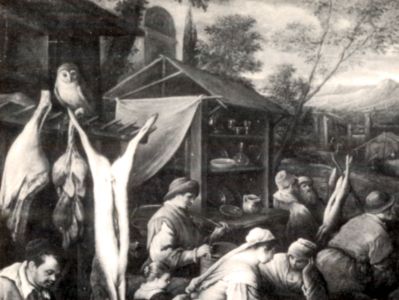
Market stall selling ceramics and glass ware, from Francesco Bassano, Market Day, Late sixteenth century, oil on canvas, current location unknown (photographed at the Trafalgar Galleries, London, 1983; photo in the Warburg Institute Photographic Collection)

The art history of the late Middle Ages and the Renaissance has generally been written as a story of elites: bankers, noblemen, kings, cardinals, and popes and their artistic interests and commissions. Recent decades have seen attempts to recast the story in terms of material culture and include a wider range of objects than are discussed in the traditional surveys of painting, sculpture and architecture, but the focus has not fundamentally shifted away from the upper strata of society. One otherwise excellent publication following this new approach even states confidently that ‘there was no such thing as poor man’s art in the Renaissance.’

There are, however, countless modest images, decorated objects and buildings across Europe that belie this notion, from lead and tin pilgrims’ badges in the Museum of London to frescoed churches commissioned by village communities during the Venetian period on Crete. These works of art were made for the more than 95% of the population who were economically less privileged: peasants, unskilled and skilled workers in the building and manufacturing industries, small-time artisans. They are works that tend not to enter the major art museums and exhibitions of the western world, or feature prominently in tourist guide books; they can be found in museums of urban history and archaeology and the closest they come to mingling with ‘real’ art is in shows with an anthropological approach, such as ‘the art of devotion.’ If they are discussed in artistic terms at all, these are often negative: ‘coarse’; ‘crude’; ‘primitive’; or ‘provincial’. There is also a common assumption that such objects did not have artistic traditions of their own but were always derived from the shining examples made by famous artists for the rich.

This conference aims to challenge these perceptions. For the first time, ‘the art of the poor’ will be given centre stage. Through a variety of case studies, objects, their functions and manufacturing traditions will be re-evaluated and established aesthetic judgements and tacit assumptions in scholarship re-examined. The conference will seek to give impetus to a new field combining the expertise of urban archaeologists, historians, historical anthropologists, and art historians. This field, different from general studies of material culture in that its principal object is ‘art’, can help us re-assess the very concept of ‘art’ and its function in society, neither of which can be understood properly without taking into account the broadest range of artistic activity.

Topics for papers may include, but are not limited to:

  • Art forms made for people with lower incomes, e.g. decorations of village and small parish churches, pilgrims’ souvenirs, woodcuts, decorated ceramics, drinking glasses, textiles, costume, modest paintings and sculptures
  • The iconography of images for the poor
  • The ‘art market’ of the poor, including manufacturing traditions, vending of artefacts, (collective) commissions, second-hand retail
  • Relevant aspects of social history, e.g. income levels and purchasing power, records of transactions or possessions, anecdotal evidence from literary sources, visual evidence from paintings, manuscript illuminations and other images
  • Relations between the art of the poor and more upmarket artistic manufacture
  • The historiography (or lack of it) of the art of the poor
  • Relevant finds in urban archaeology, relevant aspects of museum collections

Papers by early career scholars are particularly welcome. The aim is for the conference proceedings to be published.

Papers are restricted to 25 mins. Please send a short abstract and a brief CV to rembrandt.duits@sas.ac.uk by 28 July 2017

Source : The Warburg Institute
Publié dans Appel à contributions | Laisser un commentaire

Colloque – Le manuscrit franciscain retrouvé

La découverte en 2015 d’une nouvelle Vie de François d’Assise due à Thomas de Celano, sans doute la deuxième écrite en l’honneur du saint à quelque dix ans de sa mort, a eu un large écho. Ce texte ne représente que la huitième partie du manuscrit qui le contient, aujourd’hui conservé à la Bibliothèque nationale de France sous la cote nal 3245. C’est l’ensemble de ce manuscrit que la rencontre des 20-22 septembre 2017 s’appliquera à explorer et à comprendre.

Colloque organisé par la Bibliothèque nationale de France et l’Institut de recherche et d’histoire des textes (CNRS) avec le soutien du LabEx Hastec, du Centre de recherches historiques (EHESS-CNRS), d’APICES, de la Fondation André Vauchez (Balzan) et de la galerie Les Enluminures.

nal

Programme :

Mercredi 20 septembre 2017 après-midi, salle Léopold Delisle

14h – Isabelle le Masne de Chermont (Bibliothèque nationale de France) et François Bougard (Institut de recherche et d’histoire des textes) : Bienvenue.
14h15 – Jacques Dalarun (IRHT, Académie des inscriptions et belles-lettres) : Colloque mode d’emploi.

L’objet manuscrit – présidence François Bougard

14h30 – Amandine Postec (BnF) et Nathalie Buisson (BnF) : Les matériaux du codex.
15h15 – Denis Muzerelle (IRHT) : Analyse codicologique et paléographique.

16h – Pause.

16h15 – Nicoletta Giovè (Università di Padova) : La fisionomia del manoscritto.
17h – Fabio Zinelli (École pratique des hautes études, IRHT) : La langue du manuscrit.
17h45 – Débat général.
18h30 – Présentation du manuscrit nal 3245 à la BnF.

Jeudi 21 septembre 2017 matin, salle Jeanne Vielliard

Le primat de la sainte Écriture – présidence Isabelle le Masne de Chermont

9h – Laura Light (Les Enluminures) : Job, Zacharias, Matthew : Why are they here ?

9h45 – Robert Lerner (Northwestern University) : The unexpected Pseudo-Methodius.
10h30 – Amandine Postec : Appropriations anciennes et nouvelles de la Bible : l’Unum ex quattuor.

11h15 – Pause.

La communication du message religieux

11h30 – Dominique Poirel (IRHT) : Le commentaire du Notre Père : aperçus sur une prédication franciscaine primitive.
12h15 – Nicole Bériou (CIHAM, AIBL) et Isabelle le Masne de Chermont : Le sermon sur la Purification de la Vierge : une reportatio faite à Paris.

Les fragments d’une culture – présidence Nicole Bériou

14h30 – Nicole Bériou : Introduction.
14h45 – Nicole Bériou, Marjorie Burghart (CIHAM), Isabelle le Masne de Chermont, Dominique Poirel et Amandine Postec : Le manuscrit nal 3245, florilège de florilèges. Brève présentation raisonnée des ensembles successifs de textes, dans l’ordre du codex.
16h – Thomas Falmagne (Bibliothèque nationale du Luxembourg) : Les « florilèges » du manuscrit nal 3245.

16h45 – Pause.

17h – Marco Giuseppe Rainini (Università cattolica del Sacro Cuore di Milano) : Il manoscritto nal 3245 e le pratiche esegetiche.
17h45 – Carlo Delcorno (Università di Bologna) : Chemin des sermons latins et vernaculaires dans les florilèges.
18h30 – Débat général.

Vendredi 22 septembre 2017 matin, salle Jeanne Vielliard

Un manuscrit franciscain ? – présidence André Vauchez (AIBL)

9h30 – Jacques Dalarun : Introduction.
9h45 – Sean Field (University of Vermont) : The Vita beati patris nostri Francisci in a Franciscan manuscript.
10h30 – Luigi Pellegrini (Università di Chieti) : La produzione di un manoscritto francescano.
11h15 – Sylvain Piron (École des hautes études en sciences sociales) : La longue vie d’un manuscrit franciscain.

12h – Pause.

12h15 – Nicole Bériou, Jacques Dalarun, Isabelle le Masne de Chermont, Dominique Poirel : Conclusions.

Contact : jacques.dalarun@irht.cnrs.fr

Informations pratiques :

École nationale des chartes
65 rue de Richelieu, 75002 Paris
Salle Léopold Delisle, rez-de-chaussée

IRHT
40 avenue d’Iéna, 75116 Paris
Salle Jeanne Vielliard, 1er étage

Source : IRHT

Publié dans Colloque | Laisser un commentaire

Offre d’emploi – Doctoral fellowship Medieval history : Ecclesiastical Assemblies and the Transformation of Post-Carolingian Society

For Medieval History, Leuven we are looking for a motivated doctoral student to investigate the functioning of councils and synods during the ‘long tenth century’. Central to this research is a thorough terminological study and contextual analysis of these meetings in West-Francia and Lotharingia. The objective is to grasp the meaning of ecclesiastical assemblies within the framework of the complex transformation of the Post-Carolingian world. Your research, which will take place under the supervision of Professor Brigitte Meijns, will result in a doctoral dissertation after four years.

The KU Leuven Research Unit Medieval History explores the western Middle Ages from a viewpoint of continuity between the Middle Ages and Late Antiquity, on the one hand, and the Early Modern period, on the other. By abandoning traditional periodization, the members of this research unit invite interdisciplinarity and cross-border research without losing sight of the individuality of the medieval period. Their geographical research area consists, broadly speaking, of the region of the Southern Low Countries and its interaction with the surrounding regions. The research of our staff members and the courses they teach at KU Leuven focus on the interaction between Church and society, on the one hand, and urban history, on the other. The study of the relationship between ecclesiastical and secular authorities during the Early and High Middle Ages is one of the cornerstones of our research. Particular attention is paid to the authority of tenth- and eleventh-century bishops in the church province of Rheims and neighbouring dioceses.

Project :

Ecclesiastical Assemblies and the Transformation of Post-Carolingian Society. Councils and Synods as a Forum for Negotiation between Kings, Church Leaders and Secular Magnates (Francia, c.875-c. 1050)

This project will investigate the functioning of councils and assemblies during the‘long tenth century’, a period of crucial transformation in society. In traditional scholarship early medieval ecclesiastical gatherings have essentially been considered as a practical tool for the administration of the Church, and as such, they have been disregarded in scholarship on political assemblies. This project proposes a shift from an almost exclusively religious interpretation towards a more holistic approach. This new approach is in line with early medieval society as the integration of religion and politics left little room for highly independent secular and ecclesiastical spheres. The project will focus on the host of regional, provincial and diocesan church andother assemblies which gathered in West Francia/France and Lotharingia during the important transition from Post-Carolingian to ‘feudal’ society. It will test the hypothesis that against the background of fading royal power, these meetings, which dealt with a range of issues (political, religious, social),operated as a forum for negotiation and decision-making between church leaders,kings and secular magnates, and as a means to broadcast visions about the proper ordering of Church and society. In particular, it will be argued that is was precisely through the organization of a wide range of these assemblies that bishops took the lead and played a decisive role at key moments in the history of West Francia and Lotharingia.

Profile :

– You have obtained a Master’s degree in History with excellent results (by September 2017, at the latest).
– You have a keen interest and demonstrable expertise in the history of the Middle Ages.
– You possess a good command of English, French, German and Dutch.
– You possess a positive research attitude and a good knowledge of (medieval) Latin.
– You are enthusiastic about communicating your research at (inter)national conferences, social media, education and in
(international) journals.

Offer :

We offer you a doctoral fellowship for a period of four years (one year, prolonged with another year and two years respectively after positive evaluations) in a young and dynamic research environment.µ

Interested ?

For more information please contact Prof. dr. Brigitte Meijns, tel.: +32 16 32 49 98, mail: brigitte.meijns@kuleuven.be.
For questions regarding doctoral research at the Research Unit Medieval History, please contact dr. Ortwin Huysmans:
ortwin.huysmans@arts.kuleuven.be

Please add to your cv and motivation letter, the following information:
– a diploma supplement listing the seperate results of your courses during both BA and MA
– a pdf-version of your MA-thesis (or a sample chapter of the MA-thesis)

You can apply for this job no later than July 23, 2017 via the online application tool :
http://www.kuleuven.be/eapplyingforjobs/light/54228053

KU Leuven seeks to foster an environment where all talents can flourish, regardless of gender, age, cultural background, nationality or impairments. If you have any questions relating to accessibility or support, please contact us at diversiteit.HR@kuleuven.be.

Source : KULeuven

Publié dans Offre d'emploi | Laisser un commentaire

Appel à contribution – Les cultures politiques dans la péninsule Ibérique et au Maghreb (VIIIe-XVe siècle)

2 octobre – 5 octobre 2017
Bielle (Pyrénées-Atlantiques)
Inscriptions au séminaire international ouvertes jusqu’au 7 juillet 2017.

csm_bataille-168_402f774447

Ce séminaire est organisé par l’université Toulouse – Jean Jaurès, l’université Bordeaux Montaigne, l’université de Pau et des pays de l’Adour, et l’École des hautes études hispaniques et ibériques (Casa de Velázquez, Madrid). Il vise à proposer un examen croisé des cultures politiques dans la péninsule Ibérique et au Maghreb au Moyen Âge (VIIIe-XVe siècle). Dans toute la mesure du possible, et sans jamais rien retirer aux singularités des contextes respectifs, l’étude sera fondée sur une démarche résolument comparatiste et pluridisciplinaire, associant historiens, archéologues, historiens de l’art et littéraires.

À l’encontre des approches essentialistes et différentialistes, fondées sur le mythe de l’existence de deux blocs homogènes et affrontés, il s’agira de mettre en regard différentes expériences politiques, de part et d’autre de la frontière islamo-chrétienne, afin de susciter des rapprochements, de relever des écarts, voire de révéler des situations d’interaction ou d’interdépendance, en matière de fonctionnement étatique et de culture politique, par-delà les antagonismes religieux. Certes la référence religieuse a valeur fondatrice et imprègne institutions et idéologies de combat (jihad, Reconquista, croisade), mais les acteurs de cette histoire, au travers de leurs pratiques de gouvernement et de leurs imaginaires politiques, mobilisent des répertoires bien plus vastes et plus divers qu’il s’agira d’identifier et de mieux appréhender.

C’est à l’exploration de ces cultures politiques, associant à la fois registres textuels et manifestations matérielles du pouvoir, que sont invités les jeunes chercheurs qui participeront au séminaire.

Comité d’organisation : Amaia Arizaleta (Université Toulouse – Jean Jaurès), Daniel Baloup (Université Toulouse – Jean Jaurès), David Bramoullé (Université Toulouse – Jean Jaurès), Laurent Callegarin (Casa de Velázquez), Laurence Cabrero-Ravel (Université de Pau et des pays de l’Adour), Isabelle Cartron (Université Bordeaux Montaigne), Martine Charageat (Université Bordeaux Montaigne), Yann Dejugnat (Université Bordeaux Montaigne), Fabienne Guillén (Université de Pau et des pays de l’Adour), Véronique Lamazou-Duplan (Université de Pau et des pays de l’Adour).

La première session du séminaire se tiendra à Bielle (Pyrénées-Atlantiques), du 2 au 5 octobre 2017. Elle réunira six formateurs, douze doctorants ou jeunes docteurs, et des étudiants de Master issus des universités organisatrices.

Le séminaire est gratuit. Les institutions organisatrices assument les frais d’hébergement des participants, à Bielle. Pour les doctorants et les jeunes docteurs dont la candidature aura été retenue, le voyage jusqu’au point de regroupement de Pau reste à leur charge.

Chaque journée de travail sera partagée entre la présentation de leurs travaux par quatre doctorants ou jeunes docteurs, et les interventions de deux formateurs qui prononceront une conférence et animeront un atelier pratique (sur les sources, la bibliographie, les notions, etc.).

Les langues de travail seront le français, l’espagnol, le portugais et l’anglais.

Dans l’année suivant le séminaire, un ouvrage regroupant les contributions des formateurs, des doctorants et des jeunes docteurs sera publié.

Inscriptions au séminaire international ouvertes jusqu’au 7 juillet 2017. Accéder au formulaire.

Publication des résultats : 17 juillet

Pour tout renseignement concernant la logistique, veuillez contacter Ghizlane Bencheikh : ghizlane.bencheikh@u-bordeaux-montaigne.fr +33 (0)5 57 12 45 55

Source : Casa de Velazquez

Publié dans Appel à contributions, Séminaire | Laisser un commentaire

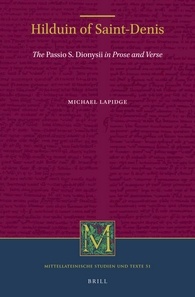
Publication – Hilduin of Saint-Denis, « The Passio S. Dionysii in Prose and Verse », éd. et tard. Michael Lapidge

Hilduin (c. 785-c. 860), abbot of Saint-Denis in Paris and archchaplain to Louis the Pious, was one of the leading scholars and administrators of the Carolingian empire. He was the first to translate the mystical Greek writings of the pseudo-Dionysius into Latin; he then identified this Dionysius with the first bishop of Paris of that name, and assigned his episcopacy and martyrdom to 96 A.D. Hilduin composed a life of St Dionysius in prose and verse: the prose work has not been edited since 1580, and the verse work – a major new Carolingian Latin poem – has never before been printed. Both texts are accompanied by facing-page English translation and detailed commentary; eleven appendices contain editions of the various texts on which Hilduin drew in compiling his fictitious account of St Dionysius.

4001569

Michael Lapidge, Ph.D. 1971, Litt.D. 1987, Hon.D.Litt. 2011. Emeritus Professor of Anglo-Saxon, University of Cambridge; author or editor of 50 books and 250 articles; Fellow of the British Academy; Corresponding Fellow of the Bayerische Akademie der Wissenschaften (Munich) and Accademia dei Lincei (Rome).

Informations pratiques :

Hilduin of Saint-Denis, The Passio S. Dionysii in Prose and Verse, éd. et tard. Michael Lapidge, Boston – Leyde, Brill, 2017 (Mittellateinische Studien und Texte, 51). ISBN : 9789004341654. Prix : 173 euros.

Source : Brill

Publié dans Publications | Laisser un commentaire

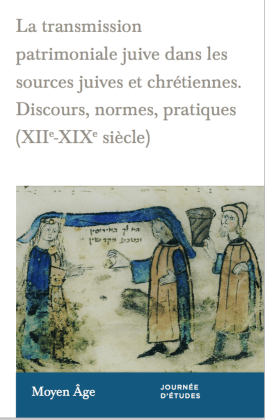
Journée d’étude – La transmission patrimoniale juive dans les sources juives et chrétiennes. Discours, normes, pratiques (XIIe-XIXe siècle)

This is the second workshop in a series that will culminate in a collected volume entitled A Jewish Model of Devolution? The Inheritance in the Medieval and Modern Jewish Societies. After a rst workshop at the University of Paris-Est – Créteil-Val-de-Marne on February 13, 2017, we continue our re ection on inheritance and de- volution in Western Jewish societies, now fo- cusing on the relationship between norms and practices.

While much attention has been paid over the past two decades to the history of the Jewish family, patrimonial devolution has never been systematically studied. Because of the comple- xity and multiplicity of its dimensions (legal, socio-economic, cultural, religious, anthropo- logical), inheritance can be considered a key to our understanding of the phenomena of social reproduction and of the functioning of Jewish societies. The multiplicity of Jewish origins and identities has probably had a signi cant impact on the practices of patrimonial devolu- tion, which we propose to study from different angles and in different contexts over the long term.

Transmission patrimoniale juive

Programme :

9H : Pierre Savy – EFR Accueil

Présidence de séance

Isabelle Poutrin – Université Paris-Est Créteil, Centre de recherche en histoire européenne comparée

Michaël Gasperoni – Centre national de recherche scienti que, Centre Roland- Mousnier – « A Jewish Model of Devolution ? » : the scienti c and editorial project
Javier Castano – Consejo Superior de Investigaciones Cientí cas, Centro de Ciencias Humanas y Sociales – Women, Families, and Patterns of Inheritance among 15th-Century Aragonese Jews: The Hebrew Documentary Evidence
Pause

Marina Girona Berenguer – Consejo Superior de Investigaciones Cientí cas, Instituto de lenguas y culturas del Mediterráneo y Oriente próximo-Centro de Ciencias Humanas y Sociales – Property on Hold: Doña Cinha’s Litigation on Marital Assets (Castile, 15th Century)
Miriam Davide – Università degli Studi di Trieste – The Jewish Transmission of the Assets in the Context of the Christian Legislation in Use in Northern Italy (14th-15th Centuries)

14 H 30
Présidence de séance
Cyril GranGe – Centre national de la recherche scienti que, Centre Roland-Mousnier

Pierre Savy – Jews, Clerics, and Princes on Jewish Devolution in Renaissance Northern Italy
Pinchas roth – Bar-Ilan University – Inheritance of Synagogue Seats in Medieval Europe
Pause
Kenneth Stow – University of Haifa – Why did Tranquillo Corcos have to Defend the Right of Roman Jews to Make a Will ?
Jessica MarGlin – University of South California – American Academy in Rome
Jewish Law in Modern Italian Courts: The Estate of Nissim Shamama, 1873-1883

Informations pratiques :

3 juillet 2017
Roma Piazza Navona 62

Organisation scientifiques :
Pierre Savy – EFR

Contacts :
École française de Rome Pierre Savy Directeur des études médiévales Grazia Perrino Secrétariat des études médiévales
Piazza Farnese, 67 – 000186 Roma – Italia T. +39 06 68 60 12 48 – secrma@efrome.it

Source : Academia.edu

Publié dans Colloque | Laisser un commentaire

Podcast – Quelle médecine pratiquait-on au Moyen Âge ?

De quelles maladies souffrait-on au Moyen Âge ? Quelle médecine pratiquait-on ? Quels étaient les remèdes utilisés ? Les recherches en histoire et en archéo anthropologie nous renseignent sur l’état de santé des populations d’alors.

Au XIIe siècle, la médecine fut la première à connaitre son renouveau. Son utilité sociale, l’essor des villes, comme une probable volonté des autorités ecclésiastiques de freiner le recours à des pratiques entretenant un certain paganisme, expliquent en grande partie la précocité du renouveau du savoir médical.

Des traductions en latin de textes arabes et grecs à partir de la fin du XIe siècle, permirent la refondation d’une théorie médicale, apte à guider rationnellement les actes de la pratique.

https://dailymotion.com/video/x5oev6c

S’imposa alors l’idée selon laquelle un médecin digne de ce nom, devait être lettré, connaitre l’anatomie, la physiologie du corps humain, et rechercher les causes des maladies pour être en mesure d’appliquer un traitement. Et si la médecine prétend être une science, c’est qu’elle recherche les causes des maladies.

Ce modèle du médecin autant théoricien que praticien avait existé dans l’antiquité grecque et romaine, et dans certaines parties du monde musulman, mais il s’était estompé dans l’Occident chrétien.

Même si nous savons aujourd’hui que les connaissances anatomiques étaient imparfaites, que la théorie médicale était peu apte à justifier des traitements efficaces pour les maladies les plus sévères, ce choix d’une médecine savante fondée rationnellement fut capital.

Une conférence enregistrée en mai 2017.

Danielle Jacquart, historienne médiéviste, directrice d’études à l’EPHE

Cyrille Leforestier, archéo-anthropologue, Inrap.

Source : France Culture

Publié dans Podcast | Laisser un commentaire

Appel à contribution – Jeux et compétitions dans les sociétés médiévales

14-17 février 2018
Institut Historique Allemand Paris

Clôture des candidatures : 15 septembre 2017

logo

Les jeux et les compétitions, de même que les contextes particuliers dans lesquels ils se déroulent, ont connu une attention particulière de la part des recherches récentes. Pour les sociétés « prémodernes », en revanche, une analyse opérée dans une perspective culturelle afin de définir le caractère universel et transversal du ludique et son importance globale et sociale, reste à conduire.

L’objectif de ce colloque est de porter un nouveau regard sur l’aspect fondamental de l’étude des loisirs pour la connaissance des sociétés médiévales, sur leur caractère à la fois ludique, agonistique et social. Jeux et compétitions révèlent, en leur sein, des jeux de pouvoir, des stratégies de communication de même qu’elles donnent à voir une réalité des contacts entre les trois états traditionnels de la société et entre les sexes. Ils constituent également un moment privilégié pour la mise en scène de l’ordre social et des pratiques culturelles qui le structurent. Ces moyens d’expression sont dépendants des conjonctures sociales, sociétales et culturelles, notamment au vu de l’importance des enjeux en soulevés. Nous partons du principe que jeux et compétitions jouaient un rôle primordial dans la transmission et la fixation de l’ordre social dans chaque strate et pour chaque sexe de la société médiévale.

Ce colloque international souhaite ouvrir le débat sur l’ensemble de la période médiévale (V-XVe siècles) sans restriction thématique ni géographique. Afin d’orienter les débats, nous mettons ici une liste possible de thèmes qui pourraient être abordés :

– Rapports jeux et sérieux
– Jeux éducatifs, pédagogiques et didactiques
– Jeux de pouvoir entre villes et cours
– Jeux dans les contextes religieux et spirituels
– Théâtre, loisir et divertissement
– Jeux et échanges culturels
– Jeux dangereux
– Jeux de stratégie, jeux de conversation et énigmes
– Règles, normes et pratique
– Intégration, exclusion et sociabilité
– Performance des jeux et compétitions
– Satire, comique et subversion
– Le genre dans la perspective des jeux et compétitions

Cet appel à communication est ouvert à des historiens / historiennes mais également des chercheurs / chercheuses issu(e)s d’autres disciplines associées à partir du doctorat ou bien engagé en début de post-doc et au-delà. Les langues de travail retenues sont l’allemand, le français, et, si nécessaire, l’anglais. Des connaissances de l’ensemble de ces trois langues sont les bienvenues et plus particulièrement de l’allemand et du français, même s’il ne s’agit pas d’une condition exclusive.

Les propositions de communication (250 mots max.) devront être accompagnées d’une lettre de motivation incluant des informations indiquant les compétences linguistiques des candidats et candidates, de même qu’un CV académique.

Une fois la candidature acceptée, l’intervention ne devra pas excéder une durée de 30 minutes. Il est, de plus, attendu des participants, deux mois avant la tenue du colloque, qu’ils fournissent aux organisateurs et organisatrices un résumé de leur communication (500 mots) en anglais. Ceux-ci seront publiés sur le blog du groupe de recherche de l’IHA (ludite.hypotheses.org).

Les frais de déplacement des participants pourront être remboursés sur demande des participants. L’hébergement, si nécessaire, sera réservé et pris en charge.

Les propositions de communication devront être retournées à l’un.e des organisat.eurs/.rices : Vanina Kopp (vkopp@dhi-paris.fr), Constanze Buyken (cbuyken@dhi-paris.fr) ou Guillaume Bureaux (gbureaux@dhi-paris.fr).

Merci de faire parvenir l’ensemble des documents le 15 septembre au plus tard en précisant, comme objet, « CFP Jeux et compétitions » en un seul document (format pdf).

Source : H-Soz-Kult

Publié dans Le réseau | Laisser un commentaire

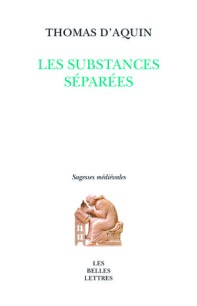
Publication – Thomas d’Aquin, « Les substances séparées », trad. et commentaire Nicolas Blanc

Le traité Sur les substances séparées, bien que resté inachevé, n’en est pas moins l’un des chefs d’œuvre de Thomas d’Aquin. Dans cet écrit de maturité composé à Paris ou à Naples dans la seconde moitié de 1271, l’auteur aborde les questions de l’origine, de la nature, du statut et du rôle des créatures spirituelles que la tradition biblique, distinguant les bons des mauvais, appelle anges et démons. Adoptant une perspective aussi bien philosophique que théologique, il se confronte tout d’abord aux diverses opinions antiques sur le sujet, depuis les présocratiques jusqu’aux philosophes de langue arabe, en passant par Platon, Aristote, les penseurs médio et néo platoniciens, avant de reprendre dans un deuxième temps les mêmes questionnements à la lumière de la doctrine chrétienne (Bible et Pères de l’Église). Les problèmes, abordés de façon à la fois historique et systématique, couvrent des thématiques d’une grande richesse et complexité, telles l’hylémorphisme universel d’Avicébron et la théorie émanatiste d’Avicenne, la connaissance divine des singuliers ou encore la présence du mal dans les anges. Devant la démultiplication des médiations philosophiquement posées entre Dieu et le monde sublunaire (moteurs célestes, Idées, hénades, âmes des sphères), Thomas d’Aquin cherche à établir le caractère immédiat et universel de la causalité divine créatrice, tout en soulignant la consistance des substances séparées dans leur ordre propre.

14884

Nicolas Blanc est docteur de l’École Pratique des Hautes Études (Paris) en Philosophie, Textes et Savoirs. Il a soutenu sa thèse sur le De natura hominis de Némésius d’Émèse. Ses recherches portent sur la philosophie antique, la théologie patristique et la métaphysique médiévale.

Informations pratiques :
Thomas d’Aquin, Les substances séparées, trad. et commentaire Nicolas Blanc, Paris, Les Belles Lettres, 2017 (Sagesses médiévales, 18). 150 pages, 13,5 x 21 cm. ISBN : 9782251446882. Prix : 23 euros.

Source : Les Belles Lettres

Publié dans Publications | Laisser un commentaire

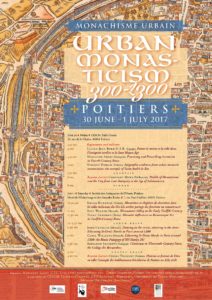
Colloque – Urban monasticism / Monachisme urbain : 300-1300

Date: 30th June-1st July 2017

Places: CESCM – Hôtel Berthelot – 24 rue de la Chaine – Poitiers

Société des Antiquaires de l’Ouest – Hôtel de l’Échevinage et des Grandes Écoles – 7, rue Paul Guillon – Poitiers

URBANMONASTIC_net-1-212x300

Organizers:

in cooperation with

CESCM, Poitiers (France), CEU Budapest (Hungary), Turku University (Finland), Monash University (Australia), FOVOG Dresden (Germany)

Christianity emerged as an urban phenomenon, yet monasticism is more often than not presented as an escape from the sinful town into the wilderness, and as more concerned with the soul than with the body. Ascetics, however, have always had a vested interest in the city, and not only symbolically. Monasticism has been an important urban presence since Late Antiquity up to the Late Middle Ages, even if they were sometimes in competition with newer religious orders. This interdisciplinary conference aims to explore the influence of monasticism in the city from Late Antiquity to the Late Middle Ages as well as in shaping attitudes to the body. What was the social status of the “monastic family” in the towns (including the vassals who held the monastic lands on loan)? How did monasteries integrate into the social fabric of cities? What role did they play in care for the sick? What was the relation between consecrated persons and laity? What economic role did monasteries play in towns? How did monastic art, schools and scriptoria contribute to the life of the city? To what extent did monasteries, abbots and abbesses get involved in urban politics? How did urban monasteries shape urban identity?

We plan to publish the proceedings in one volume but in two languages.

A major goal of the workshop is to develop an international research network relating to new perspectives on monasticism and religious life within an urban context, attending to themes like that of the body, devotion and religious life in the city.

Programme :

June 30 / CESCM, Salle Crozet

3 pm – registration

3:30 pm – Welcome speeches

4 pm – Lucien-Jean Bord O.S.B. (Ligugé) : Penser le moine et la ville dans l’Antiquité tardive et le haut Moyen Âge

4:30 pm – Marianne Sághy (Budapest) : Practicing and Prescribing Asceticism in Fourth-Century Rome

5 pm – Vincent Debiais (Poitiers) : Epigraphic Evidences from Urban Monastic Communities: the Example of Saint-André-le-Bas

5:30 pm: Cocktail

6 pm: Keynote lecture = Constant Mews (Melbourne) : Models of Monasticism and the City from Late Antiquity to the Age of Scholasticism

8 pm – dinner


July 1 / Société des Antiquaires de l’Ouest

10:30 am – Emilie Kurdziel (Poitiers) : Monastères et chapitres de chanoines dans les villes italiennes des IXe-XIe siècles : partage des fonctions ou concurrence ?

11 am – Kyly Walker (Monash) : Westminster Abbey in the Early Twelfth Century

11:30 am – Teemu Immonen (Turku) : Monastic Influences on Romanesque Art in Twelfth-Century Rome

12-2:30 pm – lunch break

2:30 pm –John Crossley (Monash) : Dancing in the Streets, Chanting in the Choir: Educating St-Denis Monks in Paris around 1300

3 pm – Carol Williams (Monash) : Educating St Denis Monks in Paris around 1300: the Music Pedagogy of MS Harley 281

3:30 pm – Riccardo Saccenti (Bologna) : Cistercians in Thirteenth-Century Paris: the Collège des Bernardins

4 pm – coffee break

4:30 pm – Keynote lecture = Cécile Treffort (Poitiers) : Hommes et femmes de Dieu en ville : l’exemple des établissements bénédictins de Poitiers au XIIe siècle

Source : CESCM

Publié dans Colloque | Laisser un commentaire