Colloque – Colloque – Les grandes abbayes et l’art roman

Semaine de conférences et de visites, à Saint-Michel de Cuxa (Codalet, Pyrénées-Orientales, France)

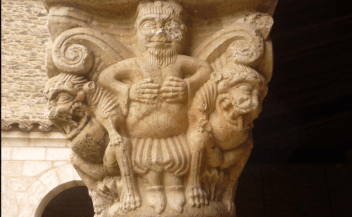
This theme for this year’s Romanesque conference at Cuxa (les journées romanes de Cuxa) is the art and architecture of the great abbeys. Papers are in French and are given in the former west range of the abbey of Saint-Michel de Cuxa, according to the programme below. Booking forms can be downloaded from www.cuxa.org – or via email on contact@cuxa.org

cuxa-2017

Programme :

Lundi 10 juillet, ouverture :

Michel Lauwers, Université Côte d’Azur, CEPAM (Nice) – Les complexes monastiques de l’Occident médiéval, laboratoires de représentations et de pratiques spatiales singulières

[2017, année Puig i Cadafalch]
Olivier Poisson, association culturelle de Cuxa
Josep Puig i Cadafalch (1867-1956) et Cuxa
visite de l’abbaye : Caroline de Barrau, Olivier Poisson, Emmanuel Garland

Mardi 11 juillet

Christian Sapin, directeur de recherche émérite au CNRS – De Saint-Riquier à Vézelay, l’apport de l’archéologie à la connaissance des monastères
Neil Stratford, membre de l’Institut – Cluny III: autels, choeur liturgique, sépultures
Eliane Vergnolle, professeur honoraire, Université de Franche-Comté – Le chœur de Saint-Benoît-sur-Loire : programme monumental, mise en scène des reliques et liturgie monastique
Christian Gensbeitel, maître de conférences, Université Bordeaux Montaigne – L’église du prieuré clunisien Saint-Eutrope de Saintes, entre culte des reliques et vie monastique.
Maddalena Vaccaro, Università degli studi di Salerno (Italie) – Sous les pieds de la communauté du Mont-Cassin (Montecassino) : espaces architecturaux et décors des pavements.

Mercredi 12 juillet

Excursion et visite : abbaye de Lagrasse (Aude), Andréas Hartmann-Virnich, Christian Markiewicz, Nelly Pousthomis,

Conférence sur place : Anna Orriols, Universitat Autònoma de Barcelona – Entre souvenir et prestige. Commémorations visuelles dans les abbayes catalanes (XI-XII siècles).

Jeudi 13 juillet

John McNeill, University of Oxford (Grande-Bretagne) – Trois grands monastères clunisiens en Angleterre: Lewes, Castle Acre et Wenlock
Pio Pistilli, Università di Roma “La Sapienza” (Italie) – Architecture bénédictine au Sud de l’Empire. L’adaptation de l’église abbatiale de Farfa à l’époque préromane.
Cécile Treffort, Université de Poitiers, CESCM – Fonder, construire, consacrer une abbaye en Poitou et Saintonge à l’époque romane
Andreas Hartmann-Virnich, Heike Hansen, Aix-Marseille Université (LA3M), Götz Echtenacher, architecte – A la recherche du chœur perdu : Saint-Gilles-du-Gard et Montmajour

17h communications de jeunes chercheurs :

Marie-Pierre Bonetti, doctorante, Aix Marseille Université (LA3M) – Entre innovation et tradition, deux siècles d’architecture romane à l’abbaye Saint-Victor de Marseille.
Anaël Vignet, doctorant, université de Poitiers – L’abbaye de Saint-Amant-de-Boixe
Julie Gonzalez, Université de Pau et des Pays de l’Adour (LITEM) – L’iconographie de l’Enfer et des gueules dévorantes au Moyen Âge. Histoire
d’une forme et de sa représentation.

18h Assemblée générale de l’Association culturelle de Cuxa

Vendredi 14 juillet

matin : excursion/visite : Saint-Martin du Canigou, Olivier Poisson

après-midi :

Marc Sureda Jubany, musée épiscopal de Vic (Catalogne) – La liturgie dans l’abbaye romane : Santa Maria de Ripoll
Scott Brown, University of North Florida (États-Unis) – Amat d’Oloron à l’abbaye de La Sauve-Majeure: l’esprit constructeur et son guide dans l’architecture religieuse en Aquitaine à la fin du XIe siècle

Conclusions

Samedi 15 juillet

excursion, visites :
Les abbayes du Vallespir : Arles-sur-Tech, Saint-André, Saint-Genis-des-Fontaines, Caroline de Barrau, Emmanuel Garland, Olivier Poisson.

Source : Medieval Art Research

Publié dans Colloque | Laisser un commentaire

École d’été – Le livre médiéval au regard des méthodes quantitatives

École d’été Paris
12-16 juin 2017

Accueil limité à 22 inscrits
Formulaire d’inscription à remplir en ligne
https://goo.gl/forms/dCd38JZ13g4E6xlq1
Clôture des inscriptions : 13 avril 2017
–
Sélection des dossiers : 20 avril 2017
Des remboursements de frais de transport et de logement pourront être réalisés, à hauteur d’un plafond qui
sera déterminé en fonction d
u nombre et de l’origine géographique des inscrits

Ecole d’été organisée par le Laboratoire de Médiévistique occidentale de Paris, l’Institut de Recherche et d’Histoire des Textes, l’École nationale des Chartes et l’Université de Namur ; avec le soutien du LabEx Histoire et anthropologie des savoirs, des techniques et des croyances et du Conseil scientifique de l’Université Paris 1 Panthéon-Sorbonne.

Direction : François Foronda, Maria Gurrado, Christine Bénévent et Xavier Hermand

Coordination scientifique et pédagogique : Émilie Cottereau-Gabillet, Octave Julien et Laura Albiero

livre-medieval-meth-quantit

Programme :

Lundi 12 juin
Institut de Recherche et d’Histoire des Textes
13h45 – Ouverture par François Bougard, directeur de l’IRHT

14h – Histoire culturelle et approche quantitative par Jean-Philippe Genêt 14h45 – Mesure et imagination, les indispensables du quantitatif par Ezio Ornato 15h30 – Formalisation, statistique, sémantique par Alain Guerreau

16h30 – Principes de statistiques par Gaëtan Bonnot

Mardi 13 juin
Institut de Recherche et d’Histoire des Textes
9h – Présentation des travaux des participants, discussion animée par François Foronda et Xavier Hermand : Ateliers d’application

Mardi 13 juin
Bibliothèque de l’Arsenal

14h00 – Présentation de quelques manuscrits et incunables conservés à la Bibliothèque de l’Arsenal
15h30 – Analyse paléographique et méthodes quantitatives, atelier animé par Maria Gurrado et Denis Muzerelle

Mercredi 14 juin
École nationale des Chartes
9h – Ouverture par Michelle Bubenicek, directrice de l’EnC
9h15 – Observer les livres pour quantifier : les manuscrits, atelier animé par Émilie Cottereau-Gabillet

14h – Observer les livres pour quantifier : les incunables, atelier animé par Ezio Ornato et Christine Bénévent

Jeudi 15 juin – Laboratoire de Médiévistique occidentale de Paris, Campus de la Sorbonne
9h – Ouverture par Philippe Bernardi, directeur du Lamop
9h15 – Le livre en données, atelier animé par Laura Albiero et Ezio Ornato

14h – La construction d’une démarche statistique : l’exemple de la disposition du texte, atelier animé par Octave Julien

Vendredi 16 juin
Laboratoire de Médiévistique occidentale de Paris, Campus CNRS de Villejuif
9h – Livres, textes, statistiques, atelier animé par Alain Guerreau
11h – Production, diffusion et possession du livre médiéval, atelier animé par Catherine Kikuchi
14h – Bilan du cours et remise des certificats de participation

Source : LAMOP

Publié dans École d'été | Laisser un commentaire

Appel à contribution – Saint(-)Hubert d’Ardenne, quoi de neuf ?

Colloque anniversaire 1967-2017
Ancienne abbaye de Saint-Hubert
24 novembre 2017

En 2017, la société régionale d’histoire et d’archéologie Saint-Hubert d’Ardenne, fondée sous le nom de Terre et Abbaye de Saint-Hubert, fête ses 50 ans d’existence.

Depuis cinq décennies, la société développe les objectifs que lui ont donnés les membres fondateurs : l’étude, la mise en va- leur la protection, la défense et la conservation du patrimoine his- torique, archéologique, folklorique, artistique, dialectal et naturel du pays de Saint-Hubert, avec son abbaye, ses possessions et tout ce qui s’y rapporte en Ardenne et ailleurs et au culte du saint (…).

Pendant le demi-siècle passé, Saint-Hubert d’Ardenne a mis à pro t tous les moyens de communication disponibles pour assurer la diffusion des connaissances acquises : publications, conférences, expositions, visites guidées, site Internet et présence sur les réseaux sociaux. En cette année anniversaire, elle organise un colloque au cours duquel les chercheurs, professionnels ou non, sont invités à faire état de leurs recherches, sur et autour des sujets portés par la société d’histoire Saint-Hubert d’Ardenne, face à un public d’amateurs d’histoire locale et régionale, d’histoire religieuse, d’histoire des mentalités, etc.

St-Hubert.png

Le colloque et les échanges seront pérennisés par la publication des actes dans un volume édité par la société d’histoire.

Thèmes
Le colloque fera l’état de la recherche historique actuelle sur les trois thèmes structurant le volume VIII de Saint-Hubert d’Ardenne, Cahiers d’Histoire paru en 1991 :
– la ville de Saint-Hubert et sa région: histoire des lieux et des personnes ;
– l’abbaye de Saint-Hubert : le site, les religieux et l’institution des origines à 1797 ;
– saint Hubert : histoire, culte et dévotions, ici et ailleurs.

Propositions
Nous vous invitons à soumettre votre proposition (titre et résumé de 300 mots) avant le vendredi 30 juin 2017 à l’adresse colloque@sha.be. Les interventions, sélectionnées par un comité scientifique constitué par le conseil d’administration de l’asbl, seront limitées à 20 minutes. Elles bénécieront en- suite d’une publication dans les actes du colloque. À cette n, les textes des intervenants devront parvenir au secrétariat de Saint-Hubert d’Ardenne dans le mois suivant l’événement.

Questions

Toutes les questions relatives au colloque sont à adresser au secrétaire de Saint-Hubert d’Ardenne, Thierry Scholtes, à l’adresse colloque@sha.be.

Informations pratiques

Le colloque aura lieu le vendredi 24 novembre 2017 dans les murs de l’ancienne abbaye de Saint-Hubert, place de l’Abbaye 12, 6870 Saint-Hubert.

Publié dans Appel à contributions | Laisser un commentaire

Exposition – Scribes and Royal Authority: Scotland’s Charters 1100-1250

Scribes and Royal Authority: Scotland’s Charters 1100-1250. An exhibition at the National Records of Scotland.

Launch by Leslie Evans (Scottish Government Permanent Secretary).

Tuesday 4th April 2017, 6pm – 8pm

Adam Dome, HM General Register House, 2 Princes Street, Edinburgh

banner-1437x349

This event will be an opportunity to see some of the earliest medieval Scottish charters.

Wine & nibbles will be served.

Event sponsored by the AHRC-funded project Models of Authority: Scottish Charters and the Emergence of Government 1100-1250

Registration: here

Source : Models of Authority

Publié dans Exposition | Laisser un commentaire

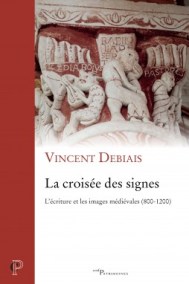
Publication – Vincent Debiais, « La croisée des signes. L’écriture et les images médiévales (800-1200) »

L’écriture est omniprésente dans les images médiévales. Ce constat – celui d’une évidence – a alimenté un pan entier de la médiévistique au cours des trente dernières années, celui de l’étude des relations entre le texte et l’image. Le présent ouvrage envisage à nouveaux frais ces questions en les abordant au prisme de la coprésence des signes alphabétiques et iconiques au sein d’une même image, qu’elle soit peinte sur l’enduit ou sur le verre, sculptée dans la pierre ou le métal, composée en mosaïque ou en textile. En analysant les dispositifs de l’inscription, sa forme, sa localisation et son contenu, cette étude propose de dépasser le constat de l’omniprésence de l’écriture dans l’image pour interroger les conditions et les effets de cette rencontre. Les considérations théologiques et les réflexions patristiques éclairent les intentions et les conditions de la présence conjointe du texte et de l’image au sein d’une même construction visuelle. Sur cette toile de fond intellectuelle se met en place une mécanique du sens entre imago et littera, qui dépasse les fonctions strictes d’identification, de commentaire ou de glose. L’émergence d’une signification augmentée de l’image, voire d’une image nouvelle, se produit dans la friction du texte et de l’image, et l’écriture devient partie intégrante du processus de création du visuel. À partir d’exemples produits entre 800 et 1200, cette étude met en perspective les pratiques artistiques et épigraphiques avec la théologie de l’image. Elle étudie ces objets qui traduisent dans le matériau la réflexion médiévale sur les capacités respectives de l’écriture et de l’image à mettre en signe l’étendue de la Création et l’histoire du monde.

9782204115391-5878b263da119

Informations pratiques :
Vincent Debiais, La croisée des signes. L’écriture et les images médiévales (800-1200), Paris, Cerf, 2017. 376 pages, 229 x 152 mm. ISBN : 9782204115391. Prix : 34,40 euros.

Source : Éditions du Cerf

Publié dans Publications | Laisser un commentaire

Appel à contribution – Dominicans and Civil Authority

During its whole history, from the Medieval Ages to the contemporary times, the Order of Preachers has engaged the civil authority, both on the local and international level. There have been times of both close cooperation as well as harsh conflicts between them. Considering such complex affairs, the editorial board has chosen to give volume 3 (2018) of the Archivum Fratrum Praedicatorum, Nova Series, monographic character on the topic; Dominicans and Civil Authority. We will be pleased to evaluate original contributions dealing with the proposed subject considering different perspectives and situations. Theoretical reflections of the members of the Order shall be compared with the real facts in local contexts, on the level of individual provinces or priories as well as on the national and international level. The objective is to put together a volume which would offer the best possible overview of an aspect of the history of the Dominican Order which has been little investigated until now. Interested scholars are invited to submit by end of April 2017 an abstract of an article they intend to write (200-250 words). The selected topics ideal for publication shall be submitted by end of 2017 through email address istitutostorico@pust.it; they shall not exceed 45.000 characters (excluding footnotes). The articles will be submitted for peer review.

Archivum Fratrum Praedicatorum / Istituto Storico Domenicano
istitutostorico@pust.it

Source : Ordensgeschichte

Publié dans Appel à contributions | Laisser un commentaire

Base de données – ArmmA. Armorial Monumental du Moyen Âge

Accès : ici

logo-armma

Dès le XIIIe siècle, les armoiries devinrent un élément omniprésent dans l’horizon visuel de l’homme médiéval. Elles apparaissaient sur tous types de supports et de bâtiments et étaient chargées de fonctions sémiotiques multiples, qui dépassaient largement la seule fonction d’identification des personnes. Bien que l’action du temps et des hommes aient considérablement réduit ce patrimoine d’images, dans toute la France, les monuments et les sources écrites offrent de nombreux témoignages de cette profusion héraldique. Toutefois, même pour les zones ou l’importance de cette présence a été reconnue par les spécialistes, manquent encore des études systématiques qui permettraient de saisir la réalité du phénomène sur une échelle territoriale et chronologique ample. D’ailleurs, dans les dernières années, des études de plus en plus nombreuses ont démontré l’intérêt scientifique d’une typologie d’images qui souvent délivre des informations essentielles pour la connaissance du monument, de ses fonctions, de la nature et de la culture de ses commanditaires. Clef de voûte ornée d’un ange tenant un écu aux armes de Pierre de Combarel. Beaumont, église Notre-Dame. Initié en 2014 par le Centre d’Etudes Supérieures de Civilisation Médiévale de Poitiers, le programme de recherche ARMMA (ARmorial Monumental du Moyen Âge) vise précisément à établir, sur le long terme, un recensement complet et une étude scientifique de toutes les figurations héraldiques monumentales médiévales (fin XIIe-début XVIe siècle), dans les limites de la France actuelle. L’enquête, qui débute avec un volet consacré au patrimoine héraldique du Poitou (et notamment de la Vienne), prend également en compte les figurations disparues mais documentées et les pièces isolées conservées hors de leur contexte d’origine (collections des musées notamment). Chaque décor armorié est documenté sur place et analysé en rapport avec son contexte monumental, fonctionnel, artistique, sémantique, patrimonial. D’ailleurs, l’objectif du programme n’est pas seulement d’avancer dans la connaissance scientifique des pratiques héraldiques au Moyen Âge, mais de contribuer à la valorisation et à la conservation d’un patrimoine iconographique longtemps déprécié ou ignoré et, par conséquent, plus souvent exposé aux risques de destructions ou de restaurations pas attentives à la reconstruction philologique de l’image.

Auteurs : Laurent Hablot et Matteo Ferrari
Collaborateurs : Patrick Bouvart et Camilla Ceccoti

Source : ArmmA

Publié dans Banque de données, Web | Laisser un commentaire

Colloque – Communal Life of Women Religious: Authority, Legitimacy, Recognition

Ort : Basel
Veranstaltungsort : Departement Geschichte, Hirschgässlein 21, Seminarraum 1
Veranstalter / Société d’Études Interdisciplinaires sur les Femmes au Moyen Âge et à la Renaissance (SEIFMAR)
Datum : 26.05.2017 – 27.05.2017

Klöster und Stifte verfügten im vormodernen Europa häufig über weitreichende Macht – nicht nur religiöser sondern auch politischer und wirtschaftlicher Art. Dies galt auch für Äbtissinnen – die als Feudalherrinnen Priester beriefen, Recht sprachen, Steuern erhoben und im Heiligen Römischen Reich mitunter Stimmrecht im Reichstag hatten.

Die internationale Tagung geht Fragen nach dem politischen und gesellschaftlichen Einfluss mächitger weiblicher Klöster und Stifte nach. Im Zentrum der Betrachtung stehen dabei die Formen der Macht und der Einflüsse sowohl innerhalb und außerhalb der Klostermauern.

communal-life-basel

Programme :

May 26th 2017

11.15 a.m. -11.30 a.m. Introduction – Dr. Annalena Müller (Basel)

Session 1 Authority Beyond the Cloister
11.30 a.m. -1.00 p.m.
Chair: Prof. Dr. Claudia Opitz-Belakhal (Basel)

Dr. Teresa Schröder-Stapper (Essen) – “Das weynende Stift » – The Relationship
Between the Free Secular Endowments Essen, Herford and Quedlinburg and the
Holy Roman Empire in 17th and 18th Century
Jasmin Hoven-Hacker, MA (Greifswald) – The Duke, his Daughter, and the Reform.
Family Relationships of Principes and their Daughters in Religious Communities in Times of Change in the Late Middle Ages
Dr. Annalena Müller (Basel) – Abbatial Authority and Enclosure? – The Expansion of Bourbon Authority through Fontevraud’s Reform
Lunch Break

Session 2 The Cloister and the World: Lay Patrons of Female Monasticism
2.30 p.m.- 4.00 p.m.
Chair: Maria Tranter, MA (Basel)

Laura Cayrol-Bernardo, MA (EHESS) – Queens and Señoras: Fontevraud in Medieval Iberia
Professor em. Kathleen Wilson-Chevalier (American University of Paris) – French Courtly Ladies Figuring the Lives of Religious Women Inside and Outside the Convent Around the Turn of the 16th Century
Iria Blanco, MA (Santiago de Compostela) – Double Monasticism in the Northwest of the Iberian Peninsula: Patronesses and Abbesses. An Approach to Women’s Roles
Coffee Break

5 p.m. Keynote: Professor Dr. Sigrid Hirbodian (Tübingen) – The Worldly Dominion of Spiritual Women

ca. 6.30 Conference Dinner

May 27th 2017

Session 3 Performing Authority –Performed Authority: Liturgy, Ceremonies and Art
10.30 a.m. -12.00 p.m.
Chair: Dr. Maike Christadler (Basel)

Dr. Stella Ferrari (Milan) – “Kirchensysteme” in North Italian Female
Monasteries? Rethinking Liturgical Connections in the Cities Between the 9th and the 13th Century.
Professor Dr. Eduardo Carrero (Barcelona) – Two Cistercian Nunneries at the Doors of Two Cities. Valldonzella in Barcelona and La Saïdia in Valencia, Monasteries and Royal Hostelries
Dr. Mercedes Pérez-Vidal (Padua) – Relics and Power. Cult of Relics, Memory, and Liturgical Performance among Dominican Nuns
Lunch Break

Session 4 The Cloister vs. World: Disputes of Authority

1.30 p.m.- 3.00 p.m.
Chair: Dr. Annalena Müller

Dr. Michel Melot (Paris): Fontevraud’s Order: Class Struggle and Gender Struggle

Professor Dr. Jennifer C. Edwards (Manhattan College) – Patterns of Disputed Authority: Election Disputes in 13th and 15th-Century Poitiers
Professor Dr. Marguerite Ragnow (University of Minnesota) – The Pesky Abbesses of Sainte-Marie: Defining and Defending Female Abbatial Authority in 11th-Century France

3.30- ca. 4.15 p.m. Final Discussion and Closing Remarks – Dr. Mercedes Pérez-Vidal (Padua) and Laura Cayrol-Bernard (EHESS)

Publié dans Colloque | Laisser un commentaire

Cycle de conférences – Trésors du patrimoine écrit à la loupe

Institut national du Patrimoine – Informations pratiques
Auditorium Colbert
2, rue Vivienne ou 6, rue des Petits Champs – 75002 Paris
De 18h15 à 19h30. Entrée libre.

Logo_INP_v2

Programme :

7 février 2017, 17h15 | Table ronde LAHIC / Inp
L’invention, au quotidien, de la Culture
Sylvie Sagnes, chargée de recherches au CNRS, IIAC (Institut interdisciplinaire d’anthropologie
du contemporain) UMR 8177 – Équipe LAHIC ; Thierry Wendling, chargé de recherche et Claire le Thomas, chargée de recherche

21 février 2017, 18h15 | cycle « Trésors du patrimoine écrit à la loupe »
Édition numérique de testaments de guerre de Poilus : premiers résultats et perspectives
Florence Clavaud, conservateur en chef à la direction des Fonds des Archives nationales, Marie-Françoise Limon-Bonnet, conservateur général responsable du département du Minutier central des notaires de Paris aux Archives nationales, et Christine Nougaret, professeur à l’École nationale des chartes

28 février 2017, 18h15 | cycle « Trésors du patrimoine écrit à la loupe »
Le Dit du Genji en peintures et en gravures dans le Japon du XVIIe siècle (Smith-Lesouef japonais 52)
Véronique Béranger, département des Manuscrits de la Bibliothèque nationale de France, et Estelle Leggeri-Bauer, maître de conférences au département de japonais de l’INALCO

14 mars 2017, 18h15 | cycle « Trésors du patrimoine écrit à la loupe »
Aux origines des Galeries historiques de Versailles
Éric Landgraf, doctorant à Paris-Saclay et chargé d’expositions aux Archives nationales, Valérie Bajou, conservateur en chef au musée et domaine national des châteaux de Versailles et de Trianon, et Mathieu Deldicque, conservateur au musée Condé

18 avril 2017, 18h15 | cycle « Trésors du patrimoine écrit à la loupe »
1945-1947 : des sciences de l’homme pour faire la paix
Yann Potin, chargé d’études documentaires au département de l’Éducation, de la Culture et des Affaires sociales aux Archives nationales, et Thomas Hirsch, post-doctorant dans le cadre du labex Hastec/Archives nationales, et avec la participation de Philippe Joutard, président de l’association Lucien Febvre et directeur d’études à l’Ecole des hautes études en sciences sociales / Aix Marseille Université, et de Brigitte Mazon, EHESS (sous réserve)

16 mai 2017, 18h15 | cycle « Trésors du patrimoine écrit à la loupe »
Les Turgot au travail : sciences et administration au temps des Lumières
Alexis Douchin, chargé d’études documentaires au département des Archives privées des Archives nationales, et Loïc Charles, professeur à l’université Paris VIII, membre du Led/EA 3391 et chercheur associé à l’Institut national d’études démographiques

30 mai 2017, 18h15 | cycle « Trésors du patrimoine écrit à la loupe »
Christine de Pizan et la guerre : le Livre des faits d’armes et de chevalerie (Manuscrits Français 603 et 585)
Delphine Mercuzot, conservateur au département des Manuscrits de la Bibliothèque nationale de France, et Michelle Szkilnik, Professeur de littérature du Moyen Âge, Université de Paris 3- Sorbonne Nouvelle

6 juin 2017, 18h15 | cycle « Trésors du patrimoine écrit à la loupe »
Le registre de Nesle 
Emmanuelle Giry, conservateur au département de l’Éducation, de la Culture et des Affaires sociales aux Archives nationales, et Jean-Pierre Samoyault, conservateur général du patrimoine honoraire

20 juin 2017, 18h15 | cycle « Trésors du patrimoine écrit à la loupe »
Un manuscrit à la charnière des mondes mérovingien et carolingien : le sacramentaire de Gellone (Paris, BnF, ms. latin 12048)
Charlotte Denoël, conservateur au département des Manuscrits de la Bibliothèque nationale de France, et Isabelle Marchesin, conseillère scientifique à l’Institut national d’histoire de l’art

Source : Institut national du Patrimoine

Publié dans Colloque | Laisser un commentaire

Offre d’emploi – England and France 700–1200: Franco-Saxon Manuscripts in the Ninth Century (University of Leicester)

The British Library and The University of Leicester
AHRC Collaborative Doctoral Studentship

The British Library and the University of Leicester are pleased to invite applications for a three- year AHRC Collaborative Doctoral Partnership PhD Studentship, available from 1 October 2017 and tenable at The British Library in London. This doctoral award is funded through the Arts and Humanities Research Council (AHRC) under its Collaborative Doctoral Programme. The thesis will be jointly supervised by Professor Joanna Story at Leicester and by Dr Kathleen Doyle, Lead Curator of Illuminated Manuscripts, at the British Library.

The successful candidate will undertake a thesis on Franco-Saxon Manuscripts in the Ninth Century that centres on analysis of manuscripts that were produced in North-Eastern Francia in the later ninth century. There is ample scope for the successful student to develop this project in ways that complement and extend the student’s existing skills-set and interests.

Leicster

Historical context

In the later ninth century monasteries in the Pas de Calais, at Saint-Amand, Saint-Bertin (Saint- Omer), Corbie, and Saint-Riquier produced distinctive manuscripts which are characterised by the use of a highly distinctive style of ‘Franco-Saxon’ illumination. These monasteries were places of great power, wealth, and patronage in the ninth century, and were ruled by abbots who had close links to the Carolingian court. Proximity to the Channel coast, and to the trading emporium of Quentovic (Étaples) – which lay not more than a day’s ride from both Saint-Riquier and Saint- Bertin – meant that there were also longstanding political, cultural, economic, and religious connections with Anglo-Saxon England. These links to places and people of power are made manifest in the deluxe manuscripts that were produced in these monasteries in the later ninth century, which combined the measured aesthetic of Carolingian epigraphic display scripts with an idiomatic use of Insular decoration.

The development of a distinctive ‘Franco-Saxon’ school of illumination in these monasteries in the second half of the ninth century balanced the aesthetics of the art of epigraphic lettering with the interlace and animal ornamentation of Insular art, familiar from manuscripts made in Anglo-Saxon England or Ireland a century or more before. The unifying aesthetic in the Franco-Saxon books is the generous use of space and symmetry in contradistinction to the horror vacui of earlier Insular art, and the classicising style of Charlemagne’s Court School. The Franco-Saxon style used the white space of the parchment as a key element of the mise-en-page in a way not seen in earlier Insular or Carolingian book production. The clean lines of the epigraphic display capitals juxtapose the complexity of the illuminated initials. But this contrast is neutralised by the white space, which renders the two parent styles a coherent whole. Tthis unity is enhanced by the exaggerated symmetry of the Insular-style ornament. The generous use of space around and within the text block, as well as the application of gold to the lettering, underlines the wealth and resources of the patrons of these books, some of which were destined for Carolingian kings.

The Project

This PhD project will centre on ninth-century manuscripts held in the British Library, complementing analysis of codices held in other locations, especially the BnF. The successful student will shape the approach and content of the project, and it may evolve an art historical or cultural history focus depending on the student’s expertise and interests. It is also a topic that could support a student with expertise in material culture and archaeological science, and in that case the conservation resources (personnel and equipment) of the British Library would provide essential support, and unique access. What is special is the opportunity for codicological research, examining books at first hand to study methods of making, choices of parchment production and use, and the colour palette as well as details of script and page layout.

Applicants are encouraged to consider ways in which they would like to develop the project. Avenues for research include: the history of the ‘Channel monasteries’ through the ninth century, and the personnel networks and the networks of texts, scribes and artisans revealed by the extant manuscripts; the art of script and lettering in the ninth century; connections with earlier Court School books from Charlemagne’s time; the influence of the Franco-Saxon style on book production in monasteries on the Loire or in Frankish monasteries in Germany; the influence on script, decoration, and methods of making manuscripts that were produced in southern England in the tenth century; and the use of Insular script and Insular ornament in Frankish monasteries.

This AHRC collaborative studentship arises from a new international digitisation initiative, funded by the Polonsky Foundation, to digitise 800 illuminated manuscripts relating to ‘England and France, 700–1200’ that are held at the British Library and the Bibliothèque nationale de France (BnF) in Paris. That digitisation project creates unique opportunities for the successful candidate to this studentship competition, via training and outreach opportunities (e.g.: writing catalogue entries, manuscript descriptions, blog-posts), and by examining aspects of the art history, codicology, palaeography, and historical context of production and patronage of relevant manuscripts held at the BL, and potentially also in Paris. In addition, this studentship also overlaps with the period of preparation and launch of the major exhibition at the British Library on Anglo- Saxon England in the autumn and winter of 2018/19. The successful applicant can expect to work with the Library’s Medieval Manuscripts team preparing this exhibition.

The project will develop the research skills and knowledge base of the successful student, and a highly trained manuscript scholar will emerge with expertise in the traditional ‘sciences’ of palaeography and codicology, as well as digital technologies. Immersion in the working environment of the British Library will provide privileged ‘in house’ training in a world-leading library and major manuscript repository. As a result, the student can make a contribution to the knowledge base of the discipline, and be set up to make a significant contribution to the academic and curatorial profession.
The student will join the vibrant academic community at Leicester where there are many academic staff, post-doctoral researchers, and postgraduate students who work on the history and culture of the Middle Ages. History at Leicester, was ranked =12th for research outputs in the Times Higher REF2014 tables, and with the highest percentage of 3*/4* research (87.5%) among UK History departments in that evaluation; the School is home to a lively postgraduate community of around 80 doctoral candidates in history, many of whom are based in the Marc Fitch Historical Institute.

The School runs several other current collaborative doctoral projects with organisations including the British Library, The National Archives, English Heritage, the Science Museum, the Marylebone Cricket Club, and the National Maritime Museum. There are a range of postgraduate seminars and events (including the New History Lab and the annual postgraduate conference), and the University is home the Leicester Medieval Research Centre that brings together the expertise of medievalists across the University. The student will also be expected to present his or her findings in seminars and conferences beyond Leicester and, as the work progresses, to publish papers in academic books and journals. The student will automatically become part of the UK-wide CDP development scheme (http://www.ahrc-cdp.org/category/activities-for-students/), which will provide training in a range of skills needed for research within museums, archives, galleries and heritage organisations.
For further information on the AHRC Collaborative Doctoral Partnership scheme at the British Library, please visit: http://www.bl.uk/help/ahrc-collaborative-doctoral-partnerships

Person specification

We are seeking to recruit a highly promising student who will relish the opportunity of combining academic research with the experience of working as part of a professional team of curators and researchers. This studentship is likely to appeal to individuals with a background in early medieval history, book history, literature and language, Classics, or applying interdisciplinary methods for understanding early medieval material culture. Prior experience of research using early medieval manuscripts will be an advantage, and the successful applicant will be able to demonstrate skills commensurate with career stage in relevant medieval and modern languages and palaeography. A commitment to communicating the results of research to a wider public audience is a key asset in the context of the British Library’s digitisation and exhibition programmes.

Eligibility

Residency Criteria – applicants are required to meet the RCUK residence criteria as follows:
• British nationals who have lived in the UK and Islands all their lives are eligible.
• Also eligible are non-British nationals who have settled status AND have been resident in the UK for 3 years immediately prior to the date of the start of the course.
• EU nationals who have been ordinarily resident in the UK and Islands for three years immediately prior to the date of start of the course are eligible.
• EEA and Swiss nationals (EEA migrant workers) should refer to the full RCUK guidelines to check eligibility and may be eligible for a fees only award.

If you are unsure about your eligibility please email pgradmissions@le.ac.uk and we will be happy to make an assessment for you.

Academic Criteria – Applicants are required to hold a Bachelor Degree at 2:1 or better in a relevant subject and hold or are expected to hold a Master’s degree in a relevant subject (e.g.: history, medieval history, medieval studies, art history, classics, material culture/archaeological science) by September 2017.

Funding information

The studentship is available for full-time study (or part-time equivalent), and applicants must be able to commence their studies on 25 September 2017.
The standard tuition fees and stipend (maintenance grant) will be paid by the ARHC to the award holder subject to the eligibility criteria outlined above. The AHRC stipend for 2017/18 is £14,553 for 2017/18 (plus an additional stipend payment of £550 for Collaborative Doctoral Students (TBC)).

In addition the British Library will provide:
Up to £1,000 per annum for research-related costs and staff-level access to the British Library’s collections, expertise and facilities, plus dedicated desk space alongside the medieval manuscripts curatorial team. The student also will benefit from the dedicated programme of professional development events delivered by the British Library in tandem with the other museums, galleries and heritage organisations affiliated with the CDP scheme. Additional student development funding (equivalent to an additional 6 months of funding per studentship) is available to allow time for the student to take up further training and skills development opportunities that are agreed as part of the PhD programme.

How to Apply

To apply you need to complete the standard University of Leicester online application form here: http://www2.le.ac.uk/study/research/phd/history. In the Funding section of the online application form select STUDENTSHIP and select AHRC from the dropdown options. Please make sure you include the project title and supervisors’ names in the proposal section of the form. In place of the research proposal requested on this form, you should provide a statement of up to 1,000 words on:
1. How you would like to develop the project theme, how your education and experience to date has prepared you for this research position, and how you will develop the opportunities offered by working with the British Library medieval manuscripts team.
2. Your experience of working with primary source material, including medieval manuscripts.
Applicants should also submit:
A piece of scholarly writing which you think best reflects your academic abilities and aspirations (e.g.: an essay or dissertation)

Informal Enquiries
Informal enquiries can be sent to Professor Joanna Story: js73@le.ac.uk Closing Date: Monday 10 April 2017, 12:00 (midday, London time)
Interview Date: 5 May 2017, at The British Library, London

Source : University of Leicester

Publié dans Offre d'emploi | Laisser un commentaire