Offre d’emploi – Lecturer Medieval History : University of Groningen

Location : Groningen, The Netherlands
Function types : Professors, associate professors, assistant professors and lecturers
Scientific fields  : Language and Culture
Hours : 30.0 hours per week
Salary maximum : € 5288
Education : University Graduate
Job number : 216020E
About employer : University of Groningen
Short link : http://www.academictransfer.com/32055

abafb97964bdc4a808b6a8da4e5a3dc1

Job description

To strengthen and complement its team, the Chair Group of Medieval History is looking for an active lecturer (for 0.8 fte) specializing in socioeconomic history. The position will combine teaching (60% of duties) and research (40%). The position will initially be a temporary appointment for two years, with the prospect of an appointment for an indefinite period. We are looking for an enthusiastic, versatile colleague who is able to strengthen our varied teaching curriculum in Medieval History with innovative and pioneering research in the field of the socioeconomic history of the Middle Ages. The teaching will cover the Medieval history of the Netherlands and Europe in a global context. Although the main focus will be on socioeconomic history, the new lecturer will also be expected to fulfil more general duties within the History degree programme. Knowledge of or experience with the application of digital humanities in teaching and the candidate’s own research will be an advantage.

In organizational terms, the Lecturer will be part of the Chair Group of Medieval History. The research will form part of the Groningen Research Institute for the Study of Culture (ICOG), and within ICOG the Centre for Historical Studies (www.rug.nl/research/icog/research/research-centres/research-centre-for-historical-studies?lang=en).

Duties associated with the position:

  • Teaching and supervising theses in the field of Medieval History (BA and MA) and related degree programmes, including the Research Master’s in Classical Medieval and Renaissance Studies, various degree programme-related and Faculty Minors and the University Honours Programme.
  • Conducting research and publishing in national and international journals, as well as initiating (independently or jointly) and implementing national and international research projects.
  • Playing an active and stimulating role in the organization of teaching and research, including administrative duties related to the teaching.
    Requirements

In addition to a number of basic requirements set by the University of Groningen, such as excellent social, communication, presentation and coaching skills as well as a results-oriented attitude, we are looking for a candidate with a PhD in the field of Medieval History, who has an adequate command of Dutch or who is willing to learn Dutch within two years, and who also:

In the area of teaching:

  • has experience with teaching in the field of the socioeconomic history of the Middle Ages at university level
  • has obtained the University Teaching Qualification (UTQ) or is prepared to do so within a year
  • is an excellent teacher, as demonstrated by positive teaching evaluations
  • is demonstrably able to make concrete contributions to the development of course units, partly by actively linking teaching to research.

In the area of research:

  • has set out an individual research line in publications that dovetails with the research programme of the Centre for Historical Studies (www.rug.nl/research/icog/research/research-centres/research-centre-for-historical-studies/?lang=en
  • has international experience and an international network.

In the area of management and organization:

  • is able to make a constructive contribution to interdisciplinary collaboration and a friendly atmosphere within the department
  • has demonstrable administrative and organization skills.

Conditions of employment

The University of Groningen is offering a salary, depending on qualifications and experience, of between € 3,400 (scale 11) and € 5,288 (scale 12 of the Collective Labour Agreement (CAO) for Dutch Universities) gross per month for a full time position. The appointment is a temporary one for a period of two years, with the prospect of a permanent contract.

Interviews are planned for the beginning of March.

Date of entry into employment: 1 August 2016.

Procedure:
You may apply for this position until 29 February / before 1 March 2016 Dutch local time by means of the application form (click on « Apply » below on the advertisement on the university website).

N.B. Please do not send your application to the email address of the contact person.

The selection procedure may include a sample lecture.

Application files must contain the following information:
1. A letter of motivation
2. A curriculum vitae with an overview of course units taught
3. A list of publications and an overview (one page A4) of research plans for the next two years
4. Two names and addresses of people whom we may contact for further information about you.

Unsolicited marketing is not appreciated.

Contract type: 24 maanden

Organisation

Rijksuniversiteit Groningen (RUG)
De Rijksuniversiteit Groningen (RUG) verzorgt kwalitatief hoogstaand onderwijs en onderzoek, is internationaal georiënteerd, honoreert verschillen in ambities en talenten, werkt actief samen met bedrijfsleven, overheden en burgers, en behoort tot de top van de Europese universiteiten.
Department

Faculty of Arts
The Faculty of Arts of the University of Groningen is a large, dynamic faculty in the centre of the city of Groningen, where over 5,000 students and 700 members of staff work at the frontiers of knowledge. The Faculty offers a wide curriculum, organized into 15 Bachelor’s degree programmes and over 40 Master’s degree programmes. Research in the fields of archaeology, cultural studies, history, international relations, journalism, literature and linguistics is conducted at an international level.

Additional information
Prof. Catrien Santing,Professor of Medieval History
+31 50 3636117,
c.g.santing@rug.nl

Source : Academic Transfer

Publié dans Offre d'emploi | Laisser un commentaire

Appel à contribution – Retour aux sources. Quatrième rencontre RES-HIST

Nice, 22-24 septembre 2016

Le groupe collaboratif RES-HIST a été créé en 2013. Ouvert à tout l’éventail des recherches historiques, il se propose de favoriser l’échange entre les historien.ne.s travaillant sur les réseaux, promouvoir le recours à des outils à la fois conceptuels et méthodologiques partagés et adaptés, et permettre le dialogue avec les autres sciences sociales qui appliquent l’analyse des réseaux à leur objet d’étude. Après le succès de la première manifestation, organisée à Nice en septembre 2013, des rencontres se sont tenues en 2014 à Toulouse et en 2015 à Paris. Elles ont permis de présenter des recherches en cours et achevées, de donner une large place au débat et aux échanges entre chercheur.e.s d’horizons divers, et d’organiser plusieurs ateliers de formation aux outils. Un site internet réunit les textes des interventions, voire leurs enregistrements, et nourrit les échanges en servant de plateforme commune (http://reshist.hypotheses.org/). La création du GDR CNRS Analyse de réseaux en SHS (AR_SHS) à partir de janvier 2016, dont plusieurs fondateurs de RES-HIST sont partie prenante, permettra d’articuler encore davantage le dialogue interdisciplinaire.

logoreshist

La quatrième rencontre du groupe RES-HIST se tiendra à la MSHS du Sud-Est à Nice et sera consacrée à une réflexion à la fois épistémologique et pratique autour des problèmes spécifiques qui se posent aux historien.ne.s lorsqu’il s’agit de formaliser le contenu des sources pour procéder à une analyse des réseaux. Il est en effet rare que l’historien.ne dispose d’une information exhaustive sur un ego et ses alter, et sur la nature des liens qui les relient. Par ailleurs, la nature diachronique de l’information livrée par la source et ses lacunes dans le temps posent des défis supplémentaires. Comment peut-on y faire face au mieux ? Comment formaliser l’information de manière efficace sans introduire des biais lors de l’exploitation des données ? Comment concilier la sensibilité propre à l’historien.ne dans sa perception de sa source, saisie dans son unicité et toutes ses nuances, avec son traitement informatisé ou mathématique ? Plus concrètement, comment choisir entre différents logiciels appliquant différents algorithmes pour aboutir à des résultats signifiants en évitant que l’outil prenne le dessus, amenant à des résultats justes quant au calcul, mais faux quant à leur contenu heuristique, en raison d’une série de simplifications excessives lors du traitement des informations ?

Nous souhaitons échanger autour de ces questions à partir d’une vaste gamme de sources différentes, telles que :

  • correspondances
  • egodocuments/écrits du for privé
  • généalogies ou autres sources permettant de reconstituer des liens familiaux
  • sources épigraphiques
  • listes de noms, de membres…
  • sources fournissant des citations : écrits scientifiques, mais aussi textes littéraires avec leur intertextualité, etc.
  • sources juridiques et judiciaires (actes notariés, procès)
  • sources attestant des mobilités : transports, migrations, flux commerciaux, etc.
  • comptabilités
  • sources archéologiques

Nous invitons donc les chercheur.e.s faisant appel dans leurs recherches à des sources historiques ou archéologiques, concevant leur objet comme un réseau et/ou ayant recours à une formalisation des informations livrées par les sources en vue de la constitution d’une base de données et/ou d’une analyse de réseaux, à participer à ces rencontres. A côté de l’objet de l’étude et des résultats obtenus, il s’agit de placer au cœur de l’analyse le traitement de l’information et les difficultés liées à la source. Les propositions d’intervenant.e.s des précédentes rencontres RES-HIST tout comme celles de chercheur.e.s qui n’y ont pas assisté sont les bienvenues.

Selon une formule qui a fait ses preuves lors des précédentes journées RES-HIST, les intervenant.e.s fourniront un texte qui sera mis en ligne à l’avance, et présenteront leurs propos oralement en 20 minutes maximum, qui seront suivis par 40 minutes de débat et d’échange avec la salle. Des présentations par des invité.e.s et un ou plusieurs ateliers de formation aux logiciels d’analyse de réseaux sur une demi-journée seront également proposés au cours des rencontres.

Les propositions de communication, d’une longueur d’une page et accompagnées du nom, statut et adresse mail, devront être adressées avant le 31 mars 2016 par courriel à pierre-yves.beaurepaire@unice.fr ; Silvia.Marzagalli@unice.fr; jm.imizcoz@gmail.com. Le résultat de la sélection sera communiqué avant le 1er mai 2016, après examen par le conseil scientifique. Les textes présentés seront fournis avant le 14 juillet 2016.

Les organisateurs prendront en charge les nuitées et la plupart des repas au cours de la rencontre. Les frais de transport sont à la charge des intervenant.e.s ou de leur laboratoire.

Source : Res-Hist

Publié dans Appel à contributions | Laisser un commentaire

Offre d’emploi – 5 one-year postdoctoral fellowships : Research Centre “Religions and Societies in the Mediterranean world”

The Research Centre “Religions and Societies in the Mediterranean world” (RESMED), a laboratory of excellence affiliated to Sorbonne University (Paris) offers five (5) one-year RESMED postdoctoral fellowships, starting july 2016. Deadline for applications: 15 March 2016.
Labex_Resmed_Logo_petit-2

Eligibility

The project will have clearly to fit in the scientific program of the Labex RESMED.

Candidates will have defended their doctorates in France or abroad less than 5 years ago, or lessa than 10 years if they can justify research experience in other academic institutions. Candidates holding a PhD from our founding institutions are not allowed to apply (Universities of Paris-Sorbonne, Panthéon- Sorbonne, Ecole Pratique des Hautes Etudes).

Application documents

  • Application form to download
  • Application letter
  • Curriculum vitae
  • Postdoctoral project description (up to 5 pages)
  • Two recommendation letters
  • Electronic copy of the thesis if it not published at the time of application
  • A significant paper in electronic format

The application may be submitted in French or English.

Submission

The application will be sent in pdf format before March 15, 2016 at midnight (Paris) to the Director (beatrice.caseau@college-de-france.fr) and the Secretaries of the Labex RESMED (julie.masquelier-loorius@labex-resmed.fr and stavros.lazaris@labex-resmed.fr).
Decisions will be taken at the end of May 2016.

Starting date of the contract
1st July 2016

Net salary
About 2000 €/month

A final report has to be provided at the end of the contract.

Profiles
List of post-doctoral profiles submitted to the councils on November 12 2015.
5 candidates will be financed out of 10 profiles.

  • Profile 1 (research axis: A1)

Conversions and controversy: Christian culture of the late-ancient and medieval Near East in Muslim lands

Recent work in comparative codicology, particularly in the context of the European program COMST, revealed a delay in the study of manuscripts written in Syriac and Garshuni (Arabic in Syriac script). The study of these manuscripts is fundamental for editing texts, to further our knowledge of literary circles and the transmission of Christian culture in Muslim lands. To provide a basis for such a study, the database e-ktobé was developed in collaboration between Orient & Méditerranée, IRHT and the Centre de conservation du livre. It is now hosted by IRHT’s online platform.

The recruited postdoctoral fellow will devote part of the year (30%) to the enrichment of the above-mentioned database. He / she will receive training and help to work on the database. The studied manuscripts for the database can match the research topic chosen by the postdoctoral fellow. Wherever possible, the description will be based on an autoptic review of manuscripts. According to his/her interest, the post-doctoral fellow will participate and be an essential actor in the preparation of the 15th Syriac studies Roundtable.

The candidate shall offer a personal research project in order to produce within one year either a critical edition of a Christian Arabic or Syriac text or the translation and annotation in French of a text already published (with a possible publication in the collection « Library of the Christian East » published by the Belles-Lettres), or a study of manuscripts, whether from a material point of view (codicology) or as a witness to the life of a literate circle. Whichever the candidate choses to undertake, the work must be completed within a year.

The / candidate (s) must have some experience in working on manuscripts and a solid knowledge of Syriac and Garshuni.

  • Profile 2 (research axis: A1)

The situation of the Manicheans in the intellectual, social and political context of the Roman and Byzantine Empires

In order to properly illustrate the actual situation of Manicheans in the society of their time, the candidate’s project will need to focus on various research themes such as the stories of forced conversions, the Greek and Latin abjuration formulas, the study of anti-Manichaean legislation through various edicts. The role played by bishops and even popes, in the implementation of laws against the Manicheans may also be the topic of innovative research.

The post-doctoral fellow is expected to produce, in a year, a publishable research work, such as an annotated translation of one or more texts or a thematic study and he/she should actively participate in the organization of a workshop.

The / candidate (s) should demonstrate an excellent knowledge of the sources in their original language, present a draft outlining their project’s objectives, methodology and propose a timetable for his/her research.

  • Profile 3 (research axes: A1, C2)

Comparative religious law (Judaism, Christianity and Islam, Zoroastrianism)

Each of the monotheistic religions, Judaism, Christianity and Islam, as well as Zoroastrianism developed its own legal tradition that rules over not only ritual but also a great many aspects of individuals’ and family’s daily life, inheritance, relationships with neighbours, or agriculture. Most often, these aspects are studied separately in a single tradition. But to give just one example, comparisons, contrasts, influences and possible reactions between the ecclesiastical laws of Syriac churches and Islamic law or Jewish law are very interesting and relatively little studied.

He/she can propose a personal research project in comparative Law. Je/she shall be free to choose a specific theme to study. He/she should expect to help in publishing research work produced by the Labex or organize a round-table.

The candidate must have very good command of at least one of these traditions and notions of another one and should present a research project on comparative law between at least two religions.

  • Profile 4 (research axis: A2)

Shrines and deities of pre-Islamic Arabia in ancient Semitic inscriptions (South Arabian, Nabataean, dedanite, taymanite, thamoudean, etc.). Analysis and distribution maps.

The recruited post-doctoral researcher will record in a database the divine names attested in inscriptions and graffiti and, whenever possible, divine names used in compound theophorous names. Using relevant criteria, the post-doctoral fellow will then focus on mapping them, in a geographical information system (GIS), to obtain distribution maps which will eventually be analysed and interpreted. The aim is to highlight the dissemination areas of deities attested in the Arabian Peninsula and thereby show potential overlap of these areas, their limits, disparities in the concentration of mentions, in order to produce a spatial picture of the pre-Islamic Arabic pantheon. The candidate can count on the collaboration of the UMR 8167 Semitic World’s team of researchers, as well as the existing databases, already available online for South Arabia and North Arabia (Dedanite and Safaitic). The aim is the publication of a commentary of one or more maps, at the end of the post-doctoral period.

The candidate should already be familiar with at least one of the intended corpus to be studied. He / she will be proficient in at least one database software and acquire the basics of GIS (ArcGIS or free software if that solution is preferred), if it is not already the case.

  • Profile 5 (research axis: B2)

« The doctor equal to a god »: religion, ethics and medical practices in the ethical treatises of the Hippocratic Corpus and their Galenic reading

The great ethical and bioethical questions that upset and often divide our contemporary societies were already partly addressed in ancient medical science. In particular, issues such as abortion, the origin of life or, on the contrary, the end of life, did not leave the first doctors indifferent. Within the Hippocratic Corpus, a group of treatises, called ethical, specifically addresses these issues. Besides the famous Oath, other treatises entitled Laws, Precepts and Propriety, dating from the early imperial period, ought to be mentioned. Although envisaged as rational medicine, in the Hippocratic tradition the physician who was called a philosopher was sometimes even compared to a god (ἰητρὸς γὰρ φιλόσοφος ἰσόθεος). Galen himself, in the second century AD, did not hesitate to call Hippocrates divine. Taking in account the timely discovery by the UMR 8167 Greek medicine team of an manuscript in Arabic from the Great Mosque of Damascus that preserved several fragments of the commentary on the Oath (lost in Greek) attributed to Galen, it seems highly desirable to revisit this group of ethical treatises mentioned above and study their relation with contemporary philosophical movements, and look at this figure of the doctor equal to a god, as heralding Christ the doctor.

As bioethical issues are almost ubiquitous in today’s society, a new approach and a new reading of the ethical treatises of the ancient medical literature are much needed.

The / candidate (s) must demonstrate a research expertise on ethics treatises in Greek.

  • Profile 6 (research axes: B2, C1)

« Oracles and individual destinies. » Anthropological approach of Pharaonic Egyptian sources: identification of consulted deities and their fields of action, characteristics of divination practices and content analysis in the light of Near Eastern, Greco-Roman and Byzantine sources

Magic in Ancient Egypt is an integral part of everyday life and is inseparable from religion. The terminology and the instruments used reveal a close relationship between divination and magic; a magician operated as a soothsayer. The oracles were interrogation techniques for gods and divination rituals materialized responses of the deities to questions put to them. These practices that involved interpretations sometimes had therapeutic applications too, produced objects called « spells » or implied the observation of natural phenomena.

The objective of this project is to highlight the cultural permanence in the expression of these magical-religious practices in the different mentioned (open list) civilized areas.
This profile thus forms part of B2 research programs (magic and medicine are closely related in that period, therapeutic scope of some divine answers) and C1 (individual or family destinies, closely related to the evolution of the individual and place of these magical-religious practices within the community).

The candidate is expected to have a thorough knowledge of the documentation relating to the magical-religious sphere. This implies that he / she has mastered the language and Egyptian writings of the Pharaonic era, prior to the Hellenistic and Roman period, especially hieratic writing.

  • Profile 7 (research axis: C1)

Musical iconography: uploading and analysing medieval music images from the Mediterranean to the portal MUSICOMED

Under the new MUSICOMED program, the recruited postdoctoral fellow will enter data in the database hosted by the portal MUSICOMED (ANR 2011-2015) and analyse medieval musical images in the Mediterranean, with the collaboration of Tunisian researchers associated with the project.

Its main mission is to identify, catalogue, analyse and index in the portal MUSICOMED-IReMus-ResMed images of the ancient Mediterranean world and medieval ritual representing musical practices and signs of sound from the evidence provided by members of MUSICOMED.

The fellow will ensure the promotion of MUSICOMED programs, work on its scientific coordination and help prepare collective publications.

The fellow will also contribute to the program’s research effort and exploitation of indexing results in view of the MUSICOMED collective publication planned in 2018.

The candidate must be an expert in image analysis (all media), and hold a PhD in ancient or medieval art history or in medieval musicology. He / she should master iconographic indexing techniques.

He / she must also know the field of Western and Eastern musical iconography, ancient or medieval, and have notions of organology and musicology related to the representation of music and sound in images. He / she will also have a solid background in the fields of anthropology, theology, music theory and liturgy that will allow him / her to complete the organological approach with a contextual and historical-cultural vision of visual representations.

  • Profile 8 (research axis: C1)

Religious life in Byzantium from the end of the Dark Ages until 1204: hagiography, homiletic literature and religious poetry

In recent years, Labex RESMED has shown an interest in Byzantine religious literature. Symposia (such as the one entitled Worship of saints and hagiographical literature, September 2015), invited professors like Stephanos Efthymiadis and Theodora Antonopoulou, the project by Flusin Bernard on the first Eastern Christian synaxaries (SynaxOr), the recruitment in 2015 / 2016 of a specialist in homiletics of the late Byzantine period (postdoctoral fellow Marco Fanelli) and the support given to the construction of research tools (Greek hagiographic database BHGms) amounts to only some of the support given towards this research.

However, a postdoctoral fellow working religious literature of the middle byzantine period is still needed, particularly of the tenth and eleventh century, when hagiography was no longer limited to the genre of the Vitae, but took different forms with a greater social role (ceremonial speeches, poetry). This profile is relatively wide: the candidate, trained in ancient and medieval Greek and connoisseur of this religious literature, will strengthen our team and would be likely to participate in collective tasks in the service of Labex RESMED projects.

Here is a non-exhaustive list of possible topics for a postdoc fellow:
- A study of the Life Pancratius of Taormina, a long debated text because it was understood as a plea in favour of images dating from the iconoclastic period (8th – mid 9th centuries) an unpublished Oxford thesis (due to the premature death of its author), dates the text to the late 7th century. It could be a document recording the worship of images before iconoclasm, a topic that deserves to be looked at again.
- The establishment of Synaxarion of the Church of Constantinople in the 10th century is being studied, but the subject is so broad that a study of any of its aspects could advance research.
- The revaluation of Byzantine poetry in philological studies in the last twenty years could be extended to the poetry of the 12th century, especially in what it reveals about sponsors and promotional strategies or manipulation of cults.

The candidate (s) must have a good level of Greek and be able to publish quickly the results of his / her research at the end of the postdoctoral year.

  • Profile 9 (research axes: A1, B1, C1)

The notion of influence in the studies of interactions between religions in late antiquity: Judaism, Christianity, Hellenism

In recent years, the concept of « interaction » has become one of the prominent concepts to think through the relationship between religious groups in antiquity, especially but not only the relations between Jews and Christians. Often taken for granted, this concept has historical and epistemological implications that deserve to be evaluated: religious groups are not necessarily in relation with one another; not all relationships are « interactions », a concept which implies a set of reciprocal influences and which suggests that the history of doctrines should be written in terms of reactions to one another.

To reverse a present trend which identifies any form of relationship as an « interaction », this profile calls for a critical look at the concept of interaction, through a case study (an author, a work or a religious group), a methodological reflection, or an historiographical study. The periods considered for this profile are the ancient and the Byzantine period, in their different languages, in so far as its focus is on religions of the Mediterranean region.

The candidate (s) should demonstrate a sound knowledge of the history of religions in late antiquity.

  • Profile 10 (research axes: A1, C1, C2)

Religious practices and constitution of ecclesiastical patrimony in the Italo-Greek acts of the High Middle Ages

The archives of southern Italy, monastic or public, still preserve significant amounts of unpublished literature from the High Middle Ages. The Italian-Greek notarized documentation is indeed, after the archives of Athos, the second largest medieval trove in Greek – and even the first one for the Central Middle Ages. This material is particularly interesting because it documents the main contact zone between Greek and Latin Christendom, characterized by specific hybrid forms. Yet, at best, old editions are the only means of access to these sources, despite the fact that they are major sources. They deserve better than poor editions, when they exist.

Of course, this documentary manna primarily concerns ecclesiastical property, its formation, extent and management. But beyond that, their study proves very instructive on the evolution of the legal systems of ecclesiastical property in this area where the influences of Byzantine law of Roman tradition and Germanic codification overlap. This rich documentation also allows to approach concretely many forms of piety related to the perpetuation of private assets, such as pro anima donations, foundations of private churches, legacies in favour of icons etc. Finally, religious structures to guide the population are reflected in real terms, as well as the slow process of acculturation of Greek communities after the withdrawal of the imperial power. The quantitative importance of the documentation allows for a systematic confrontation of legal requirements and daily practices by the faithful and the clergy.

Unpublished archives benefited from campaigns of systematic scanning which means they can be published. There is an opportunity to promote the publication of sources of exceptional importance. However, this work requires a rare set of skills, including, in addition to mastering Latin and Greek, a good experience of palaeography, reading various Greek and Latin handwritings, (script from Benevento, curial Neapolitan script etc.) in use in southern Italy and a solid training in the fields of medieval law, especially canon law, and South Italian notarial practices.

The candidate must be able to read all Latin scripts. All photographs related to the project are available.

Source : Labex-Resmed

Publié dans Offre d'emploi | Laisser un commentaire

Publication – Paul Delsalle et Laurence Delobette (dir.), « Champlitte. Place forte du comté de Bourgogne, XIIIe-XVIIe siècles »

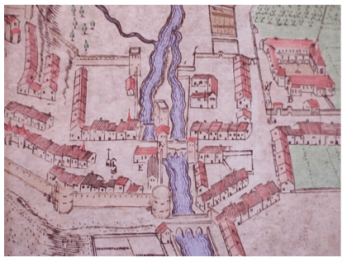
Paul Delsalle et Laurence Delobette (dir.), Champlitte. Place forte du comté de Bourgogne, XIIIe-XVIIe siècles, Vy-lès-Filain, 2016. Format 16 x 20 cm ; environ 300 pages. Contenant plusieurs cahiers d’illustrations en couleurs. Ouvrage accompagné d’un plan grand format. Édition hors commerce et à tirage limité. Prix : 20 euros. Ce volume sera expédié dès parution (printemps 2016).

Bon de commande : ici

Capture d’écran 2016-01-30 à 22.30.54

Table des matières :

Introduction

Leslie Maussang, Christine Cogniez, Nicolas François – Balade chanitoise : les richesses du patrimoine
André Bouvard, Eric Affolter – Les tracés de l’enceinte fortifiée de Champlitte
Michael Depreter – À l’aune de Champlitte : artillerie et guerre de siège
durant la seconde moitié du XVe siècle
Patrick Boisnard – Présentation des deux tours d’angle conservées de l’enceinte fortifiée de Champlitte
Nicolas Faucherre – La tour Charles Quint de Champlitte : le chant du cygne de la tour à canon en Comté
Philippe Bragard – Ambrogio Precipiano en Franche-Comté, en Lorraine, aux Pays-Bas, … et à Champlitte ?
Nicolas Faucherre – De la tour au bastion, en Europe des expériences concomitantes
Xavier Quenot – Saint-Jean de Champlitte, une maison de l’Ordre de Saint-Jean de Jérusalem aux portes de la ville
Laurence Delobette – « Pour l’entretenement du nom et des armes de Vergey » : le testament de Marguerite de Vergy, dame de Champlitte († 1472)
Paul Delsalle – Champlitte, un bastion du catholicisme (1493-1668)
Nicolas Vernot – La galerie Renaissance du château de Champlitte : un programme iconographique à la gloire des Vergy
Serge Degand – Le faubourg Notre-Dame et le couvent des Augustins
Paul Delsalle – Le Chanitois Jean Richardot, à la tête des Pays-Bas et de la Franche-Comté (1540-1609)
Odile Eglin-Hugot – Un regard sur la vie à Champlitte vers 1609-1626, avant la guerre de Dix Ans

Publié dans Publications | Laisser un commentaire

Offre d’emploi – Quatre contrats doctoraux (3ans et huit contrats post-doctoraux (1 an) : Laboratoire européen d’histoire et anthropologie des savoirs, des techniques et des croyances (HASTEC)

Le Laboratoire européen d’histoire et anthropologie des savoirs, des techniques et des croyances (HASTEC) propose pour l’année universitaire 2016-2017 quatre contrats doctoraux (3ans et huit contrats post-doctoraux (1 an) à de jeunes chercheurs inscrivant leur enquête dans les champs thématiques du LabEx.

Hastec

Le labEx Hastec est évidemment soucieux de l’aide à apporter aux jeunes chercheurs dans la mise en œuvre de son programme. Notre Laboratoire d’Excellence en histoire et anthropologie des savoirs, des techniques et des croyances (HASTEC) propose pour l’année universitaire 2016-2017 quatre contrats doctoraux (3ans et huit contrats post-doctoraux (1 an) à de jeunes chercheurs inscrivant leur enquête dans les champs thématiques du LabEx.
Candidature

Pour les candidatures aux contrats post-doctoraux, le dossier de candidature doit être envoyé sous forme électronique au format .pdf (un seul fichier portant le nom du candidat) et la publication significative (aussi au format .pdf), avant le mercredi 9 mars 2016 (à 9h), au Service de la Recherche de l’EPHE.

Pour les candidatures aux contrats doctoraux, le dossier de candidature doit être envoyé sous forme électronique au format .pdf (un seul fichier portant le nom du candidat), avant le mardi 3 mai 2016 (à 9h), au Service de la Recherche de l’EPHE.

Service de la Recherche de l’EPHE : coordinateur.hastec@ephe.sorbonne.fr

Note pour les candidatures aux contrats doctoraux : le dossier doit être visé par l’école doctorale dans laquelle le candidat souhaite s’inscrire. Il doit donc être vigilant par rapport au calendrier et prévoir suffisamment de temps pour obtenir ces signatures : durant la période des vacances scolaires, les écoles doctorales peuvent être fermées.

Directeurs de thèse et correspondants scientifiques doivent être membres du Labex Hastec > Liste des partenaires.

Les dossiers de candidature et les crières de sélection sont à télécharger sur le site du Labex-Hastec.

Source : IRHT

Publié dans Offre d'emploi | Laisser un commentaire

Appel à contribution – Colloque international sur le Duché de Limbourg et les Pays d’Outre-Meuse

Au printemps 2016, les Archives générales du Royaume publieront plusieurs inventaires sur les archives des institutions limbourgeoises d’Ancien Régime. A cette occasion, les Archives de l’État organiseront un colloque international d’histoire sur le Duché de Limbourg et les pays d’Outre-Meuse (Dalhem, Valkenburg, ‘s-Hertogenrade). Ce colloque se déroulera les lundi et mardi 23 et 24 mai 2016 aux Archives de l’État à Liège et à Maastricht. Il mettra l’accent sur des thèmes jusqu’ici peu abordés dans l’historiographie de cette région. Vous êtes chercheur et souhaitez proposer un sujet de communication ? Contactez-nous !

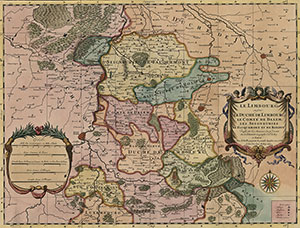
2016-01-15_call-for-papers-colloquium-Limburg_small

Sous l’Ancien Régime, la province de Limbourg constitue une des dix-sept provinces des Pays-Bas espagnols, puis autrichiens. C’est en réalité un ensemble de caractère fédéral qui rassemble quatre composantes bien distinctes : le duché de Limbourg, le pays de Dalhem, le pays de Valkenburg (Fauquemont) et le pays de ‘s-Hertogenrade (Rolduc). Ces territoires étaient apparus au moyen âge sous forme de principautés territoriales autonomes et leur rassemblement, aux XIIIe-XIVe siècles, sous un même sceptre (d’abord ducs de Brabant, puis ducs de Bourgogne, Habsbourg d’Espagne ensuite, d’Autriche enfin) entraîna leur rapprochement, mais non leur fusion (du moins jusqu’en 1778), en une seule entité politique et administrative. Autres caractéristiques importantes de ces pays : leur position frontalière aux confins des Pays-Bas méridionaux et au-delà de la Meuse, d’où l’expression « pays d’Outre-Meuse », en même temps que leur situation d’enclave des Pays-Bas au sein d’États étrangers (la principauté épiscopale de Liège, les Provinces-Unies, l’Empire, la principauté abbatiale de Stavelot-Malmedy, etc.). Par ailleurs, ces pays s’inscrivent dans la région naturelle d’Entre-Meuse-et-Rhin, caractérisée ici par la présence, à leurs bordures, de villes importantes comme Maastricht, Aix-la-Chapelle, Verviers et Liège. Un particularisme bien marqué, au plan tant politique et socio-économique que culturel, s’en dégagera.

Publication d’inventaires

Au printemps 2016, les Archives générales du Royaume publieront plusieurs inventaires sur les archives des institutions limbourgeoises d’Ancien Régime, réalisés par Bruno Dumont et Sébastien Dubois. Il s’agira essentiellement des institutions suivantes :

  • États du duché de Limbourg et des pays d’Outre-Meuse (Dalhem, Valkenburg, ‘s-Hertogenrade) et de la province, [XIIe siècle] 1570-1794.
  • Comité du dénombrement et du cadastre du Limbourg, (1756) 1769-1783 (1797).
  • Commission des charges publiques dans le Limbourg, 1778-1794.
  • Chambre des Domaines et tonlieux du Limbourg, à Herve, 1668-1794.
  • Waumaître du duché de Limbourg, XVIIe-XVIIIe siècle.
  • Haute Cour de Limbourg, XVe-XVIIIe siècle.
  • Tribunal souverain de Limbourg, 1703-1717.
  • Conseil souverain de Limbourg, 1789-1793.

Le colloque

Les lundi et mardi 23 et 24 mai 2016, les Archives de l’État organiseront un colloque international d’histoire sur le Duché de Limbourg et les pays d’Outre-Meuse (Dalhem, Valkenburg, ‘s-Hertogenrade), province de Limbourg d’Ancien Régime. Ce colloque se déroulera notamment aux Archives de l’État à Liège et à Maastricht, avec la collaboration du Regionaal Historisch Centrum Limburg (RHCL).

Il a paru, en effet, intéressant d’inscrire la sortie de presse des divers inventaires, consacrés à des « pays », encore bien mal connus et insérés au cœur du « Pays sans frontière », dans une rencontre entre chercheurs de Belgique, des Pays-Bas, d’Allemagne et d’ailleurs …et les Archives de l’État, gardiennes de ce précieux patrimoine écrit. Le colloque sera l’occasion de faire le point sur les recherches menées jusqu’ici et de tracer des pistes pour de nouvelles. Grâce à la parution prochaine de ces inventaires, une documentation importante et souvent inédite sera mise à la disposition des chercheurs.

Le colloque devrait mettre l’accent sur des thèmes jusqu’ici guère abordés dans l’historiographie de cette région : l’organisation et la pratique, politiques comme administratives (composition et fonctionnement des États, rapports avec le gouvernement de Bruxelles) et judiciaires (rôle du Conseil souverain de Brabant), le régime fiscal et la lutte contre les privilèges en ce domaine, le poids des guerres, le statut douanier et les relations commerciales, la combinaison d’une agriculture intensive avec une proto-industrialisation précoce, l’industrialisation profonde de « bourgs », tels Eupen et Hodimont, le combat contre l’épizootie, le ravitaillement de la population lors des disettes, la diversité linguistique et religieuse, etc.

Vous êtes chercheur et souhaitez proposer un sujet de communication d’une durée de 20 à 30 minutes, portant sur la région concernée ou en lien avec celle-ci ? Envoyez votre proposition de communication pour le 25 février 2016 au plus tard à bruno.dumont@arch.be.

Source : Archives de l’État

Publié dans Appel à contributions | Laisser un commentaire

Journée d’étude – Les guerres d’évêques (XIe-XVe siècles)

On connaît l’importance du rôle de l’évêque dans le maintien et la restauration de la paix au haut Moyen Âge. La montée des seigneuries épiscopales ne contrevient pas à cette mission sur laquelle elle s’appuie pour partie. Mais elle conduit aussi les évêques à devoir s’impliquer davantage dans le siècle, y compris dans la pratique de la guerre. C’est ce qui nous conduit à proposer une recherche collective sur les guerres menées par des évêques du XIe au XVe siècle. À cet égard, il s’agit aussi bien de s’interroger sur la figure combattante du prélat, que sur les conflits conduits par des évêques. Inscrite dans un temps long, permettant de repérer d’éventuelles flexions ou évolutions, la discussion devra prendre en compte la nécessité de bien lire et de contextualiser au plus près la documentation employée. Sans prétendre à l’exhaustivité, trois directions principales nous ont semblé devoir être suivies :

Comment la documentation traite-t-elle des guerres commanditées par des évêques ? Les condamne-t-elle ou les justifie-elle ? Quels arguments sont mis en avant ou sous-tendent cette condamnation ou cette justification ?
Les guerres conduites par des évêques sont-elles liées à des circonstances particulières, qui ne se rencontrent pas pour d’autres acteurs seigneuriaux ? Par exemple, quel rapport existe-t-il entre guerres d’évêques et paix diocésaine ?
Les guerres d’évêques donnent-elles lieu à des pratiques spécifiques dans le déroulement des opérations ?

Programme :

Matinée (en Sorbonne, Bibliothèque Boutruche)

10 h : Dominique Barthélemy (Université Paris IV, EPHE, IUF) – « Paix diocésaines et guerres d’évêques (Xe-XIIIe siècles) »
10 h 40 : Sébastien Fray (Université Jean Monnet, Saint-Etienne) – « Les évêques du Puy et la guerre (fin Xe-XIIIe siècle)
11h 20 : pause
11 h 30 : Rémy Roques (Archives de la Poste) – « Conflits féodaux et renforcement de la seigneurie épiscopale. Clermont. XIIe-XIIIe siècles »

Après-midi (en Sorbonne escalier U, salle H 627)

14 h : Rolf Große (Institut Historique Allemand) – « L’archevêque de Cologne en guerre au XIIe siècle »
14 h 40 : Alain Marchandisse (Université de Liège) – « L’évêque de Liège en temps de guerre à la fin du Moyen Âge »

Informations pratiques :
10 février 2016 en Sorbonne

Journée d’étude internationale, organisée par Dominique Barthélémy, Université Paris Sorbonne, EPHE, Institut Universitaire de France (Centre Roland Mousnier, UMR 8596) et Sébastien Fray, Université Jean Monnet Saint-Etienne (LEM-CERCOR UMR 8584)

Contact : fray.sebastien@univ-st-etienne.fr

Publié dans Colloque | Laisser un commentaire

Appel à contribution – Re//generate: Materiality and the Afterlives of Things in the Middle Ages, 500-1500

The University of St Andrews School of Art History in collaboration with the St Andrews Institute of Medieval Studies (SAIMS) present Re//generate: Materiality and the Afterlives of Things in the Middle Ages, 500-1500, an interdisciplinary conference on reuse and recycling in medieval Europe taking place on 6-7th May 2016.

In recent years, the discipline of Art History has been grappling with the concept of materiality, the very thingness of art. The material of medieval art, be it parchment, precious metal, gem, bone or stone, has emerged as a spearheading topic. Unsurprisingly, this “material turn” has prompted intriguing questions. To what extent does an ivory figure of the Virgin and Child embody the divine, rather than merely represent it? What exactly did pilgrims do with the holy dust or liquid which they carried away from saints’ shrines in little ampullae? It is within this context that we wish to explore how recycling was part of the medieval (re)creative process.

This conference will investigate the different ways in which medieval people used and reused goods, materials, and other elements from existing forms to create (or recreate) new art and architecture. Why did medieval people preserve, conserve, and recycle art and materials from a different era? Did such appropriation go beyond mere economic practicality? Could the very materiality of an object have been the reason for its retention or reinvention? The two-day conference is aimed at postgraduates and early career academics from a range of disciplines including, but not limited to history, art history, museum studies, archaeology, book studies and literature.

We invite twenty-minute papers on the following range of topics and their relationship to the study of materiality, recycling and reuse in middle ages:

  • Second-hand materiality of medieval art and/or everyday objects;
  • The concept of refuse/garbage and its reuse;
  • The medieval and post-medieval afterlives of things;
  • Theoretical approaches to medieval materiality; Thing theory and Stuff theory;
  • Semiotics and anthropology of medieval recycling and recreation;
  • Issues of authorship, circulation and ownership of recycled art;
  • Genealogy of recycled materials: spoils, heirlooms, relics, ruins and remnants;
  • Conservation, preservation and restoration in medieval thought and practice.

Papers on other issues related to the study of materiality and reuse of materials in the Middle Ages or of medieval materials in post-medieval practice are also welcome. Please direct your submissions (250 word abstract) along with a short biography (100 word) to regenerate2016@st-andrews.ac.uk no later than 1st of February 2016. Conference website: regenerate2016.wordpress.com.

Organized by: Emily Savage (ens@st-andrews.ac.uk) and Ioana Coman (ic39@st-andrews.ac.uk). Funded through the Centre for Academic, Professional and Organisational Development (CAPOD).

Source : The Medieval Academy blog

Publié dans Appel à contributions | Laisser un commentaire

Appel à contribution – La Langue étrangère de spécialité dans l’histoire : de l’Antiquité à notre futur

LAIRDIL – CEMA
IUT A Paul Sabatier – Université Paul Sabatier, Toulouse
Les 9 et 10 février 2017

Le terme de « langue(s) de spécialité » est relativement récent. Galisson et Coste (1976 : 511) en donnent cette définition sans que le terme n’apparaisse en tant que tel : « Expression générique pour désigner les langues utilisées dans des situations de communication (orales ou écrites) qui impliquent la transmission d’une information relevant d’un champ d’expérience particulier. » Lerat (1995 : 20) la définit comme suit : « La notion de langue spécialisée est [plus] pragmatique : c’est une langue naturelle considérée en tant que vecteur de connaissances spécialisées. » Enfin, Dubois et al. (2001 : 40) précisent : « On appelle langue de spécialité un sous-système linguistique tel qu’il rassemble les spécificités linguistiques d’un domaine particulier. » Les créations en 1982 du GERAS (Groupe d’Études et de Recherche en Anglais de Spécialité) puis en 2006 du GERES (Groupe d’Études et de Recherche en Espagnol de Spécialité) et enfin du GERALS pour l’allemand (en 2011) montrent le dynamisme de la recherche sur cette spécialité.

Appartenant au champ de la linguistique appliquée, la langue de spécialité est clairement à mettre en relation avec le(s) besoin(s) des apprenants, tout spécialement professionnel(s). C’est ainsi que, face à – ou plus sûrement au côté de – la littérature, la civilisation et la linguistique pure, la langue de spécialité devient multiple, devient les langues de spécialité. Ainsi, médecine, droit, économie, biologie, génie mécanique, théologie, sans que ces exemples ne constituent une liste exhaustive des domaines concernés, ont vu émerger puis s’affirmer un enseignement spécialisé des langues étrangères dans leurs cursus respectifs (Van der Yeught, 2012), que cela soit en anglais, en français langue étrangère, en espagnol ou encore dans une multitude d’autres langues.

Ces questions ont été largement étudiées, tout spécialement du point de vue des échanges intellectuels qui ont circulé, mais la question tournant autour de la maitrise de ces textes étrangers a rarement été abordée dès lors que l’échange n’était plus véhiculé par une langue commune comme le latin, par exemple. On pourrait d’ailleurs également s’interroger sur cette langue commune, les conditions de son émergence en tant qu’outil de médiation et les problèmes de traduction qui y sont liés.

Cette notion de langue de spécialité n’est donc pas nouvelle. Elle remonte aux temps les plus anciens. Rien d’étonnant à cela au vu des disciplines concernées et des mouvements de population, pacifiques ou non, qui ont pu avoir lieu au fil des siècles. On peut par exemple penser à l’apprentissage de la langue scientifique par les Acadiens lors de leur conquête de Sumer, le conquérant n’opprimant pas nécessairement linguistiquement le conquis. Du parlier du Moyen Age, dont le rôle était de coordonner désir de l’architecte et réalisations des artisans aux provenances si diverses sur un même chantier de cathédrale en passant par les besoins langagiers spécifiques des marchands, ambassadeurs et autres prêcheurs au fil des siècles, la langue de spécialité est partout. Ces confrontations linguistiques, pacifiques ou non, altruistes ou marchandes, ont-elles donné lieu à la rédaction de manuels didactiques tels ceux de Caxton (v. 1415/1422-v. 1492) ou de Roger Ascham (1515-1568) ou d’interculturalité ? Des dictionnaires spécialisés pour une profession donnée, des carnets de voyage avec le vocabulaire essentiel pour faire face à quelque peuple autochtone lors de voyages de découvertes sur les continents américain, africain ou asiatique ont-ils été rédigés? Des cours spécialisés dans le secret du préceptorat ou à la lumière des universités d’Europe ou d’ailleurs sont-ils apparus ? Les utopies et les anti-utopies fournissent également des exemples intéressants de l’importance des langues de spécialité (et de leurs échanges / traductions) dans l’évolution des sociétés. La langue s’est-elle spécialisée avant que la langue de spécialité ne s’impose ?

Ces journées d’études internationales sur la langue de spécialité dans l’histoire s’intéresseront donc à tous les aspects des langues de spécialité sans discrimination de langues, de périodes ou de thématiques, permettant une approche diachronique et / ou synchronique.

Les propositions de communication de 350 mots, en anglais ou en français, ainsi qu’une courte biographie (université de rattachement, laboratoire de rattachement, axe(s) de recherche et dernières publications) devront parvenir au comité d’organisation avant le 30 juin 2016.

Les actes de ces journées donneront lieu à une publication courant 2017.

Pour l’envoi des propositions et toute demande de renseignements : nolwena.monnier@iut-tlse3.fr

Galisson, Robert, et al., Dictionnaire de didactique des langues, Paris : Hachette, 1976.
Pierre, Lerat, Les langues spécialisées, Paris : PUF, 1995.
Dubois, Jean, Dictionnaire de linguistique, Paris : Larousse, 2001.
Van der Yeught, Michel, L’anglais de la bourse et de la finance : description et recherche, Paris : Éditions Ophrys, 2012.

Publié dans Appel à contributions | Laisser un commentaire

École d’été – London International Palaeography Summer School

The London International Palaeography Summer School is a series of intensive courses in Palaeography and Manuscript Studies. Courses range from a half to two days duration and are given by experts in their respective fields from a wide range of institutions. Subject areas include Latin, English, Anglo-Saxon, German, Welsh and Greek palaeography, history of scripts, illuminated manuscripts, codicology, manuscript editing and liturgical and devotional manuscripts.

The Summer School is hosted by the Centre for Manuscript and Print Studies with the co-operation of the British Library, the Institute of Historical Research, Senate House Library, the Warburg Institute, University College, King’s College London and the Victoria and Albert Museum.

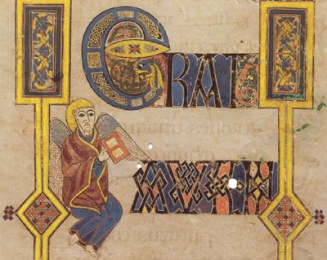
Book of Kells cropped_large

Courses 2016 : here

Venue

Most classes will take place in seminar rooms located in Senate House, Malet Street, London, WC1E 7HU. Exact locations will be confirmed in advance of the Summer School.

Accommodation

A wide range of accommodation is available in the area close by to Senate House where most of the teaching takes place. Summer School partcipants will need to make their own arrangements for accommation. We have some suggestions available on our accommodation page. This includes details for the University of London’s intercollegiate halls of residence (please refer to the prices under the ‘Visitor’s heading). In all cases, please arrange accommodation directly.

Contact :

Summer School Administrator

Mr Christopher Adams
Institute of English Studies, Room 239
Senate House
Malet Street
London WC1E 7HU

Tel: +44 (0) 20 7862 8679
Email: iesevents@sas.ac.uk

Academic Co-ordinator

Dr Marigold Norbye (University College London)

Source : School of Advanced Study – University of London

Publié dans École d'été | Laisser un commentaire