Colloque – Archaeologia Mediaevalis 36

Archaeologia Mediaevalis 36
Bruxelles – Musées royaux d’Art et d’Histoire
 21-22/03/2013

Veuillez trouver ci-joint le programme définitf d’Archaeologia Mediaevalis 2013, le colloque annuel de l’archéologie médiévale et post-médiévale. La 36e édition aura lieu les jeudi 21 et vendredi 22 mars 2013 dans les Musées royaux d’Art et d’Histoire à Bruxelles. Toute personne qui désire participer à ce colloque est invitée à s’inscrire avec le formulaire ci-joint avant le 17 mars.

Programma / Programme / Programm :

Jeudi / Donderdag / Donnerstag 21-03-2013

8h30 : Accueil – Onthaal – Empfang
9h30:
Michel Draguet, Directeur general f.f. des MRAH / Algemeen directeur a.i. van de KMKG – Introduction / Inleiding
 

9h45 : Dominique Castex (Directrice de recherches, Université Bordeaux I, France) – Le devenir des morts par épidémie à l’époque médiévale. Croyances et réalité archéologique.
10h15 : Sylvie Byl, Céline Devillers, Michel Fourny& Philippe Sosnowska – Le château de Carloo – nouvelles fouilles préventives sous la place de Saint-Job à Uccle (Région Br.).
10h30 : Isabelle Deramaix – Investigations archéologiques au château de la Royère à Néchin (XIIe-XIVe siècle) (Ht.).
10h45 : Aurélie Lecomte – Fouilles d’un site médiéval à Quévy-le-Grand – premiers résultats archéologiques (Ht.).
11h00 : Koffie / Café / Kaffee


11h30 : Thomas Pieters – Het middeleeuwse kerkhof van Slype (Middelkerke, W.-Vl.).
11h45 : Frédéric Chantinne & Philippe Mignot – Réexamen du dossier archéologique de la collégiale Sainte Gertrude à Nivelles (Br. Wal.).
12h00 : Kim Quintelier – Stabiele stikstof- en koolstofisotopen als indicatie voor paleodieet en status in het postmiddeleeuwse karmelietenklooster te Aalst (O.-Vl.).
12h15 : Pierre-Hugues Tilmant – D’une église à des logements sociaux, en passant par une chapelle et une école… (Nr.).
12h30 : Christian Frébutte – Campagnes d’archéologie globale 2011-2012 sur le site de l’abbaye Notre-Dame de Saint-Rémy à Rochefort (Nr).
12h45 : Lunch


14h00 : Aline Wilmet – L’analyse archéologique du décor sculpté de l’architecture gothique de la region mosane (1240-1520). – État de la question et perspectives de recherches.
14h15 : Pierre Anagnostopoulos – Les fragments de sculpture et d’architecture en pierre provenant des fouilles du choeur de la collégiale Sainte-Waudru à Mons (XVe-XVIIIe siècle) (Ht.).
14h30 : Elise Bailleul & Laure-Anne Finoulst – Origines, diffusion et utilisations des calcaires lorrains dans l’architecture et la sculpture de la vallée mosane moyenne au Moyen Âge.
14h45 :
Pierre Anagnostopoulos – La fontaine gothique de la Grand-Place de Bruxelles (vers 1300). Essai de restitution de son architecture et de son ornementation (Région Br.).
15h00 : Dries Tys – Medieval Europe Research Conference : present situation and future and its importance for Belgium.
15h15 : Koffie / Café / Kaffee


15h45 : Cateline Clement, Ruben Pede & Bart Cherretté – Op het spoor van Spillegem ? Een nederzetting uit de volle middeleeuwen te Ronse – De Stadstuin (O.-Vl.).
16h00 : Laurent Verslype, Stéphane Révillion, Ines Leroy, Delphine Cense & Murielle Meurisse – Quentovic. Un port du haut Moyen Âge entre Ponthieu et Boulonnais.
16h15 : Tim Vanderbeken – Sporen van volmiddeleeuwse bewoning in Bilzen-Centrum (Limb.).
16h30 : Marie-Hélène Corbiau & Olivier Collette – La Via Mansuerisca, une voie médiévale traversant les Hautes Fagnes belges – nouvelles recherches sur l’itinéraire.
16h45 : Ann Degraeve – L’archéologie en Région de Bruxelles-Capitale – aperçu de l’année 2012 / Archeologie in het Brussels Hoofdstedelijk Gewest – een overzicht voor 2012.
17h00 : Drink / Verre de l’Amitié / Empfang


Vendredi / Vrijdag / Freitag 22-03-2013


9h00 : Accueil – Onthaal – Empfang
09h30 : Laure-Anne Finoulst – Les sarcophages du Haut Moyen Âge en Gaule du Nord – production, diffusion, typo-chronologie et pratiques funéraires.
09h45 : Michel Fourny, René Borremans & Sylvie de Longueville – Identification des céramiques
carolingiennes issues des fouilles de l’ancienne collégiale romane Saints-Michel-et-Gudule à Bruxelles (Région Br.).
10h00 : Sophie Challe¸ Koen De Groote & Eric Leblois – Les céramiques funéraires en Belgique entre le XIIe et le début du XVe siècle.
10h15 : Geert Verbrugghe – Mortiers en pierre à Caen (Calvados, Basse-Normandie, France) – une production locale à diffusion internationale entre deux festins de la 2e moitié XIIIe / 1e moitié XIVe siècle.
10h30 : Stephan Van Bellingen – Benen riemtongen uit Brusselse bodem (Br. Gewest).
10h45 : Koffie / Café / Kaffee


11h15 : Sylvie Byl, Céline Devillers & Michel Fourny – Recherches archéologiques au pied de la « Tour Anneessens » à Bruxelles (Région Br.)
11h30 : Jean-Yves Dufour – Le jeu de paume du roi Louis XIII à Versailles (France).
11h45 : Geert Vermeiren, Marie-Anne Bru, Thomas Bradt & Karen Laisnez – Huidenvetters op de Waalse Krook (Gent, O.-Vl.).
12h00 : Robrecht Vanoverbeke – Van blekerij tot spinnerij. Resultaten van de 1e fase van opgraving aan de Burgstraat / Perkamentstraat te Gent (O.-Vl.).
12h15 : Souad Ech-Chakrouni & Jozef Hus – Datation archéomagnétique des fours à briques et des fours à tuiles (Br.-Wal., Ht., Vl.-Brab.).
12h30 : Lunch


13h30 : Frédéric Chantinne, Philippe Mignot, Amélie Vallée & Laurent Verslype – Le projet CARE en Belgique (Corpus Architecturae Religiosae Europeae, IVe-Xe saec.).
13h45 : Hélène Clérin & Patrice Gautier – La transformation d’un bâtiment agricole en dortoir des frères lais au prieuré de Rouge-Cloître à Auderghem (fin du 17e siècle). L’étude de l’archéologie du bâtiment confrontée aux sources iconographiques (Région Br.).
14h00 : Patrick Hoffsummer, Sylvianne Modrie & Armelle Weitz – Les charpentes de toiture en région bruxelloise : datation et étude typologique.
14h15 : Pascale Fraiture & Sarah Cremer – Dendrochronologie à l’Institut royal du Patrimoine artistique (IRPA) : du mobilier à l’immobilier.
14h30 : Koffie / Café / Kaffee


15h00 : Bert Heyvaert – De miniemen intra-muros (Br. Gewest).
15h15 : Anne Schryvers – Het archeologisch onderzoek naar het oude stadhuis van Antwerpen (15e eeuw) en het 16e-eeuwse bouwblok Den Teerling (Ant.).
15h30 : Maarten Smeets – Vroegmiddeleeuwse sporen aan de Mottekamp te Maasmechelen (Limb.).
15h45 : Marie Verbeek & Olivier Vrielynck – Suivi des travaux d’assainissement des eaux à Dinant, rue Saint-Martin. Bâtiment à abside et cimetière du Haut Moyen Âge (Nr).
16h00 : Besluit / Conclusion / Schluß

Publié dans Colloque | Laisser un commentaire

Appel à contribution – From Carpentry to Joinery

On Friday 29 November 2013 IRPA-KIK, in collaboration with the University of Namur, the Université Libre de Bruxelles (ULB) and the Royal Museums for Art and History (MRAH-KMKG), organises the study day

From Carpentry to Joinery: floors and ceilings, shutters and frames, doors and panelling in Medieval and Modern Architecture”

as part of the series of scientific meetings started by the research group AcanthuM (University of Namur) on the theme of construction finishings and fittings. We are now launching the call for papers for this study day, which will focus on joinery elements in architecture from the Middle Ages and modern period that contribute to the organization of the interior workings of a building and division of space through the layout of doorways and window openings, as well as playing a part in the interior decoration. Wooden floors and ceilings, shutters and frames, doors and panelling will be the subject of an interdisciplinary session combining archaeology, art history, the history of techniques and engineering, economic, social and environmental history and archaeometry.


With the study of historical buildings’ joinery elements as a starting point, this study day aims to stimulate a wider reflection on the evolution of architecture or on the life of interior spaces in relation to the functions and challenges that are assigned to them, depending on the period or on technical, social or economic stimuli, etc.

The material and technical challenges inferred from the conception of these ‘building joineries’ will be considered by examining the supply strategies of the construction site and the evolution of the traditional techniques applied. The choice of wood types and knowledge of their mechanical and aesthetic qualities seems fundamental to this approach, as is the art of engineering, inextricable from the conception of structures such as wooden floors, ceilings or other elements used to divide space.

We will also take into consideration the statutes and working practices of the different métiers in a given historical context. The division of work between the carpenter and the joiner will be reassessed, according to region and period, by comparing known documents with archaeological analysis, set in a broader epistemological perspective free of the sometimes disputable categories of “structure” and “finishings and fittings” of a building.

The study day will finally be an occasion to take stock of the – all too rare – studies dedicated to joinery in architecture by underlining major recent methodological progress on an international scale, by reassessing the traditional typologies and by giving special attention to archaeological studies, enriched by the methodological progress in archaeometry and, notably, dendrochronology.

Language: English (French/Dutch possible if necessary)
Date: November 29th 2013
Location: IRPA-KIK (Parc du Cinquantenaire / Jubelpark 1 – 1000 Brussels)
Provisional programme: 12 presentations of 20 min.

Deadline for abstracts: April 20th 2013 (length = 450 words) 

Acceptance of abstracts: May 20th 2013
Send your abstract to: carpentrytojoinery.abstracts@gmail.com

Oganising comittee :

Sarah Crémer, Royal Institute for Cultural Heritage (IRPA-KIK)
Pascale Fraiture (IRPA-KIK)
Patrice Gautier, Royal Museums of Art and History (MRAH/KMKG)
Mathieu Piavaux, University of Namur (UNamur)
Philippe Sosnowska, Université libre de Bruxelles (ULB)
Michel de Waha (ULB)

Scientifc comittee :
Anna Bergmans, Ghent University
Sarah Crémer (IRPA-KIK)
Pascale Fraiture (IRPA-KIK)
Patrice Gautier (MRAH/KMKG)
Patrick Hoffsummer, University of Liège
Charles Indekeu, Royal Academy of Fine Arts Antwerp
Isabelle Parmentier (UNamur)
Mathieu Piavaux (UNamur)
Philippe Sosnowska (ULB) 


Source de l’information : KIK-IRPA
Publié dans Appel à contributions | Laisser un commentaire

Appel à contribution – Collections, remaniements, expositions : les vies du manuscrit médiéval aux périodes moderne et contemporaine

L’INHA organise une journée d’étude le 18 novembre 2013 visant à penser l’histoire des collections de manuscrits aux périodes modernes et contemporaines, à mettre en perspective historique les processus de découpages, de collages et de remaniements des manuscrits médiévaux tels qu’ils ont été développés à partir du XVIIIe siècle et à réfléchir sur les questions touchant à la conservation, la restauration et l’exposition de telles œuvres au sein des musées.

Au gré de donations et parfois d’acquisitions de feuillets enluminés provenant de manuscrits démantelés ou de manuscrits complets, les musées se sont enrichis de précieux témoignages de l’enluminure médiévale et de la Renaissance. Rarement exposées, ces œuvres ont pour une grande partie d’entre elles été peu étudiées, ou demeurent encore inconnues.

Le musée des Beaux-Arts d’Angers, le Palais des Beaux-arts de Lille et le musée des Augustins de Toulouse, en collaboration avec l’INHA, accueilleront à l’automne 2013 trois expositions à partir des collections conservées dans les institutions des régions Centre et Pays de la Loire, Nord-Pas-de-Calais, Picardie et Champagne-Ardenne, Midi-Pyrénées et Languedoc-Roussillon (musées et sociétés savantes) afin de faire connaître au grand public ce patrimoine fragile.

La production de feuillets isolés existe dès la fin du Moyen Âge mais leur découpe, leur recomposition et leur collection se développent au XVIIIe siècle. Les célèbres Heures d’Etienne Chevalier, par exemple, réalisées par Jean Fouquet, sont démembrées au xviiie siècle puis collées sur des panneaux et leur texte dissimulé, pour en faire des images indépendantes, répondant aux critères contemporains de l’œuvre d’art. De nombreux exemples de montage à partir de plusieurs manuscrits, de recueils de lettrines ou de découpes, pour des raisons aussi bien économiques qu’esthétiques, émaillent ainsi l’histoire du livre médiéval. Ces pratiques révèlent les goûts et les aspirations des collectionneurs, dont certains sont très célèbres pour leur approche du manuscrit enluminé (J. Granger et J. Bagford au xviiie siècle ou Luigi Celotti au XIXe siècle). Les collectionneurs et les sociétés savantes, dont l’essor est contemporain, ont joué un rôle important dans la constitution de certaines collections et la préservation de nombreuses œuvres enluminées. Parallèlement à l’engouement croissant des collectionneurs du xixesiècle pour les œuvres médiévales et, parmi elles, les manuscrits enluminés, la question de leur conservation et de leur exposition au public apparaît fondamentale. Les conditions d’exposition de telles œuvres sont en effet particulièrement complexes et demandent des moyens scientifiques et techniques importants, ainsi qu’une réflexion approfondie en amont.

Les communications en français, en anglais ou en italien pourront ainsi porter sur les questions suivantes :
  • Les pratiques et les goûts des collectionneurs vis-à-vis du manuscrit enluminé depuis le début de l’époque moderne jusqu’à la période contemporaine (découpe, recomposition, destruction, création de faux, etc.).
  • La constitution des collections de manuscrits dans les musées.
  • La conservation, la restauration et la présentation de manuscrits dans les musées ou les collections privées et les sociétés savantes du XIXe siècle à nos jours.

Veuillez envoyer un résumé de 250 mots avec un CV de deux pages maximum à Judith Soria (Judith.soria@yahoo.fr) et Tania Lévy (tlevy@info-histoire.com) avant le 19 mai 2013.

Le programme sera annoncé en juillet 2013.

Source de l’information : IRHT
Publié dans Appel à contributions | Laisser un commentaire

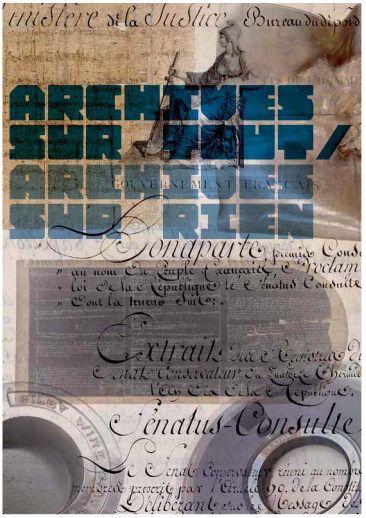
Exposition – Archives sur tout, archives sur rien

Papyrus, parchemin, papier, bois, cire, tissu, métal, disques durs… Les fonds des Archives nationales regorgent de supports de l’écrit dont la diversité ne laisse pas de surprendre, témoignant de l’ingéniosité des hommes à fixer des traces d’eux sur « n’importe quoi ». 

Le propos de cette présentation de documents, qui accompagne l’inauguration de notre nouveau site, est de montrer au public la pluralité des fonds conservés dans les sites de Fontainebleau, Paris et Pierrefitte-sur-Seine. Cette diversité est le résultat de l’évolution des techniques qui jalonne l’histoire de l’Humanité et elle est aussi un témoignage de la créativité humaine. La recherche de facilité et de souplesse d’utilisation, le besoin de réduire les coûts d’approvisionnement, de fabrication, de transport et de stockage peuvent être à l’origine de la subrogation d’un support par un autre. 

On a ainsi vu au fil des siècles, pour les supports d’écrits officiels, le papyrus détrôné par le parchemin, ce dernier ayant lui-même été remplacé par le papier. Toutefois des situations d’urgence et de conflit ont aussi produit des supports inattendus, bricolés sur des matériaux de hasard imposés par la clandestinité ou les pénuries de matériaux. Ces supports inattendus d’écrits souvent éphémères sont les témoignages émouvants de résistance. 

Enfin, notre époque connaît un bouleversement sans précédent avec une dématérialisation croissante des supports d’archivage.

Livret de l’exposition : ici

Informations pratiques :
Archives sur tout, Archives sur rien
Exposition du 21 janvier au 29 mars 2013
59, rue Guynemer
93380 Pierrefitte-sur-Seine
Tél – 01 75 47 20 00
Horaires :
Du lundi au samedi de 9h00 à 17h00
Fermée le dimanche et les jours fériés
Entrée libre et gratuite
Source de l’information : Archives Nationales
Publié dans Exposition | Laisser un commentaire

Colloque – Connecting Ideas and Circulating Texts. Inside the Dynamics of Philosophy and Literature in the Rhineland and the Low Countries (ca 1300-1550)

MITT – Mobility of Ideas and Transmission of Texts
Connecting Ideas and Circulating Texts. Inside the Dynamics of Philosophy and Literature in the Rhineland and the Low Countries (ca 1300-1550)
MITT and the Philosophy Department of the University of Freiburg present the results of a international research project dedicated to the late medieval dynamics of intellectual, religious, and literary life in the Rhineland and the Low Countries.
MITT brings together five expert teams to provide substantive and methodological training on late medieval intellectual history, philosophy, and literature to a cohort of early-stage researchers and associate members.

Programme :

Wednesday, 10.04.2013 

14h00-15h30 : Maarten Hoenen (Freiburg), Gunther Neuhaus (Freiburg) and Geert Warner (Leiden) – Welcome & Introduction

16h00-17h30 : Abram (Freiburg) – The Mobility of Psychological Ideas in Scholastic and Mystical Texts Marieke 
Respondent: Kent Emery, Jr. (Notre Dame)


Thursday, 11.04.2013 

9h00-10h30 : Racha Kirakosian (Oxford) – Saintly Writing and Writing Saints. The Mystical Account of Christina of Hane 
Respondent: Burkhard Hasebrink (Freiburg)

11h00-12h30 : Susanne Zwierlein (Lecce) – A Testimony of 15th Century Female Readership. The Vernacular Collection of Sermons in Berlin, SBPK, mgq 1084 
Respondent: Rudolf Weigand (Eichstätt) 

14h00-15h30 : Anna Dlabacova (Leiden) – Reaching Readers, Influencing Ideas. From Manuscript to Bestseller in the Late Middle Ages
Respondent: Freimut Löser (Augsburg)

16h00-17h30 : Markus Polzer and Daniëlle Prochowski (Antwerpen) – Mobility of Ideas in the Middle Ages
Respondent: Wolfgang Neuber (Abu Dhabi)
17h45-18h45 : Round Table: Final Debate about MITT – Paul Bakker (Nijmegen), Juliane Besters-Dilger (Freiburg), Nadja Germann (Freiburg), Hans-Jochen Schiewer (Freiburg), Loris Sturlese (Lecce), Geert Warnar (Leiden)

Informations pratiques :
10-11 April 2013 
Haus “Zur Lieben Hand”
Freiburg i.B.
The conference is open to the public. 

For more information please contact: 
Lehrstuhl : Prof. Maarten J.F.M. 
Hoenen : Philosophisches Seminar Albert-Ludwigs-Universität 
Freiburg, Platz der Universität 3 
79085 Freiburg im Breisgau 
Phone: +49 761/203-2440 
sekretariat.hoenen@philosophie.uni-freiburg.de
Source de l’information : MITT
Publié dans Colloque | Laisser un commentaire

Appel à contribution – Speaking in Tongues: Language, Communication and Power in the Middle Ages

Communication in the Middle Ages could take place within a wide spectrum of languages, dialects, and tongues. This conference, planned for the 14th of June 2013, will explore how the use and manipulation of language can contribute to our understanding of ‘real-world’ medieval cultural interaction, and investigate how complex ideas and societal mores were communicated and translated between languages.

How did people overcome the governmental and administrative challenges in multilingual environments, such as diplomatic missions to the Mongols, knightly organizations, courts, and trading entrepôts? How were concepts and theories transmitted through cultures, across borders, or within the peripheries of Christendom, even within large institutions such as the Church or multi-ethnic polities, such as the Holy Roman or Byzantine empires? What kind of problems presented themselves in the realms of East-West relations, synods, and church councils, where complex doctrine and beliefs were discussed, debated and translated?


This interdisciplinary conference, bringing together the linguistic, cultural, and historical, will be held at the IHR in central London. It will comprise of four broad thematic strands, interspersed with refreshments, a catered lunch, and a keynote lecture, delivered by Dr Alan V. Murray (University of Leeds):

  • Cultural and political interaction in central and eastern Europe. Lines of inquiry could include the imposition of German settlement and law in Slavic lands, how legal problems and grievances were resolved in multi-lingual communities and the difficulties which French and German European noble houses, such as the Angevins or the Luxemburgs, had in ruling their polyglot Eastern domains
  • Ecclesiastical administration and theory: the practicalities of synods and councils, managing conflict within ecclesiastical communities, translation of documents involved in papal government, and the problems the papacy and the ecclesiastical hierarchy faced in transmitting its ideas and organization on a ‘global’ scale.
  • Byzantium and the gateway to Europe: Possible areas of interest may include the transfer of scientific principles into and out of Christian Europe; the Byzantine state’s government of a wide array of different ethnic, and hence linguistic, groups; and the role of language in trading networks in the Aegean and beyond. 
  • The Latin East, crusader states, and knightly orders: Potential areas of investigation would be the role of language in the administration and diplomacy of multi-lingual and multi-cultural states in the Holy Land, whether Christian or Muslim; the challenges knightly orders faced when dealing with a ‘worldwide’ membership; and how ideas on religious warfare permeated across cultures.

Proposals (max. 300 words) for papers of 20 minutes, fitting broadly within one of the above thematic strands, are welcomed both from early career scholars, and from postgraduate students, before the 22nd of March 2013. Further enquiries and proposals for papers should be sent to the organisers, Simon Parsons and Mark Whelan, at speakingintonguesconference@gmail.com.
Attendance at the conference is free but registration is necessary. To register please email the organisers at speakingintonguesconference@gmail.com In order that candidates from outside London are able to attend, we hope to be able to provide limited travel expenses to speakers from outside London. Postgraduates should therefore make their status and their institution clear when submitting their proposal to achieve the best use of funds.
Publié dans Colloque | Laisser un commentaire

Journée d’étude – The Papacy and the East

The Second Council of Lyon (1274) and the Council of Ferrara-Florence (1439) constitute two crucial, yet ultimately unsuccessful, attempts to establish new unity between the Roman and the Eastern Churches. In between these two assemblies, intellectual and religious confrontations between East and West produced original results. With Seljuk and Mamluk Turks increasing military pressure, threatening the Mediterranean, the Apostolic See did not cease implementing new strategies to bring Eastern Christian communities into Latin obedience.

These multi-faceted interventions included diplomacy, missions, and theological and cultural exchange, resulting in a consistent flow of people, texts, and ideas across the Mediterranean. This international symposium brings together scholars from different backgrounds to discuss intellectual relations and cultural interactions between the Papal curia and Christian communities and Churches of the Greek, Armenian, and Syriac East between 1274-1439. Fresh empirical analysis will provide new insights into this phase of East-West relations, offering a major laboratory to explore the actors, mechanisms, tools, ideas, and purposes of overseas cultural contacts.

Subjects

Particular attention will be paid to:
  • the actual knowledge and intellectual reception of Eastern lands, cultures, and religions within the papal entourage;
  • the flow of people, texts and ideas across cultural, religious, and linguistic boundaries and the corresponding need for cultural adaptation;
  • doctrinal and ecclesiological debates, including discussions over the authority of the pope and mutual accusations of heresy;
  • the specifics of the Eastern policies of the Holy See after the move to Avignon and during the Great Schism, between the decline of the Mongols and the rise of the Ottoman Empire.


As a result, new light will be shed on the cultural processes through which, at the end of the medieval era, the Papal curia attempted to react to the crisis of universalism by confronting the Christian ‘other’.

Programme :
9h30 : Irene Bueno (Leiden University/EHESS Paris) – Opening and introduction

Chair: Heleen Murre-van den Berg (Leiden University)

Claudine Delacroix-Besnier (Université de Picardie) – John Kantakuzenos and Rome (1355-1375). Papal letters revisited.
Claude Mutafian (Université de Paris Nord) – The Armenian Church and the Papacy during the last century of Cilician Armenia (1275-1375). 
Benjamin Weber (Université de Toulouse) – Integrating Ethiopia into the Orbis Christianus: Relations, knowledge and misunderstandings between the Papacy and Ethiopia, 13th-15th century. 
11h15 : Coffee break 

11h30 – Chair: Ernestine van der Wall (Leiden University) 

Herman Teule (University of Nijmegen/University of Louvain) – The Papacy and the oriental Churches: different expectations due to different theological positions. 
Irene Bueno (Leiden University/ EHESS Paris) – The “heresies” of Greeks, Jacobites, and Armenians in Guy Terrena’s Summa de haeresibus et eorum confutatione (1338-1342). 
12h30 : Lunch

14h00 – Chair: Irene Bueno (Leiden University/EHESS Paris) 

Marco Bais (European University of Rome) – The Armenians in La flor des estoires de la terre d’Orient.
Camille Rouxpetel (University of Paris-Sorbonne) – Riccoldo da Monte Croce’s mission towards the Nestorians and the Jacobites (c.1288-1300): defining heresy and inventing the relationship with the Other. From theory to missionary experience. 
Kenneth Parker (Royal Holloway, London/Gutenberg Universität, Mainz) – The Mendicant Orders and the Oriental Christians, ca 1328-1365
15h45 : Coffee break

16h15 – Chair: Herman Teule (University of Nijmegen/University of Louvain)

Chris Schabel (University of Cyprus) – Church Councils and the Filioque in Western Theology, 1274-1439 
William Duba (Freiburg University) – From Emanations to Energies: The Divine Essence from Paris to the Peloponnese via the Papacy

Heleen Murre-van den Berg (Leiden University) – Concluding remarks
Abstracts : here
Informations pratiques :
8th March 2013
Leiden University

Organizers: Dr. Irene Bueno, Leiden Institute for Religious Studies, Prof. Dr. Heleen Murre-van den Berg, Leiden Institute for Religious Studies

Registration and information, please contact: Dr. Irene Bueno, Leiden Institute for Religious Studies

Venue: University Library, Conference Room (2nd floor, Zuidhal), Witte Singel 27, 2311 BG Leiden

Source de l’information : Universiteit Leiden
Publié dans Colloque | Laisser un commentaire

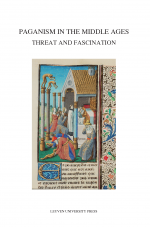
Publication – Paganism in the Middle Ages. Threat and Fascination

In this volume the persistence, resurgence, threat, fascination, and repression of various forms of pagan culture are studied in an interdisciplinary perspective from late antiquity to the emergent Renaissance. Contributions deal with the survival of pagan beliefs and practices, as well as with the Christianization of pagan rural populations or with the different strategies of oppression of pagan beliefs. The authors examine problems raised by the encounter with pagan cultures outside the Muslim world and show how philosophers contrived to ‘save’ the great philosophers and poets from ancient culture notwithstanding their paganism. The contributors also study the fascination of classic ‘pagan’ culture among friars during the fourteenth and fifteenth centuries and the imitation of pagan models of virtue and mythology in Renaissance poetry.

Table des matières :

Introduction

Ludo Milis – The Spooky Heritage of Ancient Paganisms
Carlos Steel – De-paganizing Philosophy
John Marenbon – A Problem of Paganism
Henryk Anzulewicz – Albertus Magnus über die philosophi theologizantes und die natürlichen Voraussetzungen postmortaler Glückseligkeit: Versuch einer Bestandsaufname
Marc-André Wagner – Le cheval dans les croyances germaniques entre paganisme et christianisme
Brigitte Meijns – Martyrs, Relics and Holy Places: The Christianization of the Countryside in the Archdiocese of Rheims during the Merovingian Period
Edina Bozoky – Paganisme et culte des reliques: le topos du sang vivifiant la végétation
Rob Meens – Thunder over Lyon: Agobard, the tempestarii and Christianity
Robrecht Lievens – The ‘pagan’ Dirc van Delf
Stefano Pittaluga – Callimaco Esperiente e il paganesimo
Anna Akasoy – Paganism and Islam: Medieval Arabic Literature on Religions in West Africa

Informations pratiques :
Carlos Steel, John Marenbon, and Werner Verbeke (éd.), Paganism in the Middle Ages. Threat and Fascination, Louvain, Leuven University Press, 2013 (Mediaevalia Lovaniensia, Series 1/Studia, 43). Paperback. ISBN: 9789058679338. Prix : 59,50 €.
Publié dans Publications | Laisser un commentaire

Séminaire – Réception de l’Antiquité

La question de la réception de l’antiquité est prise à la fois comme phénomène culturel au sens large et comme champ disciplinaire spécifique, dans le cadre du développement récent des classical reception studies ; elle est également envisagée dans l’évolution des différentes disciplines qui font de l’antiquité leur champ d’étude privilégié, en interaction avec l’ensemble des sciences humaines et les innovations technologiques. Le séminaire aborde différents aspects de la réception de l’antiquité :
  1. L’Antiquité comme référence culturelle au sens large, les mécanismes de revendication et d’appropriation dont elle fait l’objet.
  2. L’histoire des disciplines qui fondent la réception de l’Antiquité, leur actualité et leur impact sur le paysage culturel contemporain
Programme : 
Figures de conquérants

9h30-10h45 : Catherine Gaullier-Bougassas (Université de Lille 3, ALITHILA) – Réception de la figure d’Alexandre le Grand » (programme ANR).
10h45-12h00 : Alban Gautier (Univ. du Littoral, HLLI) – Trajan au paradis ? Aux origines de la légende médiévale du meilleur des empereurs
La réception de l’antiquité à la Renaissance
13h15-14h30 : Anne-Pascale Pouey-Mounou (Univ. de Lille 3, laboratoire ALITHILA) – Les débordements de la création, l’inspiration dans tous ses états
14h30-15h45 : Elsa Kammerer (Univ. Lille 3, laboratoire ALITHILA) – Archaiologia et humanistes « antiquaires». Comment la passion pour l’Antiquité fit naître l’archéologie (XVe-XVIe siècles)
L’antiquité une science : la figure d’un fondateur
15h45-17h00 : Jean-Louis Podvin (Univ. du Littoral, HLLI) – Auguste Mariette, le 2e fondateur de l’égyptologie
Informations pratiques :
Vendredi 1er mars 2013,  9h00-17h30
Lille-III – Laboratoire : HALMA-IPEL, UMR 8164
Lieu : salle F 013
Responsables : Jean-Christophe Jolivet, Christine Hoët-Van Cauwenberghe et Marie-Madeleine Castellani – laboratoires : HALMA-IPEL et ALITHILA
Laboratoires partenaires, programmes partenaires : MESHS – EA ALITHILA – UMR 8164 HALMA-IPEL

Source de l’information : Université Lille-III
Publié dans Colloque, Séminaire | Laisser un commentaire

Colloque – Resounding Images: Medieval Intersections of Art, Music, and Sound

Resounding Images: Medieval Intersections of Art, Music, and Sound
A Conference of the University Seminar on Medieval Studies
Faculty House, Columbia University, May 3, 2013
Date: 05/03/2013
Organizer: Susan Boynton

Although sound is probably the most difficult component of the past to reconstruct, it was also the most pervasive, whether planned or unplanned, instrumental or vocal, occasional or ambient. This conference brings together specialists in several fields to explore the now-missing intersection of visual and aural in the experience of medieval environments and objects.

The conference is free of charge and open to the public. There will be a buffet lunch ($16.50) and dinner ($25), both in Faculty House, both payable by check (made out to Columbia University) on the day of the conference. To register, please send an email to jmw2202@columbia.edu indicating whether you want to sign up for one or both of the meals. Space at the meals is limited, so please make sure to reserve your place as early as possible.

This conference is sponsored by the University Seminar on Medieval Studies, Medieval and Renaissance Studies, the Department of Art History and Archeology, the Department of Music, the Axion Estin Foundation, and the Friends of Burke Library

Programme : 

9h00 : Susan Boynton, Columbia University/Diane Reilly, Indiana University – Welcome

9h15-11h00 – Chair: Holger Klein, Columbia University

Roland Betancourt, Yale University – Fulfillment and the Medium: The Image-Text in Byzantine Gospel Lectionaries of the Late Eleventh Century
Henry Schilb, Index of Christian Art, Princeton University – Singing, Shouting, Crying, and Saying: Embroidered Veils and the Sounds of the Byzantine Rite
Nancy P. Ševčenko, Independent Scholar – Written Voices. The Spoken Word in Byzantine Monumental Painting
11h15-11h15 : Break

11h15-12h45 – Chair: Vivian Mann, Jewish Theological Seminary

Elizabeth Valdez del Álamo, Montclair State University – Hearing the Image at Santo Domingo de Silos
Tom Nickson, Courtauld Institute of Art – Vox Domini Sonat: Conquest, Change and Continuity in Medieval Iberia
Matthew G. Shoaf, Ursinus College – The Voice in Relief: Sculpture and Vocal Surplus at the Rise of Naturalism
12h45-14h00 : Lunch, Faculty House

14h00-15h30 – Chair: Kathryn Smith, New York University

Margot Fassler, University of Notre Dame, and Jeffrey Hamburger, Harvard University – John the Baptist at Paradies bei Soest: A Newly-Discovered Office and Its Visual Program
Isabelle Marchesin, Université de Poitiers – The musica of the Jongleur in the Rhetorical Strategies of Medieval Texts and Images
Sébastien Biay, Université de Poitiers – Building a Church with Music: The Plainchant Capitals at Cluny, c. 1100
15h30-15h45 : Break
15h30-17h00 – Chair: Nancy Wu, The Cloisters and The Metropolitan Museum of Art

Sheila Bonde, Brown University, and Clark Maines, Wesleyan University – Performing Silence and Regulating Sound: The Soundscape of the Medieval Cloister of Saint-Jean-des-Vignes
Stephen Murray, Columbia University – The Voice of the Interlocutor in the Cathedral
17h00 : Discussion of all the papers
18h00 : Dinner, Faculty House

Source de l’information : ici
Publié dans Colloque | Laisser un commentaire