Mardi 23 avril 2024 entre 12h et 15h (salle Perroy, Sorbonne)
À propos d’« Une question d’actualité : réforme grégorienne et périodisation du Moyen Âge », parue dans Le Moyen Age, 2023/1 (Tome CXXIX, p. 75-214) (Dominique Barthélemy, Patrick Henriet, Michel Lauwers, Florian Mazel)
Résumé : La Nouvelle Histoire du Moyen Âge, parue en 2021 sous la direction de Florian Mazel, a fait récemment l’objet dans la revue Le Moyen Âge de deux commentaires critiques par Dominique Barthélemy et Patrick Henriet. Leur caractère sévère a conduit la revue à accorder un droit de réponse à Michel Lauwers et Florian Mazel dans le même numéro.
Mêlant un ton agonistique à la critique d’un paradigme historiographique dont l’ouvrage serait le produit et le reflet, ces deux comptes rendus et leurs réponses semblent participer d’une polémique scientifique – la forme et la dimension de chacune de ces productions les apparentent à des articles scientifiques – d’autant plus significative que les quatre auteurs occupent des positions académiques et scientifiques importantes et que le sujet de l’échange – la réforme grégorienne – est au cœur du programme de la question d’agrégation en histoire médiévale.
Cependant, faut-il immédiatement assimiler l’expression de positions divergentes à un débat scientifique ? Cette parution constitue ainsi un point de départ idéal pour définir les méthodes et donner un exemple de ce que peut être la fonction objectivante d’une sociologie des médiévistes cherchant à échapper aussi bien à un paradigme idéaliste (tout débat entre savant est un débat purement savant) qu’à un réductionnisme sociologisant (les positions scientifiques ne sont que l’expression d’intérêts).
Programme :
A. Fontbonne (UNamur), G. Fontbonne (CESSP), « Un débat dans le champ des médiévistes », les risques de la construction d’objet
F. Madeline (UParis1), P. Vey (ENC-Paris 1), Genèse de la Nouvelle Histoire du Moyen Âge : les enjeux d’un manuel
B. Dufal (The University of Sydney), N. Ruffini-Ronzani (UNamur-Archives de l’État ), Trajectoires et positions des auteurs
Anne-Orange Poilpré, PR et Philippe Plagnieux, PR, accompagnés de Sabine Maffre, conservatrice au département des manuscrits de la BNF, docteure en histoire de l’art
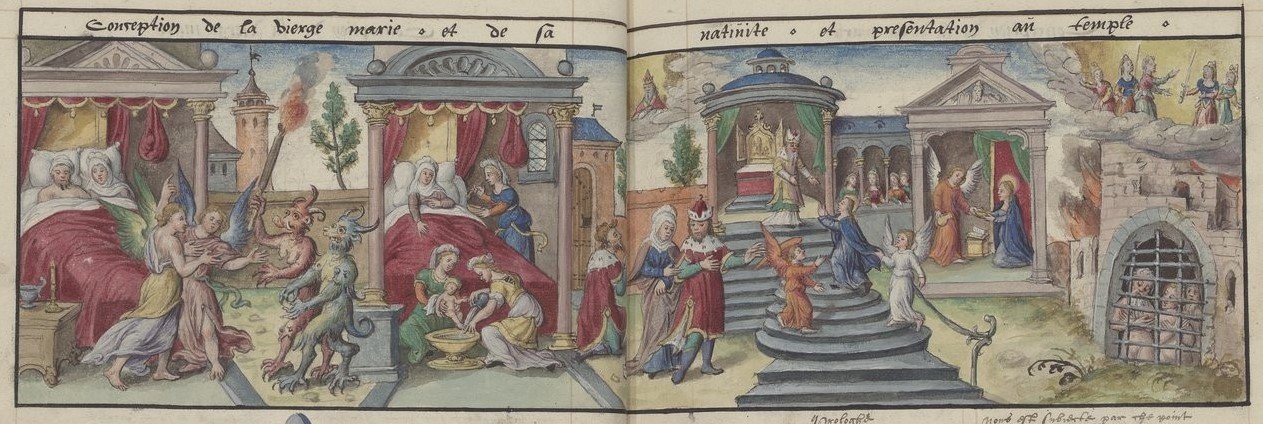
Jeux et drames liturgiques dans les manuscrits médiévaux enluminés
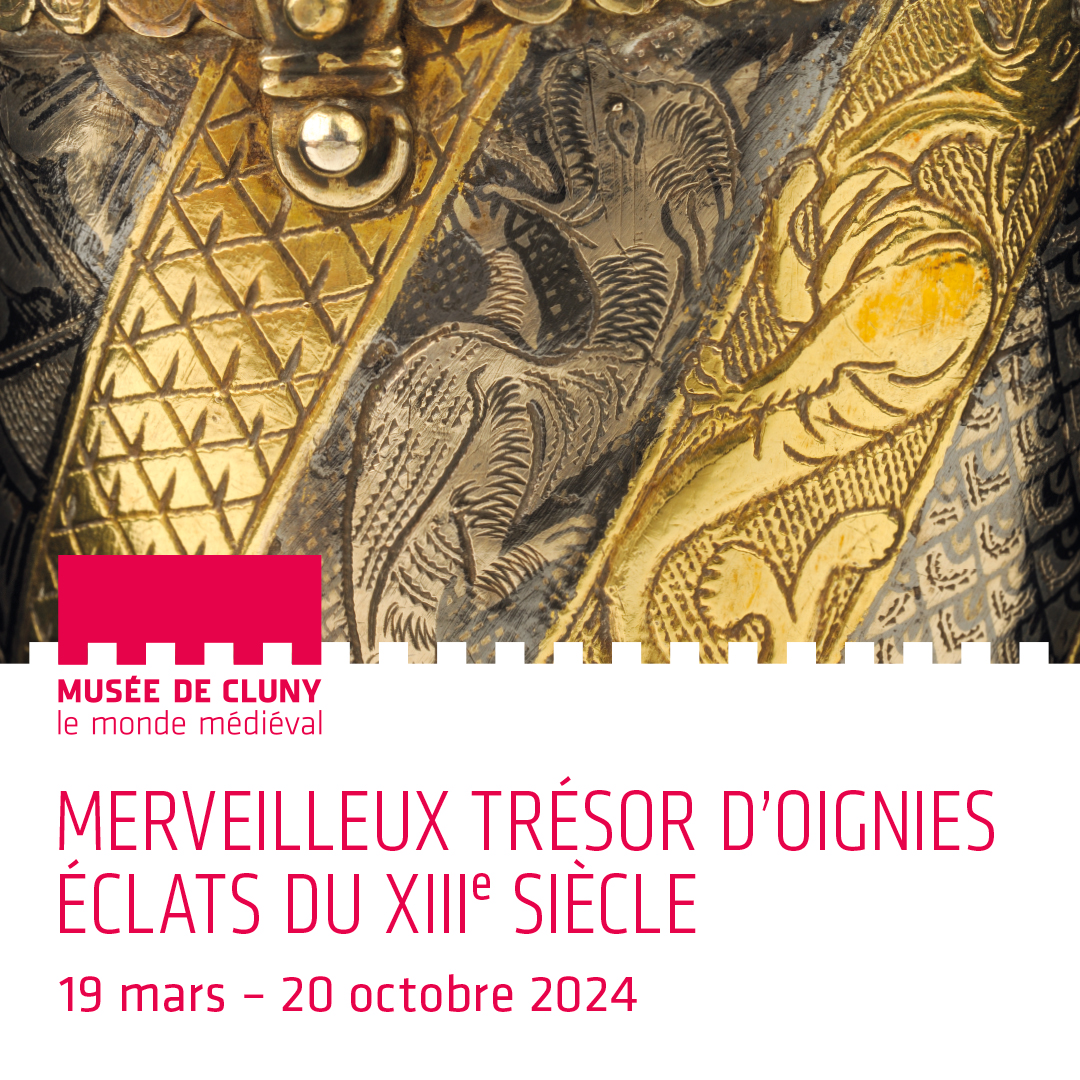
Le Trésor d’Oignies, reconnu depuis 1978 comme l’une des sept merveilles de Belgique, sort du territoire belge presque en intégralité pour la première fois. Du 19 mars au 20 octobre 2024, le musée de Cluny – musée national du Moyen Âge présente ces pièces d’orfèvrerie dans une exposition qui leur est entièrement dédiée : Merveilleux Trésor d’Oignies : éclats du XIIIe siècle.
Parmi les objets du trésor, exposé habituellement au Musée des Arts anciens du Namurois, une trentaine pouvant voyager est présentée au musée de Cluny : des pièces d’orfèvrerie, principalement des reliquaires, et une sélection de textiles. Le parcours rassemble des œuvres majeures telles que le reliquaire du lait de la Vierge, le reliquaire de la côte de saint Pierre, les plats de reliure de l’évangéliaire d’Oignies ou encore le calice et la patène dits de Gilles de Walcourt. L’exposition permet de retracer l’histoire du prieuré Saint-Nicolas d’Oignies, une communauté de chanoines augustins fondée à la fin du XIIe siècle, autour de trois figures centrales : Marie d’Oignies (1177-1213), Jacques de Vitry (1185-1240) et le talentueux orfèvre Hugues de Walcourt, dit Hugo d’Oignies († vers 1240). Ses créations et celles de son atelier, reconnaissables par la profusion des nielles, filigranes, motifs naturalistes et cynégétiques, constituent un témoignage virtuose du travail du métal précieux.
Quelques années après la fondation du prieuré, la mystique Marie d’Oignies s’y installe. Plusieurs pièces de l’exposition évoquent le destin de celle qui a été déclarée bienheureuse peu après sa mort et qui est encore vénérée aujourd’hui. À la même époque, Jacques de Vitry, brillant prédicateur et un temps évêque d’Acre en Terre sainte, devient le principal mécène du prieuré et lui fournit reliques et matières précieuses. Son soutien permet au prieuré de devenir un important foyer de création d’objets d’orfèvrerie. Hugo d’Oignies, puis son atelier, y déploie un art en constante évolution, comme le souligne l’exposition.
C’est la première fois que ce prestigieux trésor, dont une grande partie des pièces ont été inscrites en 2010 sur la liste des biens classés comme « Trésor de la Fédération Wallonie-Bruxelles », sort dans sa presque intégralité de Belgique, cent ans après une présentation partielle de trois pièces au musée du Louvre en 1924.
Des bornes interactives permettront également aux visiteurs d’approfondir leur expérience de visite, en revenant sur le parcours de Jacques de Vitry ou pour découvrir dans leurs moindres détails les plats de reliure d’Hugo d’Oignies.
L’exposition Merveilleux Trésor d’Oignies : éclats du XIIIe siècle est organisée par le Musée de Cluny – musée national du Moyen Âge et le TreM.a-Musée des Arts anciens du Namurois, avec le soutien de la Fondation Roi Baudouin, propriétaire du Trésor d’Oignies. Le commissariat en est assuré par Christine Descatoire, conservatrice générale au musée de Cluny, responsable de la collection d’orfèvrerie et Julien De Vos, conservateur général, directeur du Service du Patrimoine culturel de la Province de Namur.
Informations pratiques :
Au Musée de Cluny, Paris 19 mars – 20 octobre 2024
Étudié depuis 1978, le site archéologique de Brandes (Huez-Alpe d’Huez, Isère) réunit en un seul et même lieu des fortifications, une église paroissiale, un cimetière, des habitations, des mines, des ateliers de minéralurgie, des aménagements hydrauliques et des archives. Les très nombreux objets de la vie quotidienne découverts montrent un mobilier riche et éclairant de façon inédite le niveau de vie et de pensée des mineurs d’argent au Moyen Âge. Les résultats publiés ici livrent une image parfois surprenante de cette population et de la vie quotidienne des travailleurs du métal dans un village alpin du Moyen Âge.
Informations pratiques :
Vivre en montagne au Moyen Âge. Les objets racontent l’histoire de l’argenteria de Brandis. Huez-Alpe d’Huez – XIIe-XIVe siècles, éd. Marie-Christine Bailly-Maître, Lyon, CIHAM Édiitons, 2024 ; 1 vol., 504 p. (Mondes médiévaux, 9). ISBN : 978-2-9568426-9-9. Prix : € 49,00.
The Medieval Academy at 100 The 2025 Annual Meeting of the Medieval Academy of America
Harvard University, Cambridge MA 20-22 March 2025
The Centennial Meeting of the Medieval Academy of America will take place on the campus of Harvard University in Cambridge, Massachusetts, hosted by Harvard University, Boston College, Boston University, Brandeis University, Fitchburg State University, the Massachusetts Institute of Technology, Stonehill College, Tufts University, and Wellesley College. While the conference will take place in person, the plenary lectures and some other events also will be live streamed. Plenary addresses will be delivered by Kristina Richardson (Professor of History and Middle Eastern and South Asian Languages and Cultures, University of Virginia), Sara Lipton (Incoming President of the Medieval Academy of America and Professor of History, Stony Brook University), and Wendy Belcher (Professor of Comparative Literature and African American Studies, Princeton University). The Annual Meeting will be followed by the Sunday annual meeting of the Medieval Academy’s Committee on Centers and Regional Associations (CARA).
Conference Location: The conference sessions, receptions, and pre-conference programs will take place at Harvard University in Cambridge, Massachusetts. The Harvard campus is accessible by taxi and public transit from Boston’s Logan Airport as well as from the South and Back Bay Amtrak stations. In addition to Harvard’s own museums and libraries, visitors can take advantage of greater Boston’s rich dining, entertainment, and cultural resources, including the Museum of Fine Arts, the Isabella Stewart Gardner Museum, and the Boston Public Library, all easily reached by the MBTA subway from Harvard Square.
Proposals: The Program Committee invites proposals for papers and panels on any topic from scholars studying the medieval world in all its variety, in all disciplines, regions, and periods of Medieval Studies. Panels usually consist of three 25-minute papers, and proposals should be geared to that length. Panel organizers, however, may wish to propose different formats for their panels, and the Program Committee may choose a different format for some panels after the proposals have been reviewed. Any member of the Medieval Academy may submit a paper or panel proposal. Others may submit proposals as well, but they must become members in order to present at the meeting. Exceptions may be given to individuals whose specialty would not normally involve membership in the Medieval Academy. Please contact MAA Executive Director Lisa Fagin Davis (lfd@themedievalacademy.org) with any questions about this policy.
We are particularly interested in papers and panels that cross traditional disciplinary and geographical boundaries, or that use various approaches to examine a given topic. Our goal is to create a rich and diverse program that embodies the conference theme « The Medieval Academy at 100,” placing detailed, methodologically rigorous scholarship on the Middle Ages into conversation with broader reflections on the histories and possible futures of Medieval Studies itself. We encourage those proposing papers and panels to engage with one or more of the threads below.
Threads: The Program Committee has created six threads for the Centennial Meeting, meant to promote critical engagement between scholars working on all aspects of the medieval world, as well as on more modern appraisals and interpretations of that world. These are:
Who? Subjects of Medieval Studies. Possible topics might include: identities (race, ethnicity, gender, religion); animals and the non-human; abilities and disabilities; and communities in theory and practice.
What? Definitions, Reevaluations, and Transformations. Possible topics might include: canons and canonicity; orthodoxies and heterodoxies; laws and norms; science and scientia; disciplines of/and Medieval Studies; and making the « Middle Ages », 1925-2025.
When? Beginnings, Endings, and Possible Futures. Possible topics might include: remembering and forgetting; periodizations and paradigms; environmental, evolutionary, and geological perspectives on the medieval; and the future(s) of Medieval Studies, 2025-2125.
Where? Space, Place, and Geographies. Possible topics might include: people, things, and ideas on the move; frontiers and boundaries; opportunities and challenges of the “global turn”; landscapes, wilderness, and lived environments; and preservation and effacement of the medieval.
Why? Reverence, Recycling, and Rejection of the Middle Ages. Possible topics might include: medievalisms and popular cultures of the medieval; aesthetics of the medieval; politics and the medieval, then and now; and what the Middle Ages might do for us today.
How? Frameworks for Research, Teaching, and Public Engagement. Possible topics might include: translation in theory and practice; digital medieval studies; the science of the medieval past; the Middle Ages in the contemporary classroom; and curating and exhibiting the medieval.
Submissions: Individuals may either propose individual papers or a full panel of papers and speakers, using the links provided below. Paper proposals should include the individual’s name, professional affiliation (including independent scholar), contact information, paper title, and a brief (c. 150-word) abstract. Session proposals should include the name and contact information for the session organizer, the session title, a c. 500-word abstract, and information for each of the session participants (including proposed chairs and respondents). Those submitting paper and session proposals also will be asked to indicate the thread(s) with which their contributions might best be associated. All submissions are due by Monday, 3 June 2024. If you have any questions, please direct them to the Program Committee chairs at MAA2025@themedievalacademy.org.
Individual paper proposals
Panel proposals
Selection Process: The Program Committee will assess paper and panel proposals via blind review during the summer of 2024, evaluating their quality, significance, and relevance to the conference themes. Those proposing papers and sessions will be informed of the Committee’s decision by 15 September 2024, with the final program announced in late 2024. Please note that all Annual Meeting participants will be required to agree to abide by the MAA’s Professional Behavior Policy, which can be found here.
The Medieval Academy offers several travel bursaries and awards in conjunction with the Annual Meeting:
1) Student Bursaries: Graduate students who are members of the Medieval Academy of America and who have had their papers accepted for presentation at the 2025 meeting are eligible to apply for a Medieval Academy Annual Meeting Bursary of up to $500. The bursaries will be awarded to graduate students for papers judged meritorious by the local Program Committee, and one applicant will be awarded the prize for Best Student Paper. The application includes a biographical form and the completed paper. The deadline for applications is 31 December 2024. Click here to apply.
2) Medieval Academy of America Travel Grants: The Medieval Academy provides a limited number of travel grants to help Academy members who hold doctorates but are not in full-time faculty positions, or are contingent scholars without access to institutional funding, attend conferences (including the Annual Meeting) to present their work. Awards to support travel in North America are $500; for overseas travel the awards are $750. These awards are adjudicated by the Academy’s Committee for Professional Development, and the deadline for applications to travel to the Annual Meeting is 1 November 2024. Click here to apply.
3) Inclusivity and Diversity Travel Grant: The Academy will present the annual Inclusivity and Diversity Travel Grant of $500 to one Annual Meeting participant presenting an accepted proposal on the study of inclusivity and diversity in the Middle Ages, broadly conceived. This Grant will be adjudicated by the Academy’s Inclusivity and Diversity Committee, and preference will be given to student, junior, adjunct, or unaffiliated scholars. The deadline for applications is 31 December 2024. Click here to apply.
Some additional travel funding may be available for those whose papers are accepted by the Program Committee, and who lack other sources of research funding. Priority will be given to part-time and contingent faculty, independent scholars, and graduate students whose institutions do not provide conference support. If you or members of your proposed session would like to be considered for travel funding, please check the appropriate box(es) in the submission portal.
The Interdisciplinary Summer School 2024 “Bridging Archaeogenetics and Medieval Studies » will bring together M.A. students and junior Ph.D. students from History, Biology, Archaeology and other relevant disciplines in order to introduce them to the use of a(ncient)DNA as a source for migration, demographics, kinship and pathology in the Middle Ages and for interdisciplinary exchange.
Bridging Archaeogenetics and Medieval Studies: Using aDNA as a source for migration, demographics, kinship and pathology
In the age of the « ancientDNA-revolution », archaeogenetic research institutes are nowadays routinely analysing samples from all periods of the human past, not the least from medieval times. Sometimes the scientific objective of the analysis resides primarily in the realm of History/Archaeology; sometimes the questions asked are of a biological nature; in other instances there is a mix of both. A rapidly growing and highly promising field of more or less intertwined genetic, historical, and archaeological knowledge production is developing, and the Middle Ages have become relevant to Genetics, as well as vice versa. Yet, true interdisciplinary cooperation remains rare, and there is much mutual distrust, misunderstanding and lack of knowledge. The Interdisciplinary Summer School « Bridging Archaeogenetics and Medieval Studies » will bring together students from History, Biology, Archaeology and other relevant disciplines in order to familiarize them with the use of a(ncient)DNA as a source for migration, demographics, kinship and pathology in the Middle Ages. The Summer School will provide a general introduction to the scientific methods, both in theory and practice. In addition, participants will be given the opportunity to learn about a particular ongoing research project, „Migration and Urban Demographics in the Berlin-Brandenburg Area during the High Middle Ages“, in which many among the teaching staff are involved. Participants will be able to learn how the methods are applied to a concrete case study, to discuss with scientists cooperating in an ongoing research project, and to participate in interdisciplinary exchanges around specific problems. This interaction will help to develop critical engagement with the sometimes fundamentally different general approaches of scientists and scholars in the humanities.
Target group: M.A. students and junior PhD/doctoral students from History, Biology, Archaeology and other Natural Sciences and Humanities
Fees: There is no fee for participation. However, participants must cover their own accommodation and travel expenses for travelling to and from Berlin, as well as for the day trip to Leipzig. A number of inexpensive accommodations are available at the guesthouse of Humboldt University. They can be booked through the organizers.
Application details: Your application should include the following: 1. Letter of motivation (one page, outlining why you are interested in participating in the Summer School and what you are expecting from it) 2. Curriculum Vitae (one page) 3. Scan of B.A. or M.A. diploma (or equivalent) All three elements must be merged into a single PDF document. Please let us know in your application if you are interested in residing at the guesthouse of Humboldt University during the Summer School (single bedrooms with shared bathroom facilities, cost: about 300 EUR for six nights from 22 to 27 September) Please send your application to: medieval.summerschool@bbaw.de The application deadline is 30 April 2024.
Preliminary Program
Among the topics to be taught at the Summer School are: Introduction to population genetics Detecting migration and kinship through aDNA Introduction to the questions and methods of medieval history and to the challenges of interdisciplinary research on the Middle Ages Introduction to the archaeology of migration, kinship and gender Field trip to excavation site in Berlin Detecting pathogens through aDNA
The Summer School will begin on 23 September, 9.30 a.m. and end on 27 September, 3 p.m.
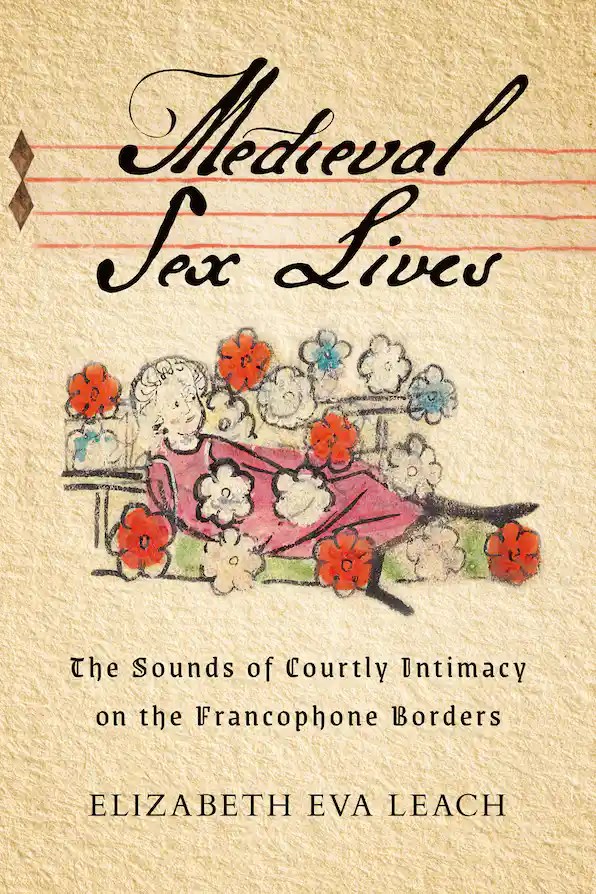
Medieval Sex Lives examines courtly song as a complex cultural product and social force in the early fourteenth century, exploring how it illuminates the relationship between artistic production and the everyday lives of the elites for whom this music and poetry was composed and performed. In a focused analysis of the Oxford Bodelian Library’s Douce 308 manuscript—a fourteenth-century compilation that includes over five hundred Old French lyrics composed over two centuries alongside a narrative account of elaborate courtly festivities centered on a week-long tournament—Elizabeth Eva Leach explores two distinct but related lines of inquiry: first, why the lyric tradition of « courtly love » had such a long and successful history in Western European culture; and, second, why the songs in the Bodleian manuscript would have been so important to the book’s compilers, owners, and readers.
The manuscript’s lack of musical notation and authorial attributions make it unusual among Old French songbooks; its arrangement of the lyrics by genre invites inquiry into the relationship between this long musical tradition and the emotional and sexual lives of its readers. Combining an original account of the manuscript’s contents and their likely social milieu with in-depth musical and poetic analyses, Leach proposes that lyrics, whether read or heard aloud, provided a fertile means of propagating and enabling various sexual scripts in the Middle Ages. Drawing on musicology, literary history, and the sociology and psychology of sexuality, Medieval Sex Lives presents a provocative hypothesis about the power of courtly songs to model, inspire, and support sexual behaviors and fantasies.
Elizabeth Eva Leach is Professor of Music at the University of Oxford. She is the author of Sung Birds and Guillaume de Machaut.
Informations pratiques :
Elizabeth Eva Leach, Medieval Sex Lives. The Sounds of Courtly Intimacy on the Francophone Borders, Ithaca, Cornell University Press, 2023 ; 1 vol., 324 p. ISBN : 978-1-50177-187-3. Prix : € 46,95.
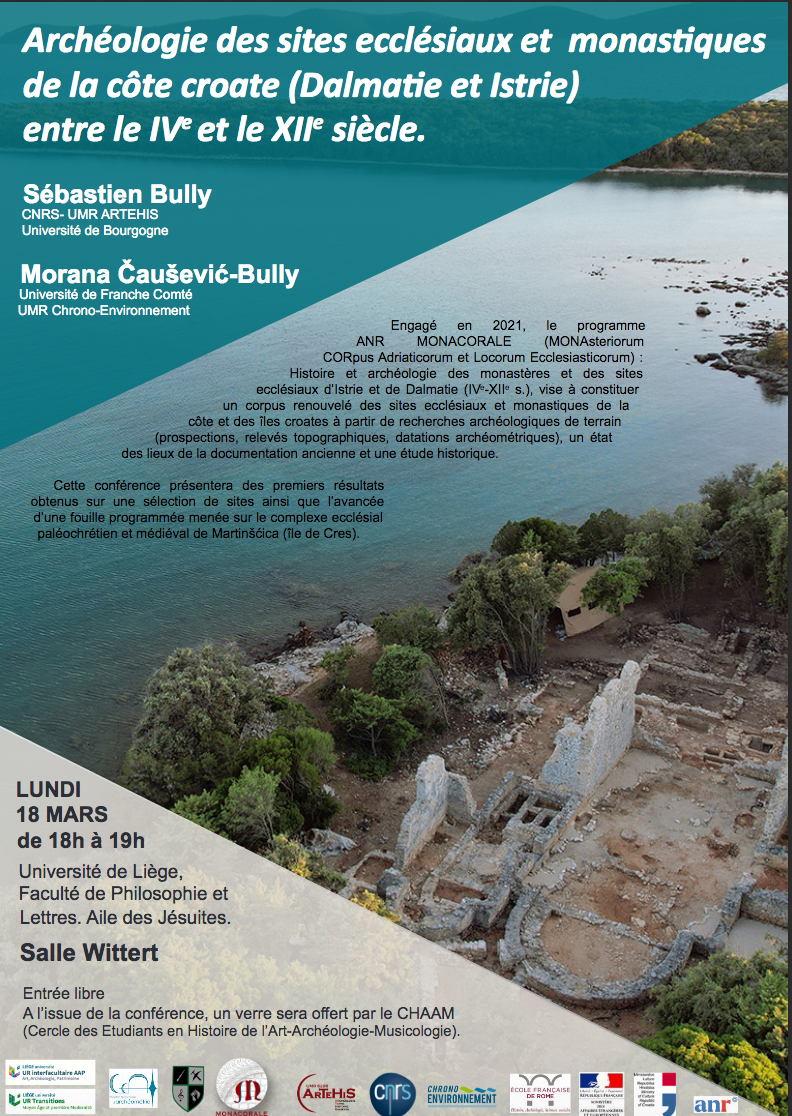
Engagé en 2021, le programme ANR MONACORALE (MONAsteriorum CORpus Adriaticorum et Locorum Ecclesiasticorum) : Histoire et archéologie des monastères et des sites ecclésiaux d’Istrie et de Dalmatie (IVe-XIIe s.), vise à constituer un corpus renouvelé des sites ecclésiaux et monastiques de la côte et des îles croates à partir de recherches archéologiques de terrain (prospections, relevés topographiques, datations archéométriques), un état des lieux de la documentation ancienne et une étude historique.
Cette conférence présentera des premiers résultats obtenus sur une sélection de sites ainsi que l’avancée d’une fouille programmée menée sur le complexe ecclésial paléochrétien et médiéval de Martinšćica(île de Cres).
Informations pratiques :
LUNDI 18 MARS de 18h à 19h Université de Liège, Faculté de Philosophie et Lettres. Aile des Jésuites.
Salle WittertEntrée libreA l’issue de la conférence, un verre sera offert par le CHAAM (Cercle des Etudiants en Histoire de l’Art-Archéologie-Musicologie).
Enrico Veneziani (univ. Porto), The Pope’s Men. Papal Legates, Judges Delegate, and Representatives in the Iberian Peninsula (11th–13th Centuries)
Commentaire: Lucas Burkart (univ. Bâle)
Pour participer à la conférence, merci de vous inscrire ici: Zoom
Événement dans le cadre du cycle de séminaires »Euro-Mediterranean Entanglements in Medieval History«, organisé par les Instituts historiques allemands de Paris et de Rome.
Centre d’Histoire « Espaces et Cultures » (CHEC UPR 1001) Université Clermont Auvergne Almanach de Brioude
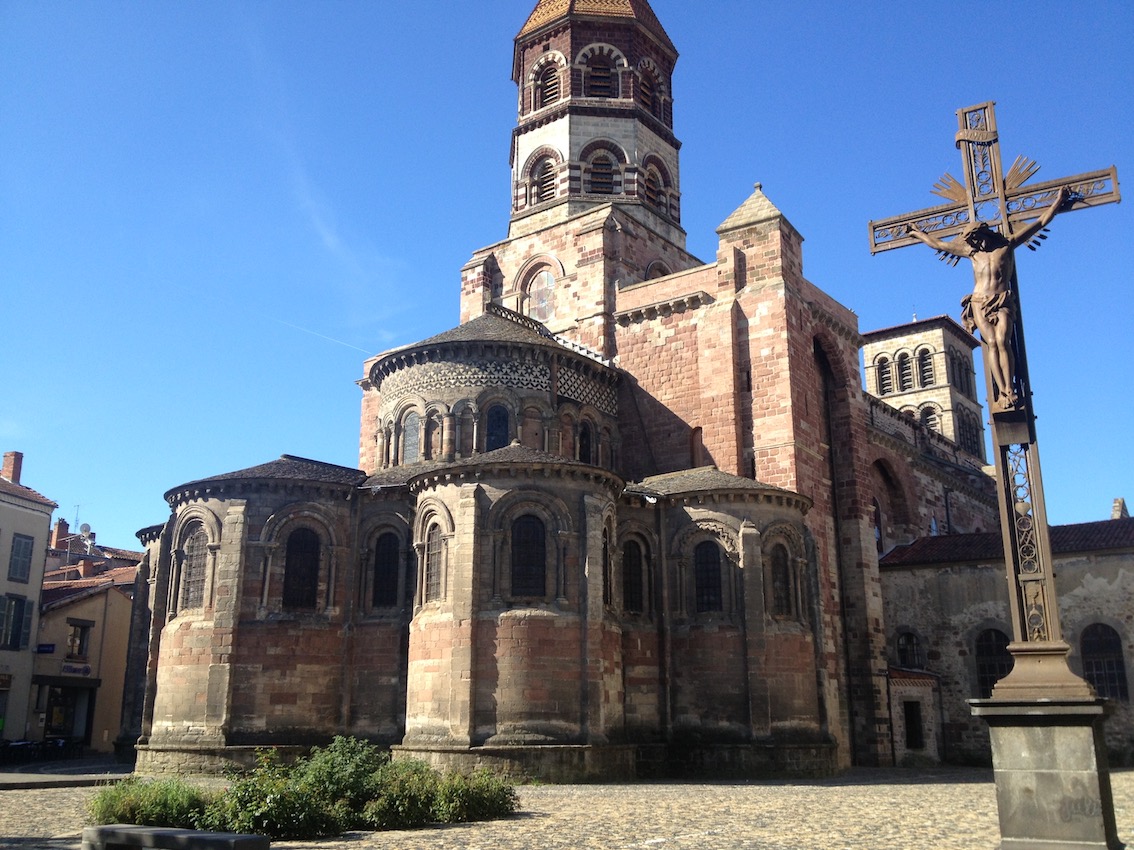
En 2004, 2007 et 2011, trois colloques ont envisagé l’histoire de Brioude depuis « ses origines » jusqu’aux « temps féodaux »1. Dans le prolongement de ces manifestations, nous souhaitons aborder de nouvelles thématiques en considérant, d’une part l’histoire de l’ensemble du territoire brivadois, et non plus de la seule ville de Brioude, d’autre part élargir l’étude aux périodes moderne et contemporaine, sans négliger pour autant les siècles précédents. Les ressources documentaires disponibles permettent d’envisager une telle rétrospective, qu’il s’agisse des collections publiques (archives départementales, bibliothèques patrimoniales…) ou privées (Almanach de Brioude…). Notre rencontre entend ainsi encourager la valorisation de fonds méconnus, tel que celui de l’érudit brivadois Paul Le Blanc (1828-1918), conservé à la Bibliothèque du patrimoine de Clermont Auvergne Métropole.
Il conviendra de s’interroger sur les représentations du « Brivadois » dont l’emprise territoriale a pu varier au cours du temps, ainsi que ses limites selon la nature de son administration civile ou religieuse par exemple. De même, les champs d’analyse devront englober les thématiques les plus larges possibles, ces questionnements étant susceptibles d’intéresser également des géographes sur l’organisation du territoire, ainsi que des juristes ou des sociologues.
Ce colloque entend explorer plusieurs thématiques de recherche, en lien avec l’historiographie la plus récente :
– Conduire une réflexion sur la « fabrique » de l’espace, à propos d’une histoire de la construction, déconstruction et reconstruction de ce territoire, en lien avec les acteurs, leurs représentations et leurs actions.
– Etudier les recompositions et les mutations territoriales aux regards de phénomènes sociaux, économiques, géographiques ou politiques afin de cerner des mobilisations d’identités liées aux éléments du contexte.
– Analyser les modalités d’appropriation de l’espace, concernant notamment les réseaux à l’œuvre, les processus de territorialisation ou son fonctionnement comme interface entre entités régionales, nationales et internationales.
– Questionner les notions de « centre », de « périphérie » et de « marge » concernant la place d’un territoire « brivadois » aux contours évolutifs, dans la structuration de l’espace à une échelle qui le dépasse, et comprendre de quelles façons son existence ou sa reconnaissance s’articulent avec celles des entités territoriales voisines. Le choix d’une large temporalité, de l’Antiquité aux temps contemporains, permettra de caractériser les continuités et les ruptures, tout en développant des visées comparatistes entre différentes aires géographiques à l’échelle nationale et internationale. Nous vous invitons à proposer une présentation de vos travaux en envoyant une courte biobibliographie, un titre de communication accompagné d’un résumé d’une dizaine de lignes exposant votre projet, et indiquant le thème dans lequel celui-ci s’inscrit.
Date limite d’envoi des propositions, le 15 janvier 2025 à : Stéphane Gomis, professeur d’histoire moderne, Université Clermont Auvergne stephane.gomis@uca.fr
Avec le soutien du FNRS, du CRHiDI (UCLouvain – Saint-Louis, Bruxelles), d'INCAL (UCLouvain), de PraME (UNamur), de sociAMM (ULB) et de Transitions (ULiège)









Vous devez être connecté pour poster un commentaire.