Publication – « Historiography and Identity V: The Emergence of New Peoples and Polities in Europe, 1000-1300 », éd. Walter Pohl, Veronika Wieser, Francesco Borri

In many countries in Northern and Eastern Europe, the period after 1000 saw the emergence of new Christian kingdoms. This process was soon reflected in works of historiography that traced the foundation and development of the new polities. Many of these texts had a lasting impact on the formation of political, ethnic, and religious identities of these states and peoples.

This volume deals with some of these earliest histories narrating the past of the new polities that had emerged after 1000 in Northern, East Central, and Eastern Europe, as well as in the Adriatic regions. They have often been understood as ‘national histories’, but a closer look brings out the differences in their aims and construction. One question addressed here is to what extent these historians built on models of identification developed in earlier historiography. The volume provides an overview of several fundamental texts in which identities in the new Christian kingdoms were negotiated, and of recent research on these texts.

Walter Pohl is Emeritus Professor of Medieval History at the University of Vienna and former Director of the Institute for Medieval Research at the Austrian Academy of Sciences.

Veronika Wieser works as a postdoctoral researcher at the Institute for Medieval Research at the Austrian Academy of Sciences.

Francesco Borri, Department of Humanities, Ca’ Foscari University of Venice.
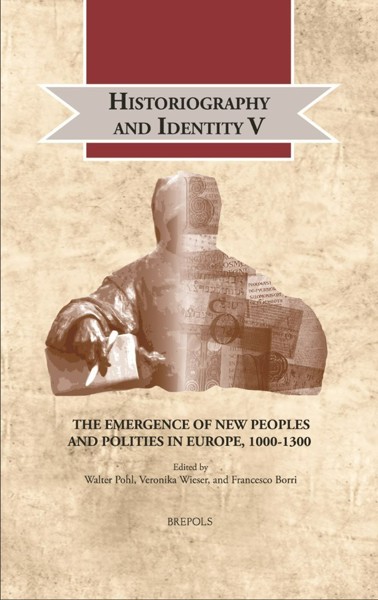
Table des matières :

Introduction: The Historiography of New Peoples and Polities in Northern and Eastern Europe— WALTER POHL and VERONIKA WIESER

Scandinavian and Baltic Origins
Adam of Bremen’s Use of Earlier History
IAN WOOD
National Identity in Scandinavian Chronicles (Saxo and Snorri)
SVERRE BAGGE
Orkney, Óláfr Tryggvason, and the Conversion to Christianity
ROSALIND BONTÉ
Biblical Motifs and the Shaping of Ethnic Categories in the Chronicle of Henry of Livonia
STEFAN DONECKER and PETER FRAUNDORFER

Cosmas of Prague, the Gesta principum Polonorum, and their Western Contexts
The Legenda Christiani, the Chronica Bohemorum, and the Bohemian Slavs
PAVLÍNA RYCHTEROVÁ
Space and Identity in the Chronica Bohemorum of Cosmas of Prague
JAN HASIL
Helmold of Bosau and our Reading of his Chronica Slavorum
JAN KLÁPŠTĚ
Creating Dynastic Identity: Gallus Anonymus’s Chronicle
ZBIGNIEW DALEWSKI
‘By the Crown of My Empire! The Things I Behold Are Greater than I Had Been Led to Believe!’: The Narrative Pattern Sheba Visits Salomon in Medieval Narratives (Gallus’s Chronicle, Chronicon Salernitanum, and Pèlerinage de Charlemagne)
JACEK BANASZKIEWICZ

Hungarian Origins and their Political Uses
Hungarian Origins and Carolingian Politics in Regino of Prüm’s Chronicle
MAXIMILIAN DIESENBERGER
Us and Them: The Description of Foreigners and Indigenous Peoples in Master P.’s and Simon of Kéza’s Gesta (Thirteenth Century)
DÁNIEL BAGI
Christian Identity versus Heathendom: Hungarian Chroniclers Facing the Pagan/Nomadic Past and the Present
LÁSZLÓ VESZPRÉMY

Histories of Origins from the Adriatic and the Balkans
Circles of Identity: The Narratives of Thomas of Split and Domnius de Cranchis of Brač
NEVEN BUDAK
Grado as Aquileia Nova and Split as Salona Nova? Local Historiography and Local Identity
PETER ŠTIH
Patria Venecia: John the Deacon’s Search for Venetian Origins
FRANCESCO BORRI
The ‘Dioclean Tradition’ in Serbian Literature of the Early Thirteenth Century
ALEKSANDAR UZELAC

The Rus’ Primary Chronicle, the Old Testament, and the Byzantine Background
The Debate over Authorship of the Rus’ Primary Chronicle: Compilations, Redactions, and Urtexts
DONALD OSTROWSKI
Creating Time, Forging Identity, Building a State:
The Primary Chronicle of Rus’
OLEKSIY TOLOCHKO
Historiography of the New Europe: Comparative Perspectives
WALTER POHL

Index

Informations pratiques :

Historiography and Identity V: The Emergence of New Peoples and Polities in Europe, 1000-1300, éd. Walter Pohl, Veronika Wieser, Francesco Borri, Turnhout, Brepols, 2023 ; 1 vol., XIV–501 p. (Cultural Encounters in Late Antiquity and the Middle Ages, 31). ISBN : 978-2-503-58849-0. Prix : € 125,00.

Source : Brepols
Publié dans Publications | Laisser un commentaire

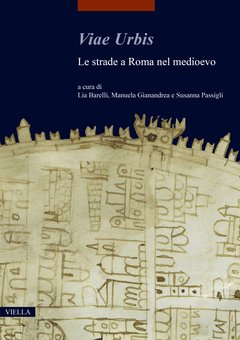
Publication – « Viae Urbis. Le strade a Roma nel medioevo », éd. Lia Barelli, Manuela Gianandrea et Susanna Passigli

Il volume raccoglie gli atti di un convegno interdisciplinare, svoltosi a Roma nel 2021, che ha riunito alcuni tra i più noti studiosi di Roma medievale. I contributi, a seguito di un ampio confronto, permettono di delineare le caratteristiche delle strade dell’Urbe medievale: una complessa e peculiare trama viaria che connetteva tra loro palazzi, case, un numero eccezionale di chiese, orti e vigne, mescolati alle antiche rovine o sorti direttamente su di esse, in un’intricata compresenza di testimonianze di una gloria passata ma anche di un vivace presente. Di tale trama, grazie all’analisi dei resti materiali e delle fonti, si analizzano e ricostruiscono da un lato la consistenza fisica e di immagine, dai manti stradali ai fronti delle case, fino agli elementi di ‘arredo urbano’ più o meno progettato, tra cui gli spolia che attiravano curiosità o anche ammirata celebrazione; dall’altro la vita sociale che per le strade si svolgeva, da alcune tra le più significative cerimonie religiose della cristianità fino agli atti della vita quotidiana.

Table des matières :

  • Lia Barelli, Manuela Gianandrea, Susanna Passigli, L’occasione di un convegno, la genesi di un volume
  • Domenico Palombi, Sacra via vs via Sacra. Persistenza e trasformazione di un percorso cerimoniale tra età antica e medioevo
  • Federico Guidobaldi, Cuncta prospera, cuncta salubria in Urbe. Il rialzamento dei livelli stradali al tempo di papa Pasquale II e altre osservazioni sulla viabilità urbana
  • Hendrik Dey, Strade e rovine a Roma nel medioevo: le forme di una compresenza
  • Giulia Facchin, Riccardo Santangeli Valenzani, Dal vicus ad Carinas a via del Tempio della Pace. Trasformazione di una strada nel medioevo
  • Robert Coates-Stephens, Statue antiche nelle strade di Roma altomedievale
  • Annarena Ambrogi, Le fontane romane nel medioevo. Continuità d’uso delle vasche e dei labra di età imperiale
  • Ottavio Bucarelli, Scritture esposte nello spazio pubblico della Roma medievale
  • Orietta Lanzarini, Le strade raccontano. I frammenti antichi nel tessuto viario di Roma medievale attraverso i disegni di età umanistica
  • Andreas Rehberg, Stemmi ed epigrafi come segni di demarcazione nelle strade della Roma tardomedievale
  • Daniela Esposito, Strade e cripte nell’area del campus Agonis
  • Maria Grazia Ercolino, Nuove percorrenze nell’area del Foro di Traiano tra X e XI secolo
  • Michele Asciutti, La strada a Roma nella sua realtà materiale, dalle tecniche di realizzazione ai problemi della carrabilità e delle acque
  • Lia Barelli, Le facciate come luogo dell’interazione tra spazi interni ed esterni: case e strade di Roma medievale
  • Andrea A. Verardi, Tra topografia e memoria dello spazio urbano: le strade di Roma nel Liber Pontificalis
  • Cristina Carbonetti Vendittelli, Il Comune di Roma e la salvaguardia delle strade tra XIII e XIV secolo
  • Susanna Passigli, La strada negli atti notarili romani
  • Giulia Barone, Le vie della Roma bassomedievale come luogo della socialità
  • Anna Modigliani, Le vie e le piazze del commercio nella Roma tardomedievale
  • Andrea Fara, Il Tevere quale via di trasporto, luogo di produzione e spazio commerciale a Roma nel medioevo 251
  • Francesca Alhaique, Luca Brancazi, Bufali e altri strani incontri animali per le strade di Roma e non solo
  • Manuela Gianandrea, Strada e chiesa a Roma nel medioevo: riflessioni su un rapporto articolato
  • Simone Piazza, Un’arte ostentata: decorazioni musive sulle facciate delle chiese di Roma (IV-XIV secolo)
  • Claudia Bolgia, La via Lata e la via Maior tra processioni e trasformazioni dello spazio urbano nei secoli XII-XIV: nuovi dati e nuove proposte
  • Sante Guido, La strada a Roma come luogo di culto: immagini e suppellettili sacre in processione
  • Giorgia Maria Annoscia, Monica Ceci, Leggere le iscrizioni per rileggere le strutture: S. Nicola de’ Calcarario lungo la via Papalis
  • Maurizio Caperna, Donatella Fiorani, La distruzione del tessuto medievale a Roma tra XIX e XX secolo. Una proposta di metodo per restituire la consistenza della forma medievale della città 339
  • Bibliografia
  • Summaries
  • Autrici e autori

Informations pratiques :

Viae Urbis. Le strade a Roma nel medioevo, éd. Lia Barelli, Manuela Gianandrea, Susanna Passigli, Rome, Viella, 2023 ; 1 vol., 404 p. (I libri di Viella. Arte). ISBN : 978-8-83313-871-8. Prix : € 55,00.

Source : Viella

Publié dans Publications | Laisser un commentaire

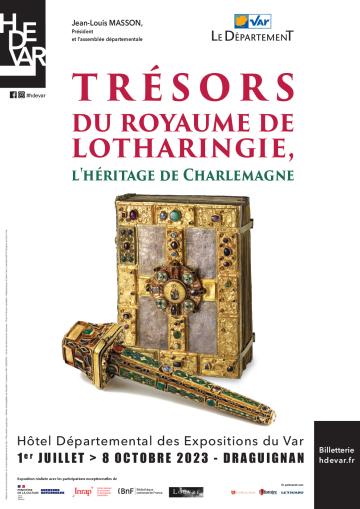
Exposition – Trésors du royaume de Lotharingie, l’héritage de Charlemagne

Du 1er juillet au 8 octobre 2023

Hôtel départemental des expositions du Var, Draguignan (Provence-Alpes-Côte d’Azur)

Une exposition inédite sur l’histoire méconnue du royaume de Lotharingie réalisée avec la participation de l’Inrap, la Bibliothèque nationale de France et le musée du Louvre.

À la mort de Charlemagne, puis de son fils Louis le pieux, l’empire fut partagé entre les trois petits-fils de Charlemagne lors du traité de Verdun en 843 : la Lotharingie, domaine de Lothaire, la Francie Orientale et la Francie Occidentale.

L’exposition mettra en avant l’histoire de ce royaume souvent méconnu ainsi que l’exceptionnelle richesse de l’art carolingien. La Lotharingie, au fil d’évolutions politiques complexes, se trouve en effet avoir couvert des territoires, allant de la mer du Nord à la mer Méditerranée et aujourd’hui intégrés à l’Allemagne, les Pays-Bas, la Belgique, le Luxembourg, la France et l’Italie.

Tout en abordant les événements les plus importants ayant rythmé l’histoire de la Lotharingie, l’exposition s’attachera à en révéler les courants artistiques. Qu’elles soient précieuses ou ordinaires, les œuvres de Lotharingie sont le miroir de la grande créativité de cette période.

Suivant un parcours linéaire suggéré par l’architecture du centre d’exposition, la manifestation présentera donc l’art  lotharingien dans un contexte élargi dans le but d’offrir des passerelles visuelles aux visiteurs et de permettre de comprendre la place charnière du monde lotharingien au tournant des Ier et IIe millénaires.

Source : INRAP

Publié dans Exposition | Laisser un commentaire

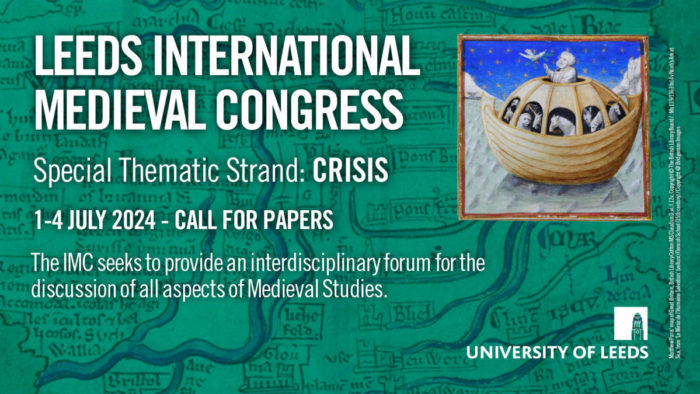
Appel à contribution – Visualising Crisis in Late Middle Ages

1-4 July 2024 – Panel Session at Leeds IMC 2024 « Crisis »

Argument

The session invites papers dealing with multiple societal / moral / religious / economic crisis in late medieval Europe resulting in the new approaches in visual media – such as new or idiosyncratic iconography (crisis of images), emotional aspects of visual objects, naturalism etc. Papers should address not only the ways the visual media reflected, responded to and represented the period crisis, but also the rituals and rites that helped to pacify it and battle the period anxiety. Papers using the variety of methodologies are welcome, in particular those addressing the period relation between the society and images via the optics of media studies, visual anthropology, visual semiology and information and communication sciences, theories of reception, or addressing the particular aspects of the late medieval visuality.

The possible topic may (but not have to) include:

  • moral and religious crisis and its visual perceptions
  • visualizing late medieval heresy and witchery and how to “deal with it” with images or pictures
  • crisis of images – new images in mind
  • moral theology and art (seven deadly sins, works of mercy, Sunday Christ etc.)
  • visualizing the pastoral didactics
  • visual objects and prayers against the illness / heresy
  • magical visual objects: visual
  • media and sin / death / devil
  • new ways: visual information and communication (dogmatic images, pastoral education)

Studying relationships and collective dynamics within mediation processes with visual objects and artefacts give us a better understanding of cultural representations of the idea of “crisis” during this particular time. We cananalyse social and individual identities, but also how images are used to perform and mediate meaning and symbol, that can also change through use.

This panel will therefore look at the agency and the multimodality of newsets of thinking the crisis through, with, and in reflection to Late Medieval images.

Submission guidelines

Paper proposals (20 minutes) should be sent to Marianne Cailloux (marianne.cailloux@univ‑lille.fr) and Daniela Rywiková (daniela.rywikova@osu.cz). They should include paper title, max 150 word abstract, speakers’ affiliation and contact information.

The deadline for paper proposals is 31 August 2023.

Session organisers

  • Marianne Cailloux, MCF – Sciences de l’Information et de la Communication, Université de Lille – sciences humaines et sociales – GERIICO 
  • Daniela Rywiková, professor at the Department of Art History and Cultural Heritage (VIVARIUM – Centre for Research in Medieval Society and Culture) and Vice-Dean for Internation Affairs and Public Relations

Leeds IMC 2024 scientific committee

  • Julia Barrow (School of History / Institute for Medieval Studies)
  • Catherine Batt (School of English / Institute for Medieval Studies)
  • Emma Cayley (School of Languages, Cultures and Societies – French / Institute for Medieval Studies)
  • Alaric Hall (School of English / Institute for Medieval Studies)
  • Emilia Jamroziak (School of History / Institute for Medieval Studies)
  • Catherine Karkov (School of Fine Art, History of Art, and Cultural Studies / Institute for Medieval Studies)

Source : Calenda

Publié dans Appel à contributions | Laisser un commentaire

Publication – Ermanno Orlando, « Matrimoni medievali. Sposarsi in Italia nei secoli XIII-XVI »

Prima che il concilio di Trento (1563) lo codificasse rigidamente, nel basso medioevo il matrimonio mantenne a lungo una natura laica, mutevole e versatile, caratterizzata da una grande variabilità di pratiche e modelli. Pare quindi più opportuno parlare di matrimoni al plurale, abbandonando la visione univoca dell’istituto affermatasi solo dopo Trento.

Nel volume si farà, pertanto, ampio riferimento non solo ai matrimoni legittimi e codificati, ma anche all’esteso ventaglio di quelli incerti e irregolari, come i matrimoni a tempo, le unioni di fatto, i matrimoni plurimi, le convivenze more uxorio o i rapporti concubinari; si passeranno in rassegna le diverse forme di unioni trasgressive, dal ratto all’adulterio, dai matrimoni finti e simulati sino a quelli violenti e forzati; si rifletterà, infine, sulle forme proibite o a stento tollerate, come i matrimoni interconfessionali, la promiscuità interreligiosa e le unioni con gli esclusi e i marginali.

Ermanno Orlando insegna Storia medievale nell’Università per Stranieri di Siena. Fra le sue monografie ricordiamo Altre Venezie. Il Dogado veneziano nei secoli XIII e XIV (Venezia 2008); Sposarsi nel medioevo (Roma 2010); Migrazioni mediterranee (Bologna 2014); Venezia e il mare nel Medioevo (Bologna 2014); Strutture e pratiche di una comunità urbana. Spalato, 1420-1479 (Venezia-Wien 2019); Le repubbliche marinare (Bologna 2021); Medioevo migratorio (Bologna 2022).

Table des matières : ici

Informations pratiques :

Ermanno Orlando, Matrimoni medievali Sposarsi in Italia nei secoli XIII-XVI, Rome, Viella, 2023 ; 1 vol., 308 p. (La storia. Temi, 107). ISBN : 979-1-25469-233-2. Prix : € 27,00.

Source : Viella

Publié dans Publications | Laisser un commentaire

Colloque – Les écrits du commerce

Vendredi 13 octobre 2023 – Troyes, Centre de congrès de l’Aube – Entrée libre

La prochaine journée d’étude du Centre de recherche sur le commerce international médiéval (CRECIM) aura lieu le vendredi 13 octobre 2023, au Centre de Congrès de l’Aube à Troyes.

Entrée libre.

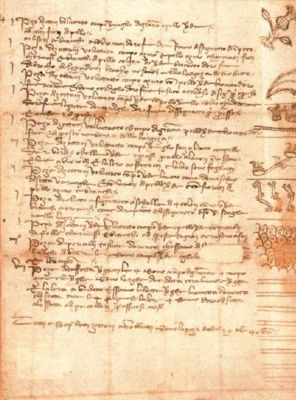
Les communications de cette rencontre auront pour thème « Les écrits du commerce de toute nature dans l’Occident du XIIe au XVe siècle ».

Programme :

9h – Accueil des participants

9h30 – Mot d’accueil par Nicolas DOHRMANN, directeur des Archives et du Patrimoine de l’Aube

9h45 – Introduction. Pister le commerce. Variété et complémentarité des sources, par Jean-Marie YANTE (Université catholique de Louvain).

10h – Pierre-Vincent CLAVERIE (Centre de recherche scientifique de Chypre) : De Perpignan aux portes de Damas : le renouveau du commerce nord-catalan dans la seconde moitié du XIVe siècle (d’après les archives notariales roussillonnaises).

10h30 – Pause

10h50 – Elena MACCIONI (Université de Cagliari), La production documentaire des cours et guildes marchandes : consulats catalans et mercanzie italiennes à la fin du Moyen Âge.

11h20 – Angela ORLANDI (Université de Florence). Des archives d’entreprise : les archives Datini.

12h – Assemblée générale du CRECIM

12h30 – Pause déjeuner

14h – Matthieu SCHERMAN (Université Gustave-Eiffel). Les foires de l’Europe du Nord et les grands marchands d’après la comptabilité Salviati de Londres et de Bruges du XVesiècle.

14h30 – Jean-Marie YANTE (Université catholique de Louvain). Les sources de l’histoire des foires de Champagne.

15h – Luc DUCHAMP (Ville de Provins) et Thomas LACOMME (Université de Namur). Le cas des foires de Provins.

15h30 – Pause

15h50 – Patrick DEMOUY (Université de Reims Champagne-Ardenne). Les chartes de fondation de la foire de Pâques à Reims, d’abord par Henri de France puis par Guillaume de Champagne (1170, 1176, 1183).

16h20 – Danielle QUERUEL (Université de Reims Champagne-Ardenne). Ce que disent les textes littéraires médiévaux sur les foires de Champagne.

16h50 – Patrick DEMOUY (Université de Reims Champagne-Ardenne). Conclusions.

  • Renseignements et inscriptions

Archives départementales de l’Aube

Courriel : archpat.aube@aube.fr

Téléphone : 03 25 42 52 62

  • Adresse

Centre de congrès de l’Aube, 2 rue Pierre Labonde 10000 – Troyes

Source : Archives de l’Aube

Publié dans Colloque | Laisser un commentaire

Exposition – Cantate Domino: Music in the Lambeth Palace Library collections

This inaugural exhibition for the Library’s new exhibition room celebrates musical treasures held in Lambeth Palace Library, placing better-known holdings alongside lesser-known volumes and fragments from the collections.

The exhibition features the Arundel Choirbook (one of the most important records of Tudor polyphonic music); Sion College’s illuminated York Breviary from the 15th century; and sermon notes pertinent to the composition of the hymn “Amazing Grace” (celebrating its 250th anniversary this year). These are displayed alongside numerous other beautiful and interesting examples of music in the Library’s collections found in a variety of forms and spanning the 11th to 20th centuries.

This free exhibition will be open from 23 June to 18 September 2023. In addition, a concert (including private view of the exhibition) will be held in conjunction with the exhibition on 11 July. The annual Friends of Lambeth Palace Library Lecture, to be delivered by Professor Magnus Williamson on 23 June, will also complement the exhibition.

For more information about the concert and to book tickets, please see our Eventbrite.

We are grateful to Hymns Ancient and Modern for a grant towards the costs of producing this exhibition – www.hymnsam.co.uk

Source : Lambeth Palace

Publié dans Exposition | Laisser un commentaire

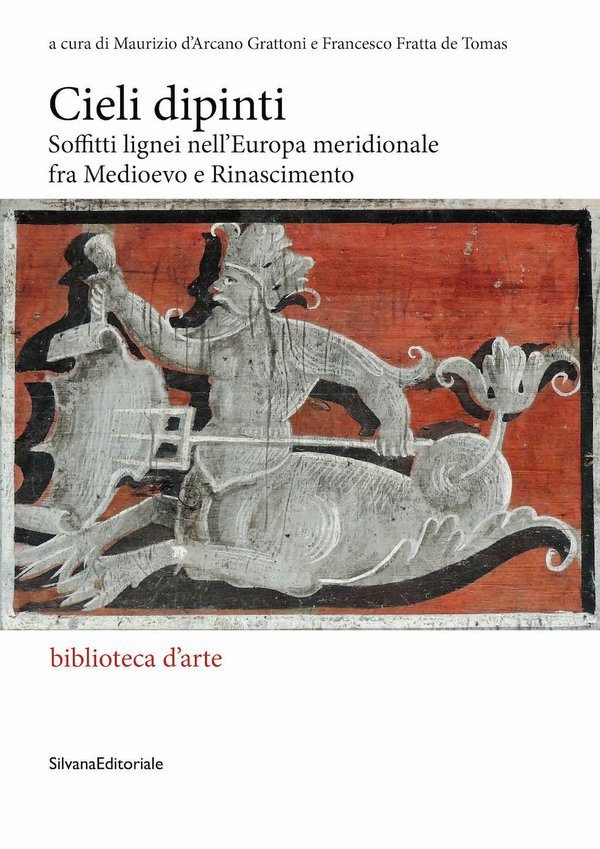
Publication – « Cieli dipinti Soffitti lignei nell’Europa meridionale fra Medioevo e Rinascimento », éd. Maurizio d’Arcano Grattoni et Francesco Fratta de Tomas

Il gusto per i soffitti lignei dipinti costituisce un fenomeno che interessò soprattutto l’Europa meridionale dal Medioevo centrale al Rinascimento, rappresentando – pur se declinato secondo modalità strutturali ed esornative differenti – un elemento caratteristico e unificante. Anche se tali manufatti sono depositari di molteplici informazioni sulla cultura del tempo e costituiscono spesso l’unica cifra capace di tramandarci il decoro degli interni, solo recentemente sono divenuti oggetto di un sempre crescente interesse.

Inserito nell’ambito di un percorso di ricerca in seno al Dipartimento di Studi umanistici e del patrimonio culturale (DIUM) dell’Università di Udine, il convegno ha riunito studiosi provenienti da Croazia, Francia, Germania, Italia, Portogallo, Spagna, Svizzera e, oltre ad affrontare aspetti strettamente scientifici, ha voluto stimolare l’interesse per questa espressione artistica in parte ancora a rischio di dispersione e di distruzione, tuttora poco nota a un pubblico non specialistico e soltanto parzialmente valorizzata.

Maurizio d’Arcano Grattoni è docente di Storia della produzione artigianale e della cultura materiale nel Medioevo e di Storia delle arti applicate presso il Dipartimento di Studi umanistici e del patrimonio culturale dell’Università degli Studi di Udine. I principali settori di ricerca riguardano l’architettura residenziale e gli arredi fra basso Medioevo e primo Rinascimento. Autore di studi e saggi su tali argomenti, per quanto riguarda i soffitti lignei ha curato la mostra Tabulæ pictæ (2013).

Francesco Fratta de Tomas è dottore di ricerca in Storia dell’arte. Si è occupato in particolare di soffitti lignei dipinti e di arredi a intaglio piatto di area norditaliana del XV e XVI secolo, temi che ha sviluppato nel corso di assegni di ricerca presso il Dipartimento di Studi umanistici e del patrimonio culturale dell’Università degli Studi di Udine. Ha pubblicato saggi concernenti l’architettura residenziale e le arti applicate, fra cui il volume Soffitti lignei in Friuli fra Medioevo e Rinascimento (2019).

Entrambi fanno parte di gruppi di ricerca nazionali e internazionali, fra cui LOC-GLOB. The local connectivity in an age of global intensification (1280-1500), nell’ambito del quale sono impegnati nello studio degli interni in Friuli attraverso gli inventaria bonorum di XV secolo.

Table des matières :

Introduzione
Cieli dipinti: una via per comprendere il gusto, le appartenenze sociali, la cultura della società europea fra Medioevo e Rinascimento
Maurizio d’Arcano Grattoni, Francesco Fratta de Tomas

1. La produzione di soffitti lignei dipinti: un tratto comune dell’Europa meridionale

1.1 Looking at images again: an enquiry on wooden ceilings in painting (14-16th centuries)
Marta Simões

1.2 Le plafond de la « salle dorée » de l’ancienne Maison de la Ville de Valence
Arturo Zaragozá Catalán, Georges Puchal

1.3 Soffitti trecenteschi a Chieri e dintorni
Luisa Clotilde Gentile

1.4 Dame, draghi e cavalieri: nuovi studi sui soffitti lignei bresciani (XV-XVI secolo)
Paola Bonfadini

1.5 Tavolette da soffitto in Emilia: prime riflessioni sui modelli
Giorgio Milanesi

2. Il ‘cielo dipinto’ nello spazio sacro e in quello domestico

2.1 (Re)discovering Portuguese medieval painted ceilings (15th century)
Joana Antunes

2.2 Un soffitto a tavolette nel castello di Scipione
Mario Marubbi

2.3 Un soffitto del secondo quarto del Cinquecento a Egna
Helmut Stampfer

2.4 Un cielo dipinto adriatico. Il soffitto ligneo nel palazzo Petris-Moisé a Cherso
Tea Sušanj Protić

2.5 Un ‘cielo’ ad modus navis nella Udine di XV secolo: la camera carenata di palazzo Cignotti Corbelli Giacomelli
Maurizio d’Arcano Grattoni

3. I modelli iconografici e le scelte della committenza

3.1 Aportaciones al estudio iconográfico de algunos elementos decorativos de las techumbres pintadas hispanas
Pedro Luis Hernando Sebastián

3.2 Nouvelles recherches pour l’interprétation de l’iconographie du plafond du Palais Vieux de Narbonne (Languedoc)
Georges Puchal

3.3 Enquête sur un motif folklorique : l’homme au sac
Maud Pérez-Simon

3.4 L’espace du sacré dans deux plafonds en bois peint sur le territoire suisse : Zillis et Bellinzona
Vera Segre

3.5 Circolazione di modelli nella produzione di tavole da soffitto cremonesi del XV secolo
Roberta Aglio

3.6 Intrecci parentali e modelli incisori: l’universo famigliare nei soffitti del castello ‘di Sotto’ di Strassoldo
Francesco Fratta de Tomas

4. Indagini, strategie e restauri per i soffitti lignei

4.1 Dendrochronologie des plafonds peints du Languedoc
Frédéric Guibal

4.2 La lavorazione dei solai strutturali storici in legno e dei soffitti lignei: la tecnica a spacco
Roberto Raccanello

4.3 Per una rilettura del capitolo di San Nicolò a Treviso: il ciclo delle pettenelle dipinte e la decorazione ad affresco preesistente all’intervento di Tomaso da Modena
Giuliano Romalli

4.4 Le pettenelle dipinte del capitolo di San Nicolò a Treviso: un raro esempio di iconografia sacra. Descrizione della tecnica esecutiva del soffitto ligneo e delle pettenelle dipinte
Valentina Piovan

4.5 Il soffitto dipinto di palazzo Chiaromonte-Steri a Palermo restaurato: singolarità tecniche e qualche novità iconografica
Licia Buttà

4.6 Estratto dallo studio preliminare al restauro del soffitto ligneo dell’atrio dell’abbazia di Sesto al Reghena
Susanna Sbaraglia, André Zehrfeld

Bibliografia
Indice dei nomi
Indice dei luoghi

Informations pratiques :

Cieli dipinti Soffitti lignei nell’Europa meridionale fra Medioevo e Rinascimento, éd. Maurizio d’Arcano Grattoni, Francesco Fratta de Tomas, Milan, Silvana Editoriale, 2023 ; 1 vol., 336 p. ISBN : 978-8-83665-447-5. Prix : € 32,00.

Source : Silvana Editoriale

Publié dans Publications | Laisser un commentaire

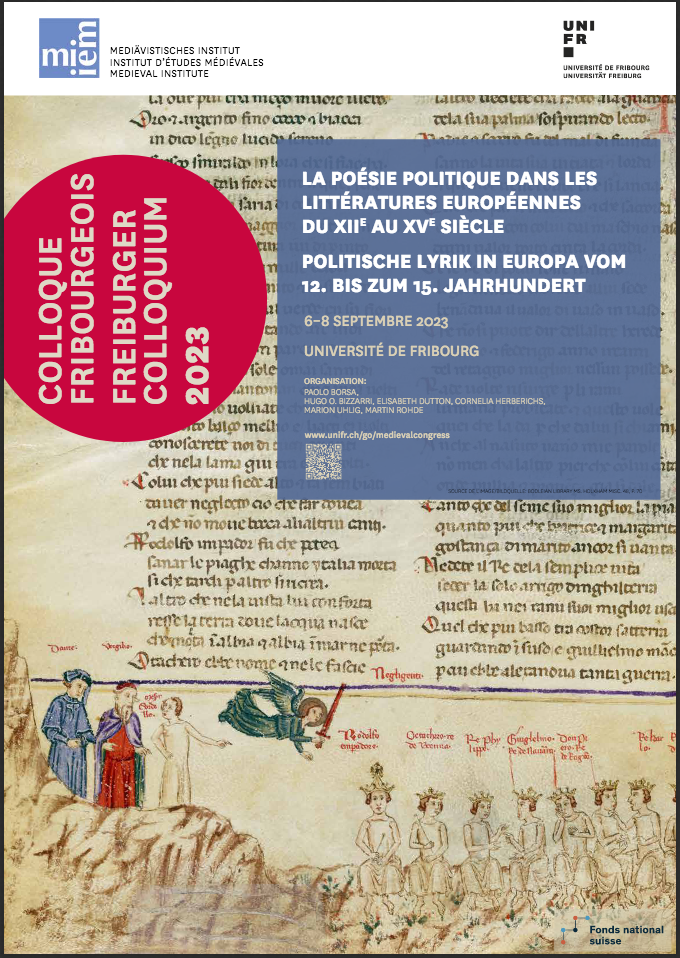
Colloque – La poésie politique dans les littératures européennes du XIIe au XVe siècle

Universität Freiburg
6-8 septembre 2023

L’Institut d’Études Médiévales de l’Université de Fribourg (Suisse) organise tous les deux ans un colloque interdisciplinaire réunissant des chercheurs et des spécialistes autour d’un thème relatif à la culture médiévale. Le prochain colloque aura lieu en septembre 2023 sur le thème „La poésie politique dans les littératures européennes du XIIe au XVe siècle“.

Examinant quels sujets sont dignes d’être traités en langue vernaculaire illustre par les poètes les plus excellents, au début du deuxième livre du „De vulgari eloquentia“, Dante identifie trois sujets principaux (magnalia): salus videlicet, venus et virtus (II ii 8), à savoir la prouesse des armes (armorum probitas), la passion de l’amour (amoris accensio) et la rectitude de la volonté (directio voluntatis). Cette liste sélective – poésie de guerre, poésie amoureuse, poésie morale – exclut donc, entre autres, le genre de la poésie politique, pourtant très cultivé dans l’Italie communale de Dante. La raison de cette exclusion réside probablement dans le fait que, aux yeux du poète florentin, la poésie politique apparaît comme un genre hybride, que ce soit parce que des considérations morales, civiles et militaires s’y côtoient, ou parce que les poèmes politiques se présentent parfois comme des chansons d’amour fictif ou métaphorique, et donc comme une variante ou un sous-genre mineur de la lyrique érotique. Pour Dante, les magnalia doivent être traités par les meilleurs poètes dans leur forme pure ou dans leurs conséquences pures et directes (Dve II iv 9); en revanche, dans la poésie politique fait irruption la dimension du contingent et de l’accidentel. Plus encore, le contingent et l’accidentel constituent l’espace même de la poésie politique, qui se caractérise par le fait d’être occasionnelle, liée à des événements historiques précis, sectaire et visant un but pratique (exhorter, persuader, promouvoir, diffamer).

Les considérations du „De vulgari eloquentia“ sur les trois magnalia ne sont pas forcément compatibles avec d’autres traditions littéraires que la poésie lyrique italienne; elles permettent cependant de circonscrire et de définir le domaine de la poésie politique dans son ensemble. Sur cette base, le prochain colloque fribourgeois entend explorer l’existence d’une tradition européenne de poésie politique, en rassemblant et en confrontant des spécialistes de poésie médiévale issue de différentes traditions linguistiques, dans une région située idéalement entre l’Islande et le Caucase. La période examinée sera comprise entre le XIIe siècle et la première moitié du XVe siècle. A côté des langues vernaculaires, les langues sacrées et/ou impériales (latin, grec, arabe, hébreu) seront également prises en considération.

Quel est le statut de la poésie politique dans une tradition spécifique ou dans un groupe de traditions apparentées? Sous quelles formes ce genre de poésie s’exprime-t-il (formes métriques, mise en texte, mise en page)? Qui en sont les auteurs, et pour quel public? Quels sont les modes de transmission des textes? Dialoguent-ils avec des images? Et aussi, autour de quels événements historiques les poèmes politiques fleurissent-ils? Quel est le niveau de conscience rhétorique, juridique, philosophique ou théologique des auteurs? Peut-on détecter des thèmes et des débats translinguistiques et/ou transnationaux? Peut-on parler, dans certains cas, de propagande politique en vers? Le colloque tentera d’apporter des réponses à ces questions et à d’autres, dans le but de poser quelques jalons pour commencer à esquisser une image globale de la poésie politique européenne entre le Moyen-Âge central et le Moyen Âge tardif.

Les Actes du colloque seront publiés dans la collection „Scrinium Friburgense“ auprès de la maison d’édition Reichert Verlag (Wiesbaden).

Programme :

Mittwoch, 06. September 2023

09.15–09.30
Einführung durch Paolo Borsa

Sektion 1 Moderation: Elisabeth Dutton, Karin Schlapbach

09.30–10.15
Wim Verbaal (Universiteit Gent, Latin Language and Literature): (De)Forming the Present: Politics of “renaissance” in Medieval Latin Poetry

10.45–11.30 Uhr
Marie-Agnès Lucas-Avenel (Université de Caen, Langue et littérature latines): Le poète, les armes et le roi, dans le „Corde fero tristi“ de Serlon de Bayeux

11.30–12.15 Uhr
Mikael Males (University of Oslo, Scandinavian Studies): “The Strenuous Joys of Old Norse Panegyrics”

14.00–14.45 Uhr
Nikolaos Zagklas (Universität Wien, Byzantinistik und Neogräzistik): In Praise of the Emperor: Political Poetry in Medieval Greek Tradition

14.45–15.30 Uhr
Sandro Nikolaishvili (University of Southern Denmark, Odense, Medieval History): Political Poetry in the Service of a Female Ruler: Court Rhetoric in the Age of Queen Tamar (r. 1184–1212)

16.00–16.45 Uhr
Ophir Münz-Manor (The Open University of Israel, Jewish liturgy and liturgical poetry): Hebrew Laments of the Crusades as Political Poetry

Donnerstag, 07. September 2023

Sektion 2 Moderation: Paolo Borsa, Martin Rohde

09.00–09.45 Uhr
Andrea Scala (Università degli Studi di Milano, Glottologia e Linguistica): Temi politici e sociali nella lirica armena del XIII secolo: il caso del canzoniere di Frik

10.15–11.00 Uhr
Stefano Asperti (Sapienza Università di Roma, Filologia e linguistica romanza): Testi e temi politici nella lirica provenzale

11.00–11.45 Uhr
Matteo Cambi (Firenze, Opera del Vocabolario italiano – CNR, Filologia e linguistica romanza): Rimatori guelfi (e ghibellini) nel X fascicolo del Canzoniere palatino

13.30–14.15 Uhr
Alessandro Pilosu (Sapienza Università di Roma, Italianistica): di valor dimembrata‘ l’allegoria del corpo politico da Guittone al Saviozzo

14.15–15.00 Uhr
Marco Grimaldi (Sapienza Università di Roma, Filologia della letteratura italiana): La poesia politica dai trovatori a Dante

15.30–16.15 Uhr
Ricarda Bauschke-Hartung (Heinrich-Heine-Universität, Düsseldorf, Germanistische Mediävistik): Die politische Lyrik Walthers von der Vogelweide im Kontext der altokzitanischen Sirventes

16.15–17.00 Uhr
Daniel Eder (Universität Kiel, Ältere deutsche Literatur): Repräsentationen des Politischen in der Minnekanzone (bei Ulrich von Winterstetten und Hug von Werbenwag)

Freitag, 08. September 2023

Sektion 3 Moderation: Cornelia Herberichs, Marion Uhlig

09.00–09.45 Uhr
Klaus Amann (Universität Innsbruck, Germanistische Mediävistik): Hybride Form und die (Un-)Möglichkeit epistemischer Deutung: Das Wappengedicht „Der Fürsten Warnung“

10.15–11.00 Uhr
Jean-Claude Mühlethaler (Université de Lausanne, Littérature française du Moyen Âge): D’Alain Chartier à George Chastelain: Le lyrisme, vecteur de la pensée politique au temps de Charles VII

11.00–11.45 Uhr
Philippe Frieden (Université de Genève, Littérature française médiévale): Politique courtoise et poétique du recueil: le manuscrit BL Harley 4431 de Christine de Pizan

13.30–14.15 Uhr
Aude Mairey (CNRS, Laboratoire de Médiévistique occidentale de Paris, Histoire médiévale): Les poésies politiques anglaises à la fin du Moyen Âge

14.45–15.30 Uhr
Ludovica Sasso (Universität Münster i.W., Lateinische Philologie des Mittelalters): Hostis fidei in propinquo est: il „Türkendiskurs“ in versi nella poesia neolatina del XV secolo italiano

15.30–16.00 Uhr
Konklusion

Source : H-Soz-Kult

Publié dans Colloque | Laisser un commentaire

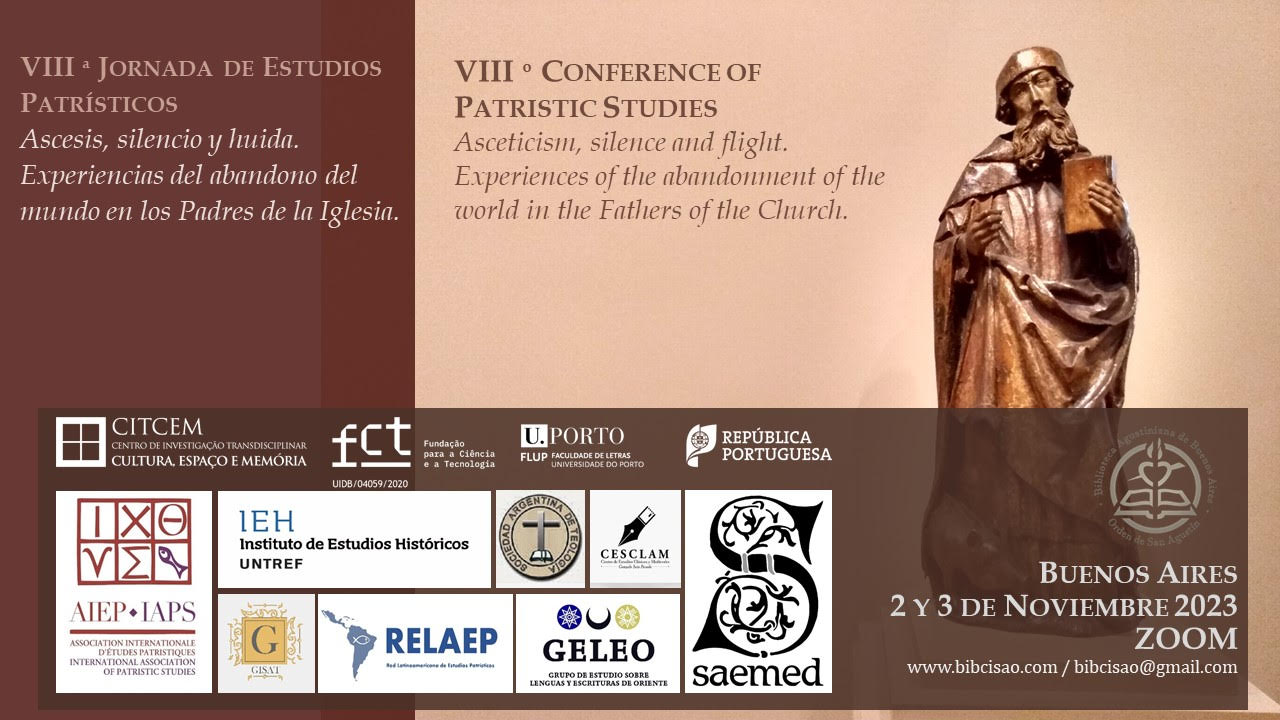
Appel à contribution – Ascesis, silence and flight. Experiences of the abandonment of the world in the Fathers of the Church

VIII Jornadas de Estudios Patristicos / VIII Conference of Patristics Studies Order of St. Augustine – Augustinian Library of Buenos Aires

The sharp opposition brandished in the Gospel of John about the antagonism between Jesus and the world provoked intense reflections about the place of believers in the current political and economic order. The call to the mission and the conversion of the people demanded that the Fathers of the Church ask themselves about the most appropriate ways of living, witnessing and transmitting the Good News without being contaminated by the rhythm and customs of Greco-Roman society. Although marriage and family life enjoyed high esteem among the churches, fleeing into the desert, sexual renunciation, fasting, and an austere life emerged as expressions of profound piety, but also of discontent and prophylaxis towards a society that was sometimes hostile and, after the triumph of Constantine (as Peter Brown says), not Christian enough.


These VIII Conference on Patristic Studies are intended to recover, analyze and debate the various expressions of renouncing the world proposed by the writers of Patristics based on the understanding of the particular social, economic and theological situations that occurred in Classical Antiquity, Late Antiquity and the Middle Ages.

We therefore call on the different disciplines of the broad field of philosophical, theological, historical, linguistic and artistic studies to share their contributions according to these coordinates:
– History of monasticism
– Writings of the fathers and mothers of the desert
– Exegesis in monastic movements
– Theology of abandonment of the world
– Fasting and almsgiving as practices promoted by monks
– Art and iconography
– Monasticism, ecclesial politics and secular politics

Send a title and an abstract of the proposed communication (150-250 words) and five keywords to bibcisao@gmail.com before August 28, 2023.

The Full Paper Submission Rules can be found at:

https://www.bibcisao.com/bibliotheca

The final work can be sent for peer review if you want it to participate in the edition of our Patristica Augustiniana V Supplement, the Dossier of the Bibliotheca Augustiniana ISSN 2469 – 0341, before October 20, 2023.

Organizers

Dr. Mariano Splendido, UNLP-CONICET // AIEP
D. Pablo Guzmán, SAEMED /AIEP – BibCISAO – OSA

Academic Committee

Dra. Paula Almeida Mendes, CITCEM – University of Porto

Dra. Patricia Ciner, AIEP

Dra. Paula Druille, UNLaPampa / CONICET

Dra. Emilia Jamroziak, Leeds University

Dra. María del Mar Marcos Sánchez, Universidad de Cantabria

Dra. Arianna Rotondo – Università di Catania

Dra. Estefania Sottocorno, UNTREF

Dra. Juana Torres, Universidad de Cantabria

Dra. Ana Cristina Villa Betancourt, Universidad Pontificia Bolivariana, RELAEP

Dra. Laela Zwollo, Tilburg University

Dr. Julian Barenstein, UNSAM-USAL / CONICET

Dr. Francisco Bastitta, UBA-UCA / CONICET

Dr. Oscar Horacio Beltrán, Pontificia Universidad Católica Argentina

Dr. Horacio Botalla, UNTREF

Dr. Rodrigo Laham Cohen – IMHICIHU – CONICET; UBA UNSAM

Dr. Héctor Francisco, GISAT – UBA, SAEMED / CONICET

Dr. Hernán Giudice, SAT – UCA

Lic. Fr. José Guillermo Medina, OSA

Dr. Esteban Noce, UBA / CONICET

Dr. Hans van Reisen, Katholieke Theologische Universiteit Utrecht

Publié dans Appel à contributions | Laisser un commentaire