Publication – Serena Romano, « La basilica di San Francesco ad Assisi. Pittori, botteghe, strategie narrative »

I sette saggi di cui si compone il libro, nella maggior parte inediti, hanno per tema la decorazione pittorica della chiesa di S. Francesco ad Assisi, a partire dalla prima fase di affrescatura della basilica inferiore fino al ciclo francescano nella navata di quella superiore. Nel loro insieme costituiscono il frutto di più di venti anni di ricerche dell’autrice, e studiano la veste pittorica della basilica secondo due approcci diversi ma non indipendenti l’uno dall’altro.

Il primo è l’analisi della maniera di pittori e botteghe, del mestiere dell’artista e del funzionamento del cantiere: un problema sempre complesso e sempre sfuggente, per la difficoltà dell’indagine e la scarsezza di fonti e di informazioni. Ad Assisi ogni tranche della decorazione pittorica ha proprie caratteristiche tecniche, proprie modalità di funzionamento, propri sistemi di organizzazione del lavoro, e il libro ne studia le ricadute sul risultato pittorico finale.

Il secondo approccio, o metodo, è l’analisi iconografica. Essa schiude le porte della storia, e ad Assisi più che altrove. Non si tratta di cercare il significato delle “figure” in un episodio storico, o in una fonte letteraria: quelle figure sono il testo, sono la storia, la fanno e la svelano senza subordinazioni, l’immagine ha una natura complessa che si annida all’interno della storia organica del monumento, preso in una rete di relazioni di cui la figuratività è un aspetto.
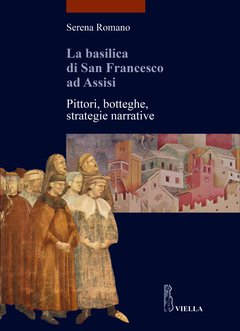
Table des matières : ici

Informations pratiques :

Serena Romano, La basilica di San Francesco ad Assisi. Pittori, botteghe, strategie narrative, Rome, Viella, 2022 ; 1 vol., 384 p. (I libri di Viella. Arte). ISBN : 978-8-88334-041-3. Prix : € 39,00.

Source : Viella
Publié dans Publications | Laisser un commentaire

Publication – « Gazette du livre médiéval », t. 66

Gazette du livre médiéval, t. 66, 2022. ISSN : 0753-5015. Prix : € 30,00.

Table des matières :

  • Libri dispersi e costruzione di un modello: il caso di Pisa (secolo XII prima metà) [A. Puglia]
  • Entre archives et manuscrits : étude paléographique d’un groupe d’ex-libris de Saint-Victor de Paris des années 1220-1230 [E. Defaÿsse]
  • Las góticas pseudocursivas castellanas: su uso en libros a fines de la Edad Media [A. Ares Legaspi]
  • L’espace imprimé des incunables lyonnais : normes et évolutions (1473-1500) [J.-B. Krumenacker]
  • Appréhender le succès d’une oeuvre au Moyen Âge : quelques réflexions à partir du cas des Variae de Cassiodore [N. Michel]

Notes et discussions

  • Le bibbie glossate conservate a Montecassino: Ricerche in corso [E. Zambardi]
  • Les papiers de Jean Vezin à l’Institut de recherche et d’histoire des textes [S. Barret]
  • Inventaires des documents manuscrits en écritures latine et grecque dans les bibliothèques russes (années 2000-2022) [S. Abuzina ; G. Schmidt]
  • Bibliographie de Denis Muzerelle

Chronique

  • Travaux en cours. — Vient de paraître – à paraître. — In memoriam. — Abstracts – résumés.

Nota bene

  • Création du Prix Denis Muzerelle

Source : IRHT

Publié dans Publications | Laisser un commentaire

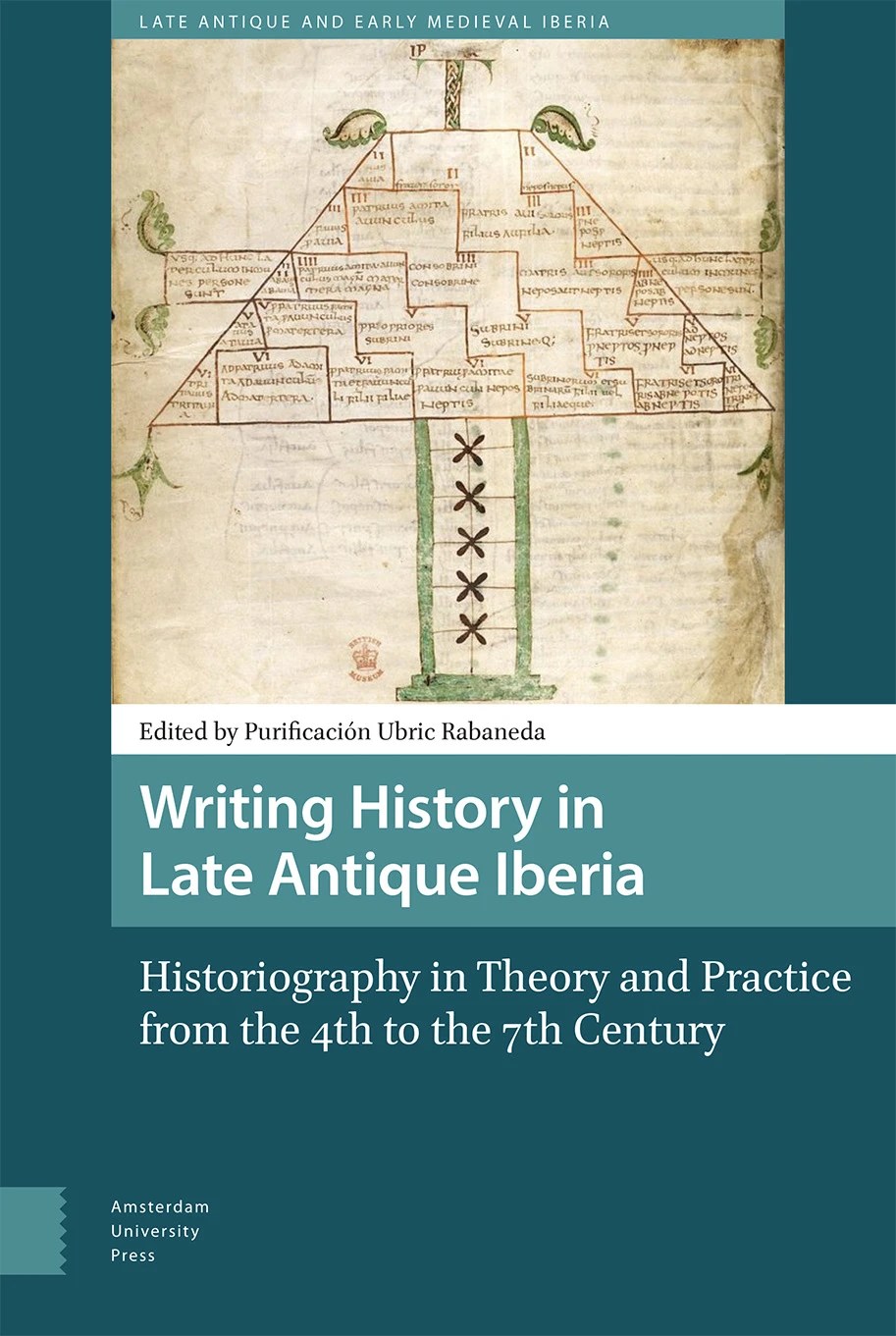
Publication – « Writing History in Late Antique Iberia. Historiography in Theory and Practice from the 4th to the 7th Century », éd. Purificación Ubric Rabaneda

This volume reflects on the motivations underpinning the writing of history in Late Antique Iberia, emphasising its theoretical and practical aspects and outlining the social, political and ideological implications of the constructions and narrations of the past. The volume includes general topics related to the writing of history, such as the historiographical debates on writing history, the praxis of history writing and the role of central and local powers in the construction of the past, the legitimacy of history, the exaltation of Christian history to the detriment of other religious beliefs, and the perception of time in hagiographical texts. Further points of interest in the volume are the specific studies on the historiographical culture. All these issues are analysed from an innovative perspective, which combines traditional subjects with new historiographical topics, such as the configuration of historical discourse through another type of documentation like councils, hagiography or legislation.

Purificación Ubric is lecturer of Ancient History at the University of Granada. She has been visiting scholar at Oxford, Harvard and Rome. Her main research interest lies in History of the Church and Barbarians in Late Antique Iberia. She has several publications and research projects on these subjects

Table des matières :

1. Writing History in Late Antique Iberia: Theory and Praxis (Purificación Ubric)
2. Para qué sirve la Historia. Principios teóricos de la historiografía hispana tardoantigua (Gonzalo Bravo Castañeda)
3.From Christian Historiography to the Emergence of National Histories: Spanish Historiography between Romans and Visigoths (Immacolata Aulisa)
4. Orosius: an Iberian Patriot’s History of Rome (Andrew Fear)
5. Orosius, Barbarians, and the Christian Success Story (Maijastina Kahlos)
6. Prophecies and Omens of the Fall of the Roman Empire in the Chronicle of Hydatius of Lemica (Laura Marzo)
7. La dimensión política de los historiadores del reino visigodo de Toledo (Francisco Salvador Ventura
8. The Definitions and Uses of historia in Isidore of Seville (Hervé Inglebert)
9. Bishops and their Biographers: The Praxis of History Writing in Visigothic Iberia (Jamie Wood)
10. Local Powers and Construction of the Past in the Visigothic Kingdom of Hispania (Santiago Castellanos)
11. The Contemplation of the Past in the Libellus Precum of Faustinus (and Marcellinus) (José Fernández Ubiña)
12. Orthodoxy and Heterodoxy: The Historiography of Hispania in Late Antiquity (Chantal Gabrielli)
13. Expulsados de la Historia: el argumento histórico en la polémica antijudía hispana (siglos IV-VII) (Raúl González Salinero)
14. Consideraciones sobre la temporalidad en las Vitae Sanctorvm visigóticas (Pedro Castillo Maldonado)
15. The Image of Leovigild as Arian Monarch in the Vitas Patrum Emeritensium: from Historical Reality to Hagiographic Deformation (Ramón Teja Casuso and Silvia Acerbi)

Informations pratiques :

Writing History in Late Antique Iberia. Historiography in Theory and Practice from the 4th to the 7th Century, éd. Purificación Ubric Rabaneda, Amsterdam, Amsterdam University Press, 2022 ; 1 vol., 312 p. (Late Antique and Early Medieval Iberia). ISBN : 978-9-46372-941-3. Prix : € 124,00.

Source : Amsterdam University Press

Publié dans Publications | Laisser un commentaire

Appel à contribution – Encounters: Christians, Muslims, and Jews in Medieval and Early Modern Art

Encounters between Christians, Muslims, and Jews were manifold in the Middle Ages and the Early Modern period. In recent decades scholarship has increasingly begun to acknowledge the significance of such encounters for the development of artistic production and visual culture in each of these societies. For example, a shared culture of luxury goods common to the elite of both Christian and Muslim principalities, and the rich dialogue between Jews and Christians pertaining to the production of illuminated manuscripts, have been comprehensively studied. The 16th Annual IMAGO conference consequently aspires to examine the impact of encounters between Jews, Muslims, and Christians on the visual culture and art of the Middle Ages and the Early Modern Period. We hope that the resulting papers will not only shed new light on the artistic, social, religious, and political mechanisms involved in such encounters throughout this period, but will also produce fresh insights into the cultural and artistic outcomes of these encounters.

We invite papers in English from diverse points of view: case studies of iconographies resulting from such encounters; studies of the artistic responses to specific conditions of encounters and dialogues; comparative studies on the connections between the Christian, Jewish, and Islamic worlds, etc. Interdisciplinary studies and those engaging with the production, reception, and interpretation of art produced through such encounters are of particular interest. Suggested topics include, but are not limited to:

• Artists, artisans, and workshops
• Luxury goods, portable objects, and trade
• Manuscript illumination
• Visual elements in everyday life and the domestic sphere
• Visual agency in acculturation, mission, conversion,
interfaith debates, and polemics
• Images of Jews, Muslims, and Christians
• Use, reuse, misuse, and appropriation of objects
• Quotation, citation, and the migration of pictorial and
architectural motifs

The conference will take place on Thursday, March 2, 2023, at Bar-Ilan University.

Abstracts of no more than 250 words should be sent to Dr. Gil Fishhof (gfishhof@staff.haifa.ac.il) no later than January 1, 2023. Abstracts should include the applicant’s name, professional affiliation, contact details, and a short CV. Each paper should be limited to a 20-minute presentation, to
be followed by a discussion and questions. All applicants will be notified by January 20, 2023, regarding the acceptance of their proposal. For additional information or further inquiries, please contact Dr. Fishhof.

Organizing committee: Dr. Gil Fishhof, Dr. Zvi Orgad, Prof. Jochai Rosen, Ms. Mazi Kuzi, Ms. Masha Goldin

Source : Medieval Art Research

Publié dans Appel à contributions | Laisser un commentaire

Séminaire – Le médiévalisme – Des usages contemporains du Moyen Âge (2023)

Aude Mairey, Directrice de recherche (LaMop – CNRS/Paris 1 ; http://www.audemairey.com)

Depuis quelques décennies, le médiévalisme, que l’on peut définir à la suite de Louise d’Arcens comme « la réception, l’interprétation ou la recréation du Moyen Âge européen dans les cultures post-médiévales », est devenue une discipline à part entière, d’abord dans les pays anglophones puis dans l’ensemble de l’Europe occidentale (pour ne s’en tenir qu’à elle, même si l’Orient ne doit pas être négligé). Le champ est vaste : de Victor Hugo à J.R.R. Tolkien, de la recréation d’une architecture néo-gothique aux jeux vidéos populaires, de l’anneau de Jeanne d’Arc à la reconstitution de batailles médiévales, les usages contemporains du Moyen Âge sont nombreux – littéraires, cinématographiques, ludiques, mais aussi politiques… Pourtant, alors que nos collègues littéraires ont été les premiers à s’emparer de ce champ au sein du monde universitaire, les historiens ont davantage tardé à s’emparer du sujet, même si une dynamique est désormais engagée. Ce séminaire se propose donc d’envisager, en complémentarité avec les autres disciplines, tant l’histoire du médiévalisme que la diversité de ses usages actuels.
Il portera cette année sur la guerre et le médiévalisme.
Les séances sont ouvertes à tous et se tiendront si possible le vendredi de 14h à 16h en salle Perroy, à la Sorbonne (et en hybride). Si vous souhaitez y assister, en précisant si vous serez présent ou à distance, inscrivez-vous à l’adresse suivante : aude.mairey@univ-paris1.fr.

Programme 2022-2023 (2nd semestre) :

27 janvier 2023 – Aude Mairey, « Introduction ».
10 février 2023 – Benoît Bouzigues (Université de Montréal), « Les animaux dans les guerres des univers de Tolkien et Lewis ».
10 mars 2023 – Alban Gautier et Victor Barabino (Université de Caen), « De Saxo Grammaticus à Robert Eggers : figures d’Amleth le  guerrier ».
17 mars 2023 – Florian Besson (agrégé et docteur en histoire), « Dieu le veut ! De la science-fiction à l’extrême-droite, retour sur les croisades imaginaires ».
31 mars 2023 – Enki Baptiste (Université Lumière Lyon 2 (CIHAM-UMR 5648) et Institut français d’islamologie), « Le médiévalisme de l’État islamique, ou le fantasme de la guerre des origines ».
14 avril 2022 – Bruno Dumézil (Sorbonne Université – Ecole polytechnique), « Conan et autres barbares : constantes et métamorphoses de l’altérité ».

Source : LAMOP

Publié dans Séminaire | Laisser un commentaire

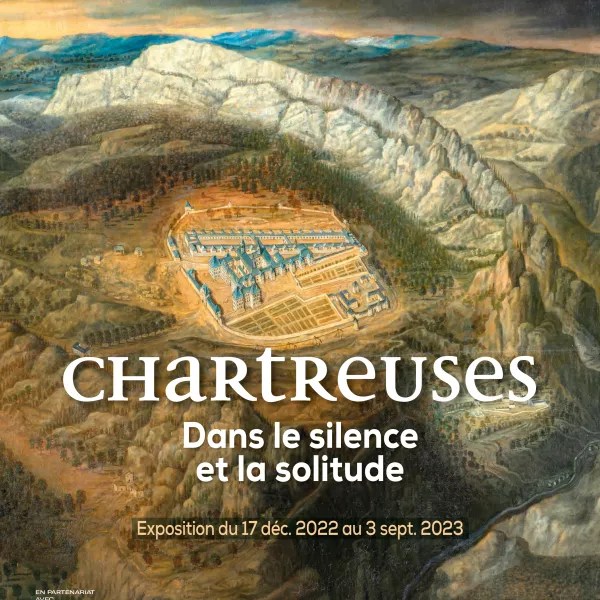
Exposition – Chartreuses. Dans le silence et la solitude

Les monastères de l’ordre des chartreux s’ouvrent à vous à travers la présentation de trente et une peintures monumentales.

En 1084, Bruno de Cologne entre au « désert de chartreuse » accompagné de six compagnons, pour y fonder un monastère et y mener une vie de solitude et de prière, origine de l’ordre des chartreux. Près de mille ans plus tard, l’ordre des chartreux est toujours là, au cœur de ce massif qui lui a donné son nom, marquant plus que jamais son identité et continuant à fasciner croyants et non-croyants.

La collection de soixante-dix-neuf peintures monumentales représentant des monastères de l’ordre en Europe du XVIIe au XIXe siècle, appelées également « cartes de chartreuse », est exceptionnelle. Classé au titre des Monuments historiques, cet ensemble, propriété du monastère de la Grande Chartreuse a fait l’objet d’un long et minutieux travail de restauration qui aura duré vingt ans et suscité une mobilisation exemplaire, en commençant par les pouvoirs publics et les très nombreux mécènes privés.

En 2002, le musée de l’Ancien Évêché s’associait au lancement de cette vaste opération, révélant le caractère remarquable de la collection lors de l’exposition « Chartreuses d’Europe ». Aujourd’hui, avec cette nouvelle exposition, le public découvrira l’éclat et la beauté des œuvres restaurées. Il mesurera également leur apport essentiel à la connaissance de l’histoire de l’ordre, à travers les représentations des monastères et les nombreux détails qui illustrent la vie des hommes et des femmes qui ont fait vœu de silence et de solitude absolue.

Une exposition en partenariat avec le musée de la Grande Chartreuse et l’Association pour la Restauration des Cartes de Chartreuse (ARCC)

Informations pratiques :

Musée de l’Ancien Évêché
17 décembre 2022 – 3 septembre 2023

Source : Musées Isère

Publié dans Exposition | Laisser un commentaire

Publication – « La triade dell’Essere Essenza – Potenza – Atto nel pensiero tardo-antico, medievale e rinascimentale », dir. Renato de Filippis et Ernesto Sergio Mainoldi

La storia della filosofia tardo-antica, medievale e umanistica ha visto ricorrere con frequenza e continuità una peculiare struttura terminologico-concettuale di origine neoplatonica, definita dai termini essenza (οὐσία – substantia o essentia) – potenza (δύναμις – virtus) – atto (ἐνέργεια – operatio). Essa trova le sue prime attestazioni in Galeno e Giamblico, e sviluppi in Proclo, Damascio e Simplicio, sebbene il suo modello ontologico emergesse già in Plotino. Talvolta assimilata allo schema aristotelico atto – potenza, questa triade comporta in realtà una radicale rielaborazione dell’ontologia aristotelica – dalla cui base terminologica e concettuale prende peraltro le mosse –, attraverso la reintroduzione dell’elemento esemplaristico platonico, configurandosi così come struttura causalistico-processionale. Essa venne ripresa dal pensiero cristiano patristico, e attraverso lo snodo fondamentale dello pseudo-Dionigi, conoscerà una inesauribile fortuna nel Medioevo greco e latino, dove verrà utilizzata per spiegare questioni di angelologia, di psicologia e di dottrina trinitaria. A Bisanzio la triade converge verso la teologia delle energie divine, venendo impiegata da autori quali Massimo il Confessore, Giovanni Damasceno e Gregorio Palamas. Nel Medioevo latino, essa viene utilizzata da autori come Eriugena, Ugo di San Vittore, Isacco della Stella, Egidio Romano, Enrico di Gand, Bonaventura, Alberto Magno, Tommaso d’Aquino e Dante, diffondendosi fino alle soglie dell’Età moderna (Ficino, Bruno). Attraverso le fonti neoplatoniche la triade conosce fortuna anche nella filosofia araba (Al-Fārābī, Ibn Sīnā). Questo volume mira a offrire una quanto più possibile esaustiva identificazione e discussione delle occorrenze e delle trasformazioni concettuali (nonché, talvolta, delle metamorfosi lessicali) che la triade ha conosciuto nei contesti storico-filosofici qui presi in esame.

Table des matières :

Premessa
Sigle e abbreviazioni

La formazione e le ricezioni della triade οὐσία – δύναμις – ἐνέργεια. Una presentazione del problema storico e storiografico (Renato de Filippis & Ernesto Sergio Mainoldi)
Significato e funzione della triade οὐσία – δύναμις – ἐνέργεια nel neoplatonismo greco pagano (Michele Abbate)
Oὐσία, δύναμις ed ἐνέργειαι nell’opera di Giamblico (Lucrezia Iris Martone)
Ὕπαρξις, δύναμις, ἐνέργεια in relazione all’Unificato. La triade neoplatonica nel De primis principiis di Damascio (Ilaria Grimaldi)
La triade οὐσία – δύναμις – ἐνέργεια nel pensiero di Simplicio (Claudia Lo Casto)
La triade οὐσία – δύναμις – ἐνέργεια in Gregorio di Nissa e nei Cappadoci. Paralleli filosofici e ascendenze origeniane (Ilaria Ramelli)
La triade οὐσία – δύναμις – ἐνέργεια nel pensiero patristico-orientale e proto-bizantino (Ernesto Sergio Mainoldi)
La triade οὐσία – δύναμις – ἐνέργεια nella visione cosmica di Massimo il Confessore (John Gavin)
La triade οὐσία – δύναμις – ἐνέργεια nella riflessione teologica e filosofica di età medio e tardobizantina (Ernesto Sergio Mainoldi)
La sostanza fra potenza e atto. Il pensiero di Mario Vittorino (Roberto Schiavolin)
La triade dell’essere in Giovanni Scoto Eriugena (Renato de Filippis)
La triade dell’essere da Eirico di Auxerre a Egidio Romano (Antonio Sordillo)
Aes, sigillabilis, sigillantis. Una metamorfosi della triade dell’essere nelle Theologiae di Abelardo (Melissa Giannetta)
Substantia, potentia e actus nella filosofia araba (Beate Ulrike La Sala)
Sicut magnes attrahit ferrum. Tommaso d’Aquino, l’immaterialità dell’intelletto e il fondamento occulto delle virtù naturali (Massimiliano Lenzi)
Illa trinitas Dionysii (sostanza, virtù e operazione) in Bonaventura (Andrea di Maio)
Vede perfettamente ogne salute. La triade ‘nascosta’ in Dante, dalla Vita nova alla Monarchia (Giulio d’Onofrio)
La triade substantia – virtus – operatio negli autori della scuola domenicana tedesca. Alberto Magno, Ulrico di Strasburgo, Teodorico di Freiberg e Bertoldo di Moosburg (Massimo Perrone)
Res (essentia), esse essentiae (virtus), esse existentiae (operatio). Dall’essere di essenza all’essere intelligibile: Duns Scoto e Guglielmo di Alnwick (Davide Riserbato)
La triade in Cusano (Pietro Secchi)
La triade essentia – virtus – operatio nel platonici del Rinascimento (Roberto Melisi)
Antitrinitarsmo e triadicità in Giordano Bruno. Il ricorso alla triade substantia/essentia – potentia – actus nel De la causa, principio et uno (Giulio Gisondi)

Abstracts – Summaries

Indici (Vanni Claves – Giuseppe Donnarumma – Simone Luigi Migliaro – Antonio Sordillo)

Informations pratiques :

La triade dell’Essere Essenza – Potenza – Atto nel pensiero tardo-antico, medievale e rinascimentale, dir. Renato de Filippis et Ernesto Sergio Mainoldi, Turnhout, Brepols, 2022 ; 1 vol., 652 p. (Nutrix, 13 ). ISBN : 978-2-503-58864-3. Prix : € 105,00.

Source : Brepols

Publié dans Publications | Laisser un commentaire

Séminaire – Le droit médiéval. Sources et méthodes

Dans le cadre du projet Erasmus + FoNTES (Fostering Innovative Training in the use of European Legal Sources) porté par les universités de Palerme, de Genève, de Cracovie (Jagellonne) et par l’école des hautes études en sciences sociales (EHESS), un séminaire de recherche sur les sources du droit est organisé à Paris. Ce séminaire est ouvert aux étudiant·es de master et de doctorat. Six bourses de recherche couvrant les frais d’hébergement sont prévues, afin de permettre aux étudiant·es intéressé·es de pouvoir participer à ces ateliers dans de bonnes conditions.

Salles 3.03 et 3.05 – Centre de colloques, campus Condorcet, place du Front Populaire
Aubervilliers, France (93)

Les candidats et candidates à la bourse peuvent envoyer une lettre de motivation au professeur Emanuele Conte : emanueleconte@gmail.com

Programme :

Mardi 7 Février 2023, salle 3.03

Accueil

Présentation des participants

Introduction générale

Mercredi 8 Février 2023, salle 3.03

Matin

  • 9h00Paolo Napoli (EHESS), Normativité sociale et normativité juridique
  • 11h00Emanuele Conte (Université Roma Tre, EHESS) et Corinne Leveleux (Université d’Orléans, EPHE), Qu’est-ce qu’une source juridique?

Après-Midi

  • 15h00- Guido Rossi et Beatrice Pasciuta (Université de Palerme), Typologie des sources juridiques

Jeudi 9 février 2023, salle 3.03

Matin

  • 9h00- Joanna Fronska (IRHT), Marta Cerrito et Anna Floris (Université de Palerme), Codicologie et paléographie
  • 11h00-Raphael Eckert (Université de Strasbourg),Les sources du droit canonique

Après-Midi

  • 15h00- Emanuele Conte (Université Roma tre, EHESS) et Marie Bassano (Université de Toulouse),Les sources du droit romain et le cas particulier de la littérature orléanaise
  • 17h00Maciej Mikula and Kakper Gorski (Université Jagellonne de Cracovie),Les sources juridiques en réseaux

10 Février 2023, salle 3.05

  • 9h00- Julie Claustre (Université de Paris 1), Les sources de la pratique (notariale, judiciaire)

11h00- Conclusions

Source : Calenda

Publié dans Séminaire | Laisser un commentaire

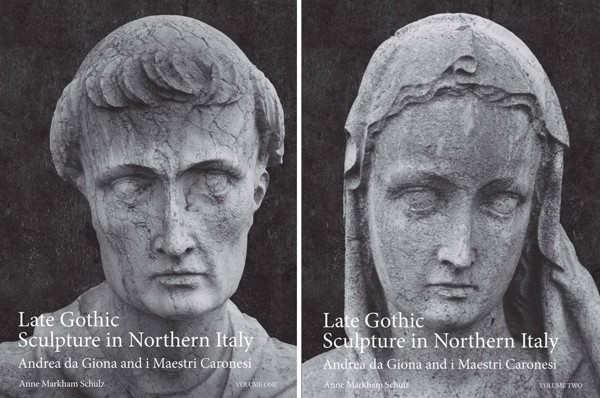
Publication – Anne Markham Schulz, « Late Gothic Sculpture in Northern Italy: Andrea da Giona and I Maestri Caronesi. An Addition to the Pantheon of Venetian Sculptors »

Over the course of a century and a half more than forty late Gothic sculptures have been recognized as sharing a vocabulary of figure and facial types, drapery, wings, and hair. Despite the fact that all the works date from the second quarter of the fifteenth century, they were widely distributed throughout Northern Italy – from Udine in the east to Venice, Ferrara, Vicenza, Verona, Milan, Genoa, and Savona in the west. Payments for the greatest of these works, the Milanese Tomb of Giovanni Borromeo, name as its authors Filippo Solari and Andrea, both from Carona or its satellite Giona, towns in the Ticino close to Lake Lugano which gave birth to several famous dynasties of stonecarvers. How Filippo and Andrea and their numerous assistants, known generally as maestri caronesi, were linked and what kinds of organizations permitted such wide-spread activity over such a narrow span of time are questions asked here for the first time. On the basis of close analyses of comparable works, moreover, it proves possible – not only to identify the chief among these maestri caronesi as Andrea da Giona (d. 1449) – but to follow his career in Castiglione Olona, Milan, and Venice where he was preeminent during the transition from late Gothic to Renaissance sculpture.

Educated in the History of Art at Radcliffe College, Harvard University, and the Institute of Fine Arts, NYU, Anne Markham Schulz has taught at the University of Illinois at Chicago Circle, Brown University, and the Università Federico II at Naples. Her previous book, The History of Venetian Sculpture, ca. 1400 to 1530, was named Book of the Year by Apollo magazine in 2018.  This is her eleventh book.

Informations pratiques :

Anne Markham Schulz, Late Gothic Sculpture in Northern Italy: Andrea da Giona and I Maestri Caronesi. An Addition to the Pantheon of Venetian Sculptors, Turnhout, Brepols, 2022 ; 2 vol., 660 p. (Studies in Medieval and Early Renaissance Art History). ISBN : 978-1-912554-80-5. Prix :€ 275,00.

Source : Brepols

Publié dans Publications | Laisser un commentaire

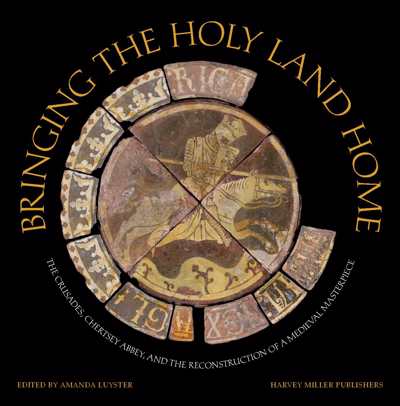
Publication – « Bringing the Holy Land Home. The Crusades, Chertsey Abbey, and the Reconstruction of a Medieval Masterpiece », dir. Amanda Luyster

A carefully-integrated group of studies begins with the so-called “Chertsey” ceramic tiles, depicting combat between King Richard the Lionheart and Saladin. Found at Chertsey Abbey not far outside London and admired since the nineteenth century, we present here a new reconstruction of both the tiles and their previously-undeciphered Latin texts. The reconstruction demonstrates not only that the theme of the entire mosaic is the Crusades, but also that the overall appearance of the tiles, when laid as a floor, draws from the composition and iconography of imported Islamic and Byzantine silks. Essays illuminate specific material contexts that similarly witness western Europe’s, and particularly England’s, engagement with the material culture of the eastern Mediterranean, including ceramics, textiles, relics and reliquaries, metalwork, coins, sculpture, and ivories.

Amanda Luyster specializes in the study of the art of the thirteenth and fourteenth centuries in England and France, with particular attention to secular production and cross-cultural contact with the Islamic and Byzantine worlds.

Table des matières :

Foreword, Michael Wood

Director’s Foreword, Meredith Fluke

Preface: « For we who were Occidentals have now become Orientals », Amanda Luyster

Violence, Persecution, and Cultural Borrowing during the Crusades, Amanda Luyster

The Chertsey Tiles, Reassembling Fragments of Meaning, Amanda Luyster

A Clash of Civilizations? Diverse Motivations, Multiple Actors, and the Hidden Richness of Muslim Historical Sources, Suleiman Mourad

The Crusades: A Short History, David Nicolle

« So much national magnificence and national history »: The Foundation, Structure, and Fall of Chertsey Abbey, Euan Roger

Epic Sensibilities in French art of the Crusader Period, Richard A. Leson

Recreating the Holy Land at Home: Relics from the East in England, Cynthia Hahn

The Mobility of Fabric: Textiles in and around Medieval Eurasia, Elizabeth Dospel Williams

Crusaders in Jerusalem: Frankish Encounters with Idols, Holy Monuments, and Portable Objects, Eva R. Hoffman

Oliphants and Elephants: African Ivory in England, Sarah Guerin

A Cupbearer Crosses Cultures: Figural Ceramic Traditions of the Eastern Mediterranean, Scott Redford

Citizens and Invaders: Encounters with Sculpture in Constantinople during the Fourth Crusade, Paroma Chatterjee

Object Biographies

Select Bibliography

Informations pratiques :

Bringing the Holy Land Home. The Crusades, Chertsey Abbey, and the Reconstruction of a Medieval Masterpiece, dir. Amanda Luyster, Turnhout, Brepols, 2022 ; 1 vol., 376 p. (Studies in Medieval and Early Renaissance Art History). ISBN : 978-1-912554-94-2. Prix : € 100,00.

Source : Brepols

Publié dans Publications | Laisser un commentaire