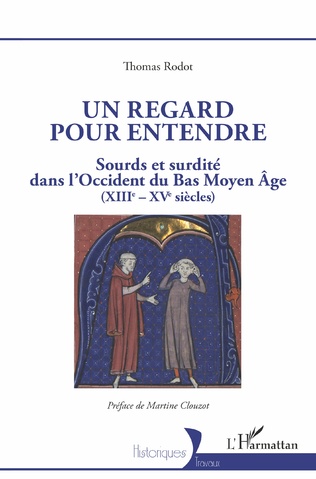
La surdité au Moyen Âge est marquée par l’absence d’une étude d’ampleur, ce qui facilite la diffusion de stéréotypes dépeignant des sourds stigmatisés et des sociétés intolérantes. L’objectif de cet ouvrage est de répondre à cette carence, de déconstruire les visions fantasmées et de nourrir les réflexions sur un sujet encore méconnu. Quels sont les causes et les remèdes attribués à la surdité ? Comment les sourds sont-ils perçus et quels comportements sont entretenus à leur égard ? De quels droits bénéficient-ils et à quels interdits doivent-ils faire face ? Par l’étude des discours médicaux, religieux et juridiques, l’ouvrage explore les représentations et les réalités des sourds afin d’évaluer leur intégration dans les sociétés occidentales de la fin du Moyen Âge.
Préface de Martine Clouzot
Étudiant à l’université de Bourgogne et professeur d’histoire-géographie, Thomas Rodot est diplômé d’un master recherche en histoire médiévale.
Informations pratiques :
Thomas Rodot, Un regard pour entendre. Sourds et surdité dans l’Occident du bas Moyen Âge (XIIIe-XVe siècles), Paris, L’Harmattan, 2022 ; 1 vol., 242 p. (Historiques. Travaux). ISBN : 978-2-14-028450-2. Prix : € 27,50.
Call for papers for the special issue: « Historical documents and automatic text recognition ».
Editors : Ariane Pinche and Peter Stokes
Journal of Data Mining and Digital Humanities
With this special issue of the Journal of Data Mining and Digital Humanities (JDMDH), we wish to bring together in one single volume several experiments, projects and reflections related to automatic text recognition on historical documents.
To address these issues, we propose the following three axes:
– Axis 1: Sources, constitution and sharing of training data.
– Axis 2: Machine learning
– Axis 3: Feedback and data exploitation
This special issue aims to provide an overview of the use of HTR or OCR on historical documents, as its uses multiply and more and more research projects and cultural heritage institutions become interested in it. Through the Journal of Data Mining and Digital Humanities, we are delighted to offer an opportunity to all those who wish to make their own contribution to the field or to share their experience by exposing their successes, their questions and their difficulties, or even failure. By publishing this special issue, we hope to present a state of the art of the uses of automatic handwriting recognition today.
Prix pour un jeune chercheur(se) (max. 35 ans) ayant réalisé un travail innovant dans le domaine de l’archéométrie.
De quoi s’agit-il ?
Le Prix Jean-Jacques Comhaire, d’un montant de 5.000€, sera chaque année décerné à un jeune chercheur/une jeune chercheuse de maximum 35 ans pour un travail innovant dans le domaine de l’archéométrie.
Créé au sein de la Fondation Roi Baudouin en 2012, le Fonds Jean-Jacques Comhaire a pour but de « favoriser et de faciliter le recours aux méthodes d’investigation et de contrôle propres aux sciences exactes (physique, chimie, (micro)biologie, etc.) ou à l’informatique dans le but de mieux faire connaître le patrimoine, soit les recherches de nature archéométrique au sens large ».
L’étude des matériaux (support, pigment, etc.) d’éléments architecturaux, d’œuvres ou d’objets archéologiques permet grâce à une approche partant des sciences exactes, de renouveler et d’élargir le questionnement à propos d’un élément de notre patrimoine. Les sciences exactes et les sciences humaines apportent chacune leur spécificité pour mieux comprendre les témoins de notre passé.
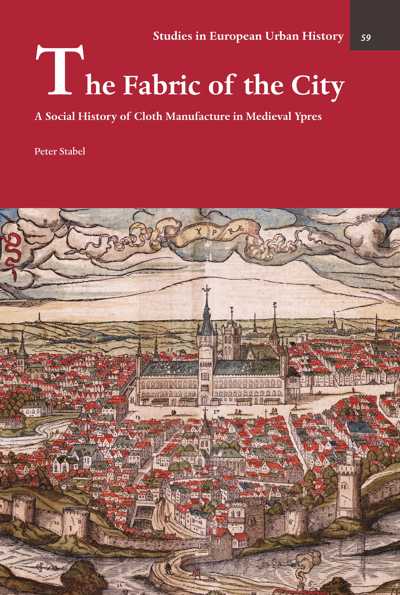
Textile industries were one of the driving forces of the urbanisation process in medieval Northwest Europe, and nowhere was their impact so profound as in Flanders, where almost all larger and smaller cities were involved in manufacturing woollens from the 12th to the 16th century. Ypres, the third city in the county, was perhaps the most important concentration of industrial labour and capital in this period. In their heyday in the 13th and 14th centuries Ypres woollens were exported all over Europe and Ypres entrepreneurs and textile workers were able to adapt in very flexible ways to changes in demand. This book investigates not only what the impact of cloth manufacture was on urban society, it also tries to unravel the social mechanisms of industrial development in late medieval cities. It focuses on social inequalities and on the often difficult relationship between the various stakeholders in the urban cloth industry: merchants, entrepreneurs, guild masters and skilled and unskilled workers. Through the analysis work practices, wage levels, investment strategies, gender issues and political aspirations, it unravels how urban industries in the pre-industrial era shaped social relations in the city, how they moulded the urban fabric.
Peter Stabel teaches medieval and urban history at the University of Antwerp’s History Department. He is chair of the Centre for Urban History at the University of Antwerp and president of the European Association for Urban History. He publishes widely on the social history of towns in the medieval Low Countries, more specific on guild life, economic organization, social inequality and gender. He is currently preparing a synthesis on city life in medieval Latin Europe, the Byzantine Empire and the Islamic World.
Informations pratiques :
Peter Stabel, The Fabric of the City. A Social History of Cloth Manufacture in Medieval Ypres, Turnhout, Brepols, 2022 ; 1 vol., 278 p. (Studies in European Urban History, 59). ISBN : 978-2-503-60051-2. Prix : € 94,00.
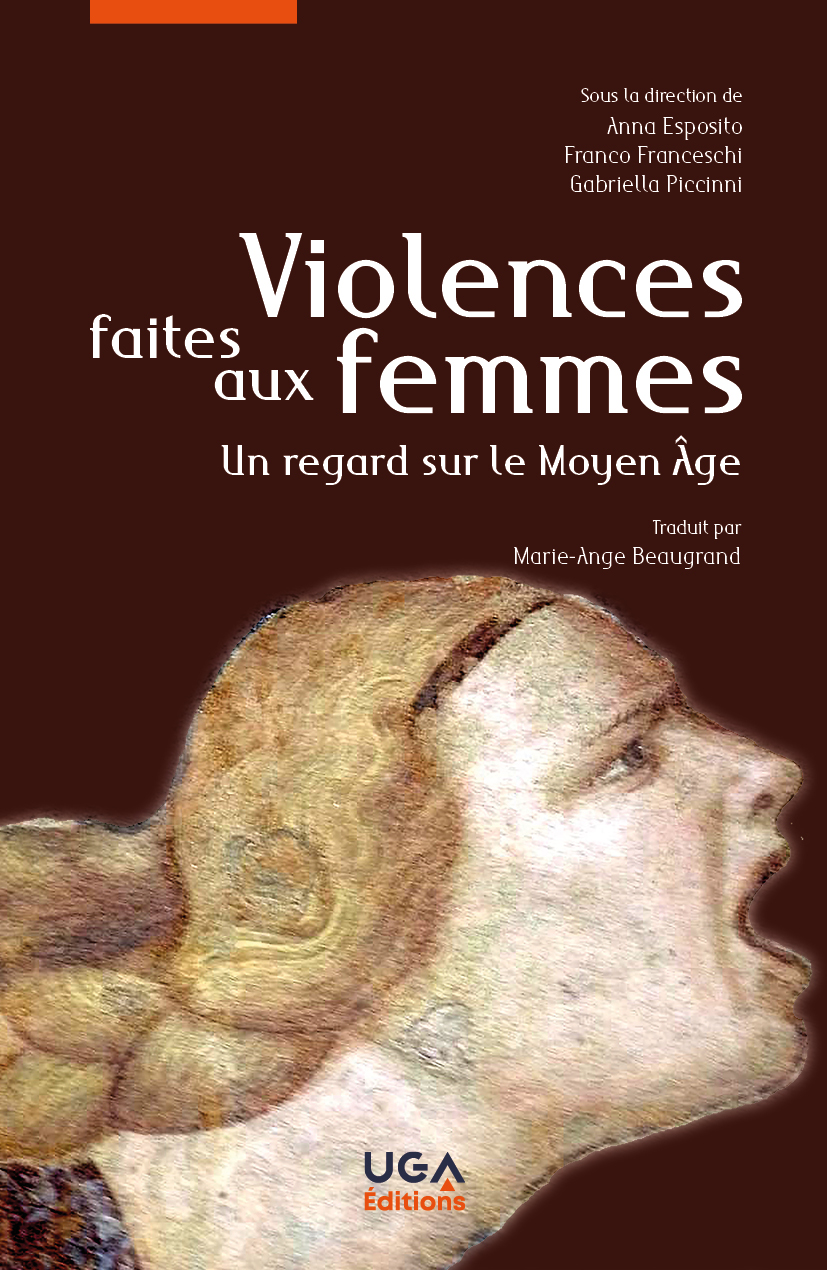
Les formes de violence exercées au Moyen Âge contre les femmes composent un catalogue impressionnant : graves sévices infligés au nom du droit du mari à « corriger » sa femme, du droit du père à assujettir et punir sa fille, du droit du maître à battre sa servante ; injures liées au comportement féminin ; viols, ségrégations, homicides au nom de l’honneur trahi ; spoliation de biens, à commencer par les héritages et les dots ; mariages et prises de voile forcés ; manipulations des consciences et violences inquisitoriales ; mauvais traitements, prévarication et discrimination sur le lieu de travail. Cet ouvrage, qui se concentre surtout sur le bas Moyen Âge italien, raconte comment se sont codifiés les comportements violents contre les femmes sans d’ailleurs omettre les cas de violences de femmes contre d’autres femmes ou la réponse violente de certaines d’entre elles à qui les menaçait et les agressait.
Traduit par Marie-Ange Beaugrand
Anna Esposito, Franco Franceschi et Gabriella Piccinni sont professeurs en histoire médiévale dans diverses universités d’Italie. Ils coordonnent ici les essais de 17 enseignants et chercheurs italiens spécialistes de l’histoire médiévale.
Marie-Ange Beaugrand a été professeur de lettres classiques et a traduit de nombreux titres italiens, notamment sur le Moyen Âge.
Informations pratiques :
Violences faites aux femmes. Un regard sur le Moyen Âge, éd. Anna Esposito, Franco Franceschi, Gabriella Piccinni, Grenoble, UGA Éditions, 2022 ; 1 vol., 414 p. (Italie Plurielle). ISBN : 978-2-37747-311-3. Prix : € 28,00.
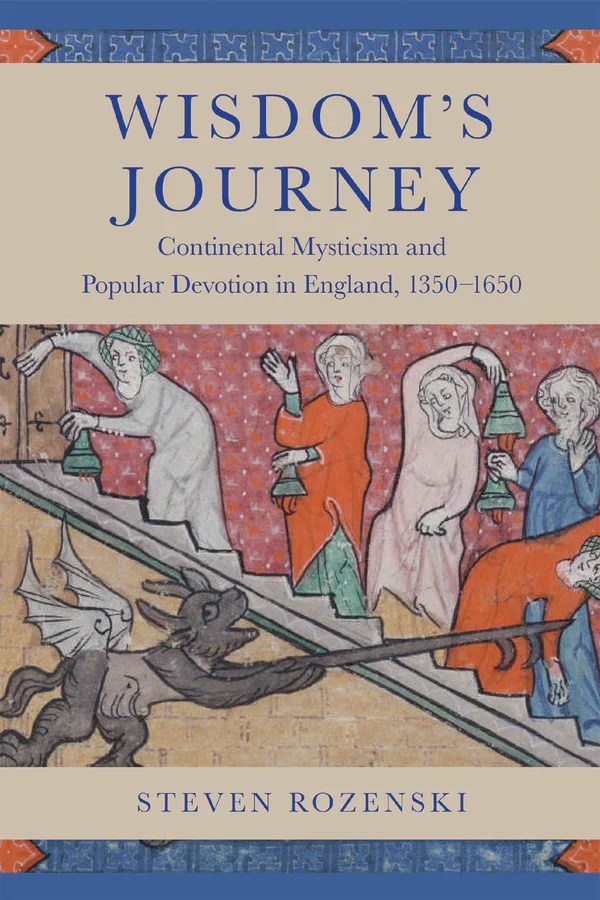
For many, Martin Luther’s translation of the Bible into German has come to define the spirit of the Protestant Reformation. But there existed a host of devotional and mystical writings translated into the vernacular that had more profound impacts upon lay religious practices and experiences well into the seventeenth century. Steven Rozenski explores this devotional and mystical literature in his focused study of English translations and adaptations of the works of Henry Suso, Catherine of Siena, and Thomas à Kempis, and the common devotional culture manifested in the work of Richard Rolle.
In Wisdom’s Journey, Rozenski examines the forms and strategies of late medieval translation, of early modern engagement with Continental medieval devotion, and of the latter’s literary afterlives in English-speaking communities. Suso’s Rhineland mysticism, the book shows, found initial widespread influence, translation, and adaptation followed by a gradual decline; Catherine of Siena’s Italian spirituality saw continued use and retranslation in post-Reformation recusant communities paralleled by vehement denunciation by English Protestants; and Thomas à Kempis’s Imitation of Christ attained a remarkably consistent expansion of popularity, translation, and acceptance among both Catholic and Protestant readers well into the nineteenth and twentieth centuries. Wisdom’s Journey traces this path as it reshapes our understanding of English devotional and mystical literature from the 1400s to the 1600s, illuminating its wider European context before and after the Reformations of the sixteenth century. Written primarily for scholars in medieval mysticism, Reformation studies, and translation studies, the book will also appeal to readers interested in medieval studies and English literature more broadly.
Steven Rozenski is an assistant professor of English at the University of Rochester. He is co-editor of Devotional Interaction in Medieval England and Its Afterlives.
Informations pratiques :
Steven Rozenski, Wisdom’s Journey. Continental Mysticism and Popular Devotion in England, 1350–1650, Notre Dame, University of Notre Dame Press, 2022 ; 1 vol., 344 p. ISBN : 9780268202767. Prix : USD 125,00.
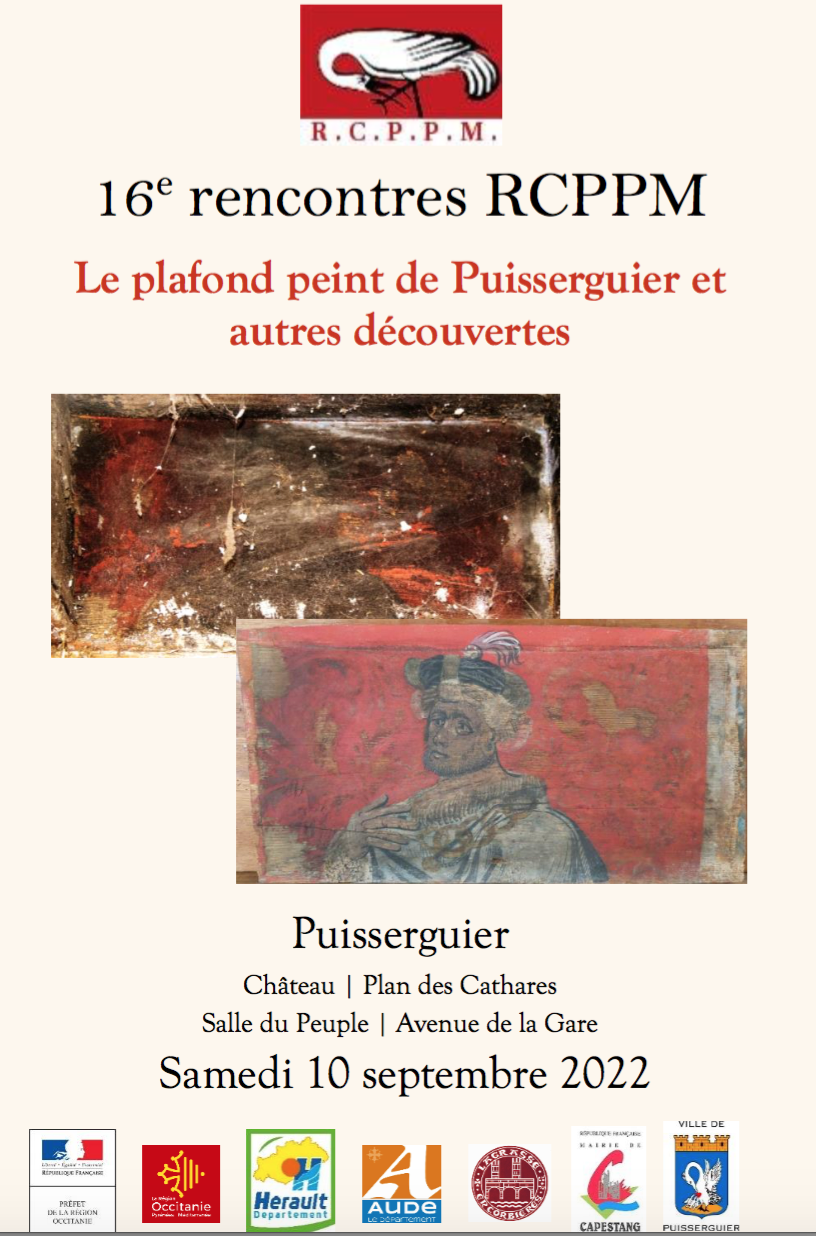
Puisserguier Château | Plan des Cathares Salle du Peuple | Avenue de la Gare Samedi 10 septembre 2022
Sur inscription à : plafondspeints@sfr.fr
Programme :
Visite de la Galerie aux images médiévales. La redécouverte du plafond peint de Puisserguier
10-12h
09h30 : Accueil par l’ARESP (Association de Recherche, Étude et Sauvegarde du Patrimoine de Puisserguier) au Château de Puisserguier . début de la visite
Au mois de juin 2011, au moment où un bâtiment insalubre allait être abattu, le maire de Puisserguier y reconnut in extremis, badigeonné, recouvert de suie, caché par un faux plafond, délavé par les fuites du toit, un plafond peint. A sa demande, il fut protégé par les Monuments historiques, mais l’état du bâtiment était tel qu’il fallut démonter le plafond. Après un difficile travail de restauration, il est aujourd’hui présenté au château de Puisserguier dans la Galerie aux images médiévales.
La RCPPM a élaboré, en collaboration avec la DRAC, une exposition où est évoquée la splendeur passée de l’hôtel dit du Viguier autour d’un choix de closoirs avec une attention particulière à leur toute récente restauration. Le plafond de Puisserguier y est présenté dans ses liens avec les autres plafonds peints qui ont orné les grandes demeures du monde méditerranéen (Languedoc, Provence ; Italie et Espagne)
12h : buffet à la Salle du Peuple
Plafonds inédits, plafonds d’ailleurs
14-16h
Lannie Rollins : Nouvelles découvertes en Occitanie : quelques plafonds peints inédits
De nouveaux plafonds peints médiévaux sont encore à retrouver. Lannie Rollins présentera les résultats de son enquête approfondie en Occitanie, des rives du Rhône jusqu’aux confins occidentaux du Gers. Elle révèle que la partie occidentale de l’actuelle Occitanie a aussi connu le goût de la fin du Moyen Âge pour les plafonds peints. Quant à sa partie gardoise, elle recèle encore quelques plafonds inédits. Mais combien ont gravement souffert !
Maud Pérez-Simon : Voyage en Italie. Pour un catalogage des plafonds d’Italie du Nord
Les élites italiennes de la fin du Moyen Âge aiment peupler leurs plafonds d’images splendides pour faire valoir leur statut social. Un périple dans l’Italie du Nord que présentera Maud Pérez-Simon permet de retracer les centres d’intérêts privilégiés sur les plafonds : saynètes comiques, modèles héroïques antiques, extraits de romans arthuriens.
Two Postdoctoral Research Fellowships (SKO 1352) in Medieval Studies are available at the Department of Conservation, Archaeology, and History, University of Oslo. The position is funded by the European Research Council and associated with the ERC Advanced Grant project 101018645 MINiTEXTS “Minuscule Texts: Marginalized Voices in Early Medieval Latin Culture (c. 700–c.1000)”, funded by the European Research Council and led by Professor Ildar Garipzanov (Principal Investigator).
MINiTEXTS seeks to systematically study early medieval Latin minuscule texts (also known as “guest texts” or “microtexts”), i.e. short texts which were added in large numbers, before c. 1000, to flyleaves, margins and other blank spaces of pre-900 Latin manuscripts. MINiTEXTS examines such textual additions as a unique corpus of practical knowledge deeply embedded in the social praxis of early medieval society and aspires to understand the “social logic” of such texts as well as the social, religious, and cultural practices that they signify.
More about the position
Successful candidates will become members of the project team. In close collaboration with the project leader and other project members, they will work on specific types of early medieval minuscule texts identified by the project.
Postdoctoral fellowship 1 is linked to MINiTEXTS’ Sub-project 3 (The Christian Norm & Liturgical Practices), and the successful applicant will analyze early medieval liturgical textual additions and pen trials in non-liturgical manuscripts.
Postdoctoral fellowship 2 is linked to MINiTEXTS’ Sub-project 5 (Cultures of Healing & Medical Practices) and the successful applicant will analyze early medieval medical and para-medical textual additions in non-medical manuscripts.
Applicants are invited to propose a project proposal pertinent to one of these two themes and clearly indicate the chosen theme in the application leatter.
The positions are available for a period of 3 years starting from January 2023. There is a 10 % component of the position which is devoted to administrative duties.
The main purpose of postdoctoral research fellowships is to qualify researchers for work in higher academic positions within their disciplines. The successful candidate is expected to become part of the research milieu or network and contribute to its development.
Qualification requirements
PhD or equivalent academic qualifications within medieval studies with a specialization in medieval liturgy (Postdoc 1) or the history of medieval “cultures of healing” (Postdoc 2)
The candidate’s research project must be closely connected to one of the two work packages mentioned above
Competence in medieval Latin
Training in Latin paleography and academic experience of working with early medieval Latin manuscripts
Fluent oral and written communication skills in English
Personal suitability and motivation for the position
The following qualifications will count in the assessment of the applicants:
The project’s scientific merit, research-related relevance and innovation
The applicant’s estimated academic and personal ability to complete the project within the allocated time frame and contribute to MINiTEXTS
Academic qualifications and academic production in the field of medieval studies
Ability to create and contribute to a positive environment for collaboration
Good co-operative skills, and the ability to successfully join in academic collaboration within and across disciplines on an international level
In the evaluation of the qualified candidates the full range of these criteria will be explicitly addressed and assessed.
We offer
Salary NOK 534 400 – 615 800 per annum depending on qualifications
Application letter (statement of motivation, summarising academic work, relevant qualifications, and suitability for the announced position), maximum 2 pages
Curriculum Vitae (educational background, academic positions, list of publications, administrative experience, and other relevant activities)
Project description (appox. 3 – 5 pages, maximum 14,000 characters. See Template for project descriptions). The project description must present a feasible progress plan. It is expected that the applicant will be able to complete the project during the period of appointment
An academic publication, to be considered as most relevant for the position (no longer than 30 pages in total). In longer publications, applicants should specify the relevant pages
Copies of educational certificates and transcripts
List of 3 references (name, relation to candidate, e-mail and phone number)
Please note that all documents must be in English or a Scandinavian language.
The application with attachments must be delivered in our electronic recruiting system, please follow the link “apply for this job”.
The short-listed candidates will be invited for an interview.
No one can be appointed for more than one Postdoctoral Fellow period at the University of Oslo.
According to the Norwegian Freedom of Information Act (Offentleglova) information about the applicant may be included in the public applicant list, also in cases where the applicant has requested non-disclosure.
The University of Oslo has an Acquisition of Rights Agreement for the purpose of securing rights to intellectual property created by its employees, including research results.
The University of Oslo aims to achieve a balanced gender composition in the workforce and to recruit people with ethnic minority backgrounds.
Contact information
Professor Ildar Garipzanov, phone number: +47 22841937, e-mail: ildar.garipzanov@iakh.uio.no
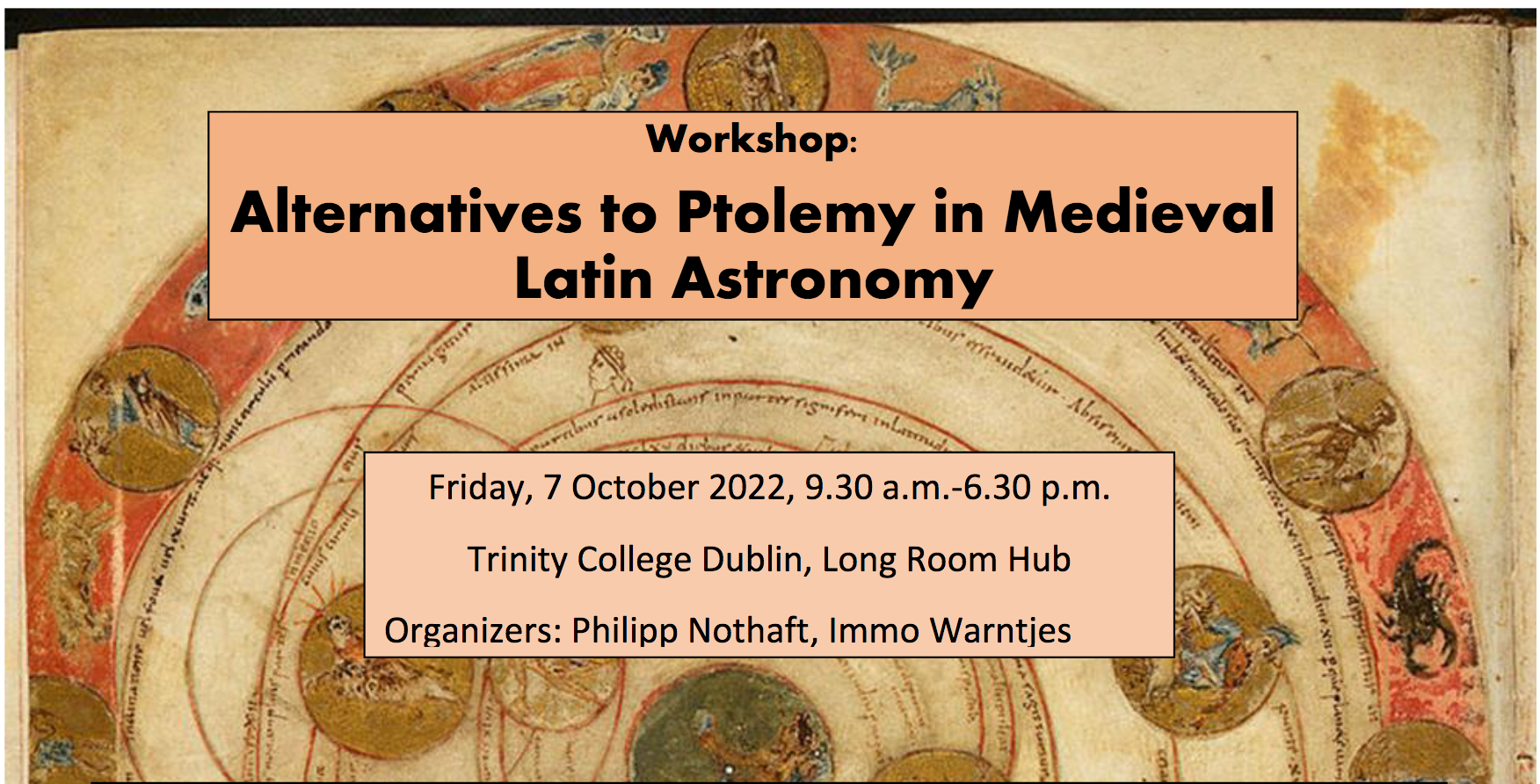
Friday, 7 October 2022, 9.30 a.m.-6.30p.m. Trinity College Dublin, Long Room Hub Organizers: Philipp Nothaft,Immo Warntjes
The translations of Ptolemy’s Almagestinto Latin during the twelfth century have traditionally beenframedas one of the key episodes in the broader history of medieval science, one which ensured that European astronomy developed under a Ptolemaic paradigm until the rise of Copernican planetary theory in the sixteenth century. At the same time, historians have long been aware that medieval Europeans had a range of alternatives to Ptolemy at their disposal, from circumsolar orbits to homocentric planetary models, while also operating with various modifications to ‘orthodox’ Ptolemaic theory, such as non-linear theories of precession. The goal of this workshop is to expand and add nuance to our understanding of these non-Ptolemaic strands in medieval Latin astronomy and of the ways in which alternative models of the heavens coexisted, interacted, or conflicted with the Ptolemaic tradition. It spotlightsnon-Ptolemaic descriptions of the material heavens documentedfrom any period of the Latin Middle Ages.
Programme :
9.30–9.45a.m.: introduction
9.45-10.30a.m.: David Juste(Bavarian Academy of Sciences and Humanities) –Ptolemaic and non-Ptolemaic Astronomy in the Latin Middle Ages
10.30-11.15a.m.: Isabelle Draelants(CNRS) –The ‘Liber Nemroth’as a Rare Example of Non-Ptolemaic Astronomy in the Central Middle Ages
11.15-11.45a.m.: coffee break
11.45a.m.-12.30: Charles Burnett (The Warburg Institute) –Hildegard of Bingen’s Folk Astronomy
12.30-2.30 p.m.:lunch break and opportunity to visit exhibition in TCD library
2.30-3.15p.m.: Barbara Obrist (CNRS) –Alternatives to Ptolemy in Twelfth-Century Cosmology
3.15-4.00p.m.: Irène Caiazzo (CNRS) – Reading Martianus Capella in the Long Twelfth Century
4.00-4.30 p.m.: coffee break
4.30-5.15 p.m.: Philipp Nothaft (TCD) – Non-Ptolemaic Interpretations of Computational Models in Twelfth-Century Sources
5.15-6.00p.m.: Richard L. Kremer (Dartmouth) –The So-Called ‘Astronomischer Tisch’ in Stams (c.1430)
À la croisée de la lecture et du commentaire bibliques, des mystères et des célébrations liturgiques, des traditions littéraires de la romanité classique, la poésie latine de l’antiquité chrétienne atteste, dans un temps de profondes mutations qui alterne les renaissances et les crises, une conception nouvelle des enjeux esthétiques, spirituels et militants de la création poétique. Loin du divertissement d’esthète, dont, à quelques rares exceptions près, elle ne renie cependant pas l’excellence formelle, la poésie des chrétiens latins réinvente « en mieux » les grands genres et les images poétiques de l’antiquité pour expliciter sinon « réenchanter » les Écritures, honorer les héros de la Bible et de la foi, servir l’orthodoxie doctrinale, la discipline et les valeurs morales proclamées par l’Église romaine. À travers une sélection de vingt-quatre études, toutes revues, mises à jour et accompagnées d’un épilogue inédit, ce livre illustre différents aspects de la manière dont le christianisme antique est ainsi allé « à la conquête de sa poésie ».
Table des matières :
Introduction
I – Réinventer l’épopée 1. L’épopée biblique en langue latine. Essai de définition d’un genre littéraire 2. Ficta et facta. La condamnation du « mensonge des poètes » dans la poésie latine chrétienne 3. L’intériorisation des espaces épiques dans la Psychomachie de Prudence 4. La mise en œuvre du merveilleux épique dans le poème De diluuio mundi d’Avit de Vienne 5. La mise en scène d’un drame intérieur dans le poème Sur le péché originel d’Avit de Vienne
II – Miracles selon Juvencus 6. Les guérisons merveilleuses dans la geste évangélique de Juvencus ou l’extravagance épique du retour à la norme 7. La résurrection de Lazare dans le poème évangélique de Juvencus (IV, 306-402)
III – Aratoriana 8. Les images de l’héroïsme triomphal dans l’Historia apostolica d’Arator 9. La mort de Judas dans l’Historia apostolica d’Arator (I, 83-102) 10. La tempête dans l’Historia apostolica d’Arator. Sources et exégèse d’un cliché littéraire
IV – Sagesse et dévotion 11. Le martyre chez Prudence : sagesse et tragédie. La réception de Sénèque dans le Peristephanon Liber 12. Mémoire et dévotion dans la célébration poétique des martyrs chez Prudence 13. Mille nocendi artes. Les préfigurations virgiliennes du mal dans la poésie des chrétiens latins 14. Caeli enarrant gloriam Dei. La poésie de Dieu dans les ciels poétiques des chrétiens latins
V – Aux premiers jours du monde 15. Natura creatrix. Jeux d’eau, de lumière et de feu aux deux premiers jours du monde dans l’Hexaméron poétique de Dracontius 16. « Tout est né ici ». La pédagogie des délices dans le paradis de Claudius Marius Victorius
VI – Corps et portraits 17. Formatur… limatur… Le corps d’Adam et Ève dans la poésie latine chrétienne 18. « Telle une nymphe de l’abîme… » La création d’Ève dans l’Hexaméron poétique de Dracontius (laud. Dei I, 371-401) 19. Apostolus apostata. La figure de Judas dans la poésie latine chrétienne Apostille: Nous sommes tous des traîtres 20. Visages de Didon dans la poésie des chrétiens latins
VII – Réception des mythes anciens 21. Les métamorphoses du phénix dans le christianisme ancien 22. Les poisons de l’âme ou le mythe de Circé dans un poème de Boèce (Boeth. cons. IV, metr. 3) 23. Les ailes de l’âme, un avatar philosophique du vol d’Icare dans un poème de Boèce (Boeth. cons. IV, metr. 1)
VIII – Épilogue 24. Le christianisme latin « à la conquête de » sa poésie
Indices
Informations pratiques :
Publication – Paul-Augustin Deproost, In melius. Études sur la poésie latine chrétienne, Paris, Institut des Études augustiniennes, 2022 ; 1 vol., 516 p. (Collection des Études Augustiniennes. Série Antiquité, 211). ISBN: 978-2-85121-322-8. prix : € 69,00.
Avec le soutien du FNRS, du CRHiDI (UCLouvain – Saint-Louis, Bruxelles), d'INCAL (UCLouvain), de PraME (UNamur), de sociAMM (ULB) et de Transitions (ULiège)










 L'Agenda des Médiévistes
Vous devez être connecté pour poster un commentaire.