Appel à contribution – Neglected Voices in Premodern Sciences, from Persia to Iceland(Routledge, “Global Perspectives on the History of Natural Philosophy”)

Most of the studies about Pre-modern European sciences have been dedicated to the role played by a relatively small number of primary characters (Avicenna, Albert the Great, Roger Bacon, Nicole Oresme, Nicholas of Cusa, to name but a few) who had a significant impact on knowledge, culture and modi pensandi of the Latin West throughout and beyond the Middle Ages. However, this presentation has led to two closely related consequences. The first consequence is that while the works of the “main” authors tend to be thoroughly studied and thus their ideas continuously observed and reinforced, those of other, less known characters, have received little, if any, attention, or have simply been forgotten, primarily when they evolved on the fringe of the mainstream. The second consequence is that Pre-modern and Medieval science is often perceived as a monolith, one composed, and shaped, only by a few inspired authors.

In response to this observation, this book aims to shed light on these neglected voices in Pre-modern sciences and to give a voice even to those ‘underrated’ actors (authors, scribes, compilers, copyists, readers, users…) who nevertheless have somehow contributed to the formation of Medieval science. Within this perspective, the volume addresses these issues from the point of view of both ideas and practices, which are particularly delicate to interrogate when dealing mainly with textual material. For this purpose, several axes (not exhaustive) have been defined:

1) Authors against the tide: This section is particularly interested in authors who, in various ways, went against the major scientific tendencies of their time and developed their science as “free electrons” by contrast to their contemporaries. Several cases are to be considered: (1) authors whose scientific involvement goes against the traditional ways of thinking by exploring original and even daring theories and practices in opposition to what was in vogue at their time; (2) authors who evolved outside the main intellectual centers and networks of the time. This can be due either to their geographical situation on the periphery of the traditional radiating places in the development of sciences or because they did not belong to any organization, institutional group or religious order promoting the diffusion and assimilation of knowledge.

2) Actors in the “physical” margins: This point focuses on those who added scientific contents into the “broader margins” of a Late Medieval work, i.e. in the actual margins, at the beginning or end of a manuscript or of a codicological unit. The contributions can analyze the authors’ identities, if they can be reconstructed, as well as the new contents which were added (ideas, sources, relationships with the main texts, reasons for which they were inserted, circulation…). Moreover, the texts considered can be both paratextual additions (comments, glosses, scholia…) or actual “guest texts”.

3) Unknown actors: This point questions the role of discrete authors, almost invisible and unknown, in the development and diffusion of Medieval knowledge. It aims to bring to

light unpreserved authors who are known only through other posterior works. Within this perspective, one could consider both characters who left no written traces and authors whose works have been lost and are only known by later quotes. Papers focusing on figures evolving in an “oral culture” (for instance in the pre-Islamic context), who provided a basis for further scientific developments, will be particularly welcome. Similarly, the scientific contribution of teachers, whose ideas and practices were kept through the writings of their students, deserves to be taken into account. Finally, papers highlighting the role of oral witnesses, practitioners and merchants, who might contribute to the transmission of knowledge by bringing empirical data taken from their daily practice, will be highly appreciated.

4) Authors between traditions: Another line of research will be dedicated to the study of the dissemination and use of scientific knowledge in areas outside the scientific field (art, literature…). In the first case, this volume is interested as much in the depictions of the figure of the experimenter or the scholar as in the artistic exploitation of the scientific disciplines. In the second case, a particular attention will also be paid to the integration of scientific knowledge into the literary domain. The sciences, as well as some scientific figures, become motifs and themes with specific narrative functions. Conversely, one might also consider the way in which scientific discourse is fed and expressed through a literary medium.

5) Authors on the fringes of historiography: Finally, this book also wants to give a voice to authors who received less attention despite their actual importance and significant contribution to premodern sciences. In particular, the historiographical readings and the appreciation of an author’s significance have been oriented, among other criteria, by their impact on European thought. Nevertheless, this attitude tends to exclude certain important characters from our usual research horizons. This is notably the case of authors who were not translated into Latin during the Middle Ages and who hardly reached European Latin scholars at that time. From this point of view, this book gives the opportunity to reassess the original contribution of such authorities and even to reevaluate their possible influence on later works in more indirect ways, outside the scope of the translations.

Abstracts (250/300 words) should be sent to:
Meyssa Ben Saad (mbs.bsaad@gmail.com), Mattia Cipriani (mattia.cipriani80@gmail.com), Grégory Clesse (gregory.clesse@uclouvain.be), or Florence Ninitte (Florence.Ninitte@univ-nantes.fr).

Contributions will be written in English.
Abstracts submission deadline: on the 30th of September 2022.

Submission deadline for the completed articles: on the 30th of April 2023.
Publié dans Appel à contributions | Laisser un commentaire

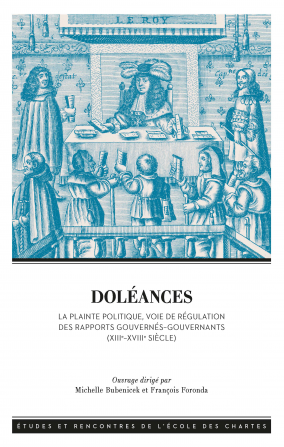
Publication – « Doléances. La plainte politique, voie de régulation des rapports gouvernés-gouvernants (XIIIe-XVIIIe siècle) », dir. Michelle Bubenicek et François Foronda

Entre la révolution du gouvernement, au XIIIe siècle, et la révolution de la citoyenneté, au xviiie siècle, la doléance, ou la plainte politique, a fonctionné telle une voie de régulation du rapport entre gouvernés et gouvernants. Si l’histoire d’autres formes de demandes est bien connue, la requête par exemple, celle de la doléance restait à entreprendre. Cet ouvrage en propose les premiers jalons, sur la base d’une enquête documentaire de dimension européenne visant à déterminer l’identité propre de la doléance. Émerge ainsi toute la complexité des supposées origines des « cahiers de doléances », dont la mémoire a été avivée, en France, par le récent Grand débat national et les « cahiers des mairies ». À travers des contributions d’historiens spécialistes du politique et du social ainsi que de juristes historiens du droit, l’ouvrage met délibérément l’accent sur les sources qui permettent d’exprimer et donc de connaître la doléance, qu’il s’agisse de suppliques, de requêtes, de mémoires, de billets manuscrits, de cahiers synthétiques, de placets ou de recueils imprimés. Une attention particulière est également apportée à l’économie interne de ces supports, et notamment à la langue et au vocabulaire employés. Ces approches croisées permettent ainsi d’appréhender la doléance comme un objet historique à part entière.

Professeur des universités, directrice de l’École nationale des chartes – PSL, Michelle Bubenicek s’intéresse à la place des femmes dans la sphère politique médiévale, ainsi qu’aux modalités d’implantation et de réception des pouvoirs.

Maître de conférences HDR à l’université Paris 1 Panthéon-Sorbonne, François Foronda travaille sur la production sociale d’un pouvoir d’État à la fin du Moyen Âge, à partir d’un champ d’observation castillan confronté à l’horizon européen.

Informations pratiques :

Doléances. La plainte politique, voie de régulation des rapports gouvernés-gouvernants (XIIIe-XVIIIe siècle), dir. Michelle Bubenicek et François Foronda, Paris, École nationale des chartes, 2022 (Études et documents de l’École des chartes). 288 p. ISBN : 978-2-35723-166-5. Prix : 34 euros.

Source : École nationale des chartes

Publié dans Le réseau | Laisser un commentaire

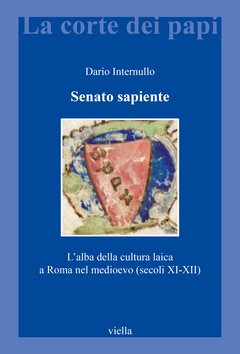
Publication – Dario Internullo,  » Senato sapiente. L’alba della cultura laica a Roma nel medioevo (secoli XI-XII) »

La Roma del XII secolo profuma di novità. Dopo esser stati a lungo governati dai papi, i romani danno vita a una struttura politica inedita, laica e inclusiva dal punto di vista sociale. È la nascita del comune, chiamato con il nome altisonante di «Senato» e associato al «popolo» di Roma attraverso il recupero dell’antica sigla S.P.Q.R.: Senatus PopulusQue Romanus.

Gli storici si sono confrontati a lungo con questa vicenda ma, privilegiandone gli aspetti sociali, hanno finora lasciato sullo sfondo i fondamenti intellettuali del nuovo sistema politico, ricco di tradizioni e riferimenti colti.

Ribaltando la prospettiva e allargando lo sguardo ai secoli XI e XII, il libro pone quel problema al centro del discorso, portando alla luce i testi, i contesti, i personaggi dotti e le dinamiche che hanno reso possibile quel cambiamento.

Table des matières : ici

Dario Internullo è ricercatore in Storia medievale presso l’Università degli Studi Roma Tre. È autore di Ai margini dei giganti. La vita intellettuale dei romani nel Trecento, Viella, 2016.

Informations pratiques :

Dario Internullo, Senato sapiente. L’alba della cultura laica a Roma nel medioevo (secoli XI-XII), Roma, Viella, 2022 (La corte dei papi, 33). 408 p. ISBN : 9788833138381. Prix : 38 euros.

Source : Viella

Publié dans Publications | Laisser un commentaire

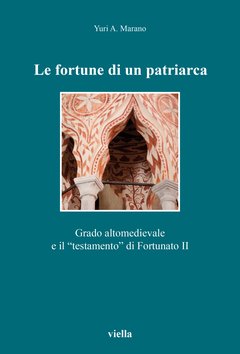
Publication – Yuri A. Marano, « Le fortune di un patriarca Grado altomedievale e il “testamento” di Fortunato II »

Lo scorcio dell’VIII e gli inizi del IX secolo segnarono nell’alto Adriatico una fase di intenso confronto politico e diplomatico tra Franchi e Bizantini, gli uni impegnati nel tentativo di imporre la loro supremazia sull’area istriano-dalmata e pannonica, gli altri decisi alla tenace difesa dei propri interessi nella regione. È sullo sfondo di questi avvenimenti che il patriarca Fortunato di Grado intraprese una politica di spregiudicate alleanze che avrebbe dovuto garantire la salvaguardia degli interessi della sua Chiesa, schierandosi con l’una o con l’altra parte ogniqualvolta il mutamento degli scenari “internazionali” mettesse a repentaglio il perseguimento di tale obiettivo. Il “testamento” di Fortunato, di cui si presentano qui una traduzione e un commento, costituisce una fonte di eccezionale interesse e fascino per la ricostruzione della parabola politica e umana di questo personaggio e di un capitolo di cruciale importanza nella storia dell’Adriatico altomedievale.

Yuri A. Marano collabora con la cattedra di Archeologia Medievale dell’Università Ca’ Foscari di Venezia. I suoi principali interessi scientifici vertono sull’evoluzione dell’urbanesimo, delle pratiche funerarie e delle produzioni nell’Adriatico e nel Mediterraneo tra la tarda Antichità e l’alto Medioevo.

Table des matières : ici

Informations pratiques :

Yuri A. Marano, Le fortune di un patriarca Grado altomedievale e il “testamento” di Fortunato II, Roma, Viella, 2022 (Altomedioevo, 10). 244 p. ISBN : 9788833138978. Prix : 28 euros.

Source : Viella

Publié dans Publications | Laisser un commentaire

Offre d’emploi – Departmental Lecturer in Medieval History (University of Oxford)

Closes: 18th July 2022

This is an exciting opportunity to join the thriving Medieval History community in the Faculty, and to gain teaching experience at the undergraduate and graduate levels. Although this is primarily a teaching role, you will also conduct independent research, assist in the running of the History School at Wadham College and play an active part in the interdisciplinary College community. The post is intended to cover teaching and administrative duties whilst Dr Matthew Kempshall is on leave. 

You will have research and teaching interests in Medieval History. You will be able to inspire and enthuse students and draw on your own research to inform and augment your teaching.

This is a full-time, fixed term post and is tenable from 1st October 2022 until 30th September 2023 (limited by external funding).

About you

You will hold a completed doctorate in a relevant field, or evidence that a doctorate is close to completion.  You will possess sufficient depth and breadth of knowledge, alongside research and teaching interests, in Medieval History which will enable you to develop course materials and research proposals.  You will have a publication record commensurate with career stage, and familiarity with the existing literature and research in the field of Medieval History.

You will be able to inspire and enthuse students and draw on your own research to inform and augment your teaching.

Application Process 

For an informal discussion about this role, please contact Dr Matthew Kempshall at matthew.kempshall@wadham.ox.ac.uk; all practical and procedural queries should be sent to our recruitments team: recruitments@history.ox.ac.uk. All enquiries will be treated in strict confidence; they will not form part of the selection decision.

We expect to hold interviews on Monday 8th August 2022; overseas candidates will be offered Microsoft Teams interviews.

You will be required to complete a supporting statement, setting out how you meet the selection criteria, curriculum vitae and the names and contact details of two referees as part of your online application.

The deadline for applications is 12.00 noon on Monday 18th July 2022.

Only applications submitted via our e-recruitment system and received before noon Monday 18th July 2022 can be considered.

Committed to equality and valuing diversity

Publié dans Offre d'emploi | Laisser un commentaire

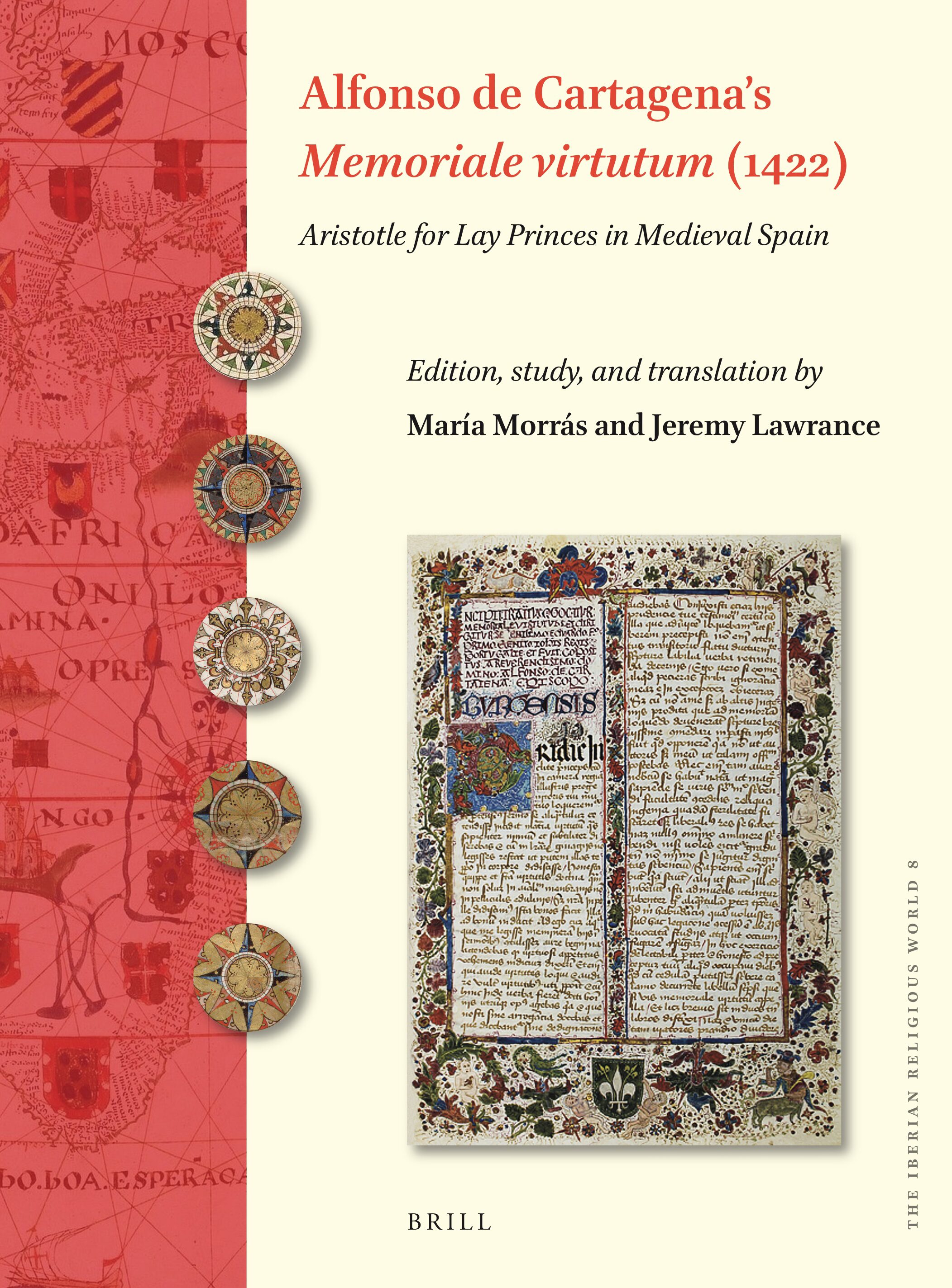
Publication – « Alfonso de Cartagena’s ‘Memoriale virtutum’ (1422). Aristotle for Lay Princes in Medieval Spain », dir. María Morrás et Jeremy Lawrance

In Alfonso de Cartagena’s ‘Memoriale virtutum’ (1422) María Morrás and Jeremy Lawrance offer a new edition from the manuscripts of a compilation of Aristotle’s Nicomachean Ethics addressed by the major Castilian intellectual of the day, bishop Alfonso de Cartagena, to the heir to the throne of Portugal, crown prince Duarte.

The work was a speculum principis, an education for the future king in the virtues suitable to a statesman; Cartagena’s choice of Aristotle was thus a significant index of the advent of new Renaissance ideas. This edition shows how the “memorial” throws light on the ideological transformation of society those ideas would bring, setting new ethical guidelines for the ruling class at the crossroads between medieval feudalism and Renaissance absolutism.

María Morrás Ph.D. (1990, Berkeley), professor in Humanities at Universitat Pompeu Fabra, Barcelona and Special Lecturer at Oxford, studies medieval and Renaissance Spanish literature, particularly the cultural impact of humanism. She has edited Cartagena’s Ciceronian translations, Libros de Tulio (Alcalá, 1996).

Jeremy Lawrance, DPhil (1983, Oxford), former Professor of Spanish at the Universities of Manchester and Nottingham, studies the history of ideas. He has edited and translated Latin works by Cartagena (Bellaterra, 1979), Vitoria (Cambridge, 1991), and Palencia (Madrid, 1998–99).

Table des matières : ici

Informations pratiques :

Alfonso de Cartagena’s ‘Memoriale virtutum’ (1422). Aristotle for Lay Princes in Medieval Spain, dir. María Morrás et Jeremy Lawrance, Leiden–Boston, Brill, 2022 (The Iberian Religious World, Volume: 8). ISBN : 978-90-04-41115-9. Prix: 128 euros.

Source : Brill

Publié dans Publications | Laisser un commentaire

Colloque – La peinture monumentale en Occitanie du Moyen Âge à nos jours

La peinture monumentale est une des formes d’art dont l’étude se renouvelle régulièrement du fait des découvertes. Souvent cachées sous des couches de badigeons, masquées par des aménagements postérieurs ou oubliées dans des lieux peu accessibles, les peintures monumentales réapparaissent tous les jours au gré de travaux d’entretien et de restauration ou sont révélées grâce à des études. Le corpus des peintures murales évolue donc en permanence, enrichissant notre patrimoine et développant nos connaissances.

Le Groupe de Recherches sur la Peinture Murale (GRPM) et la région Occitanie vous proposent de dresser un bilan des connaissances et d’ouvrir des perspectives de recherche et de valorisation des peintures monumentales régionales ; peintures murales et plafonds peints. Bienvenue à tous les spécialistes de la peinture monumentale et aux amateurs d’histoire et de patrimoine local ou pictural !

Programme :

Mercredi 28 septembre

9h00 à 9h30 : Accueil des participants et café

9h30 à 9h50 : Ouverture du colloque, discours officiels

Matinée : la Région Occitanie et la peinture murale

Président de séance : Nicolas Bru, Conservateur des M.H. DRAC Occitanie

9h50 à 10h10 : Introduction (GRPM, Région)

10h10 à 10h15 : Présentation film chronologique

  • 10h15 à 10h30 : Roland Chabbert et Sylvie Decottignies, Présentation et bilans du dispositif régional
  • 10h30 à 10h45 : Lise Del Tedesco (Région Occitanie), Le mécénat de compétence appliqué à la peinture murale

Pause de 10h45 à 11h15

  • 11h15 à 11h35 : Guillaume Bernard (Chargé de mission patrimoine mobilier, CD Lot) et Manon Vidal (Conservatrice des M.H. DRAC Occitanie), Étude sanitaire des peintures murales du Lot (46)
  • 11h35 à 11h50 : Anaïs Charrier (Archéologue du bâti, Chargée d’Inventaire, Direction du patrimoine, Cahors), L’exemple de Cahors et ses dernières découvertes

11h50 à 12h10 : Questions/débat

12h10 à 12h45 : Présentation des posters

12h45 à 14h00 : Déjeuner

Après-midi : la conservation-restauration

Président de séance : Jean-Marc Stouffs, conservateur-restaurateur de peintures murales

  • 14h à 14h20 : Aude Aussilloux (conservatrice-restauratrice), Amarrante Szidon (Fille de l’artiste), La conservation des oeuvres de Dado, site des Orpellières à Sérignan (34)
  • 14h20 à 14h40 : Diane Henry-Lormelle (conservatrice-restauratrice), L’église de Toulongergues (12) : les choix de présentation des enduits peints romans et des enduits historiques au sein d’un édifice qui a subi de nombreuses transformations
  • 14h40 à 15h00 : Jérôme Ruiz, Florence Meyerfeld, Sandra Abreu (conservateurs-restaurateurs), La restauration de 36 closoirs provenant de la maison du Viguier de Puisserguier (34)

Pause de 15h00 à 15h15

  • 15h15 à 15h35 : Anne Rigaud (conservatrice-restauratrice de peintures murales), La chapelle de Centeilles ou l’urgence peut-elle se contenir à défaut de se prévenir ?
  • 15h35 à 15h55 : Philippe Pécout (Région Occitanie), Aux limites du Languedoc et de la Provence : les peintures médiévales conservées dans les édifices gardois du sillon rhodanien, entre le XIIe et le XIVe siècle (30)

16h00 à 16h20 : Questions/débat

16h20 : Départ pour la visite de Saint-Sernin

  • 17h00 : Présentation des peintures romanes de l’édifice : Natacha Piano et Jean-Marc Stouffs

Jeudi 29 septembre

Matinée : études

Présidente de séance : Géraldine Victoir, Maître de conférence, Université de Montpellier Paul-Valéry

  • 9h00 à 9h20 : Adeline Béa (chargée d’études, Inventaire du Patrimoine CAUE Tarn), Le décor peint des demeures patriciennes de Cordes (81)
  • 9h20 à 9h40 : Térence de Monredon (chercheur indépendant, GRPM), Le décor héraldique du château de Larnagol : originalité d’un décor quercynois (46)
  • 9h40 à 10h00 : Sandrine Ruefly, Léa Gérardin (chercheures, Service inventaire PETR Pays Midi-Quercy), État des dernières découvertes

10h00 à 10h20 : Questions/débat

Pause de 10h20 à 10h45

Présidente de séance : Sophie Duhem, Maître de conférence, Université de Toulouse Jean-Jaurès

  • 10h45 à 11h05 : Lannie Rollins (doctorante, Université de Toulouse Jean-Jaurès), Étude de cas liant peintures murales et plafonds peints
  • 11h05 à 11h25 : Frédéric Mazeran (architecte du département de l’Hérault, RCPPM), Les décors peints du département de l’Hérault : quelques exemples significatifs d’un patrimoine civil

11h25 à 11h50 : Questions/débat

11h50 à 13h30 : Déjeuner

Après-midi : valorisation

Président de séance : Roland Chabbert, Chef du Service de la Connaissance et de l’Inventaire des Patrimoines, Région Occitanie

  • 13h30 à 13h50 : Christian Davy (Chercheur indépendant, GRPM), Perceptions de l’intégrité de la peinture murale : exemples de Saint-Sernin de Toulouse et Saint-Martin des Puits
  • 13h50 à 14h10 : Christine Leduc-Gueye (Chercheure indépendante, GRPM), Laurence Blondaux (conservatrice-restauratrice, GRPM), Quelle médiation pour des peintures murales cachées ou difficilement accessibles au public : l’exemple de Lasbordes (11)
  • 14h10 à 14h30 : Valérie Dumoulin et Marion Ortiz (RCPPM), « Heraldica Domestica » : un projet de numérisation et de valorisation pour les armoiries des plafonds peints
  • 14h30 à 14h50 : Christiane Tabouriech (architecte du patrimoine, RCPPM), Trésors cachés de Notre-Dame du Mont-Carmel à Carcassonne (11)

14h50 à 15h10 : Questions/débat

Pause de 15h10 à 15h45

15h45 : Départ pour la visite des Jacobins de Toulouse (valorisation, réalité augmentée)

  • 16h30 : Présentation Marie Bonnabel et Hortense Rolland

Vendredi 30 septembre

Matinée : nouvelles réflexions

Présidente de séance : Ilona Hans-Collas, GRPM

  • 9h à 9h20 : Carelyne Henocq (Doctorante, Université de Toulouse Jean-Jaurès), Les peintures murales du logis abbatial de Moissac : quelle place au sein de la culture visuelle Plantagenêt (82) ?
  • 9h20 à 9h40 : Sophie Ducret (Doctorante, Université de Montpellier Paul-Valéry), Le processus de la commande artistique aux âges romans : l’exemple des peintures murales du Midi de la France
  • 9h40 à 10h00 : Hortense Rolland (Doctorante, Université de Toulouse Jean-Jaurès), Les peintures de l’église du couvent des Jacobins de Toulouse

10h00 à 10h20 : Questions/débat

Pause de 10h20 à 10h45

Président de séance : Nicolas Meynen, Maître de conférence, Université de Toulouse Jean-Jaurès

  • 10h45 à 11h30 : Rosalie Godin (conservatrice-restauratrice), Michel Peron (architecte du patrimoine, maître d’oeuvre), Guy Ashell de Toulza (professeur honoraire d’histoire de l’art), Witold Nowik (ingénieur de recherche, pôle Peinture murale et polychromie, Laboratoire de Recherche des Monuments Historiques), Un décor médiéval découvert et restauré au XIXe siècle à Rabastens (81), concept de restauration et critique d’authenticité : conservation et restauration aujourd’hui
  • 11h30 à 11h50 : Gérard d’Alto (étudiant, Université de Toulouse Jean-Jaurès), Renouveler la recherche sur les peintures murales réalisées par les Pedoya à travers l’étude de leurs réseaux de sociabilité
  • 11h50 à 12h10 : Nicolas Bru (conservateur des M.H. DRAC Occitanie), Un décor monumental des Ateliers d’art sacré en 1936 pour la chapelle de la Providence à Mende (48)

12h10 à 12h30 : Questions/débat

12h30 à 14h00 : Déjeuner

Après-midi : street art

Présidente de séance : Christine Leduc-Gueye, GRPM

  • 14h00 à 14h20 : Nicolas Gzeley (chercheur indépendant), L’art urbain : du graffiti au néo-muralisme
  • 14h20 à 14h40 : Sarah Gerber (chercheure, Mairie de Montauban – CIAP), L’art urbain à Montauban : valorisation et médiation (82)
  • 14h40 à 15h00 : Aurélie Bégou (coordinatrice du projet Portes de Gascogne), Projet street art des portes de Gascogne (32)

15h00 à 15h30 : Questions/débat

15h30 : Conclusion, Monique Bourin, Professeur émérite Université Paris 1-CNRS, Présidente de la RCPPM

Informations pratiques :

28-30 septembre 2022

Hôtel de Région – 22 boulevard du Maréchal-Juin
Toulouse, France (31)

Source : Calenda

Publié dans Colloque | Laisser un commentaire

Offre d’emploi – University Assistant (post doc) at the Department of History (Universität Wien)

The University of Vienna (20 faculties and centres, 179 fields of study, approx. 10.000 members of staff, about 90.000 students) seeks to fill the position from 01.10.2022 of a

University Assistant (post doc)at the Department of History

to 30.09.2027.

Reference number: 13311

The Faculty of Historical and Cultural Studies is offering a post-doc position in the Department of History.

Duration of employment: 5 year/s

Extent of Employment: 30 hours/week
Job grading in accordance with collective bargaining agreement: §48 VwGr. B1 lit. b (postdoc) with relevant work experience determining the assignment to a particular salary grade.

Job Description:
Participation in research and teaching in the field of Austrian History; offering classes autonomously in the history programs of Vienna University (BA, MA, and Second School Teaching Certificate); general administration duties. It is expected that candidates will take further steps in their career (Habilitation), publish in their fields and present papers at conferences.

Profile:
Ph.D. in history with a focus on Medieval and/or Early Modern History, preferably c. 13th-16th, with a focus on Austria in its European context and/or on comparative Central European history.

Teaching qualities and teaching experience are expected, as is the ability and commitment to participate in the department´s administration. Broad experience in working with archival and other sources is a prerequisite; the participation in one of the Faculty´s key research areas (FSP Austria in Its Context, Historical and Cultural European Studies) is encouraged. Besides excellent language skills in English and/or German, we expect candidates to have very good knowledge of Latin as well as of one or more Central European languages (preferably Hungarian, Czech), experiences in Digital Humanities are welcome.
Application documents
– Letter of motivation
– Academic curriculum vitae (including a list of publications, a list of courses taught, and a list of talks given)
– Description of research interests and research agenda / of the intended habilitation project (if applicable)
– Contact details of people who could provide a letter of reference

Research fields:

Main research fieldSpecial research fieldsImportance
History, ArchaeologyScience of historyMUST


Applications including a letter of motivation (German or English) should be submitted via the Job Center to the University of Vienna (http://jobcenter.univie.ac.at) no later than 18.07.2022, mentioning reference number 13311.

For further information please contact Lutter, Christina +43-1-4277-27290.

The University pursues a non-discriminatory employment policy and values equal opportunities, as well as diversity (http://diversity.univie.ac.at/). The University lays special emphasis on increasing the number of women in senior and in academic positions. Given equal qualifications, preference will be given to female applicants.

Source : University of Vienna

Publié dans Offre d'emploi | Laisser un commentaire

Web – Sacra Pagina : la Bible latine glosée au Moyen Âge

Accès : ici

Responsable scientifique : Martin Morard (CNRS-IRHT)

La Bible glosée est un corpus de centaines de milliers de ‘sentences’, explications synthétiques, disposées dans les marges et l’interligne de la Sacra Scriptura. Elle forme la Sacra Pagina, socle de l’enseignement de la théologie ou Sacra doctrina.

Diffusée par le réseau des maîtres et des prédicateurs, de la chaire des écoles à la chaire des églises, Reader’s Digest des interprétations de la Bible, témoin privilégié des évolutions de la réception des Pères et des auteurs anciens, la Bible glosée a procuré par son autorité un socle commun au Christianisme occidental. Elle a contribué à la construction culturelle et religieuse de l’Europe, pénétrant, au-delà des frontières linguistiques et même confessionnelles, jusqu’à la République des Lettres.

GLOSS-e 2022 est un programme collaboratif lancé en 2009. Il procure des éditions électroniques natives évolutives des corpus exégétiques retenus, mises à jour au fil de la production des données. Grâce aux technologies numériques, la stratégie et la méthode éditoriales répondent aux souhaits d’historiens comme Marc Bloch (†1944) et Louis-Jacques Bataillon (†2009) qui invitaient à éditer les documents de référence du patrimoine médiéval, de manière scientifique mais pragmatique, sur la base de critères adaptés à la complexité des ‘textes ouverts’, attestés par un grand nombre de témoins. => Pour en savoir plus : M. Morard, « Pour une lecture panoramique de la Bible latine glosée. Le programme Glossae Sacrae Scripturae electronicae » (2019-2021).

Vous trouverez ici le texte de la Bible latine du Moyen Âge tardif (Littera communis) associé à plus de 200’000 sentences (35’000 pages), éditées à partir de laGlose ‘ordinaire’, de ses versions et de commentaires associés, soit  :

  1. & Littera communis : édition originale de la Bible ‘parisienne’ (version amendée de l’édition princeps de la Glossa ordinaria,Strasbourg, 1481) avec leçons des éditions critiques, variantes des correctoires bibliques (inédits) et de témoins inédits de la Bible latine du Moyen Âge tardif (12e-16e siècles) (en cours)
  2. & Glossa ordinaria : d’après la Biblia latina cum glossa ordinaria, Adolf Rusch pro Antonio Koberger, [Strasbourg 23.IX.1481], 2415 p., amendée, enrichie de prologues, sentences et collations inédites :
  3. & Glossa media in Psalmos et epistolas Pauli de Gilbert de la Porrée (1120-1140 c.) : extraits en attente d’une transcription complète.
  4. & Glossa magna in Psalmos et epistolas Pauli de Pierre Lombard (1160 c.): de la Patrologie latine collationné et complété à partir des manuscrits d’Herbert de Bosham (1172 c.) (en cours)
  5. & Summa super Psalterium de Philippe le Chancelier (1230 c.) : texte de l’édition princeps (Paris 1523 / 1533?)
  6. & Postillae super totam Bibliam de Hugues de Saint-Cher (1230-1240 c.) : d’après l’édition de Venise, 1703, restructurée par versets bibliques (en cours). Disponibles : tomes 3 (livres sapientiaux), 4 (Is. Ier. Lam. Ez.), 6 et 7 (Nouveau Testament) ; en préparation : t. 1 (Gn.-Esdras), 2 (Psaumes), 5 (Dn. 12 Proph. 1-2 Mcc.)
  7. & Catena aurea super quattuor Evangelia de Thomas d’Aquin (1262-1272) : première édition critique, en cours : texte médiéval restitué avec analyse des sources. 12840 sentence s; taux d’avancement : 60 % ; index greco-latin des traductions natives
  8. & Base GLOSSEM. Le projet est adossé à un répertoire critique des manuscrits de la Bible latine glosée ou bibles avec commentaires, réunissant à ce jour plus de 11’500 livres bibliques glosés, conservés sous quelque 6000 cotes de conservation.

Tous les corpus sont encodés en mode texte et format numérique (XML/TEI), avec liens vers les images des témoins disponibles en ligne, et interfaces d’interrogation permettant la sélection et l’interrogation croisée des données. Les corpus sont interrogeables par chapitres et versets bibliques, par chaînes de caractères et par opérateurs booléens. La recherche permet de sélectionner et combiner les corpus et les livres bibliques, de cibler les unités textuelles à interroger : texte bibliques, lemmes commentés, prologues, sentences, apparats du texte et des sources, autorités déclarées (lemmes attributifs), sources identifiées, citations bibliques, variantes textuelles, etc. (Développement : ACATUS-informatique. Orléans)

Pour en savoir plus :

Carnet de recherches : SACRA PAGINA : Gloses et commentaire de la Bible au Moyen-Âge

Poster de présentation : Les gloses de la Bible, 1000 chemins ouverts vers une culture religieuse plurielle

Editoriaux précédents : 2006, 2016

Source : IRHT

Publié dans Web | Laisser un commentaire

Colloque – The Embodied Court: Procreation – Sexuality – Lifestyles – Death

La conférence annuelle de la Society for Court Studies, organisée par le comité de la branche européenne en partenariat avec le département d’histoire de l’université d’Helsinki, se tiendra sous une forme hybride à l’université d’Helsinki et au château de Turku du 1er au 3 septembre 2022.

Ces dernières années, une attention accrue a été accordée aux corps individuels qui composaient les cours royales et princières, et à la manière dont l’environnement de la cour façonnait les expériences corporelles de tous les participants, du souverain aux serviteurs. Cette conférence interdisciplinaire explorera la physicalité de la cour dans quatre contextes clés du cycle de vie : les corps naissant et donnant naissance ; les corps en tant qu’acteurs ou objets sexuels ; les corps dans les styles de vie de la cour ; et les corps morts et mourants. Ces expériences communes n’étaient pas uniformes, mais ont pris des conséquences politiques, sociales et culturelles particulières dans l’atmosphère chargée de la cour.

Les principaux intervenants sont Helen Watanabe-O’Kelly (Université d’Oxford), Svante Norrhem (Université de Lund) et Anu Lahtinen (Université d’Helsinki).

Les inscriptions à tarif préférentiel se terminent le 15 juillet, et les inscriptions normales le 15 août.

Pour de plus amples informations, y compris le programme de la conférence et l’inscription pour une participation en personne ou en ligne, veuillez consulter https://www.embodiedcourtconference.com/

« The Embodied Court: Procreation – Sexuality – Lifestyles – Death », organized by the European Branch Committee of the Society in partnership with the Department of Philosophy, History and Art Studies at the University of Helsinki, Aalto University, Turku Castle, and Åbo Akademi University.

​This hybrid conference will take place from 1 to 3 September 2022 at the University of Helsinki, with the third day held at Turku Castle (with an optional guided tour of Turku Castle). 

​The conference features keynote lectures from:

Helen Watanabe-O’Kelly

(Faculty of Medieval and Modern Languages, University of Oxford)

Svante Norrhem

(Department of History, Lund University)

Anu Lahtinen

(Department of Philosophy, History and Art Studies, University of Helsinki)

​In the following pages you will find information and details including the conference programme, digital participation, and important information about the conference venue and visiting Helsinki. We have also compiled all of this information in a comprehensive PDF guide, which can be downloaded by clicking the button below. 

​We look forward to welcoming all of our presenters and participants to Helsinki and virtually on 1 September. See you then! 

Source : The Embodied Court

Publié dans Colloque | Laisser un commentaire