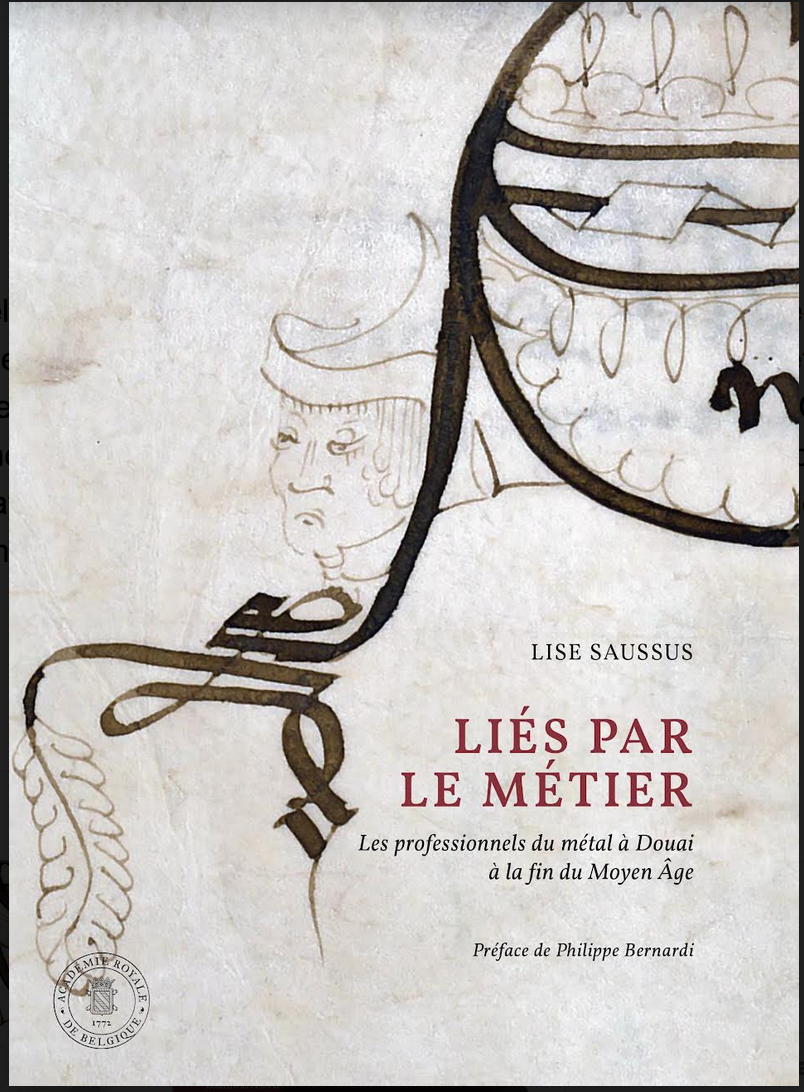
Entre les XIIIe et XVe siècles, à Douai, comme dans d’autres villes, les métallurgistes du fer, du cuivre, de l’étain, du plomb, de l’or et de l’argent participent à un marché varié et polymorphe d’objets et de fournitures en métal. À partir de quelques milliers de documents, cet ouvrage s’intéresse à la vie collective et individuelle des membres de ce groupe professionnel : leur nombre, leur répartition topographique, leur niveau de vie, leurs activités, parfois multiples. Les liens entre ces hommes, ces femmes et ces familles sont étudiés, qu’ils relèvent de la confiance, de l’amitié ou de la mobilité des capitaux, qu’ils soient le socle de stratégies matrimoniales ou de transmission de ce qui fait le métier, y compris l’atelier, les outils et les savoir-faire.
Lise Saussus est docteure en histoire et archéologie médiévale de l’UCLouvain, chargée de recherches au FNRS, après un postdoctorat du Labex Hastec au LAMOP (Paris 1 Panthéon-Sorbonne) sur les métiers du métal à Douai. Spécialisée en histoire des techniques, elle consacre actuellement ses travaux à l’étude de la production et de la consommation des métaux non ferreux entre Ve et XVe siècles. Sa thèse, soutenue en 2017 sur la métallurgie du cuivre dans la Flandre de la fin du Moyen Âge, est distinguée en 2018 par le prix Pro Civitate et en 2019 par l’Association française d’histoire économique.Actuellement, elle poursuit un postdoctorat financé par le DIM-MAP au Centre de recherches historiques (École des hautes études en sciences sociales) et au Centre de recherche et de restauration des musées de France. »
Informations pratiques :
Lise Saussus, Liés par le métier. Les professionnels du métal à Douai à la fin du Moyen Âge, Bruxelles, Académie royale de Belgique. 312 p., ISBN : 978-2-8031-0842-8. Prix (imprimé) : 40 euros. Téléchargeable gratuitement en ligne.
The ERC project Anatomy in Ancient Greece and Rome: An Interactive Visual and Textual Atlas (ATLOMY) is offering a Post-Doctoral fellowship in Jerusalem to study Galen’s anatomy through a novel multidisciplinary perspective and in a team of specialists from different fields (data science, 3D modelling, ancient Greek philology and literature, Arabic literature, history of science, medicine, veterinary).
We are based at Department of Classics at The Hebrew University of Jerusalem.
Fellowship start date: October 1st, 2022 or as soon as possible thereafter.
Eligibility: Scholars who have received their Ph.D. after October 1st 2017 or will submit their Ph.D. no later than October 1st 2022 are eligible to apply. Please see the full Call for further perquisites.
The fellowship includes a monthly stipend of approximately 10,000 NIS and will be granted for a maximum of three years (subject to review at the end of each year).
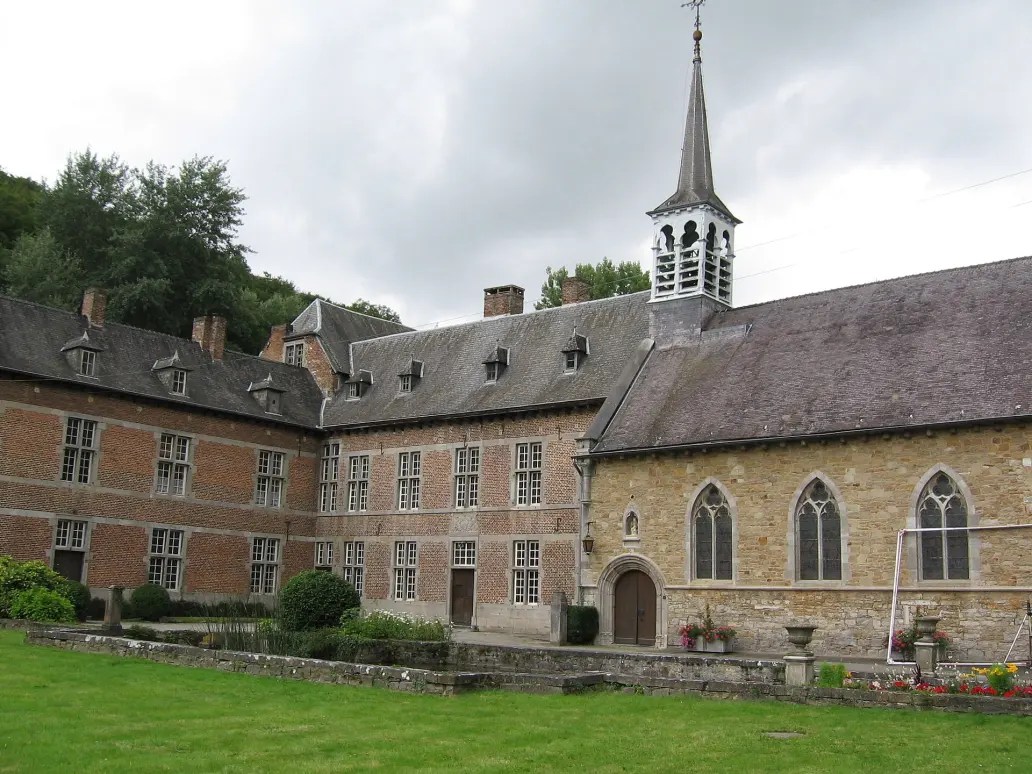
Fondée au XIIIe siècle, l’abbaye Notre-Dame-du-Vivier a été occupée et gérée par des moniales cisterciennes jusqu’en 1856, puis par différentes congrégations religieuses. Acquise par une société immobilière fin 2018, elle bénéficie d’un programme de restauration avec l’appui de l’Agence wallonne pour le Patrimoine. L’étude archéologique révèle des pans entiers et méconnus du développement médiéval de l’abbaye, de son insertion dans son environnement et de son évolution.
Informations pratiques :
Mardi 17 mai 2022, 12h30-13h30
Lieu : locaux de la Bourse, place d’Armes (Namur, Belgique).
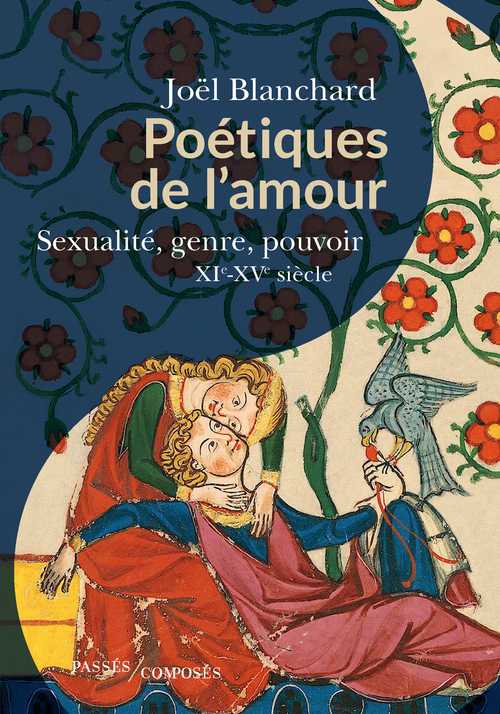
Depuis les premiers écrits chrétiens jusqu’aux expressions les plus abouties de l’amour dit courtois au XVe siècle, Joël Blanchard interroge l’histoire du discours amoureux, ses formes de pensée et d’écriture qui se sont forgées depuis un millénaire. Avec force d’exemples, l’auteur retrace les débats, théologiques et rhétoriques, les controverses, morales et philosophiques, convoque les acteurs, troubadours, clercs, chevaliers et dames, et révèle que si la fin’amor est d’abord l’affirmation de l’amour le plus délicat et passionné, elle s’avère bientôt être l’expression d’une tradition misogyne. Les échos de ces temps où la voix des femmes peine à se faire entendre parviennent jusqu’à nous. Sexualités, virginité, chasteté et désir, ou encore conjugalité, mariage et célibat sont autant de sujets qui animent l’espace public, et montrent que l’expression de l’amour est avant tout une question de pouvoir.
Informations pratiques :
Joël Blanchard, Poétiques de l’amour. Sexualité, genre, pouvoir. XIe-XVe siècle, Paris, Passés/Composés, 2022. ISBN : 978-2-3793-3251-7, 336 pages. Prix : 22 €
Department: Department of History Regime Part-time
Let’s shape the future – University of Antwerp
The University of Antwerp is a dynamic, forward-thinking, European university. We offer an innovative academic education to more than 20000 students, conduct pioneering scientific research and play an important service-providing role in society. We are one of the largest, most international and most innovative employers in the region. With more than 6000 employees from 100 different countries, we are helping to build tomorrow’s world every day. Through top scientific research, we push back boundaries and set a course for the future – a future that you can help to shape.
The Department of History in the Faculty of Arts has the following part-time (75%) vacancy: principal research (& teaching) fellow in the field of late medieval history
Position
As a principal research fellow, you will be part of the Academic Assistant Staff (Dutch: Assisterend Academisch Personeel, AAP). You will spend at least 55% of your working time on education. In addition, you will actively contribute to academic research (40%) and academic and societal service provision (5%).
Education
You will teach high-quality academic classes and provide support for the following courses: Middle Ages: politics and institutions (yearly, second semester), Introduction to Historiography (twice, in 2022-3 and 2024-5, second semester), Historical sources per period: Middle Ages (at least once in the three years, first semester) and a Bachelor 3 thesis writing seminar on a topic of your choice (at least once in the three years, both semesters).
Research
You will carry out high-quality academic research on the history of the later Middle Ages (1200-1500, Europe).
You will report on the results of your research and produce academic publications.
You will assist in ongoing research projects and the activities of the research group.
You will contribute to attracting national and international research funding.
Services
You will play an active role in the academic and societal service provision of the Department of History. You will also assist in student recruitment and exam supervision.
Profile
You hold a PhD in medieval history or you will have obtained it by the time you start work.
Your teaching competences are in line with the University of Antwerp’s educational vision. Relevant teaching experience in the field of medieval history would be an advantage.
You are motivated to work actively on your further professional development. In this, you can make use of a wide range of training courses and professionalisation opportunities.
You act with attention to quality, integrity, creativity and cooperation.
What we offer
We offer an appointment as a principal research fellow for a period of three years.
Your gross monthly salary is calculated according to the pay scale for a principal research fellow (Academic Assistant Staff, AAP). If you work part time, your salary is calculated proportionally on the basis of your employment percentage.
You will receive ecocheques, Internet-connectivity allowance and a bicycle allowance or a full reimbursement of public transport costs for commuting.
The planned start date is 1 September 2022 or as soon as possible after that date.
You will do most of your work at the City Campus in a dynamic and stimulating working environment.
Click here to find out more about working at the University of Antwerp and the related benefits.
Want to apply?
You can apply for this vacancy through the University of Antwerp’s online job application platform up to and including 23 May 2022 (by midnight Brussels time).. Click on the ‘Apply’ button, complete the online application form and be sure to include the following attachments: a motivation letter and your academic CV.
The selection committee will review all of the applications as soon as possible after the application deadline. As soon as a decision has been made, we will inform you about the next steps in the selection procedure. Applicants who make it into the second and final round will be asked to give a mock lecture and provide a research note in which they show they can connect with the Back to the Future project.
The University of Antwerp received the European Commission’s HR Excellence in Research Award for its HR policy. We are a sustainable, family-friendly organisation which invests in its employees’ growth. We encourage diversity and attach great importance to an inclusive working environment and equal opportunities, regardless of gender identity, disability, race, ethnicity, religion or belief, sexual orientation or age. We encourage people from diverse backgrounds and with diverse characteristics to apply.
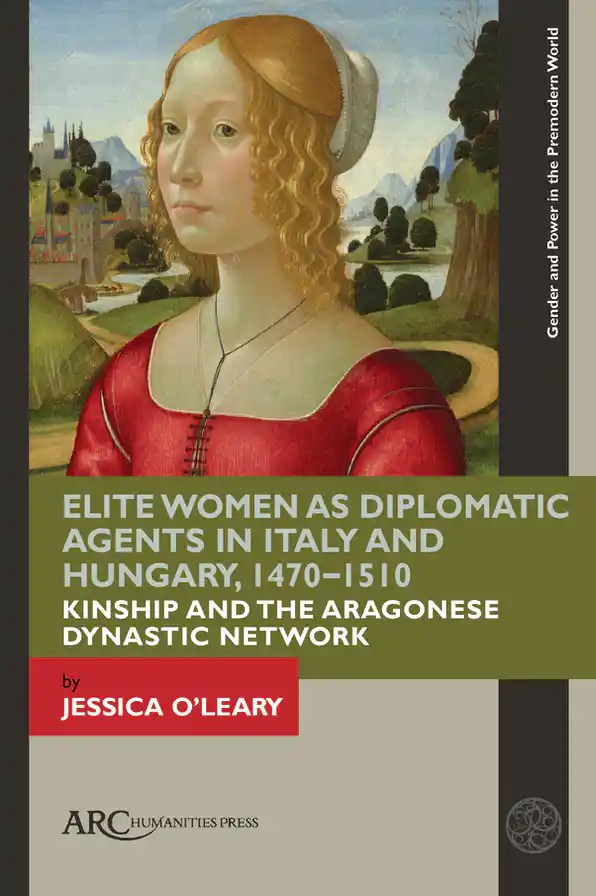
This book explores the diplomatic role of women in early modern European dynastic networks through the study of Aragonese marriage alliances in late fifteenth-century Italy and Hungary. It challenges the frequent erasure of dynastic wives from diplomatic and political narratives to show how elite women were diplomatically active agents for two dynasties.
Chapters analyze the lives of Eleonora (1450-1493) and Beatrice d’Aragona (1457-1508), daughters of King Ferrante of Naples (1423-1494), and how they negotiated their natal and marital relationships to achieve diplomatic outcomes. While Ferrante expected his daughters to follow paternal imperatives and to remain engaged in collective dynastic strategy, the extent of his kinswomen’s continued participation in familial projects was dependent on the nature of their marital relationships. The book traces the access to these relationships that enabled courtly women to re-enter the diplomatic space after marriage, not as objects, but as agents, with their own strategies, politics, and schemes.
Jessica O’Leary is a Research Fellow at the Gender and Women’s History Research Centre in the Institute for Humanities and Social Sciences at the Australian Catholic University.
Table des matières :
Introduction
1. Dynastic Wives, War, and Mediation
2. Sisterly Negotiation
3. A Family Divided
4. Female Agency in Exile
Conclusion
Chronology
Bibliography
Index
Informations pratiques :
Jessica O’Leary, Elite Women as Diplomatic Agents in Italy and Hungary, 1470–1510 Kinship and the Aragonese Dynastic Network. Gender and Power in the Premodern World, Leeds, ARC Humanities Press, 2022. 127 p. ISBN : 9781641892421. prix : GBP 59.
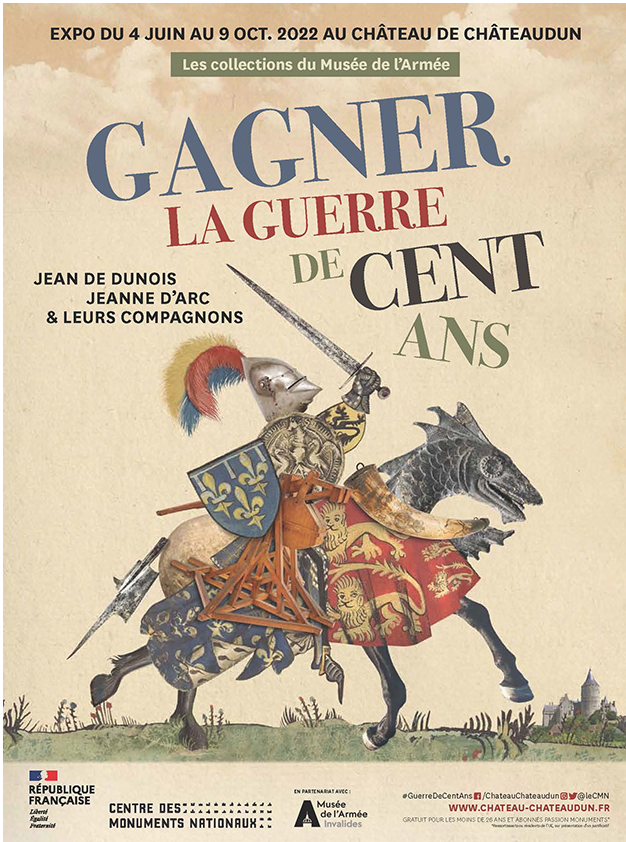
L’exposition « Gagner la guerre de Cent Ans. Jean de Dunois, Jeanne d’Arc et leurs compagnons », en partenariat avec le musée de l’Armée, se penche sur cette période complexe qui ne se résume pas qu’au conflit entre la France et l’Angleterre, et voit se succéder guerres civiles, révoltes, affrontements dynastiques, sociaux et religieux !
Elle met en lumière les bouleversements politiques et l’évolution des techniques de combat à la fin du Moyen Âge grâce à une trentaine d’objets, d’œuvres et de documents spectaculaires.
Profitez-en pour (re)découvrir le château de Châteaudun, que Jean de Dunois dit le « Bâtard d’Orléans », neveu de Charles VI et compagnon d’armes de Jeanne d’Arc, entreprit de transformer au sortir de la guerre de Cent Ans.
Des victoires anglaises à la reconquête française
Le parcours propose d’abord un éclairage sur les victoires anglaises et les guerres civiles de 1337 à 1422. Au cours des batailles de l’Écluse (1340), Crécy (1346) et surtout d’Azincourt (1415), les chevaliers français sont à la peine face aux archers anglais.
Admirez des pièces rares héritées directement du champ de bataille d’Azincourt !
Puis l’exposition s’attarde sur l’épopée de Jeanne d’Arc et de Jean de Dunois dans les années 1420, une période charnière au cours de laquelle l’avantage bascule définitivement du côté français.
Elle évoque enfin la reconquête, rendue possible notamment par le développement de l’artillerie, qui s’illustre particulièrement à la bataille de Castillon en 1453. Des épées du champ de bataille vous sont présentées !
Au cœur de l’exposition figure la représentation spectaculaire du chevalier Jean de Dunois, Bâtard d’Orléans, lors de son entrée dans Rouen le 10 novembre 1449. Monté sur un cheval grandeur nature, le chevalier est en habit d’apparat, portant l’armure et l’épée réservée à son rang…
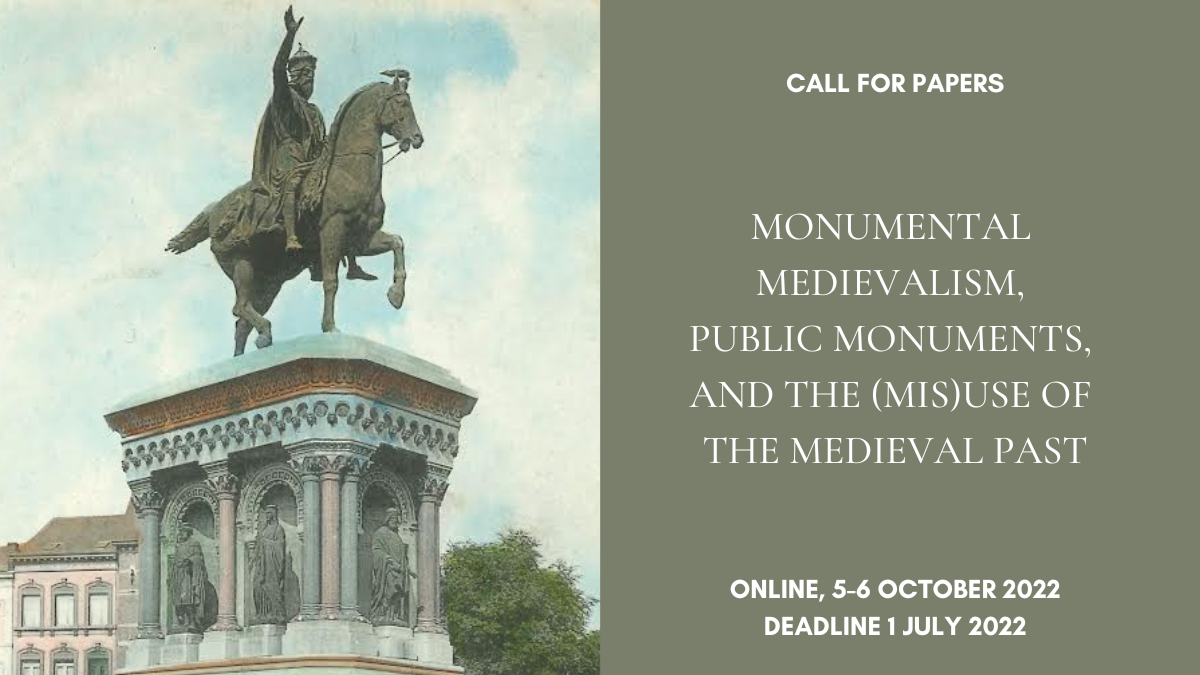
In the summer of 2020, one of several dozen protests organised throughout the world in response to the murder of George Floyd in Minneapolis (USA) culminated in the statue of the slave trader Edward Colston being dumped into the water of Bristol Harbour (England). The ripples were felt across the globe. In the ensuing days, weeks and months, scores of other monuments depicting historical figures were variously defaced, toppled, removed from view, or placed under new scrutiny. Many of these had played prominent roles in the slave trade and/or in European colonialism. Some of these monuments were of medieval figures, while others were evocative—to varying degrees of credibility—of the (faux-)chivalric codes and rose-tinted regalia of the medieval past. Of course, to medievalists, the convergence of civic and civil statuary with protest and activism was nothing new. In fact—from the damnatio memoriae of later Roman Emperors to Saints Florus and Laurus smashing statues in Kosovo; Byzantine Eikonomachía; Aniconism in medieval Islam; the Huichang Persecution of Buddhist images; the Ghaznavid plundering of Mathura and Somnath; the Khmer intolerance of Jayavarman monuments in Angkor; the Strigólnik stripping of Pskov and Novgorod; and the First and Second Suppression Acts of the 1530s—many of its roots actually lie in the medieval world. What use then, or advantage, might the study of the Middle Ages hold in evaluating these modern political struggles? This workshop will address precisely this question.
The workshop has three aims. Firstly, it will explore examples of statues, monuments and related forms of public sculpture which speak to the ongoing making and unmaking of medieval figures, images and histories: what we term ‘Monumental Medievalism’. Secondly, in addition to considering the ‘when’, ‘how’ and ‘why’ of monuments’ original production, it will interrogate the varied and often contested meanings that monuments later acquired over time. Of special interest, moreover, will be papers that address not only the use but the misuse of the Middle Ages, in connection to questions of local identity, gender, sexuality, race, religion and/or marginalisation. Thirdly, it will take the measure of nostalgia for the Middle Ages in the twenty-first century, asking questions of appropriation, anachronism, authenticity, nationalism and reflecting upon the possibilities and pitfalls of conscripting medieval images to serve as contemporary cultural conduits.
The topics of papers may include, but are not limited to:
– The intersection of statuary invoking the Middle Ages with protest and awareness/activism in popular or political thought – The global and/or post-colonial Middle Ages and monumental evocations of the medieval world in Africa, Asia, the Americas and Europe – The creation, alteration or removal of statues of medieval figures in any context – The use of medieval figures, tropes and traditions in memorials to frame post-medieval history – The commemoration of medieval figures by, inter alia, national, civic and civil communities – The role of monuments in debates over the legacy of divisive or contested medieval figures and histories
Scholars at all career stages, regardless of disciplinary background or affiliation status, are invited to submit a (max) 300-word abstract for their proposed paper, along with a short biography, by 1 July 2022. Scholars invited to present at the workshop will be contacted soon after. Papers should be 25-30 minutes long. Attendance will be free. This event is supported by Swansea University’s Research Centre for Medieval and Early Modern Studies (MEMO) and by the Paul Mellon Centre for Studies In British Art.
KEY DETAILS Format: Online, via Zoom Dates: 5-6 October 2022; sessions will run c. 1pm–6pm GMT Organisers: Euan McCartney Robson and Simon John Contact email: monumentalmedievalism@gmail.com
The collaboration between Michelangelo Buonarroti (1475-1564) and Sebastiano del Piombo (1485-1547), is among the most extraordinary artistic partnerships of the early modern period. It produced works of startling originality, crucial to the development of the so-called High Renaissance in the first decades of the sixteenth century.
It was arguably Michelangelos most creative collaboration, helping him refine motifs and narrative strategies, and it proved determining for Sebastianos development of a monumental, spiritually invested idiom whose influence became a touchstone for religious art deep into the following century, and for principles of painterly abstraction beyond.
Inspired by the exhibition Michelangelo & Sebastiano, mounted at The National Gallery in London in 2017, this book unites a group of international scholars in reflection on the two artists, their collaboration and its wider significance.
Matthias Wivel, PhD, is Curator of Sixteenth-Century Italian Paintings at the National Gallery, London. He was the curator of the major 2017 exhibition Michelangelo & Sebastiano, as well as the primary author and editor of the attendant catalogue. He has published widely on Venetian drawing, painting and printmaking and has recently, in 2016, co-edited a special issue of Artibus et Historiae dedicated to Prof. Paul Joannides.
Table des matières :
Matthias Wivel — The Compass and the Mirror
Elena Calvillo — Friendship, Medium and the Diverging Lives of Sebastiano del Piombo and Michelangelo
Piers Baker-Bates — Copies and Versions in Sebastiano’s Art? The Christ Carrying the Cross
Sheryl E. Reiss — A Word Portrait of a Medici Maecenas: Giulio de’ Medici (Pope Clement VII) as Patron of Art
Arnold Nesselrath — Raphael: Of Heirs and Pretenders
Matthias Wivel and Rachel Billinge — Sebastiano’s Vich Triptych
Carlo Piga — Da Michelangelo a Sebastiano: antiche suggestioni e moderne invenzioni nel ciclo decorativo della Cappella Borgherini in San Pietro in Montorio a Roma
Stefania Pasti — Aperietur in tempore: Sebastiano del Piombo and the Borgherini Chapel in the Light of Prophetic Readings
Paul Joannides — A New Drawing by Sebastiano del Piombo for the Semi-Dome of the Borgherini Chapel
Costanza Barbieri — Sebastiano as Portraitist and a Case Study: The Portrait of Michelangelo Pointing at His Drawings
Oriana Sartiani — A Portrait of Michelangelo Attributed to Sebastiano del Piombo: Technical Examination, Discoveries, and Treatment
Simonetta Antellini — L’originalità compositiva della Nascita della Vergine di Sebastiano del Piombo
Daniela Luzi — ‘Il bel secreto’: La pittura sperimentale sulla pietra di Sebastiano nella Cappella Chigi
Morten Steen Hansen — The Readings of Angels: Sebastiano del Piombo and the Politics of the Immaculate Conception
Andrea Donati — Marcello Venusti, Michelangelo and the Legacy of Sebastiano del Piombo
Charles Robertson — Michelangelo’s Last Judgement: Sebastiano del Piombo’s Contribution
Informations pratiques :
Sebastiano del Piombo and Michelangelo: The Compass and the Mirror. An Anthology, dir. Matthias Wivel, Turnhout, Brepols, 2022 (Museums at the Crossroads, 31). 344 p., 10 b/w ill. + 150 colour ill., 210 x 297 mm. ISBN: 978-2-503-58026-5. Prix : 120 euros
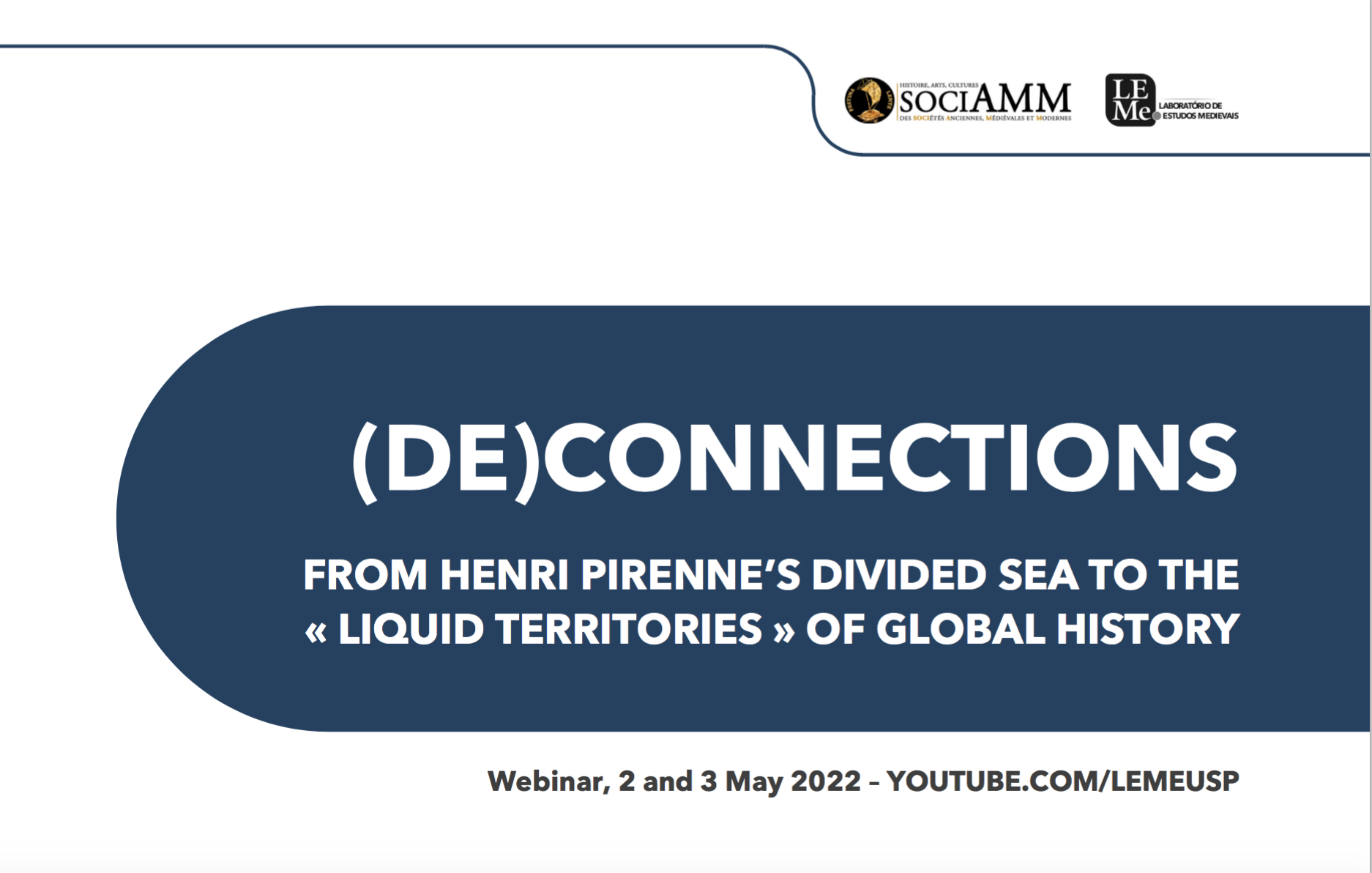
Marcelo CÂNDIDO DA SILVA (Universidade de São Paulo) Jean-Pierre DEVROEY (Université Libre de Bruxelles) Alexis WILKIN (Université Libre de Bruxelles)
In recent years, it has become a commonplace to assert that medieval history is a European invention. This is true for the concept itself, but also for the chronology and certain interpretive models that derive from it. Indeed, at least since the 19th century, historians have tended to treat the Middle Ages as the prehistory of the nations of this continent, especially in its western part. However, national history has not been satisfied with projecting itself into the notion of the Middle Ages but has intervened in the very logic of organising the archives of this period. Thus, research topics as diverse and non-national as monasticism and religious orders, piracy, barbarian kingdoms, among others, ended up being interpreted within a territorial and institutional logic that corresponded roughly to the frame- works of modern nation states. In this perspective, the Mediterranean appears essentially as a frontier: an often- impassable barrier for international trade, especially from the eighth century onwards, and also the place of confron- tation between Latin and Greek Christians, between Latin Christians themselves and, above all, between Christians and Muslims. This shared Mediterranean was built at the cost of erasing the diversity within these communities and exaggerating the differences between them. The image of the Mediterranean as a divided sea owes much to the work of Henri Pirenne, in particular the classic Mahomet et Charlemagne, published in 1937, and to the article that gave rise to it, has been published almost one century ago, in 1922. Pirenne’s thesis, which associates the Muslim expansion of the 7th and 8th centuries with the closure of the Mediterranean to Christian trade and navigation, was soon the subject of much criticism. These criticisms showed the permanence of intense trade networks that were based in the Mediterranean and whose ramifications extended to Scandinavia, the Baltic and the North Sea. How- ever, the challenges to Pirenne’s thesis have not produced a connected history of the Mediterranean, whether from a political, economic or cultural point of view. Fernand Braudel’s Mediterranean, despite its innovative character, is still a shared sea, in which political actors and local societies are largely absent. The weight of national histories, as well as the imperatives of specialisation in the fields of history and archaeology, which led to the production of re- gional monographs, help to explain why historians did not embark very early on a connected history of the Mediter- ranean. The emergence of global history seems to have changed this. Horden and Purcell’s The Corrupting Sea (2000), already proposes another vision, which insists on the existence of micro-societies united by the sea, in a continuous movement of connectivity on a daily basis (through coastal shipping, roads), or sometimes experienced on exceptional scales (Roman supplies), and marked by incessant environmental challenges, to which these societies brought contrasting responses that have shaped the history of the great sea. The result of this investigation is there- fore a panoramic vision of a highly fragmented history, while also minimising the difficulties and gaps in this history.
From another perspective, David Abulafia’s work also rewrites Braudelian space, notably with The Great Sea: A Human History of the Mediterranean (2011) and The Boundless Sea: A Human History of the Oceans (2019). These two books bring navigation techniques, competition and the role of the merchant as a smuggler back to the forefront of the debate.
Therefore, from the perspective of ‘liquid territories’, the river, the sea and even the ocean constitute spaces of connection between communities rather than obstacles or borders (the same discourse is held for other physical barriers or limits, such as mountains). The analysis of the construction of the Iberian empires from the perspective of global history has shown, on the one hand, that these ‘liquid territories’ are formidable tools of communication, circulation and domination, in a word, vectors of integration. On the other hand, it has also revealed that borders in the New World do not disappear, even if they do not have the rigidity of the borders of the nation state. These borders are part of a political game, appearing and disappearing according to the balance of power between the groups participating in the process of colonisation. The optimism born of connected history should not make us forget the limits of integration and connection.
This conference, organised on the occasion of the centenary of the 1922 article mentioned above, has a multi-scalar objective and is based on the fruitfulness of a shared vision by researchers in medieval, modern and contemporary history from Latin America and Europe. This is about:
Starting from Henri Pirenne’ work, to think about the tension between compartmentalisation and integra- tion, in order to better reflect on the ways in which « liquid territories » integrate and separate communities. The different models of connectivity, of centre and periphery, of world-economies conveyed by Pirenne, Braudel, Wallerstein or recently by Horden and Purcell or Wickham in the Mediterranean space, and their echo in the historiography of Latin American medievalists and modernists, will be discussed in an historio- graphical manner.
To assess the question of the reception of Pirenne’s work in Latin America, from 1922 to the present day, and in particular to reflect on the resonance that Pirenne’s work and ideas have had in the scientific commu- nity: The aim is to examine the way in which his vision of the Mediterranean has been appreciated, particu- larly in the light of his contacts with Latin American researchers, but also with the whole world of Portuguese and Spanish-speaking research; as well as the echoes that his vision of exchanges, connectivity and the re- lationship between centre and periphery have had.
La mer qui sépare ou réunit. Réflexions inspirées par la Méditerranée, de Pirenne à Horden et Purcell, en passant par Braudel – Alexis Wilkin (Université Libre de Bruxelles-Sociamm) and Jean-Pierre Devroey (Université Libre de Bruxelles- Sociamm)
Expériences impériales prémodernes et « territoires liquides » – Marcelo Cândido da Silva (Universidade de São Paulo) and Maria Filomena Coelho (Universidade de Brasília)
What Pirenne got right and what he got wrong in his thesis. A new appraisal – Eduardo Manzano Moreno (University of St. Andrews)
Competition on a Connected Sea: The Material Culture of Expanding Empires in the Mediterranean – Joanita Vroom (Universiteit Leiden)
Remettre l’Europe à sa (juste) place. La scène maritime des Grandes découvertes (Insulinde, XVIe-XVIIe siècles) – Romain Bertrand (Institut d’Études Politiques de Paris)
Very far from the Mediterranean: the impact of Pirenne’s theses on Argentinian Medieval Studies (1940- 1990) – Eleonora Dell’Elicine (Universidad de Buenos Aires)
Deux formes d’engagement politique, Pirenne et Sanchez-Albornoz – Agnès Graceffa (ULB – SociAMM)
Henri Pirenne in Mexico: influence and impact – Diego Spínola (Universidad Nacional Autónoma de México)
Avec le soutien du FNRS, du CRHiDI (UCLouvain – Saint-Louis, Bruxelles), d'INCAL (UCLouvain), de PraME (UNamur), de sociAMM (ULB) et de Transitions (ULiège)






 L'Agenda des Médiévistes
Vous devez être connecté pour poster un commentaire.