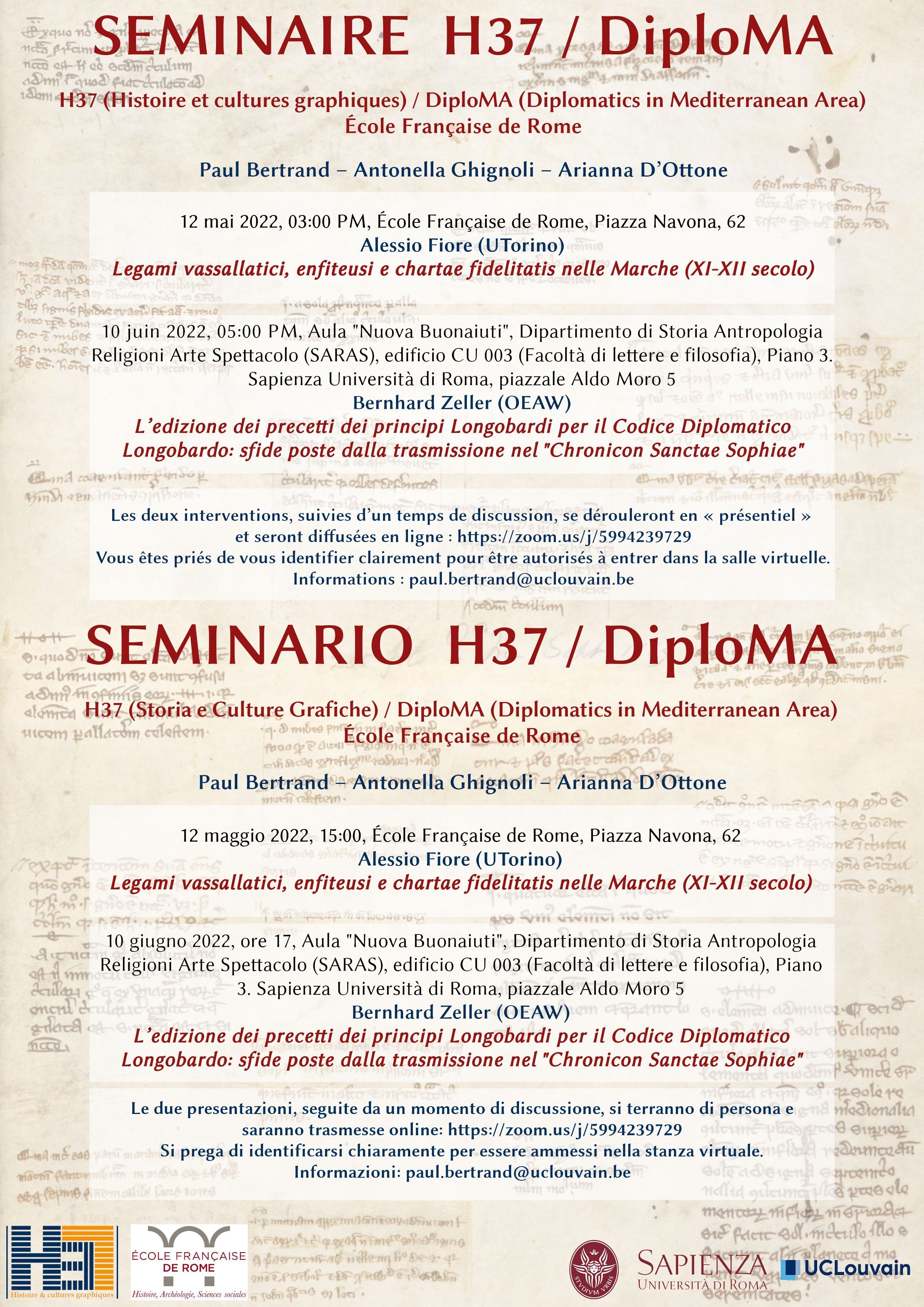
Conférence (hybride) – Bernhard Zeller (OEAW) : « L’edizione dei precetti dei principi Longobardi per il Codice Diplomatico Longobardo: sfide poste dalla trasmissione nel « Chronicon Sanctae Sophiae »

10 juin 2022, 05:00 PM
Aula « Nuova Buonaiuti », Dipartimento di ‘Storia Antropologia Religioni Arte Spettacolo’ (SARAS), edificio CU 003 (Facoltà di lettere e filosofia), Piano 3. Sapienza Università di Roma, piazzale Aldo Moro 5

Bernhard Zeller (OEAW) : « L’edizione dei precetti dei principi Longobardi per il Codice Diplomatico Longobardo: sfide poste dalla trasmissione nel « Chronicon Sanctae Sophiae »

L’intervention, suivie d’un temps de discussion, se déroulera en « présentiel » et sera diffusée en ligne :

https://zoom.us/j/5994239729

Vous êtes priés de vous identifier clairement pour être autorisés à entrer dans la salle virtuelle.

Informations : paul.bertrand@uclouvain.be

Publié dans Colloque | Laisser un commentaire

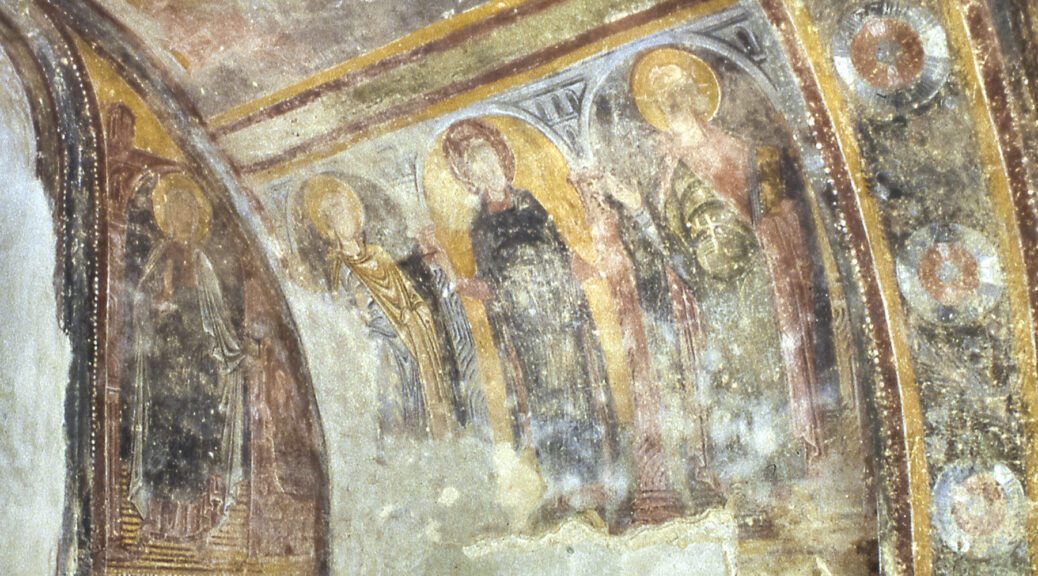
Colloque – Le décor peint des cryptes romanes

 Colloque international organisé par le CESCM, sous la coordination de Marcello Angheben, Claire Boisseau et Fabio Scirea.

Dates : mercredi 8 au vendredi 10 juin.

Lieux : En présentiel à Poitiers et en visioconférence (lien à venir).

Poitiers, faculté des Sciences humaines et arts et hôtel Berthelot :

– Mercredi 8 juin : Poitiers, hôtel Berthelot – salle Crozet – 24 rue de la chaîne – bât. E13
– Jeudi 9 juin : Poitiers, faculté des Sciences humaines et arts – amphi Descartes – 8 rue René Descartes – bât. E18

Ouvert à toutes et tous

Pour les présentations en italien, une traduction en français est proposée aux auditeurs.

Programme :

Mercredi 8 juin 2022

Hôtel Berthelot – salle Crozet – 24 rue de la chaîne – bât. E13

• 9h – Accueil

• 9h15 – Marcello Angheben (Université de Poitiers, CESCM), Claire Boisseau (CESCM) et Fabio Scirea (Università degli Studi di Milano)  : Présentation

Session 1

Présidence : Cécile Voyer (Université de Poitiers, CESCM)

• 9h30 – Christian Sapin (CNRS) : Architecture et fonction des cryptes : des premiers décors aux peintures carolingiennes

• 10h10 – Marcello Angheben (Université de Poitiers, CESCM)
Les multiples fonctions des décors peints des cryptes romanes : l’exemple d’Anagni

10h50Pause

• 11h10 – Valentino Pace (Trinity Coll., Hartford, CT, Rome Campus) : La crypte de l’abbé Épiphane à San Vincenzo al Volturno

• 11h50 – Claire Boisseau (Université de Poitiers, CESCM) : La crypte de Saint-Savin-sur-Gartempe : passion peinte et culte des saints

12h30 – Discussion

Session 2

Présidence : Valentino Pace (Trinity Coll., Hartford, CT, Rome Campus)

• 14h30 – Marie-Gabrielle Caffin (chercheuse indépendante) : Que nous disent de la dévotion les décors peints des cryptes romanes de Bourgogne ?

• 15h10 – Amaëlle Marzais (Université de Tours LAT, CESCM) : La crypte de Tavant : architecture et décor peint

15h50 – Pause

• 16h10 – Gerardo Boto (Universitat de Girona) : Visualiser la vertu pérenne des frères martyrs : les peintures de l’église inférieure de San Juan de la Peña

• 16h50 – Marc Sureda (Museu Episcopal de Vic) : Les peintures de la crypte nord de l’ancienne cathédrale Saint-Vincent de Roda de Isábena

• 17h30 – Marco Rossi (Université Catholique de Milan) : La décoration de la crypte de San Pietro al Monte a Civate et son contexte : hypothèses et problématiques

18h10 – Discussion

Jeudi 9 juin 2022

Faculté des Sciences humaines et arts – amphithéâtre Descartes – 8 rue René Descartes – Bât. E18

Session 3

Présidence : Marco Rossi (Université Catholique de Milan)

• 9h – Andrea Tilatti (Università degli Studi di Udine) : La cripta di Aquileia come problema storiografico e… storico

• 9h40 – Luigi Schiavi (Università degli Studi di Pavia) : La crypte de l’église de San Giovanni Domnarum à Pavie et ses peintures de la seconde moitié du XIIe siècle

10h20 – Pause

• 10h40 – Scirea Fabio (Università degli Studi di Milano) : Le décor peint de la crypte de San Filastrio dans la « Rotonda » de Brescia

• 11h20 – Irene Quadri (Université de Lausanne) : Nouvelle lecture de la crypte de l’abbaye de Marienberg à Burgusio

• 12h – Giulia Bordi (Università di Roma Tre) : La cripta della cattedrale di Spoleto e il ciclo pittorico con le storie di san Benedetto

12h40 – Discussion

Session 4

Présidence : Fabio Scirea

• 14h40 – Lorenzo Riccardi (Ministero della cultura) : Tra Gaeta e Montecassino: la cripta dipinta del santuario di S. Maria del Piano ad Ausonia

• 15h20 – Maddalena Vaccaro (Università degli Studi di Salerno) :
Moltiplicazione degli spazi e devozioni mediterranee : la cripta di Minuta di Scala nel contesto italomeridionale normanno

16hPause

• 16h20 – Giulia Arcidiacono (Università di Catania) et Tancredi Bella (Università di Catania, CESCM) : La crypte de San Marciano à Syracuse : architecture, décor peint, espace liturgique

17h – Discussion et conclusion

Visite de la crypte de Notre-Dame-la-Grande

17h30

Par Claude ANDRAULT-SCHMITT, Visite réservée aux intervenants du colloque.

Vendredi 10 juin 2022

Visite de Montmorillon et de Saint-Savin-sur-Gartempe

Pour les auditeurs du colloque, sur réservation préalable auprès de Claire Boisseau : claire.boisseau@univ-poitiers.fr

• 8h – Départ en car de Poitiers.

• 9h30 – Crypte de Montmorillon, Visite par Claudine Landry (Docteure en histoire de l’art)

• 11h – Crypte de Saint-Savin-sur-Gartempe, Visite par Claire Boisseau et Carolina Sarrade (Université de Poitiers, CESCM)

• 12h15 – Déjeuner

• 15h – Retour à Poitiers

Informations complémentaires

Contact

Marcello Angheben
  marcello.angheben@univ-poitiers.fr

Inscriptions pour la journée du 10 juin

Pour les auditeurs du colloque, la participation aux visites s’effectue sur réservation préalable :
Claire Boisseau –   claire.boisseau@univ-poitiers.fr

Publié dans Colloque | Laisser un commentaire

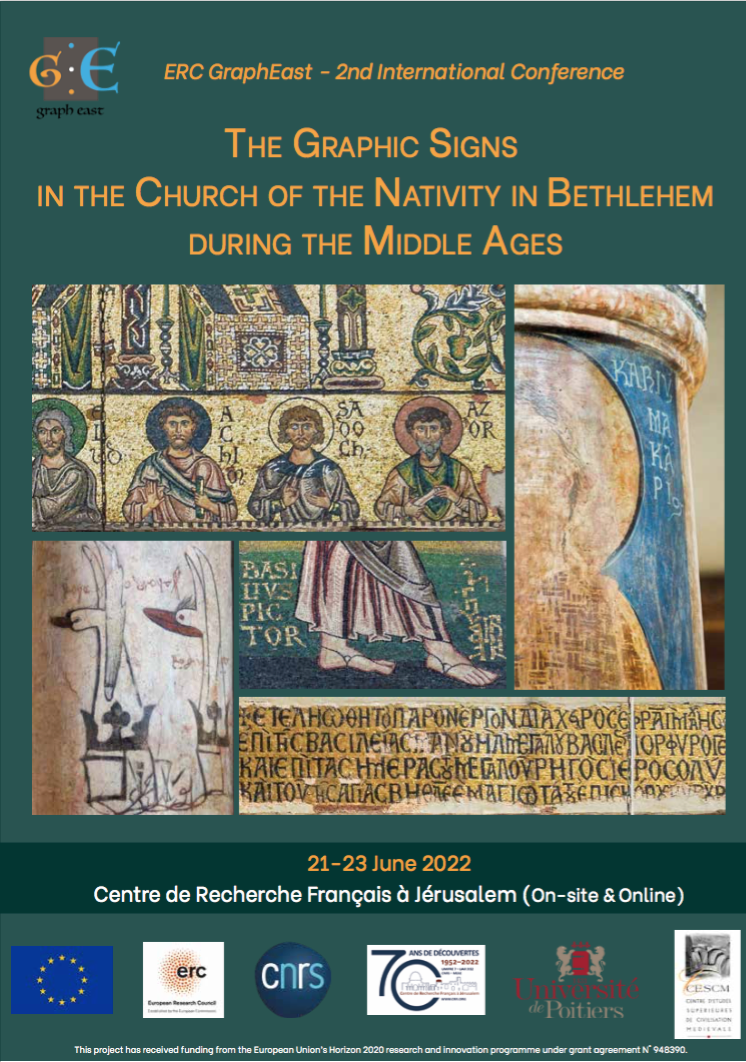
Colloque (hybride) – The Graphic Signs in the Church of the Nativity in Bethlehem during the Middle Age

21-23 June 2022

Centre de Recherche Français à Jérusalem (On-site & Online)

Organiser: Estelle INGRAND-VARENNE (estelle.ingrand.varenne@univ-poitiers.fr) Co-organiser: Clément DUSSART (clement.dussart@univ-poitiers.fr)

Location: Centre de Recherche Français à Jérusalem (Shimshon street 3)

Link: https://us02web.zoom.us/j/89620986239?pwd=bR3nLn6khmskqFDAZK4qIduSmnuAUs.1
ID meeting: 896 2098 6239
Passcode: 987835

Les horaires sont ceux de Jérusalem (CET +1).

Programme :

Tuesday June 21st

9:00 Coffee

9:30 Welcome: Vincent LEMIRE (Head of the CRFJ)

10:00 Introduction: Estelle INGRAND-VARENNE (CNRS CRFJ-CESCM) and Clément DUSSART (CESCM, University of Poitiers)

10:30-12:30 1st session, moderator: Maria VILLANO (ERC GRAPH-EAST, CESCM)

“Towards a Periodisation of Gra iti between Antiquity and the Middle Ages” – Carlo TEDESCHI (Università degli Studi « G. d’Annunzio » Chieti Pescara)
“The Tree of Abraham in the Nativity Church and its Epigraphic Exegesis” – Estelle INGRAND-VARENNE (CNRS CRFJ-CESCM) Lunch at the CRFJ

14:30-18:00 2nd session, moderator: Sercan SAGLAM (ERC GRAPH-EAST, CESCM)

“Scratch, Incise, Engrave: Technical Study of the Lapidary Gra iti of the Nativity” – Thierry GRÉGOR (CESCM, University of Poitiers)
“The discovery and the conservation of Gra iti on the columns of the Church of the Nativity” – Marcello PIACENTI (Piacenti SpA Centro Restauri) [visio]

Coffee Break

“Apposer son emblème. La mise en signe des espaces sacrés au Moyen Âge. L’exemple de l’église de la Nativité de Bethléem en perspective” –Laurent HABLOT (EPHE, SAPRAT) [visio]
Dinner

Wednesday June 22nd

Coffee

3rd session, moderator: Gil FISHHOF (University of Haifa)

“Portraits, gra iti, and ta oos: pilgrims and the appropriation of Bethlehem’s sanctity” – Michele BACCI (Freiburg University)
“Quotation and Glori cation: Bethlehem’s Conciliar Texts in Local Context” – Megan BOOMER (Columbia University)
Lunch at the CRFJ

Departure to the Nativity Church, Bethlehem
Epigraphic tour of the basilica, the cave of St. Jerome and the chapel of St. Joseph Dinner

Thursday June 23rd

Coffee

4th session, moderator: Yana TCHEKHANOVETS (Ben-Gurion University of the Neguev)

“The Armenian Inscriptions and Graffiti of the Church of the Nativity in Bethlehem” – Khachik A. HARUTYUNYAN (Scienti c Research Center of the Historical and Cultural Heritage, Matenadaran)

“The Arabic inscriptions of the Basilica of the Nativity: inventory and research perspectives” – Anna LAGARON-KHALIFA (ERC Horn-East, Iremam Aix-Marseille Université) [visio]
“Recent discoveries of Latin gra iti and signs in the Nativity Church: new contributions to the history of a holy place and to pilgrimage practices (9th-16th c.)” – Clément DUSSART (CESCM, CRFJ, University of Poitiers)
Lunch at the CRFJ

Departure to the Custody (Saint Saviour, Jerusalem)
Visit of the Treasure of Bethlehem at the Custody of the Holy Land,with fr. Stéphane MILOVITCH (ofm, Director of the Cultural Heritage Office)

Public Conference of Michele BACCI at the École biblique et archéologique française: “The Nativity Church in Bethlehem: New Approaches and Discoveries”

Closing Dinner

6pm in the Lecture Room of the École biblique

Programme au format PDF : ici

Publié dans Colloque | Laisser un commentaire

Colloque – War with Byzantium – Legitimation, Consequences and Reception

International Conference of the Research Training Group 2304 “Byzantium and the Euro-Mediterranean Cultures of War. Exchange, Differentiation and Reception”. Johannes Gutenberg-Universität Mainz
09.06.2022 – 11.06.2022
Johannes Gutenberg-Universität Mainz

The conference will focus on war with Byzantium, the Eastern Roman empire, from an external perspective. It will cover four thematic areas: first, the legitimation of wars against Byzantium including e.g. the question of how the empire’s opponents constructed a hostile image of Byzantium. How did Byzantium’s enemies describe war with the empire on a religious and ideological level? Second, we will examine the concrete ways in which wars with Byzantium were waged and what kind of infrastructure was necessary for such undertakings. Frontier regions and their protection played an important role in this context. The third thematic area will focus on the consequences of war both for the environment and for the population, such as captivity, enslavement or forced conversion. Which strategies did people employ to cope with these experiences? Last but not least, we will investigate the reception of wars against Byzantium, regardless of whether they ended in victory or defeat, in post-Byzantine times.

Organized by
Hans-Christian Maner, Johannes Pahlitzsch, Jörg Rogge, Roman Shliakhtin and Ute Verstegen

Programme :

Thursday, June 9th, 14.00

Introduction
Johannes Pahlitzsch

1st Session
The Eastern Roman Empire as Enemy: Legitimations of War against Byzantium

14.30–16.00
Hansjoachim Andres (Düsseldorf)
The Relativity of ‘World Domination’. Approaching Sasanian and Roman Claims to Power

Clemens Gantner (Vienna)
An Alliance Turned into War: Louis II of Italy’s Conflict with Byzantium in 873 and the Development of the Relations During the Great Southern War, 866-874

16.30–18.00
Andrea Riedl (Regensburg)
Christians against Christians. Contemporary Theological Implications in Justifying the Sack of Constantinople (1204)

Bart Peters (RTG 2304 Mainz)
Salerno Facing an Empire: The Battle of Basintello against Byzantium According to the Chronicon Salernitanum.

19.00
Evening Lecture
Diana Mishkova (Sofia)
Byzantium against Byzantium: Narratives of Empire in the Historiographies of Southeastern Europe

Friday, June 10th
2nd Session
How to Wage a War against Byzantium: Infrastructure, Logistics, Fortification

9.30–11.00
Alexander Sarantis (Warsaw)
Differentiating the Impact of Barbarian Raiding and Migration in the Balkans, 565-750

Hugh Kennedy (London)
Was There a Cavalry Revolution in Islamic Armies in the Ninth Century?

11.15–12.30
Dimitri Korobeinikov (Albany)
The War: Aristocratic Families on Both Sides of the Byzantine-Arab and Byzantine Seljuk Border from the 11th to the 13th Century

Philipp Margreiter (RTG 2304 Mainz)
Building and Financing Fortifications in Byzantine North Africa. Reconsidering the Epigraphic and Archaeological Evidence

14.00–15.00
Poster Session
Presentation of the projects of the doctoral students of the RTG

3rd Session
Dealing with the Consequences of War

15.00–16.30
Adam Izdebski (Jena)
Environcide or Side-effect of Societal Collapse? War-associated Environmental Change in Byzantium

Jim Crow (Edinburgh)
Changing Landscapes of Fortification in the Roman East 500-750

16.45–18.15
Laury Sarti (Freiburg)
Experiencing the Fourth Crusade. The Consequences of War from the Perspective of Western Eyewitnesses

Markus Koller (Bochum)
(Post-)War Societies in the Early 15th Century – Effects of Ottoman-Byzantine Struggles in the Sign of the Ottoman ‘Civil War’ (1402-1413)

Saturday, June 11th
4th Session
Reception of Wars against Byzantium

9.00–10.30
Alice Sullivan (Tufts, Medford)
Constructed Memories: The Sieges of Constantinople after 1453

Nicholas Melvani (Mainz)
Landscapes of Victory in 16th-century Istanbul

10.45–12.00
Roman Shliakhtin (RTG 2304 Mainz)
Perception of the Fall of Constantinople in the Moscuvite Rhethoric in the 15th and 16th Centuries

Gwendolyn Döring (RTG Mainz)
Byzantium in the Limelight or Twilight? Images of Rulership and War on the Italian Opera Stage (1650–1750)

13.00–14.30
Round Table
Byzantium and its Enemies – Cultures of War in Transition
Organized by Philipp Margreiter, Regina Molitor, Michael Rapp (RTG Mainz)

With Gergely Csiky (Budapest), Alexander Sarantis (Warsaw), Lauri Sarti (Freiburg), Rustam Shukurov (Dushanbe), Yannis Stouraitis (Edinburgh)

14.30
Final Remarks

Kontakt

grk2304@uni-mainz.de

Source : H-Soz-Kult

Publié dans Colloque | Laisser un commentaire

Publication – Pierre de Jean Olivi, « Sur les lois de l’Ancien Testament. Quatre questions disputées. Traité sur les préceptes cérémoniels. Neuf points sur les préceptes judiciels. Mystère du parcours de la Loi et de la Synagogue », présentation, édition et traduction par Elsa Marmursztejn

Ces textes du franciscain Pierre de Jean Olivi (1248-1298), rédigés dans les dernières années de sa carrière, offrent une version scolastique de la doctrine chrétienne sur la nature et le statut de la Bible hébraïque. Quatre questions disputées portent sur la pertinence des différents types de préceptes. Suit un dossier composite, sans doute constitué par le théologien en vue de la rédaction des questions ou d’un traité perdu ou jamais écrit. Sous des angles variés, ces textes visent à rendre raison des lois de l’Ancien Testament, imparfaites quoique données par Dieu et dont le christianisme se présentait comme l’accomplissement.

La contribution d’Olivi à la réflexion sur la « Loi ancienne » est marquée par sa dépendance envers Thomas d’Aquin et par l’usage du Guide des égarés de Maïmonide, enrôlé dans l’effort scolastique de rationalisation de la Loi et de construction du sens chrétien. Dans le contexte languedocien de la fin du XIIIe siècle, l’usage et la discussion des interprétations maïmonidiennes suggèrent la possibilité de contacts avec des juifs réels. Outre les différents niveaux de contexte (biographique, scolastique, local), la présentation traite des singularités matérielles des textes et des vicissitudes de leur transmission, et envisage les représentations des juifs produites par le discours sur la Loi.

Livrant la pensée sur le judaïsme d’un théologien majeur de la fin du XIIIe siècle, ces textes intéressent tout à la fois l’histoire du travail scolastique, celle des approches chrétiennes de la Bible hébraïque et celle des relations entre juifs et chrétiens au Moyen Âge.

Elsa Marmursztejn est maître de conférences en histoire du Moyen Âge à l’université de Reims, habilitée à diriger des recherches.

Table des matières :

Présentation 
1. Position périphérique et intégration scolastique 
2. Le manuscrit : hypothèses sur la copie et la circulation de textes interdits 
3. Les textes : titres et datation 
4. Genres, structure et thèmes
Variété des genres 
Structure des questions et découverte d’une
responsio manquante 
Structure du second groupe de textes : un dossier composite 
Variété des disciplines, des thèmes et des registres 

5. Les juifs dans les textes d’Olivi sur la Loi ancienne 
Imperfection et adéquation de la Loi ancienne 
« Juifs herméneutiques » et intellectuels juifs languedociens
Présence et rôle de Maïmonide 
Proximité des juifs réels à Narbonne dans les années 1290 

6. Principes d’édition 
7. Note sur la traduction 


Sur les lois de l’Ancien Testament

1- Quatre questions sur les lois de l’Ancien Testament 
< Question 1 : les préceptes moraux de la Loi ancienne contiennent-ils la rectitude complète et formelle des vertus ? > 
< Question 2 : les préceptes cérémoniels de la Loi ont-ils eu une raison littérale ou significative suffisante, sans pour autant signifier le Christ ni son statut ? > 
< Question 3 : les préceptes judiciels de la Loi ont-ils été donnés de manière adéquate ? > 
< Question 4 : la Loi a-t-elle été enseignée sous une forme adéquate ? > 

2- Traité sur les préceptes cérémoniels 
<1 : Sacrifices et offrandes> 
<2> Des choses sacrées 
<2.1> Des lieux 
<2.2> Des sept fêtes 
<3> Des sacrements 
<4> Des observances 

3- Neuf points sur les préceptes judiciels 
<1> Des peines 
<2> Pourquoi il y eut une division en tribus 
<3> De la septième année du jubilé 
<4> Des villes de refuge 
<5> De la vache rousse 
<6> De l’épouse répudiée 
<7> Des fils bâtards 
<8> Des preuves de virginité 
<9> De la lapidation de la femme adultère 

4- Mystère du parcours de la Loi et de la Synagogue 

Appendice – Pierre de Trabibus : « La Loi contient-elle la rectitude complète et formelle des vertus ? » 

Index des références bibliques (Bible hébraïque) 
Index des références bibliques (Nouveau Testament) 
Index des matières

Informations pratiques :

Pierre de Jean Olivi, Sur les lois de l’Ancien Testament. Quatre questions disputées. Traité sur les préceptes cérémoniels. Neuf points sur les préceptes judiciels. Mystère du parcours de la Loi et de la Synagogue, présentation, édition et traduction par Elsa Marmursztejn, Paris, Les Belles Lettres, 2022 (Bibliothèque scolastique, 18). LXXVI + 636 pages. ISBN : 9782251452555. Prix : 85 euros.

Source : Les Belles Lettres

Publié dans Publications | Laisser un commentaire

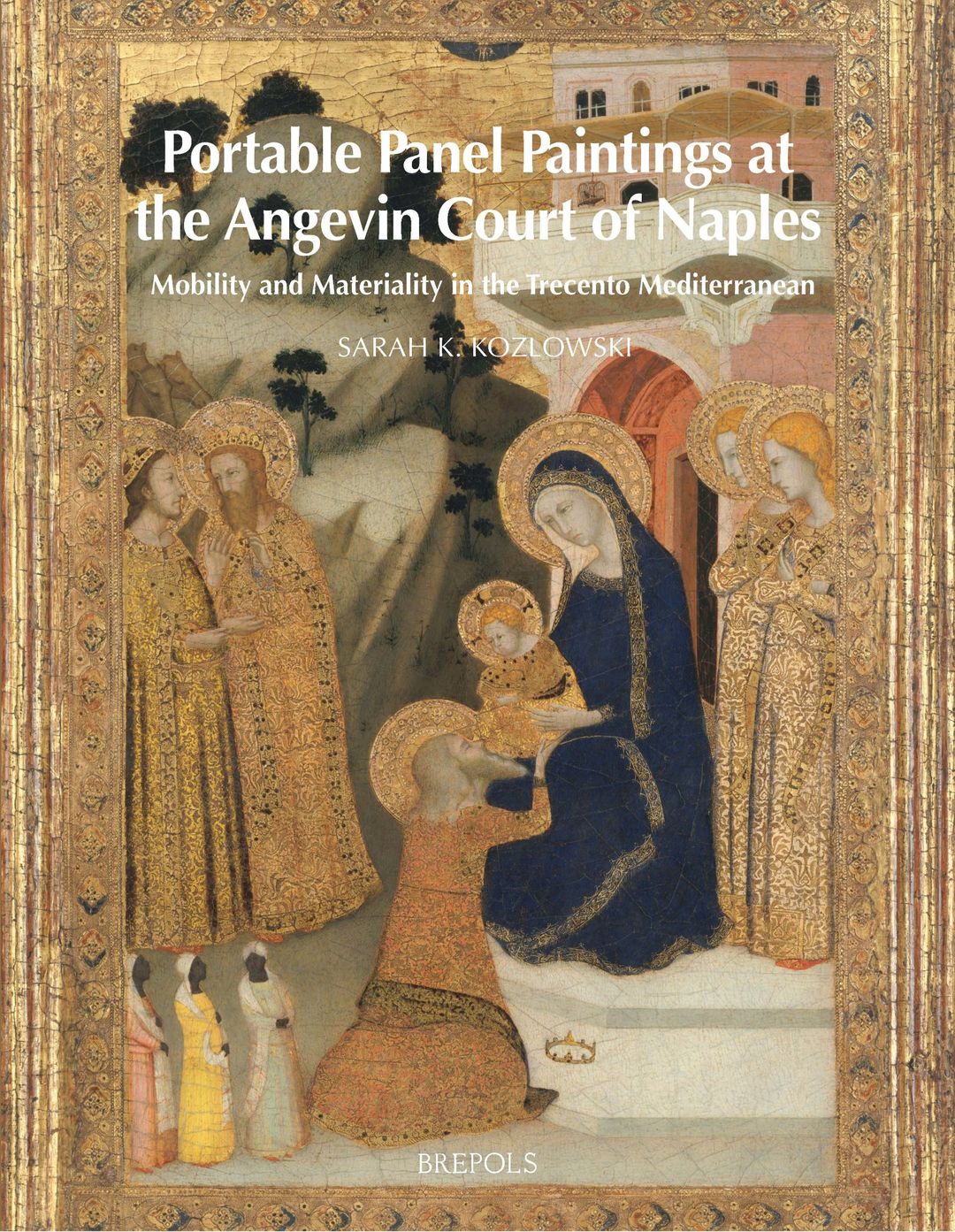
Publication – Sarah K. Kozlowski, « Portable Panel Paintings at the Angevin Court of Naples: Mobility and Materiality in the Trecento Mediterranean »

This book explores the mobilities and materialities of panel painting at and beyond the Angevin court of Naples in the context of objects, materials, patrons, and painters on the move through the fourteenth-century world. It asks how panel paintings participated in and thematized patterns of circulation and exchange; how they extended the artistic and political geography of the court far beyond Naples itself; how their materialities intersected with other mediums from woven silk to precious metalwork to stone; and how painters’ formal and technical experimentation combined with painted panels’ real and imagined itineraries to create meaning.

The volume traces a series of painted panels through networks of patronage, production, gift giving, transport, and replication. It locates the making, movement, and meaning of these works in the overlapping contexts of Angevin dynastic and territorial ambitions, including the family’s stakes in the Holy Land; patterns of collecting and adapting authoritative icons; practices of royal female patronage; and painters’ engagement with the limits of the medium of panel painting itself. Each chapter weaves together sustained analysis of paintings’ pictorial and material structures, close reading of primary sources, and questions of art’s materialities and mobilities. Moving between single objects and larger patterns, between the local and the global, this study presents new research on individual works even as it reframes trecento art in the broader context of artistic circulation, exchange, and transformation across the late medieval and early Renaissance world.

Sarah K. Kozlowski (BA Wheaton College, MA Williams College, PhD Yale University) is Associate Director of the Edith O’Donnell Institute of Art History at the University of Texas at Dallas, and Director of the Centro per la Storia dell’Arte e dell’Architettura delle Città Portuali at the Museo di Capodimonte in Naples. Her research centers on medieval and Renaissance southern Italy in its broader cultural and geographic contexts, and explores how artworks’ mobilities, materialities, and formats generate meaning.

Table des matières :

Chapter 1. Panel Painting in and beyond Fourteenth-Century Naples: Mobility and Materiality

Chapter 2. Mobility and Materiality in Simone Martini’s Saint Louis of Toulouse Crowning Robert of Anjou

Chapter 3. Icons in Angevin Naples between Past and Present, the Monumental and the Mobile

Chapter 4. Artists, Patrons, and Objects on the Move: Diptychs for the Angevin Court

Chapter 5. Paint, Stone, Flesh: Portable Multipart Panel Paintings with Porphyry Exteriors

Chapter 6. Portable Panel Paintings, Royal Women as Patrons, and Court Art beyond the Court

Chapter 7. Materiality, Mobility, and Revelation in the Stuttgart Apocalypse Panels

Conclusion

Bibliography

Informations pratiques :

Sarah K. Kozlowski, Portable Panel Paintings at the Angevin Court of Naples: Mobility and Materiality in the Trecento Mediterranean, Turnhout, Brepols, 2022 (Trecento Forum, 4). 292 p., 11 b/w ill. + 132 colour ill., 2 b/w tables, 216 x 280 mm. ISBN: 978-2-503-59695-2. Prix : 135 euros.

Source : Brepols

Publié dans Publications | Laisser un commentaire

Publication – « Le Chevalier aux deux épées. Roman en vers du XIIIe siècle », édité et traduit par Gilles Roussineau

Composé en vers à la fin du premier tiers du XIIIe siècle, le Chevalier aux deux épées est un roman d’aventures chevaleresques fortement imprégné de motifs arthuriens. Mériadeuc, le héros du roman, ignore son nom quand il apparaît à la cour d’Arthur et parvient à déceindre l’épée que porte la jeune reine de Caradigan. Promis par cet exploit à un destin exceptionnel, il multiplie les prouesses jusqu’à ce qu’il épouse, à la fin du roman, Lore, la reine de Caradigan, dont la détermination égale le courage. Habilement construit, le roman enchaîne les aventures sur un rythme soutenu. Une riche imagination se déploie et l’intrigue est fertile en rebondissements, avec des pauses qui laissent des temps à la description des réalités de l’époque, des cités traversées et des habits portés par les personnages. Les octosyllabes se suivent avec alacrité et rendent la lecture plaisante. La qualité de l’œuvre, qui mérite d’être appréciée à sa juste valeur, justifie une place de choix du Chevalier aux deux épées dans notre patrimoine littéraire. Pour la première fois, le texte édité est accompagné d’une traduction en français moderne. Il est assorti de notes et d’un glossaire. Spécialiste de philologie française, Gilles Roussineau est professeur émérite à Sorbonne Université.

Table des matières :

INTRODUCTION

Le manuscrit et la date de composition

La tradition romanesque et l’esprit de l’oeuvre

Langue du manuscrit et de l’auteur

Analyse et points de repère

Présentation et toilette du texte

LE CHEVALIER AUX DEUX ÉPÉES

Notes

Proverbes et expressions sentencieuses

Glossaire

Table des noms propres

Bibliographie

Informations pratiques :

Le Chevalier aux deux épées. Roman en vers du XIIIe siècle, édité et traduit par Gilles Roussineau, Genève, Droz, 2022 (Texte courant, 15). 1112 p. ISBN : 978-2-600-06333-3. Prix : 18,77 euros.

Source : Droz

Publié dans Publications | Laisser un commentaire

Offre d’emploi – Job Opportunity at Bonnefanten in Maastricht

The Bonnenfanten in Maastricht has a job opening for a Junior Curator of Old Masters (full-time, 36 hrs/wk). The deadline for applications is 28 June 2022.

Junior conservator oude kunst (36 uur)

Het Bonnefanten in Maastricht is hét toonaangevende kunstmuseum van Limburg en de euregio. Het door de befaamde Italiaanse architect Aldo Rossi ontworpen gebouw is met zijn markante toren een van de bekendste gebouwen van Maastricht. In het museum wordt een rijke collectie oude en hedendaagse kunst in telkens wisselende samenstelling tentoongesteld. Daarnaast zijn de tijdelijke tentoonstellingen voor vaste en nieuwe bezoekers keer op keer de aanleiding om het museum te komen ontdekken en te beleven. Het Bonnefanten geniet nationale en internationale bekendheid als een signalerend museum met een onderscheidende oriëntatie op kunst en kunstenaars die (nog) niet in de meeste andere musea te zien zijn. Diversiteit en inclusie zijn thema’s die sinds enige jaren hoog in het vaandel staan van het beleid. Met ruim 140.000 bezoekers per jaar staat het Bonnefanten in de top van Nederlandse kunstmusea. ‘Backstage’ staat het Bonnefanten voor een moderne en professionele organisatie, met een informele cultuur, passend bij een omvang van plusminus 50 medewerkers. Wij zijn voor uitbreiding van ons team op zoek naar een junior conservator oude kunst (36 uur).

Met spraakmakende en tegelijk kunsthistorisch gedegen tentoonstellingen rondom oude meesters als Pieter Brueghel II, Henri de Fromantiou en de Meester van Elsloo concentreert het aandachtsgebied van het Bonnefanten zich op wat tegenwoordig als de Euregio omschreven wordt. Van collectiecatalogus naar catalogue raisonné en van materiaal-technisch onderzoek naar picturale tradities, de aanpak van deze tentoonstellingen wordt gedreven door de wens om kennis over de eigen collectie waar nodig te verdiepen, zowel als het publiek op een aansprekende manier kennis te laten maken met die collectie. Daarnaast richt het Bonnefanten zich de laatste jaren steeds vaker ook op kunstpraktijken die een meer divers en inclusief perspectief op de wereld bieden zoals met de tentoonstelling Brueghel en tijdgenoten. Kunst als verborgen verzet? (2021).Met verrassende toonaangevende presentaties en uitdagende tentoonstellingen hedendaagse en oude kunst, wil het Bonnefanten betekenisvolle ervaringen bieden aan een breed en divers publiek en daarmee het leven van mensen verrijken.

Doel van de functie

De junior conservator ondersteunt conceptwikkelingen van tijdelijke en permanente presentaties, ondersteunt en/of verricht wetenschappelijk onderzoek met betrekking tot de (kunst)historie van de collectie, werkt mee aan behoud en beheer, vorming en registratie/documentatie van de collectie en realiseert presentaties onder begeleiding van een senior conservator en de artistiek directeur.

De junior conservator oude kunst werkt daarnaast samen met de junior conservator hedendaagse kunst, een junior marketeer en de collega’s van de afdeling educatie om verbindingen te leggen tussen de programmering en nieuw publiek. Daarbij krijgen de junior conservatoren de ruimte om nieuwe onderwerpen te agenderen en presentatievormen te vinden die specifiek zijn gericht op het bereiken van nieuw publiek.

Jouw profiel:

  • Academisch werk- en denkniveau in een voor de functie relevant vakgebied
  • Een gedegen begrip van de eigenaardigheden van de oude kunst, maar niet bang om dat gebied in het bredere verband zoals hierboven geschetst, te beschouwen
  • Enige ervaring in het realiseren van kunsthistorische projecten en projectmatig werken in een museale omgeving strekt tot de aanbeveling
  • Een communicatief sterke persoonlijkheid
  • Goede beheersing van de Nederlandse, Engelse en bij voorkeur ook de Duitse taal en in het bezit van een vlotte pen
  • Vertrouwdheid met geautomatiseerde bestanden en documentatieprocessen
  • Goede neus voor de actuele ontwikkelingen in de kunsten en de maatschappij met betrekking tot het vakgebied
  • In staat om nieuwe visies te ontwikkelen op de collecties en andere verhalen te vertellen in collectiepresentaties
  • Een teamspeler die met de medewerkers van het Bonnefanten kijkt naar de toekomst en de ontwikkeling van de collectie, het programma, personeel én publiek
  • Flexibel op het gebied van avondwerk en werken in weekends

Overige informatie

We streven naar 1 augustus 2022 als datum indiensttreding. Voor deze functie geldt een aanstelling op basis van 1 fte (36 uur). Wij hanteren de CAO provinciale sector, deze functie is ingeschaald in schaal 10, afhankelijk van kennis en ervaring.
Voor inhoudelijke informatie kun je contact opnemen met Artistiek Directeur Stijn Huijts.

Het Bonnefanten wil als organisatie een afspiegeling van de maatschappij zijn. Wij zoeken mensen die door hun profiel, culturele afkomst en/of maatschappelijke positie meer diversiteit op de werkvloer creëren. Wij realiseren ons dat het ook wat van de organisatie vergt. Wij gaan dit avontuur graag met jou aan.

Jouw sollicitatie kun je vóór 28 juni per e-mail richten aan mevrouw M. Gerets, onder vermelding van “vacature Junior conservator oude kunst ”. E-mail: sollicitaties@bonnefanten.nl.

De eerste gespreksronde is gepland op 8 juli 2022.

*Acquisitie naar aanleiding van deze vacature wordt niet op prijs gesteld, ongevraagde geïntroduceerde kandidaten worden beschouwd als eigen sollicitaties.

Source : Codart

Publié dans Offre d'emploi | Laisser un commentaire

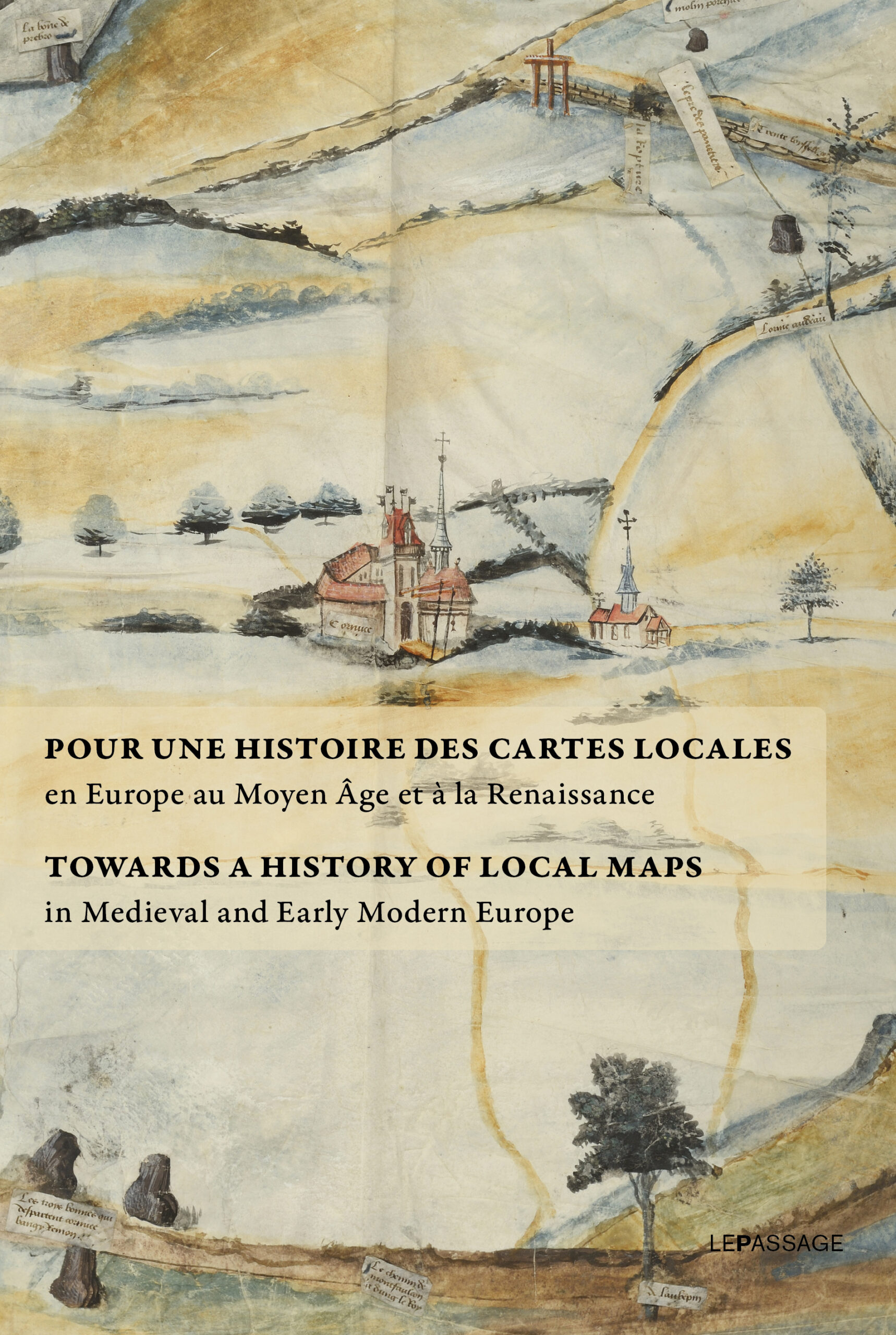
Publication – « Pour une histoire des cartes locales en Europe au Moyen Âge et à la Renaissance », dir. Juliette Dumasy-Robineau, Camille Serchuk et Emmanuelle Vagnon

L’ouvrage est le fruit de travaux présentés à l’occasion de l’exposition « Quand les artistes dessinaient les cartes. Vues et figures de l’espace français, Moyen Âge et Renaissance » (Archives nationales, 2019), qui montrait, pour la première fois, l’ampleur du corpus des cartes locales produites en France entre 1300 et 1600. Les contributions (en anglais et en français) réunies ici élargissent la réflexion à l’ensemble des pays européens pour proposer les premières pistes d’une histoire comparée de ce phénomène, qui constitua une étape déterminante de l’histoire de la cartographie.

Textes de Nathalie Bouloux, Axelle Chassagnette, Léonard Dauphant, Catherine Delano-Smith, Juliette Dumasy-Rabineau, Judith Förstel, Samantha Frénée, Étienne Hamon, P. D. A. Harvey, Thomas Horst, Gaël Lebreton, Françoise Michaud-Fréjaville, Rose Mitchell, Sébastien Nadiras, Armelle Querrien, Camille Serchuk, Christophe Speroni, Raphaële Skupien, Emmanuelle Vagnon.

L’ouvrage a été publié entre autres avec le soutien du Labex Hastec et du LAMOP.

Informations pratiques :

Pour une histoire des cartes locales en Europe au Moyen Âge et à la Renaissance, sous la direction de Juliette Dumasy-Robineau, Camille Serchuk et Emmanuelle Vagnon, Paris, éditions Le Passage, 2022. 320 p. ISBN : 978-2-84742-483-6. Prix : 35 euros.

Source : Éditions Le Passage

Publié dans Publications | Laisser un commentaire

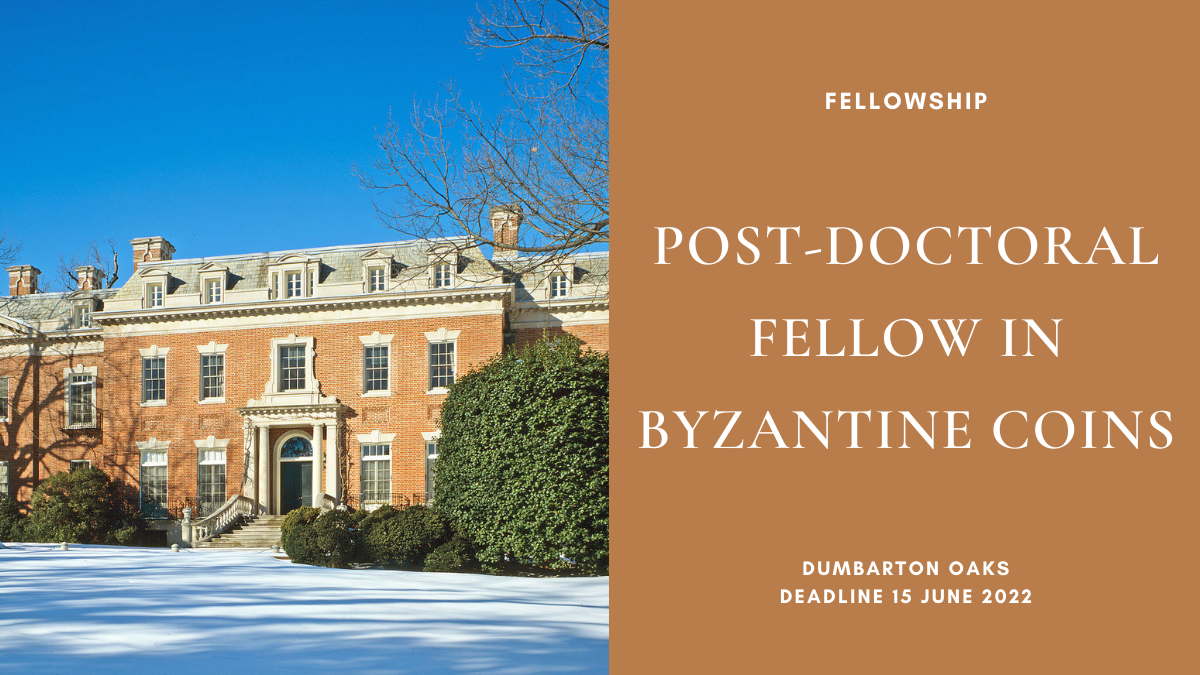
Offre d’emploi – Post-Doctoral Fellow in Byzantine Coins

Dumbarton Oaks invites applications for a Post-Doctoral Fellow to work with the museum team on projects relating to cataloging, publication, and exhibition of the coin collection. The successful candidate will receive training in digital cataloging, collections management, and exhibition planning. They will catalogue the newly acquired Mansfield and Shaw collections of early Byzantine coins, describing, recording, and publishing these coins in the Online Coin Catalogue. They will also work with the Collections Manager and Registrar to accession and house the coins. Building on the work of nomisma.org the Post-Doctoral Fellow will be involved in the establishment of a federated database to catalogue and digitize Byzantine coin holdings in various collections worldwide. In partnership with the Associate Curator and the Manager of Exhibitions, they will help to create temporary exhibits of the coin collection and take part in the planning and execution of educational activities. The fellowship offers unique opportunities to build career skills in digital humanities, museum curation, and collections-based education. The Fellow will participate fully in Dumbarton Oaks’ dynamic community of scholars and programming in Byzantine Studies and will devote 20% of the fellowship time to personal research.

 Major Responsibilities

  • Work with representatives of the Numismatic Collection of the Firestone Library Collections, Princeton University, and nomisma.org to establish and implement a linked-open data platform for Byzantine coins.
  • Research and establish unique issue identifiers for Byzantine coins for the period 717–1204.
  • Aid in the accessioning and housing of the newly acquired Mansfield and Shaw collections of early Byzantine coins.
  • Catalogue the newly acquired Mansfield and Shaw collections into the Dumbarton Oaks Online Coin Catalogue.
  • Help prepare museum displays of numismatic material.
  • Take part in educational activities involving the coin collection.

Qualifications

Basic

  • PhD in History, Art History, or Archaeology with a specialization in Byzantine Studies.
  • Excellent research skills, particularly in the areas of numismatic cataloging.

Preferred

  • Experience in a museum, special collection, or comparable environment.
  • Strong computer skills including using relational databases and collection management software.

Term

This is a one-year fellowship, with the possibility of renewal for two additional years. The Post-Doctoral Fellow will have access to the outstanding resources of the institute and become part of the larger research community at Dumbarton Oaks.

The Post-Doctoral Fellow would report to the Associate Curator of Coins and Seals and the Registrar and Collections Manager.

 How to Apply

Please send a cover letter, resume/CV, and two letters of reference to FellowshipPrograms@doaks.org by June 15, 2022.

Source : Medieval Art Research

Publié dans Offre d'emploi | Laisser un commentaire