Publication – Jonathan R. Lyon, « Corruption, Protection and Justice in Medieval Europe. A Thousand-Year History »

What was an “advocate” (Latin: advocatus; German: Vogt) in the Middle Ages? What responsibilities came with the position and how did they change over time? With this groundbreaking study, Jonathan R. Lyon challenges the standard narrative of a “medieval” Europe of feudalism and lordship being replaced by a “modern” Europe of government, bureaucracy and the state. By focusing on the position of advocate, he argues for continuity in corrupt practices of justice and protection between 750 and 1800. This book traces the development of the role of church advocate from the Carolingian period onward and explains why this position became associated with the violent abuse of power on churches’ estates. When other types of advocates became common in and around Germany after 1250, including territorial and urban advocates, they were not officeholders in developing bureaucracies. Instead, they used similar practices to church advocates to profit illicitly from their positions, which calls into question scholarly arguments about the decline of violent lordship and the rise of governmental accountability in European history.

Jonathan R. Lyon is Professor of History at the University of Chicago, where he specializes in the history of the Holy Roman Empire. He has previously held fellowships from the Humboldt Foundation and the Austrian Science Fund. He is the author of Princely Brothers and Sisters: The Sibling Bond in German Politics, 1100–1250 (2013), which won the 2017 John Nicholas Brown Prize from the Medieval Academy of America, and Noble Society: Five Lives from Twelfth-Century Germany (2017).
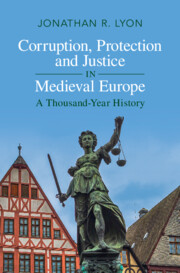
Table des matières :

Introduction

  1. The First “Medieval” Advocates
  2. Putting Down Roots in Ninth-Century Francia
  3. The « Aristocratization » of Post-Carolingian Advocacy
  4. Elite Competition at the Turn of the First Millennium
  5. The Limits of Church Reform
  6. Pigs and Sheep, Beer and Wine, Pennies and Pounds
  7. A History of Violence
  8. Weapons of the Not-so-Weak
  9. The Murder of Archbishop Engelbert
  10. Widening the Lens
  11. The Emperor as Vogt, ca. 1000–1500
  12. From Lordship to Government?
  13. Reframing the History of Violence
  14. Crossing the False Divide: Advocates after 1500
  15. A Cultural History of the Rapacious Advocate, or: William Tell’s Revenge
    Conclusion.

Informations pratiques :

Jonathan R. Lyon, Corruption, Protection and Justice in Medieval Europe. A Thousand-Year History, Cambridge, Cambridge University Press, 2022 ; 1 vol., 375 p. ISBN : 978-1-31651-374-3. Prix : GBP 29,99.

Source : Cambridge University Press
Publié dans Publications | Laisser un commentaire

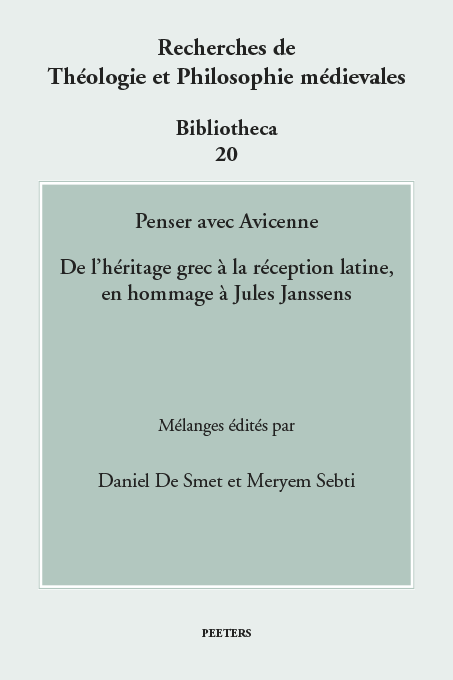
Publication – « Penser avec Avicenne. De l’héritage grec à la réception latine, en hommage à Jules Janssens », dir. Daniel De Smet et Meryem Sebti

Jules Janssens a construit une œuvre importante, qui, pour de nombreux chercheurs, a ouvert des perspectives de recherches nouvelles et fécondes. Ses travaux ont fait date. Ils portent principalement sur la philosophie d’Avicenne, ses sources, ses rapports avec la pensée musulmane, son influence sur la théologie ash’arite (al-Ghazali, Fakhr al-Din al-Razi) et sa réception dans le monde latin. Pour lui rendre hommage, quatorze collègues et amis de renommée internationale se sont réunis pour poursuivre ses réflexions sur ces thèmes. L’ouvrage qui en est issu offre un état des lieux de la recherche contemporaine sur Avicenne et sa postérité arabo-latine.

Table des matières : ici

Informations pratiques :

Penser avec Avicenne. De l’héritage grec à la réception latine, en hommage à Jules Janssens, dir. Daniel De Smet et Meryem Sebti, Louvain, Peeters, 2022 ; 1 vol., IV-405 p. (Recherches de Théologie et Philosophie Médiévale. Bibliotheca, 20). ISBN : 978-9-04294-919-5. Prix : € 92,00.

Source : Peeters

Publié dans Publications | Laisser un commentaire

Conférence – Anne Rauner, « Le système documentaire de la memoria de la paroisse Sainte-Aurélie de Strasbourg au bas Moyen Âge »

Le séminaire d’histoire médiévale organisé par l’École pratique des hautes études et l’Institut historique allemand se poursuit avec, le mercredi 19 octobre 2022, de 10h00 à 12h00,

Anne Rauner (université de Strasbourg), « Le système documentaire de la memoria de la paroisse Sainte-Aurélie de Strasbourg au bas Moyen Âge ».

La discussion qui suivra sera animée par Jean-Loup Lemaitre (École pratique des hautes études).


Le séminaire aura lieu en mode hybride, avec un système de visioconférence pour ceux qui ne pourront pas se déplacer à l’IHA.

Les personnes désireuses d’assister au séminaire sur place se feront connaître auprès de Rolf Große : rgrosse@dhi-paris.fr (message adressé en copie à Laurent Morelle : Laurent.Morelle@ephe.psl.eu).

Pour les personnes souhaitant participer à distance, merci de vous inscrire ici : https://us06web.zoom.us/meeting/register/tZEpdOqsrzsrGtXsP9oXxxpAhG_2xBxb6u-O

Après votre inscription, vous recevrez un mail de confirmation.

Vous trouverez le programme complet du séminaire sous cette adresse : https://calenda.org/1017513?lang=fr

Source : Institut historique allemand

Publié dans Colloque | Laisser un commentaire

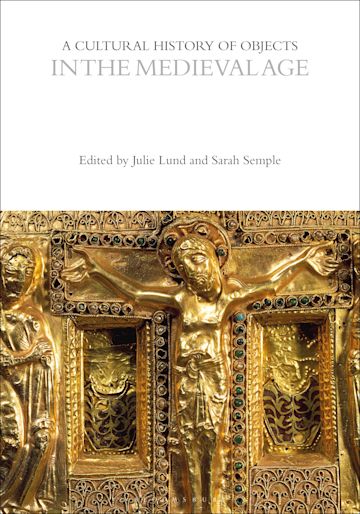
Publication – « A Cultural History of Objects in the Medieval Age », vol. 32, éd. Julie Lund et Sarah Semple

A Cultural History of Objects in the Medieval Age covers the period 500 to 1400, examining the creation, use and understanding of human-made objects and their consequences and impacts. The power and agency of objects significantly evolved over this time. Exploring objects and artefacts within art, technology, and everyday life, the volume challenges our understanding of both life worlds and object worlds in medieval society.

The 6 volume set of the Cultural History of Objects examines how objects have been created, used, interpreted and set loose in the world over the last 2500 years. Over this time, the West has developed particular attitudes to the material world, at the centre of which is the idea of the object. The themes covered in each volume are objecthood; technology; economic objects; everyday objects; art; architecture; bodily objects; object worlds.

Julie Lund is Associate Professor at the University of Oslo, Norway. Sarah Semple is Professor at Durham University, UK.

Table des matières :

1. Objecthood, Robin Fleming and Katherine L. French
2. Technology, Steve Ashby
3. Economic Objects, Dries Tys and Pieterjan Deckers
4. Everyday Objects: Making and Shaping Medieval Worlds, Toby F. Martin
5. Art, Hans Henrik Lohfert Jørgensen
6. Architecture, Sam Turner
7. Bodily Objects, Bonnie Effros
8. Object Worlds, Ben Jervis and Sarah Semple

Informations pratiques :

A Cultural History of Objects in the Medieval Age, éd. Julie Lund et Sarah Semple, Londres, Bloomsbury, 2022 ; 1 vol., 296 p. (The Cultural Histories Series). ISBN : 978-1-47429-868-1. Prix : USD 99,00.

Source : Bloomsbury

Publié dans Le réseau | Laisser un commentaire

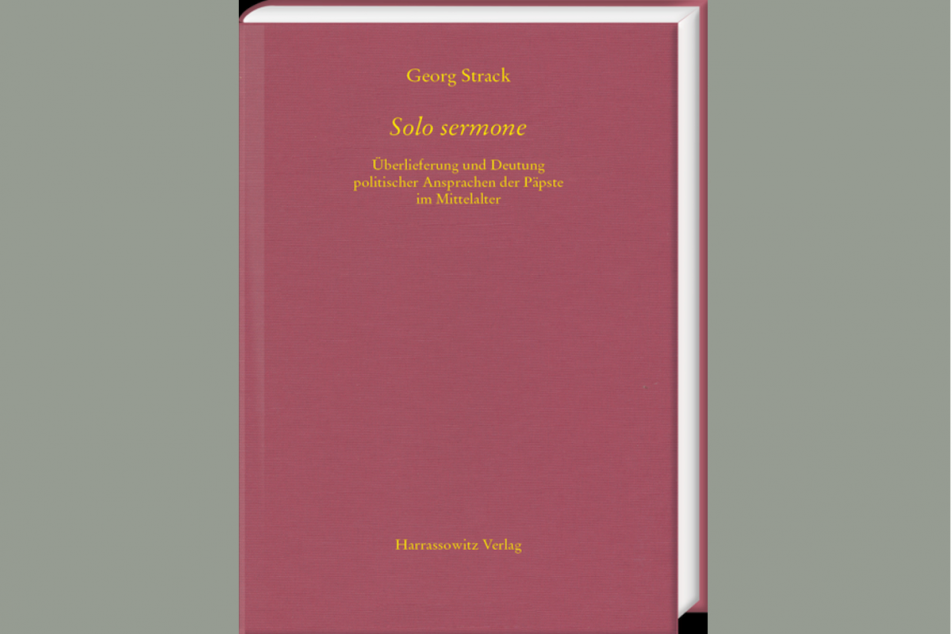
Publication – Georg Strack, « Solo sermone. Überlieferung und Deutung politischer Ansprachen der Päpste im Mittelalter »

Die vorliegende Monographie untersucht erstmals systematisch politische Ansprachen von Päpsten des Hoch- und Spätmittelalters. Als wichtigstes Redeforum nimmt sie Konzilien in den Blick und zeigt, wie päpstliche Oratorik dazu beiträgt, den Konsens über allgemein verbindliche Beschlüsse rituell zu verdeutlichen. Dieser Funktion entspricht die feierliche, aber eher schlichte Gestaltung der Vorträge, wie sie in Konzilsakten – etwa dem Papstwahldekret von 1059 – überliefert sind. Die Studie macht deutlich, dass es vor allem das literarische Verfahren der réécriture ist, das Päpste in Heiligenviten, Chroniken und Versepen zu großen Rednern werden lässt. Vor diesem Hintergrund erscheinen Ansprachen von Leo IX. bis Bonifaz VIII. in einem neuen Licht – und auch der angeblich so dramatische, in Deus vult-Rufen gipfelnde Kreuzzugsaufruf Urbans II. in Clermont. Besser bezeugt ist persuasive Oratorik für Calixt II., der als Prediger primär auf die Imitatio Christi rekurriert. Das Thema der Leidensnachfolge dominiert in politischen Ansprachen der Päpste seit Innozenz III. Seine Konzilspredigt Desiderio desideravi (Luc. 22,15) von 1215, die Jacques-Paul Migne nur unvollständig druckte, wird im Anhang erstmals kritisch ediert. Innozenz III. steht auch am Beginn der Überlieferungstradition päpstlicher Konsistorialreden, die in einem Ausblick bis hin zu Clemens VI. exemplarisch diskutiert werden. Das Buch wird erschlossen durch Register der Handschriften, Namen und Bibelzitate.

Table des matières : ici

Informations pratiques :

Georg Strack, Solo sermone. Überlieferung und Deutung politischer Ansprachen der Päpste im Mittelalter, Wiesbaden, Harrassowitz Verlag, 2022 ; 1 vol., XLIV–328 p. (Schriften, 79). ISBN : 978-3-447-11388-5. Prix : € 70,00.

Source : Monumenta Germaniae Historica

Publié dans Publications | Laisser un commentaire

Offre d’emploi – Postgraduate Position in Berlin: ‘Translation German Mysticism: The Construction of a European Idea’

Wiss. Mitarbeiter*in (Postdoc) (w/m/d) mit 65%-Teilzeitbeschäftigung befristet auf 3 Jahre Entgeltgruppe 13 TV-L FU Kennung: AE_Postdoc_2022

Bewerbungsende: 10.10.2022

Das Projekt Translation German Mysticism: The Construction of a European Idea ist Teil des SPP 2130 Übersetzungkulturen der Frühen Neuzeit (https://www.spp2130.de/ ; und https://www.spp2130.de/index.php/ii-sektion-2/ ). Dieses Projekt zeigt die prägende Rolle des Übersetzens in der Frühen Neuzeit am Beispiel der Übertragungen von deutscher mystischer Literatur ins Englische. Das England der Frühen Neuzeit bot einen außergewöhnlichen Nährboden für die Rezeption von Autoren wie Paracelsus (1493-1541), Sebastian Franck (1499-1542), Valentin Weigel (1533-1588) und Jacob Böhme (1575-1624): Getragen von dichten Netzwerken wurden Sie ins Englische übersetzt und veröffentlicht. Dadurch wurde eine Tradition erschaffen und einer neuen Leserschaft vermittelt: Ideen aus Kontinentaleuropa wurden mit einheimischen Ansätzen verbunden und eine neue Sprache entstand. Das Projekt zielt auf eine umfassende philosophische und kulturelle Neubewertung dieser Übersetzungen: Es analysiert, wie Ideen durch Übersetzung adaptiert und neu erfunden wurden, und hat drei Zielvorgaben. 1) Anhand von Kurzbeschreibungen wird das Korpus der englischen Übersetzungen auf der Webseite des Projekts präsentiert. 2) Übersetzungsstrategien für die Übertragung mystischer Terminologie und deren Einfluss auf den philosophischen Transfer werden analysiert. 3) Die Beziehung zwischen interlingualem Übersetzen und visueller Verbildlichung als Mittel für transkulturelle Vermittlung philosophischer Ideen wird am Fall des handschriftlichen Werks von Dionysius Andreas Freher (1649-1728) offengelegt.

Aufgabengebiet:
• Führende Funktion in der Organisation der wissenschaftlichen Zusammenarbeit im Forschungsprojekt bzw. mit den Partnerinstitutionen des Projektes
• Wissenschaftliche Koordination der Publikationen in enger Zusammenarbeit mit den Projektleiterinnen Dr. Cecilia Muratori und Prof. Dr. Anne Eusterschulte 

• Mitarbeit bei der Organisation und Durchführung interdisziplinärer, internationaler Tagungen und Workshops
• Teilnahme an Aktivitäten (Workshops, Tagungen, Arbeitstreffen, ‚TransUnits‘ https://www.spp2130.de/index.php/transunits/), die im Rahmen des SPP 2130 organisiert werden
• Zuständigkeit für die Finanzplanung in Zusammenarbeit mit der Projektleitung
• Zuständigkeit für die Projektwebseite
• Entwicklung eigenständiger Beiträge im Kontext des Forschungsprojektes
• Vorbereitung einer eigenen Qualifikationsschrift oder selbständigen Publikation

Einstellungsvoraussetzungen:
Abgeschlossenes wissenschaftliches Hochschulstudium sowie Promotion in einem literatur- oder kulturwissenschaftlichen Fach; in Kunstgeschichte; in Philosophie oder einer angrenzenden Disziplin mit literaturwissenschaftlichen oder historischen Qualifikationen

Erwünscht:
• Ausgewiesene Kenntnisse im Bereich Literatur- und Kulturtheorie, Philosophiegeschichte oder „intellectual history“ der Frühen Neuzeit
• Kenntnisse im Bereich digital gestützter Präsentation und Publikation von Forschungsdaten
• Vertrautheit mit editorischen Verfahren bzw. Bereitschaft zur Einarbeitung in Transkriptionsverfahren und digitale Aufbereitung von Manuskriptbeständen
• Mitarbeit an der Einrichtung einer kritischen digitalen Edition eines frühneuzeitlichen Textbestandes
• Verantwortlichkeit für die Pflege der Projekt-Website
• Bereitschaft zum Verfassen von eigenständigen Beiträgen zur ‚Mystischen Literatur‘ im Rahmen der Zusammenarbeit des Forschungsprojekts
• Organisation von Team-Meetings, Arbeitstreffen, internationalen Workshops
• Kenntnisse oder Interesse an der Einarbeitung in den Kontext ‚Mystische Literatur‘ aus einer vergleichenden Perspektive / Übersetzung und Transfer zwischen deutsch- und englischsprachigem Raum
• sehr gute Promotion
• sehr gute Deutsch- und Englischkenntnisse (eine der beiden Sprachen mindestens auf dem Niveau C1 GER, die andere mindestens auf dem Niveau B2 GER)

Weitere Informationen erteilt Frau Prof. Dr. Cecilia Muratori (cecilia.muratori@unive.it ).

Weitere Informationen

Bewerbungen sind mit aussagekräftigen Unterlagen (CV, Zeugnisse, Publikationsliste) ein kurzes (maximal 3-seitiges Exposé) des geplanten eigenen Forschungsvorhabens im Rahmen des Forschungsprojekts in deutscher oder englischer Sprache umfassen. Aus dem Exposé soll insbesondere der konkrete Beitrag zur Forschungsagenda des Forschungsprojektes hervorgehen.) unter Angabe der Kennung im Format PDF (vorzugsweise als ein Dokument) elektronisch per E-Mail zu richten an Frau Prof. Dr. Anne Eusterschulte: henrietta.schiffer@fu-berlin.de oder per Post an die

Freie Universität Berlin

Fachbereich Philosophie und Geisteswissenschaften

Institut für Philosophie

Frau Prof. Dr. Anne Eusterschulte

Habelschwerdter Allee 30

14195 Berlin (Dahlem)

Mit der Abgabe einer Onlinebewerbung geben Sie als Bewerber*in Ihr Einverständnis, dass Ihre Daten elektronisch verarbeitet und gespeichert werden.

Wir weisen darauf hin, dass bei ungeschützter Übersendung Ihrer Bewerbung auf elektronischem Wege von Seiten der Freien Universität Berlin keine Gewähr für die Sicherheit übermittelter persönlicher Daten übernommen werden kann.

Source : Freie Universität Berlin

Publié dans Offre d'emploi | Laisser un commentaire

Séminaire – Séminaire “Grandes et petites mythologies”

Possibilité de suivre la conférence via ZOOM. Le lien sera publié le mardi précédant la séance sur notre site*

Horaire : 17h-19h
Lieu : BU Robert de Sorbon, Campus Croix-Rouge

Programme complet : ici

Première séance : Le Golem

Géraldine Roux
De la figure mythologique juive du Golem à la créature de Frankenstein : origines et réception d’un être anthropoïde en quête d’identité

Le lien ZOOM pour assister à distance à la séance sera publié ici même mardi 4 octobre.
Plus de détail sur l’affiche ci-dessous.

TELECHARGEMENT :
Affiche ROUX Géraldine presentation.Golem

Source : CRIMEL

Publié dans Séminaire | Laisser un commentaire

Publication – Claude Mutafian, « Jérusalem et les Arméniens. Jusqu’à la conquête ottomane (1516) »

Dans la division en quatre de la vieille ville de Jérusalem, le quartier chrétien et le quartier arménien sont contigus mais indépendants. Cette situation a priori paradoxale correspond bien à l’ancienneté et à l’importance de la présence arménienne. Jérusalem est en effet restée un mythe pour les Arméniens dès le IVe siècle, quand le christianisme a été proclamé religion nationale. Les relations des Arméniens avec la Ville sainte n’ont jamais cessé, pour culminer à l’époque des croisades qui donnèrent l’occasion de fonder en Cilicie, à la fin du XIe siècle, un État arménien frontalier de la Syrie franque, converti en royaume un siècle plus tard. Jérusalem abritait alors le siège d’un Patriarcat arménien et l’activité culturelle y était particulièrement intense. En témoignent la quantité et la qualité des inscriptions, des sculptures, des mosaïques, des pièces d’orfèvrerie, ou encore des manuscrits superbement calligraphiés, ornés de miniatures qui comptent parmi les chefs-d’œuvre de l’art arménien. Sous la domination des Mamelouks, la culture arménienne continua à fleurir à Jérusalem, comme on peut le voir dans les nombreux récits des voyageurs européens qui n’omettaient jamais une section consacrée aux Arméniens.

À l’heure actuelle, Jérusalem est le plus important conservatoire de la culture arménienne hors d’Arménie. Présentant les relations arméno-hiérosolymitaines dans leur contexte historique et artistique, ce livre en est un reflet. L’abondance des cartes et des tableaux généalogiques en facilite la lecture. L’iconographie y joue un rôle fondamental, le texte étant essentiellement traité en légende des images, qu’il s’agisse de reproductions de miniatures, de monuments et d’œuvres d’art, ou encore de pages manuscrites d’historiens et de voyageurs.

Professeur agrégé de mathématiques, Claude Mutafian a enseigné à l’Université Paris XIII et a publié une série de manuels d’algèbre avant de se consacrer, depuis 1980, à l’étude du Proche-Orient. Titulaire d’une Habilitation à diriger des recherches, il a organisé plusieurs expositions internationales, à commencer par « Le royaume arménien de Cilicie » à la Chapelle de la Sorbonne en 1993. Il est l’auteur de nombreux livres et articles, en particulier sur l’histoire et la culture arméniennes. Aux Belles Lettres ont été publiés L’Arménie du Levant (2012), La Saga des Arméniens de l’Ararat aux Carpates (2018) et Jérusalem et les Arméniens jusqu’à la conquête ottomane (1516) (2022). 

Informations pratiques :

Claude Mutafian, Jérusalem et les Arméniens. Jusqu’à la conquête ottomane (1516), Paris, Les Belles Lettres, 2022 ; 1 vol., 518 p. ISBN : 978-2-25145-296-8. Prix : € 75,00.

Source : Les Belles Lettres

Publié dans Publications | Laisser un commentaire

Colloque – Expériences collectives, pratiques et communautés au premier Moyen Âge. Études de cas et réflexions méthodologiques

Journée d’études, le vendredi 30 septembre 2022, organisée par Geneviève Bührer-Thierry (LaMOP) et Piroska Nagy (UQAM)

Les communautés médiévales – citadines ou rurales, politiques ou religieuses – sont depuis longtemps au cœur de l’intérêt historien. Dans les sociétés prémodernes, les communautés locales étaient à la base de toute expérience de la société : le singulier ne pouvait se penser qu’à partir du collectif; l’individu, à partir de la communauté et jamais sans. Si les pratiques des communautés supposent la coopération des membres d’un groupe en vue de la réalisation d’un objectif commun, et reposent à la fois sur une culture partagée et sur l’interaction et l’échange régulier d’informations, amenant à la prise de conscience d’une spécificité et d’une identité distincte, de nombreuses occasions de la vie en société rassemblent des foules et créent des collectivités éphémères, qui peuvent avoir une durée de vie variable. L’on peut penser à celle des foules accompagnant les translations de reliques ou des processions, à des événements liturgiques ; à celle des membres de différentes assemblées (plaid, assemblée générale, concile); aux armées en campagne, ou encore à de foules en colère, qu’il s’agisse des différents épisodes « patarins » en Italie ou des foules mettant à sac le Harzbourg d’Henri IV en 1074. Qu’est-ce qui caractérise l’expérience collective – et l’expérience personnelle d’un événement collectif ? Quelles sont les expériences et les descriptions de la foule éphémère ou du rassemblement collectif qui servent parfois à actualiser une communauté durable ? Comment l’une et l’autre sont décrites, évaluées, et comment les comprendre aujourd’hui ?

Programme :

9h00 :
Geneviève Bührer-Thierry, Université de Paris I et Piroska Nagy, UQAM
Introduction

1ère partie : Expériences collectives et construction des identités
Président : Gordon Blennemann, Université de Montréal

9h30 :
Laurent Jégou, Université Paris I Panthéon-Sorbonne,

L’expérience conciliaire comme instrument de construction de l’identité collective épiscopale à la fin du IXe siècle

10h30 :
Béatrice Couture, Université de Montréal,

« Des assemblées pieuses de citoyens » : les Rogations comme fêtes unificatrices des communautés alto-médiévales

11h30 Pause

11h45 :
Antonio Manco, Università Sacro Cuore, Milan

Miracles et émotions collectives dans les pèlerinages militants au tombeau d’Anselme de Mantoue (XIe s.)

12h45-14h00 dîner /déjeuner

2ème partie : Expériences collectives et résolution des conflits
Président : Richard M. Pollard, UQAM

14h00 :
Erika Cinello, Université de Bologne Alma Mater Studiorum

Le « commun » à travers la communauté. L’expérience collective du publicum dans le placitum de Risano

15h00 :
Shane Bobrycki, Université de Vienne

Clamor, concursus, et tumultus à Tours: le collectif en débat au IXe siècle

16h Pause

16h30 :
Piroska Nagy, UQAM

De quoi témoignent les serments collectifs à Milan au XIe siècle? Communauté(s), pratiques, droit(s)

17h30 Conclusions

Source : LAMOP

Publié dans Colloque | Laisser un commentaire

Appel à contribution – Hearing with all Senses. Interdisciplinary Approaches to a Multisensory Phenomenon (ca. 500–1500)

Organizer / Organisation: Joanna Olchawa, Goethe-Universität Frankfurt am Main Julia Samp, RWTH Aachen University
Date and conference venue / Datum und Veranstaltungsort: as part of the DFG-funded network / im Rahmen des DFG-Netzwerks „Lautsphären des Mittelalters“, March 23–24 / 23.–24. März 2023, Frankfurt am Main
Deadline: November 1 / 1. November 2022

Hearing with all Senses. Interdisciplinary Approaches to a Multisensory Phenomenon (ca. 500–1500)

Hearing occupies a prominent place within the medieval hierarchy of senses. The New Testament pericopes « In the beginning was the Word » (John 1.1) and « Faith comes from hearing » (Romans 10.17) had an immense impact in late antiquity and in the Middle Ages. For example, based on this, the ideas of the conceptio per aurem, according to which Mary conceived by hearing, develop – and these ideas find an astonishing appeal especially in the visual implementation. Exploring the medieval sensory worlds no longer from the primacy of seeing, but rather from hearing, opens up new and surprising perspectives for the evaluation and understanding of actions and rituals, media and narratives. But one sense rarely stands alone. Thus, the reception of writing and text is sometimes understood as a multisensory appropriation – signs for the eye, sounds for the ears, words for gustatory and materials for olfactory as well as haptic perception; and by ruminating on what you have read even the inner senses are involved. The interaction of the senses also facilitates memorization: Hence, the plucking or beating of the ears serves as a reminder – if you want to hear, you have to feel. During the service, in turn, incense was used as a pungent aid to manifest the audible « Word of God » in the room and to envelop those present in it. Thus, perception – especially in the

Christian-Latin Middle Ages – is fundamentally figured as a fluid, situation-dependent mutual interrelation of the senses.

The aim of the conference is to trace the special significance of hearing within multisensory structures and related patterns of perception and contexts of meaning within their specific communication contexts. This not only addresses genuine questions of the historical sciences and humanities, but also calls for interdisciplinary approaches (e.g., in the field of psychoacoustics or the neurosciences): For instance, how does what is heard change depending on what is seen or perceived with other senses? It is equally necessary to consider transcultural as well as transreligious perspectives on the phenomenon of multisensory hearing. Furthermore, it is important to question the terminology of the sensory crossing of borders (such as synesthetic, multi- or intersensory, multi- or cross-modal) regarding contemporary categories of interpretation. The possibilities of present-day mediation of medieval themes and objects in the context of the sensory interplay in museums, for example to blind visitors or in general in ears-on-exhibitions, should also be discussed. The contributions can open exemplary approaches, tackle the phenomenon on a theoretical level or outline methodological insights.

The international conference is organized as part of the interdisciplinary DFG-funded network « Lautsphären des Mittelalters ». With the aim of supporting the networking of PhD students and postdocs working on these topics, proposals from scientists at these levels of qualification are particularly welcome. Travel and accommodation costs will be covered. Please send your abstract of max. 250 words for a presentation of approximately 4.500 words in German or English language as well as a short curriculum vitae until November 1, 2022 to Joanna Olchawa (olchawa@kunst.uni-frankfurt.de) and Julia Samp (samp@histinst.rwth-aachen.de). Do not hesitate to contact us if you have any questions regarding the conference or the submission.

Further information: https://www.tu-chemnitz.de/phil/iesg/professuren/gdma/dfg-netzwerk.php#allgemein

Publié dans Appel à contributions | Laisser un commentaire