Offre d’emploi – Professor (W2 with tenure track) of Medieval History (Goethe University Frankfurt)

Goethe University Frankfurt am Main invites applications for the position ofProfessor (W2 with tenure track) of Medieval Historyat the Faculty of Philosophy and History.

This civil servant or public employee position will start 01.October 2022.

This is a tenure-track position for an initial six-year term. If tenure is approved at the end of the term, theposition will be made permanent and promotion to the rank of Distinguished Professor (W3) will begranted.

The successful candidate will represent the subject in research and teaching and will be expected toparticipate in collaborative research projects, especially the research initiative Religious Dynamics. Thepr ofessorship is also involved in teacher training; experience and concepts for teaching subject content inschools are welcome.

The formal hiring requirements are defined in the Hessian Higher Education Act (HessischesHochschulgesetz).Goethe University is an equal opportunity employer, committed to diversity and inclusion. In particular, weare welcoming applications by qualified women and people with a migrant background.

At Goethe University, a special emphasis is placed on creating and sustaining a family-friendly work and research environment. Where applicants are otherwise equally qualified, preference is given to candidates withdisabilities or equivalent. The same applies to women in fields in which they are under-represented.

To apply, please send a CV, a list of publications, an overview of your research and teaching activities aswell as transcripts and course evaluations as a single PDF document by 09.03.2022 todekanat08@em.uni-frankfurt.de (subject line: „Professur Mittelalterliche Geschichte“). If you have any questions, please contact the Dean’s Office at dekanat08@em.uni-frankfurt.de. Further information about the appointment process, the legal framework and data protection: http://www.vakante-professuren.uni-frankfurt.de

Source : Goethe University Frankfurt

Publié dans Offre d'emploi | Laisser un commentaire

Colloque – Le rituel au Moyen Âge

Date : 1er juin 2022
Lieu : CESCM (Université de Poitiers-CNRS), Salle Crozet, 24 rue de la Chaîne, Poitiers.
Entrée libre.
Contact : Sini Kangas sini.kangas@univ-poitiers.fr

Les communications peuvent être présentées en français ou en anglais.

Le terme ”rituel” couvre un éventail ouvert de nombreuses activités médiévales. Selon une définition large, il comprend des comportements répétés et souvent formels qui associent des processus cognitifs à des actions physiques. Qu’ils soient pratiqués en privé ou en public, les rituels médiévaux ont inévitablement une fonction sociale ; ils sont exécutés pour et en interaction avec des publics présents, qu’ils soient humains ou surnaturels. Cette dimension performative implique une expérience partagée de pratiques visuelles, auditives, voire sensorielles tout court, qui donnent forme aux rituels.

Les rituels poussent à penser et à agir. Ils suscitent aussi des réactions émotionnelles. Ils servent à renforcer un sentiment d’inclusion et d’appartenance et à offrir une protection contre le mal. Ces fonctions profondes soulignent leur importance dans la vie sacrée et quotidienne ainsi que dans les moments de transition ou de péril. Même si des facteurs contextuels déclenchent et affectent le comportement cérémoniel, le contenu d’un rituel ne peut jamais être entièrement spontané.

L’environnement matériel joue un rôle important dans le déroulement des cérémonies médiévales. Des espaces, tels que des salles d’apparat ou de banquet, ont été conçus pour l’usage rituel. Dans les églises paroissiales, les rites sacrés symbolisent et accueillent un riche ensemble de pratiques, notamment la messe et les prières, surtout à l’occasion des fêtes religieuses. La liste des objets matériels d’une église médiévale rattachés à des rituels particuliers serait longue. La signification symbolique de la croix est si grande que, dans des situations extrêmes, les chevaliers vont jusqu’à en fabriquer.

La diversité des rituels médiévaux est énorme. C’est oralement que se déroulent les cérémonies et elles sont donc documentées de façon variée. Au cours des rites du souvenir, l’histoire est revécue par les populations sous forme coutumière. Leur identité est affectée et peut-être façonnée par les rites de passage et d’initiation du baptême, du mariage ou de la paix. Du point de vue juridique, les rituels obligent, autorisent, sanctionnent et fixent les relations humaines. Ils justifient et renforcent l’autorité royale, seigneuriale ou cléricale. A l’opposé, ils entérinent la soumission des sujets.

Aussi importants soient-ils pour les médiévaux, les rituels suscitent parfois de la méfiance. Même si, à la guerre, ils encouragent la loyauté et l’obéissance des chevaliers, sergents d’armes et piétons avant, pendant et après la bataille, ils comportent des connotations négatives de mort et de destruction pour la plupart des non-combattants.

Ce colloque réunit des spécialistes de divers domaines pour aborder la théorie et la pratique des rituels dans la culture médiévale sous plusieurs angles :

– Aspects socio-culturels des rituels religieux, juridiques et militaires.

– Rituels tenus en public ou réservés à la vie privée.

– Rituels de coercition, de négociation et de défi.

– Bornes de tolérance : rituels d’inclusion et d’exclusion.

– Représentation littéraire des rituels et formes ritualisées de l’écrit.

– Dimension visuelle et auditive de la performance rituelle.

– L’espace rituel.

Programme

9.00 Accueil et présentation de la journée

9.10-11.10 Rituel dans l’espace sacré

Iris SHAGRIR (Professeure en histoire médiévale, Open Univ. de Tel Aviv) : Liturgy and Topography in Latin Jerusalem

Estelle INGRAND-VARENNE (Chargée de recherche CNRS au CESCM/CRFJ de Jérusalem, responsable de l’ERC GRAPH-EAST, Univ. de Poitiers) : Faut-il consacrer les lieux saints ? Un problème soulevé dans l’inscription du Saint-Sépulcre.

Pierre LEVRON (Chargé de recherche CNRS en littérature médiévale, CESCM, Univ. de Poitiers) : Rituels de consécration ou de re-consécration d’églises dans les récits de croisades.

11.30-13.00 Rituels judiciaires et doctrinaux

Mia KORPIOLA (Professeure en histoire du droit, Univ. de Turku) : The Ritual of Oathgiving in Medieval Scandinavia.

Benjamin WEBER (Chercheur en histoire des croisades, Univ. de Toulouse) : L’élaboration d’un rituel : les origines médiévales de la bulle In Coena Domini.

15.00-18.00 À la croisée des pratiques cléricales et laïques

Martin AURELL (Professeur en histoire médiévale, CESCM, Univ. de Poitiers) : L’impossible adoubement par le prêtre (XIIe-XIVe siècles).

Vladimir AGRIGOROAEI (Chargé de recherche CNRS en littérature médiévale, CESCM, Univ. de Poitiers) : The Odd Case of the Four Old French Prayers in the End of the Winchester Psalter.

Katherine ZIEMAN (Maître de conférence en littérature anglophone, CESCM, Univ. de Poitiers) : Devotion and the Ritualization of Attention.

Sini KANGAS (Chercheuse invitée au CESCM, Univ. de Poitiers/Univ. de Tampere) : Prayers by the Crusader Knights: Adaptations of Ritual Observance.

Conclusions

Source : CESCM – Poitiers

Publié dans Le réseau | Laisser un commentaire

Colloque – Archaeologia catastropharum

Veuillez trouver ci-joint le programme ainsi que le bulletin d’inscription pour le colloque Archaeologia Mediaevalis 45 qui se tient les 17 et 18 mars 2022 aux PAC à Gent. N’hésitez pas à partager ces informations dans vos réseaux.

Merci de bien vouloir envoyer votre bulletin d’inscription à cette adresse avant le 8 mars 2022.

Programme :

8h45      Onthaal en koffie / Accueil et café / Empfang und Kaffee

9h15      Welkomstwoord Schepen Filip Watteeuw Stad Gent

9h30      Natalie DE VISSER: Verdronken dorpen in de Schelde-Delta (Nl.)

10h00      Wim DE CLERCQ, Coralie ANDRÉ, Frieda BOGEMANS, Dante DE RUIJSSCHER, Dieter DEMEY, Vanessa HEYVAERT, Stephen LOUWYE, Maxime POULAIN & Jan TRACHET: Een landschap van calamiteiten en opportuniteiten. Middeleeuws Brugge en haar problematische toegang tot de zee (W.-Vl.)

10h30      Caroline POLET: Les épidémies de peste du passé: apport de l’anthropologie biologique

11h00      Marit VAN CANT (per visio): Wonen aan het water – idyllisch?: malaria, polderkoorts of (luchtwegen) infecties bij eeuwenoude Vlaamse skeletten bewijzen het tegendeel

11h30      Sofie VANHOUTTE & Tomas BRADT: Beziect ende besmet metten lazers in de laatmiddeleeuwse leprozerie van de stad Ieper. Toevalsvondst in Sint-Jan leidt tot uniek archeologisch onderzoek voor de Lage Landen (W.-Vl.)

12h00      Lunch

13h10      Anne-Sophie BARNICH: Le Centre de Conservation et d’Etude (CCE) des biens archéologiques wallons évacué ! Etat des lieux de la situation (Nr)

13h40      Davy HERREMANS & Maarten BERKERS : The real asbestos. Een natuurlijke ramp voor de longen en het depot (O.-Vl.)

14h10      Patrice GAUTIER, Louise HARDENNE, Camille RUSTAERT, José Alberto Solinis CARRERA & Armelle WEITZ : Un demi-siècle de présence de chanoinesses régulières en forêt de Soignes (1399-1456). Regard archéologique sur la chapelle du prieuré de l’Ermite (Br. w.)

14h40      Koffie / Café / Kaffee

15h10      Pascal SAINT-AMAND & Marie VERBEEK: Quand la Meuse se déchaîne à Dinant: traces archéologiques et mémorielles des crues (Nr)

15h40     : Floris BEKE & Jelle DE MULDER: De plundering van een herberg in Stene en het beleg van Oostende (1601-1604) (W.-Vl.)

16h10     : Ewoud DESCHEPPER, Kristof HANECA & Elliot VAN MALDEGEM: De vroegmiddeleeuwse boer, gebukt onder rampen en hongersnood? Het potentieel van multi proxy methodes voor de demografie van de historische periodes: noordelijk Francia als voorbeeld

16h40     : Slotwoord Gedeputeerde An Vervliet Provincie Oost-Vlaanderen

Drink / Verre de l’amitié / Empfang

Source : Archaeologia Medievalis

Publié dans Colloque | Laisser un commentaire

École d’été – Franz Bierlaire, « Les Colloques d’Érasme, le livre toujours à suivre d’un écrivain arrivé »

Le mercredi 30 mars 2022

Les Colloques d’Érasme, le livre toujours à suivre d’un écrivain arrivé

Prof. Franz Bierlaire (Prof. émérite de l’Université de Liège) 

Moins célèbres aujourd’hui que l’Éloge de la Folie, les Colloques familiers, vieux cette année de 500 ans, sont le livre qui, tout au long du XVIe siècle, connut la diffusion la plus large et le plus grand retentissement.

Pendant près de trente-cinq années, Érasme garda sur le métier ce feuilleton toujours à suivre, l’augmentant régulièrement de nouveaux épisodes, jusqu’à multiplier par dix le nombre de ses pages et constituer un recueil d’une soixantaine d’« entretiens familiers » entre des personnes de tous âges, des deux sexes et de toutes les professions, sur les principaux problèmes de l’heure.  L’actualité, grande et même petite, nourrit en effet ces « exemples de propos échangés lors d’une rencontre », qui sont à la fois des modèles de conversations en bon latin et d’utiles leçons de vie, comme le souligne le titre même de l’ouvrage : « pour polir le style et régler sa vie ».

musee d erasme

Professeur émérite de l’Université de Liège, Franz Bierlaire y a enseigné notamment l’Histoire de l’humanisme et l’Histoire moderne. Ses travaux portent sur Érasme et l’érasmisme, l’histoire du livre scolaire et l’histoire de l’éducation à l’époque de la Renaissance. Au niveau international, il est un des plus grands connaisseurs des Colloques d’Érasme.

Il a publié notamment : Érasme et ses ‘Colloques’ : le livre d’une vie, préface de Léon-E. Halkin, Genève, Librairie Droz, Travaux d’Humanisme et Renaissance, 159, 1977.

Et récemment : Érasme au fil du temps, préface de Pierre Jodogne, Bruxelles, Éditions de l’Académie royale de Belgique, 2021.

Deux options : assistez à la conférence au musée ou suivez-la à distance via le livestream.

Pour assister à la conférence sur place, une réservation est nécessaire sur cette page. Le Covid Safe Ticket sera demandé et le port du masque sera obligatoire dès 6 ans.

Pour suivre à distance via le livestream, aucune réservation n’est requise. Vous pourrez regarder la conférence en direct sur notre chaine YouTube. Le moment ne vous convient pas ? Vous pouvez également revoir la conférence par la suite.

Publié dans École d'été | Laisser un commentaire

Colloque – From Book to Field – from Field to Book. Entangled Theory and Practice in Dietetics and Agriculture (c. 1300–1600 CE)

31.03.2022 – 02.04.2022
Lorsch

Man-made climate change has recently led to intense debates on agriculture, food production and consumption. Industrial agriculture and livestock farming are criticised for contributing to global warming. Alternative approaches are developing and new forms of interaction between humans and nature are emerging. Simultaneously, modern technologies and media are substantially changing ways of accessing dietetic information and methods of acquiring food. This is not an unprecedented issue in human history. In the past, times of change have triggered profound transformation processes in economic practices and consumer behaviour.

Among other factors, climatic trends since the onset of the Little Ice Age (c. 1300), the Great Famine (1315–1317) or the Black Death (1347–1352) led to changing social conditions, which had an impact on agriculture as well as pomi- and viticulture. Through humanism and the media revolution of the 15th century, classical literature was translated into vernacular languages becoming more accessible to a broader group of recipients. Culinary customs and dietetics have therefore been the subject of German Medieval Studies in the recent past. Ancient knowledge about agronomy and dietetics was not only copied, but also supplemented with relevant information about weather-related requirements and growing phases of certain plants. Via the Columbian Exchange food from the New World (e.g. maize, peppers) was introduced in the Old World and added to specialist literature such as Leonhart Fuchs’ New Kreüterbuch (1543). Noble marriage alliances between families from different regions changed eating habits, which required new types of cultivation (e.g., asparagus). Due to their intellectual, economic and manorial capacities courts, cities and monasteries can be described as ‘sites of condensed knowledge’. Expertise was likely to be found at these sites and distributed from there. However, the relationship between traditional knowledge, early forms of empirical approaches and practical experience (e.g., local knowledge) needs to be discussed critically. Were these forms combined to something new or did certain forms of knowledge prevail and if so, under what conditions? We generally assume that new forms of interaction with the biophysical environment could have emerged, which can be understood as Socio-Natural Sites in the sense of the Viennese school of environmental history.

The conference would like to take a look behind these processes and interacting dynamics. The aim is to clarify questions of the appropriation and distribution of knowledge, and to discuss their effects on social change during the period of c. 1300–1600: To what extent did vernacular literature help to bring knowledge ‘from book to field’ (or vice versa) in particular and to what extent did new knowledge and new practices lead to transformations of ecosystems?

The conference will be held in Lorsch and simultaneously be streamed via Zoom. If you are interested in a digital participation, please contact Dr Stephan Ebert by 20 March 2022: ebert@pg.tu-darmstadt.de.

Programme :

Thursday, 31 March 2022

12 p.m. [CET] arrival
1 p.m. welcome

Section 1: Vom Buch aufs Feld I – Volkssprachen und der Einfluss neuer Medien / From Book to Field I – Vernacular Languages and the Influence of New Media
Chair: Jürgen Wolf (Marburg)

1:30 p.m.
Helmut W. Klug / Astrid Böhm (Graz): Kochrezeptsammlungen als Spiegel von Ernährungsgewohnheiten. Zum Erkenntnispotential einer Quellengattung
2:15 p.m.
Thomas Gloning (Giessen): Landwirtschaftliche Literatur in deutscher Sprache vom Mittelalter bis um ca. 1600

3 p.m. coffee break

3:30 p.m.
Christian Stadelmaier (Giessen): Verdichtungsorte von Wissen? Niederlassungen der Zisterzienser und ihr Umfeld mit Fokus auf das frühe 14. Jahrhundert
4:15 p.m.
Stefan Sonderegger (Zurich): Landwirtschaftliche Spezialisierungen in der südlichen Bodenseeregion im Spätmittelalter. Voraussetzungen, Akteure und Auswirkungen

6 p.m. keynote (in English)
Johannes Preiser-Kapeller (Vienna): New Crops for the New Rome? Tradition, Innovation and Dynamics of Agriculture in the Byzantine Empire and the (late) Medieval Eastern Mediterranean / Neue Früchte für das neue Rom? Tradition, Innovation und Dynamik der Landwirtschaft im Byzantinischen Reich und im (spät-)mittelalterlichen östlichen Mittelmeerraum

8 p.m. dinner

Friday, 1 April 2022

9 a.m. arrival

Section 2: Vom Buch aufs Feld II – Ernährung, Landwirtschaft und Gartenbau in Theorie (und Praxis) / From Book to Field II – Dietetics, Agriculture and Horticulture in Theory (and Practice)
Chair: Volkhard Huth (Bensheim/Darmstadt)

9:15 a.m.
Dominic Olariu (Marburg): Botanik am Übergang von der Handschrift zum Druckwerk. Pflanzenillustrationen in Kräuterbüchern des 15. und 16. Jahrhunderts
10:00 a.m.
Ansgar Schanbacher (Göttingen): Gärten und Ackerbau in religiösen Kontexten des 16. Jahrhunderts

10:45 a.m. coffee break

11 a.m.
Maximilian Schuh (Berlin): Grundherrschaft in Theorie und Praxis. Landnutzung und -verwaltung in der didaktischen Literatur zur Landwirtschaft in England zu Beginn des 14. Jahrhunderts
11:45 a.m.
Stephan F. Ebert (Darmstadt): Vom Buch aufs Feld? Zur praktischen Rezeption von ‚Fachliteratur‘ im deutschsprachigen Raum des ausgehenden Mittelalters

12:30 p.m. lunch

Section 3: Vom Feld ins Buch – Ernährung, Landwirtschaft und Gartenbau in Praxis (und Theorie) / From Field to Book – Dietetics, Agriculture and Horticulture in Practice (and Theory)
Chair: Rainer Schreg (Bamberg)

2 p.m.
Julian Wiethold (Metz): Landwirtschaft, Weinbau und Ernährung im Spätmittelalter und zu Beginn der Frühen Neuzeit (1300–1600). Neue archäobotanische Ergebnisse aus Lothringen, Ostfrankreich
2:45 p.m.
Andreas Dix (Bamberg): Sonderkulturen als historisch-geographisches Problem – Das Fallbeispiel Bamberg seit dem Spätmittelalter

3:30 p.m. coffee break

4 p.m. excursion Freilichtlabor Lauresham / Laboratory for Experimental Archaeology

7 p.m. evening lecture (in German)
Gerrit J. Schenk (Darmstadt): Gartenbau und Sonderkulturen am Oberrhein. Vom Lorscher Arzneibuch bis zum Pfälzer Duwak / Horticulture and special crops on the Upper Rhine. From the Lorsch Pharmacopoeia to the Palatinate Duwak

8:30 p.m. dinner

Saturday, 2 April 2022

9 a.m. arrival

Section 4: Globale Perspektiven / Global Perspectives
Chair: Stefan Knost (Halle)

9:15 a.m.
Antonio Sánchez de Mora (Seville): Documents from Spanish Archives to Study the Changes in American Agriculture, Ecosystems and Food during the Early Modern Age
10 a.m.
Fabian Kümmeler (Vienna): Granoturco (Maize) and the Columbian Exchange. Agriculture, Pastoralism, and Society in Premodern Southeast Europe

10:45 coffee break

11 a.m.
Chun Xu (Berlin): Terraforming the Mongol-Yuan Metropole. Yu Ji and His Campaign for Riziculture in Littoral Metropole
11:45 a.m.
summary und final discussion

12:30 p.m. refreshment / snacks

End of conference

Source : H-Soz-Kult

Publié dans Colloque | Laisser un commentaire

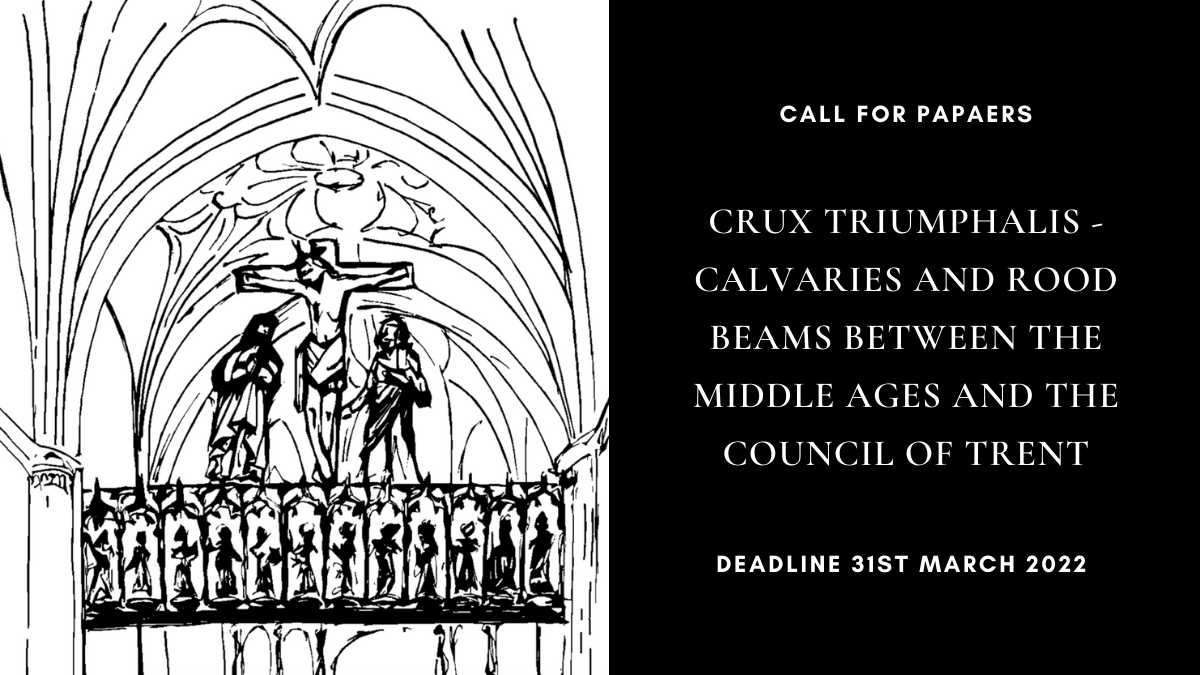
Appel à contribution – CRUX TRIUMPHALIS – Calvaries and Rood Beams between the Middle Ages and the Council of Trent

Deadline : 31st March 2022

The 1st Colloquium on Art and Liturgy: CRUX TRIUMPHALIS. Calvaries and Rood Beams between the Middle Ages and the Council of Trent will take place in Cádiz during 13-15 October 2022.

We invite the academic community to submit abstracts in Spanish, English, Italian and French consisting of a 500-700 words summary highlighting the innovative nature of the paper together with the chosen session and a brief curriculum vitae before the 31st of March 2022 to the following address: crux.triumphalis@uca.es.

The organising committee shall acknowledge receipt of submissions and select those considered most closely aligned with the meeting objectives. The selection will be made public before the 15th of May. Following peer review, these papers will be published in a monograph. Texts should be sent by the 15th of November 2022.

During the Middle Ages and even the Early Modern period, the biggest eye-catcher for those who entered into a church was an image of Christ crucified, frequently flanked by the Virgin and Saint John, supported by a beam. This beam, located on the triumphal arch’s imposts, became -together with the altar steps- the element that pointed out the frontier between the space for the faithful and the one intended for the clergy. Due to its prominent position at the entrance of the presbytery, the crucifix became a focus for the faithful’s gaze. This image increased their spiritual involvement in liturgical celebrations, particularly during Mass, because they were persuaded through the transcendence of the mystery that occurred at the altar. That mystery, which was the miraculous and bloodless repetition of the Calvary’s sacrifice, also was the very same iconographical depiction that the faithful could distinguish at the top of the beam.
Like any other church furniture, the origin of the rood beams can be traced back into the early Middle Ages or even Late Antiquity through Archaeology and documentary evidence that go back to the patristic literature or the Liber Pontificalis. The High Medieval sources that mention these wooden structures and their calvaries are even more numerous, for instance, Sicard of Cremona or Guillaume Durand treatises, which not only had a significant impact but were also strongly connected with this kind of works.
It is still possible to locate many rood beams throughout Europe, showing their past abundance. However, the Hispanic reality is much different. Scarcity of preserved examples, together with the lack of academic interest in this topic, could lead to a false image of a past where these structures would have been irrelevant. Nevertheless, documentary evidence and sculptural remains permit us to reconstruct a different reality where the visual power of these beams would have decayed only at the end of the 15th Century, in parallel with the extraordinary development of the great altarpieces. The unprecedented growth of altarpieces in the Iberian Peninsula and the consequences of certain theological developments would became catalyst that provoked both the fall into disuse of rood beams and also their academic oblivion.
The aim of the first Expert meeting on Art and Liturgy, to be held in the University of Cádiz with a commitment to continuity, is to restore the memory of these singular pieces in its architectural, sculptural and pictorial dimension within the visual and functional context for which they were conceived. In order to provide a forum for debate on these issues, the Colloquium will count with renowned experts such as Teresa Laguna, Justing Kroesen or Eduardo Carrero, among others.

Session I. The Triumphal Cross in liturgical and historical sources. Study of patristic texts and medieval liturgical books, pastoral visits, other literary sources such as periegesis and chorography, as well as contractual and accounting documentary sources. In addition, graphic evidence of beams and calvaries: drawings, engravings, descriptive painting and historical photography.

Session II. Spanish Calvaries and Rood Beams in the European Context. Origins and typological relations with similar elements: screens, retrochoirs, jubé… Spatial configuration and formal development. Iberian world. Local particularities.

Session III. The decline of a typology. The emergence of the great altarpieces and the last beams. Disuse and dismantling of beams and calvaries. Functional, liturgical and maintenance issues involved in the disappearance process. Singular examples preserved: survival and revival.

Session IV. Image, piety and devotion. Devotional implications in the cult of medieval crucifixes and calvaries after their descent. Altars, altarpieces and chapels devoted to “Beam Christs”. Medieval prestige in the baroque context.

Source : Medieval Art Research

Publié dans Appel à contributions | Laisser un commentaire

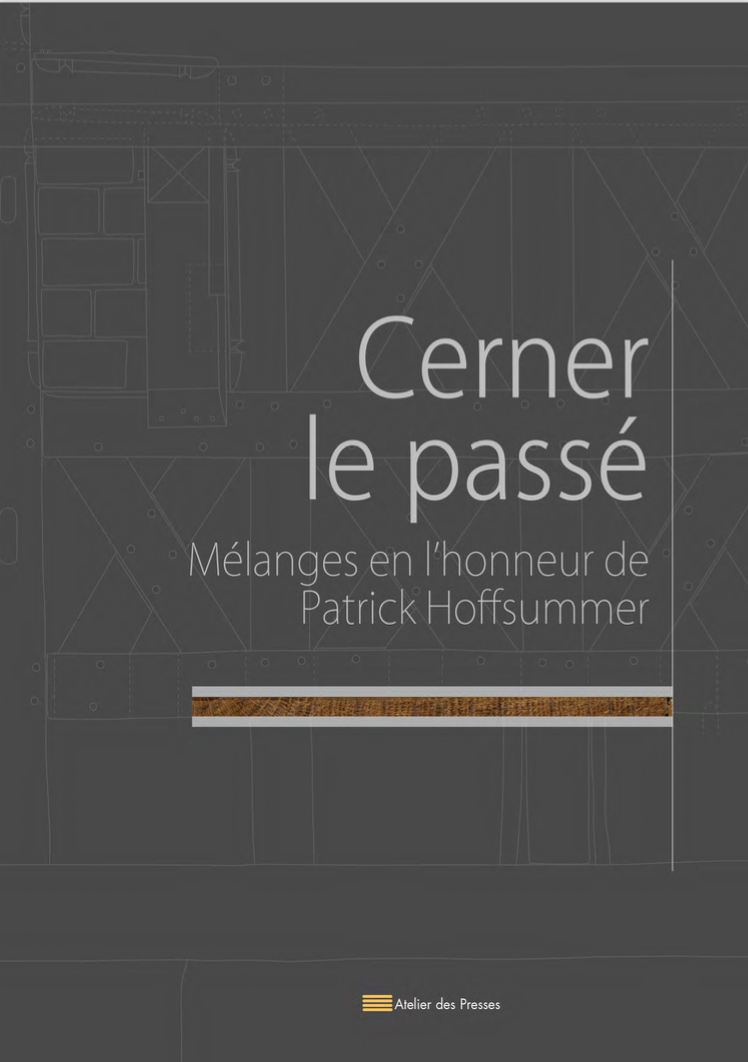
Publication – « Cerner le passé. Mélanges en l’honneur de Patrick Hoffsummer », éd. Line Van Wersch, Sarah Cremer, Pascale Fraiture, Christophe Maggi, David Strivay, Muriel Van Ruymbeke, Armelle Weitz

Cerner le passé. Mélanges en l’honneur de Patrick Hoffsummer, éd. Line Van Wersch, Sarah Cremer, Pascale Fraiture, Christophe Maggi, David Strivay, Muriel Van Ruymbeke, Armelle Weitz, Liège, Atelier des Presses, 2021.

Contact pour la vente :
Emmanuel Delye, emmanuel.delye@uliege.be

Table des matières : ici

Le comité éditorial tient à remercier l’ensemble des auteurs ainsi que les relecteurs des différentes contributions. Il remercie aussi L’UR AAP et l’Université de Liège pour les financements reçus.

Les articles et leurs contenus restent sous la seule responsabilité des auteurs.

Université de Liège – Atelier des Presses Chemin des Amphithéâtres – Bât B7a 4000 Liège (Belgique)

Publié dans Publications | Laisser un commentaire

Publication – « Civic Identity and Civic Participation in Late Antiquity and the Early Middle Ages », dir. Cédric Brélaz et Els Rose

This title will be available in Open Access via https://www.brepolsonline.net/series/celama-eb

During the Ancient Greek and Roman eras, participation in political communities at the local level, and assertion of belonging to these communities, were among the fundamental principles and values on which societies would rely. For that reason, citizenship and democracy are generally considered as concepts typical of the political experience of Classical Antiquity. These concepts of citizenship and democracy are often seen as inconsistent with the political, social, and ideological context of the late and post-Roman world. As a result, scholarship has largely overlooked participation in local political communities when it comes to the period between the disintegration of the Classical model of local citizenship in the later Roman Empire and the emergence of ‘pre-communal’ entities in Northern Italy from the ninth century onwards.

By reassessing the period c. 300-1000 CE through the concepts of civic identity and civic participation, this volume will reassess both the impact of Classical heritage with regard to civic identities in the political experiences of the late and post-Roman world, and the rephrasing of new forms of social and political partnership according to ethnic or religious criteria in the early Middle Ages. Starting from the earlier imperial background, the fourteen chapters examine the ways in which people shared identity and gave shape to their communal life, as well as the role played by the people in local government in the later Roman Empire, the Germanic kingdoms, Byzantium, the early Islamic world, and the early medieval West. By focusing on the post-Classical, late antique, and early medieval periods, this volume intends to be an innovative contribution to the general history of citizenship and democracy.

Cédric Brélaz is Professor of Ancient History at the University of Fribourg, Switzerland.

Els Rose is Professor of Late and Medieval Latin at Utrecht University.

Table des matières :

Introduction — CÉDRIC BRÉLAZ, ELS ROSE

Part I. Local Communities, Citizenship, and Civic Participation in the Early Roman Empire (1st-3rd Century CE)

Local Citizenship and Civic Participation in the Western Provinces of the Roman Empire — CLIFFORD ANDO

Democracy, Citizenship(s), and ‘Patriotism’: Civic Practices and Discourses in the Greek Cities under Roman Rule — CÉDRIC BRÉLAZ

Part II. Local Identities, Civic Government, and Popular Participation in Late Antiquity

Civic Identity and Civic Participation in Constantinople — ANTHONY KALDELLIS

Social Status and Civic Participation in Early Byzantine Cities — AVSHALOM LANIADO

Informal Expressions of Popular Will in Late Roman Africa — JULIO CESAR MAGALHÃES DE OLIVEIRA

Urban Identities in Late Roman Italy — PIERFRANCESCO PORENA

Cities and Civic Identities in Late Roman and Visigothic Spain — MICHAEL KULIKOWSKI

Part III. Rephrasing Citizenship

Personal Identity in the Later Roman Empire — RALPH MATHISEN

A Relationship of Justice: Becoming the People in Late Antiquity — PETER VAN NUFFELEN

Reconfiguring Civic Identity and Civic Participation in a Christianizing World: The Case of Sixth-Century Arles — ELS ROSE

Legalizing Ethnicity: The Remaking of Citizenship in Post-Roman Gaul (6th-7th Centuries) — STEFAN ESDERS AND HELMUT REIMITZ

Part IV. Expressions of Civic Identity in the Early Middle Ages

Urban Populations in Early Islam: Self-Identification and Collective Representation — MATHIEU TILLIER

Urban Culture in the Early Medieval West: The Case of the Episcopal Towns in the German Kingdom — MARCO MOSTERT

Elites and Urban Communities in Early Medieval Italy: Identities, Political Initiatives, and Ways of (Self-) Representation — GIANMARCO DE ANGELIS

Citizenship and Contexts of Belonging: A Postscript — CLAUDIA RAPP

Index nominum

Index rerum

Informations pratiques :

Civic Identity and Civic Participation in Late Antiquity and the Early Middle Ages, dir. Cédric Brélaz et Els Rose, Turnhout, Brepols, 2022 (Cultural Encounters in Late Antiquity and the Middle Ages, 37). 447 p., 6 b/w ill., 3 b/w tables, 156 x 234 mm, 2021 ISBN: 978-2-503-59010-3. Prix : 120 euros.

Source : Brepols

Publié dans Publications | Laisser un commentaire

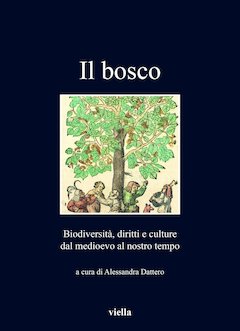
Publication – « Il bosco. Biodiversità, diritti e culture dal medioevo al nostro tempo », dir. Alessandra Dattero

Attraverso i secoli il bosco appare come una metafora del pianeta terra: è fonte di risorse apparentemente inesauribili per la vita delle specie animali e vegetali e l’azione dell’uomo ne ha profondamente modificato le caratteristiche.

Dai tempi più remoti ad oggi, il bosco ha avuto un’influenza sulla cultura e l’immaginario collettivo, ha favorito complesse organizzazioni sociali, con le loro normative, e intorno a esso sono fiorite elaborazioni letterarie e raffinate costruzioni linguistiche.

Questo libro indaga molti di questi aspetti, ma si pone anche nella prospettiva di restituire qualcosa: esplorare il bosco nel passato significa oggi cercare di offrire creativamente un contributo ad una sua rigenerazione nel tempo presente.

Table des matières :

  • Alessandra Dattero, Introduzione
  • Giovanni Maria Flick, La foresta e la città nel confronto-scontro tra ambiente e profitto
  • I. Nel bosco: uomini, comunità, territorio
    • Fabio Saggioro, Marco Marchesini, Silvia Marvelli, Per un’archeologia del bosco nel medioevo: elementi, dinamiche e processi
    • Katia Occhi, La ricchezza della natura: risorse forestali e scambi nelle Alpi orientali della prima età moderna
    • Andrea Savio, La rapida ascesa di due mercanti di legname nel Veneto del XVI secolo: Iseppo e Girolamo Forni
    • Koldo Trapaga Monchet, Las políticas forestales en los reinos de Castilla y Portugal (siglos XV-XVII)
    • Saverio Russo, Il pino da pece e il frassino da manna nel Gargano del XIX secolo
  • II. Norme e pratiche del bosco tra medioevo ed età contemporanea
    • Maria Gigliola di Renzo Villata, La legislazione bassomedievale nell’Italia centro-settentrionale e la “sfida” del bosco. Riflessioni sparse
    • Javier García Martín, El derecho comunitario al uso del bosque en Castilla en los siglos XVI-XVIII
    • Monica Chiantini, Emanuele Conte, Qualificazioni giuridiche dei beni collettivi. Una breve rassegna storica
    • Giacomo Demarchi, L’articolo 9 e il problema ambientale: spigolature storico-costituzionali
    • Maurizio Flick, L’evoluzione del bosco tra tutela, valorizzazione e fruizione
  • III. Saperi e linguaggi botanici
    • Angela Andreani, False “cacographees” and “correct” English names: the quest for perfect botanical naming in early modern England
    • Elisabetta Lonati, New plants & new names: botanical terminology in late modern English lexicography
    • Justin Begley, Stephen Hales (1677-1761) and the uses and abuses of plant-animal analogies
    • Agnese Visconti, Verso la costruzione del concetto di ecosistema. Lo studio dei boschi del botanico Filippo Parlatore
    • Carlo Blasi, Stato di conservazione e «Lista Rossa» dei sistemi forestali in Italia
  • IV. I boschi della bassa Lombardia: una ricerca interdisciplinare
    • Ilda Vagge, Le foreste di farnia e carpino bianco della pianura lombarda
    • Paolo Grillo, I boschi dell’abbazia di Morimondo nell’area del Ticino (XII-inizi XIII secolo)
    • Blythe Alice Raviola, La chimera. Boschi e acque nel Novarese di età moderna
    • Alessandra Dattero, Interessi, conflitti e politiche di governo nei boschi lombardi di pianura nell’età delle riforme: la comunità di Abbiategrasso
    • Stefania Salvi, Boschi, legna e legislazione austriaca in Lombardia (XVIII secolo): riflessioni storico-giuridiche
  • Indice dei nomi

Informations pratiques :

Il bosco. Biodiversità, diritti e culture dal medioevo al nostro tempo, dir. Alessandra Dattero, ROma, Viella, 2022 (I libri di Viella, 411). pp. 388, 15×21 cm, bross. ISBN: 9788833138367. € 35,00

Source : Viella

Publié dans Publications | Laisser un commentaire

Séminaire – Actualité de la recherche archéologique

4 mars 2022, de 14h à 17h

Université de Caen, Campus 1, SH 027

Coord. : L. Bourgeois (Unicaen, Craham)

Programme :

Clarisse PARRA-PRIETO et Sophie PILLAULT (Unicaen, Craham), Le sanctuaire celto-romain de Baron-sur-Odon (Calvados)

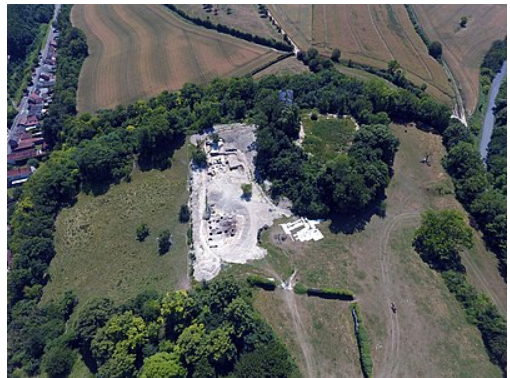
Richard JONVEL (Unicaen, Craham), Les fouilles de la basse-cour du château de Boves en Picardie (Xe-XVIe siècle). Quelles relations avec le château à motte ?

Valentin MICLON (Unicaen, Craham), Alimentation, état sanitaire et statut social des populations médiévales dans le centre de la France. Approche archéo-anthropologique et paléobiochimique

Source : CRAHAM

Publié dans Séminaire | Laisser un commentaire