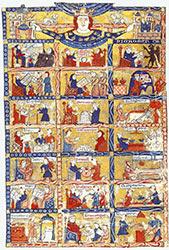
Le séminaire intitulé « Recherches en histoire des textes scientifiques et magiques au Moyen Âge » organisé par le pôle Sciences du Quadrivium de l’IRHT, dirigé par Jean-Patrice Boudet, continue en cette année universitaire 2018-2019. Ce séminaire a pour but de présenter des recherches sur l’histoire des sciences médiévales au sens large.
Le séminaire reprend un vendredi par mois de 10h à 12h à partir du 9 octobre 2020.
Programme 2020-2021 :
Vendredi 16 octobre 2020 (10h-12h) Thibault Miguet (CNRS-IRHT) : Le Viatique du voyageur d’Ibn al-Gazzar : une encyclopédie médicale entre Orient et Occident.
Vendredi 6 novembre 2020 (10h-12h) Hélène Colleu (POLEN, doctorante) : Ad habendum equum velocissimum : évolution du motif du cheval volant à la fin du Moyen Âge. Séance en visio-conférence sur inscription auprès de Julien Véronèse : julien.veronese@univ-orleans.fr
Vendredi 4 décembre 2020 (10h-12h) : Joël Chandelier (Paris 8) : Médecine, économie et morale à la fin du Moyen Âge. Séance en visio-conférence sur Teams.
Vendredi 22 janvier 2021 (10h-12h) Maria Sorokina (EUR Translitterae) : La Summa de astris de Gérard de Feltre : sources, arguments et fortune d’un traité anti-astrologique.
Vendredi 19 février 2021 (10h-12h) : Jean-Patrice Boudet (POLEN) : titre à venir.
Vendredi 2 avril 2021 (10h-12h) : Korshi Dosoo (Würzburg) et Naïm Vanthieghem (CNRS-IRHT) : titre à venir
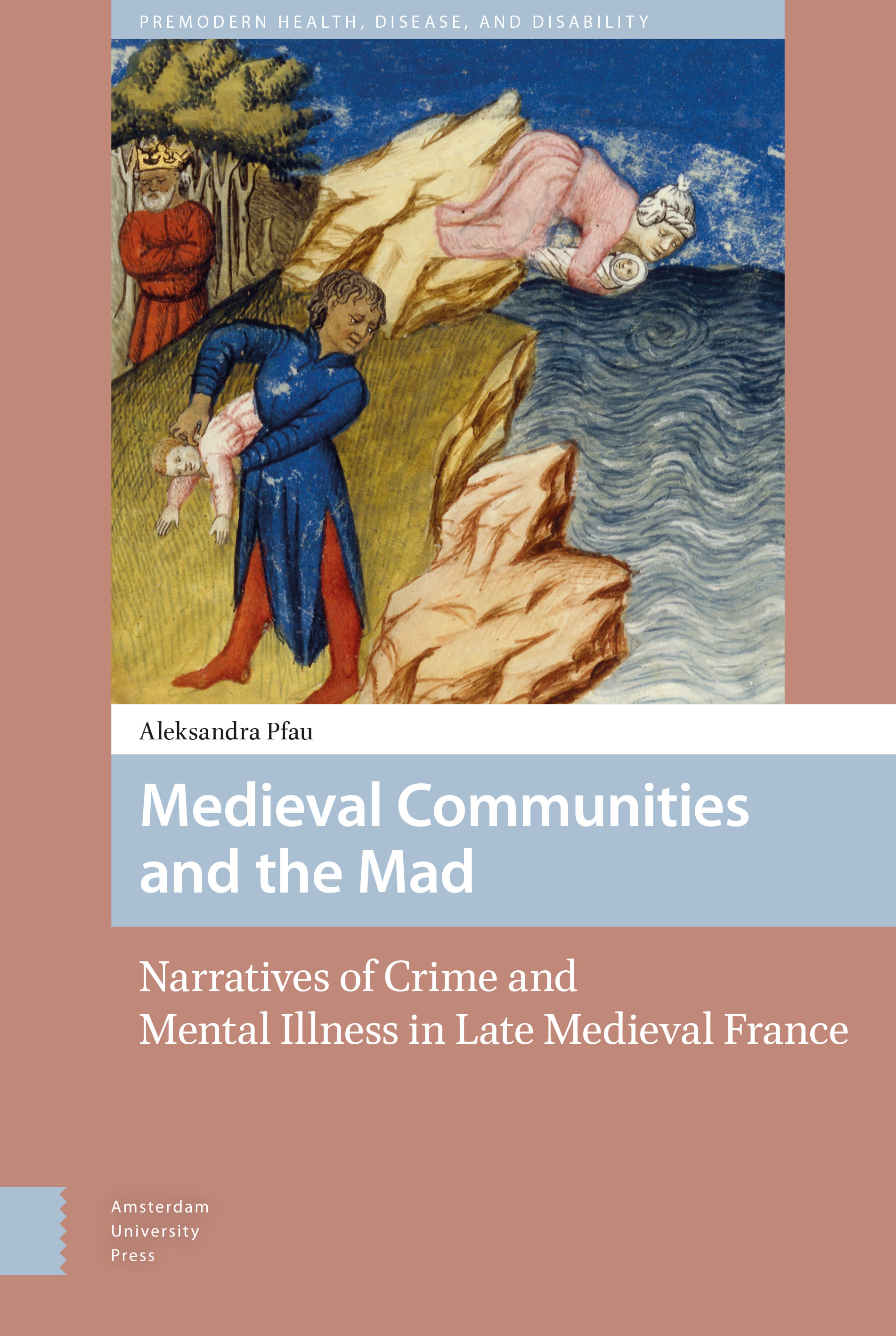
The concept of madness as a challenge to communities lies at the core of legal sources. Medieval Communities and the Mad: Narratives of Crime and Mental Illness in Late Medieval France considers how communal networks, ranging from the locale to the realm, responded to people who were considered mad. The madness of individuals played a role in engaging communities with legal mechanisms and proto-national identity constructs, as petitioners sought the king’s mercy as an alternative to local justice. The resulting narratives about the mentally ill in late medieval France constructed madness as an inability to live according to communal rules. Although such texts defined madness through acts that threatened social bonds, those ties were reaffirmed through the medium of the remission letter. The composers of the letters presented madness as a communal concern, situating the mad within the household, where care could be provided. Those considered mad were usually not expelled but integrated, often through pilgrimage, surveillance, or chains, into their kin and communal relationships.
Dr. Aleksandra Pfau is a professor of History at Hendrix College in Conway, Arkansas. She received her PhD in 2008 from the University of Michigan, and has published several articles on crime in medieval France.
Informations pratiques :
Aleksandra Nicole Pfau, Medieval Communities and the Mad. Narratives of Crime and Mental Illness in Late Medieval France, Amsterdam, Masterdam University Press, 2020. 202 p.. ISBN : 9789462983359. Prix : 99 euros.
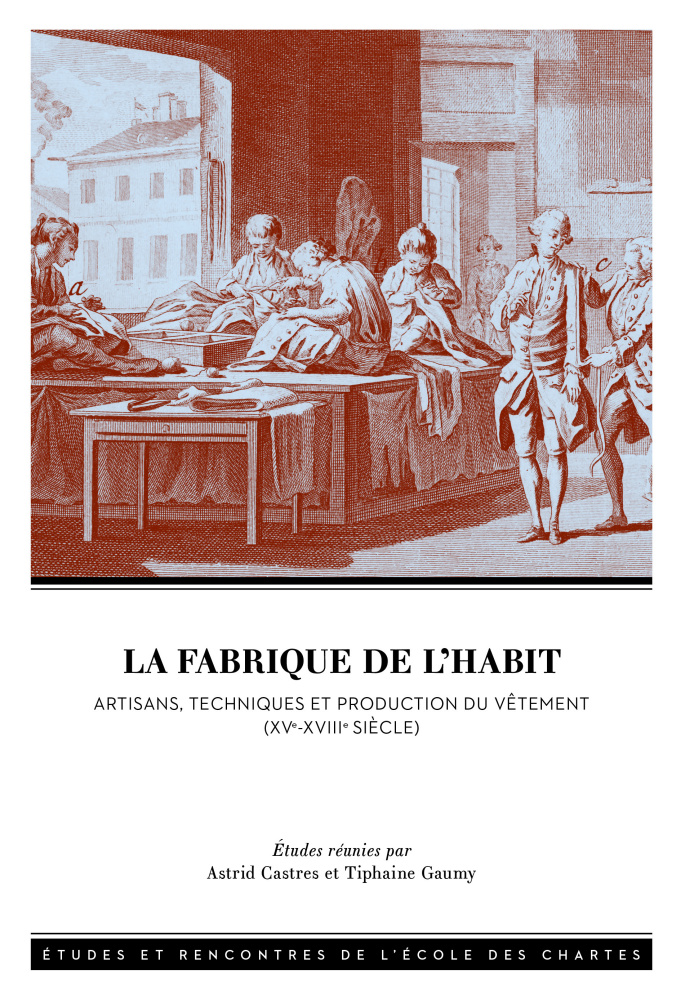
Au Moyen Âge et tout au long de l’époque moderne, le vêtement était un bien coûteux, aux modes d’acquisition et d’entretien spécifiques. Sa production relevait de logiques d’économie du matériau (récupération, piéçage), amenées à évoluer après l’essor de l’industrie textile et de la confection, l’apparition des grands magasins et l’invention de la machine à coudre au XIXe siècle.
Chercheurs et spécialistes du vêtement (archéologues, conservatrices-restauratrices du patrimoine, historiens, historiennes de l’art et professionnels du costume de scène) explorent dans ce livre la culture technique des artisans de l’habillement entre le XVe et le XVIIIe siècle. Le dialogue entre les disciplines ici représentées permet d’envisager sous un angle neuf les pratiques professionnelles et les cadres de fabrication des vêtements et des accessoires de mode en Occident dans les sociétés pré-industrielles.
Au-delà d’une approche pluridisciplinaire, cet ouvrage soulève des questionnements méthodologiques liés aux recherches sur l’histoire du vêtement, notamment sur la manière de documenter l’histoire de savoir-faire textiles, dont certains relèvent d’un patrimoine immatériel à préserver.
Table des matières ;
Préface
Introduction
Partie I. Dans l’atelier, la fabrique de l’habit
Nadège Gauffre Fayolle – Pierre de Chignin (1396-1425 ?), un tailleur au service d’Amédée VIII de Savoie Tiphaine Gaumy – Du poil au chapeau en passant par la cloche : la complexe technicité chapelière dans le Paris de la première modernité Entretien avec Cécilia Aguirre, conservatrice-restauratrice du patrimoine textile, spécialisée en teintures naturelles
Partie II. Les vestiges matériels : une source pour l’histoire du vêtement Véronique Gendrot, Gaël Barracand, Sylvie Duchesne, Olivier Laurent et Rozenn Colleter – Costumes et textile archéologique du XVIIe siècle en contexte funéraire : de la découverte à l’étude Emmanuelle Garcin – Le costume comme source historique : pour une philologie de la matière Entretien avec Sébastien Passot, costumier et membre de The School of Historical Dress
Partie III. Suivre les modes : s’adapter, innover, diffuser
Astrid Castres – À propos de quelques nouveautés dans la production de vêtements à Paris au XVIe siècle Pascale Cugy – Jean Dieu de Saint-Jean, l’invention de l’image de mode et le Mercure galant: quelques remarques sur la réception et la diffusion des modes gravées Sophie Lemahieu – Entre tradition et innovation technique : fabriquer et entretenir les costumes à la Comédie-Française
Résumés Glossaire Index
Informations pratiques :
La fabrique de l’habit. Artisans, techniques et production du vêtement (XVe-XVIIIe siècle), éd. Astrid Castres et Tiphaine Gaumy, Paris, École nationale des chartes, 2020 (Études et rencontres de l’École des chartes). 232 p., 50 ill. ISBN : 9782357231573. Prix : 28 euros.
Although King John is remembered for his political and military failures, he also resided over a magnificent court. Power and Pleasure reconstructs life at the court of King John and explores how his court produced both pleasure and soft power.
Much work exists on courts of the late medieval and early modern periods, but the jump in record keeping under John allows a detailed reconstruction of court life for an earlier period. Power and Pleasure: Court Life under King John, 1199-1216 examines the many facets of John’s court, exploring hunting, feasting, castles, landscapes, material luxury, chivalry, sexual coercion, and religious activities. It explains how John mishandled his use of soft power, just as he failed to exploit his financial and military advantages, and why he received so little political benefit from his magnificent court. John’s court is viewed in comparison to other courts of the time, and in previous and subsequent centuries.
Hugh M. Thomas, Professor and Director, Center for the Humanities, University of Miami, USA
Hugh M. Thomas specializes in the social and cultural history of England during the central Middle Ages. He has published four previous books and a number of articles. The recipient of several prestigious fellowships in the US and the UK, he has taught at the University of Miami since 1988.
Table des matières :
1:Introduction 2:Hunting and Falconry 3:Luxury and Material Culture at Court 4:Aspects of Court Culture 5:Religious Practices at Court 6:Food and Feasting 7:Places and Spaces 8:King John and the Wielding of Soft Power 9:John’s Court in a Comparative Context: A Preliminary Sketch
Informations pratiques :
Hugh M. Thomas, Power and Pleasure. Court Life under King John, 1199-1216, Oxford, Oxford University Press, 2020. 288 p., 234x156mm. ISBN: 9780198802518. Prix : £75.00.
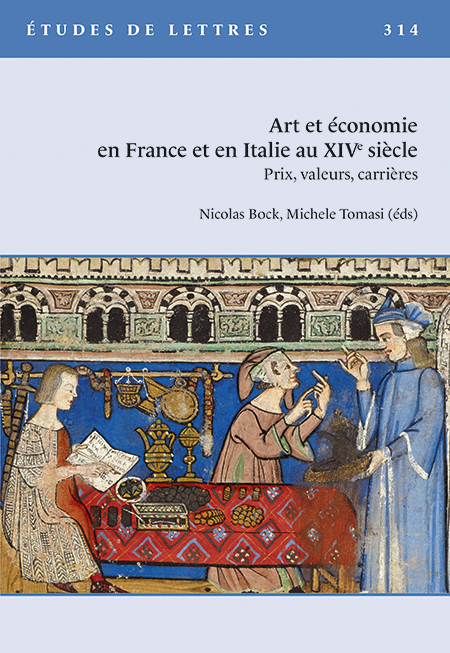
Ce volume invite à se jouer des frontières disciplinaires et à s’aventurer sur un terrain encore trop peu exploré pour le XIVe siècle, l’un des plus grands siècles de l’art européen.
Les contributions réunies ici éclairent les rapports entre art, économie et société à l’aide de quelques études de cas, en adoptant différentes démarches: de la microanalyse de la production d’un seul artiste à la réflexion sur l’organisation de toute la chaîne de valeur, de la fabrication jusqu’aux réseaux de commerce et d’échange de marchandises artistiques. De Giotto à l’orfèvre parisien Jean le Braelier, d’Avignon à Naples en passant par Majorque, en abordant des tableaux, des monuments funéraires, des fresques, des lambrissages en bois précieux et même un faldistoire royal, les auteurs s’interrogent sur l’impact des facteurs économiques sur la création artistique.
Ces articles ouvrent ainsi le débat en montrant l’intérêt d’enquêtes qui osent franchir les limites entre histoire de l’art, histoire sociale et histoire économique, afin d’appréhender de manière globale les conditions d’élaboration et de réception des œuvres.
Étienne Anheim — The consumption of Italian paintings in Avignon in the 14th century (p. 23-42)
The relocation of the Papal Court from Italy to France at the beginning of the 14th century and its installation in Avignon for several decades from 1309 gives the opportunity to reflect on the practices of consumption of Italian paintings outside the peninsula. We are first dealing with the construction of an artistic labor market based on the mobility of artists, and then with the construction of a market for works of art, very gradually established, thanks to the new mobility of paintings. Avignon thus played the role of a laboratory for the diffusion of Italian painting in late medieval Europe, both from an aesthetic and economic point of view.
Damien Cerutti — Giotto & Cie. Stratégies entrepreneuriales et coûts décoratifs de chapelles funéraires dans la Florence des années 1330 (p. 43-72)
À la fin de sa carrière, Giotto déléguait à des collaborateurs qualifiés de son atelier florentin l’exécution de fresques, dans certains chantiers dont il avait la responsabilité. Cette stratégie entrepreneuriale permettait à Giotto de garder – grâce à l’autonomie relative de son atelier – une forme de contrôle sur le segment supérieur du marché artistique florentin, à une époque où ses nombreuses activités à l’extérieur de la Toscane ne lui permettaient plus de s’impliquer directement dans la réalisation de fresques. La démonstration est en partie basée sur des calculs de prix des différents éléments décoratifs des chapelles funéraires de l’époque.
Paola Vitolo — Spese della morte : investimenti per l’aldilà (e per l’al di qua) e pratica artistica (Italia, XIV secolo). Studi sull’economia funeraria, primi appunti (p. 73-94)
L’investimento nella costruzione di cappelle funerarie, con i relativi arredi, crebbe nel corso del Basso Medioevo con il fine di rendere stabile e duratura la celebrazione della memoria personale e dinastica dei defunti. Accanto allo studio degli elementi di stile e di iconografia, la valutazione dell’entità della spesa potrebbe aprire interessanti squarci sull’attività delle botteghe, sull’organizzazione dei cantieri, sulla circolazione dei modelli, ma anche sul valore riconosciuto al lavoro dell’artista e più in generale al significato simbolico attribuito nel Medioevo a questi prodotti. Attraverso l’analisi di alcuni casi di studio, il saggio presenta alcune riflessioni sul tema, quali esito di una prima esplorazione dell’argomento.
Doron Bauer — La peste noire et la rémunération des peintres au Royaume de Majorque (p. 95-110)
L’examen des paiements versés aux peintres à Majorque tout au long du XIVe siècle révèle deux tendances importantes. Premièrement, le prix des retables a augmenté de manière spectaculaire, passant d’une dizaine de libras avant la peste noire à plus de 100 libras par la suite. Deuxièmement, les peintres ont cessé de recevoir un salaire journalier et ont été payés à la commande. Réunis, ces deux changements ont eu de profondes répercussions. Après la peste noire, les peintres pouvaient accéder à plus de richesse. Ils se distinguent également d’autres artisans, comme les charpentiers, par la façon dont le prix de leur travail était établi. Ces développements ont ouvert la voie à une plus grande mobilité sociale et à une reconfiguration du statut du peintre et de son art.
Giampaolo Distefano — Sur Jean le Braelier, « aurifabro Parisiensi » et « varlet de chambre du Roy » Jean le Bon : art et économie (p. 111-134)
À Paris, au milieu du XIVe siècle, dans un moment de transformation en ce qui concerne le travail des métaux précieux, l’orfèvre Jean le Braelier, qui fut sans doute aussi ivoirier, représente un cas exemplaire d’artiste oeuvrant auprès d’une cour princière. Une documentation abondante décrit en détail ses activités, permettant de reconstruire sa carrière d’artiste, ainsi que son rôle dans la vie économique de la cour de Jean le Bon.
Alain Salamagne — Le bois dit de Danemarche dans le décor de la demeure aristocratique vers 1400 (p. 135-154)
Le rôle du lambrissage dans le décor intérieur de la demeure aristocratique reste encore peu connu. Pourtant les comptabilités, et quelques ensembles conservés comme celui du château royal de Vincennes, montrent l’importance qui était accordée à ces décors comme une marque du statut aristocratique de la demeure noble. Certains lambris dits de Illande, Ollande ou Danemarche, termes qui renvoient à leur origine géographique, la Livonie, ou à leur transit commercial par la Hollande ou le Danemark, étaient particulièrement recherchés. Si ce type de décor fut mis en oeuvre dès le début du XIVe siècle dans la demeure aristocratique, le relais des chantiers royaux après 1350 – probablement depuis les régions les plus septentrionales –, semble avoir été essentiel dans sa réception puis sa diffusion dans les logis princiers, particulièrement en Bourgogne, Berry et Poitou.
Michele Tomasi — Prix des oeuvres et appréciation esthétique à la fin du XIVe siècle en France: quelques remarques à partir des chroniques de Jean Froissart et Michel Pintoin (p. 155-175)
Alors qu’aujourd’hui il est souvent de bon ton de ne pas évoquer de «basses» questions d’argent au sujet de l’art, l’attitude est tout autre au Moyen Âge. Cet article veut en donner une preuve en s’attachant à montrer comment la question du prix des oeuvres, somptuaires notamment, est abordée par deux chroniqueurs de la fin du Moyen Âge, Jean Froissart et Michel Pintoin. Ces deux auteurs permettent de restituer le regard porté sur les biens de luxe par l’aristocratie en France à la fin du XIVe siècle. La lecture de leurs textes permet d’apprécier à quel point la valeur monétaire de certains objets était indissociable non seulement de leur fonction sociale, mais aussi de leur appréciation esthétique.
Informations pratiques :
Art et économie en France et en Italie au XIVe siècle. Prix, valeurs, carrières, éd. Nicolas Bock et Michele Tomasi, Lausanne, 2020. ISBN : ISBN 978-2-940331-75-8. 22 CHF / 20 €
L’Institut des langues et littératures romanes de l’Université de Zurich organise la onzième édition du Dies Romanicus Turicensis. Cet événement s’adresse en priorité aux jeunes chercheurs spécialisés dans les disciplines romanes (linguistique, littérature et études culturelles) et offre la possibilité d’échanger sur le plan scientifique dans le cadre d’un colloque international.
La situation sanitaire actuelle liée à la propagation de l’épidémie du coronavirus a entraîné de profondes transformations dans les différentes formes de relations que nous entretenons avec autrui. La distanciation sociale comme manifestation du (non) contact ou de l’absence constitue un défi de taille dans le champ académique des sciences humaines et sociales. La consolidation des nouveaux espaces de circulation et d’échanges scientifiques, que l’on observe notamment dans les études romanes, permet l’émergence de nouvelles méthodes et perspectives dans le domaine de la linguistique, de la littérature et des études culturelles.
Dans son texte « La invención de una epidemia » (« L’invention d’une épidémie »), Giorgio Agamben s’interroge sur les répercussions sociales de la Covid-19 et met en garde contre le déclin des activités productives et des échanges culturels, qui pourrait s’expliquer par « la peur d’être contaminé au contact des autres » (« el temor a contagiarse de otros » (2020 : 17). Les divers clivages susceptibles d’en découler et la manière dont ils peuvent être surmontés exigent une analyse rigoureuse des pratiques de communication orales, textuelles et matérielles, examinant dans quelle mesure ce lien à distance peut être abordé dans les espaces traditionnels de convergence et de contact comme celui de la Romania. À la lumière de cette constellation critique et à partir des concepts clés de l’absence et de la présence (Absentia et Praesentia), la onzième édition du Dies Romanicus Turicensis invite les jeunes chercheurs à envoyer leurs propositions de contribution portant sur des thèmes récurrents tels que le contact et la créativité linguistiques, l’appropriation et la contamination textuelles, l’inter- et la transmédialité, mais aussi des contributions sur des phénomènes plus récents impliquant une interaction virtuelle (langage télématique, littérature numérique et podcasts).
Thèmes de recherche dans le domaine de la linguistique :
La présence ou l’absence d’un ou de plusieurs traits phonétiques, morphologiques ou syntaxiques (et influence sur le système) ;
L’étude de variétés linguistiques qui n’ont pas été examinées ni décrites, et pour lesquelles on ne dispose pas encore de grammaires ni de dictionnaires, contrairement à celles qui ont déjà fait l’objet de descriptions exhaustives et documentées (comparaison de traits déjà traités avec ceux pour lesquels une description est en attente) ;
La présence ou l’absence de variation et de normes linguistiques, de langues par élaboration ;
L’étude des contacts linguistiques et l’importance de la présence ou de l’absence d’un ou de plusieurs traits pour déterminer leur évolution ;
L’étude linguistique diachronique et synchronique et la disparition ou l’apparition de traits structurels dans une variété ;
L’importance de la présence ou de l’absence dans la reconstruction étymologique et dans la grammaire historique comparative et reconstructive;
L’effet du déclin ou de l’apparition de nouvelles formes sur le lexique général d’une langue ; créativité linguistique (particulièrement dans un contexte bilingue ou multilingue) ;
L’impact de la présence ou de l’absence d’un signifiant dans le domaine de la pragmatique ;
L’influence de la pandémie sur la langue (la signification des nouvelles mesures de protection pour la recherche linguistique et les propositions pour de nouveaux modèles de recherche ; la refonctionnalisation d’éléments lexicaux; la création de nouvelles unités linguistiques; les nouvelles technologies qui favorisent les interactions intersubjectives, de même que les implications de telles technologies, etc.).
Thèmes de recherche dans le domaine de la littérature et des études culturelles :
L’étude de l’intertextualité et des phénomènes de réception (types d’interaction avec l’auctoritas ; présence et absence de modèles; théorie et pratique de l’aemulatio et de l’imitatio; etc.) ;
Le thème du silence et les techniques rhétoriques qui lui sont associées (praeteritio, ellipses narratives, phénomènes d’accélération, ineffable, deus ex machina, etc.) et inversement de l’éloquence ;
La présence et l’absence sur le plan narratif (différents degrés de présence ou d’absence dans le texte d’un auteur réel ou implicite, d’un narrateur, et différentes combinaisons possibles) et l’impact éditorial (par exemple dans le cas d’Elena Ferrante) ;
La présence et l’absence en tant que thèmes littéraires (la disparition, le deuil, la nostalgie, la méditation, le motif romantique de la solitude, la dualité de la vie et de la mort, l’invisibilité des personnages, etc.) ;
L’écriture autobiographique et l’autofiction (différents degrés de présence/absence dans les événements narrés et à partir d’eux et décalage éventuel entre événements vécus et événements narrés) ;
La construction du canon littéraire (intégrations et exclusions) ;
La reconstruction philologique ;
La matérialité du texte (techniques et choix typographiques de mise en page, rapport image-texte, ponctuation, etc.) ;
L’absence et la présence d’acteurs et de structures culturels (maisons d’édition, revues spécialisées, intermédiaires intellectuels, traducteurs) au sein du système littéraire et répercussions sur la production littéraire ;
La relation entre oralité, réalité extratextuelle et “médiation” de l’écriture et réflexion sur le rapport entre le mot et la vérité ;
La théorie des mondes possibles en littérature (Marie-Laure Ryan, Thomas Pavel, Lubomir Doložel) et la complétude et l’incomplétude des mondes fictionnels, comment ils sont traités dans la critique littéraire (rapport entre l’univers référentiel et fictionnel ; opposition entre le monde fictionnel et le texte, qui essaye de le décrire, etc.);
Le transvestisme comme ressource d’écriture et de représentation et comme présence dissimulée ;
Le souvenir et la mémoire comme éléments constitutifs, vestiges et traces dans la littérature.
Les propositions de contributions doivent être envoyées sous la forme de résumés anonymes (comportant un titre, un résumé de 2000 signes maximum ainsi qu’une bibliographie) jusqu’au 20 février 2021 à l’adresse suivante : diesrom@rom.uzh.ch. Le nom et l’affiliation de l’auteur/e ainsi que le titre de la contribution devront figurer dans le courriel d’accompagnement. Les présentations dureront vingt minutes et seront suivies d’une discussion de dix minutes en séance plénière. Les contributions doivent être originales et ne peuvent pas avoir fait l’objet d’une publication. Le comité d’organisation sélectionnera les contributions qualitativement convaincantes en vue de les publier.
Comité d’organisation Martina Albertini, Larissa Binder, Stefano Bragato, Marguerite Dallas, Dayron Carrillo-Morell, Charlotte Defrance, Bárbara Garrido Sánchez-Andrade, Alberto Giudici, Antony Kussmaul, Stefano Negrinelli
Les Fasti Ecclesiae Gallicanae présentent, pour chaque diocèse de France entre 1200 et 1500 :
des notices biographiques des évêques, auxiliaires de l’évêque, dignitaires et chanoines prébendés du chapitre cathédral,
des tables chronologiques pour les évêques, leurs auxiliaires, les dignitaires et les chanoines du chapitre cathédral,
une présentation des institutions diocésaines et des sources, avec une bibliographie,
quelques notices faisant le point sur les aspects particuliers de chaque diocèse.
Les notices biographiques offertes par ce nouveau volume concernent les trente-trois prélats élevés sur le siège épiscopal d’Évreux, et près de 700 auxiliaires de l’évêque, dignitaires et chanoines identifiés pour la période considérée dans un chapitre relativement modeste. Le volume propose également des synthèses sur plusieurs thèmes en relation étroite avec le clergé de l’Église d’Évreux : la cathédrale et son environnement dans la cité, le quartier cathédral dans la ville médiévale, les représentations des évêques et des chanoines dans les verrières de cet édifice et enfin ses stalles.
Les Fasti Ecclesiae Gallicanae,ce sont aussi des chercheurs, débutants ou confirmés, rassemblés dans une équipe qui se réunit une fois par an, ainsi qu’une base de données réunissant désormais 21 000 enregistrements d’individus, enrichie chaque jour, qui doit être mise en ligne et diffusée sur le site Brepolis de Brepols Publishers. L’équipe dispose d’un site web offrant de nombreuses informations sur ses activités : https://fasti.huma-num.fr/
Informations pratiques :
Fasti Ecclesiae Gallicanae : Diocèse d’Évreux, éd. Vincent Tabbagh, Turnhotu, Brepols, 2020 (Fasti Ecclesiae Gallicanae, 20). XII+496 p., 31 b/w ill., 156 x 234 mm. ISBN: 978-2-503-59136-0. Prix : 70 euros.
Dans le cadre du programme Fil_IAM, un financement de 36 mois est réservé à la conduite d’une recherche doctorale sur les questions relatives aux « vices » et « défauts » des corps dans les productions normatives médiévales.
Dates prévisionnelles du contrat : 1e avril 2021-31 mars 2024
Sujet : Vitium, defectus, macula. Le corps « incapable » dans la pensée juridique de l’Occident médiéval latin (XIIe-XVe s.)
Pour structurer la réflexion sur les régimes de filiations « à défaut » et les enjeux normatifs et sociaux à penser et vivre le handicap juridico-social et/ou physique, un séminaire « Corps empêchés » est programmé à raison de trois séances par an pendant le temps du contrat doctoral. Ainsi, le ou la doctorant.e bénéficiera de l’animation de la recherche rendue possible par ces rencontres pluridisciplinaires régulières. Il.elle pourra également être associé.e aux actions de recherche engagées dans les autres axes du programme Fil_IAM (https://anr.fr/Projet-ANR-19-CE41-0004).
Le ou la doctorante sera par ailleurs membre à part entière du laboratoire TEMOS et participera aux différentes activités de l’unité, spécialement au sein de l’axe 1 : Enfance, Genre, Traces de soi (https://temos.cnrs.fr/le-laboratoire/).
Organisé les 18, 19 et 20 novembre 2021 à la MSH de Clermont-Ferrand par le CELIS et le Centre de recherches André Piganiol-Présence de l’Antiquité sous la direction de Fabrice GALTIER et Rémy POIGNAULT
Le colloque Présence de Juvénal se situe dans le sillage des précédentes réunions scientifiques issues de la collaboration établie depuis longtemps entre le CELIS et le centre André Piganiol-Présence de l’Antiquité, dont l’objectif est la réception de l’Antiquité.
Il s’agit, en l’occurrence, d’explorer la réception des Satires de Juvénal, œuvre dont le rayonnement et l’influence suscitent depuis quelques années un regain d’attention. En 2005, le Cambridge Companion to Roman Satire en réinterrogeait déjà certains aspects. Mais l’intérêt pour cette question s’est accru depuis, comme en témoignent, en Italie, le colloque qui s’est tenu en 2014, Giovenale tra storia, poesia e ideologia, dont les actes ont été publiés par A. Stramaglia, S. Grazzini et G. Dimatteo (Berlin/Boston, De Gruyter, 2016) et celui qui est prévu à Aquino en mars 2021 sur La fortuna di Giovenale nella letteratura europea, centré surtout sur la littérature italienne, en France, la journée d’études organisée par H. Casanova-Robin et S. Grazzini en mars 2019 sur « La satire de Juvénal et sa postérité », et, tout récemment, le colloque « De la satire à la juvénale : formes et enjeux de la satire chez Rétif de la Bretonne », qui soulignait la filiation entre le satiriste romain et l’auteur français. Cependant, ce vaste champ d’exploration n’a jusqu’ici fait l’objet d’aucune véritable enquête d’ampleur. L’angle d’approche choisi pour la mener à bien concerne, au-delà du seul genre satirique, l’apport de Juvénal à l’expression littéraire des réalités, thèmes ou idées qu’il entend représenter et la manière dont cet apport a été perçu, traduit ou assimilé dans la culture occidentale.
Les principaux axes de réflexion, à titre indicatif, sont les suivants :
– Juvénal et la satire : son rapport au genre et à ses prédécesseurs (Théophraste, Lucilius, Horace, Perse…) ; son influence sur les auteurs de satires (Mathurin Régnier, Théophile de Viau, Boileau, Johnson…)
– Les apports de Juvénal à l’écriture satirique dans l’Antiquité et au-delà, sa réception et son influence : Lucien et la seconde sophistique, les textes satiriques chrétiens (Tertullien, Commodien, Arnobe, Lactance, Prudence, Claudien…), Agrippa d’Aubigné, La Bruyère, Quevedo, Rétif de La Bretonne, Victor Hugo, Léon Bloy, Barbey d’Aurevilly, Octave Mirbeau, Paul Léautaud…
– La satire de Juvénal au carrefour des genres littéraires : épopée (Juvénal et Virgile…) ; histoire (Juvénal et Tacite…) ; philosophie ; rhétorique ; théâtre…
– Juvénal et l’empire romain : . la réalité de l’empire au prisme du regard du satiriste . Juvénal inspirateur d’images de l’empire romain dans la littérature et les arts à l’époque moderne et contemporaine
– Éditions, traductions, gloses de Juvénal… Comité scientifique – Frédéric Duplessis, ENS de Lyon – Fabrice Galtier, Université Clermont Auvergne, CELIS – Stefano Grazzini, Université de Salerne – Catherine Notter, Université de Strasbourg – Rémy Poignault, Université Clermont Auvergne, CELIS – Antonio Stramaglia, Université de Bari
Les actes du colloque feront l’objet d’une publication dans la collection « Caesarodunum » du Centre de recherches André Piganiol-Présence de l’Antiquité.
Prière d’adresser le titre de votre proposition de communication avec un bref résumé à fabrice.galtier@orange.fr et remy.poignault1@orange.fr avant le 28 février 2021.
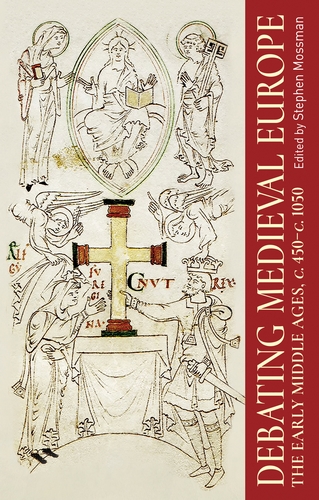
Debating medieval Europe serves as an entry point for studying and teaching medieval history. Rather than simply presenting foundational knowledge or introducing sources, it provides the reader with frameworks for understanding the distinctive historiography of the period, digging beneath the historical accounts provided by other textbooks to expose the contested foundations of apparently settled narratives. It opens a space for discussion and debate, as well as providing essential context for the sometimes overwhelming abundance of specialist scholarship.
Volume I addresses the early Middle Ages, covering the period c. 450-c. 1050. The chapters are organised chronologically, and cover such topics as the Carolingian Order, England and the ‘Atlantic Archipelago’, the Vikings and Ottonian Germany. It features a highly distinguished selection of medieval historians, including Paul Fouracre and Janet L. Nelson.
Stephen Mossman is Senior Lecturer in Medieval History at the University of Manchester
Table des matières :
How to use this book: a guide for students – Stephen Mossman 1 The transformation of the Roman world, c. 450-c. 550 – Craig H. Caldwell III 2 The Successor States, 550-750 – Paul Fouracre 3 The Carolingian moment – Janet L. Nelson 4 Translatio imperii: Ottonian Germany – T. J. H. McCarthy 5 Feudal revolution? Transformations around the year 1000 – Paul Fouracre 6 Vikings and the ‘age of iron’ in the North Sea – Charles Insley 7 Early medieval Spain, 800-1100: the Christian kingdoms and al-Andalus – Robert Portass 8 England and the Atlantic Archipelago from Alfred to the Norman Conquest – Charles Insley 9 The Norman world, c. 1000-c. 1100 – Paul Oldfield Index
Informations pratiques :
Debating medieval Europe. The early Middle Ages, c. 450–c. 1050, ed. Stephen Mossman, Manchester University Press, 2020. 320 p. ISBN : 978-1-5261-1733-5. Prix : 18,99 £.
Avec le soutien du FNRS, du CRHiDI (UCLouvain – Saint-Louis, Bruxelles), d'INCAL (UCLouvain), de PraME (UNamur), de sociAMM (ULB) et de Transitions (ULiège)








Vous devez être connecté pour poster un commentaire.