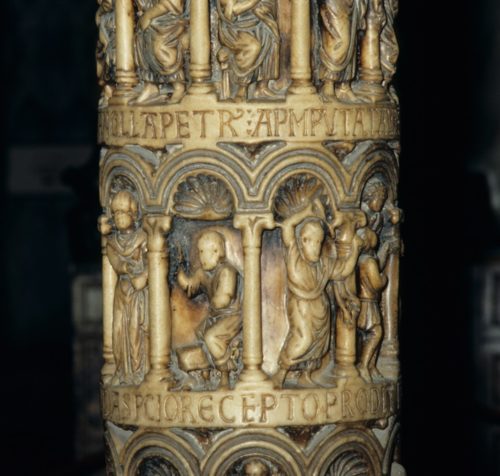
Podcast – Maria Villano, « Courts-circuits temporels: l’ajout d’inscriptions sur objets remployés. Le cas des colonnes du ciborium de San Marco à Venise »

Maria Villano (docteure  en histoire de l’art, Università Ca’ Foscari Venise/Université de Poitiers), Courts-circuits temporels: l’ajout d’inscriptions sur objets remployés. Le cas des colonnes du ciborium de San Marco à Venise .

Accès : ici

Source : EPIMED

Publié dans Le réseau | Laisser un commentaire

Podcast – Van Eyck. An optical Revolution

Now that the exhibition is unfortunately closed due to the measures taken against COVID-19, we would like to bring the Van Eyck experience to art lovers at home.

360° virtual tour

Visit Flanders and the MSK joined forces with Belgian virtual reality company Poppr, to develop an online 360° virtual tour of the Van Eyck galleries.

Enter the largest Van Eyck exhibition ever directly from the comfort of your home! While scrolling through the 360° images, discover 13 museum rooms with over 120 masterpieces. The audio guide for adults or children is your personal guide through the exhibition.

Source : Van Eyck 2020

Publié dans Podcast | Laisser un commentaire

Podcast – Nicolas Michel, « Cassiodore à l’Université de Cracovie (1430-1470) : autour de Jean de Dabrowka et de ses étudiants »

Séminaire web animé par Nicolas Michel (UNamur)
Cassiodore à l’Université de Cracovie (1430-1470) : autour de Jean de Dabrowka et de ses étudiants
8 avril 2020

Source : YouTube — H37

Publié dans Podcast | Laisser un commentaire

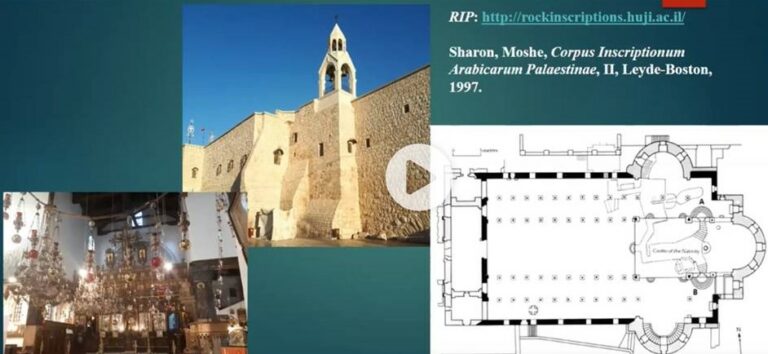
Podcast – Anna Lagaron, « Étude préliminaire des graffiti arabes de la Nativité et des routes de pèlerinages au Sinaï »

Anna Lagaron (doctorante Aix-Marseille Université/IREMAM), Étude préliminaire des graffiti arabes de la Nativité et des routes de pèlerinages au Sinaï

Accès : ici

Source : EPIMED

Publié dans Podcast | Laisser un commentaire

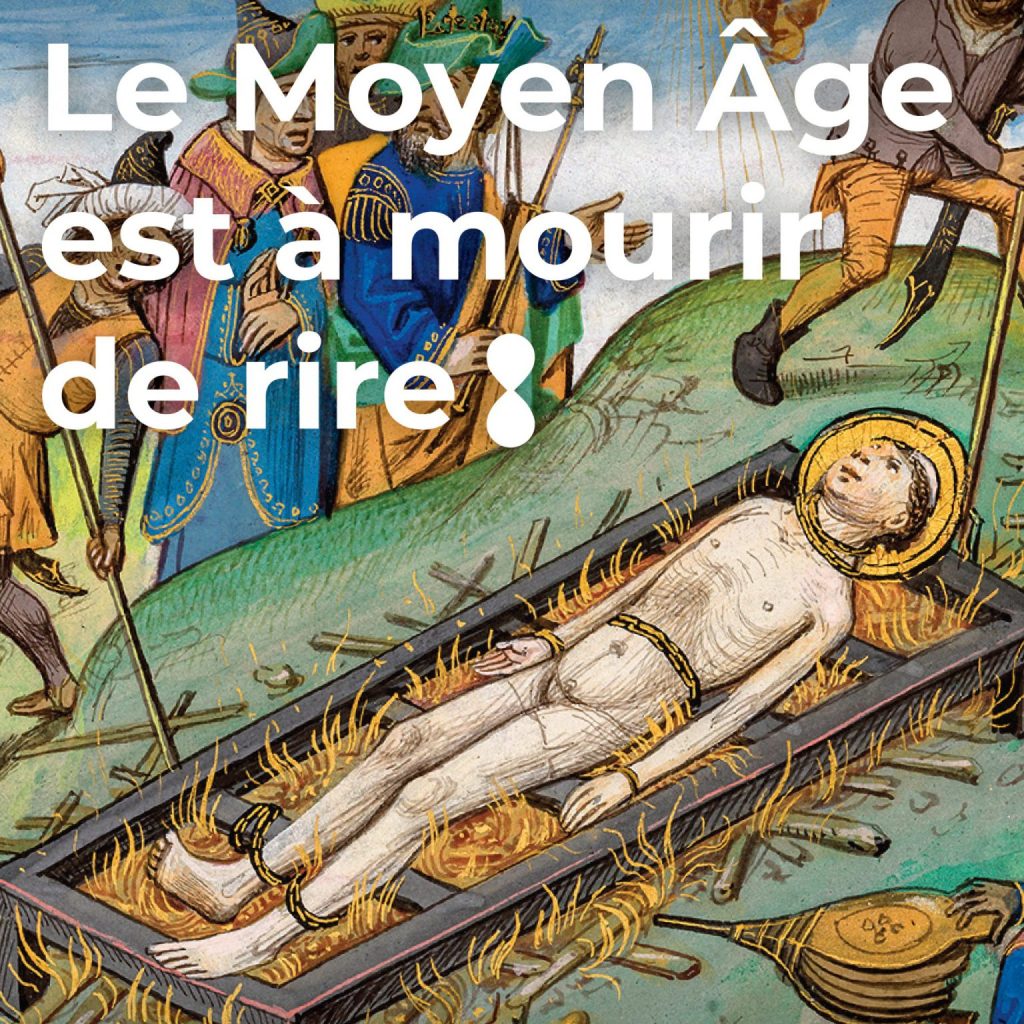
Exposition – Le Moyen Âge est à mourir de rire

Bruxelles, Bibliothèque royale
18 septembre — 30 juin 2020

On associe souvent l’époque médiévale à une période sombre et austère. Guerre, famine, épidémies sont en effet trois fléaux bien présents. Et la religion chrétienne impose ses normes morales.

Mais les manuscrits nous transmettent l’image d’une autre facette de la société médiévale, vivante et drôle. À travers les textes et les images mais aussi un espace particulier : les marges. Les bordures des pages sont truffées d’éléments très drôles, parfois satiriques, juste à côté de textes souvent religieux. On peut légitimement se demander quelle partie de la page regardaient réellement lecteurs et lectrices…

En marge

À partir de 1250 environ, des « drôleries » envahissent les marges des manuscrits du Nord de l’Europe. Des animaux, monstres, hybrides, etc. s’accrochent aux lettrines ou gesticulent autour du texte. Des saynètes inspirées de la culture populaire se glissent également çà et là. Avec ces marginalia, les miniaturistes ont trouvé un espace d’expression et de liberté. Et le lecteur devient aussi spectateur.

Le monde à l’envers

Ces marges sont notamment le lieu d’un renversement du monde, un mundus inversus où l’ordre des choses se dérègle : le lapin poursuit le chasseur, les soldats en armes fuient devant des escargots et l’âne enseigne les Écritures. Des animaux humanisés vont aussi copier et caricaturer l’humain et ses travers. Toutes les catégories sociales, ou presque, deviennent l’objet de moquerie. Et il n’est pas rare que les saynètes soient équivoques voire carrément grivoises.

Tout un roman

De nombreux textes révèlent aussi un Moyen Âge vivant et fantaisiste. Le Roman de Renart est un des textes les plus lus, et racontés, du Moyen Âge. Emblématique de ces animaux tournant l’humain en dérision, il marque les esprits au point que son héros, Renart, laissera son nom à l’animal qu’il incarne (nommé goupil auparavant). Les tours qu’il joue à Ysengrin le loup, Chantecler le coq ou Tiécelin le corbeau pimentent souvent les marges des manuscrits.

Le succès des romans chevaleresques dénote aussi un goût affirmé pour une littérature « légère ». Amour, combats épiques, tache de naissance, coups montés, philtre magique, traîtres sans scrupules et un zeste d’érotisme : les ingrédients du Roman de Gérart de Nevers auraient de quoi séduire un producteur de série contemporaine ! Pourtant, c’est bien d’un manuscrit copié au XVe siècle qu’il s’agit.

Explorez la fantaisie des marges et des histoires médiévales dès le 18 septembre au KBR museum.

Jusqu’à l’ouverture du musée, nous vous emmenons à l’époque des ducs de Bourgogne à travers des détails et anecdotes tirés des manuscrits de leur prestigieuse Librairie.

Envie de recevoir ces savoirs chaque semaine directement dans votre boite mail ? Alors, inscrivez-vous à la newsletter de KBR !

Source : Bibliothèque royale de Belgique

Publié dans Exposition | Laisser un commentaire

Offre d’emploi – Collectie-expert Boekgeschiedenis (KULeuven)

Binnen KU Leuven Bibliotheken beheert Bijzondere Collecties een belangrijk deel van de bibliothecaire erfgoedcollecties (manuscripten, oude drukken, grafiek en andere kostbare werken). Daarnaast beheert Bijzondere Collecties een referentiecollectie met circa 75.000 titels over boekgeschiedenis en grafiek. Website van de eenheid

Functie

Bijzondere Collecties is uniek in Europa als expertisecentrum voor de geschiedenis van het handschrift, het gedrukte boek en grafiek. Als collectie-expertboekgeschiedenis ben je, in overleg met de conservatoren, verantwoordelijk voor de referentiecollectie. Je staat in voor de uitbouw en het beheer van deze collectie, de communicatie erover en een belangrijk deel van de dienstverlening in de leeszalen.

1. Collectie

  • Je staat in voor de opbouw, aanvulling en uitbreiding van de referentiecollectie door het bijhouden van uitgeverscatalogi, recensies en bibliografische opzoekingen. Je doet dit in overleg met de conservatoren en de collega’s van andere bibliotheken.
  • Je beheert het collectiebudget dat is toegewezen voor de uitbouw van de collectie.
  • Je zorgt voor een kwalitatieve ontsluiting van de collectie (toekennen van een relevant plaatskenmerk en onderwerpsontsluiting in UDC).

2. Communicatie

  • Je verzorgt de communicatie over de collecties in nieuwsbrieven en op de website. Je bent altijd op zoek naar mogelijkheden om de collectie een bredere zichtbaarheid te geven.

3. Dienstverlening

  • Je bent verschillende dagdelen per week verantwoordelijk voor de permanentie in Bijzondere Collecties en de eerstelijnszorg die hieraan verbonden is (assistentie aan lezers, terugplaatsen van boeken en zorgen voor de orde en netheid in de leeszalen).
  • Je biedt onderzoeks- en onderwijsondersteuning gekoppeld aan de collecties, bijvoorbeeld door het geven van informatiesessies en rondleidingen.
  • Je bent het aanspreekpunt voor inhoudelijke vragen over de collectie boekgeschiedenis.

Voor al deze taken als collectie-expert boekgeschiedenis rapporteer je aan het hoofd van Bijzondere Collecties.

Profiel

  • Je hebt een masterdiploma of bent gelijkwaardig door ervaring. Een boekhistorische specialisatie en een basiskennis van Latijn zijn pluspunten. Werkervaring in een wetenschappelijke bibliotheek en/of een bijkomende bibliotheekopleiding strekken tot aanbeveling.
  • Je hebt kennis van het bibliotheeksysteem Alma en het indelings- en classificatieschema UDC, of je bent enthousiast om je daarin te bekwamen.
  • Je bent vertrouwd met informatica en softwarepakketten als Microsoft Office. Je kan goed uit de voeten met diverse software rond design en communicatie (zoals Adobe Indesign en Intuiface) of je bent enthousiast om je daarin te bekwamen.
  • Je beschikt over uitstekende mondelinge en schriftelijke communicatievaardigheden in het Nederlands en het Engels en een goede kennis van het Frans.
  • Je bent een teamspeler die overlegt en goed samenwerkt met collega’s.
  • Je bent klantgericht, nauwgezet, ondernemend en vernieuwingsgericht. Je hebt zin voor orde, organisatie, innovatie en kwaliteit.
  • Je bent bereid om je permanent bij te scholen.

Aanbod

Wij bieden een voltijdse tewerkstelling van onbepaalde duur. De functie is gekoppeld aan een salaris in graad 6 of graad 7.  Graad 8 is uitzonderlijk weggelegd voor kandidaten die reeds van bij de start, omwille van doorgedreven kennis en ervaring, extra verantwoordelijkheden kunnen opnemen. Hierbij bieden wij een kosteloze hospitalisatie- en groepsverzekering.  Meer informatie over het salarispakket kan je terugvinden op de jobsite.  

Interesse?

Meer informatie is te verkrijgen bij mevrouw Elke Herinckx, tel.: +32 16 19 40 36. Solliciteren voor deze vacature kan tot en met 31/08/2020 via onze online sollicitatietoepassing KU Leuven wil een omgeving creëren waarin alle talenten maximaal tot ontplooiing kunnen komen, ongeacht gender, leeftijd, culturele herkomst, nationaliteit of functiebeperking. Hebt u vragen in verband met toegankelijkheid of ondersteuningsmogelijkheden, dan kan u ons contacteren via diversiteit.HR@kuleuven.be.

Source : KULeuven

Publié dans Le réseau | Laisser un commentaire

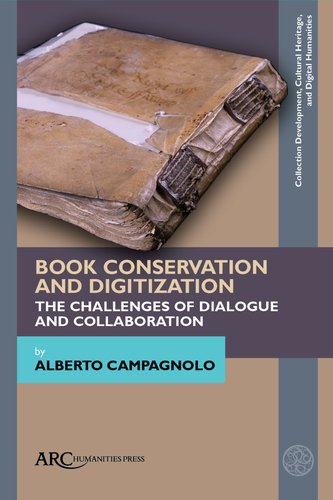
Publication – Alberto Campagnolo, « Book Conservation and Digitization: The Challenges of Dialogue and Collaboration »

The successful transmediation of books and documents through digitization requires the synergetic partnership of many professional figures, that have what may sometimes appear as contrasting goals at heart. On one side, there are those who look after the physical objects and strive to preserve them for future generations, and on the other those involved in the digitization of the objects, the information that they contain, and the management of the digital data. These complementary activities are generally considered as separate and when the current literature addresses both fields, it does so strictly within technical reports and guidelines, concentrating on procedures and optimal workflow, standards, and technical metadata. In particular, more often than not, conservation is presented as ancillary to digitization, with the role of the conservator restricted to the preparation of items for scanning, with no input into the digital product, leading to misunderstanding and clashes of interests. Surveying a variety of projects and approaches to the challenging conservation-digitization balance and fostering a dialogue amongst practitioners, this book aims at demonstrating that a dialogue between apparently contrasting fields not only is possible, but it is in fact desirable and fruitful. Only through the synergetic collaboration of all people involved in the digitization process, conservators included, can cultural digital objects that represent more fully the original objects and their materiality be generated, encouraging and enabling new research and widening the horizons of scholarship.

Table des matières :

Introduction

Part One: Books as Objects and Their Digitization

Chapter 1: Understanding the Artifactual Value of Books
Chapter 2: Conservation and Digitization: A Difficult Balance?

Part Two Conservation and Digitization in Practice

Chapter 3: Conservation towards Large-Scale Digitization at the Vatican Library, Ángela Núñez Gaitán, Head of Conservation, Vatican Apostolic Library
Chapter 4: Large-Scale Digitization at The National Archives, Catt Baum, formerly Senior Conservation Manager—Digitization Services, The National Archives
Chapter 5: British Library/Qatar Foundation Partnership and the Digitization Project: A Case Study about Conservation Processes within Mass Digitization of Library Material, Flavio Marzo, formerly Conservation Manager, British Library/Qatar Foundation Partnership, British Library
Chapter 6: The Digitization of Medieval Western Manuscripts at the Wellcome Library, Stefania Signorello, Conservator, Wellcome Library
Chapter 7: Caring for the Object during Digitization of Written Heritage: The Strategy of the Herzog August Library Wolfenbüttel, Almuth Corbach, Head of Collection Care and Conservation, Herzog August Bibliothek
Chapter 8: The Great Parchment Book Project, Caroline De Stefani, Conservation Studio Manager, and Philippa Smith, Head of Collections, London Metropolitan Archives
Chapter 9: The Development of the Language of Bindings Thesaurus, Athanasios Velios and Nicholas Pickwoad, Directors, Ligatus Research Centre, University of the Arts London
Chapter 10: Spectral Imaging to Aid Preservation and Conservation of Cultural Heritage, Fenella G. France, Chief, Preservation Research and Testing Division, Library of Congress
Chapter 11: Multispectral Imaging for Special Collection Materials, Michael B. Toth, President and Chief Technology Officer, R. B. Toth Associates

Part Three: Conservators and Digitization Experts in Dialogue

Chapter 12: The Digitization of Manuscripts from the Point of View of a Book Conservator, Abigail B. Quandt, Head of Book and Paper Conservation, the Walters Art Museum
Chapter 13: Implementing Advanced Digital Imaging Research in Cultural Heritage: Building Relationships between Conservators and Computational Imaging Scientists, Melissa Terras, Professor of Digital Cultural Heritage, University of Edinburgh
Chapter 14: Coda: Concluding Thoughts on Digital Surrogates

Bibliography

Informations pratiques :

Alberto Campagnolo, Book Conservation and Digitization: The Challenges of Dialogue and Collaboration, Leeds, ARC Humanities Press, 2020. 300 p., 609 ill. ISBN : 9781641890533. Prix : 69 euros.

Source : ARC Humanities

Publié dans Le réseau | Laisser un commentaire

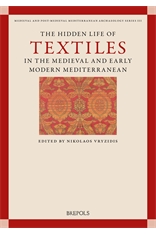
Publication – Nikolaos Vryzidis, « The Hidden Life of Textiles in the Medieval and Early Modern Mediterranean. Contexts and Cross-Cultural Encounters in the Islamic, Latinate and Eastern Christian Worlds »

The book contains published papers of the conference ‘Textiles & Identity in the Medieval and Early Modern Mediterranean: Paradigms of Contexts and Cross-Cultural Exchanges’ of the British School at Athens held at the (Benaki) Museum of Islamic Art in 2016, as well as some new contributions.

The focus in this wide-ranging collection of studies by key scholars in the field is on textiles and their functions in various Mediterranean contexts (and beyond) during medieval and post-medieval times (ca. 10th-19th c.). The scope of the contributions encompasses archaeological, anthropological and art historical perspectives on a great variety of subjects, such as textiles from the Byzantine Empire and the Medieval Islamic World (e.g. Spain, Mamluk Egypt, Seljuk Anatolia), as well as the production and use of textiles in Italy, the Ottoman Empire, Armenia and Ethiopia. The volume offers a state-of-the-art of an often still hardly known area of study of textiles as historical and cultural sources of information, which makes it essential reading for scholars and a larger audience alike.

The book includes contributions by Laura Rodríguez Peinado, Ana Cabrera-Lafuente, Avinoam Shalem, Scott Redford, Maria Sardi, Vera-Simone Schulz, Nikolaos Vryzidis, Marielle Martiniani-Reber, Elena Papastavrou, Jacopo Gnisci and Dickran Kouymjian.

Nikolaos Vryzidis received his PhD from SOAS, University of London, with a thesis on Greek clerical costume of the Ottoman period. He has already published on the subject in journals like Byzantine and Modern Greek Studies, Convivium, Iran, JOTSA and Orientalia Christiana Periodica. His research interests are centred on material culture of religion, cross-cultural encounters in the Medieval Mediterranean, and Byzantine-Islamic interchange.

Table des matières :

Laura Rodríguez Peinado (Complutense University of Madrid) & Ana Cabrera-Lafuente (Museo del Traje, Madrid), New approaches in Mediterranean textile studies: Andalusí textiles as case study
Avinoam Shalem (Columbia University), Metaphors we dress with: Medieval poetics about textiles
Scott Redford (SOAS, University of London), Flags of the Seljuk sultanate of Anatolia: Visual and textual evidence|
Maria Sardi (Independent scholar), Foreign influences in Mamluk textiles: The formation of a new aesthetic
Vera-Simone Schulz (Kunsthistorisches Institut in Florenz), Entangled identities: Textiles and the art and architecture of the Apennine peninsula in a trans-Mediterranean perspective
Nikolaos Vryzidis (Aristotle University of Thessaloniki), Animal motifs on Asian textiles used by the Greek Church: A case study of Christian acculturation. Appendix by Dimitris Loupis: Woven Islamic inscriptions
Marielle Martiniani-Reber (Musée d’art et d’histoire, Geneva), Quelques aspects des relations entre productions textiles byzantine et arabe aux Xe-XIe siècles
Elena Papastavrou (Hellenic Ministry of Culture), Osmosis in Ottoman Constantinople: The iconography of Greek church embroidery
Jacopo Gnisci (Oxford University), Ecclesiastic dress in Medieval Ethiopia: Preliminary remarks on the visual evidence
Dickran Kouymjian (California State University, Fresno), Armenian altar curtains: Repository of tradition and artistic innovation
Nikolaos Vryzidis, Concluding remarks: Textiles as units of transmission

Informations pratiques :

Nikolaos Vryzidis, The Hidden Life of Textiles in the Medieval and Early Modern Mediterranean. Contexts and Cross-Cultural Encounters in the Islamic, Latinate and Eastern Christian Worlds, Brepols, 2020 (Medieval and Post-Medieval Mediterranean Archaeology, 3). 304 p., 10 b/w ill. + 105 colour ill., 178 x 254 mm. ISBN: 978-2-503-58773-8. prix : 70 euros.

Source : Brepols

Publié dans Le réseau | Laisser un commentaire

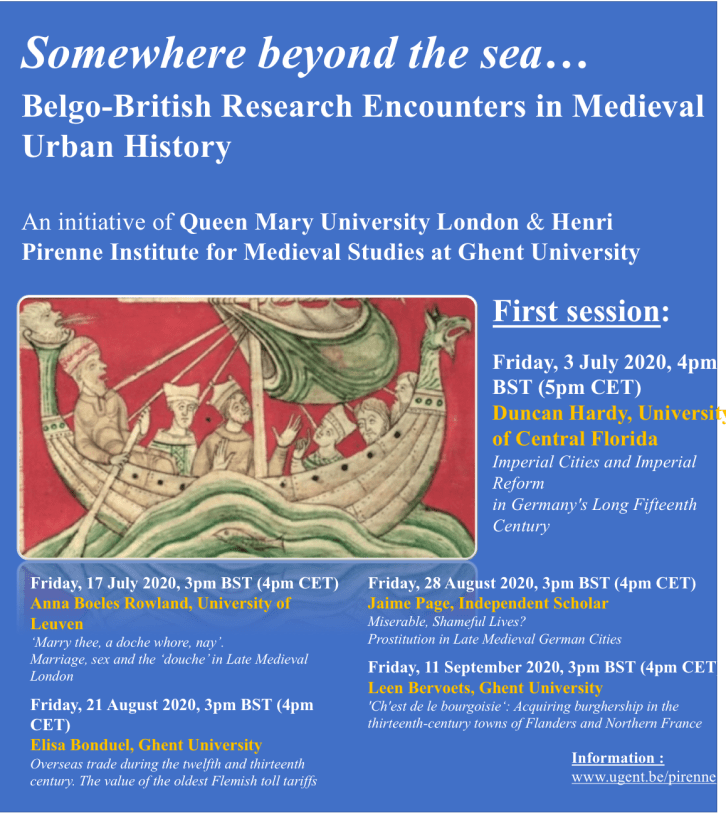
Conférence – Elisa Bonduel, « Overseas trade during the twelfth and thirteenth century. The value of the oldest Flemish toll tariffs »

Friday, 21 August 2020, 3pm BST (4pm CET)
Elisa Bonduel, Ghent University
Overseas trade during the twelfth and thirteenth century. The value of the oldest Flemish toll tariffs

Open Digital Debates & Lectures

An initiative of Queen Mary University London & Henri Pirenne Institute for Medieval Studies at Ghent University

Debates & lectures will take place in an MS TEAMS environment. You do not (necessarily) need an account to get access. The organisers do need to send you an invitation and web-link for easy access, so if you are interested, make yourself

Find more information on the papers and speakers on http://www.ugent.be/pirenne or via Twitter: @MedievalUGent. If you wish to know more about the institute or subscribe to our newsletter, email the coordinator: Stefan.Meysman@UGent.be.

Organisation & access:
Miri Rubin (Queen Mary University London), Marc Boone (Ghent University), Jan Dumolyn (Ghent University)

Source : Universiteit Gent

Publié dans Le réseau | Laisser un commentaire

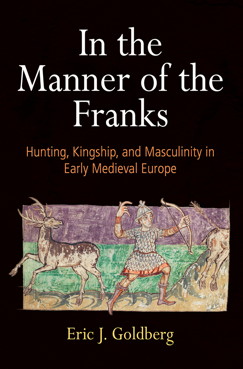
Publication – Eric J. Goldberg, « In the Manner of the Franks Hunting, Kingship, and Masculinity in Early Medieval Europe »

Eric J. Goldberg traces the long history of early medieval hunting from the late Roman Empire to the death of the last Carolingian king, Louis V, in a hunting accident in 987. He focuses chiefly on elite men and the changing role that hunting played in articulating kingship, status, and manhood in the post-Roman world. While hunting was central to elite lifestyles throughout these centuries, the Carolingians significantly altered this aristocratic activity in the later eighth and ninth centuries by making it a key symbol of Frankish kingship and political identity. This new connection emerged under Charlemagne, reached its high point under his son and heir Louis the Pious, and continued under Louis’s immediate successors. Indeed, the emphasis on hunting as a badge of royal power and Frankishness would prove to be among the Carolingians’ most significant and lasting legacies.

Goldberg draws on written sources such as chronicles, law codes, charters, hagiography, and poetry as well as artistic and archaeological evidence to explore the changing nature of early medieval hunting and its connections to politics and society. Featuring more than sixty illustrations of hunting imagery found in mosaics, stone sculpture, metalwork, and illuminated manuscripts, In the Manner of the Franks portrays a vibrant and dynamic culture that encompassed red deer and wild boar hunting, falconry, ritualized behavior, female spectatorship, and complex forms of specialized knowledge that united kings and nobles in a shared political culture, thus locating the origins of courtly hunting in the early Middle Ages.

Eric J. Goldberg is Associate Professor of History at the Massachusetts Institute of Technology.

Table des matières :

Introduction
Chapter 1. Emperors and Elites
Chapter 2. Merovingians and Magnates
Chapter 3. Charlemagne and the Chase
Chapter 4. Louis the Pious and His Legacy
Chapter 5. Hounds and Hawks
Chapter 6. Peasants and Poachers
Chapter 7. Bishops and Boars
Chapter 8. Danger and Death
Conclusion

Notes
Bibliography
Index
Acknowledgments

Informations pratiques :

Eric J. Goldberg, In the Manner of the Franks Hunting, Kingship, and Masculinity in Early Medieval Europe, University of Pennsylvania Press, 2020. 384 pages. ISBN 9780812252354. Prix : $89.95.

Source : UPenn Press

Publié dans Publications | Laisser un commentaire