Offre d’emploi – Assistant Professor (Research): The Solway Fellowship in the History of Christianity (c.400 to c.1800)

Location: Durham
Salary: £33,199 to £39,609 Grade 7
Hours: Full Time
Contract Type: Fixed-Term/Contract
Placed On: 14th February 2019
Closes: 15th April 2019
Job Ref: 016033

Contract Type: Full-time and Fixed term (9 months – 1 October 2019 – 30 June 2020)

Closing Date: 15 April 2019 (12.00 midday)

64

The Solway Fellowship is located in the Institute of Medieval and Early Modern Studies and University College. IMEMS is one of the largest, most diverse and dynamic centres of medieval and early modern studies in the world, bringing together over eighty members of permanent academic staff, plus many postgraduate and postdoctoral researchers, from all three faculties of the University. Archaeology, English, History and Modern Languages are particularly well represented among its members, but the Institute has a specific brief to encourage and support links across disciplines and inter- and multi-disciplinary research initiatives. A generous benefaction to University makes it possible to offer this fellowship in any aspect of the history of Christianity between c.400 and c.1800.

Applications are invited for an Assistant Professor (Research) in any relevant subject area with a particular interest in the history of Christianity c.400–c.1800. The successful applicant will be expected to engage actively in the academic life of both the Institute and the College and to pursue a research project that will lead to high quality research outputs. We particularly welcome applications that bring religion into dialogue with other disciplines, including the sciences, and demonstrate engagement in any of these three areas: (1) projects that focus on our collections and/or our tangible and intangible heritage at the World Heritage Site; (2) projects that complement, or provide stimulating contrasts with, any current research initiatives by IMEMS members; (3) projects which contribute to IMEMS research themes.

Source : Jobs.ac.uk

Publié dans Offre d'emploi | Laisser un commentaire

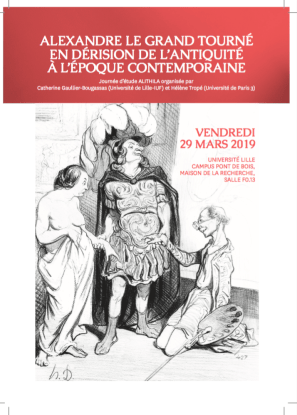
Journée d’étude – Alexandre le Grand tourné en dérision, de l’Antiquité à l’époque contemporaine

29 mars 2019
Université Lille – Campus Pont de Bois, Maison de la recherche, salle F0.13

Organisatrices :
Catherine Gaullier-Bougassas (Université de Lille-IUF)
et Hélène Tropé (Université de Paris 3)

Capture d’écran 2019-03-25 à 22.42.26

Programme :

9h accueil

9h15, ouverture par Catherine Gaullier-Bougassas (Lille-IUF) et Hélène Tropé (Paris III)

9h30-10h, Corinne Jouanno (Caen), « ‘Alexandre le Petit’ : fragments d’un discours de dérision sur Alexandre dans la tradition anecdotique ancienne »
10h-10h30, Diane Cuny (Tours), « Alexandre et Diogène. La dérision au service d’une leçon morale »
10h30-11h, Margaret Bridges (Berne), « Nicolas et Darius : Variantes du rire dans les écrits sur Alexandre au Moyen-Âge anglais »
11h15-11h30 pause

11h30-12h, Samuel Fasquel (Orléans), « Alexandre en Espagne, entre admiration et satire »
12h-12h30, Catherine Dumas (Lille), « L’abaissement d’Alexandre, ou la déconstruction burlesque du héros dans The Rival Queans de Colley Cibber (1710 ?) »
12h30-14h30 déjeuner

14h30-15h, Liliane Picciola (Paris X), « La métamorphose d’Alexandre en Sallemandre : Alexandre ou le Paisan-Roi, de Langendyk/Roullaud (1751) »
15h-15h30, Benoît Abert (Lille), « La Mort de Bucéphale de Pierre Rousseau : la dérision par la discordance »
15h30-15h45 pause

15h45-16h15, Florent Gabaude (Limoges), « Le mythe d’Alexandre le Grand tourné en dérision par Arno Schmidt au lendemain de la Seconde Guerre Mondiale dans Alexander Oder Was ist Wahrheit »
16h15-16h45, Constantin Bobas (Lille), « Fâcheux et/ou facétieux avatars du mythe et de l’histoire dans le film Alexandre le Grand de Theo Angelopoulos »

Discussion, et annonce de la deuxième journée, 7 juin 2019

Publié dans Colloque | Laisser un commentaire

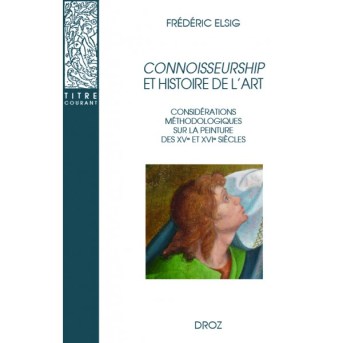
Publication – Frédéric Elsig, « Connoisseurship et histoire de l’art. Considérations méthodologiques sur la peinture des XVe et XVIe siècles »

Dans la sphère académique, l’histoire de l’art traverse une crise d’identité qui gagne peu à peu le monde muséal. À force d’emprunter ses approches à d’autres disciplines des sciences humaines, elle prend le risque de perdre de vue son objet premier, l’œuvre d’art dans sa matérialité, et son outil le plus fondamental : le connoisseurship. Celui-ci consiste à établir l’identité des œuvres, en les replaçant dans la dynamique des parcours individuels et des échanges culturels. Loin de se réduire à un talent inné, il peut et doit être enseigné sur une base théorique permettant l’exercice de l’œil. C’est à cet objectif que répond ce livre. Conçu comme un manuel méthodologique, il vise à responsabiliser les futurs acteurs de notre patrimoine et à leur transmettre des compétences concrètes, pertinentes aussi bien sur le marché de l’art que dans le monde muséal et la sphère académique. Ce faisant, il plaide en faveur d’une histoire de l’art organique, capable de se réinventer sans cesse.

connoisseurship-et-histoire-de-l-art

Table des matières :

AVANT-PROPOS

INTRODUCTION
I
LE NIVEAU DE L’OEUVRE
1. LA DATATION
1.1. Le principe de la datation relative
1.2. Le principe du terminus
2. L’ATTRIBUTION
2.1 Le principe de la stratification
2.2. Le principe de la cohérence
2.3. La question du vocabulaire
Copie et pastiche
Falsification et restauration abusive
II
LE NIVEAU DU STYLE INDIVIDUEL
1. LA RECONSTITUTION D’UNE PERSONNALITÉ
ARTISTIQUE
1.1. Le principe du maillon intermédiaire
1.2. Le principe de l’unité
2. L’IDENTIFICATION D’UNE PERSONNE
HISTORIQUE
2.1. Principe de l’oeuvre de référence
2.2. Principe de la vraisemblance historique
III
LE NIVEAU DU STYLE COLLECTIF
1. LA PÉRIODISATION
1.2. Le principe de la catégorie spécifique

2. LA CONSTRUCTION D’UNE GÉOGRAPHIE
ARTISTIQUE.
2.1. Le principe du foyer
2.2. Le principe du réseau

CONCLUSION

BIBLIOGRAPHIE
INDEX
TABLE DES ILLUSTRATIONS

Informations pratiques :

Frédéric Elsig, Connoisseurship et histoire de l’art. Considérations méthodologiques sur la peinture des XVe et XVIe siècles, Genève, Droz, 2019 (Titre Courant, 41). 168 pages, 12 x 19 cm. 75 illustrations. ISBN : 978-2-600-10566-8. Prix : 19,80 euros.

Source : Droz

Publié dans Publications | Laisser un commentaire

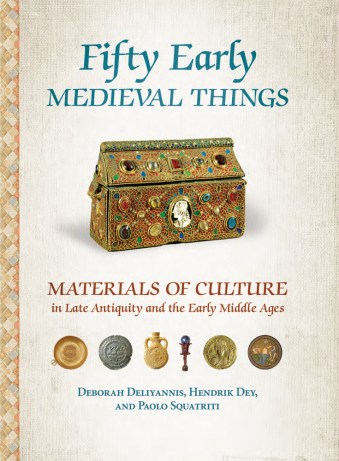
Publication – « Fifty Early Medieval Things. Materials of Culture in Late Antiquity and the Early Middle Ages », dir. Deborah Deliyannis, Hendrik Dey et Paolo Squatriti

Fifty Early Medieval Things introduces readers to the material culture of late antique and early medieval Europe, north Africa, and western Asia. Ranging from Iran to Ireland and from Sweden to Tunisia, Deborah Deliyannis, Hendrik Dey, and Paolo Squatriti present fifty objects—artifacts, structures, and archaeological features—created between the fourth and eleventh centuries, an ostensibly « Dark Age » whose cultural richness and complexity is often underappreciated. Each thing introduces important themes in the social, political, cultural, religious, and economic history of the postclassical era.

80140100884230L

Some of the things, like a simple ard (plow) unearthed in Germany, illustrate changing cultural and technological horizons in the immediate aftermath of Rome’s collapse; others, like the Arabic coin found in a Viking burial mound, indicate the interconnectedness of cultures in this period. Objects such as the Book of Kells and the palace-city of Anjar in present-day Jordan represent significant artistic and cultural achievements; more quotidian items (a bone comb, an oil lamp, a handful of chestnuts) belong to the material culture of everyday life. In their thing-by-thing descriptions, the authors connect each object to both specific local conditions and to the broader influences that shaped the first millennium AD, and also explore their use in modern scholarly interpretations, with suggestions for further reading. Lavishly illustrated and engagingly written, Fifty Early Medieval Things demonstrates how to read objects in ways that make the distant past understandable and approachable.

Informations pratiques :

Fifty Early Medieval Things. Materials of Culture in Late Antiquity and the Early Middle Ages, dir. Deborah Deliyannis, Hendrik Dey et Paolo Squatriti, Cornell university Press, 2019. 264 pages, 61 ill. ISBN : 978-1-5017-2589-0. Prix : 95 $.

Source : Cornell University Press

Publié dans Publications | Laisser un commentaire

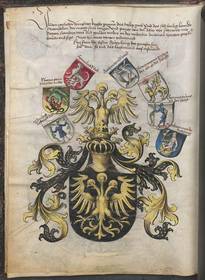
Conférence – Aaron Jochim, « Les connaissances d’un patricien: une relecture des armoiries imaginaires de l’Armorial de Konrad Grünenberg »

Le 4 avril 2019, à 10h, Aaron Jochim (IHA) donnera une communication intitulée Les connaissances d’un patricien: une relecture des armoiries imaginaires de l’Armorial de Konrad Grünenberg à l’occasion du séminaire de recherche organisé par l’IHA (R. Große) en coopération avec l’EPHE (L. Morelle).

Présidence: Michel Pastoureau (EPHE)

Informations et inscription: event@dhi-paris.fr

csm_2019_4_Seminaire_histoire_medievale_Vortrag_Jochim_kleiner_cd1e3ff51c

Informations pratiques :

Institut Historique Allemand (Paris)
10 avril, 10h-12h

Source : IHA – DHIP

Publié dans Colloque | Laisser un commentaire

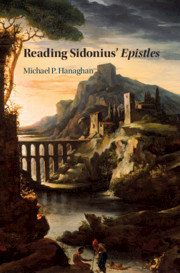
Publication – M. P. Hanaghan, « Reading Sidonius’ Epistles »

Sidonius Apollinaris’ letters offer a vivid series of glimpses into an otherwise sparsely documented period. His rich anecdotes feature the events, characters, and moments that defined his life, ranging from the treason trial of Arvandus to the Visigothic raiding of Clermont, from the corrupt and vile Seronatus to the holy widow Eutropia, and the day-to-day incidents that confronted a Gallo-Roman poet, aristocrat, and bishop as the Late Roman West transitioned into the barbarian successor kingdoms. Like any good storyteller, Sidonius exploited a wide array of narratological tools, manipulating temporality for dramatic effect, sketching his heroes and villains in vivid detail, and recreating witty dialogue in a collection that is highly organised and carefully strategised. This book provides a fuller understanding of his contribution to Latin literature, as a careful arranger of his self-image, a perceptive exploiter of narrative dynamics, and an influential figure in Late Antique Gaul.

9781108429214

Table des matières :

1. Sidonius’ world
2. Self and status
reading ‘Sidonius’ in the Epistles
3. Reading time: Erzählzeit and Lesezeit
4. Reading epistolary characters
5. Narrating dialogue
6. Arrangement
Epilogue
Appendix I: timeline 378–485
Appendix II: catalogue of content and addressees

Informations pratiques :

M. P. Hanaghan, Reading Sidonius’ Epistles, Cambridge, Cambridge University Press, 2019. 246 p., 235 x 158 x 15 mm. ISBN : 9781108429214. Prix : 75 £.

Source : Cambridge University Press

Publié dans Publications | Laisser un commentaire

Colloque – Dante et Shakespeare : cosmologie, politique, poétique

4-6 avril 2019
Poitiers, faculté des Sciences humaines et arts, hôtel Berthelot, salle Crozet – 24 rue de la Chaîne – Bât. E13

Dante est probablement à la littérature italienne ce que Shakespeare est à la littérature anglaise. Ils sont, par la profondeur et la densité de leur œuvre, deux monuments de la littérature européenne dont ils dépassent les frontières. Comme l’écrivait T.S. Eliot en 1929 : « Dante and Shakespeare divide the modern world between them; there is no third » (« Dante et Shakespeare se partagent le monde moderne. Ils n’ont pas d’équivalent »). S’il est possible de contester ce jugement, il n’en reste pas moins que ces deux auteurs ont chacun à leur façon porté au plus haut la littérature et l’esprit de leur temps. On peut, certes, se demander si les écrits de Dante ont eu une influence plus ou moins directe (par la médiation de Pétrarque) sur ceux de Shakespeare (et de ses contemporains). Toutefois il s’agira surtout dans ce colloque de faire se rencontrer, par-delà les siècles, la réflexion et l’esthétique à l’œuvre dans leurs créations respectives, de les faire thématiquement entrer en résonance.
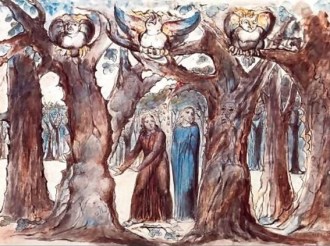
Illustration-To-Dantes-Divine-Comedy-Hell-5

Programme :

Jeudi 4 avril

13h30 – Accueil des participants
14h – Ouverture du colloque par Christine BARON, Assesseur à la Recherche de l’UFR Lettres & Langues, et par Charles GARCIA, Co-Directeur du CESCM

I. DANTE ET SHAKESPEARE : RENCONTRES RHÉTORIQUES ET POÉTIQUES
Présidente de séance : Piero BOITANI (Sapienza Universita di Roma, Italie)

14h30/15h10 – Dante, Chaucer, Florio, Foxe… et Shakespeare : des relations ambigües, Emilia DI ROCCO (Sapienza Universita di Roma, Italie) (en italien)
15h10/15h50 – Dante et Shakespeare face au dilemme des couleurs rhétoriques, Franziska MEIER (Universität Göttingen, Allemagne) (en français)
15h50/16h30 – Métaphore filée et comparaison épique chez Dante et Shakespeare, Barbara MULLER (Université de Lorraine, France) (en français)

Président de séance : Pascale DROUET (Université de Poitiers)

16h50/17h30 – Écriture, traduction et modernité, René de CECCATTY (écrivain et traducteur, notamment de La Divine Comédie, France) (en français)
17h30/18h10 – Table ronde avec le graphiste Edouard Lekston (Paris) : « L’Enfer chez Dante et Shakespeare : croisements graphiques » – présentation Louis André (Université de Poitiers)
18h30 – Pot d’accueil et vernissage de l’exposition d’Edouard LEKSTON, « L’Enfer chez Dante et Shakespeare : croisements graphiques », au CESCM ou dans l’espace d’exposition SHA

Vendredi 5 avril

II. LES DÉRÈGLEMENTS DU DÉSIR CHEZ DANTE ET SHAKESPEARE
Président de séance : Piero BOITANI (Sapienza Università di Roma, Italie)

9h/9h40 – ‘In abito leggier di peregrino’ (Vita Nuova, IX.27) : échos et influence de Dante dans le Roméo et Juliette de Shakespeare, Christophe CAMARD (Sorbonne Université, France) (en français)
9h40/10h20 – Compulsion, plaisir, regret : volonté et passivité dans trois sonnets de Dante, Pétrarque et Shakespeare, Manuele GRAGNOLATI (Sorbonne Université, France) et Francesca SOUTHERDEN (University of Oxford, Grande Bretagne) (en anglais)

Président de séance : Christophe CAMARD (Université de la Sorbonne)

10h40/11h20 – Théologisme philogyne (Dante) et anti-théologisme misogyne (Shakespeare), Raffaele PINTO (Universitat Autonoma de Barcelona, Espagne) (en italien)
11h20/12h – ‘Let me be Ignorant’: une lecture thomiste de l’aveuglement chez Shakespeare et Dante, Angela SCHUMANN (Monash University, Australie) (en anglais)

III. DANTE ET SHAKESPEARE : ORDRE COSMIQUE, DÉSORDRES POLITIQUES
Président de séance : Bruno PINCHARD (Université de Lyon 3)

14h-14h40 – ‘Quasi una ordinata civilitade’. Ordre cosmique et ordre politique chez Dante et Shakespeare, Arianna HIJAZIN et Federico ROSSI (Scuola Normale Superiore, Pisa, Italie) (en italien)
14h40/15h20 – La musique des sphères : Dante et Shakespeare, Piero BOITANI (Sapienza Universita di Roma, Italie) (en italien)
15h20/16h – La faculté de juger chez Dante et Shakespeare : pourquoi parler avec les morts ?, Cécile LE LAY (Université de Lyon 3, France) (en français)

Président de séance : Philippe GUÉRIN (Université de la Sorbonne Nouvelle)

16h20/17h – Les paysages de l’au-delà chez Dante et Shakespeare, Wael ELLOUZ (Université de Poitiers) (en anglais)
17h/17h40 – De Dante à l’Hamlet de Shakespeare : comment la révélation théologique devient croyance en la providence, William FRANKE (Vanderbilt College of Art and Science, Nashville, États Unis) (en français)
18h : Mise en voix d’extraits de textes de Dante et de Shakespeare par les élèves du Conservatoire de Poitiers, sous la direction d’Agnès DELUME, Médiathèque François-Mitterrand

Samedi 6 avril 2019

IV. L’HÉRITAGE CONTEMPORAIN ET LA « FONCTION » DANTE/SHAKESPEARE
Président de séance : William FRANKE (Vanderbilt University, États Unis)

9h/9h40 – Dante et Shakespeare, un dialogue pour Victor Hugo, Bruno PINCHARD (Université de Lyon 2, France) (en français)
9h40/10h20 – Éclat dantesque : splendeur et fragment dans les Cantosd’Ezra Pound, Émilie GEORGES (Paris Nanterre, France) (en français)
10h20/11h – Le classicisme moderniste et le dialogue avec la tradition. Dante et Shakespeare chez Montale, Novella DI NUNZIO (Università di Vilnius, Lithuanie) (en italien)

Président de séance : René DE CECCATTY (écrivain et traducteur)

11h20/12h – Les livres perdus de Dante et de Shakespeare : les classiques à l’épreuve de la littérature de genre, Filippo FONIO (Université de Grenoble Alpes, France) (en français)
12h/12h40 – Dante et Shakespeare comme ‘réservoir du mal’ dans l’imaginaire contemporain, Caroline GONDAUD (Paris Sorbonne/Ministère des Affaires Étrangères, France) (en français)
12h40/13h – Clôture du Colloque par Isabelle BATTESTI & Pascale DROUET

Source : CESCM

Publié dans Colloque | Laisser un commentaire

Offre d’emploi – Pearsall Fellowship in Naval and Maritime History

Location: London
Salary: £23,500
Hours: Full Time
Contract Type: Fixed-Term/Contract
Placed On: 18th January 2019
Closes: 29th March 2019

The Pearsall Fellowship is a one year postdoctoral Fellowship in Naval and Maritime History. Applications are encouraged for work on any aspect of Naval and Maritime History, in the broadest sense, anywhere in the world, from the fall of the Roman Empire in the West up to the present day.

36_1533728335

Area of research:

Naval and Maritime History in any period from the fall of the Roman Empire in the West until the 21st century.

Eligibility requirements:

Applicants may be of any nationality, and their PhD (or equivalent) may have been awarded in any country.

Applicants must already have submitted their doctoral thesis for examination, or be prepared to do so by 1 October of the academic year in which the award is to be held. Applicants who already hold doctorates must have been awarded them in the five years prior to October 2019.

This Fellowship is intended as a first academic post for recent doctoral graduates. Those who have previously held another postdoctoral research Fellowship will not be eligible.

The Fellowship cannot be held in conjunction with any other substantial maintenance grant.

Amount awarded: £23,500

Application guidelines: pearsall_fellowships_guidelines_2019.pdf

Applications open: 9 Jan 2019 to 29 Mar 2019

Source : Jobs.ac.uk

Publié dans Offre d'emploi | Laisser un commentaire

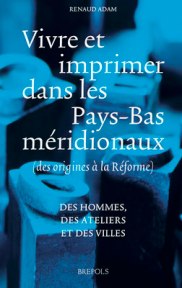
Conférence – Présentation du livre « Vivre et imprimer dans les Pays-Bas méridionaux (des origines à la Réforme) », par Renaud Adam

Orateur : Renaud Adam (ULiège – Transitions. Unité de recherches sur le Moyen Âge et la première Modernité)

La séance débute à 12h30 et est suivie d’un temps de questions-réponses.

image

La thématique centrale de l’ouvrage Vivre et imprimer dans les Pays-Bas méridionaux – sorte de fil d’Ariane reliant chacune des parties entre elles – pourrait se résumer à une question, simple en apparence, mais ô combien complexe : comment les premiers imprimeurs se sont-ils intégrés au tissu socio-économique des Pays-Bas méridionaux au tournant des xve et xvie siècles ? Pour répondre à cette interrogation, il fut nécessaire de se pencher sur le métier d’imprimeur avec des questionnements centrés autour du statut juridique et de l’organisation de cette profession ainsi que sur le fonctionnement interne d’une officine, sur la commercialisation des livres et le profil de la clientèle. L’examen de la composition de la communauté des premiers imprimeurs et une tentative de décorticage des trames réticulaires nouées avec les autres acteurs de la société urbaine constituaient une suite logique à cette démarche. Ces deux grandes enquêtes sont au cœur du premier volume. L’obsolescence des synthèses sur l’histoire des débuts de l’imprimerie des Pays-Bas méridionaux et l’évolution constante de la recherche ont rapidement convaincu l’auteur de la nécessité de réécrire un historique détaillé, ville par ville, de l’introduction de l’imprimerie dans ces régions et de son évolution jusqu’en 1520. C’est précisément l’objet du second volume, complété par un dictionnaire des imprimeurs ayant exercé antérieurement à 1520.

Informations pratiques :

1er avril 2019

Université Saint-Louis – Bruxelles
12h30-14h
119 rue du Marais, salle 4015
1000 Bruxelles

L’inscription aux midis est gratuite mais obligatoire. Nous vous serions reconnaissants de confirmer votre présence via l’adresse mail suivante : crhidi@gmail.com

Source : Université Saint-Louis – Bruxelles

Publié dans Colloque | Laisser un commentaire

Appel à contribution – Roles, Images, and the Social Position of Women in the Medieval Cities on the Rhine. Interdisciplinary Perspectives

During the High Middle Ages, episcopal centres grew into vibrant urban communes. Craftspeople, Traders and Merchants developed new forms of social and political organization. Many towns and cities on the Rhine received liberties from emperors and kings or from their episcopal lords. The Jewish communities played an exceptional role in this process. In Speyer, Worms, and Mainz talmudic academies reached Europe-wide fame. Known as ShUM (Shpira, Warmaisa, and Magenza), the three communities wielded great authority in matters of religion, ritual, and Jewish law. They built synagogues and miqwa’ot that became models for such buildings in central Europe.

What roles, what images, and what social standing did the Jewish and Christian women attain in the emerging new forms of social and political organization in the Rhenish cities? Did their status vary according to their cultural and religious identity? How were their roles expressed, and who expressed them? These questions are the focus of an interdisciplinary conference. Its aim is to highlight the role and position of Jewish and Christian women in the medieval urban societies of the Rhineland in view of their social, cultural, and religious aspects and contexts. Particularities as well as intercultural exchange will be discussed, and needs for further research identified.

The conference builds a bridge between the current UNESCO World Heritage campaign “The ShUM Sites: Speyer, Worms and Mainz”, and the State Exhibition “From Charlemagne to Frederick Barbarossa: The Emperors and the Pillars of Power”, to be opened in the State Museum of Mainz in September 2020.

The organizers call for papers dealing with the following thematic fields:

– The roles of women in the towns and cities of the Rhineland
– Women in the emerging new forms of social and political organization
– Comparative studies on the roles and standings of women in the different cultural contexts
– Religious role-models and experiences of Jewish and Christian women
– The self-images of medieval Jewish and Christian women
– Daily life and economic activities
– Images and self-images of women in contemporary sources
– Expressions of women’s roles and self-image in art, architecture, and literature
– Teaching gender in historical exhibitions

Please submit abstracts for papers, which should last no longer than 20 minutes. Papers are accepted in German and English. The organizers aim to cover the travel and accommodation expenses. A publication of the papers is previewed.

Please send your abstracts and a short CV by 31 March, 2019, via mail to
nadine.hoffmann@gdke.rlp.de

We are looking forward to receiving your proposals.
Kontakt

Nadine Hoffmann
Erthaler Hof – Schillerstraße 44
55116 Mainz

nadine.hoffmann@gdke.rlp.de

Source : H-Soz-Kult

Publié dans Appel à contributions | Laisser un commentaire