École d’été – Semaines d’études médiévales de Poitiers 2019

Le CESCM organise depuis 1954 une session annuelle internationale francophone de formation, qui regroupe une quarantaine d’étudiants, doctorants et jeunes chercheurs, français et étrangers. Les conférences, les séances de travail autour des ressources documentaires, les excursions et visites au programme des stagiaires sont proposées par des spécialistes du Moyen Âge venus du monde entier.

Cette manifestation interdisciplinaire, unique en son genre, contribue à construire et à renforcer, depuis une cinquantaine d’années, un solide réseau national et international dans le domaine de l’étude du Moyen Âge.

Admission sur dossier, date limite de candidature : 30 mars 2019

Les candidatures peuvent être envoyées dès à présent au moyen du Formulaire de candidature

Auditeurs libres : Bulletin d’inscription

Pour consulter les Modalités pratiques

Renseignement : sem.cescm@univ-poitiers.fr

Tél. 33(0)5 49 45 45 57

CESCM

Programme :

Lundi 17 juin

9h30 – Accueil des stagiaires, présentation du déroulement de la session, du CESCM, des ressources documentaires. Visite des lieux.

14h – Visite de Notre-Dame-la-Grande

16h30 – Conférence inaugurale de Corrado Bologna (École normale supérieure de Pise), Dante : pouvoir de la langue et langue du pouvoir

18h30 : Cocktail de bienvenue

Mardi 18 juin

9h – Corinne Beck (Université de Valenciennes), Géohistoire des forêts : au croisement entre temporalités et territorialités

14h – Lola Badia (Université de Barcelone), La France dans le roman catalan du XVe siècle Curial e Güelfa

17h – Visite de Saint-Hilaire-le-Grand

Mercredi 19 juin

9h – Quitterie Cazes (Université de Toulouse Jean Jaurès), Art et politique à Toulouse autour de 1100

Après-midi : séance aux Archives départementales de la Vienne

14h – Joseph Morsel (Université Panthéon-Sorbonne), Pour quand écrire ? Temporalité médiévale, représentation spatio-temporelle et production de chartes (dans l’Empire, XIII-XVe siècles)

16h30 – Présentation d’archives par Gaël Chenard et Pierre Carouge

Jeudi 20 juin

9h – Isabelle Ragnard (Sorbonne Université – Faculté des lettres), L’invention de la musique médiévale dans la première moitié du XXe siècle par le prisme des enregistrements discographiques

14h – Table ronde association Janua

16h30 – Visite du baptistère Saint-Jean

Vendredi 21 juin

9h – Marco Mostert (Université d’Utrecht), Nouvelles démarques dans l’étude de la communication au Moyen Âge : l’oral, l’écrit et le non-verbal parmi les sans-nom

14h – Howard Bloch (Université de Yale), Les pierres disputantes : Théophile, saint Étienne, et Abélard sur les portails nord et sud de Notre-Dame de Paris

17h – Visite du Musée Sainte-Croix

Samedi 22 juin : journée libre

Dimanche 23 juin : excursion

Gencay, Saint-Maurice-la-Clouère, Civray, Charrou

Lundi 24 juin

10h30 – Présentation des ressources numériques

14h – Alban Gautier (Université de Caen Normandie), Représentations modernes et contemporaines des Nords médiévaux : bilan et perspectives

16h30 – Visite du Palais des comtes

Mardi 25 juin

9h – Maria Colombo (Sorbonne Université – STIH), Du langaige rommaint antique au langage moderne françois : réécritures et sentiment de la langue entre le XIIe et le XVIe siècle

14h – Stéphane Boissellier (Université de Poitiers – CESCM), D’une culture (arabo-musulmane) à une autre (latino-chrétienne) dans le Gharb al-Andalus / sud du Portugal, XIIe-XVe siècle

16h30 – Présentation des manuscrits enluminés de la Médiathèque François-Mitterrand

Mercredi 26 juin

9h – Maria Filomena Coelho (Université de Brasilia), Entre Portugal et Bourgogne : allers retours d’une historiographie des institutions (XIIe siècle)

13h30/ 19h – Excursion à Parthenay

Jeudi 27 juin

9h – Robert A. Maxwell (Institute of Fine Arts – Université de New Yok), Discernement et crédulité dans l’art du XIIe siècle

14h – Visite de Saint-Jean de Montierneuf à Poitiers

À partir de 19h : Repas international (Association Janua – Société d’études médiévales)

Vendredi 28 juin

9h – Conférence de clôture : Roberto Delle Donne (Université de Naples Federico II), Fiscalité et culture politique dans le Royaume angevin de Sicile

11h30 – Conclusions par Martin Aurell, directeur du CESCM

Source : CESCM

Publié dans École d'été | Laisser un commentaire

Offre d’emploi – Twelve post-doc researchers : “The European Qur’an: Islamic Scripture in European Culture and Religion (1150-1850)” (EuQu)

The Université de Nantes, the Consejo Superior de Investigaciones Científicas, Università di Napoli l’Orientale, the University of Kent and the University of Amersterdam are hiring post-doctoral researchers to join our project “The European Qur’an: Islamic Scripture in European Culture and Religion (1150-1850)” (EuQu).

This is an exciting opportunity for early career researchers to be involved in a highly visible, international collaborative research project that involves leading academic institutions in Europe and beyond. We offer outstanding work and research conditions, competitive salaries, funded travel opportunities, options for prolonged stays at partner universities and involvements in ventures at the forefront of cultural studies and digital humanities. You will be conducting research under the supervision of four leading scholars in the field of Christian-Muslim relations and have the opportunity to collaborate and exchange with colleagues from a wide range of disciplinary, institutional and personal backgrounds.

Capture d’écran 2019-02-28 à 08.26.25

Project summary

“The European Qur’an. Islamic Scripture in European Culture and Religion 1150-1850” (EuQu) is a six- year research project funded through a synergy grant from the European Research Council (ERC). Its four principal investigators (and host institutions) are Mercedes García-Arenal (Centro de Ciencias Humanas y Sociales, CSIC, Madrid, Spain), John Tolan (Université de Nantes), Jan Loop (University of Kent) and Roberto Tottoli (Università di Napoli l’Orientale).

The project studies the ways in which the Islamic Holy Book is embedded in the intellectual, religious and cultural history of Medieval and Early Modern Christians, European Jews, freethinkers, atheists and European Muslims. We will conduct research on how the Qur’an has been translated, interpreted, adapted and used in Christian Europe from the Middle Ages through to early modern history, in order to understand how the Holy Book has influenced both culture and religion in Europe. EuQu will look at the role of the Qur’an in interactions with Islam, in debates between Christians of different beliefs and in critiques of Christianity during the Enlightenment.

The six-year project will produce interdisciplinary research through scientific meetings across Europe, a GIS-database of Qur’an manuscripts, translations and other works in which the Qur’an is discussed, and through PhD theses and monographs. It will bring the fruits of this research to non-academic audiences though a creative multimedia exhibition on the place of the Qur’an in European cultural heritage.

Candidates should consult the full description of the project, available at proyectos.cchs.csic.es/corpi/es/news and http://ipra.eu/fr/2019/02/15/euqu-the-european-quran- erc-synergy-grant-2019-2025/

Qualifications

Applicants should have a PhD in a discipline in the humanities by the time of application, or at least strong assurance that they will obtain the PhD by August 2019. Candidates should be fluent in English and have strong skills in other languages appropriate to their research topics.

Research profile

Up to twelve positions will be filled. Each candidate should propose an original, innovative research project on an important aspect of the role played by the Qur’an in Medieval and Early Modern European culture. The following is a list of possible broad themes, but in no ways should be seen as restrictive. All innovative research proposals are welcome, as long as they clearly fit the themes and structure of the EuQu project. We also welcome proposals that apply digital technologies such as mapping, textual analysis, visualization, or the semantic web to their topic. Candidates should clearly situate their proposed research in the context of the state of the art and should describe some of the sources they propose to work on.

• Synthetic comparison of translation strategies and ideologies of language study and translation between early modern polemical works
• The use that European scholars made of Muslim exegetical literature in order to understand the Qur’an.
• Translations of the Qur’an written before 1800 (in Latin and in various European vernaculars)
• Collecting the Qur’an (manuscripts and printed editions)
• The Politics and Economies of the European Qur’an (including theological and political obstacles that editions and translations of the European Qur’an faced)
• Polemical responses to the Qur’an
• The Printing of Arabic in Europe: The Qur’an and Islamic Texts
• A History of Qur’an Manuscripts in Europe
• The Qur’an in European literature and thought
• The Qur’an in Central & Eastern Europe
• The Qur’an in European Jewish culture and scholarship
• Colonial Expansion and the European Qur’an
• The Qur’an and European Legal and Political Thinking

Responsibilities of the researchers

Each post-doctoral researcher will propose an innovative research project on some aspect of the place of the Qur’an in European Culture between the twelfth and early nineteenth centuries. Depending on the specific research topic, responsibilities may include

• Bibliographical research:
• Database management:
• Participating in regular team meetings (including periodic seminars and workshops), at the EuQu partner institutions and in their organization
• Publication: each candidate will propose contributions to one or more of the collective volumes listed in the EuQu project description. S/he should also propose a monograph or article stemming from his or her own research.

Conditions of employment

The researcher will be hired on a one-year renewable contract employed by one of the EuQu institutional partners, for a total maximum of four years of employment. The date of the beginning of the contract will be negotiated on hiring: it will be no earlier than September 1st 2019. The researcher will be expected to reside in the city of employment for the period of employment and will be provided with office space. The researcher will travel frequently for conferences, workshops and research stays with partner institutions in Europe.

Application procedures

Applicants should send an application, consisting of a letter of application, a project description, a curriculum vitae, and names of three references (with titles and e-mail addresses). In the letter of application, candidates should specify which of the EuQu partner institutions they would prefer to be affiliated with, in order of preference: The Université de Nantes, the Consejo Superior de Investigaciones Científicas, Università di Napoli l’Orientale, the University of Kent or the University of Amersterdam. The project description (5 pages maximum) should outline how the candidate’s previous research is germane to the themes of EuQu and how the candidate would contribute to the EuQu project, giving specific examples of material that s/he would integrate into the database and a tentative description of his/her contribution to one of the planned collective volumes. Before writing the project description, candidates should carefully read the full description of the EuQu project available at proyectos.cchs.csic.es/corpi/es/news and http://ipra.eu/fr/2019/02/15/euqu-the- european-quran-erc-synergy-grant-2019-2025/ .

All documents should be sent in PDF format to euqu@cchs.csic.es by April 1st, 2019.

Selected applicants will be interviewed 21-23 May 2019. The interviews will be conducted by EuQu’s four principal investigators. Applicants will be interviewed via videoconference. Those candidates who prefer to be interviewed in person may come to Madrid for interviews, but no travel expenses will be paid to interviewees. Fuller details about interviews will be sent to chosen candidates before May 1st. Applicants will subsequently be informed of the results of their application by the end of May.

Contact and information : euqu@cchs.csic.es

Source : University of Kent

Publié dans Offre d'emploi | Laisser un commentaire

Appel à contribution – « Représenter la tête au Moyen Âge », plate-forme Effervescences Médiévales

Effervescences Médiévales, plateforme collaborative et interdisciplinaire sur le Moyen Âge pour les jeunes chercheurs et chercheurs confirmés, vous invite à participer à son premier appel à publication. Les articles seront publiés sur notre blog puis, à l’issue de la date butoir, compilés sous la forme d’une revue numérique en libre accès.

tete

Pour son premier appel à publication, l’équipe d’Effervescences Médiévales vous invite à soumettre un article sur le thème suivant : Représenter la tête au Moyen Âge.

À travers ce thème, nous aborderons les représentations historiques, artistiques et littéraires de la tête au Moyen Âge. Vos articles pourront s’articuler autour des axes suivants :

  • La beauté ou/et la laideur de la tête.
  • Embellir la tête et le visage (artifices, cosmétique,…).
  • Les attributs de la tête (couronne, tiare, diadème, coiffe, chapeau, bijoux, casque,…).
  • La tête sainte (nimbe, voile,…).
  • Discipliner les cheveux (coiffure, tonsure,…).
  • Les têtes jumelles.
  • L’imaginaire de la tête : têtes fabuleuses ou monstrueuses, mythes, légendes.
  • Les rapports entre la tête et le corps, entre la tête et le cœur (conception médiévale).
  • Martyriser la tête (décapitation,…).
  • Soigner la tête.
  • La tête, réceptacle de l’âme et de l’esprit.
  • La tête du mort et son effigie en cire.

Dans une démarche interdisciplinaire, toutes les contributions de spécialistes travaillant sur le Moyen Âge sont attendues. Les articles seront publiés au fur et à mesure de leur soumission.

Votre contribution est à envoyer à l’adresse suivante effervescencesmedievales@gmail.com jusqu’au 30 septembre 2019 inclus, accompagnée d’une courte biographie.

Votre article, avec un minimum de 10.000 signes et limité à 20.000 signes (notes incluses), répondra aux normes rédactionnelles présentées sur notre site.

L’équipe d’Effervescences Médiévales

Source : Effervescences médiévales

Publié dans Appel à contributions | Laisser un commentaire

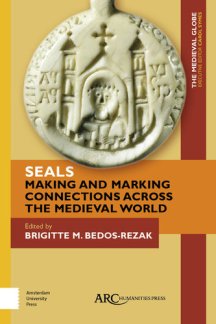
Publication – « Seals – Making and Marking Connections across the Medieval World », dir. Brigitte Bedos-Rezak

By placing medieval sealing practices in a global and comparative perspective, the essays gathered in this volume challenge the traditional understanding of seals as tools of closure and validation in use since the dawn of civilization. Far from being a universal technique, sealing is revealed as a flexible idiom, selectively deployed to mediate entangled identities: the introduction of Buddhism in early medieval China; the Islamization of Sasanian and Byzantine cultures; the balancing of Christian orthodoxy against classical and Muslim science; the development of civic consciousness in Byzantium; the efforts of tradesmen to brand merchandise for export; and the advancement of diplomacy from northern Europe to Indonesia. This examination of documentary seals, archaeologically recovered seal dies, and commercial and conceptual seals from cultures across the medieval world shows how skillful manipulation of their iconography, inscriptions, technology, and metaphorical meanings disseminated information, negotiated influences, asserted hegemony, and forged connections.

Brigitte Miriam Bedos-Rezak is a Professor of History at New York University. Her most recent research on seals, signing practices, imagistic scripts, and charismatic art has appeared in When Ego was Imago. Signs of Identity in the Middle Ages (2011), Sign and Design. Script as Image in a Cross-Cultural Perspective (2016, co-edited with Jeffrey Hamburger), and The Faces of Charisma: Image, Text, Object in Byzantium and the Medieval West (2018, co-edited with Martha Rust).

9781641892568

Table des matières :

Seals as Conceptual and Ritual Tools in Chinese Buddhism, ca. 700-1000 CE, Paul Copp
Imprinting Powers: The Astrological Seal and Its Doctrinal Meanings in the Latin West, Nicolas Weill-Parot
Medieval Solution to an Early Modern Problem? The Royal Animal Seals of Jambi, Annabel Teh Gallop
Expressing New Rule: Seals from Early Islamic Egypt and Syria, 600-800 CE, Petra M. Sijpesteijn
The Formulation of Urban Identity on Byzantine Seals, Claudia Sode
A Mark of Quality: The Rise and Fall of the Cloth Seal, John Cherry
Archeology and Sigillography in Northern Europe, Michael Andersen
Medieval Treaties and the Diplomatic Aesthetic, Jessica Berenbeim

Informations pratiques :

Seals – Making and Marking Connections across the Medieval World, dir. Brigitte Bedos-Rezak, ARC Humanities Press, 2019 (The Medieval Globe). 256 pages. 234 x 156 mm. ISBN: 9781641892568. Prix : 105 euros.

Source : ARC Humanities Press

Publié dans Publications | Laisser un commentaire

Publication – Philippe de Mézières, « Oratio tragedica », éd. et trad. Joël Blanchard et Antoine Calvet

L’Oratio tragedica est un texte de dévotion, inédit, composé par Philippe de Mézières (1327-1405), à l’époque où il rédige le Songe du Viel Pelerin (1389-1390). Cette véritable « dramaturgie de l’âme », écrite en latin, éclaire tous les visages du Chevalier, désormais retiré dans sa cellule du couvent des Célestins de Paris, mais qui ne saurait oublier qu’il fut le conseiller ou l’interlocuteur de six rois, de plusieurs papes et tant de princes… Un tel oubli nous serait interdit à nous aussi, qui prétendons approcher, dans sa complexité, ce quatorzième siècle traversé et comme illuminé par Mézières. Si l’Oratio s’inscrit dans la tradition médiévale des textes spirituels, elle révèle, jamais interrompue, la passion lancinante de délivrer les Lieux Saints et d’atteindre par là la double ambition de faire œuvre sainte d’écrivain et d’accomplir pleinement le service, le devoir du chrétien.

Première édition critique du texte latin, ainsi que première traduction française de l’Oratio tragedica, longtemps attendue.

oratio-tragedica

Table des matières :

Avant-propos
Introduction

Oratio tragedica

Édition, traduction et notes

Index des citations scripturaires.
Index auctorum.
Index général

Informations pratiques :

Philippe de Mézières, Oratio tragedica, éd. et trad. Joël Blanchard et Antoine Calvet, Genève, Droz, 2019 (Cahiers d’Humanisme et Renaissance, 156). XLII – 566 p., 152 x 222 cm. ISBN : 978-2-600-05947-3. Prix : 51,70 euros.

Source : Droz

Publié dans Publications | Laisser un commentaire

Appel à contribution – Music, Performance, Architecture. Sacred Spaces as Sound Spaces between the Late Middle Ages and the Early Modern Period

International and Interdisciplinary Conference

German Historical Institute in Rome / Biblioteca Apostolica Vaticana, Vatican City

11–13 December 2019

Conception and Organisation: Klaus Pietschmann and Tobias Weißmann (Johannes Gutenberg University Mainz) / German Historical Intitute in Rome, Department of Music History

Expert committee: Sabine Ehrmann-Herfort, Markus Engelhardt, Teresa Gialdroni, Klaus Pietschmann and Tobias Weißmann

The compositional developments between the late Middle Ages and the early modern period were accompanied by a multifaceted change of requirements to musical performance practice, which correlated with the rite and mass piety and enduringly affected the experience of liturgy and music. The most distinctive impact of this progress is epitomised by the installation of singer balconies and organ galleries on which top-class music ensembles and organists often performed and which served as stages for musical excellence. The permanent display of music advanced to become a core segment of sacred architecture while the potential of these spaces to promote identification becomes evident in numerous graffiti, as the singer pulpit in the Vatican Cappella Sistina exemplifies. Luca della Robbia’s and Donatello’s cantorie for the Florentine cathedral or Jacopo Sansovino’s pergoli in the Venetian St Mark’s Basilica are prominent examples of the high artistic value, which already was ascribed to singer pulpits in the Renaissance period. Beginning in 15th century Italy, the polychoral musical performance practice became a European phenomenon in the 17th and 18th centuries and required the modification of venerable churches and the integration of music spaces in new sacred buildings. Moreover, the polychoral experimentation and opulent musical compositions for festive occasions made ephemeral music stages necessary in order to take full advantage of the acoustics and musical potential of the church interior. However, since Alexander VII’s Editto sopra le musiche (1665), popes increasingly opposed the architectural exposure of musicians who distracted the faithful from the liturgy with their visible and audible performance.

The planned conference focuses on the complex interrelation of music and sacred space which has so far only been investigated separately in a variety of disciplines and will concentrate on the musician’s pulpits of the early modern period. In what sense did the awarding authorities consider musical issues in designing and constructing new church buildings? Which role did architecture theorists assign to acoustics and musical performance practice? How did composers and performers react to the architectural and acoustic situation in sacred spaces? In short: How was the relationship between church music and church architecture?

The conference will be organised in cooperation between the German Historical Institute in Rome and the research project CANTORIA as part of a Gutenberg Research College Fellowship held by Klaus Pietschmann. It will serve as a prelude to subsequent workshops and conferences which will explore the interdependencies between architecture, acoustics, musical performance practice in the interdisciplinary discourse between musicology, art and architecture history.

Papers of 30 minutes each will be accepted in German, Italian and English. Interested speakers are invited to submit an abstract of their proposed paper (max. 500 words) and a short CV by 15 March 2019 to: klaus.pietschmann@uni-mainz.de / tobias.weissmann@uni-mainz.de

The conference will be held in German, Italian and English. The speakers will be selected by an expert committee. Contributions by junior researchers will receive special attention. Travel and accommodation expenses will be reimbursed subject to successful financing.

Source : H-Soz-Kult

Publié dans Appel à contributions | Laisser un commentaire

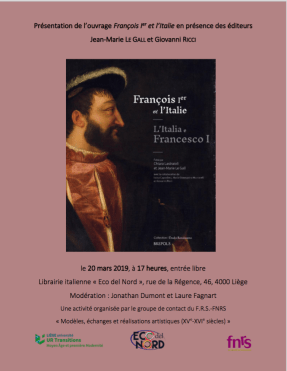
Conférence – Présentation de l’ouvrage « François Ier et l’Italie » en présence des éditeurs Jean-Marie Le Gall et Giovanni Ricci

Présentation de l’ouvrage François Ier et l’Italie en présence des éditeurs Jean-Marie le Gall et Giovanni RICCI le 20 mars 2019, à 17 heures, entrée libre. Librairie italienne « Eco del Nord », rue de la Régence, 46, 4000 Liège.

Modération : Jonathan Dumont et Laure Fagnart.

Capture d’écran 2019-02-28 à 08.38.57

Une activité organisée par le groupe de contact du F.R.S.-FNRS « Modèles, échanges et réalisations artistiques (XVe-XVIe siècles) »

Publié dans Colloque | Laisser un commentaire

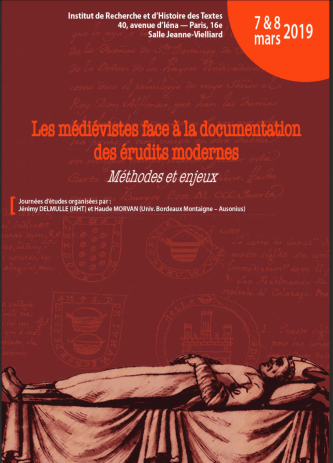
Colloque – Les médiévistes face à la documentation des érudits modernes. Méthodes et enjeux

Les spécialistes qui travaillent sur les mondes anciens et médiévaux, qu’ils soient historiens, philologues, historiens de l’art, épigraphistes ou archéologues, sont souvent amenés à utiliser des sources de l’époque moderne. En effet, les érudits des XVIIe-XVIIIe siècles ont été un maillon fondamental dans la transmission de connaissances sur les textes et les monuments. Ces sources doivent cependant être utilisées de manière critique, en pénétrant en profondeur les enjeux et les méthodes de leurs auteurs. Si l’histoire se constitue en véritable science au XVIIe siècle, affranchie de la répétition des auctoritates et appuyée sur un certain nombre de sciences auxiliaires (diplomatique, paléographie, codicologie, héraldique, épigraphie, numismatique), elle n’en reste pas moins liée à un contexte religieux, politique, culturel et intellectuel qu’il convient de connaître de manière plus fine.

Dans le cadre de cette rencontre interdisciplinaire, fruit de la collaboration de l’Institut de recherche et d’histoire des textes et de l’Institut Ausonius (UMR 5607), nous nous interrogerons sur l’apport des sources modernes, manuscrites et imprimées, pour la recherche, la collecte, l’analyse et l’édition de témoignages scripturaires et matériels de la culture médiévale, témoignages dont les originaux peuvent avoir depuis disparu ou avoir été mutilés. Cette rencontre visera à questionner les différentes méthodes qu’il convient d’adopter dans l’utilisation de cette documentation.

Capture d’écran 2019-02-27 à 09.41.46

Programme :

Jeudi 7 mars

14h – Introduction, Jérémy DELMULLE et Haude MORVAN

14h30-16h30 – La naissance des « sciences annexes » de l’histoire : héraldique, généalogie, épigraphie, iconographie

Pierre COUHAULT (Labex EHNE / Centre Roland-Mousnier, UMR 8596), Méthodes et enjeux de la collecte documentaire chez deux érudits du milieu du xvie siècle : le héraut flamand Jacques le Boucq et l’avocat parisien Jean le Ferron
Morgane UBERTI (Madrid, Casa de Velázquez), « Antiquaires » ou « apologètes » : regards modernes sur les inscriptions chrétiennes en France
Fabrizio FEDERICI (Rome, Bibliotheca Hertziana – Max Planck Institut für Kunstgeschichte), Comment la Rome baroque regardait le Moyen Âge : antiquaires et connaisseurs de l’époque des Barberini face aux images médiévales
Discussion – pause

17h-19h La construction historique dans les ordres réguliers

Ludovic VIALLET (Université Clermont-Auvergne / CHEC, EA 1001), Lire et exploiter la Narration historique… du Père J. Fodéré (1619)
Haude MORVAN (Université Bordeaux Montaigne / Ausonius, UMR 5607), Le patrimoine monumental dans l’érudition dominicaine
Bertrand MARCEAU (École française de Rome), Écrire l’histoire cistercienne au XVIIIe siècle : André Le Boullenger, historien et archiviste de Clairvaux
Discussion – dîner

Vendredi 8 mars

10h-12h Quelques figures d’érudits (1)

Anne RITZ-GUILBERT (École du Louvre), Gaignières et ses méthodes
Laurent HABLOT (EPHE), Analyse et critique de l’érudition emblématique : le cas de François-Roger de Gaignières.
Cécile TREFFORT (Université de Poitiers / CESCM, UMR 7302), Dans le dédale des notes de Dom Fonteneau († 1780) : l’historien face à la stratification documentaire

Discussion et déjeuner

14h30-16h30 Quelques figures d’érudits (2)

Valeria DANESI (Rome, La Sapienza), L’Ordo Sancti Damiani et le monastère de S. Cosimato du Trastevere dans une chronique du xviie siècle. Le mémorial de l’abbesse Orsola Formicini
Hernán GONZÁLEZ BORDAS (Ausonius, UMR 5607), Les inscriptions paléochrétiennes de la Régence de Tunis chez le père trinitaire F. Ximenez (1685-1752) : son approche et ses usages
Pierre CHAMBERT-PROTAT (École française de Rome), Dans l’ombre des « grands » érudits : Pierre-François Chifflet (1592-1682)

Discussion

17h-17h30 Conclusions, François BOUGARD (IRHT)

Informations pratiques :

7-8 mars 2019

Institut de recherche et d’histoire des textes
40, avenue d’Iéna
Paris 75016

Organisation :
Delmulle Jérémy (IRHT)
Morvan Haude (univ. Bordeaux)

Source : IRHT

Publié dans Colloque | Laisser un commentaire

Appel à contribution – Music and Late Medieval European Court Cultures

Faculty of Music, University of Oxford

26-27 September 2019

Late medieval European court cultures have traditionally been studied from a mono-disciplinary and national(ist) perspective. This has obscured much of the interplay of cultural performances that informed “courtly life”. Recent work by medievalists has routinely challenged this, but disciplinary boundaries remain strong. The MALMECC project therefore has been exploring late medieval court cultures and the role of sounds and music in courtly life across Europe in a transdisciplinary, team-based approach that brings together art history, general history, literary history, and music history. Team members explore the potential of transdisciplinary work by focusing on discrete subprojects within the chronological boundaries 1280-1450 linked to each other through shared research axes, e.g., the social condition of ecclesiastic(s at) courts, the transgenerational and transdynastic networks generated by genetic lineage and marriage, the performativity of courtly artefacts and physical as well as social spaces, and the social, linguistic and geographic mobility of court(ier)s.

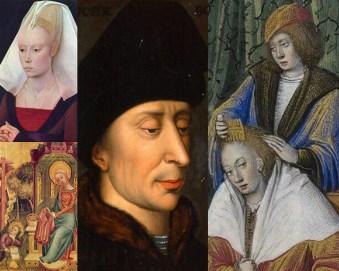
©Photo. R.M.N. / R.-G. OjŽda

Since the inception of the project, the MALMECC team have conducted an international project workshop dedicated to methodological innovation in late medieval studies (2017), and a series of  international study days (2018-19), focussing on late medieval ecclesiastic courts, late medieval multilingualism and cultural exchanges across linguistic boundaries, and cardinals’ and papal households of Avignon as transcultural hubs. A fourth international study day probing the transnational qualities of courtly life in north-western Europe is scheduled for March 2019 in Liège (Belgium).
In the project conference, we hope to unite as many strands of court studies as possible and invite speakers from any discipline engaged with the long fourteenth century (c. 1280-1450) to join us in exploring phenomena of late medieval courtly life from a transdisciplinary angle. Submissions for papers may address (but need not be limited to) one or several of the following thematic strands:

– New and unusual methodological approaches to the study of European courts and court cultures

– Blurring anachronistic boundaries set by modern scholarship

– Consciously exploring the interstitial spaces of the sacred-secular, courtly-urban-rural, virtuous-obscene, courtly-uncourtly-pastoral

– Forging links between liturgy, sound/music and space/architecture

– Music and the senses at court

– Space and place, visibility and invisibility, hearing and overhearing, silence and noise in late medieval courtly life

– Gender, genealogies, sexualities, marriage and celibacy at secular and ecclesiastical courts

– Court careers, courtly roles and their performativity

– Court communications: speech and language, multilingualism, speaking and singing, crimes of speech and slander

– Patronage, performance and cultural productions at courts: art, literature, music and entertainment, courtly diversions and their audiences

– Memory, identity and lineage

– Courtly ecologies of sounds, bodies, materials, identities, power

– Economics of the court; the court and the city; the court and the countryside

– The geography and limits of the court: boundaries, definitions, territories, institutions

– Courtly alterity: courtly discourses on race, sexuality, (social) differences and disability

– European courts and court studies in a global context

Please send abstracts of 250-400 words to Martha Buckley, project support coordinator (martha.buckley@humanities.ox.ac.uk). Deadline: 5 May 2019.

Source : MALMECC

Publié dans Appel à contributions | Laisser un commentaire

Exposition – Le Maître d’Elsloo: D’une main solitaire à une collection de maîtres

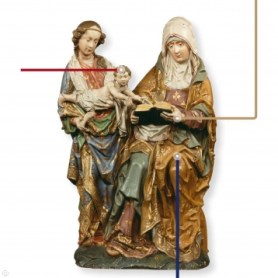
Le Bonnefantenmuseum présente une exposition unique et très attendue de sculptures en bois de la fin du Moyen Âge, consacrée au phénomène du « Maître d’Elsloo ». Qui est, ou devrait-on dire, qui sont le(s) Maître(s) d’Elsloo ? Plusieurs musées, dont le Louvre et le Victoria and Albert Museum, mais aussi de nombreuses églises de l’eurorégion ont prêté leurs statues. L’exposition nous apprend que le Maître d’Elsloo n’est pas une notion tangible, mais davantage une collection de figures solitaires. Jusqu’au 16 juin 2019, plus de cinquante sculptures seront réunies dans le cadre de l’exposition intitulée Le Maître d’Elsloo. D’une main solitaire à une collection de maîtres.

crop_50169_colw_358

Informations pratiques :

22.02.2019 t/m 16.06.2019

Bonnefantenmuseum
Avenue Céramique 250
6221 KX Maastricht

Source : Bonnefantenmuseum

Publié dans Exposition | Laisser un commentaire