Appel à contribution – Les objets du voyage, le voyage des objets. Culture matérielle et représentations du Moyen Âge au Grand Tour

Sous l’influence des « Cultural studies », les études relevant de la culture matérielle ont connu un renouveau considérable ces dernières années. Dans le sillage de l’ouvrage de Richard A. Goldthwaite, The Empire of Things: Consumer Demand in Renaissance Italy (1987) ou de celui, entre autres, de Daniel Roche pour la période moderne, Histoire des choses banales. Naissance de la consommation dans les sociétés traditionnelles (XVIIe- XIXe siècles), (1997), les objets de la vie quotidienne ont été analysés comme des facteurs clés pour comprendre l’évolution de la société ou les changements économiques.Tandis que bon nombre d’études ont privilégié le monde des objets dans leur cadre domestique (Marta Ajmar et Flora Dennis (eds), At Home in Renaissance Italy, London, 2006) et se sont penchées sur la thématique de la consommation pour éclairer le comportements des élites, cette journée d’étude se propose d’élargir la perspective, de franchir le seuil de la demeure et de s’aventurer sur les chemins européens  afin de considérer la place des objets dans la construction de l’identité culturelle du Moyen Âge à l’aube du Grand Tour. Les analyses porteront sur les objets matériels et immatériels envisagés dans un contexte spatio-temporel et montreront dans quelle mesure les commodités ou raretés participent à la fabrique du voyage.

Envisager le voyage au prisme des objets comporte une double approche selon que l’on considère le chemin aller ou retour du pèlerin ou du voyageur, les objets qu’il emporte ainsi que ceux qu’il rapporte de ses pérégrinations. Aux questions relatives à l’acquisition en amont d’objets utiles au voyage (habits, guides, cartes, lettres de recommandation etc…) viennent se greffer celles du désir, du goût et du plaisir qui se superposent à l’image du voyage perçu dans sa double acception de traversée et labeur (« travel » et « travail » en anglais). Quels sont donc les objets dont se munissent les voyageurs, ceux qu’ils découvrent et décrivent dans leurs récits, ceux qu’ils reçoivent et ceux qu’ils rapportent, soit par choix personnel, soit dans le but de fournir des preuves tangibles de leurs périples ? Certains de ces objets sont attendus par la communauté d’origine, telles les enseignes des pèlerins, coquilles Saint-Jacques ou fragments de relique, d’autres présentent un caractère plus singulier, telles la paire de chaussures érigée en trophée par le voyageur Thomas Coryate à la fois au sein de ses Crudities et dans l’église de son village d’Odcombe. Tandis que l’inquiétante étrangeté du voyageur cède progressivement la place à sa stupidité dans l’espace narratif et théâtral élisabéthain, le cure-dent devient l’un des attributs les plus cités dans les représentations de la période. Dans la comédie shakesperienne As You Like It, le personnage de Jacques livre une définition organique de sa mélancolie qui prend sa source dans les choses vues au détour de ses voyages (« …extracted from many objects, and indeed the sundry contemplation of my travels », IV,1, 13). L’étude des idiosyncrasies rhétoriques des voyageurs permettront de dresser un inventaire patrimonial des artefacts discursifs mis en œuvre dans l’espace textuel.

Trois axes seront retenus :

  1. Les objets matériels du voyage (pratiques, valeurs économiques, valeurs symboliques)
  2. La représentation des objets dans l’espace textuel/scénique
  3. Les artefacts rhétoriques des voyageurs

Modalités de soumission

Les propositions, sous la forme d’un titre, d’un résumé d’environ 250 mots et d’une brève notice bio-bibliographique, sont à envoyer au plus tard

le 15 septembre 2017

à Anne Geoffroy(anne.geoffroy9@gmail.com).

Les communications n’excèderont pas 20 minutes.

Journée d’études le 10 novembre 2017

Organisateur

Université de Versailles Saint-Quentin-en-Yvelines

Laboratoire DYPAC (Dynamiques Patrimoniales et Culturelles) EA 2449

Axe Cultures, patrimoines et savoirs

Comité scientifique

Anne Geoffroy, PRAG, Docteur en littérature anglaise des XVIe et XVIIe siècles.

Source : Calenda

Publié dans Appel à contributions | Laisser un commentaire

Offre d’emploi – Assistant Professor of French/Francophone Studies

Indiana University is an equal employment and affirmative action employer and a provider of ADA services. All qualified applicants will receive consideration for employment without regard to age, ethnicity, color, race, religion, sex, sexual orientation or identity, marital status, national origin, disability status or protected veteran status. Indiana University does not discriminate on the basis of sex in its educational programs and activities, including employment and admission, as required by Title IX. Indiana University’s non-discrimination statement is found in policy UA-01 at http://www.policies.iu.edu. Questions or complaints regarding Title IX may be referred to the U.S. Department of Education Office for Civil Rights or the university Title IX Coordinator. The address for Indiana University’s Title IX Coordinator is: 400 E. 7th Street, Poplars 833, Bloomington, IN 47405. The Annual Security Reports, containing policy statements and crime statistics for Indiana University campuses, are available through Public Safety and the IU Police Department web sites at protect.iu.edu/police-safety/annual-reports/index.html. A paper copy will be provided upon request from Public Safety at iups@iu.edu.

index

Position Details

Title Assistant Professor of French/Francophone Studies
Appointment Status Tenure Track
Department IU Bloomington French and Italian
Position Summary

Tenure-track position as Assistant Professor, beginning August 2018, to teach graduate and undergraduate literature and culture/civilization courses. Teaching load of 2 courses per semester. Primary specialization in Medieval French/Medieval Francophone literature and culture is required.

Basic Qualifications

PhD in French/Francophone Studies required by August 15, 2018. Candidates should have native or near-native command of French and English; an outstanding record in both research and teaching; and a commitment to undergraduate as well as graduate instruction, curricular development and the principles of a liberal arts education at all levels.

Department Contact for Questions

Chair, Search Committee for French/Francophone Assistant Professor, fritdept@indiana.edu, 812-855-5458

Additional Qualifications

We are particularly interested in scholars engaged in innovative cross-cultural and/or interdisciplinary research involving additional fields such as early music, digital humanities, Mediterranean studies, visual studies, material studies, critical theory, etc., and who are enthusiastic about bringing such innovations into the classroom at the undergraduate and graduate levels in both French and English.
Salary and Rank Salary commensurate with experience

Special Instructions

Review of applications will begin on Dec. 1, 2017. Submit letter of application, CV, a teaching dossier (one-page teaching statement, course evaluations, one graduate course syllabus and one undergraduate course syllabus) and three to four letters of support electronically via IU’s People Admin system. You may also mail your application to Chair, Search Committee for French/Francophone Assistant Professor, Dept. of French and Italian, Indiana University, Global and International Studies Building, 355 N. Jordan Ave., Bloomington, IN 47405-1105.

The College of Arts and Sciences is committed to building and supporting a diverse, inclusive, and equitable community of students and scholars. Indiana University is an equal opportunity and affirmative action employer and a provider of ADA services. All qualified applicants will receive consideration for employment without regard to age, ethnicity, color, race, religion, sex, sexual orientation or identity, national origin, disability status or protected veteran status.

For Best Consideration Date 12/01/2017
Expected Start Date 08/01/2018
OAA # 21708-21

Applicant Documents – Required Documents

Curriculum Vitae
Letter of Application
Statement of Teaching Philosophy
Sample Syllabus
Course Evaluation

Optional Documents

Publication 1
Publication 2
Publication 3
Other

Source : Indiana University

Publié dans Offre d'emploi | Laisser un commentaire

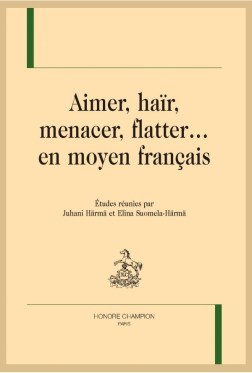
Publication – « Aimer, haïr, menacer, flatter… en moyen français », éd. Juhani Hämä et Elina Suomela Hämä

Si les sentiments qui animent les hommes sont éternels, leurs manifestations par des paroles ou des actes varient selon les époques et les civilisations comme en attestent les dix-neuf contributions littéraires, linguistiques et philologiques qui sont contenues dans ce volume et qui couvrent la période allant de 1350 environ jusqu’au début du XVIe siècle. Cette période – qui est celle du moyen français – représente un objet d’études particulièrement intéressant car elle marque la transition entre le monde médiéval et les Temps modernes. Comme on peut le constater, les différents genres (poésie et prose, textes dramatiques et édifiants, récits de pèlerinage…) disposent chacun de ressources linguistiques propres pour exprimer les sentiments amoureux et la passion, ainsi que la haine, le dégoût, les injures et les menaces.

book-08533606

Ce volume est destiné à la fois à un public de spécialistes du moyen français mais également à toutes les personnes intéressées par la culture et la littérature médiévales en général.

Table des matières : ici

Informations pratiques :

Juhani Hämä et Elina Suomela Hämä (éd.), Aimer, haïr, menacer, flatter… en moyen français, Paris, Honoré Champion, 2017 (Bibliothèque du XVe siècle, 83). 280 p., 15 x 22 cm. ISBN : 9782745336064. Prix : 45 euros.

Source : Honoré Champion

Publié dans Publications | Laisser un commentaire

Colloque – Die Stadt im Schatten des Hofes? Bürgerlich-kommunale Repräsentation in Residenzstädten des Spätmittelalters und der Frühen Neuzeit

2. Symposium des Projekts „Residenzstädte im Alten Reich (1300–1800)“ der Akademie der Wissenschaften zu Göttingen in Kooperation mit dem Institut für Kunstgeschichte und Musikwissenschaft der Johannes Gutenberg-Universität Mainz und der Akademie des Bistums Mainz, Erbacher Hof

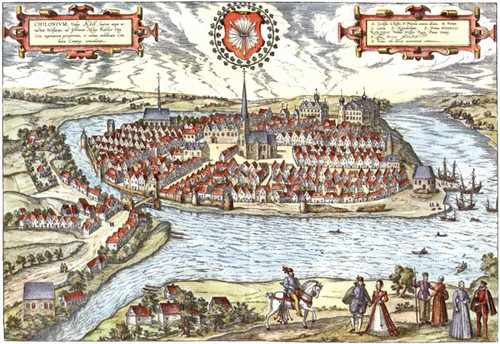
Mit einer Residenzstadt verbindet man zumeist eine große Schlossanlage, fürstliche Bauten und Gärten, prächtige Plätze und Straßen sowie höfische Kunstsammlungen. Das urbane Gefüge steht ganz im ‚Zeichen‘ eines Fürsten und seiner Residenz. Die Architektur und Kunst der Kommune und ihrer Bürger tritt hingegen in den Hintergrund. Die Stadt bleibt im Schatten des Hofes geradezu unsichtbar. Doch ist diese von oben nach unten gerichtete Perspektive, die lange Zeit auch die Forschung bestimmte, nicht völlig verzerrt? Sind nicht gerade die kleineren und kleinsten Residenzstädte vielmehr durch das integrative und konkurrierende Verhältnis von Stadt und Fürst, Gemeinde und Hof, geprägt? Ausgehend von diesem Blickwechsel widmet sich das Akademieprojekt „Residenzstädte im Alten Reich (1300–1800)“ in seinem zweiten internationalen Symposium in dezidiert städtischer Perspektive der bürgerlich-kommunalen Repräsentation in europäischen Residenzstädten vom 14. bis zum frühen 19. Jahrhundert. In interdisziplinären Vorträgen werden vor allem die kulturellen Berührungen, Austauschbeziehungen und Konflikte von Stadt und Gemeinde mit dem Stadtherrn und dessen Hof ausgelotet. Dabei interessieren besonders visuelle, materielle, textuelle und performative Formen, Praktiken und Medien bürgerlich-kommunaler Selbstdarstellung sowie deren Produzenten, Vermittler und Adressaten. In vier Sektionen ist der Blick auf den Stadtraum und die Stadtgestalt, auf Bauwerke, Plätze, Gärten und deren Ausstattungen, auf Aktions- und Handlungsräume sowie auf einzelne Bilder, Texte und Objekte gerichtet.

csm_Kielansicht_kl_9eec152890

Programme :

Donnerstag, 14. September 2017

14:00-15:00 Uhr : Registrierung

15:00-15:15 Uhr : Peter Reifenberg (Mainz) / Gerhard Fouquet (Kiel): Begrüßung

15:15-15:30 Uhr : Matthias Müller (Mainz): Einführung

SEKTION 1: DIE RESIDENZSTADT UND IHRE AUSSENRÄUME
Moderation: Konrad A. Ottenheym (Utrecht)

15:30-16:15 Uhr : Insa Christiane Hennen (Halle-Wittenberg): Residenz – Universitätsstadt – Schauplatz der Reformation: Das Stadtbild Wittenbergs im 16. Jahrhundert
16:15-17:00 Uhr : Ulrich Schütte (Marburg): Der Raum im Schatten des Herrschers. Die ‚leere‘ Esplanade zwischen Stadt und Zitadelle
17:00-17:30 Uhr : Kaffeepause

17:30-18:15 : Brigitte Sölch (Florenz/Bochum): Ferrara, Mailand, Rom: Das „Forum“ im Spannungsfeld politischer Raumbildungsprozesse im 15. und 16. Jahrhundert

18:15-19:00 Uhr : Stefan Schweizer (Düsseldorf): Im Schatten der Hofgärten? Das Problem der bürgerlichen Gartenkultur in Residenzstädten

19:30 Uhr : Empfang im Erbacher Hof (für geladene Gäste)

Freitag, 15. September 2017

SEKTION 2: DIE RESIDENZSTADT UND IHRE INNENRÄUME
Moderation: Andreas Tacke (Trier)

09:15-10:00 Uhr : Inga Brinkmann (Marburg): Bürgerliche Repräsentation im residenzstädtischen Kirchenraum

10:00-10:45 Uhr : Elke Valentin (Stuttgart): Geteilte Räume, geteilte Objekte? Porträts, Waffen und Kunst in Universität, Rathaus und beim Tübinger Schlosshauptmann Nikolaus Ochsenbach
10:45-11:15 Uhr : Kaffeepause

11:15-12:00 Uhr : Gabriele Beßler (Stuttgart): An den Rändern fließend: Städtisch-höfische (Kunst-)Sammlungen in Residenzstädten – Versuch einer Fokussierung
12:00-12:45 Uhr : Berit Wagner (Frankfurt am Main): Kontaktzonen: Residenz, Residenzstadt und Kunsthandel

12:45-14:15 Uhr : Gemeinsames Mittagessen im Erbacher Hof

SEKTION 3: DIE RESIDENZSTADT ALS AKTIONS- UND HANDLUNGSRAUM
Moderation: Harriet Rudolph (Regensburg)

14:15-15:00 Uhr : Krista De Jonge (Leuven): Räumliche Repräsentation zwischen Stadt und Hof in den Niederlanden des 16. Jahrhunderts. Der Casus Brüssel

15:00-15:45 Uhr : Ariane Koller (Bern): Performativität und Materialität geteilter Macht. Die Delfter pompa funebris für Wilhelm von Oranien (1533–1584) und die Memorialkultur der niederländischen Statthalter
15:45-16:15 Uhr : Kaffeepause

16:15-17:00 Uhr : Sebastian Fitzner (Berlin): Grundsteinlegungen als mediale Akte kommunal-höfischer Repräsentation in Residenzstädten

17:00-17:45 Uhr : Stefan Bürger (Würzburg): Die Werkmeister und ihre Wohnhäuser. Architekten in den Amts- bzw. Residenzstädten Pirna und Halle/Saale als Akteure zwischen Hof und Stadt (1500 bis 1555)
17:45-19:00 Uhr : Sitzung der Leitungskommission

19:30 Uhr : Abendessen im Restaurant „Heiliggeist“

Samstag, 16. September 2017

SEKTION 4: DIE RESIDENZSTADT IM SPIEGEL VON BILDERN, TEXTEN UND OBJEKTEN
Moderation: Stephan Hoppe (München)

09:15-10:00 Uhr : Birgitt Borkopp-Restle (Bern): Textilien in der höfischen Repräsentation – ein Handlungsfeld für die Städte
10:00-10:45 Uhr : Elisabeth Gruber (Salzburg/Krems): Objekte bürgerlich-adeliger Repräsentation in den Residenzstädten des Herzogtums Österreich: Wien, Wiener Neustadt, Graz und Linz
10:45-11:15 Uhr : Kaffeepause

11:15-12:00 Uhr : Ines Elsner (Berlin/Göttingen): Quid pro Quo?! Huldigungssilbergeschenke der (Residenz-)Städte Lüneburg, Celle, Hannover und Göttingen an die Welfen des Neuen Hauses Lüneburg 1562–1706
12:00-12:45 Uhr : Torsten Fried (Schwerin/Greifswald): Bilder aus Texten. Mecklenburg-Schweriner Residenzstädte in Briefen und Reisebeschreibungen am Ende des Alten Reiches
12.45-14:00 Uhr : Gemeinsames Mittagessen im Erbacher Hof

14:00¬-16:00 Uhr : Christian Katschmanowski (Bruchsal): Stadtführung durch die ehemalige Residenzstadt Mainz
oder
Felicitas Janson (Mainz): Führung durch den Hohen Dom St. Martin zu Mainz

16:30-18:30 Uhr : Arbeitsstellenbesprechung

19.00 Uhr : Ende

Informations pratiques :

TAGUNGSORT
Erbacher Hof
Akademie & Tagungszentrum des Bistums Mainz
Grebenstraße 24–26
55116 Mainz

ANMELDUNG
E-Mail: ebh.akademie@bistum-mainz.de
Telefon: +49 (0)6131.257-550 / -551 (ab 07.08.2017)

TAGUNGSKOSTEN
Tagungsbeitrag (inkl. Kaffeepausen und Tagungsgetränke): 27 Euro
für Studierende (bis 27 Jahre): 10 Euro
Verpflegungspauschale (zwei Mittagessen): 27 Euro
Verpflegungspauschale (zwei Abendessen): 19 Euro
Übernachtung (inkl. Frühstück) im EZ pro Nacht: 55 Euro
Übernachtung (inkl. Frühstück) im DZ pro Nacht: 74 Euro

KONTAKT & INFORMATION
Sascha Winter M.A.
Akademie der Wissenschaften zu Göttingen
Projekt „Residenzstädte im Alten Reich (1300-1800)“
Arbeitsstelle Kiel
c/o Johannes Gutenberg-Universität Mainz
Institut für Kunstgeschichte und Musikwissenschaft
Jakob-Welder-Weg 12
55128 Mainz
Telefon: +49 (0)6131.39-29390
E-Mail: sawinter@uni-mainz.de

Source : ArtHist

Publié dans Colloque | Laisser un commentaire

Colloque – Ordres militaires et territorialité : entre Orient et Occident

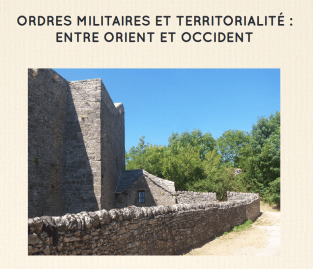
Nous proposons ici, non pas d’envisager une étude exhaustive et globale de la relation des ordres militaires à la territorialité, mais plutôt de réfléchir sur les dimensions qu’elle recouvre, d’essayer de discerner les particularités qui lui sont propres, les caractéristiques des implantations des ordres, variables selon le niveau d’échelle, la zone géographique et la société considérés. Afin de tenir compte de ces spécificités inhérentes au rapport, conscient ou non, que les ordres militaires entretiennent avec les territoires qu’ils occupent (envisagés dans leurs dimensions sociales, humaines, économiques, juridiques, matérielles, culturelles, etc.), même partiellement et pour une durée variable, ainsi que la manière dont leur présence s’inscrit dans ces lieux, plusieurs axes et directions, évidemment liés les uns aux autres et en interaction constante, sont soumis à la réflexion des participants.

Ordres militaires

Programme :

20 octobre 2017

8h45 Accueil des participants
9h00 Marie-Anna Chevalier (Université Paul-Valéry Montpellier 3), Introduction

9h30 1ère séance La France Méridionale
Présidée par Daniel Le Blévec (Université Paul-Valéry Montpellier 3)

Damien Carraz (Université Clermont Auvergne) – Perception, délimitation et administration des territoires dans l’ordre de l’Hôpital : le cas du prieuré de Saint-Gilles (XIIe-XIVe siècle)
Maxime Bonnal (Université Lumière Lyon 2) – La commanderie templière de Jalès : organisation et gestion du territoire (XIIe-XIIIe siècles)
Yoan Mattalia (Université Jean Jaurès Toulouse 2) – Ordres religieux militaires et territorialité dans le sud-ouest de la France aux XIIe et XIIIe siècles
10h45 Discussion et pause

11h30 2ème séance L’orient chrétien
Présidée par Damien Carraz (Université Clermont Auvergne)

Marie-Anna Chevalier (Université Paul-Valéry Montpellier 3) – L’établissement des templiers et des hospitaliers en Morée et en Romanie : une emprise territoriale contestée
Simon Dorso (Université Lumière Lyon 2, Centre de Recherche Français à Jérusalem) – Stratégies d’implantation et d’administration dans un territoire en sursis : templiers et hospitaliers dans la Galilée du XIIIe siècle
12h15 Discussion
12h30 Pause déjeuner

14h30 3ème séance L’ordre teutonique et l’ordre de Saint-Lazare
Présidée par Philippe Josserand (Université de Nantes)

Sylvain Gouguenheim (École Normale Supérieure de Lyon) – Conquête et maîtrise de l’espace : les Teutoniques en Prusse
Rafaël Hyacinthe (Laboratoire de Médiévistique Occidentale – Université Paris I) – Un ordre sous influences : l’Ordre de Saint-Lazare de Jérusalem et la territorialité du XIIe au XVe siècle

15h30 Discussion

16h00 Philippe Josserand (Université de Nantes), Conclusions

Informations pratiques :

Université Paul-Valéry Montpellier, Salle des colloques 2 – 3, Site Saint-Charles, Rue du Professeur Henri Serre
Montpellier, France (34)

Vendredi 20 octobre 2017

Source : Calenda

Publié dans Colloque | Laisser un commentaire

Offre d’emploi – Postdoctoral researcher ‘Medieval Prophylactic Healthcare and The Public’

Job description

The Amsterdam School of Historical Studies (ASH), one of the six research schools of the Faculty of Humanities, currently has a vacant postdoctoral position as part of the ERC project Healthscaping, led by prof. G. Geltner.

HealthScaping seeks to trace the development and impact of preventative healthcare policies, medical discourses and social and religious action in the continent’s two most urbanized and richly documented regions in the later Middle Ages, Italy and the Low Countries. The project taps numerous written, material and visual sources and archaeological data from several sites, and examines them also by critically engaging the insights of governmentality studies, cultural-spatial analysis and actor-network theory. A multidisciplinary team, working in a Geographical Information Systems environment and generating innovative urban health maps, will recover earlier societies’ struggles with domestic and industrial waste, travel and labor hazards, food quality, and social and religious behaviours considered harmful or dangerous.

Within this framework, an advanced postdoctoral researcher will scrutinize textual, material and visual sources, both in and out of print, for discussions on and prescriptions for pursuing preventative health in medical theory, as they emerge from regimens of health, medical advice letters, courtesy books and images informing the public on behavioral routines and interventions benefitting health; sermons; urban statutes and court documents; manuals of architecture; and works on economic and social issues, including urban panegyric. The researchers will examine normative expressions as sites for the negotiation of bio-power, for instance among urban policy makers, ecclesiastical institutions, guilds and urban residents, and on the shifting boundaries between personal and public health.

Requirements

Applicants must have:

  • a PhD in medieval urban, social or cultural history;
  • a research and publication record commensurate with their career stage;
  • specialist knowledge of premodern medical history (theory, policy and practice);
  • significant research experience in European manuscript libraries;
  • a thorough command of Latin, excellent English and a very good working knowledge of Middle Dutch and Italian, as well as pertinent modern languages;
  • a strong theoretical background in cultural studies, sociology of knowledge and visual/material culture;
  • a strong creative and cooperative attitude and willingness to engage in collaborative research in a multidisciplinary environment; and
  • strong organizational skills.

Conditions of employment

The postdoctoral researcher will be appointed for 26,6 hours (0.7 FTE) hours per week) for a maximum period of four years at the Department of History, European Studies & Religious Studies of the Faculty of Humanities at the University of Amsterdam. The research will be carried out under the aegis of ASH. The appointment is initially for a period of 12 months; contingent on satisfactory performance it will be extended by a maximum of 36 months. The intended starting date of the contract is 1 January 2018. The gross monthly salary (on full-time basis) will range from €3,475 to €3,839 in accordance with the Collective Labour Agreement for Dutch Universities.

Employer

University of Amsterdam

With over 5,000 employees, 30,000 students and a budget of more than 600 million euros, the University of Amsterdam (UvA) is an intellectual hub within the Netherlands. Teaching and research at the UvA are conducted within seven faculties: Humanities, Social and Behavioural Sciences, Economics and Business, Law, Science, Medicine and Dentistry. Housed on four city campuses in or near the heart of Amsterdam, where disciplines come together and interact, the faculties have close links with thousands of researchers and hundreds of institutions at home and abroad.

The UvA’s students and employees are independent thinkers, competent rebels who dare to question dogmas and aren’t satisfied with easy answers and standard solutions. To work at the UvA is to work in an independent, creative, innovative and international climate characterised by an open atmosphere and a genuine engagement with the city of Amsterdam and society.

Department

Amsterdam School of Historical Studies

Research at the Faculty of Humanities is carried out by six research schools under the aegis of the Amsterdam Institute for Humanities Research (AIHR). The Amsterdam School of Historical Studies (ASH), one of the six research schools, represents and fosters the study of the human past from Antiquity to the present day. It brings together more than 200 academics from Amsterdam’s Faculty of Humanities, who participate in ca. 25 research groups. ASH does not limit itself to a particular period, discipline or method, but integrates a variety of (inter)disciplinary perspectives, including history, history of art, literature and religious studies. It encourages collaborations between scholars along thematic lines (e.g. Religion, the City, Conflict), geographical focus (e.g. Mediterranean History,  American Studies, Modern Germany) and in terms of period (e.g. Antiquity, the Middle Ages, Early Modern and Modern History).

Additional information

For further information, please contact:

Please submit your complete application no later than 24 September 2017 to:

Only qualified applicants, as detailed above, should apply.

Applications should include only the following information, in one PDF file (not zipped):

  • a letter of motivation;
  • a full academic CV, including a list of publications;
  • the names and contact details of two referees who may be approached by the selection committee;
  • an original article/chapter-length text (c. 10,000 words) relating directly to the research field;
  • in case the PhD has not been formally awarded yet: a statement from the dissertation supervisor (or equivalent) of the candidate’s current status and graduation plan.

Applicants must have completed their PhD before the start of this postdoctoral project.

Only complete applications submitted as one PDF file to the above mentioned email address will be considered.

Please state vacancy number 17-408 in the subject line of your application.

Interviews will take place in October. For candidates living abroad interviews may be held via Skype.

Source : Academic Transfer

Publié dans Offre d'emploi | Laisser un commentaire

Colloque – Calendriers d’Europe et d’Asie

Alors que l’aspect astronomique et mathématique du calendrier des grandes civilisations est relativement bien connu, le calendrier manuscrit ou imprimé, utilisé au quotidien pour « habiter le temps », a été peu étudié pour lui-même, que ce soit en Europe ou en Asie.

Confronter, scruter, faire résonner les cycles calendaires pro- duits en Europe, aussi bien dans la Grèce ou la Rome antique, qu’au Moyen Âge, avec les calendriers retrouvés dans les tombes et grottes en Chine entre le IIIe siècle avant notre ère et le Xe siècle après notre ère, ou encore produits au Japon du VIIIe au XVe siècle et plus tardivement en Asie du Sud et du Sud-Est, ont fait l’objet de deux ateliers. Le premier a traité des « Calendriers imagés et calendriers en images » (mai 2016), le second des « Supports, usages et fonctions des calendriers » (octobre 2016).

Lors du colloque conclusif, quatre thèmes seront abordés : Calendriers et images, Calendriers savants, Calendriers du quotidien, Calendriers et nature. Une quinzaine de spécialistes, venus de France, d’Europe et d’Asie, interviendront sur ces différents sujets.

Inscription gratuite mais obligatoire, dans la limite des places disponibles : calendriers@enc-sorbonne.fr

Calendriers.png

Programme :

Mercredi 4 octobre

9 h 30 – 10 h : accueil
10 h – 10 h 15 : ouverture

Calendriers et images
Présidence Pierre-Olivier Dittmar (Centre de recherches historiques, Ehess)

10 h 15 – 10 h 45 : Valérie Huet (Université de Bretagne Occidentale) – « Les calendriers romains en images (fin IIe siècle-milieu IVe siècle apr. J.-C.) »
Pause café

11 h – 11 h 30 : Nadia Ali (British Museum/Oxford University) – « Les calendriers de la Syrie omeyyade : formes, fonctions et iconographie »
11 h 30 – 12 h : Olivier Guyotjeannin (École nationale des chartes) – « De signes et d’images : les calendriers “des illettrés” dans l’Europe médiévale et moderne »
Discussion

12h 30 – 14 h 30 : déjeuner Calendriers savants
Présidence Jean-Patrice Boudet (Université d’Orléans)

14 h 30 – 15 h : Gerhard Leinss (Université Humboldt, Berlin) – « The adoption of Chinese calendars in Japan and their impact on seasonal poetry written in the 7th to 10th centuries »
15 h – 15 h 30 : Gregory Kourilsky (École française d’Extrême-Orient) – « Jours propices, jours funestes : calendriers traditionnels en milieu bouddhiste tai »
Discussion et pause café

16 h 15 – 16 h 45 : Farouk Yahya (Ashmolean Museum, University of Oxford) – « The “Ketika Lima” (Five Times): A Form of Malay Divinatory Calendar »
16 h 45 – 17 h 15 : Alexandre Tur (Bibliothèque nationale de France) – « Des éphémérides aux almanachs : les transformations du recours au calendrier dans les pratiques astrologiques européennes du XVe siècle »
Discussion

Jeudi 5 octobre

Calendriers du quotidien
Présidence Caterina Guenzi (Centre d’études de l’Inde et de l’Asie du Sud, Ehess)

9 h 30 – 10 h : Meriem Sebai (Université Paris I Panthéon Sorbonne) – « Calendrier du quotidien : insertions et fonctions du calendrier
épigraphique en Afrique romaine »
10 h – 10 h 30 : Daniel Patrick Morgan (Laboratoire Sphere, Cnrs & Paris 7 et Paris 1) – « Les derniers jours du défunt : l’Empire et l’individu vus des calendriers récemment excavés des tombes du début de la Chine impériale »
Discussion et pause café

11 h – 11 h 30 : Alain Arrault (École française d’Extrême-Orient – Cecmc) – « Les activités quotidiennes dans les calendriers de la Chine antique et médiévale »
11 h 30 – 12 h : Matthieu Desachy (Bibliothèque inter-universitaire de Montpellier) – « Calendriers municipaux du Midi de la France au Moyen-Âge (Cordes, Monségur, Montpellier, XIIIe-XIVe siècles) »
Discussion

12h 30 – 14 h 30 : déjeuner

Calendriers et nature
Présidence Frédéric Duval (École nationale des chartes)

14 h 30 – 15 h : Catherine Chadefaud (Classes préparatoires aux Grandes Écoles) – « La crue du Nil, le calendrier et le rythme des travaux des champs dans l’Égypte ancienne (de l’Ancien Empire à l’époque gréco-romaine) »
15 h – 15 h 30 : Perrine Mane (Cnrs, Centre de recherches historiques) – « Calendriers médiévaux et nature »
Discussion et pause café

16 h – 16 h 30 : Li Guoqiang (Université Paris Ouest-Nanterre La Défense) – « Calendriers et phénologie dans la Chine antique, du XIIIe siècle avant notre ère au IIe siècle »

En guise d’épilogue

16 h 30 – 17 h : Christine Bénévent (École nationale des chartes) et Marc-Édouard Gautier (Bibliothèque municipale d’Angers) – « Les mutations du calendrier dans les livres liturgiques et les livres d’heures français imprimés (1450-1530) »
Discussion

Informations pratiques :

Mercredi 4 et jeudi 5 octobre 2017

École nationale des chartes 65, rue de Richelieu, Paris 2e (salle Léopold-Delisle)

Organisé par Alain Arrault (Efeo), Olivier Guyotjeannin (Enc) et Perrine Mane (Crh)

Publié dans Colloque | Laisser un commentaire

Offre d’emploi – 4 positions (3 PhDs, 1 Postdoc) in the NWO VICI Project Citizenship Discourses in the Early Middle Ages (400-1100)

We are looking for four researchers (3 PhD candidates and 1 Postdoc researcher) to form the team of the NWO VICI project Citizenship Discourses in the Early Middle Ages (400-1100), granted to dr. Els Rose and running from 2017-2022.

The project as a whole explores how the early medieval world employed citizenship terminology inherited from the classical and biblical past, to shape and give expression to the new social, political and religious identities of Europe’s post-Roman inhabitants. The project examines the radical semantic changes to the use of citizenship terminology in a variety of written sources dating to the period 400-1100 and applies discourse analysis to these sources in order to lay bare their social implications.

Capture d_écran 2017-08-31 à 22.25.25

A full description of the project is available here: https://www.uu.nl/en/research/utrecht-centre-for-medieval-studies/research/current-projects

The three PhD researchers will investigate citizenship discourse in the following domains of early medieval culture:

PhD 1 will work on hagiography and apocryphal literature (project P3);

PhD 2 will study liturgy and sermons (project P4);

PhD 3 will examine the role of the Latin language in the process of percolation of citizenship discourse through to all layers of society (project P5);

The Postdoc will concentrate on the legal aspects of citizenship in a Christianising world, both in the centres and the peripheries of the (former) Roman Empire, in urban as well as non-urbanised settings (project P2 shared with the PI; project P6).

Qualifications

We are looking for four excellent and enthusiastic researchers who fulfil the following requirements:

For the PhDs:

Master’s Degree in Medieval, Ancient or Classical Studies or a related field;
Demonstrable knowledge of Latin and the willingness to specialise in Medieval Latin;
Excellent communication skills in English, both in written and spoken form;
Excellent writing skills at an academic level;
Preparedness and ability to work both as a creative and independent scholar and as part of an academic team;
Ability to speak or willingness to learn Dutch

For the Postdoc, in addition to the above:

A completed and approved PhD-thesis in a relevant field of studies;
Demonstrable knowledge of and experience in researching ancient or medieval legal history is an asset.

Offer

We offer a position in an ambitious research project, embedded in the rich interdisciplinary tradition of Medieval Studies at Utrecht University. You will carry out one of the sub-projects, in which process you will have the opportunity to choose your own focus and methodological paths, depending on your expertise and choice of sources, all in consultation with the project leader.

You will be based at the Department of Languages, Literature and Communication (TLC) and participate in the Utrecht Centre for Medieval Studies (www.uu.nl/ucms), which co-ordinates the Utrecht medievalists in the Institute for Cultural Inquiry (ICON) and the Research Institute for History and Art History (OGK). Both the department and UCMS provide a stimulating and internationally oriented research environment. As a project member you will take part in the international conferences and other activities the project will initiate. All projects require a limited amount of teaching, which will allow you to build up or extend a teaching record.

We offer

Three PhD-positions at 1.0 fte, starting 1 March 2018, initially for a period of 18 months. Upon good performance and a positive evaluation, the contract will be extended for the remaining 30 months period (4 years in total). The gross monthly salary will start at € 2,222 in the first year and ends at € 2,840 in the fourth, on a full time basis (P-scale of the Collective Employment Agreement Dutch Universities);

and

A Postdoc-position at 1.0 fte, starting 1 March 2018 at the latest, initially for a period of one year. Upon good performance and a positive evaluation, the contract will be extended for the remaining 24 months period (3 years in total). The gross monthly salary ranges between € 3,238 and € 3,605 for a full-time employment, depending on experience and qualifications.

Salaries are supplemented with a holiday bonus of 8% and and a year-end allowance of 8.3% per year. In addition, Utrecht University offers excellent secondary conditions, including an attractive retirement scheme, (partly paid) parental leave and flexible employment conditions (multiple choice model). Here you’ll find more information about working at Utrecht University.

About the organization

A better future for everyone. This ambition motivates our scientists in their leading research and inspiring teaching. At Utrecht University, the various disciplines collaborate intensively on major societal themes. Our focus is on Dynamics of Youth, Institutions for Open Societies, Life Sciences and Sustainability.

The Faculty of Humanities has around 6,000 students and 900 staff members. It comprises four knowledge domains: Philosophy and Religious Studies, History and Art History, Media and Culture Studies, and Languages, Literature and Communication. With its research and teaching in these fields, the Faculty aims to contribute to a better understanding of the Netherlands and Europe in a rapidly changing social and cultural context. Enthusiastic and committed faculty members and excellent amenities in the historical city center of Utrecht, where the Faculty is housed, contribute to an inspiring working environment.

Additional information

Are you interested? Click here https://www.uu.nl/en/research/utrecht-centre-for-medieval-studies/research/current-projects for the full project description.

For further information, please contact dr. Els Rose via h.g.e.rose@uu.nl

Apply

Applications should include:

For the PhDs:

a letter stating qualifications and motivation;
a CV including a list of publications, with copies of relevant diplomas and a transcript of academic results;
a memorandum (in English, max. 1500 words) in which you reflect on the project as a whole as well as at least two of the indicated PhD-projects, expressing your ideas about specified research questions and parameters such as chronological and regional scope, sources, etc.;
an academic writing sample of 20-40 pages (1 or 2 published articles or a chapter from the MA thesis; language: English);
contact details of two referees (name, affiliation, phone number and e-mail address).

For the Postdoc:

a letter stating qualifications and motivation;
a CV including a list of publications, with copies of relevant diplomas;
a memorandum (in English, max. 1500 words) in which you reflect on the project as a whole as well as sub-projects P2 and P6, expressing your ideas about specified research questions and parameters such as chronological and regional scope, sources, etc.;
an academic writing sample of 20-40 pages (1 or 2 published articles or a chapter from the PhD thesis; language: English);
contact details of two referees (name, affiliation, phone number and e-mail address).

An interview is part of the selection procedure. Interviews will take place on 2 November 2017.

The application deadline is 12/10/2017

Source : Universiteit Utrecht

Publié dans Offre d'emploi | Laisser un commentaire

Publication – « Le récit des voyages et pèlerinages de Jean de Tournai, 1488-1489 », édité par Béatrice Dansette et Marie-Adélaïde Nielen

Après les années 1450, de nombreux voyageurs occidentaux naviguent depuis Venise vers Jérusalem pour gagner leur salut, malgré les plus grands périls. Leurs récits de pèlerinage, constituant un important corpus, sont de précieux témoins des liens existant depuis le ive siècle entre l’Europe et la Terre sainte.

Un marchand de Valenciennes, Jean de Tournai, en pèlerinage de 1488 à 1489 vers Rome, Jérusalem et Saint-Jacques de Compostelle, nous a laissé une relation de ses voyages mouvementés, riche de renseignements sur les régions qu’il traverse et la montée de l’individualisme qui caractérise cette époque pré-humaniste. En cette fin du XVe siècle, son texte, très vivant et précis, traduit également les bouleversements que connaissent l’Occident et le Proche-Orient et les rapports très conflictuels entre les Turcs ottomans, récents maîtres de Constantinople, et les puissances européennes, qui redoutent de ne pouvoir endiguer le flot turc.

le-recit-des-voyages-et-pelerinages-de-jean-de-tournai-1488-1489

Béatrice Dansette, docteur en Histoire, est spécialiste des récits de pèlerinage du Moyen Âge.

Marie-Adélaïde Nielen, archiviste-paléographe, conservateur en chef aux Archives nationales, est spécialiste des croisades et des États latins d’Orient, auxquels elle a consacré sa thèse d’École des Chartes.

Informations pratiques :

Béatrice Dansette et Marie-Adélaïde Nielen (éd.), Le récit des voyages et pèlerinages de Jean de Tournai, 1488-1489, Paris, CNRS Éditions, 2017 (Sources d’histoire médiévale). 15.5 x 24.0 cm, broché, 386 p. ISBN : 978-2-271-11624-6. Prix : 60 euros.

Source : CNRS Éditions

Publié dans Publications | Laisser un commentaire

Prix – Prix quadriennal de la Société royale de numismatique de Belgique

1.   La Société royale de Numismatique de Belgique, A.S.B.L. sous le Haut Patronage de S.M. le Roi, a créé un prix intitulé «Prix de la Société Royale de Numismatique de Belgique».  Sa cadence est en principe quadriennale.  Toutefois, le Jury n’a pas l’obligation d’attribuer le prix s’il estime qu’aucun des mémoires présentés ne le mérite.  La première attribution a eu lieu en 1981 et la plus récente en 2013.

2.   Ce prix est attribué à l’auteur d’un mémoire scientifique, original et inédit, concernant la numismatique (monnaies, médailles, jetons, méreaux, dénéraux, techniques monétaires, etc.), la sigillographie ou la glyptique.  Ce mémoire doit compter un minimum de 75 pages dactylographiées (de 33 lignes de 60 caractères ou espaces à la page).  Il peut être rédigé en français, néerlandais, allemand, anglais, italien ou espagnol.

3.   Les mémoires doivent être envoyés par voie recommandée au siège de la Société, en double exemplaire, à l’attention de M. le président de la Société Royale de Numismatique de Belgique, p/a Bibliothèque Royale (Cabinet des Médailles), Boulevard de l’Empereur, 1000 Bruxelles.  Ils doivent y parvenir avant le 1er novembre 2017.  Les manuscrits, obligatoirement dactylographiés, devront être définitifs et de présentation impeccable, ainsi que l’illustration.

4.   Le Jury chargé de l’examen des mémoires se compose des membres de la Direction de la Revue belge de Numismatique et de Sigillographie; il peut s’adjoindre un ou plusieurs spécialistes réputés des matières traitées.  Sa décision est sans appel.

Capture d_écran 2017-08-20 à 20.38.50

5.   La participation est réservée aux personnes n’ayant pas dépassé 35 ans au jour ultime fixé pour la remise des manuscrits.  Elle n’est soumise à aucune condition de diplôme, de titre ou de nationalité.  Les membres du Jury ou du Bureau de la Société ne peuvent pas concourir.

6.   Le prix s’élève à € 2.000 et est représenté par une somme d’argent.  Il est conféré au cours de l’Assemblée générale de mars de la Société.

7.   La Société royale de Numismatique de Belgique se réserve de proposer à l’auteur du mémoire couronné sa publication dans le Revue belge de Numismatique et de Sigillographie.

8.   Tout litige concernant l’interprétation ou l’application du présent règlement sera de la compétence exclusive du Conseil d’Administration de la Société.

Source : Numisbel

Publié dans Prix | Laisser un commentaire