Séminaire – (S’) écrire en temps de guerre (Europe, XVe-XVIIe siècle)

Au cours des quarante dernières années, l’historiographie relative à l’étude du fait militaire et de la guerre a connu un très net essor, pour ne pas dire un quasi-renouveau. Conscients des biais et lacunes qu’offrait l’histoire-bataille, les historiens et, de manière générale, les sciences sociales, tâchent dorénavant d’envisager le rapport à la guerre sous un angle où le champ de bataille, les grandes stratégies et les faits d’armes sont relégués à l’arrière-plan. Considérée comme un « fait social total », la guerre est devenue un lieu d’étude et d’observation pour des pratiques plurielles qui peuvent mobiliser tant les catégories de l’histoire politique qu’institutionnelle, sociale, économique, du genre, etc.

Le présent projet entend aborder le rapport au « fait militaire » – entendu dans un sens large – à travers l’étude de documents naviguant entre l’écriture de soi et l’écriture de l’histoire. En effet, la période envisagée (15e-17e s.) autorise l’historien à s’interroger sur la guerre comme élément du quotidien, comme réalité à laquelle l’individu – peu importe sa position au niveau social – est confronté. Les anciens Pays-Bas burgondo-habsbourgeois sont, par exemple, un laboratoire fertile compte tenu des nombreux conflits qui s’y sont déroulés, des migrations que ceux-ci ont engendrées, des séparations qu’ils ont provoquées. Loin de se limiter à un spectre local, la guerre et le rapport que l’Homme entretient avec, doivent aussi pour l’époque retenue s’envisager dans une optique transnationale.

(S’) écrire en temps de guerre permet également de poser la question du rapport toujours plus prégnant avec l’écrit, de même qu’il autorise d’envisager des approches éclatées : pourquoi écrit-on ? Qui écrit ? Quels types de documents ? Il ne faudrait pas non plus négliger une étude explorant les éventuels topoï littéraires. Afin d’envisager la problématique de la façon la plus large possible, les documents mobilisés dans le cadre de ce projet renverront à une ample typologie : échanges épistolaires, journaux/carnets personnels, chroniques, histoire autobiographique (parcours de vie), lettres de rémission, poèmes/hymnes/chansons, requêtes (petitions), etc.

À travers ce panel de sources, renvoyant en partie à des ego-documents, on pourra envisager une étude sous deux angles au moins. D’une part, il s’agira de déceler les ressorts propres à l’expérience individuelle en même temps que leur articulation et/ou enchâssement dans une logique collective, de groupe. Outre le fait que la guerre reste un élément prégnant dans la vie des femmes et des hommes du début des temps modernes, il est aussi évident que l’expression de soi au sens large (prise de parole, écriture, etc.) devient un élément déterminant de la modernité occidentale alors en construction. D’autre part, grâce à cette approche originale du fait militaire, c’est également une autre armée qui pourra être étudiée : serviteurs ou épouses de gens de guerre, aumôniers, marchands, etc. L’analyse pourra dès lors se situer dans un positionnement relevant presque de l’infra-militaire.

Puisque le champ de bataille et les conditions matérielles (économiques, sociales) qu’impliquent la guerre ne sont plus étudiés pour eux-mêmes mais s’intègrent dans une analyse qui permet de les retrouver par l’intermédiaire d’un médium (l’écrit), le rapport à la guerre sera ici étudié non unilatéralement dans sa singulière contingence. Il s’agira plutôt d’envisager la manière dont il prend corps à travers une construction discursive matérialisée par l’écrit. Le rapport à l’écrit mêlé à celui du fait guerrier est d’autant plus important qu’en cette fin du moyen âge et ce début des temps modernes, une double réalité ne doit pas être oubliée : 1) l’internationalisation des conflits religieux et politiques favorisant une diffusion de l’information comme rarement on l’avait vue auparavant, 2) l’apparition progressive d’enjeux nouveaux liés à la circulation des biens symboliques dont font partie les types d’écrits examinés par le présent projet et 3) l’augmentation considérable de la taille des conflits et des armées elles-mêmes, engendrant un plus grand impact de la guerre sur la vie quotidienne des populations.

Au-delà d’une étude focalisée sur une période couvrant les 15e et 17e siècles, l’approche pourra également être transversale et orientée vers la longue durée. En effet, les études renouvelées autour de la Première Guerre mondiale notamment ont permis aux historiens de sortir des ornières de l’histoire-bataille traditionnelle. À ce titre, on n’hésitera pas à appliquer aux époques médiévales et modernes des concepts d’ordinaire réservés à la période contemporaine (par exemple, la notion de « brutalisation » de G. Mosse).

Au final, il s’agira de s’interroger de façon non univoque sur les opportunités qu’offrent les multiples types d’écrits produits à la fin du moyen âge et au début des temps modernes. Au-delà d’une « simple » étude de nature historique, le projet entend déceler les rapports à l’écrit et à la guerre à travers leurs continuités et discontinuités : en clair, tenter d’aborder en historiens des questions fondamentales de nature quasi anthropologique.

uslb

Programme :

09h30 : Introduction
10h : Christophe Masson (ULg) – Adouber par l’écrit. Les traités théoriques d’art militaire en France et en Bourgogne (c. 1330-c.1530)
11h : Quentin Verreycken (USL-B, UCL, FNRS) – La lettre de rémission, un ego-document ? Les pardons accordés aux soldats par les ducs de Bourgogne (1386-1482)
12h : Pause de midi

13h : Alessandro Metlica (UCL) – Literary Tradition vs. Military Revolution ? Preliminary Hypothesis and Assumptions
14h : Monique Weis (ULB) – L’écrivain anglais George Gascoigne et le sac d’Anvers de 1576
15h : Pause
15h30 : Julien Régibeau (ULg) – Guerrier de Dieu ou mercenaire dangereux et inutile ? Usages de la relation de guerre par l’internonce Bichi comme stratégie de déstabilisation du duc Charles IV de Lorraine (1645-1646).
16h : Conclusions par Eric Bousmar (USL-B)
16h30 : Fin

Informations pratiques :
Vendredi 22 avril 2016

Université Saint-Louis – Bruxelles
Salle P 61 – 43 Boulevard du Jardin Botanique
Bruxelles, Belgique (1000)

Inscription souhaitée (gratuite)

Contact :
Quentin Verreycken : quentin(point)verreycken(at)usaintlouis(point)be
Nicolas Simon : nicolas(point)simon(at)usaintlouis(point)be

Le projet entend permettre une collaboration entre les quatre universités belges que sont l’Université catholique de Louvain (UCL), l’Université Libre de Bruxelles (ULB), la Katholieke Universiteit Leuven (KULeuven) et l’Université Saint-Louis – Bruxelles.

Les différents représentants de ces universités sont :

pour l’UCL : Silvia Mostaccio, Aude Musin et Alessandro Metlica.
pour l’ULB : Monique Weis.
pour la KULeuven : Hans Cools.
pour Saint-Louis : Philippe Desmette, Nicolas Simon et Quentin Verreycken.

Source : Université Saint-Louis – Bruxelles

Publié dans Séminaire | Laisser un commentaire

Appel à contribution – Objects of Warfare: Presence & Representation

December 12-13, 2016
Munich, Ludwig-Maximilians-Universität, IBZ

Interdisciplinary Conference of the Junior Research Group „Premodern Objects. An Archaeology of Experience“ (Elite Network of Bavaria / Ludwig-Maximilians-Universität Munich)

Today military objects such as helmets, suits of armor, swords, and shields from the ancient world, the Middle Ages and the early modern period comprise a considerable part of European craftwork. Furthermore, they have served as extremely popular subjects in literature and the fine arts since antiquity. The treatments of these artifacts in literature and art cannot, however, be understood as straightforward reflections of real-world objects and their materiality and use, but rather we must take into account the more complex dynamic between presence and representation in which such artifacts were historically situated. In their pictorial and textual treatments, objects took on new and unexpected applications and meanings through diverse processes of recontextualization, idealization, and alienation.

The workshop will take a twofold approach to such processes of object representation. First, it will examine the reception and transformation of military objects in literature, while bearing in mind the inherent laws of the narrative itself, in particular its capacity to act as a creative space and to generate significance. In addition, it will interrogate the artifacts and their imaginative depictions in literature with regard to their exemplary nature for, as well as modification through, the visual arts and art-theoretical writings. The workshop’s dual perspective aims to facilitate productive dialogue among the different disciplines of the arts and humanities that have to date shown an increased interest in military objects, either as realia or as textually and visually evoked objects. In particular, academics of History, Literary Studies, and Art History are invited to voice points of contact and difference within the traditions of premodern military artifacts.

Scholars from these and related disciplines are invited to propose contributions in German or English engaging with the outlined questions. The contributions will be pre-circulated and discussed during the workshop, rather than presented in the form of talks. A publication of the papers is planned.

Please direct your submissions (500 word abstract) along with a short biography by March 31, 2016 to romana.kaske@kunstgeschichte.uni-muenchen.de and julia.saviello@kunstgeschichte.uni-muenchen.de. Travel and accomodation expenses will be covered.

Source : H-Soz-Kult

Publié dans Appel à contributions | Laisser un commentaire

Appel à contribution – Gender, Religion, and the Power of Resistance in the High and Late Middle Ages

Masterclass
16 June 2016, Brussels

For about thirty years, especially since the publication of Caroline Walker Bynum’s Holy Feast and Holy Fast in 1987, the study of women and gender in medieval religion has been a flourishing subfield.  The work of such scholars as Nicole Bériou, John Coakley, Dyan Elliott, Kaspar Elm, Roberta Gilchrist, D. H. Green, Jeffrey Hamburger, Hildegard Elisabeth Keller, Susan Marti, Bernard McGinn, Tanya Stabler Miller, Anneke Mulder-Bakker, Elizabeth Petroff, Sarah Salih, Walter Simons, David Wallace, Nicholas Watson, Karen Winstead, and Jocelyn Wogan-Browne – to name only a few – has radically changed the way we understand such topics as mysticism, heresy, literacy, preaching, sainthood, art and architecture, and the growth of religious orders.  Where do we stand now ?  Since the old master narrative has crumbled, has a new one taken its place ?  Have the “linguistic turn” and the “material turn” played themselves out, or is there still more to be learned from them ? What comes after the old model of authoritative male clerics teaching compliant women and the newer model of a clerical elite suppressing resistant women ? What have we learned definitively about female agency, initiative, and oppression ? What are the hot-button issues and the most fruitful points of departure for future work ?

This class is open to eight early-career researchers in the field – advanced graduate students, postdocs, and beginning lecturers. After the opening conversation by Prof. Barbara Newman, each scholar will give a 15-minutes presentation on her/his current research, to be followed by 15-20 minutes of feedback and discussion. Younger and older scholars are welcome to come listen and discuss.

This masterclass is a joint organisation of the Flemish Medievalist Association (Vlaamse Werkgroep Mediëvistiek) and the Network of French-speaking Belgian Medievalists (Réseau des Médiévistes belges de Langue Française). The History Department of the Vrije Universiteit Brussels will act as host (details to be provided).

Early  career researchers are invited to submit proposals for papers. A one-page description of the proposed paper and a short CV should be submitted to pieterjan.deckers@vub.ac.be, secretary of the VWM, and to christophe.masson@ulg.ac.be, no later than 15 April 2016.

Barbara Newman is Professor of English, Religious Studies, and Classics and the John Evans Professor of Latin at Northwestern University.  She is the winner of a 2009 Mellon Foundation Distinguished Achievement Award and has held fellowships from the American Council of Learned Societies, the Guggenheim Foundation, the Rockefeller Foundation at Bellagio, and the National Endowment for the Humanities. Prof. Newman is also a Fellow of the Medieval Academy of America and served as its president in 2015-16. Her most recent books are Making Love in the Twelfth Century: Letters of Two Lovers in Context (2016), Medieval Crossover: Reading the Secular against the Sacred (2013), Thomas of Cantimpré: The Collected Saints’ Lives (2008), and Frauenlob’s Song of Songs: A Medieval German Poet and His Masterpiece (2006). Prof. Newman is also the author of God and the Goddesses: Vision, Poetry, and Belief in the Middle Ages (2003), From Virile Woman to WomanChrist (1995), and several books on Hildegard of Bingen, including Sister of Wisdom (1987).

Prof. Barbara Newman will also be the keynote speaker of the conference Social dominance and resistance in the Middle Ages which will be held on June, 17th, at the Université Libre de Bruxelles. Her lecture will be entitled Annihilation and Authorship: Three Women Mystics of the 1290s. More information about this conference will be announced at the beginning April 2016.

Appel au format PDF : ici

Publié dans Appel à contributions | Laisser un commentaire

Appel à contribution – Organisation et mesure du temps dans les campagnes européennes, du Moyen Âge au XXe siècle

20-21 octobre 2016
Colloque international, Université de Lausanne et Les Arsenaux, Sion

Problématique générale : Dans la tradition historiographique européenne, l’histoire économique et sociale du temps est très fortement liée aux milieux de la ville, des élites, de la pré-industrie et des affaires. De plus, la plupart des chercheurs tendent à privilégier ce qui, dès le Moyen Âge, annonce et prépare les manières modernes de concevoir le temps, de le vivre et de le mesurer. Tout légitimes qu’ils soient, ces choix ont eu une conséquence fâcheuse : les autres milieux, avec leurs façons bien à eux de penser, d’organiser et de mesurer le temps, ont été très négligés par les historiens. Cela vaut en particulier pour les paysans et le monde rural, éléments pourtant fondamentaux de la civilisation européenne.

Avec ce colloque, nous voudrions dépasser cette situation, en montrant, exemples à l’appui, que les campagnes n’ont rien à envier aux villes en matière d’organisation du travail, en matière de jeux subtils entre le moment, le lieu et les individus.

Trois thématiques :

I : L’architecture du temps dans les campagnes européennes

Le temps rural touche de très près à des activités de tous ordres, articulées en système complexe, menées à diverses échelles de durée, souvent simultanément et dans le même espace, impliquant passé et avenir, soumises à de fortes contraintes humaines et environnementales. Comment s’organisent et se coordonnent les vies des humains, de leurs bêtes et de leurs plantes ? Comment joue-t-on avec le temps pour réduire la tension entre activités concurrentes, et aussi pour profiter des synergies possibles ? Les pistes ne manquent pas pour cette relecture des activités rurales anciennes.
-Estimer le poids de telle activité dans le « budget de temps » individuel et collectif ; repérer ses concurrentes et ses possibles associées ; définir ses enjeux et son niveau de priorité ; inventorier ses liens avec les structures économiques, sociales et environnementales.
– Détecter les astuces garantes de temps gagné et d’efforts épargnés, qui révèlent une volonté de rationaliser les activités. Ces stratégies sont nombreuses par exemple lorsqu’il s’agit de limiter les déplacements, de répartir les tâches ou de les exécuter ensemble, d’améliorer les techniques et les outils.
– Examiner les tensions entre les besoins de temps différents de l’éleveur et de l’agriculteur, du seigneur et du paysan, du campagnard et du citadin ; entre vie économique et obligations religieuses.
– Plus largement, évaluer dans la longue durée et la variété des contextes géo-historiques, l’effet sur les « besoins de temps» de la complexification des pratiques agro-pastorales et de l’évolution de leur encadrement social.

II : Le temps des montagnards

En montagne, l’étalement vertical des climats, combiné avec la diversité des expositions et la variété des sols, offre dans un espace réduit une richesse de micro-environnements, favorables chacun à une certaine manière d’utiliser le milieu. Cependant, chaque maisonnée doit, pour pouvoir profiter de ces avantages en disposant de champs, de prés, de jardins et de vignes placés au bon endroit, accepter la forte contrainte d’un domaine fragmenté en parcelles dispersées dans un vaste territoire, du bas pays (vignes), aux alpages de la haute montagne, en passant par les étages intermédiaires des céréales et de l’herbe de fauche.
Outre la connaissance précise des potentialités de chaque recoin du territoire, cela exige, en termes de temps, une connaissance fine des horloges végétales et animales. Le morcellement des domaines familiaux implique d’incessants et très chronophages déplacements, touchant tel membre de la maisonnée, ou la famille entière. Ces mouvements ne peuvent se faire sans un partage des tâches, dans le cadre de la maisonnée ou élargi aux parents et amis, aux voisins, aux consorts. Dans leurs choix fondamentaux, les pratiques économiques des montagnards ne diffèrent pas beaucoup de celles des gens de plaines.
De ce fait, les besoins de temps sont également de natures assez proches dans ces deux types d’environnement. Cependant, comme le milieu montagnard est plus difficile, l’architecture du temps, son ingéniosité et ses contraintes ressortent là plus vivement qu’ailleurs. Enfin, il est une autre raison de s’arrêter aux montagnes. Les principales chaînes d’Europe (Alpes et Pyrénées) ont été le lieu de recherches pluridisciplinaires de grande envergure, menées sur de très longues durées. Cela offre aux chercheurs un terrain solide où réfléchir aux besoins de temps et à leur évolution dans le long terme.

III : La diffusion de l’horloge dans les campagnes européennes

Par rapport à l’historiographie courante du temps, la présence parfois ancienne de l’horloge dans les campagnes d’Europe fait figure d’anomalie. Pourquoi cette machine à découper et à dire des heures dans un monde qui passe pour le paradis des temporalités floues ? Pourquoi cet engin à découper des heures égales à elles-mêmes tout au long de l’année dans un monde rythmé par le décours irrégulier du soleil et des saisons ? Et enfin, pourquoi cet emblème de la ville, de l’État naissant et de la modernité en chemin dans un monde qui passe pour conservateur et immobile ? Plutôt qu’ignorer l’anomalie, profitons de la stimulante énigme qu’esquissent ces interrogations pour questionner notre manière de voir l’histoire sociale, culturelle et économique des campagnes, l’histoire aussi des techniques et de la diffusion de la nouveauté, l’histoire enfin de l’horloge elle-même.
Nous proposons de le faire sur deux plans :
– Esquisser une chrono-géographie de la présence de l’horloge dans les campagnes d’Europe. En parallèle, inventorier les moyens de mesure antérieurs à l’horloge, et qui coexistent très longtemps avec elle. Essayer d’interpréter ces observations, en repérant les facteurs susceptibles d’expliquer telle distribution géographique, ou telle chronologie : liens (ou non) avec les villes, les routes commerciales, les activités proto-industrielles ? Être attentifs à tout ce que cela peut nous dire sur les campagnes, leurs habitants et leur culture.
– Mettre en valeur des cas précis d’horloges rurales, à travers lesquels on apprendrait beaucoup sur les initiateurs, sur l’insertion institutionnelle de la machine et son financement, sur elle-même, sa vie quotidienne et son histoire, sur ceux qui la soignent, sur ceux qui l’utilisent, mais aussi sur ceux qui en doutent et n’en veulent pas.

Indications pratiques : Ce colloque est organisé par l’Université de Lausanne (Faculté des Lettres, Section d’Histoire), le canton du Valais (Service de la Culture, Archives d’État du Valais et Médiathèque Valais) et par la Société suisse d’histoire rurale.

Il se tiendra à l’Université de Lausanne le 20 octobre 2016 et aux Arsenaux, à Sion, le 21 octobre 2016.

Envoi des propositions (Titre et résumé) avant le 30 avril 2016, à l’une des adresses suivantes :
pierre.dubuis@unil.ch ou andro.guzzi-heeb@unil.ch

Source : IRHiS – Blog

Publié dans Appel à contributions | Laisser un commentaire

Séminaire – Seminar on practices of annotating in early medieval books

On 17 March a seminar will be held in Leiden University Library marking the end of the NWO VIDI project led by Prof. Mariken Teeuwen, ‘Marginal Scholarship: The Practice of Learning in the Early Middle Ages (c. 800 – c. 1000)’. The speakers will be John J. Contreni (Purdue University, USA), Evina Steinova (Huygens ING and Utrecht University) and Mariken Teeuwen (Huygens ING and Utrecht University). The three lectures will be followed by a manuscript display in the Vossius zaal.

gw_hum_medieval-annotated-manuscript_770x510

Programme

  • 13.30-14.15: Prof. John J. Contreni:
    What Were They Thinking? Decoding Technical Symbols in Four Ninth-Century Exegetical Manuscripts
  • 14.30-15.15: Drs. Evina Steinova:
    Pay Attention and Mark Your References! The Use of Technical Signs in Manuscript Margins
  • 15.30-16.15: Prof. Mariken Teeuwen:
    Annotating books in the Early Middle Ages: An Attempt at an Overview
  • 16.30-17.00: Manuscript display in the Vossius Zaal, drinks in the hallway

The project ‘Marginal Scholarship’ seeks to map the phenomenon of writing in the blank space of manuscripts (in the margin, in between the lines, on fly-leaves or inserted leaves) in the early Middle Ages, in order to better understand the way in which books and texts were used in that period.


Start date and time

17 March 2016 13:30

End date and time

17 March 2016 17:00

Publié dans Séminaire | Laisser un commentaire

Publication – Cynthia J. Brown et Anne-Marie Legaré (éd.), « Les femmes, la culture et les arts en Europe entre Moyen Âge et Renaissance »

The articles in this collection explore female patronage in literary, artistic and bibliophilic spheres from the Middle Ages to the early Renaissance with the aim of better defining women’s roles in the textual and visual (re)production and transmission of secular and religious works. What was their influence as commissioners of these oeuvres? Were literary texts translated or revised with a female-oriented message in mind? To what extent were images in illuminated manuscripts, illustrated books and paintings adapted to women’s interests? Bringing to light the phenomenon of cultural feminization, its conditions and constraints, the multidisciplinary approaches presented here elucidate in innovative and original fashion the real character of female patronage in Europe between the 13th and 16th centuries.

Les articles de ce recueil traitent du mécénat bibliophilique, littéraire et artistique des femmes du Moyen Âge et de la Première Renaissance afin de préciser leur rôle dans la production écrite et iconographique, en contexte profane ou religieux. Quelle fut leur influence comme commanditaires ? Des œuvres littéraires furent-elles traduites ou remaniées pour transmettre un message plus spécifiquement féminin ? De même, jusqu’à quel point les images des manuscrits enluminés, des livres illustrés et des tableaux peints furent-elles transformées ? Les approches pluridisciplinaires présentées ici révèlent un phénomène de féminisation culturelle avec ses exigences et ses limites. Ainsi s’éclaire de façon novatrice et originale le caractère réel du mécénat féminin en Europe entre les XIIIe et XVIe siècles.

rujsbtxt

Cynthia J. Brown, Professor of French at the University of California, Santa Barbara, specializes in late medieval literature and culture, with a focus on female patronage and the medieval book culture, text-image relationships, and text-editing.

Anne-Marie Legaré, Professeur d’Histoire de l’Art du Moyen Âge à l’Université de Lille III – Charles-de-Gaulle, consacre ses recherches à l’histoire des manuscrits enluminés en Hainaut et au mécénat artistique et bibliophilique des femmes en Europe.

Table des matières :

Introduction – Anne-Marie Legaré, Université de Lille-3

I. Mécénat artistique et bibliophilique

Paola Corti (Université Adolfo Ibáñez, Chili),Mécénat et culture dévote chez Marie de Clèves, duchesse d’Orléans (1426-1487)
Valérie Guéant (Université Lille-3), Marguerite de Rohan à la cour d’Angoulême : culture littéraire et arts du livre
Samuel Gras (Université de Lille-3),Les manuscrits enluminés pour Jeanne de France, duchesse de Bourbon
Mathieu Deldicque (Conservateur du patrimoine au musée Condé, Château de Chantilly), Bibliophiles de mère en fille : Marie de Balsac († 1504) et Anne de Graville († 1540)
Lieve De Kesel (Ghent University), New Perspectives on Devotional Manuscripts Associated with Margaret of Austria and Her Relations: The Role of the Prayer Books Master

II. Femmes éduquées, femmes éducatrices

Kathy Krause (University of Missouri-Kansas City), Via femina: Female Patronage of Vernacular Religious Texts in Thirteenth-Century Picardy
Juliana Dresvina (King’s College, London),‘Thys ys the boke of dame anne’: British Library MS Harley 4012 and the Context of Its Production
Anne Jenny-Clark (Université Lille-3), Les bréviaires, objets de transmission entre chanoinesses à la collégiale Sainte-Waudru de Mons (Hainaut)

III. Une iconographie féminisée

Susan Marti (Bernisches Historisches Museum), Micrographic Prayers for Monks and Colorful Images for Nuns: Evidence for Gender-Specific Decoration in Liturgical Manuscripts from Late-Medieval Germany
S. C. Kaplan (University of California, Santa Barbara),La Légende dorée, Paris, BnF fr. 244-245 (1480 – 1485) : un manuscrit conçu pour Catherine de Coëtivy ?
Anneliese Pollock Renck (Bucknell University),Traduction et adaptation d’un manuscrit des XXI Epistres d’Ovide appartenant à Louise de Savoie (Paris, BnF fr. 875)
Renée-Claude Breitenstein (Université Brock),Tensions fécondes dans la construction de publics féminins à l’aube de la Renaissance française : les exemples de La Nef des dames vertueuses de Symphorien Champier et de La Louenge de mariage et recueil des hystoires des bonnes, vertueuses et illustres femmes de Pierre de Lesnauderie
Ilaria Andreoli (Institut de Recherche des Textes et Manuscrits Modernes [ITEM, CNRS]), Livres italiens à figures et « illustration » des femmes à Lyon au XVIesiècle

IV. Héroïnes vertueuses

Francesc Massip (Université Rovira i Virgili de Tarragone),La Sibylle Érythrée : un rôle féminin dans le théâtre médiéval et sa survivance dans la tradition à Majorque
Olga Karaskova (Université Lille-3), Une princesse dans le miroir : Marie de Bourgogne est-elle la dédicataire du Miroir des dames de Philippe de Bouton ?
Carol Christensen & Gretchen Hirschauer (National Gallery of Art, Washington DC),Heroes and Heroines from a Sienese Renaissance Palazzo

V. L’image politique au féminin

Marc Gil (Université Lille-3),Question de goût, question de genre ? Commandes de sceaux royaux et princiers autour des reines Jeanne II de Bourgogne (1328-1349) et Jeanne II de Navarre (1329-1349)
Catherine Gaullier-Bougassas (Université Lille-3 [ALITHILA MESHS USR 3185], Institut universitaire de France),Perrinet du Pin et le mécénat de la duchesse de Savoie Anne de Lusignan : Le Roman de Philippe de Madien et les rêves orientaux d’une princesse chypriote
Andrea Pearson (American University), Margaret of York, Colette of Corbie, and the Possibilities of Female Agency
Cynthia J. Brown (University of California, Santa Barbara), Parenté royale et livresque : une anthologie manuscrite dans la bibliothèque de Charlotte de Savoie (Paris, BnF fr. 2222)
Tracy Adams (The Netherlands Institute for Advanced Studies, University of Auckland), Theorizing Female Regency: Anne of France’s Enseignements à sa fille
Aria Dal Molin (University of South Carolina),Renée de France, spectatrice privilégiée de La Lena de Ludovic Arioste (1474-1533)

Informations pratiques :
Cynthia J. Brown et Anne-Marie Legaré (éd.), Les femmes, la culture et les arts en Europe entre Moyen Âge et Renaissance, Turnhout, Brepols, 2016 (Texte, Codex & Contexte, 19). VIII+560 p., 92 b/w ill. + 63 colour ill., 156 x 234 mm. ISBN: 978-2-503-54626-1. Prix : 99 euros.

Source : Brepols

Publié dans Publications | Laisser un commentaire

Publication – La collégiale Notre-Dame à Huy et son Trésor. Hommage à Albert Lemeunier

Lors de la séance du 13 novembre 2013, la Société d’Art et d’Histoire du Diocèse de Liège rendait hommage à son conservateur Albert Lemeunier, disparu quelques mois auparavant. Et le 15 novembre 2014, une Journée de conférences en sa mémoire était organisée à Huy sur le thème : « La collégiale Notre-Dame à Huy et son Trésor ».

Le volume 100 de Leodium rassemble les textes prononcés lors de ces deux manifestations, ainsi… que l’abondante bibliographie de cet éminent historien de l’art. Entièrement illustré en quadrichromie, il comporte 168 pages.

En vente aux Archives de l’Évêché, rue de l’Evêché, 25 à 4000 Liège : 25 euros (à majorer de 8 euros pour frais d’envoi en Belgique, somme à verser sur le compte BE42 0000 6592 6654 de la Société d’Art et d’Histoire du Diocèse de Liège).

20141115-lemeunier

Table des matières :

Christian Dury, Juliette Noël, Hector Magotte, georges Gevers et Richard Bruck – in memoriam Albert Lemeunier.
Marylène Laffineur-Crépin – Introduction.
Myriam Serck-Dewaide – Hommage à Albert Lemeunier.

Herta Lepie – La châsse de la vierge dans la cathédrale d’Aix-la-Chapelle
Jacques Toussaint – Le Trésor d’Oignies, autrement !
Florence Suvenier – La châsse dite de saint Marc du Trésor de Huy. Étude, comparaisons et interprétations.
Fanny Van Cleven – étude et restauration du suaire de saint Mengold
Emmanuelle Mercier – « L’habit ne fait pas le moine » ou comment l’état matériel influence notre perception des œuvres. La sculpture sur bois polychromée dans les collections hutoises (XIIIe-XIVe siècles).
Benoît Van den Bossche – Les marbres mosans du XIVe siècle et le portail du « Bethléem » à Huy. Les arguments historiographiques du rapprochement.
Michel Lefftz – La scultpure de la fin du Moyen Âge dans le Trésor de Huy. Nouvelles attributions.

Publié dans Publications | Laisser un commentaire

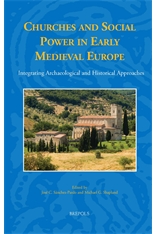
Publication – J. Sánchez-Pardo et M. Shapland (éd.),  » Churches and Social Power in Early Medieval Europe. Integrating Archaeological and Historical Approaches »

Local churches were an established part of many towns and villages across early medieval Western Europe, and their continued presence make them an invaluable marker for comparing different societies. Up to now, however, the dynamics of power behind church building and the importance of their presence within the landscape have largely been neglected.

This book takes a comparative and interdisciplinary approach to the study of early medieval churches, drawing together archaeology, history, architecture, and landscape studies in order to explore the relationship between church foundation, social power, and political organization across Europe. Key subjects addressed here include the role played by local elites and the importance of the church in buttressing authority, as well as the connections between archaeology and ideology, and the importance of individual church buildings in their broader landscape contexts.

Bringing together case-studies from diverse regions across Western Europe (Italy, Spain, Portugal, Germany, France, the British Isles, Denmark, and Iceland), the seventeen contributions to this volume offer new insights into the relationships between church foundations, social power, and political organization. In doing so, they provide a means to better understand social power in the landscape of early medieval Europe.

dIS-9782503545554-1

Table des matières :

Acknowledgements

José Carlos Sanchez-Pardo and Michael Shapland – Introduction: Churches and Social Power in Early Medieval Europe

Part I: Churches as Channels for Power Relations

Juan Antonio Quiros and Igor Santos – Founding and Owning Churches in Early Medieval Álava (North Spain): The Creation, Transmission, and Monumentalization of Memory

Alexandria Chavarria – Local Churches and Lordship in Late Antique and Early Medieval Northern Italy

Tomas O’Carragain – Local Churches and Social Power in Early Medieval Ireland: A Case Study of the Kingdom of Fir Maige

Roberto Farinelli – Churches and Social Elites in Early Medieval Tuscany: a Quantitative-Statistical Approach to the Episcopal Archive of Lucca

Part II: Churches and the Transition of Power

Aleksandra McClain – Patronage in Transition: Lordship, Churches, and Funerary Monuments in Anglo-Norman England

José Carlos Sanchez-Pardo – Power Strategies in the Early Medieval Churches of Galicia (711–910 ad)

Christofer Zwanzig – Heidenheim and Samos: Monastic Remembrance of the ‘Anglo-Saxon Mission’ in Southern Germany and the ‘Mozarabic Resettlement’ of Northern Spain Compared

David Petts – Churches and Lordship in Western Normandy, 800–1200 ad

Part III: Churches in Landscapes of Power

Anne Nissen-Jaubert  – Early Medieval Religion and Social Power: a Comparative Study of Rural Elites and Church Building in Northern France and Southern Scandinavia

Duncan W. Wright – The Church and the Land: Settlement, Economy and Social Power in Early Medieval England

Luis Fontes – Powers, Territories, and Architecture in Northwest Portugal: an Approach to the Christian Landscapes of Braga Between the Fifth and Eleventh Centuries

Christine Delaplace – Local Churches, Settlements, and Social Power in Late Antique and Early Medieval Gaul: New Avenues in the Light of Recent Archaeological Research in South-East France

Part IV: Churches as Centres of Power

Gian pietro Brogiolo – Architecture and Power at the End of the Lombard Kingdom

Andreas Schaub and Tanja Kohlberger – On the Origins of the Great Carolingian Place of Power: Recent Excavations at Aachen Cathedral

Michael Shapland – Royal Churches and the Practice of Anglo-Saxon Kingship

Gudrun Sveinbjarnardottir – The Development of the Church in Iceland in the Eleventh and Twelfth Centuries, with reference to the Reykholt Church

Index of people, places, and subjects

Informations pratiques :
J. Sánchez-Pardo et M. Shapland (éd.), Churches and Social Power in Early Medieval Europe. Integrating Archaeological and Historical Approaches, Turnhout, Brepols, 2015 (Studies in the Early Middle Ages, 42).

Source : Brepols

Publié dans Publications | Laisser un commentaire

Colloque – The Politics of Dress and Identity in Eastern Mediterranean Societies, Past and Present

The organizing committee: Rosita D’Amora, Tineke Rooijakkers, Bas ter Haar Romeny, Mat Immerzeel, Judith Kindinger, and Alexandra Pleşa

Politics of Dress and Identity

Programme :

9.00 ‐ 10.30 : Registration and opening
10.30 ‐ 10.45 : Coffee break

10.45 ‐ 11.25 : Guest Speaker: Annelies Moors (Universiteit van Amsterdam) – Standing Out, Fitting In: Muslim Dress and the Politics of Belonging

11.25 ‐ 12.40 Session 1: The veil?
Chair: Annelies Moors

11.25 ‐ 11.50 Younes Saramifar (Vrije Universiteit Amsterdam) – Politics of Scarf or Hundred Ways for Not Wearing the Scarf
11.50 ‐ 12.15 Lora Sarıaslan (Universiteit van Amsterdam) – The Quest(ion) of Veil
12.15 ‐ 12.40 Tal Shenav (The Harry S. Truman Research Institute for the Advancement of Peace, The Hebrew University) – Dress Code and Modern Muslim Role Model – A Case Study of the Animated Television Series ‘Stories of Women in the Quran’
12.40 ‐ 13.40 Lunch break

13.40 ‐ 14.20 Guest Speaker: Reina Lewis (London College of Fashion, University of the Arts London) – Marketing Modest Fashion in Turkey: Politics, Identity, Ethnicity, Nation

14.20 ‐ 15.25 Session 2: Veiling communities
Chair: Reina Lewis

14.20 ‐ 14.45 Ruxandra Todosi (Nottingham Trent University) – Depth of Surface in Glamour and in Modesty: Art(ifice), Communication and Introspection through Veils Today
14.45 ‐ 15.10 R. Arzu Ünal (Fatih Üniversitesi) – The Çarşaf: From a National Outfit to a Community Garment
15.10 ‐ 15.35 Alice Leri (University of South Carolina) – Global Trends and Local Meanings: Highlighting Power Dynamics in the Marketplace
15.35 ‐ 15.50 Coffee break

15.50 ‐ 16.30 Guest Speaker: Kristi Upson‐Saia (Occidental College) – (Re)theorizing Modesty: Gender, Religion, and Dress

16.30 ‐ 17.45 Session 3: Women and modesty in early Christianity and Islam
Chair: Kristi Upson‐Saia

16.30 ‐ 16.55 Kate Cooper (University of Manchester) – Transvestite Saints, Modesty, and Ancient Violence Against Women
16.55 ‐ 17.20 Judith Kindinger (FISO, Vrije Universiteit Amsterdam) – Dressing down the Dressed up: The Phenomenon of Long and Wide Sleeves in the Socio‐Political Context of Mamluk Egypt

Friday 25 March 2016

9.30 ‐ 10.30 Clue+ keynote: Suraiya Faroqhi (İstanbul Bilgi Üniversitesi) – Ottoman Clothes in Their Chests: Recent Research on Ottoman Garments
10.30 ‐ 10.45 Coffee break

10.45 ‐ 12.50 Session 4a: Male sartorial politics
Chair: Suraiya Faroqhi

10.45 ‐ 11.10 Avner Wishnitzer (Tel Aviv University) – Mustached, Young Turks: a History of Facial Hair in the Late Ottoman Empire
11.10 ‐ 11.35 Sivan Balslev (Van Leer Institute, Jerusalem) – Fake Collars and Fake Westernizers: Dress, Masculinity, and Social Distinction in Early 20th century Iran
11.35 ‐ 12.00 Gülsen Kaya Osmanbaşoğlu (Social Sciences University of Ankara) – The Irony of Clothing Political Leadership in Turkey: Ecevit and Demirel
12.00 ‐ 12.25 Shoshana‐Rose Marzel (University of Haifa) – The Seventies Turning Point in Israeli Masculine Fashion
12.25 ‐ 12.50 Kobi Peled (Ben‐Gurion University) – The Poetics and Politics of Bedouin Dress Among the First Zionist Watchmen and Shepherds

10.45 ‐ 13.15 Session 4b: Depicting status in Byzantine times
Chair: Henry Maguire

10.45 ‐ 11.10 Mat Immerzeel (Leiden University) – Who Do We Think They Are? Donor Portraits in the Medieval Middle East
11.10 ‐ 11.35 Cristina Stancioiu (College of William and Mary, Williamsburg) – Sartorial Choices in Eastern Mediterranean Portraiture: 13th‐15th Centuries
11.35 ‐ 12.00 Eleni Barmparitsa (Hellenic Ministry of Culture) – Dressing Codes in the Late Medieval Peloponnese, Greece: 13th‐ 15th Century
12.00 ‐ 12.25 Sophia Germanidou (Hellenic Ministry of Culture) – The Attire of Peasantry in Byzantine Iconography
12.25 ‐ 12.50 Andrea Torno Ginnasi (Università degli Studi di Milano) – Clothes Do Make the Emperor: The Byzantine toupha from Exotic Helmet Ornament to Triumphal Imperial Crown
12.50 ‐ 14.00 Lunch break

14.00 ‐ 15.55 Session 5a: Powerful hats
Chair: Katja Jana

14.00 ‐ 14.40 Guest Speaker: Katja Jana (University of Göttingen) – Loyal and Elegant Subjects of the Sublime State: Headgear and the Multiple Dimensions of Modernizing/‐ed Ottoman Identity
14.40 ‐ 15.05 Philipp Wirtz (SOAS, University of London and University of Warwick) – Between Turban and Tarbush: Remembering Cultures of Clothing in the Autobiography of Aḥmad Amīn
15.05 ‐ 15.30 : Anais Massot (Universiteit Leiden and Ecole des Hautes Etudes en Sciences Sociales) – Clerical Clothing and the Politics of Recognition during the Ottoman Tanzimat Period: the ‘Affair of the Hat’ as a Case Study
15.30 ‐ 15.55 Esther Voswinckel Filiz (Centrum für Relionsforschung (CERES) Bochum) – Sufi Turbans (Taç‐ı Şerif) in Istanbul – the Textile and Textual Production of Ritual Headgears at Saintly Gravesites

14.00 ‐ 16.05 Session 5b: Self‐presentation in the ancient Eastern Mediterranean
Chair: Mat Immerzeel

14.00 ‐ 14.25 Serdar Yalçın (Parsons School of Design, New York) – Image vs. Reality: Babylonian Professionals, their Seals and the Issue of Representation in Ancient Mesopotamia.
14.25 ‐ 14.50 Jessica L. Nitschke (Stellenbosch University) – Identity, Status, and the Meaning of Foreign Styles of Dress in Phoenician Self‐Representation
14.50 ‐ 15.15 Melanie Wasmuth (Universität Basel and Allard Pierson Museum Amsterdam) – Dressing Darius I: Visual Strategies of Incorporating Mutually Incompatible Kingship Concepts
15.15 ‐ 15.40 Betty Rame (University of Paris I Panthéon‐Sorbonne) – Mycenaean Headband: An Identity Sign?
15.40 ‐ 16.05 Maria Papadopoulou (University of Copenhagen) – Alexander the Great’s Cloak and the Politics of Dress in Hellenistic Egypt
16.05 ‐ 16.20 Coffee break

16.20 ‐ 17.20 Keynote: Henry Maguire (Johns Hopkins University) – The Politics of Imperial Dress in Medieval Art, East and West
19.00 Conference Dinner

Saturday, 26 March 2015

9.00 ‐ 9.40 Guest speaker: Giovanni Ricci (University of Ferrara) – Ambiguous Dress: Four Stories from the Medieval and Early Modern Mediterranean World

9.40 ‐ 10.55 Session 6: Negotiating sartorial identities
Chair: Giovanni Ricci

9.40 ‐ 10.05 Andrew Robarts (Rhode Island School of Design) – Negotiating Boundaries in the Early‐Modern Eastern Mediterranean: Dress, Visual Culture, and Identity in Istanbul and Venice
10.05 ‐ 10.30 Marloes Cornelissen (Sabancı Üniversitesi) – Fashion and Identity Among the Dutch in Early Modern Ottoman Istanbul
10.30 ‐ 10.55 Sümeyye Hoşgör Büke (METU, Ankara) – Making Difference Through Dresses in the Early Modern Ottoman Empire: The Case of Galata
10.55 ‐ 11.15 Coffee break

11.15 ‐ 12.30 Session 7: The image of the Other and the politics of representation
Chair: Rosita D’Amora

11.15 ‐ 11.40 Gwendolyn Collaço (Harvard University) – Documenting Dress in Diplomacy and Poetry: Costume Albums as a Transcultural Genre
11.40 ‐ 12.05 Ilse Sturkenboom (University of Vienna) – Muslims Dressing up Christians: The Image of the Christian in Medieval Persian Manuscripts
12.05 ‐ 12.30 Robyn Radway (Princeton University) – Muddling East and West: Costume and Identity in the Ottoman Habsburg Borderlands
12.30 ‐ 13.30 Lunch break

13.30 ‐ 14.20 Session 8: Communities between East and West
Chair: Petra de Bruijn (Leiden University)

13.30 ‐ 13.55 Alexander A. Novik (St. Petersburg State University) – Traditional Costume, Ethnic affiliation and Common Memory of Slavic (Macedonian) Muslims in Albania: Adaptating and Preserving the Identity
13.55 ‐ 14.20 Nicola Verderame (Berlin Graduate School Muslim Cultures and Societies)– Costumes in World Fairs and Orientalisms: The Case of Chicago, 1893
14.20 ‐ 14.45 Coffee break

14.45 ‐ 15.25 Guest speaker: Tamer el‐Leithy (Johns Hopkins University) – Shibboleths under Hats: Dress, Material Culture, and Medieval Arabic Documents

15.25 ‐ 16.40 Session 9: Dressed to impress in the early Medieval Eastern Mediterranean
Chair: Tamer el‐Leithy

15.25 – 15.50 Susanne Enderwitz (Ruprecht‐Karls‐Universität Heidelberg) – Ẓarf: A Dress‐Code in Medieval Baghdad
15.50 ‐ 16.15 Alexandra Plesa (FISO, Vrije Universiteit Amsterdam) – Regional Fashion? Dress at Matmar and Mostagedda (Middle Egypt) in the Late Antique and Early Islamic Periods
16.15 – 16.40 Hasan Al‐Khoee (SOAS, University of London) – To Wear Black Robes or White? Colour, Clothing and the Fatimid‐Abbasid Rivalry (10th and 11th Centuries)
16.40 – 17.00 Closing remarks

Publié dans Colloque | Laisser un commentaire

Appel à contribution – The lettering of prints. Forms and functions of writing in the printed image in 16th-century Europe

Paris, Centre André Chastel, Institut national d’histoire de l’art
(INHA), November 17 – 18, 2016
Deadline: Mar 31, 2016

 lettering-of-prints

Words, titles, legends, commentaries, artists’ names, privileges – necessarily – fine speeches, addresses to the “reader”, showy dedications. Cursive and typographic writing, large and small typefaces, ligatures, numbers and measures. Added words, associated with figures or set apart by a frame, words that one notices, that one watches, that one sometimes discovers within an image… What if prints were also a question of words, of written composition, of comparative reading within the written and figurative space of an image?

Before the relationship between artistic creation and writing was completely rethought by the avant-gardists, prints were long the only visual art in which words could be freely associated with figures and in which the parts of the text, inserted in the composition, could form a visual, logical and semantic whole with the drawing. This capacity of prints to accommodate within a single graphical composition a great variety of signs, forms and written material is primarily due to the conception of printing plates and to the technical properties of engraving. At a time when a mimetic conception of representation which led more often than not to the exclusion of text from the figurative field of the image was becoming widespread in Europe – painted, inscribed or drawn text often relegated to the margins, hidden in a detail or set apart by a frame – prints continued to accommodate words, to draw texts to figures, to include inscriptions in the very composition of engraved plates. During the Renaissance, professionals of the genre showed remarkable wit and inventiveness in the artistic conception of writing, the articulation of graphic registers and the complementarity of written and figurative languages which generally make up the printed image.

From this point of view, prints occupy a very specific place in artistic production, visual culture and practices of writing in modern Western society. We may even see in them the possibility of bringing together in a single medium different forms of expression and dialogue which were always deeply connected in the Middle Ages, which is one of the reasons behind the economic success of prints and their rapid assimilation by European society. For all those who needed both written resources and images, prints offered a new medium, itself a subtle intermediary between printed text and drawing. The 16th century in
Europe was not only the golden age of the printed book: it also marked the application of engraving techniques to all sorts of iconographies, the introduction of printed images in numerous spheres of activity, as well as the birth, derivative of prints, of a new social practice of images.

The goal of the conference is to study the place of writing, its forms and functions in 16th-century prints, from the production of images to their use in extremely varied socio-cultural contexts. The propositions of presenters, whether dedicated to specific corpuses or treating the question in a more cross-sectional manner, should be founded on consultation of engraved or etched inscriptions which constitute the “lettering” of prints; on technical, linguistic and iconographic analysis of these inscriptions in relationship to the images they
accompany; on historical interpretation of the objects, processes and artistic and cultural phenomena thus brought to light. We invite specialists in prints to widen their scope by taking into consideration objects and inquiries from other disciplines: literary history, history of the book, history of science (from medicine to cartography via antiquarian studies), religious history or political history may all contribute to collective thinking on the place of writing in the conception and use of printed images in the 16th century.

Proposed themes for presentations:
– The lettering and the printmaker: is there a technique of writing in the printed images of the Renaissance?
– How and why are images designed? The conception of the title, its function and uses in prints.
– Signatures, addresses and privileges: affirmation of the “name” (of the artist, printmaker, publisher, printer) and its signification in prints.
– Texts with or without frames? The conception of frontispieces, commentaries and legends.
– Readings, functions, uses: what knowledge of the lettering contributes to the historical comprehension of printed images.
– The address to the “reader”: appeal to the client, promotion of the artist or author, dialogue with the spectator and reader.
– The place of commentary, its literary form and its function within the printed image.
– The cartographic lettering: seeing and describing the world in the Renaissance (maps, views, maps of the world).
– The poetic lettering: poems, couplets, dedications, emblems in the 16th-century printed image.
– The religious lettering: the functions of writing in 16th-century religious images, teaching and devotional practices.
– The political lettering: images and dissemination of propaganda in the 16th-century European print.

NB: The conference proceedings will be published (language of publication : French and English).

Papers submission: Proposals (title and summary of roughly 1000 characters, accompanied by a brief curriculum vitae, should be addressed before Thursday March 31, 2016 to the following addresses:
emmanuellurin@yahoo.fr
Marianne.Grivel@paris-sorbonne.fr

Source : Medieval Art Research

Publié dans Appel à contributions | Laisser un commentaire