Appel à contribution – Bien consommer. Les consommations légitimes dans les villes médiévales (XIIe-XVIe siècles) 

16 et 17 novembre 2023, Sorbonne Université et Université Gustave Eiffel

La consommation, soit l’usage de biens valorisables, n’obéit pas au hasard. Entre habitude, norme et légitimité implicite, elle présente des régularités. Socialement classée et classante, elle traduit des stratégies plus ou moins conscientes d’imitation ou de distinction. Les autorités laïques, ecclésiastiques, et jusqu’au cœur de la cellule domestique, s’emploient à la réguler, selon des principes et des valeurs éthiques qui construisent aussi un ordre socio-politique et ecclésial. La valeur d’échange des biens consommés est liée, suivant des dynamiques complexes, à ces valeurs morales et socio-politiques. La légitimité à consommer les biens à haute valeur économique, morale, éthique, sociale et politique, est ainsi distribuée inégalement. Inversement, dire la norme en valorisant et régulant les consommations est un effet et une forme du pouvoir.

Au cours des derniers siècles du Moyen Âge, s’approprier cette capacité à tracer la frontière entre indispensable et superflu devient un enjeu de pouvoir de plus en plus crucial, en particulier dans les mondes urbains. Les villes, en plein essor en Occident à partir des XIe-XIIe siècles, places de marché du monde féodal, sont les hauts lieux d’une consommation intense et diversifiée, de plus en plus dépendante des productions extérieures. Les villes concentrent aussi de plus en plus les pouvoirs qui s’emploient à réguler cette consommation : clergé, pouvoirs communaux et princiers, tous s’implantent en ville, la marquent, la produisent, générant des consommations spécifiques. À chaque type d’urbanité correspondent ainsi des formes et des normes de consommations distinctes, implicites et explicites. La définition de la consommation légitime est une lutte de classements. Ses enjeux, ses modalités et ses effets sont à interroger, de la réforme grégorienne, suivie de l’essor des ordres mendiants, à la Réformation, de l’essor des villes à la « révolution de la consommation », du premier âge communal au temps des États territoriaux et princiers,

Pour ce faire, toutes les sources sont à envisager. On pense bien sûr aux sources normatives et théoriques explicites : règlements et lois somptuaires, protocoles, textes théologiques, serments et sermons, corpus littéraires… Toutefois, un enjeu majeur de ces journées d’études est d’étendre la réflexion à toutes les formes de normativité, de production de valeur et de légitimité implicites, qui ne sont pas nécessairement évidentes à la lecture. Les sources dites de la pratique, comptes, livres de raison, chartes, cartulaires, actes notariés, sources fiscales, judiciaires et annonaires… pourront ainsi être relues en ce sens : quelles « normes pratiques » expriment-elles ? Une attention particulière pourra être portée à la matérialité de ces sources, elles-mêmes biens de consommation et outils de sa gestion. Cela vaut plus encore pour les objets, précieux ou non, œuvres d’art et bâtiments, conservés dans des églises et musées ; mais aussi pour tous les vestiges archéologiques (contenants, vaisselle, restes organiques) susceptibles de documenter des consommations légitimes ou des écarts à ces normes.

Modalités de contribution

Ces journées d’études sont ouvertes à toutes les disciplines et champs d’études concernés par la période (histoire, archéologie, iconographie, histoire de l’art, etc.). Les communications se feront en français ou en anglais. Les intervenant·e·s seront invité·e·s à s’exprimer et à présenter des réflexions sur leur(s) cas d’étude pendant vingt minutes suivies d’un temps de discussion et d’échanges.

Un résumé de la communication d’une page au maximum ainsi qu’un CV sont à envoyer avant le lundi 10 avril 2023, à consommationslegitimes@gmail.com

Comité d’organisation

Marie Fontaine–Gastan (Université Gustave Eiffel)

Solène Minier (Sorbonne Université)

Comité scientifique

Isabelle Chabot (Università degli Studi di Padova)
Élisabeth Crouzet-Pavan (Sorbonne Université)
Giuliano Milani (Université Gustave Eiffel)
Frédérique Lachaud (Sorbonne Université)
Judicaël Petrowiste (Université Paris Cité)
Matthieu Scherman (Université Gustave Eiffel)
Ilaria Taddei (Université Grenoble Alpes)

Publié dans Appel à contributions | Laisser un commentaire

Appel à contribution – Supernatural Aid in Medieval Warfare

Supernatural Aid in Medieval Warfare, 4 vols. Trivent Publishing

The issue of supernatural aid in medieval warfare came into its own with the now classic study Der Heilige als Schlachtenhelfer by František Graus. Since then, much has been said on the subject. However, the studies to date have mostly been restrictive and produced in isolation within local scholarships and in native languages. The goal of the proposed set of four volumes is to collect studies that together will provide the most comprehensive and all-encompassing picture of the issue treated both as a phenomenon embedded in religious and social culture but also as a changing motif in historical and hagiographical writing.

Those interested in contributing to this project are asked to submit an abstract for a chapter proposal (up to 400 words) along with a short biographical note to the editors of the respective volumes. Proposals are due on 20 April 2023.


PLANNED VOLUMES
• Writing Divine Assistance in War, edited by Tomasz Pełech (University of Warsaw) t.pelech@uw.edu.pl
• Holy Men at War: Latin West, the Mediterranean, and the Near East! edited by Javier Albarrán (Universidad Autónoma de Madrid) javier.albarran@uam.es
• Saints at War: Slavic Lands and South Eastern Europe! edited by Boris Stojkovski (University of Novi Sad) boris.stojkovski@ff.uns.ac.rs
• Saints at War: Northern Europe, Scandinavia, and the Baltic, edited by Francesco D’Angelo (Università degli Studi « La Sapienza » di Roma) fra.dangelo@uniroma1.it
Volumes will be published within a series “Religion and War in the Middle Ages”, Trivent Publishing

Publié dans Appel à contributions | Laisser un commentaire

Publication – Peter Hilsch, « Die böhmischen Länder im Mittelalter »

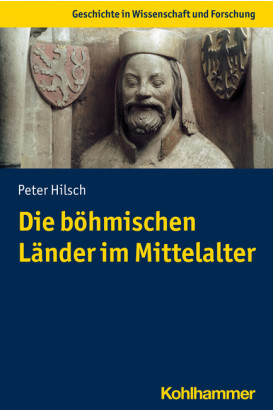
Böhmen, Mähren und Mährisch Schlesien können auf eine wechselhafte Geschichte zurückblicken. Ursprünglich keltisch-germanisches Siedlungsgebiet, wanderten im Frühmittelalter die Slawen ein. Schon bald wurden die Länder Teil des christlichen Europas. Zu einer der bestimmenden Mächte Mitteleuropas stiegen sie im 14. Jahrhundert unter der Herrschaft der einheimischen Przemysliden und der Luxemburger auf: Nach anfänglichen Konflikten kam es mit dem großen Nachbarn, dem römisch-deutschen Reich, zu einer engen Zusammenarbeit – und mit Karl IV. trug schließlich ein böhmischer König die Kaiserkrone. Im 15. Jahrhundert war es wiederum Böhmen, das mit dem ersten Prager Fenstersturz das europäische Zeitalter der Reformation einläutete.

Kurzweilig und fundiert führt Peter Hilsch den Leser durch die spannende und wechselhafte Geschichte Böhmens und Mährens.

Prof. Dr. Peter Hilsch lehrte mittelalterliche Geschichte an der Universität Tübingen. Sein Forschungsschwerpunkt war die Geschichte der böhmischen Länder im Mittelalter.

Table des matières : ici

Informations pratiques :

Peter Hilsch, Die böhmischen Länder im Mittelalter, Stuttgart, Kohlhammer, 2022 ; 1 vol., 321 p. (Geschichte in Wissenschaft und Forschung). ISBN : 978-3-17-041704-5. Prix : € 36,00.

Source : Kohlhammer

Publié dans Publications | Laisser un commentaire

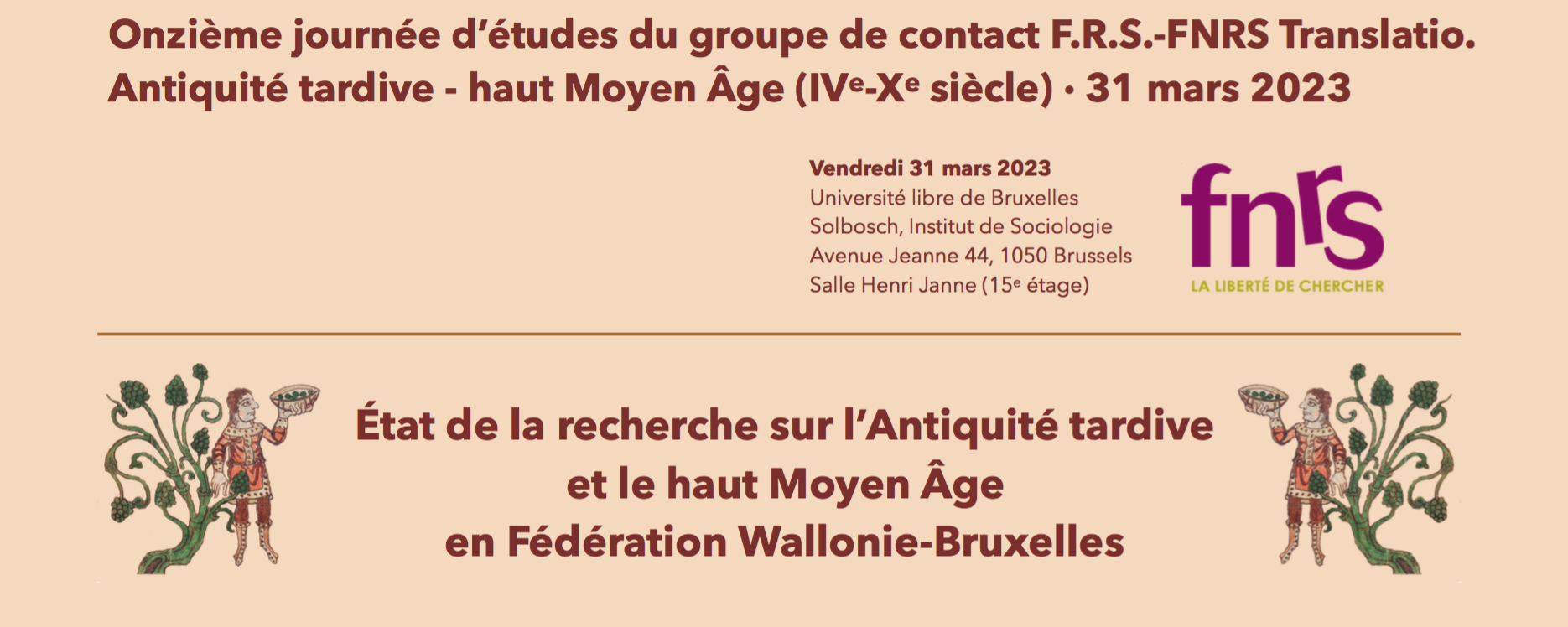
Journée d’étude – État de la recherche sur l’Antiquité tardive et le haut Moyen Âge en Fédération Wallonie-Bruxelles

Onzième journée d’études du groupe de contact F.R.S.-FNRS Translatio. Antiquité tardive – haut Moyen Âge (IVe-Xe siècle) · 31 mars 2023

Vendredi 31 mars 2023

Université libre de Bruxelles Solbosch, Institut de Sociologie Avenue Jeanne 44, 1050 Brussels Salle Henri Janne (15e étage)

Inscription libre souhaitée avant le 24 mars 2023 par courriel à nicolas.schroeder@ulb.be

Programme :

9h00 – Accueil 9h30 – Florence Close (ULiège) & Nicolas Schroeder

(ULB) : mots de bienvenue et introduction Session 1 – Président : Philippe Mignot (AWaP)

10h00 – Lucas Derwael (ULB), Caroline Polet (IRSNB) & Else Hartoch (Gallo-Romeins Museum Tongeren) : Les restes humains non incinérés d’époque gallo-romaine

du Musée Gallo-Romain de Tongres. Une étude anthropologique et paléopathologique

10h25 – Bérénice Chevalier (ULiège) : Le dimorphisme sexuel chez les Mérovingiens : les nécropoles de Ciply et Braives

10h50 – Anissa Ouzeroual (ULB) : Reconnaître la femme mérovingienne à travers sa sépulture. Étude archéologique et anthropologique du genre au haut Moyen Âge

11h15 – Discussion

11h30 – Pause café

Session 2 – Présidente : Line Van Wersch (ULiège)

11h50 – Muriel Van Ruymbeke (Université du Luxembourg – UNI.LU) : Des activités d’orpaillage dans le massif de Stavelot au haut Moyen Âge ?

12h15 – Charles Deschuyteneer (ULB) & Inès Leroy (UCLouvain) : CARE – Corpus architecturae religiosae europeae : bilan provisoire de 10 années de recherches

12h40 – Charles Wastiau (ULiège) : Sol et Luna dans l’iconographie paléochrétienne en Occident (IIIe– Ve s.)

13h05 – Discussion 13h20 – Lunch libre

Session 3 – Présidente : Sophie Glansdorff (ULB)

15h20 – Victor Vandenbulke (ULiège) : Un regard nouveau sur Théodard, évêque de Tongres- Maastricht et prédécesseur de saint Lambert

15h45 – Gabriel Mercier (ULiège) : Contrôler le sacré pour légitimer le roi. La redéfinition du sacré et l’évolution des conditions d’accès à celui-ci lors de la réforme carolingienne

16h10 – Christian Brouwer (ULB) : Songes et visions 16h35 – Discussion
16h50 – Alain Dierkens (ULB) : Observations finales

Publié dans Colloque | Laisser un commentaire

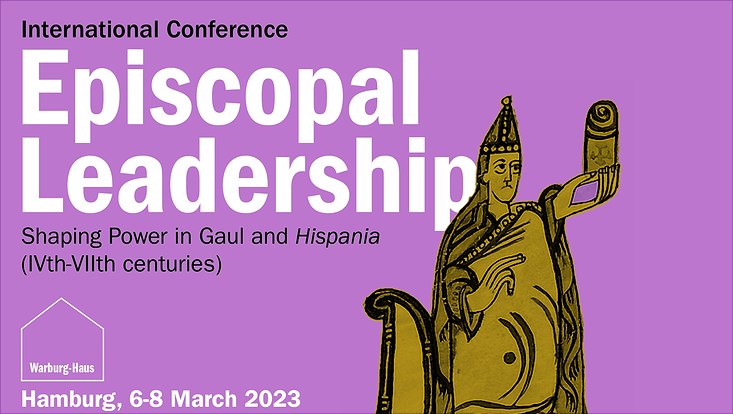
Colloque – Episcopal Leadership. Shaping Power in Gaul and Hispania (IVth-VIIth centuries)

During the Christianization of the Western Roman Empire, bishops established themselves in prominent positions in the cities from the 4th century onwards. They looked after the poor, acted as judges, were responsible for “construction booms”, and negotiated with duces, kings, or the emperor, not least when it came to ransoming prisoners. According to the communis opinio, we find this urban episcopal leadership particularly in Gaul, but research with a view to the late antique urban world of Hispania also states this phenomenon.

This international and interdisciplinary conference aims to explicitly compare episcopal rule in both regions through archaeological and thematic approaches. The case studies of paradigmatic cities will allow an analysis of the material manifestations of episcopal leadership. At the same time, the thematic approaches enable us to discuss the same process from diverse perspectives: administrative, political, economic, civic, literary and liturgical. Concerning these, how does the urban episcopal leadership differ in both regions? Is it the same type of phenomena? Did it happen simultaneously? Last but not least, to what extent did Rome continue to function as a paradigm for Gaul and Hispania?

Programme : ici

Informations pratiques :

March 6-8, 2023

Warburg-Haus

Heilwigstr. 116 20249 Hamburg
+49 40 42838 6148 http://www.warburg-haus.de

Source : Universität Hamburg

Publié dans Colloque | Laisser un commentaire

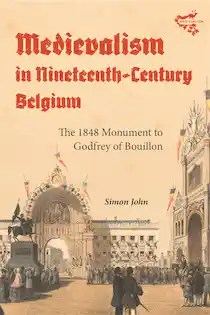
Publication – Simon John, « Medievalism in Nineteenth-Century Belgium. The 1848 Monument to Godfrey of Bouillon »

This study of the monument of Godfrey of Bouillon offers new insights to the political uses of public monuments devoted to figures from the past, modern uses and appropriations of the Middle Ages, and the role of historical culture in the creation of national identity.

On 15 August 1848, a bronze equestrian statue of the crusading hero Godfrey of Bouillon (d.1100) was unveiled in the Place Royale in Brussels, Belgium’s capital. Conceived and largely funded by the national government, its creation was a major element in a programme of political and cultural consolidation put into place after the Belgian Revolution (1830-1831) and the consequent establishment of the nation’s independence. From the outset, the monument was designed to transmit ideas about history and nationhood, and functioned as a focal point in discussions of politics, language, religion and identity.

This book sheds new light on a range of dynamics in nineteenth-century Belgium, using the statue as a prism; it investigates responses to it both home and abroad, and traces broader national interest in the commemoration of Godfrey, adopted as a national hero despite being born almost 800 years before the emergence of the state. Above all, it reveals that Belgian politics and culture in this period were profoundly shaped by a sustained interest in the Middle Ages, and by efforts to shape a historical narrative that traced Belgian nationhood back to that era, and beyond.

Informations pratiques :

Simon John, Medievalism in Nineteenth-Century Belgium. The 1848 Monument to Godfrey of Bouillon, Woodbridge, The Boydell Press, 2023 ; 1 vol., 250 p. (Medievalism). ISBN : 978-1-78327-763-6. Prix : GBP 75,00.

Source : Boydell and Brewer

Publié dans Publications | Laisser un commentaire

Conférence – Le projet ArTerm – La terminologie artistique (Italie XVe-XVIe siècles)

Le projet ArTerm se situe au croisement de l’histoire de l’art, des techniques et de la langue, ayant comme objets la création d’une base de données et la constitution d’un Dictionnaire historique de la peinture, à partir d’un corpus significatif du patrimoine textuel et iconographique. Les objectifs et la méthodologie adoptés seront exposés à travers la présentation du numéro de la revue Studi di Memofonte (déc. 2022) consacrée au Lexique de la couleur (France-Italie, XIVe-XVIIe s.) ; ainsi qu’à travers des cas d’études montrant l’évolution des termes fondateurs du langage pictural, puisés notamment dans les livres de recettes, qui sont des recueils du savoir-faire pratique circulant dans les ateliers d’artistes (Italie du Nord, XVe siècle).

Intervenantes
Julia Castiglione (université de Rome La Sapienza), Margerita Quaglino (université de Turin), Anna Sconza (université Sorbonne Nouvelle – École française de Rome)

À propos de ce séminaire
Cette deuxième saison s’intéresse aux sources et aux écrits relatifs à la couleur et à la description des matériaux de la couleur. Dès l’Antiquité, on les trouve sous la forme d’ouvrages à caractère théorique ou encyclopédique (telle l’œuvre de Pline l’Ancien) ou de quelques témoignages anciens. C’est principalement à partir du Moyen Âge que la littérature dite des recettes artistiques connaît un développement sans précédent. En parallèle de certaines œuvres désormais bien connues, telles que le Traité de Théophile ou le Libro dell’arte de Cennini, des centaines de réceptaires, principalement anonymes, ont été mis au jour. L’étude de ce vaste corpus permet de documenter un large horizon de pratiques artistiques, depuis le bas Moyen Âge, jusqu’à la fin des Temps modernes au moins. S’ajoutent les livres de secrets, les traités artistiques – plus largement diffusés par le biais
de l’imprimerie – et les carnets d’artistes.

Au cours du séminaire, il sera permis de mieux envisager la diversité de ces sources, dans leurs formes et leurs propos. En présentant l’usage actuel qu’il peut en être fait dans le cadre de l’étude de la couleur et de ses matériaux, nous aborderons également les limites de ces textes, de même que les prérequis nécessaires à leur exploitation pertinente, et les informations qu’ils sont susceptibles de nous fournir. Ce séminaire de recherche accompagne la réalisation de deux programmes, l’un mené par l’INHA « Fabrique matérielle du visuel : panneaux peints en Méditerranée, XIIIe – XVIe siècles » et l’autre par la BnF « La couleur : artefacts, matière et cognition ».

Comité scientifique
Claire Bosc-Tiessé (INHA), Charlotte Denoël (BnF), Anne-Solenn Le Hô (Centre de recherche et de restauration des musées de France), Sigrid Mirabaud (INHA), Delphine Morana-Burlot (université Paris 1 Panthéon Sorbonne), Sylvie Neven (chercheuse indépendante) et Laurianne Robinet (Centre de recherche sur la conservation)

Informations pratiques :

Jeudi 16 mars 2023, 16:00 – 18:00

Adresse : Institut national d’histoire de l’art – Galerie Colbert, salle Walter Benjamin – 2, rue Vivienne ou 6 rue des Petits Champs – 75002 Paris

Source : INHA

Publié dans Colloque | Laisser un commentaire

Publication – Paul Oldfield, « Documenting the Past in Medieval Puglia, 1130-1266 »

Documenting the Past in Medieval Puglia, 1130-1266 explores the production of historical memory in the region of Puglia after it was subsumed within the new Kingdom of Sicily in 1130. It assesses the significance of the apparent disappearance of more traditional forms of Pugliese historical writing after 1130, and explores the existence of other historical discourses (beyond those solely preserved in the few ‘royal-centred’ high-status chronicles) which were embedded in surviving local documentation. The volume incorporates an extensive examination of charters and correspondence, an evidence-type yet to be fully utilised for this purpose in the study of medieval Puglia. Closely analysing the corpus of extant Pugliese charters and correspondence for the period of Norman-Staufen rule (1130-1266) in the kingdom reveals the existence of embedded ‘histories’.

One of the book’s key aims is to examine the role of both Pugliese individuals and communities, and ‘central agents’ (monarchy, papacy), in producing local historical memory, especially across phases of political upheaval and socio-cultural transformation. The charter evidence demonstrates the preservation and creation of multiple, intersecting public and private historical narratives and remembrances, developed to protect the past, present, and future. These ‘histories’ were the product of repeated encounters between local communities and centralised superstructures. We can, therefore, identify the vibrant production of local historical narratives and memories claimed by monastic, episcopal, professional, urban, and familial communities. As such this book contributes to a broader understanding of ‘use’ of the past and of the nuanced inter-relationship between ‘Centre’ and ‘Periphery’ in medieval polities.

Paul Oldfield’s research focuses primarily on the Medieval Mediterranean between 1000 and 1300, and specifically on southern Italy and Sicily. The main themes within his research revolve around urban communities, memory and saints’ cults, and pilgrimage. H has written numerous articles, and book chapters, co-edited two volumes, and produced three monographs, including Urban Panegyric and the Transformation of the Medieval City, 1100-1300 (OUP, 2019). Oldfield has been awarded research fellowships by the AHRC, British Academy, and the Leverhulme Trust, and he is currently a Senior Lecturer in Medieval History at the University of Manchester.

Information pratiques :

Paul Oldfield, Documenting the Past in Medieval Puglia, 1130-1266, Oxford, Oxford University Press, 2023 ; 1 vol., 240 p. ISBN : 978-0-19287-090-2. Prix : GBP, 70,00.

Source : Oxford University Press

Publié dans Publications | Laisser un commentaire

Offre d’emploi – PhD candidate in the NWO VIDI project ‘Lettercraft and Epistolary Performance in Early Medieval Europe, 476-751 CE’

Uren per week:  38 tot 40
Faculteit of dienst:  Faculteit Geesteswetenschappen
Afdeling:  Departement Talen, Literatuur en Communicatie
Uiterlijk reageren op:  12 maart 2023

Functie

We are looking for two researchers (1 PhD candidate and 1 Postdoc) to form the team of the VIDI project Lettercraft and Epistolary Performance in Early Medieval Europe, 476–751 CE, granted to dr. Robert Flierman and running from 2023-2027.

The project studies how early medieval societies used the letter and who were among its users. It approaches the early medieval letter as a performative medium that had to be carried through space and was read out aloud, translated and circulated in public. It thus sees the medieval letter as a far more inclusive medium than is commonly assumed on the basis of textual qualities. Literacy or social status were not required to participate in what the project calls lettercraft, i.e. the various performative actions (e.g. travelling, delivering, listening, speaking, negotiating, gossiping) that along with writing and reading made up epistolary communication. The project explores the practical mechanics of such communication, as well as its social and political uses, e.g. as an instrument of conflict-resolution and community-building.

A full description of the project and subprojects can be obtained from dr. Robert Flierman, r.flierman@uu.nl.  

As a PhD candidate, you will conduct a case study of the consensus-building powers of lettercraft in the context of Merovingian episcopal successions (subproject 3).

Profiel

We are looking for an excellent and enthusiastic researcher who is eager to work in a research-team and fulfil the following requirements:

For the PhD:

  • RMA or MPhil degree in Medieval, Ancient or Classical studies or a related field. NB: if the degree is not yet obtained at the time of application, a statement by the applicant’s supervisor should confirm that it will be obtained by time of appointment;
  • Good or excellent reading knowledge of Latin and a willingness to specialize in medieval Latin;
  • Willingness and ability to collaborate closely with other project members and external partners;
  • Full proficiency in spoken and written English;
  • Ability to speak or willingness to learn Dutch.

Aanbod

This is an appointment of 1 fte for the duration of eighteen months. with an extension to a total of four years upon a successful assessment in the first year, and with the specific intent that it results in a doctorate within this period.
The minimum gross salary is € 2,541,- and the maximum gross salary is € 3247,- (scale P of the Collective Labour Agreement of Dutch Universities) per month, at a full-time employment.

Besides that, you will receive a holiday allowance of 8 % and a year-end bonus of 8.3 %. Utrecht University also has an appealing package of terms of employment, including the choice for a good balance between work and private (a good arrangement for leave, among other things), possibilities for development and an excellent pension scheme. More information on working at Utrecht University can be found here.

We offer a position in an ambitious new research project, embedded in the vibrant medievalist research community at Utrecht University. Within the parameters of the subprojects, you will have the opportunity to develop your own research focus, based on your interests and expertise, in consultation with the project leader. The project aims for a collaborative research environment, in which project members participate in regular research sessions to go over important finds, analyse Latin passages, come up with new questions and evaluate research practices. A close partner for the project is Utrecht University’s Digital Humanities Lab, who will assist the project in developing a new open access database of early medieval epistolary communication.

You will be based at the Department of Languages, Literature & Communication (TLC) and be imbedded in the interdisciplinary research environments of the Institute for Cultural Inquiry (ICON) and Utrecht University’s Centre for Medieval Studies (UUCMS).

Over de organisatie

A better future for everyone. This ambition motivates our scientists in executing their leading research and inspiring teaching. At Utrecht University, the various disciplines collaborate intensively towards major societal themes. Our focus is on Dynamics of Youth, Institutions for Open Societies, Life Sciences and Sustainability.

The Faculty of Humanities has around 7,000 students and 1,100 staff members. It comprises four knowledge domains: Philosophy and Religious Studies, History and Art History, Media and Culture Studies, and Languages, Literature and Communication. With its research and education in these fields, the Faculty aims to contribute to a better understanding of the Netherlands and Europe in a rapidly changing social and cultural context. The enthusiastic and committed colleagues and the excellent amenities in the historical city center of Utrecht, where the Faculty is housed, contribute to an inspiring working environment.

Aanvullende informatie

For more information about this position, please contact:
Robert Flierman (project leader), via r.flierman@uu.nl.

Solliciteren

Everyone deserves to feel at home at our university. We welcome employees with a wide variety of backgrounds and perspectives.

To apply, please use  via ‘apply’ button. We would like to receive;

• A motivation letter;
• A full academic CV, including a transcript of academic results and contact information of two referees who may be approached by the selection committee;
• A memorandum of 500-1000 words, in which you set out your approach to subproject 3;
• A copy of relevant diplomas;
• A writing sample (20-40 pages) in the form of a thesis chapter, paper, or publication in English.

Uiterlijk reageren op 12 maart 2023.

Source : Universiteit Utrecht

Publié dans Offre d'emploi | Laisser un commentaire

Publication – Joël-Henri Grisward, « L’épée jetée au lac : romans de la table ronde et légendes sur les Nartes »

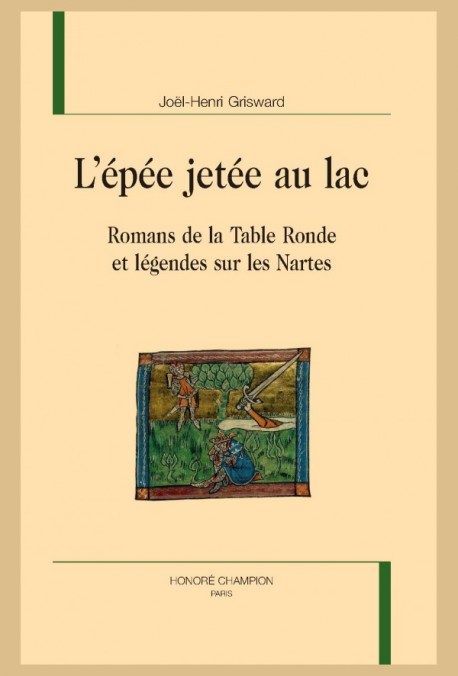
Blessé mortellement et sentant sa dernière heure arriver, le roi Arthur demande à son fidèle Girflet de jeter sa mythique épée dans un lac proche. Après une double hésitation, le chevalier se résout à jeter Excalibur : il voit alors une main sortir de l’eau, s’emparer de la fabuleuse épée, et la brandir à trois reprises avant de l’engloutir, signe et condition de la disparition du vieux roi ! Fantastique porte sur la mort ! Or un héros épique caucasien meurt de la même extraordinaire manière au terme d’un scénario en tout point superposable ! Surprenante et énigmatique rencontre ! Ledit héros appartient à un ensemble de traditions épiques : les Légendes nartes ou Légendes sur les Nartes conservées par les Osses ou Ossètes lesquels, ultimes descendants des Scythes à travers les Alains, parlent une langue indo-européenne. L’exploration de cette terra incognita à laquelle se livre l’auteur, les fouilles comparatives entreprises par lui sur cet insolite sanctuaire épique, révèlent que la parenté mise au jour entre le celtique Arthur et son homologue caucasien n’est pas le seul et unique lien entre les deux univers légendaires mais que d’autres acteurs de ce même monde arthurien comme de ce même continent narte présentent entre eux une semblable homologie. Le voyage archéologique à la découverte de ces parallélismes inattendus, voire improbables auquel nous convie l’auteur, l’étonnant dialogue entre l’antique Bretagne et le Caucase d’aujourd’hui mettant en lumière des ensembles similaires non seulement de types épiques mais aussi de structures-socles qui les organisent, débouchent sur une étrange histoire des origines, sur une insolite préhistoire de la littérature arthurienne, des romans de la Table Ronde.

Ancien élève de l’École normale supérieure et disciple de Georges Dumézil, Joël-Henri Grisward est professeur honoraire de littérature française du Moyen Âge à l’Université F. Rabelais de Tours. Il a notamment publié Archéologie de l’épopée médiévale : structures trifonctionnelles et mythes indo-européens dans le cycle des Narbonnais (Payot, 1981) et, à travers une cinquantaine d’articles, exhumé l’héritage indo-européen dans la chanson de geste et le roman médiéval.

Table des matières : ici

Informations pratiques :

Joël-Henri Grisward, L’épée jetée au lac : romans de la table ronde et légendes sur les Nartes, Paris, Honoré Champion, 2023 ; 1 vol., 194 p. (Essais sur le Moyen Âge, 78). ISBN : 9782745358080. Prix : € 38,00.

Source : Honoré Champion

Publié dans Publications | Laisser un commentaire