Offre d’emploi – European History in the Early Middle Ages (Universität Wien)

Open to new ideas. Since 1365. As a research university with high international visibility and a wide range of degree programmes, the University of Vienna is committed to basic research open to application and research-led teaching, as well as to career development of young researchers and to the dialogue with economy and society. That way, the University of Vienna contributes to the education of future generations and to the society’s ability to innovate.

The appointment of particularly qualified researchers to university professors is an important strategy of the University of Vienna. Become part of this vibrant and future-oriented organisation.

At the Faculty of Historical and Cultural Studies of the University of Vienna the position of a

University Professor
of
European History in the Early Middle Ages

(full time, permanent position) is to be filled.

The professorship focuses on early medieval European history. We invite applications from historians with the relevant methodological and theoretical expertise who work comprehensively, preferably in an intercultural perspective, on political and societal change, religious diversity, migration and integration, identity and diversity in Europe. The willingness to take over the direction of the Department of Austrian Historical Research in the future is expected. Successful candidates are expected to teach courses at all levels, BA, MA, and PhD, including active participation in a Research Cluster within the Doctoral School of Historical and Cultural Studies (https://dshcs.univie.ac.at) and to contribute to the key research areas (FSP, Forschungsschwerpunkte) of the Faculty of Historical and Cultural Studies, above all “Historical and Cultural European Studies” and “Community, Conflict, and Integration”.

Successful candidates should have the following qualifications:

·         Doctoral degree/PhD and post-doctoral experience at a university or other research institution

·         Habilitation (venia docendi) in a subject field relevant to this position or an internationally accepted equivalent qualification is
          desirable

·         Outstanding achievements in research, excellent publication record, international reputation

·         Experience in designing, procuring and managing large research projects, as well as the willingness and ability to lead research
          groups

·         Enthusiasm for excellent teaching, teaching experience at universities as well as the ability and willingness to teach students in
          all phases of their studies (bachelor’s, master’s, or doctoral level), to supervise academic theses and to promoting young
          academic colleagues

The University of Vienna expects the successful candidate to acquire, within three years, proficiency in German sufficient for teaching in bachelor’s programmes and for participation in university committees. In addition, the University of Vienna expects the successful candidate to be prepared to take over responsibility on the organisational level of the Faculty and the University, if necessary.

We offer:

·         a negotiable and attractive salary (classification according to the Collective Bargaining Agreement for University Staff, allocation
          to job group A1; section 98 of the Universities Act 2002); the salary will be individually negotiated under consideration of the
          previous career development and the current income situation

·         in addition to the statutory social insurance, the University of Vienna offers a pension fund to its employees

·         a “start-up package”, in particular for the initiation of research projects

·         a dynamic research location with well-established research funding provisions

·         attractive working conditions in a city with a high quality of life

·         comprehensive advice and support in relation to finding an accommodation, change of schools and dual career

·         a wide range of support services offered by central service institutions

The University of Vienna pursues a non-discriminatory employment policy and values equal opportunities, as well as diversity (http://diversity.univie.ac.at). The University puts special emphasis on increasing the number of women in senior and in academic positions. Given equal qualifications, preference will be given to female applicants.

Application documents:

·         Application letter, including a brief description of:

·        current research interests and research plans for the immediate future

·        current and planned foci in academic teaching and the supervision of young researchers

·         Academic curriculum vitae,
          including information about “esteem factors” (e.g. experience as a publisher, functions in research societies or programme
          committees)

·         List of publications, including:

·        specification of five key publications which the applicant considers particularly relevant to the advertised professorship

·        provision of an Internet link for download or electronic submission of PDF versions of these five publications

·        information about citations and impact factors, depending on the common practice in the relevant research area

·         List of talks given,
          including information about invited keynote lectures at international conferences

·         Third-party funds
          list of acquired third-party funds (subject, duration, origin, volume) as well as, if applicable, of inventions/patents

·         Overview of previous academic teaching and supervised theses, especially doctoral theses

·         Teaching evaluations (if available)

·         Copies of documents and certificates

Applications in German or English should be submitted by e-mail to the Dean of the Faculty of Historical and Cultural Studies of the University of Vienna, Prof. Dr. Sebastian Schütze, Universitätsring 1, 1010 Vienna (dekanat.hkw@univie.ac.at).

Reference no.: 14/26-2021/22

The application deadline is 15 September 2022.

Source : Universität Wien
Publié dans Offre d'emploi | Laisser un commentaire

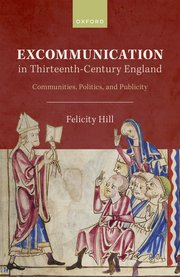
Publication – Felicity Hill, « Excommunication in Thirteenth-Century England. Communities, Politics, and Publicity »

Excommunication was the medieval churchs most severe sanction, used against people at all levels of society. It was a spiritual, social, and legal penalty. Excommunication in Thirteenth-Century England offers a fresh perspective on medieval excommunication by taking a multi-dimensional approach to discussion of the sanction. Using England as a case study, Felicity Hill analyzes the intentions behind excommunication; how it was perceived and received, at both national and local level; the effects it had upon individuals and society. The study is structured thematically to argue that our understanding of excommunication should be shaped by how it was received within the community as well as the intentions of canon law and clerics. Challenging past assumptions about the inefficacy of excommunication, Hill argues that the sanction remained a useful weapon for the clerical elite: bringing into dialogue a wide range of source material allows effectiveness to be judged within a broader context. The complexity of political communication and action are revealed through public, conflicting, accepted and rejected excommunications. Excommunication could be manipulated to great effect in political conflicts and was an important means by which political events were communicated down the social strata of medieval society. Through its exploration of excommunication, the book reveals much about medieval cursing, pastoral care, fears about the afterlife, social ostracism, shame and reputation, and mass communication.

FELICITY HILL is a lecturer in medieval history at the University of St Andrews. She was previously a research fellow at Corpus Christi College, Cambridge, and a Scouloudi fellow at the Institute of Historical Research. She holds degrees from the University of Manchester (BA), University College London (MA), and the University of East Anglia (PhD).

Table des matières :

Introduction
PART I: INDIVIDUALS
1:The Spiritual Effects of Excommunication: Instilling Fear
2:Belief, Fear, and Conscience
PART II: COMMUNITIES
3:Exclusion from the Community of the Faithful
4:Apathy, Rejection, and Divided Loyalties
PART III: PUBLICITY
5:Publicity, Reputation, and Scandal
6:Violence, Excommunication, and Dispute Settlement: Thame, 1292-1294
7:Ecclesiastical Broadcasting in the Thirteenth Century: The Origins of the Great
Conclusion
APPENDIX I: IPSO FACTO SENTENCES TO BE REGULARLY PRONOUNCED IN THIRTEENTH-CENTURY ENGLAND
APPENDIX II: WILLIAM OF PAGULA’S LIST OF IPSO FACTO SENTENCES (OCULIS SACERDOTIS, C. 1320)

Informations pratiques :

Felicity Hill, Excommunication in Thirteenth-Century England. Communities, Politics, and Publicity, Oxford, Oxford University Press, 2022. 368 Pages. ISBN: 9780198840367. Prix : GBP 75,00.

Source : Oxford University Press

Publié dans Publications | Laisser un commentaire

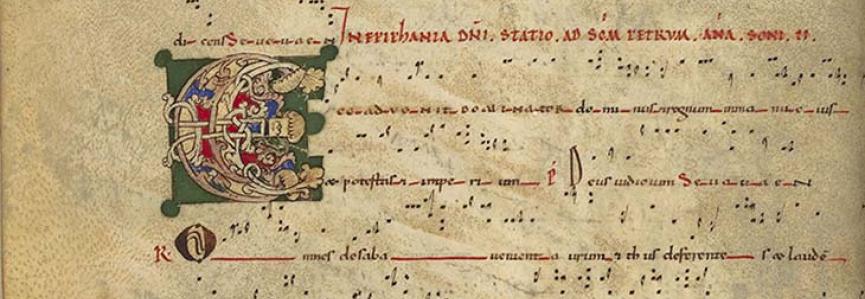
Journée d’étude – Les ressources de la Musicologie médiévale – La bibliographie

Une journée d’étude est organisée en format hybride vendredi 22 juillet 2022 (9h30-13h) au campus Condorcet par Laura Albiero autour des ressources de la musicologie médiévale.

Programme :

  • 9h30 – Laura ALBIERO (IRHT-CNRS) : Introduction
  • 9h45 – Maria Sofia LANNUTTI (Università di Firenze) : Une idée de Moyen Âge : du projet MEM au projet ArsNova
  • 10h15 – Stefania VITALE (Fondazione Ezio Franceschini) : La monodie liturgique, problèmes de catalogage dans la base de données MEM
  • 10h45 – Antonio CALVIA (Università di Pavia) : Les bases de données MEM et ArsNova dans la plate-forme MIRABILE

11h15 Pause-café

  • 11h30 – Marie WINKELMÜLLER-URECHIA (Eberhard Karls Universität Tübingen) & Raquel ROJO CARRILLO (University of Cambridge) : Liturgical Chant Bibliography : finding and promoting the most recent works in the plainchant field
  • 12h15 – Discussion

L’évènement sera en format hybride (présentiel et à distance)

Inscription gratuite et obligatoire – laura.albiero@irht.cnrs.fr

Source : IRHT

Publié dans Colloque | Laisser un commentaire

Publication – « Emperors and Imperial Discourse in Italy, c. 1300-1500. New Perspectives », dir. Anne Huijbers

Describing the Holy Roman Empire after 1250 as a hopeless dream or an empty formula only Roman in name, historians have long minimized the impact of the imperial presence in late-medieval Italy. The nationalist historiography, on which we still largely depend, presented the Empire as alien to the very essence of humanism and modernity. Associating humanism with republicanism, scholars silently suggested that the belief in the peace-bringing emperor faded away as the Renaissance unfolded. No real humanist, so it was believed, could genuinely support the medieval construct that was the Holy Roman Empire.

Only recently has this historiographical framework really been challenged. The present volume builds further on the thesis that humanism was perfectly compatible with imperialist political ideals. It aims to bring together new perspectives on empire and emperors in Italy and to highlight the continuing importance of the imperial ideal throughout the fourteenth and fifteenth century. It focuses on imperial discourses in the writings of Italian historians, humanists, poets, jurists and notaries.
The imitation of Roman emperors is both a sign of the Renaissance and a central aspect in medieval political thought. It may, therefore, not surprise that the descent of the “king of the Romans” into Italy attracted the attention of Italians with humanist tastes. The name of empire aroused high expectations. Orations, histories, treatises, and letters show that many still generally accepted the legitimacy of the empire and considered the contemporary Holy Roman Emperor as the lawful leader of the Christian world.

Anne Huijbers wrote her dissertation at Radboud University Nijmegen. Between 2016 and 2018 she stayed at the École française de Rome with a Rubicon Fellowship of the Netherlands Organisation for Scientific Research.

Accès : ici

Informations pratiques :

Emperors and Imperial Discourse in Italy, c. 1300-1500. New Perspectives, dir. Anne Huijbers, Rome, École française de Rome, 2022 (Collection de l’École française de Rome n° 592). 368 p. ISBN : 978-2-7283-1563-5. Prix : 32 €

Source : École française de Rome

Publié dans Publications | Laisser un commentaire

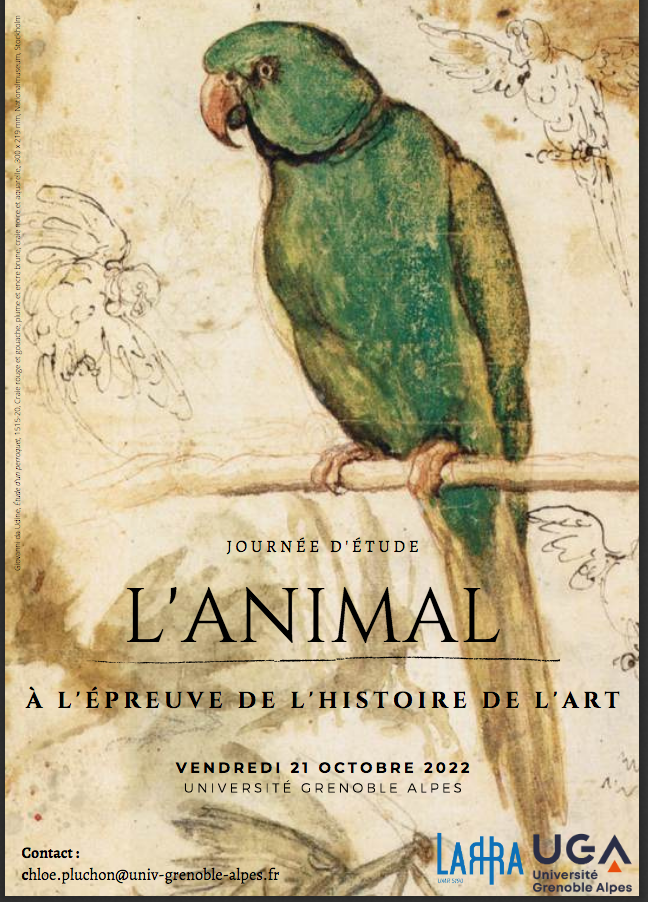
Appel à contribution – L’animal à l’épreuve de l’histoire de l’art. Études et représentations des relations homme / animal dans l’art moderne (XIVe – XVIIIe siècles)

Les Études animales, apparues dans les années 1970, se sont peu à peu imposées dans les sciences humaines, faisant de la question animale un sujet émergent. Cette remise en cause de l’anthropocentrisme, amorcée sur fond de catastrophe écologique, a eu plus de mal à atteindre l’histoire de l’art qui semble encore réticente à embrasser ce champ de recherche pourtant incontournable. Bien que la question de l’animalité dans l’art contemporain soit de plus en plus souvent abordée – d’un point de vue critique et militant notamment – et intéresse de jeunes chercheurs, les historiens de l’art moderne semblent eux plus frileux à l’idée d’intégrer les études animales à leurs recherches. Les choses avancent cependant et la question animale s’immisce progressivement dans les perspectives critiques de l’histoire de l’art moderne. L’animal reste cependant encore largement marginal pour les investigations méthodologiques de l’art moderne, qui peine à sortir du schéma symbolique imposé par l’iconographie panofskienne et son orientation humaniste. Cette journée entend faire le bilan critique de cette discipline face à la question animale et propose d’entamer un processus de remise en question par une étape indispensable : faire de l’animal un sujet à part entière de l’histoire de l’art, considéré dans son identité propre et non plus exclusivement comme une fonction au sein d’un discours anthropocentré.

La volonté première de cette journée d’étude est d’apporter un nouveau point de vue sur l’animal trop souvent étudié par un angle exclusivement symbolique dans les arts visuels. C’est donc par des approches différentes que l’animal sera ici étudié. L’approche formaliste pourra notamment permettre d’ouvrir des pistes de réflexion concernant l’évolution de la représentation, le traitement pictural ou encore de la place spécifique réservée au sein de l’œuvre à l’animal.

L’étude de l’animal à travers le prisme du commanditaire, de l’artiste pourra offrir un second grand axe de réflexions. Un intérêt particulier pourra notamment être porté à la relation qui peut exister entre l’animal représenté et le commanditaire de l’œuvre (principalement des hommes) puisqu’à partir du XVIe siècle de plus en plus d’animaux de compagnie acquièrent leur place dans la peinture. Cette célébration visuelle de l’animal en tant qu’individu vient s’ajouter aux éloges littéraires tels que les poèmes et épitaphes vantant la vie et les mérites de certains animaux et marque les débuts de la singularisation picturale de l’animal. L’étude de ce dernier dans la littérature artistique (traités, Vies, études, etc.) pourra également être envisagée.

Par ailleurs, plusieurs artistes de la Renaissance semblent développer un goût – artistique, mais aussi affectif – pour les animaux que l’on perçoit dans leurs œuvres. On peut par exemple mentionner une tendance à l’autoreprésentation ou à l’autofiguration de l’artiste avec un animal pour faire ressortir des qualités propres aux bêtes qui pourraient aussi valoriser le travail artistique. L’attachement, sinon l’intérêt, de certains peintres comme les Bassano, Titien ou Véronèse envers les animaux semblent également se traduire par le nombre de bêtes présentes dans leurs toiles, au point parfois de devenir une signature, « la patte » ou encore « la griffe » de ces peintres.

Cette journée sera consacrée aussi bien à l’étude de la représentation de l’animal dans les arts visuels de l’époque moderne qu’aux questions de méthodologies. Il s’agira de s’interroger sur ce que peuvent apporter les Animals Studies à l’histoire de l’art académique et de voir quelles pistes méthodologiques peuvent être ouvertes par cette « épreuve » de l’animal.

Modalités de soumission

Les propositions de communication (titre et résumé de 1500 à 200 signes, espaces compris) seront assorties d’une brève biographie (affiliations, domaines de recherche, projets en cours) et sont à envoyer dans un seul document au format PDF à l’adresse suivante : chloe.pluchon@univ-grenoble-alpes.fr avec pour objet « L’animal ».

La date limite d’envoi des propositions est fixée au 1er juillet.

Les intervenant·e·s seront informé·e·s des résultats de la sélection au plus tard pour le 22 juillet 2022.

Modalités pratiques

La journée d’étude se tiendra le vendredi 21 octobre 2022 à l’Université Grenoble Alpes, sur le campus de Saint-Martin-d’Hères. Une partie des frais des intervenant.e.s seont pris en charge.

Comité scientifique

Le comité de sélection sera composé de Chloé Pluchon-Riera (UGA) et du Pr. Guillaume Cassegrain (UGA).

Contact

Chloé Pluchon-Riera

Doctorante en Histoire de l’art moderne

Université Grenoble Alpes

Laboratoire de Recherche Historique en Rhône-Alpes (L.A.R.H.R.A.)

ED Sciences de l’Homme, des Politiques et du Territoire (SHPT)

chloe.pluchon@univ-grenoble-alpes.fr

Source : Calenda

Publié dans Appel à contributions | Laisser un commentaire

Publication – Stefan Rohdewald, « Sacralizing the Nation through Remembrance of Medieval Religious Figures in Serbia, Bulgaria and Macedonia »

Religious figures of remembrance served to consolidate first dynastic rule and later nation-state legitimacy and community. This book explains the interweaving of (Eastern) Roman, medieval Serbian and Bulgarian contexts as well as Ottoman and Western European national discourses or reinvented traditions. We can distinguish a secularization and nationalization of the religious contexts in the 19th century within historicism, followed by a nationalization of God and a sacralization of the nation until the end of WWII. Contrary to the national views, the origins of the modern content of these discourses lie only to a very limited extent in the Middle Ages or in the Early Modern period, as this study shows.

Please note, this is volume 2 of a 2-volume set. Click here to see volume 1.

Table des matières : ici

Informations pratiques :

Stefan Rohdewald, Sacralizing the Nation through Remembrance of Medieval Religious Figures in Serbia, Bulgaria and Macedonia, Leyde–Boston, Brill, 2022 (East Central and Eastern Europe in the Middle Ages, 450-1450, Volume: 85/2). 469 p. ISBN : 978-90-04-51630-4. Prix : 119 euros.

Source : Brill

Publié dans Publications | Laisser un commentaire

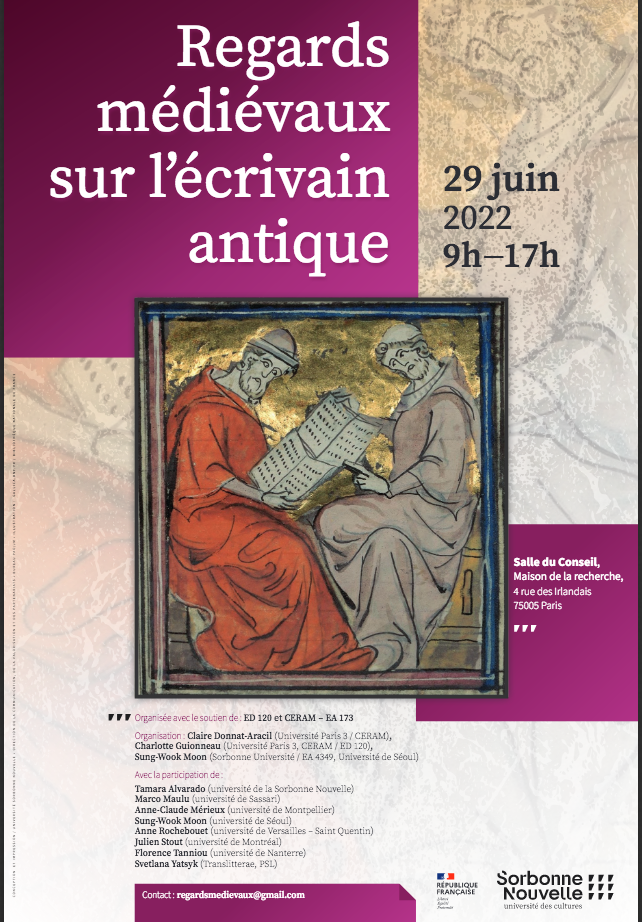
Journée d’étude – Regards médiévaux sur l’écrivain antique

Si les travaux s’intéressant à la réception médiévale des textes de l’Antiquité sont aujourd’hui nombreux, les chercheurs se sont interrogés de manière moins systématique sur la perception médiévale des auteurs de ces textes. Les huit interventions réunies lors de cette journée d’études questionneront les portraits physiques et moraux que les auteurs médiévaux dressent des auctoritates antiques. Elles analyseront comment ces choix de représentations sont porteurs d’une réflexion sur les conditions de la création littéraire, et traduisent un jeu de réflexivité complexe entre l’auteur médiéval et l’autorité dont il se réclame. 

Programme : ici

Informations pratiques :

29 juin 2022, 9h-17h
La journée aura lieu en bi-modal : 
– En présentiel :  Salle du Conseil de la Maison de la Recherche,   4 rue des Irlandais, 75005 Paris
– En visioconférence :  Si vous souhaitez recevoir le lien pour assister aux interventions, vous pouvez vous inscrire en écrivant à l’adresse regardsmedievaux@gmail.com 

Publié dans Colloque | Laisser un commentaire

Publication – Dietrich Lohrmann, « Energieressourcen Westeuropas vor 1500 »

Die mittelalterliche Energiegeschichte war lange ein Stiefkind der Forschung. Sie verlangt intensive Quellenarbeit und erhält in dieser Sammlung ein breit aufgefächertes Studienmaterial als Anregung für künftige Untersuchungen. Vor allem in der Zeit der Hochkonjunktur (12.-13. Jh.) war schon im Mittelalter eine Fülle von Problemen zu lösen. Band 1 konzentriert sich zunächst auf die klassischen Antriebskräfte Muskelkraft, Wasser- und Windkraft in ihren geographisch sehr unterschiedlichen Ausprägungen. Europas Mühlenbauer zeigten sich erfinderisch, sie fanden Lösungen auch für Standorte ohne Wasserkraft und erschlossen den weiten Bereich der Windkraft. Der zweite Teil behandelt die oft unterschätzten Leistungen des Verkehrswesens, angefangen von der Fütterung der Reit- und Zugtiere, dem Straßen-, Brücken-, Kanal-, Schleusen-, Leitungsbau bis hin zum Warentransport durch Flößen, Treideln und Triften auf Flüssen.

Band 2 bringt zehn Kapitel zu den wenig erforschten Wärmequellen und sechzehn Kapitel zu der erstaunlich aktiven Suche nach neuen Antriebs- und Wärmequellen in der Zeit vom 13. bis 15. Jahrhundert. Innerhalb der Unterabschnitte sind die Dokumente chronologisch angeordnet, so dass vielfach das Beharren, häufiger die schnelle Entwicklung innerhalb der langen Periode hervortritt, einer Zeit, in der sich Europa auf seine künftige große Expansion vorbereitete. Endpunkt der Dokumentation sind vielfach die Aufzeichnungen eines Leonardo da Vinci oder die noch zu wenig bekannten Traktate des venezianischen Arztes und Ingenieurschriftstellers Johannes Fontana. Die Bände sind reich illustriert, die Texte übersetzt und kommentiert.

Informations pratiques :

Dietrich Lohrmann, Energieressourcen Westeuropas vor 1500, Shaker Verlag, 2022. 2 vol., 528 p. + 476 p., ISBN : 978-3-8440-8576-1 et 978-3-8440-8577-8. Prix : 49,80 euros.

Source : Shaker Verlag

Publié dans Publications | Laisser un commentaire

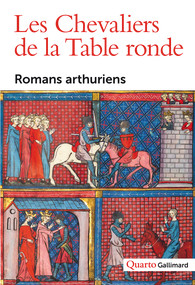
Publication – « Les Chevaliers de la Table ronde. Romans arthuriens », trad. de différentes langues par Gérard Gros, Pierre-Yves Lambert, Jacques-Charles Lemaire, Laurence Mathey-Maille, Daniel Poirion et Philippe Walter. Édition de Martin Aurell et Michel Pastoureau

Héritée d’une tradition païenne antique, ancrée dans l’opposition et la résistance des Bretons à l’envahisseur germanique, chantée par les bardes dans un dialecte celtique, la légende arthurienne prend corps au IXe siècle, en terre galloise, dans les récits en latin et en prose. C’est à partir de 1130 que l’histoire légendaire de ce roi vaillant et brave, chef charismatique et incontesté, personnage fabuleux et victorieux, connaît un écho retentissant auprès du public, à travers toute l’Europe, grâce à l’ambitieuse chronique du clerc anglais Geoffroi de Monmouth, Histoire des rois de Bretagne. À sa suite, en particulier sous l’impulsion de Chrétien de Troyes, le roman arthurien s’enrichit de nombreux épisodes des aventures du roi et de ses compagnons chevaliers : exploits prodigieux, conquêtes amoureuses, quête du saint Graal…

À la lumière de l’histoire culturelle, sociale et politique du Moyen Âge et de ses images (enluminures, sceaux, armoiries…), cette édition propose de mieux comprendre la transformation de la matière dite de Bretagne en l’une des plus grandes légendes de tous les temps.

Cycle sans égal inscrit au patrimoine littéraire mondial, la légende arthurienne n’a cessé de nourrir toutes les formes de la création – des récits de Chrétien de Troyes aux opéras de Wagner, aux beautés préraphaélites, jusqu’au nonsense des Monty Python… – et de hanter notre imaginaire.

Informations pratiques :

Les Chevaliers de la Table ronde. Romans arthuriens, trad. de différentes langues par Gérard Gros, Pierre-Yves Lambert, Jacques-Charles Lemaire, Laurence Mathey-Maille, Daniel Poirion et Philippe Walter. Édition de Martin Aurell et Michel Pastoureau, Paris, Gallimard, 2022 (Collection Quarto). 080 pages, 158 ill., sous couverture illustrée, 140 x 205 mm. ISBN : 9782072849411 Prix : 34 euros.

Source : Gallimard

Publié dans Publications | Laisser un commentaire

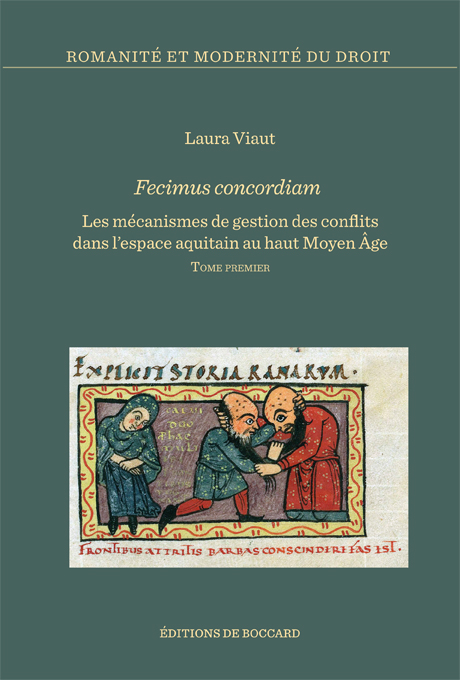
Publication – Laura Viaut, « Fecimus Concordiam. Les mécanismes de gestion des conflits dans l’espace aquitain au Haut Moyen Age (VIIIe-XIIe siècle) »

Le premier Moyen Âge a longtemps souffert d’une mauvaise réputation, celle d’être une période sombre et particulièrement violente. À l’appui de nouvelles grilles de lecture, la recherche a entrepris, au cours des dernières décennies, une réévaluation de sa justice. Mais ce champ d’études est encore lacunaire, et plus encore pour l’Aquitaine. La présente étude s’attache donc à reconstituer ses cadres institutionnels et sociétaux entre le début de la période carolingienne et la fin du XIIe siècle. Une étude d’anthropologie historique du droit permet, à partir de cas concrets, de démontrer les mécanismes par lesquels les conflits pouvaient être gérés, tout en dégageant les évolutions majeures qui s’observent dans les sources. Appréhender la justice altimédiévale passe par la reconstitution des structures, des procédures judiciaires et des stratégies sociales alors déployées pour trouver une solution aux différends. Il apparaît bien vite que les juges se sont appliqués à donner des réponses aux litiges en privilégiant les accords et la paix, plus que la coercition. Leur action se situe à la croisée du droit, du social et du religieux. Dans cette perspective, il est nécessaire de regarder le Moyen Âge, non pas du dehors avec des yeux modernes, mais du dedans pour comprendre les logiques qui en soutiennent toute la structure. Cette analyse donne l’occasion de mettre en lumière les manuscrits juridiques aquitains, dont une partie est encore inédite, pour reconsidérer l’efficacité de la justice altimédiévale.

Table des matières : ici

Informations pratiques :

Laura Viaut, Fecimus Concordiam. Les mécanismes de gestion des conflits dans l’espace aquitain au Haut Moyen Age (VIIIe-XIIe siècle), parsi, De Boccard, 2022 (Romanité et modernité du droit). 1080 p., ISBN : 978-2-7018-0602-0. Prix : 119 euros.

Source : De Boccard

Publié dans Publications | Laisser un commentaire