Publication — Ioannis Papachristou, « John Philoponus on Physical Place »

This book examines the place of physical bodies, a major topic of natural philosophy that has occupied philosophers since antiquity. Aristotle’s conceptions of place (topos) and the void (kenon), as expounded in the Physics, were systematically repudiated by John Philoponus (ca. 485-570) in his philosophical commentary on that work. The primary philosophical concern of the present study is the in-depth investigation of the concept of place established by Philoponus, putting forward the claim that the latter offers satisfactory solutions to problems raised by Aristotle and the Aristotelian tradition regarding the nature of place. Philoponus’ account proposes a specific physical model of how physical bodies exist and move in place, and regards place as an intrinsic reality of the physical cosmos. Due to exactly this model, his account may be considered as strictly pertaining to the study of physics, thereby constituting a remarkable episode in the history of philosophy and science.

This publication is GPRC-labeled (Guaranteed Peer-Reviewed Content).

Ioannis Papachristou holds a PhD in Philosophy from Humboldt-Universität zu Berlin. He is a post-doctorate researcher in the Project ‘Sourcebook of Byzantine Philosophy’ at the National and Kapodistrian University of Athens.

Table des matières :

Acknowledgments                                                                         
Preface                                                                                                

Chapter1. Form, Method and Structure of the Physics Commentary

1.1      The form of the Physics commentary                                                                   
1.2      A note on Vitelli’s edition                                                                                       
1.3      The form of the commentary and Philoponus’ philosophical contributions
1.4      Levels of interpretation                                                                                         
1.5      Dividing Aristotle’s Physics into lectures                                                         
1.6      Introduction to the digressions             
1.7      The argument of the digressions
1.8      A note on Philoponus’ sources and targets in the digressions      

Chapter 2. Place as Extension: Problems and Solutions                    

2.1      Aristotle’s rejection of place as extension                                                          
2.2      Themistius’ exegesis of Aristotle’s argument                                                 
2.3      Philoponus’ exegesis of Aristotle’s argument                                               
2.4      Philoponus refuting the infinity of places                                                       
2.5      Philoponus refuting changing and coinciding places                                  

Chapter 3. The Ontology of Place According to Philoponus            

3.1      Three-dimensionality of place                                                                       
3.2      Place as measure                                                                                                     
3.3      Place and the ‘violation’ of nature                                                                     
3.4      The empty universe                                                                                               
3.5      Place, substance, qualities and quantity                                                            

Chapter 4. Philoponus on Void as Place                                                

4.1      The concept of plērōsis                                                                                            
4.2      The void is place                                                                                                       
4.3      Motion through void and motion through a corporeal medium                     
4.4      Motion of bodies in Philoponus’ cosmological system                                   
4.5      Philoponus on physical place                                                                            

Chapter 5. Philoponus against Aristotle and the Peripatetic Tradition                                                                 

5.1      Aristotle’s definition of place                                                                                 
5.2      The equality between place and the bodies in it                                                 
5.3      The immobility of place                                                                                           
5.4      Motion through surfaces                                                                                         
5.5      The place of the heavens                                                                                            

Epilogue                                                                                              
Bibliography                                                                                        
Texts                                                                                                                                   
Translations                                                                                                                     
Secondary literature                                                                                                          

Index Locorum                                                                                      
Index Nominum                                                                                    

Informations pratiques :

Ioannis Papachristou, John Philoponus on Physical Place, Louvain, Leuven University Press, 2021 (Ancient and Medieval Philosophy – Series 1, 60). 193 p., 234 × 156 × 14 mm. ISBN : 9789462702745. Prix : 69,50 euros.

Source : Leuven University Press
Publié dans Publications | Laisser un commentaire

Podcast – Matteo Ferrari, « De la charte au mur : la fresque de l’arbitrage de Scolaio Ardinghelli dans le palais de la Commune de San Gimignano (1292) »

Atelier de la recherche virtuel PraME

Publié dans Podcast | Laisser un commentaire

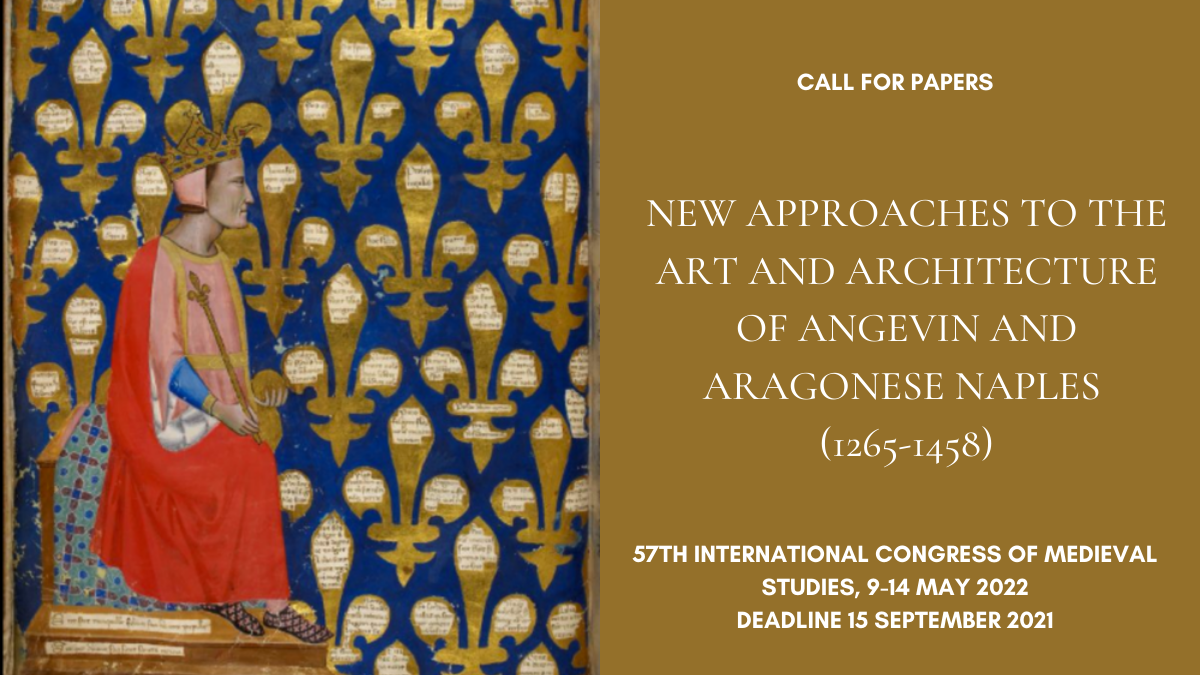
Appel à contribution — New Approaches to the Art and Architecture of Angevin and Aragonese Naples (1265-1458)

57th ICMS, 9-14 May 2022
Deadline 15 September 2021

The city and kingdom of Naples occupied a central place in late-medieval Mediterranean life: it was a powerful kingdom with deep connections to the French throne; it controlled vast territories throughout Italy in service to the papacy; and its many ports welcomed goods arriving from the Levant, north Africa, and western Europe. Despite this importance during the medieval period the city has been, generally, overshadowed by other cities such as Rome, Florence, and Venice in academic discourse. Nevertheless, the city has been interrogated in recent decades by many prominent European and American art historians who have expanded our understanding of Neapolitan art patronage and devotional images during the trecento and quattrocento, including Francesco Aceto, Nicolas Bock, Caroline Bruzelius, Bianca de Divitiis, Stefano D’Ovidio, Janis Elliott, Cathleen Fleck, Adrian Hoch, Pierluigi Leone de Castris, Vinni Lucherini, Tanja Michalsky, Alessandra Perriccioli Saggese, Elisabetta Scirocco, Paola Vitolo, Cordelia Warr, and Sarah Wilkins, to name a few.

This panel invites submissions from students that will build on recent scholarship and examine the relationship between the art, artists, and architecture of late-medieval Naples and the wider connected world. Topics of interest include but are not limited to: the movement of material and visual culture between Naples, the wider Mediterranean, and beyond; the movement of people, including patrons, artists, and craftsmen, between Naples and the wider connected world; the impact of trade to or from Naples; diplomatic, political, commercial, artistic, and cultural exchanges and interactions and their effects within and beyond Naples; the role of women as patrons, rulers, nuns, and powerbrokers in Naples; dress and comportment; the textile arts; portolan atlases; trade between Naples and other cities, including, but not limited to, Florence, London, Paris, Rome, Tunis, or Jerusalem.

Please submit papers through the ICMS Confex site at https://wmich.edu/medievalcongress/call no later than 15 September. The ICMA Student Committee will send out notifications in the latter half of September. Please direct all questions or concerns to gilbert.jones@gmail.com and elb7cn@virginia.edu .

A good abstract will state the topic and argument and will inform specialists in the field of what is new about the research. Generalities known to everyone, or research that a scholar intends to do but has not yet begun, are not appropriate. Please keep in mind that, if selected, your abstract will be used, as is, for the online program and conference app.


Since the International Congress on Medieval Studies will be run virtually in 2022, the ICMA (via a Samuel H. Kress Foundation grant) will cover the conference fees of those participating in the ICMA-sponsored session(s). Participants will be required to be members of the ICMA at the time of the conference (May 2022).

Janis Elliott and Denva Gallant are organizing two sessions on Naples sponsored by the ICMA, Naples and Beyond: World-Wide Cultural Networks. To promote stronger networks between ICMA student and senior scholars, they will also moderate the Student Committee session.

Source : Medieval Art Research

Publié dans Appel à contributions | Laisser un commentaire

Colloque — Avant l’État. Droit international et pluralisme politico-juridique en Europe, XIIe-XVIIe siècle

20 septembre 2021
Rome

Alors que l’État national souverain a longtemps été considéré comme l’acteur exclusif des relations internationales, ce projet a l’ambition de nouer un dialogue entre historiens et historiens du droit pour s’interroger sur le droit international conçu comme le cadre multi-normatif qui régit les relations entre une grande variété d’acteurs. Cette notion nous paraît mieux s’adapter aux traits spécifiques de la constellation politique médiévale et pré-moderne, qui était caractérisée par l’entrelacement de différentes juridictions, fondées sur des liens de dépendance personnelle et sur des relations de sujétion territoriale, par la coexistence d’une pluralité de centres de pouvoir au statut variable et par la répartition de l’autorité politique à différents niveaux.


Les thèmes abordés dans les deux rencontres (la première à Rome le 20 septembre 2021 et la deuxième à Lille et Courtrai les 18-19 mai 2022) incluent la guerre, les représailles, la diplomatie, les relations féodales, le droit de la mer, le commerce ou encore les relations avec les juifs et les « infidèles », notre ambition générale étant de faire porter la réflexion sur trois questions transversales : celle des acteurs du droit international ; celle des sources du droit international, qui ne constituait pas à l’époque prémoderne une branche autonome de la science juridique ; celle enfin de la résolution des conflits, en particulier à travers la médiation et l’arbitrage.

En raison des consignes sanitaires, le nombre de place est limité et sous inscription à : forms.gle/J5BfmkRt8KzcSSC29

La conférence pourra être suivie à distance sur le lien : https://seminaire.efrome.it/b/dir-ump-hgf-4s8

Programme : ici

Source : École française de Rome

Publié dans Colloque | Laisser un commentaire

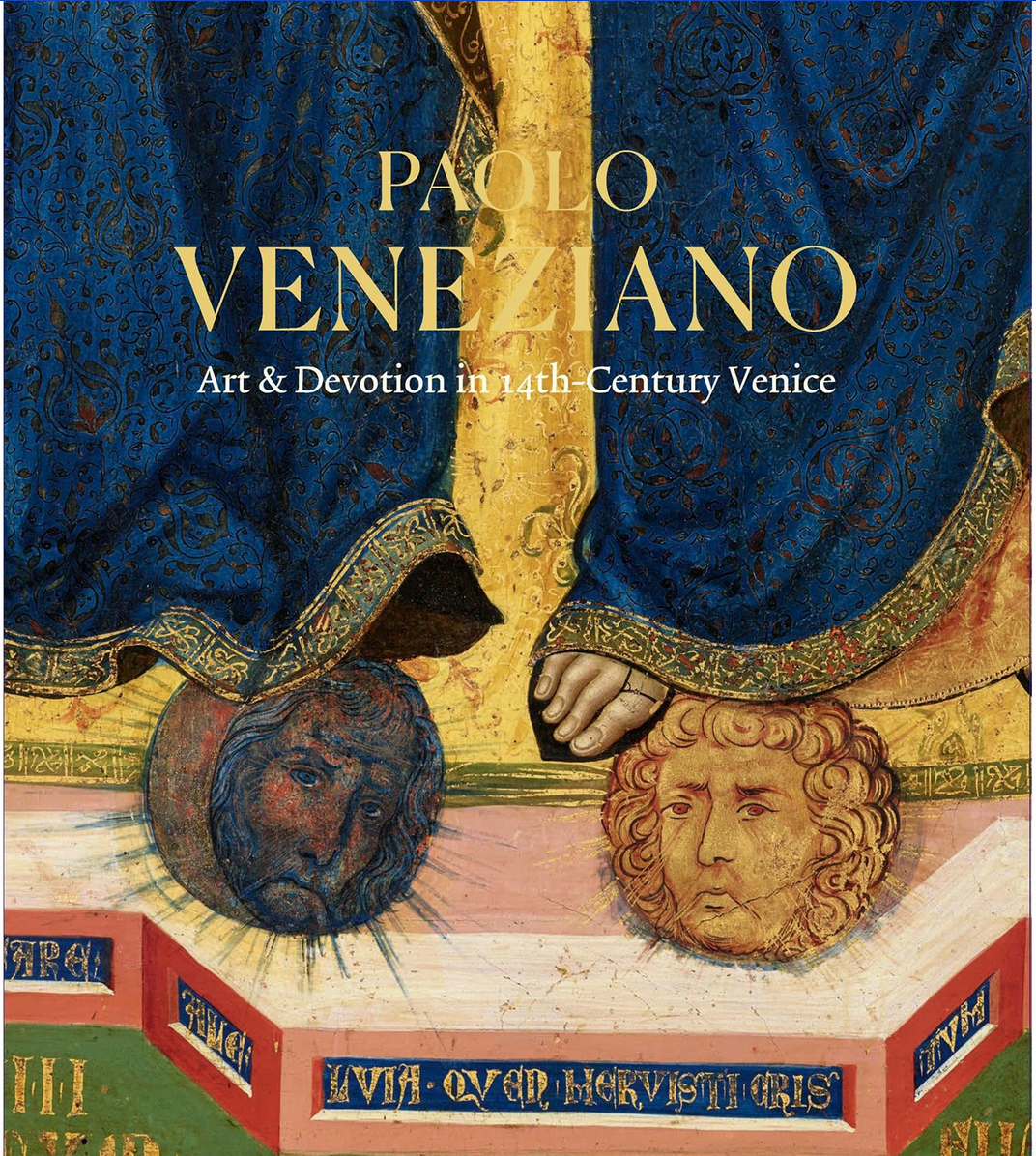
Exposition – Paolo Veneziano. Art & Devotion in 14th-Century Venice

July 13–October 3, 2021
GETTY CENTER


Paolo Veneziano led the premier painter’s workshop in late medieval Venice, producing work ranging from large complex altarpieces to small paintings intended for personal devotion. This focused exhibition reunites panels that originally formed a larger ensemble but are today scattered across different collections. This reconstruction, together with his other paintings, is set against the backdrop of the city’s uniquely cosmopolitan visual culture.

Source : The J. Paul Getty Museum

Publié dans Exposition | Laisser un commentaire

Colloque – Fragments Conference 2021

This conference, hosted by the Centre for Medieval Studies is devoted to the study of manuscript fragments, and what these fragments can tell us about lost books, medieval and post-medieval book history,and textual history. Research questions may include,but are not limited to:

  • What difference does the manuscript fragment make to the textual tradition of the text it contains?
  • What can manuscript fragments tell us about the lost literature of the Middle Ages and about changing tastes?
  • How can we use evidence from manuscript fragments to piece together the lost book from which it derives and what means do we have at our disposal to do so?
  • How should we catalogue and preserve manuscript
    fragments?
  • What do manuscript fragments tell us about the history of manuscript fragmentation and its agents (e.g. early printers, book collectors, auctioneers, book vandals)?

Please join us together with

Dr David Rundle (University of Kent),
Professor Phillipa Hardman (University of Reading),
Professor Thorlac Turville-Petre (University of Nottingham),

Join our PUBLIC LECTURE by Professor Julian Luxford (University of St Andrews) at 6 pm

Informations pratiques :

This is a two-day conference, the first day (16/09/2021) is taking place on-line, the second day (17/09/2021) is taking place in-person on campus and will not be accessible on-line.

Dates of Event16th September 2021 – 17th September 2021Last Booking Date for this Event13th September 2021

For all queries about this event, please contact:

cms-publicity@bristol.ac.uk

Source : University of Bristol

Publié dans Colloque | Laisser un commentaire

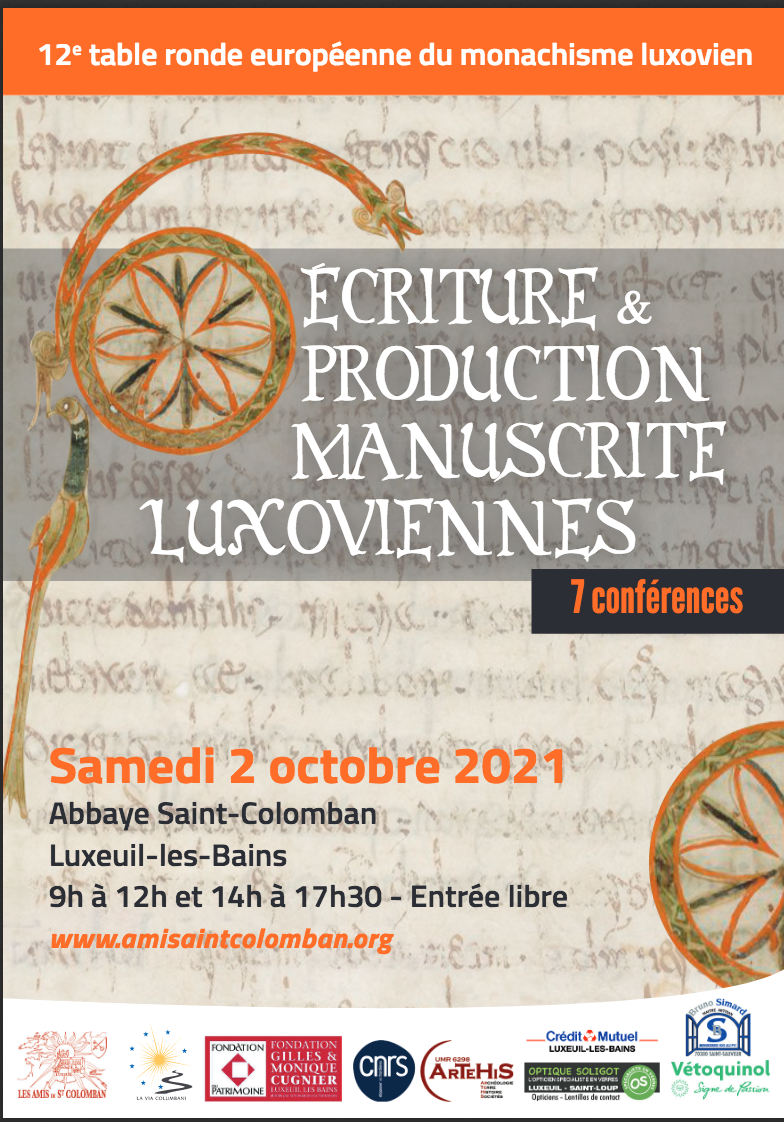
Colloque – Écriture et production manuscrite luxoviennes. 12e table ronde européenne du monachisme luxovien

Samedi, 2 Octobre 2021,  9:00 –  5:00
Contact www.amisaintcolomban.org

Table ronde organisée par l’association Les Amis de saint Colomban., en collaboration avec
UMR ARTEHIS

Programme : ici


Renseignements auprès de Jacques Prudhon au :
03 84 40 30 03/ jacques.prudhon@wanadoo.fr
www.amisaintcolomban.org

Source : ArTeHiS

Publié dans Colloque | Laisser un commentaire

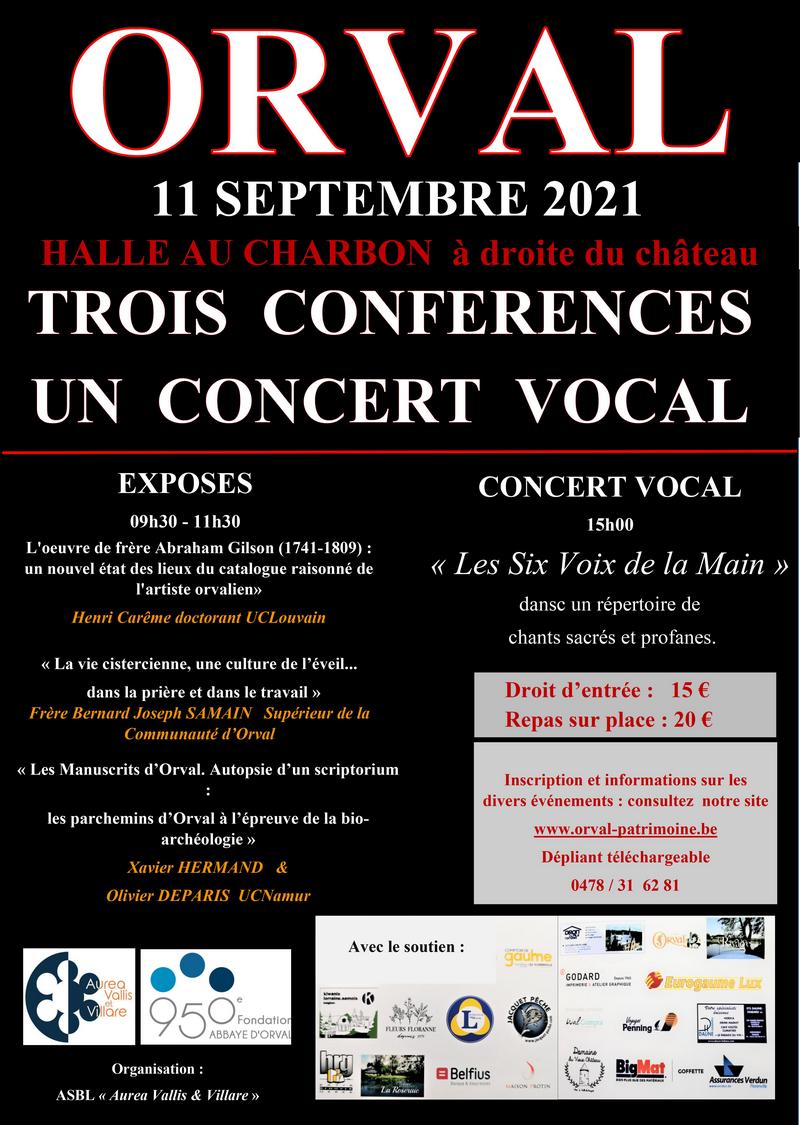
Colloque – 950e anniversaire de l’abbaye d’Orval : une journée pour tous

Abbaye d’Orval
Halle au charbon (près du château)
11 septembre 2021

SAMEDI MATIN : symposium

9h30 : « L’œuvre de frère Abraham Gilson (1741-1809) : un nouvel état des lieux du catalogue raisonné de l’artiste orvalien »
Henri Carême doctorant UCLouvain

10h10 : « La vie cistercienne, une culture de l’éveil. Dans la prière et le travail. »
Frère Bernard Joseph SAMAIN Supérieur de la Communauté d’Orval

Sur base des Sermons de Guerric d’Igny, disciple de Saint Bernard, l’orateur abordera la Spiritualité cistercienne. Le bienheureux Guerric d’Igny, né entre 1070 et 1080 à Tournai (Belgique) et décédé le 19 août 1157 à l’abbaye d’Igny (Marne, France), était un moine cistercien, abbé d’Igny. Ami et disciple de saint Bernard, il est considéré comme un des pères de la Spiritualité cistercienne, surtout par son culte marial. Son culte fut reconnu en 1889. Liturgiquement, il est commémoré le 19 août.

10h50 : « Les Manuscrits d’Orval. Autopsie d’un scriptorium : les parchemins d’Orval à l’épreuve de la bio-archéologie »
Xavier HERMAND & Olivier DEPARIS UNamur

11h30 : À l’issue du symposium : verre de l’amitié offert par l’ASBL

SAMEDI MIDI (12h30) : repas champêtre sur le site (20,00 € par personne en plus de la P.A.F. pour la journée)

Porc farci – Salades – Dessert + un ticket boisson
Sur inscription – Cliquez ici pour accéder au formulaire d’inscription pour le repas

SAMEDI APRÈS-MIDI

15h00 : CONCERT VOCAL musique sacrée et profane

Par des choristes des « SIX VOIX DE LA MAIN »
Direction : Thierry LEQUENNE

L’ensemble vocal « Les Six Voix de la Main » est né du désir de six amis chanteurs de se lancer dans le vaste répertoire choral pour voix d’hommes.
Ils interpréteront des chants sacrés et profanes. Thierry Lequenne, chanteur et dirigeant reconnu dans le monde choral international, insuffle au groupe son goût pour l’harmonie des timbres, la justesse des intonations et la musicalité des interprétations.
Les Six Voix de la Main ont obtenu le label Excellence des Tournées Art & Vie de la Communauté Française de Belgique.

P.A.F. pour la journée (même en partie, repas de midi non compris) : 15,00 €

Cliquez ici pour accéder au formulaire d’inscription aux activités (symposium et concert) de la journée du 11 septembre 2021 (pour le repas, un formulaire spécifique est accessible plus haut dans cette page)

Organisation : asbl « Aurea Vallis & Villare »

Il est également possible de s’inscrire par téléphone au 0478 316 281 du lundi au vendredi entre 9h00 et 21h00 à partir du 27 juillet.

Source : Orval Patrimoine

Publié dans Colloque | Laisser un commentaire

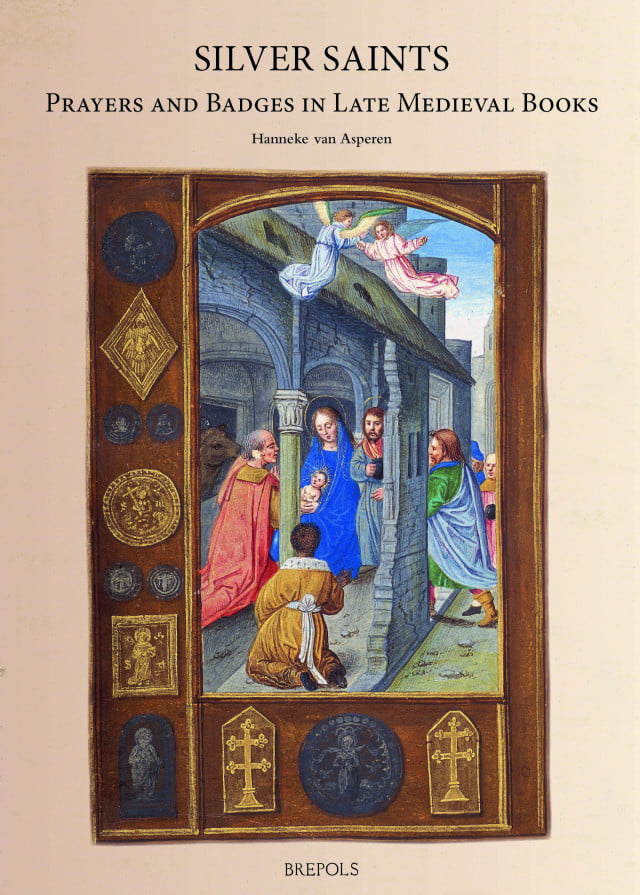
Publication — Hanneke van Asperen, « Silver Saints: Prayers and Badges in Late Medieval Books »

Late medieval books served as treasure chests for all kinds of religious keepsakes, notably small metal badges. Devotees sewed these religious badges and pilgrimage souvenirs to the parchment of their treasured devotional books and manuscript illuminators depicted silver en gilt badges in the margins as if they are sewn to the pages. Medieval manuscripts are often admired for their esthetic qualities, but many of them also served a practical use as instruments for the physical and mental wellbeing of the owners and their families. Manuscripts and incunabula containing metal badges illustrate how the owners used their books, which texts they favored, but also who collected badges and why. The depicted badges that only appear in richly illuminated and expensive manuscripts expand the knowledge of these metal objects that have been passed down in small numbers only. The painted motifs that have a more decorative and structuring role in the book fulfilled different functions than the original badges. ‘Silver Saints’ discusses the religious life of lay people in the late Middle Ages and the meaning of badges in books, both the painted motifs in beautifully decorated manuscripts and many traces of original badges.

Hanneke van Asperen is affiliated with the department of Art History at Radboud University Nijmegen. Her fields of interests are metal badges, manuscripts, devotional practices and images of charity. She is co-author of the book series ‘Heilig en Profaan’ on badge finds in the Dutch-speaking regions of medieval Europe and works on Kunera, an online searchable database  of medieval badges and ampullae.

Informations pratiques :

Hanneke van Asperen, Silver Saints: Prayers and Badges in Late Medieval Books, Turnhout, Brepols, 2021. VI+432 p., 50 b/w ill. + 87 colour ill., 220 x 280 mm. ISBN: 978-2-503-58020-3. Prix : 165 euros.

Source : Brepols

Publié dans Publications | Laisser un commentaire

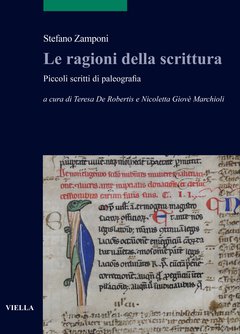
Publication — Stefano Zamponi, « Le ragioni della scrittura. Piccoli scritti di paleografia »

I saggi pubblicati in questo volume affrontano due momenti fondamentali della storia della scrittura latina in Italia: definizione e diffusione della nuova scrittura libraria che ha dominato l’Occidente fra XIII e XVI secolo, cioè la littera textualis; caratteri e varietà della scrittura e del libro ‘all’antica’, invenzioni che l’Umanesimo italiano ha consegnato alla cultura europea.

A questi temi si affiancano riflessioni di ordine metodologico su strumenti concettuali e finalità della ricerca paleografica.

Stefano Zamponi (Pistoia 1949) ha insegnato Paleografia latina presso le Università di Trieste, Padova e Firenze. Si è occupato di storia della scrittura latina intesa come storia del funzionamento e della trasformazione dei sistemi grafici, con particolare attenzione per il periodo gotico e umanistico, toccando snodi cruciali per il riconoscimento dei fatti graficamente e storicamente significativi. Ha studiato importanti personalità di copisti e intellettuali (Petrarca, Boccaccio, Iacopo Angeli, Fonzio). Ha contribuito a rilanciare in Italia la catalogazione dei manoscritti curando più volumi delle collane Manoscritti datati d’Italia, Manoscritti medievali del Veneto e Manoscritti medievali della Toscana. Presidente del Comité International de Paléographie Latine dal 2005 al 2015, dal 2010 è presidente dell’Ente nazionale Giovanni Boccaccio.

Table des matières :

Premessa, di Teresa De Robertis e Nicoletta Giovè Marchioli

Scritti di Stefano Zamponi

Introduzione

1. Elisione e sovrapposizione nella littera textualis

2. La scrittura del libro nel Duecento

3. Quattro secoli di littera textualis in Italia

4. La scrittura umanistica

5. Iacopo Angeli copista per Salutati

6. Aspetti della tradizione gotica nella littera antiqua

7. Le metamorfosi dell’antico: la tradizione antiquaria veneta

8. Il paradigma e la fine della scrittura: l’Ercole Senofontio del Feliciano

9. Epigrafi di tradizione antiquaria nel Castello del Buonconsiglio di Trento

10. Virgulariter e inferius. Giovan Francesco Cresci e la disputa sulla corsiva

11. Struttura, esecuzione, stile: ripensando il protocollo Mallon

12. Il mestiere di paleografo

Sigle delle biblioteche e bibliografia

Tavole

Indice dei manoscritti

Tabula gratulatoria

Informations pratiques :

Stefano Zamponi, Le ragioni della scrittura. Piccoli scritti di paleografia, Roma, Viella, 2021 (Scritture e libri del medioevo, 19). pp. 352, 17×24 cm, bross. ISBN: 9788833137360. Prix : 50 euros.

Source : Viella

Publié dans Publications | Laisser un commentaire