Publication – « Neighbours and strangers. Local societies in early medieval Europe », éd. Bernhard Zeller et al.

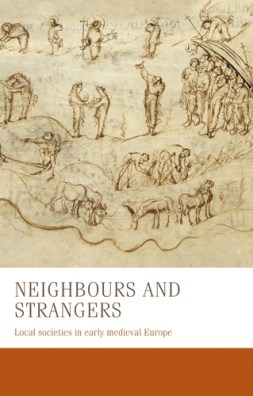
This book explores social cohesion in rural settlements in western Europe from 700-1050, asking to what extent settlements, or districts, constituted units of social organisation. It focuses on the interactions, interconnections and networks of people who lived side by side – neighbours. Drawing evidence from most of the current western European countries, the book plots and interrogates the very different practices of this wide range of regions in a systematically comparative framework. It considers the variety of local responses to the supra-local agents of landlords and rulers and the impact, such as it was, of those agents on the small-scale residential group. It also assesses the impact on local societies of the values, instructions and demands of the wider literate world of Christianity, as delivered by local priests.

9781526139818

Authors : Bernhard Zeller is Senior Research Fellow at the Institute for Medieval Research of the Austrian Academy of Sciences, Austria; Charles West is Reader in Medieval History in the Department of History at the University of Sheffield, UK; Francesca Tinti is Ikerbasque Research Professor in the Department of Medieval, Modern and American History at the University of the Basque Country UPV/EHU, Spain; Marco Stoffella is Research Fellow and Adjunct Professor in Medieval History at the University of Verona, Italy; Nicolas Schroeder is Assistant Professor in Medieval History at the Université libre de Bruxelles, Belgium; Carine van Rhijn is Lecturer in the Department of History and Art History at the University of Utrecht, Netherlands; Steffen Patzold is Professor of Medieval History in the Department of History at the University of Tübingen, Germany; Thomas Kohl is Acting Professor in the Department of History at the University of Tübingen, Germany; Wendy Davies is Professor Emerita of History at University College London and Associate Member in the Faculty of History at the University of Oxford, UK; Miriam Czock is Senior lecturer in the History Department at the University of Duisburg-Essen, Germany

Table des matières :

1 Questions to pursue
2 Setting the scene
3 The fabric of local societies: people, land and settlement
4 Making groups: collective action in rural settlements
5 Shepherds, uncles, owners, scribes: priests as neighbours in early medieval local societies
6 Interventions in local societies: lower office holders
7 Interventions and interactions
8 Neighbours, visitors and strangers: searching for the local
Index

Informations pratiques :

Neighbours and strangers. Local societies in early medieval Europe, éd. Bernhard Zeller et al., Manchester, Manchester University Press, 2020 (Manchester Medieval Studies). 304 p. ISBN: 978-1-5261-3981-8. Prix : 80 £.

Source : Manchester University Press

Publié dans Publications | Laisser un commentaire

Publication – Marie-Anne Vannier, « Judaïsme et christianisme au Moyen Âge »

Les rapports entre Judaïsme et christianisme au Moyen Âge ont été souvent présentés comme conflictuels. Or, il n’en a pas toujours été ainsi. Aussi cet ouvrage s’attache-t-il à mettre en évidence la synergie entre Judaïsme et christianisme à cette époque. Des auteurs comme Maïmonide et Eckhart ont, sur ce plan, un rôle décisif.

Marie-Anne VANNIER. Double formation en philosophie et en théologie. Spécialiste d’Augustin, de Jean Cassien et de maître Eckhart.

rhfacfbz

Table des matières :

Sylvie Camet, Préface

Marie-Anne Vannier, Présentation
Daniel Boyarin, Medieval Jews without Judaism : The case of Kuzari
Gilbert Dahan, L’utilisation de l’exégèse juive chez les exégètes chrétiens
Annie Noblesse-Rocher, Quelques remarques sur l’exégèse d’Ingetus Contardus dans la dispute de Palma de Majorque (1286)
David Lemler, Les rationalistes juifs face à l’allégorisme chrétien (XIIe-XIIIe siècles)
Israël Yuval, La matsa de Pessach et l’hostie de Pâques au Moyen Âge : relations reconsidérées
Markus Vinzent, Presbyterion kreitton ? The re-evaluation of Tradition by Jewish and Christian teachers of the thirteenth and fourteenth centuries
Marie-Anne Vannier, Maître Eckhart et le Judaïsme
Jean-Claude Lagarrigue, L’influence de l’exégèse parabolique de Maïmonide sur maître Eckhart
Harald Schwaetzer, Der Herabstieg der Weisheit in ihr Haus. Nikolaus von Kuens und das Alte Testament

Présentation des auteurs
Index Auteurs – Index Thématique

Informations pratiques :

Marie-Anne Vannier, Judaïsme et christianisme au Moyen Âge, Turnhout, Brepols, 2020 (Judaïsme ancien et origines du christianisme , 17). 149 p., 1 b/w ill., 156 x 234 mm. ISBN: 978-2-503-58421-8. Prix : 59 euros.

Source : Brepols

Publié dans Publications | Laisser un commentaire

Offre d’emploi – Departmental Lecturer in Medieval and Renaissance Art History (University of Oxford)

Location: Oxford
Salary: £32,817 to £40,322 p.a.
Hours: Full Time
Contract Type: Fixed-Term/Contract
Placed On: 12th March 2020
Closes: 17th April 2020
Job Ref: 145637

History of Art Department, Littlegate House, Oxford

Grade 7: £32,817 – £40,322 p.a.

102

We are seeking a highly motivated and inspirational person to join our thriving academic community of art historians and to bring exciting perspectives to the teaching and study of the History of Medieval and Renaissance Art at Oxford.

Although this is primarily a teaching and administrative role, the successful candidate will also engage in advanced study and independent research and play an active role in the History of Art Department and the interdisciplinary community of St Catherine’s College.

The successful applicant will have research and teaching interests in the history of Medieval and Renaissance art, broadly defined, as well as in art historical theory and methodologies. They will have an aptitude for teaching and the ability to inspire and enthuse students at all levels alongside a commitment to promoting the subject of art history within and beyond academia.

On the administrative side they will co-operate in the administrative work of the Department of Art History and Faculty of History, taking on such roles as are required, and will participate in the undergraduate and postgraduate admissions exercises.

This is a joint appointment in association with St Catherine’s College. The person appointed will be expected to take responsibility for the general administration of History of Art teaching at St Catherine’s, including arrangements for admission to the subject and pastoral duties.

The successful applicant will have a completed doctorate in a relevant field, or evidence that a doctorate is close to completion.

This is a full-time, fixed-term post for a period of 3 years.

Applications for this post must be made online. To apply, and for more details, please click on the links below.

The deadline for applications is 12.00 noon on Friday 17 April 2020.

https://my.corehr.com/pls/uoxrecruit/erq_jobspec_version_4.jobspec?p_id=145637

Closing Date: 17-APR-2020 12:00

Source : Jobs.ac.uk

Publié dans Le réseau | Laisser un commentaire

Publication – Frances et Joseph Gies, « La Vie dans un village médiéval »

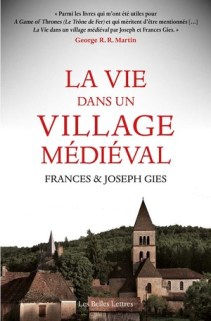
Traduit pour la première fois en France, La Vie dans un village médiéval est un classique qui a initié des millions de lecteurs anglophones aux secrets du monde médiéval. Et qui a profondément inspiré George R. R. Martin, le créateur de A Game of Thrones.

À partir de l’exemple du village anglais d’Elton, vers 1300 de notre ère, Frances et Joseph Gies racontent l’histoire de l’origine, du développement et du déclin du village européen.

Avec une grande richesse d’anecdotes et de détails, ils dressent un portrait saisissant de ce qu’était le quotidien de l’époque et nous montrent l’importance du rôle qu’y jouait le village.

Les Gies ont le don de rendre à la vie ces hommes et ces femmes qui vivaient dans et autour du village. Nous découvrons comment les champs étaient cultivés, comment seigneurs et serfs se vêtaient et se lavaient, ce qu’ils buvaient et ce qu’ils mangeaient, quels étaient leurs occupations et leurs loisirs, et quels curieux traitements ils inventaient pour se soigner. Nous y apprenons le rôle essentiel que jouait l’église dans le maintien de l’ordre social et comment le système juridique et le code de conduite, étonnamment avancés, du village médiéval posèrent les fondations de la civilisation occidentale.

Aussi plaisant à lire qu’un roman, La Vie dans un village médiéval est l’ouvrage idéal pour quiconque a envie de se plonger, l’espace de quelques heures, dans cette période fascinante.

159766.1583463618

Table des matières :

Remerciements

Prologue : Elton
I. Le village apparaît
II. Le village anglais : Elton
III. Le seigneur
IV. Les villageois : qui ils étaient
V. Les villageois : comment ils vivaient
VI. Le mariage et la famille
VII. Le village au travail
VIII. La paroisse
IX. La justice du village
X. La disparition du village médiéval

Notes
Bibliographie
Glossaire
Index
Table des illustrations
Cartes

Informations pratiques :

Frances et Joseph Gies, La Vie dans un village médiéval, trad. Christophe Jaquet, Paris, Les Belles Lettres, 2020.  13.3 x 20.4 cm. ISBN : 9782251450834. Prix : 16,90 euros.

Source : Les Belles Lettres

Publié dans Publications | Laisser un commentaire

Appel à contribution – Grey Eminences in Action. Personal Structures of Informal Decision-Making at Late-Medieval Courts

12-14 October 2020
Vienna, Austrian Academy of Sciences
Institute for Medieval Research
csm_News_GREMIA_d09ecdce34

In contrast to Norbert Elias’ perception of the court as a “gilded cage”, historians have, over a couple of decades, agreed on concepts of courts as specific social systems that can be visualised by a series of concentric circles around the ruler. Courtiers and officers were not only domesticated by the court (“Civilizing Process”), they were rather integrated in the mechanisms of decision-making. Therefore, courts can be defined as cultural and political nexuses: places where central power encountered the subjects (yet still belonging to different sort of elites, including noble and functional elites), and where power and resources were concentrated and redistributed. Courtiers and officers were integrated in a permanent process of interaction and redistribution in the surroundings of the ruler. Possible share in power and rule, promotion and admission to offices at court and in the chancery were accordingly regarded as a consequence of the ruler’s grace on the one hand or, as the quasi-institutional practice and structure of governance on the other hand. Thus, individuals who had direct and specific access to the rulers or belonged to their inner circle (gaining their trust and establishing an intellectual and even physical proximity with them), were sometimes raised to a position that enabled them to accumulate resources and develop their own influence and power.

It seems therefore crucial to understand the particular relations and interdependencies between such specific court actors, the ruler, and the different court circles, in order to unveil the functioning of medieval courts. In order to do so, it seems especially relevant to highlight the personal structures of decision-making.

Yet, for a long time, medievalists have rather targeted their attention on the shaping of state institutions, and therefore on the staff of royal councils or the chanceries, i.e. a sample of people denoted as “counsellor” or “secretary” in contemporary sources. Additionally, scholars have focused on the organigram of the court and the position of the office holders in the complex court rankings. It is only a reassessment of research then, that medieval court studies are once again addressing questions of individual agency at court, thus bridging the gap between medieval and early modern historical concepts of court.

This international conference is a vital part of the international research project GREMIA, made up of two joint projects: Grey Eminences in Action. Personal Structures of Informal Decision-Making at Late Medieval Courts (Austrian Academy of Sciences/ÖAW, FWF project I 4076, PI Andreas Zajic, https://www.oeaw.ac.at/en/imafo/research/editionsunternehmenquellenforschungmir/einzelprojekte/grey-eminences-in-action/) and its Czech counterpart Šedé eminence v akci : neformální personální struktury na pozdně středověkých dvorech (Masaryk University Brno, GF19-29622L, PI Petr Elbel, https://www.muni.cz/vyzkum/projekty/44787). Its aim is to highlight the agency of these personal structures of decision-making by investigating profiles of courtiers and officers possessing a power that superseded their ranking at court, people who exerted more influence than their social condition was supposed to bestow them, people who were to a certain extent acting behind the curtain, or in other words may be referred to as “Grey Eminences”.

The term “Grey Eminence” (“Éminence grise”) was originally coined for a figure of French early modern history, François Leclerc du Tremblay, the key adviser and alter ego of Cardinal Richelieu, to whose habit of a Capuchin friar the adjective “grey” was originally relating. Since historiography has hitherto only scarcely been using the term, we had to refer to a more unspecific, every day understanding of the word (“someone working in the shadow of another one”). The GREMIA project and this conference aim to provide a more comprehensive definition of the concept that seems apt to match the realities of power in late European medieval courts.

“Grey Eminence” seems a suitable label to apply to figures of the volatile shadow hierarchy of late medieval court staff. The factual gradation of access to the ruler made actually low-ranking servants attractive candidates for princely favour and promotion. Ranks and status at court were highly complex because all courts know a tension between a hierarchy based on established social rank, and an unstable “shadow hierarchy” based on favour and actual or perceived influence on the prince. Rulers could raise their “favourites” to great heights, yet steep promotions could be followed by even more abrupt downfalls. The phenomenon of rulers relying on trusted intimates of often lower rank has traditionally been investigated under the paradigm of “favourites” or “minister-favourites”, the term itself (“favori”) being coined in 17th century France and first introduced to the terminology of history in French literature. These people benefited personally from their disproportional credit with the rulers, a quality that made them prone to fall.

Only during the last few years, scholars have emphasised the importance of trust and confidence as well as loyalty as crucial factors of intimate bonds between princes and people regarded as secundi regi/secundi a rege (“seconds to the king”). Courtiers whom the ruler confided, were more than just favourites depending on the potentially short-termed favour of their masters, since they possessed the confidence and trust of the sovereign.

Therefore, there are some crucial differences to be made between a “favourite” and an influential advisor at court. The term “Grey Eminence” seems appropriate to avoid ambiguities connoted with the term “favourite”. “Favourite” tends to describe a person in the surroundings of the ruler that enjoyed unusual favour with the king, but was not necessarily (or rather scarcely) applied to persons of major political influence. This formula seems to fit perfectly with early modern minister-favourites but only imperfectly describes the position medieval key advisers of kings held as a result of their consequent rise to influence through the institutions of court and chancery. These political advisors acted as “go-betweens” or “power-brokers” at court, so that they could eventually be addressed by external and even foreign powers in order to pursue a certain policy with the ruler. On the contrary, favour demanded a bond of friendship, with easy access and a degree of personal familiarity, between king and minister. Consequently, Grey eminences cannot be reduced to the category of “seconds to the king”. It was a subtle mix of personal, interpersonal and structural factors that contributed to place them at the centre of strong power networks.

The papers that shall be presented at the conference are expected to either contribute to the working model/definition of Grey Eminences or to present case studies in order to enhance the comparative approach of the GREMIA project. Hence, papers may address the following research topics:

1. Proposing biographies to be compared with the case studies investigated within the GREMIA project: The starting point of the GREMIA project was the idea to trace the careers and biographies of several important decision-makers of the political entourage of late medieval Emperors and King of the Romans: Sigmund Huler (Bohemian vice-chamberlain or royal treasurer to King Wenceslas), Brunoro della Scala (key figure of the Italian party at the court of Emperor Sigismund), Sigmund Prüschenk (counsellor to Emperor Frederick III), Zyprian von Northeim (named Serntein, aulic and Tyrolean chancellor to Maximilian I) and Kaspar Schlick (imperial chancellor and leading diplomat to the Roman Kings and Emperors Sigismund, Albert II and Frederick III). We are keen to confront the chosen sample of people at the Imperial court with comparable and matching figures from other European royal and princely households.

2. Discussing and assessing one or several of the proposed characteristics attributed to Grey eminences: – Social ascent: Grey eminences often (but not always) rise to their position as the result of an advancement from comparably low social milieu (in contrast to courtiers belonging to the higher aristocracy). – Technicians of power (diplomacy, engineering, finance, legal matters, etc.): their specific technical knowledge helped them climbing the ladder and accessing the direct service of the prince, even more so, if they had training in more than just one of these areas of knowledge or retained a good general overview of political concepts and the modes of decision-making at court; – Secundus regi/imperatori, second to the ruler or to a minister in terms of power: it seems, however, that Grey eminences could not only rely on their close cooperation with the king himself; they rather had to work hand in hand with potentially rivalling courtiers; – Powerbroker/gatherer of symbolic capital, or the Grey eminence as a node of a wide-ranging network. Grey eminences often promoted family members or clients from their patronage systems, but they could also function as go-betweens for regional elites, promoting political interests of their countrymen at court and thus ensuring or intensifying interaction between the court as a political centre and its more or less distant peripheries and vice versa; – Founders of a bureaucratic and courtly dynasty: they pursued their own interests and expected to have their share in the redistribution of power and honours at court. Consequently, if the Grey eminence had gained a hold on power, they tried to retain it or to pass it on to their offspring, often seeking to achieve heredity of (formal) court offices or at least of landed property given to them. – Part of a group of Grey eminences: the ruler promoted more than one Grey eminence at a time, as a deliberate strategy to establish a counterbalance between favourites, so that none of them could entirely dominate the court or the counsel.
– Rival of the sovereign: Grey eminences entering in a relationship of rivalry with the sovereign, a constellation typically appearing with the succession of a new sovereign when the office of the Grey eminence did not end with the death of the ruler.

3. Grey Eminences belonging to other political bodies/spheres of decision centres: the five reference characters selected for the GREMIA project as well as most of the theoretical material gathered refer to Grey eminences as members of a royal or princely court. However, it is true that other forms of decision centres (ecclesiastic court, city councils, republican institutions, representative assemblies) could have produced other forms of Grey eminences. Papers on such topics will also be highly welcomed.

The conference will take place at the Institut für Mittelalterforschung of the Österreichische Akademie der Wissenschaften (Hollandstraße 11-13, 1st floor, Vienna, Austria), 12-14 October 2020. Conference languages will be English, German and French.

Proposals (including an abstract of 1500 characters max. and a short bio-bibliographical presentation) for papers of 25 min should be sent to sonja.duennebeil@oeaw.ac.at and jonathan.dumont@oeaw.ac.at before 15 April.

Source : Austrian Academy of Sciences

Publié dans Appel à contributions | Laisser un commentaire

Publication – « Le Profane et le Sacré dans l’Europe latine, Ve-XVIe siècles », éd.Caroline Heid, Marc Deramaix et Olivier Pédeflous

Les articles de cet ouvrage étudient la rencontre du sacré et du profane chez des auteurs médio et néolatins, dans des œuvres de circonstance, des poésies religieuses, ou encore des traités politiques ou pédagogiques, de l’Antiquité tardive au milieu du XVIe siècle.

Table des matières : ici

McxMS01b

Informations pratiques :

Le Profane et le Sacré dans l’Europe latine, Ve-XVIe siècles, éd.Caroline Heid, Marc Deramaix et Olivier Pédeflous, Paris, Classiques Garnier, 2020 (Rencontres, n° 428 / Colloques, congrès et conférences sur la Renaissance européenne, n° 105). 448 pages. ISBN: 978-2-406-09146-2. Prix : 46 euros.

Source : Classiques Garnier

Publié dans Publications | Laisser un commentaire

Appel à contribution – Relationships. University of York, Centre for Medieval Studies, Interdisciplinary Graduate Conference

Date(s): 23-24 June 2020
Location: King’s Manor, Exhibition Square, York
Deadline: 23 April, 2020

We welcome paper proposals of 250-300 words for 15-20 minute papers on the theme of Relationships in any area of Medieval Studies from current postgraduate students (MA, PhD, MPhil), early career scholars, and independent researchers.

unnamed

Topics can include (but are not limited to):

  • Interpersonal relationships (friendships, family, neighbourliness and dispute, patrons, authority, love, gender, and sexuality)
  • Communities, workshops, and networks (religious houses, artisan workshops, intellectual networks, interfaith and global relations)
  • Relationships between texts, images, and audiences (word-image relations, commissioned works, marginalia, authorship, reading and writing practices)
  • Relationships to objects (relics, gifts, object biographies)
  • Intertextual relationships and literary traditions
  • Relationships between people, animals, space, and landscape
  • Relationships with the past (medievalism, romanesque)
  • Interdisciplinary research (scientific methodologies, digital humanities, history of science)
  • Public engagement and collaborations with heritage institutions

We also welcome proposals for academic posters to be displayed during the conference.

Please send all proposals by 23rd April to: yorkcmsconference@gmail.com

Travel grants for unfunded speakers are available. To apply, please include with your proposal a short explanation of your financial circumstances (self-funded student, lack of travel bursary, etc.) and an itemised list of anticipated expenses.

Source : Medieval Art Research

Publié dans Appel à contributions | Laisser un commentaire

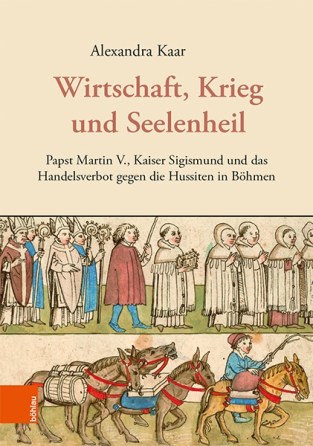
Publication en ligne – Alexandra, Kaar, « Wirtschaft, Krieg und Seelenheil Papst. Martin V., Kaiser Sigismund und das Handelsverbot gegen die Hussiten in Böhmen »

Die sogenannten Hussitenkriege (1420–1436), in deren Verlauf das katholische Europa vergeblich versuchte, die angeblich häretischen Anhänger des böhmischen Reformers Jan Hus zu unterwerfen, stellen eine der größten bewaffneten Auseinandersetzungen im spätmittelalterlichen Mitteleuropa dar. Eines der Mittel, zu denen Papst und Kaiser in ihrem Kampf gegen die böhmischen „Häretiker“ griffen, war das Verbot jedweden Handels mit den Hussiten. Das Buch bietet eine umfassende Analyse dieses Embargos. Anders als in der Forschung bisher üblich wird das Verbot vor allem als konkretes, alltägliches soziales Handeln interpretiert, durch das Strukturen und Akteure des internationalen Fernhandels sowie des lokalen Nahhandels in und rund um Böhmen sichtbar werden. Gleichzeitig wird das Handelsverbot auch auf einer kultur-geschichtlichen Ebene näher beleuchtet. Das Buch ermöglicht vielfältige Einblicke in den Lebensalltag und die Mentalitäten mittelalterlicher Menschen unterschiedlicher sozialer und geografischer Herkunft und leistet zugleich einen wichtigen Beitrag zur politischen Geschichte der Hussitenkriege.

978-3-205-20940-9_600x600@2x

Alexandra Kaar hat in Wien und Paris mittelalterliche Geschichte und historische Hilfswissenschaften studiert. Nach Forschungsaufenthalten in Prag ist sie gegenwärtig als wissenschaftliche Mitarbeiterin am Institut für Mittelalterforschung der Österreichischen Akademie der Wissenschaften in Wien tätig.

Sie forscht zur mittelalterlichen Stadtgeschichte sowie zur Geschichte Böhmens und seiner Nachbarländer im späten Mittelalter.

Informations pratiques :

Wirtschaft, Krieg und Seelenheil. Papst Martin V., Kaiser Sigismund und das Handelsverbot gegen die Hussiten in Böhmen (Forschungen zur Kaiser- und Papstgeschichte des Mittelalters Beihefte zu J. F. Böhmer, Regesta Imperii 46, Wien/Köln/Weimar: Böhlau 2020). ISBN: 978-3-205-20940-9. Open Access: https://www.vandenhoeck-ruprecht- verlage.com/themen-entdecken/geschichte/geschichte-des-mittelalters/54683/wirtschaft-krieg-und-seelenheil?c=1532

Source : Vandenhoeck Ruprecht

Publié dans Publications | Laisser un commentaire

Publication – « Le Mystère de saint Vincent (Angers, 1471 – Le Lude, 1476) Édition critique du ms. BnF, fr. 12538 », éd. Xavier Leroux

Composé pour être joué à Angers en 1471 et probablement au Lude en 1476, Le Mystère de saint Vincent est une pièce hagiographique anonyme marquée par son ancrage régional. Conservé dans un seul manuscrit, cet ouvrage en propose la première édition critique, attentive aux spécificités du texte dramatique médiéval.

Table des matières : ici

XlxMS01b

Informations pratiques :

Le Mystère de saint Vincent (Angers, 1471 – Le Lude, 1476) Édition critique du ms. BnF, fr. 12538, éd. Xavier Leroux, Paris, Classiques Garnier, 2020 (Textes littéraires du Moyen Âge, n° 49 / Corpus du théâtre médiéval, n° 1). 557 pages. ISBN : 978-2-406-07862-3. Prix : 39 euros.

Source : Classiques Garnier

Publié dans Publications | Laisser un commentaire

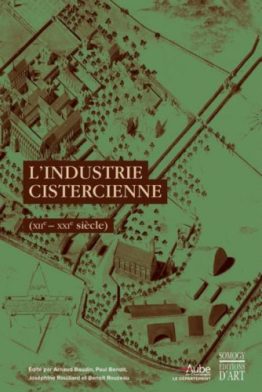
Publication – « L’Industrie cistercienne (XIIe-XXIe siècle), actes du colloque international (Troyes – Abbaye de Clairvaux – Abbaye de Fontenay, 1er-5 septembre 2015) », dir. Arnaud Baudin, Paul Benoît, Joséphine Rouillard et Benoît Rouzeau

La règle de saint Benoît, réformée par Robert de Molesme, Étienne Harding et Bernard de Clairvaux à partir de la fin du XIe siècle, structure la journée du moine entre prière et travail. Fondée sur l’exploitation par les convers de l’immense patrimoine foncier, une économie puissante et multiforme se met en place au sein de laquelle l’industrie occupe une place essentielle qui participe des innovations technologiques du Moyen Âge et de l’époque moderne. En témoignent les études monographiques consacrées aux forges monastiques, à l’énergie hydraulique, aux exploitations minières ou aux carreaux de pavement qui se sont développées au cours des cinquante dernières années.

Industrie_cistercienne_couv-334x500

Ce colloque, le premier entièrement consacré à ce thème, aborde, à la faveur de sources archivistiques et archéologiques renouvelées, les questions des arts du feu (terre cuite, verre, métallurgie du fer et des non ferreux), des activités minières (sel, pierre, argent) et textiles. De l’Angleterre et du Pays de Galles à la péninsule ibérique, en passant par la France, les Pays-Bas et l’Europe de l’Est, les meilleurs spécialistes internationaux proposent études de sites, posters et synthèses régionales. Prolongement de cette activité séculaire, certains monastères maintiennent, aujourd’hui encore, une industrie cistercienne vivante.

Informations pratiques :

L’Industrie cistercienne (XIIe-XXIe siècle), actes du colloque international (Troyes – Abbaye de Clairvaux – Abbaye de Fontenay, 1er-5 septembre 2015), dir. Arnaud Baudin, Paul Benoît, Joséphine Rouillard et Benoît Rouzeau, Paris, Somogy, 2019. 416 p., 133 ill., 16 x 24 cm. ISBN : 978-2-7572-1135-9. Prix :30 euros.

Source : LAMOP

Publié dans Publications | Laisser un commentaire