Séminaire – Monastères, couvents et confréries. Vivre en communauté en Méditerranée médiévale et moderne

MMSH, salle Paul-Albert Février – 5 rue du Château de l’Horloge
Aix-en-Provence, France (13090)

Le nouveau séminaire de recherche du LA3M entend réunir les membres des différents axes de recherche du laboratoire autour d’un thème commun, appréhendé de façon transversale et pluridisciplinaire. Archéologues, historiens et historiens de l’art sont invités à dialoguer et échanger sur des objets ou des problématiques qu’ils envisagent habituellement selon des approches ou des méthodes différenciées.

Pour les deux années à venir (2018-2019 et 2019-2020) la thématique choisie porte sur le mode de vie communautaire ou cénobitique autour de la Méditerranée aux époques médiévale et moderne, quelle que soit la religion pratiquée par ces communautés. Les intervenants (membres du laboratoire, doctorants, chercheurs et enseignants-chercheurs extérieurs) traitent de différents aspects de ce « vivre en communauté », qu’il s’agisse d’aspects matériels, artistiques, intellectuels ou spirituels.

Les séances ont lieu entre 14h et 17h.

Une journée d’étude, qui aura lieu le 13 mai, clôturera la première année. Elle portera sur « Savoirs, apprentissages, transmission ».

Capture d_écran 2019-01-01 à 14.25.06

Programme :

17 décembre 2018 : Consommation et pratiques alimentaires

Morgane Kernin (doctorante AMU-LA3M) : « L’alimentation carnée chez les moines : l’exemple de l’Abbaye de Saint-Gilles-du-Gard (30) »
Delphine Dixneuf (LA3M) et Alexandra Konstantinidou (Ministère de la Culture, Grèce) : « Pratiques et consommation alimentaire en Egypte au début de l’époque médiévale : le témoignage de l’archéologie »

28 janvier 2019 : Le monachisme insulaire

Marie-Myriam Carytsiotis (doctorante AMU-LA3M) : « Patmos, une île-monastère : logistique et enjeux économiques »
Morana Čaušević-Bully (Université Bourgogne Franche Comté / UMR Chrono-Environnement, Besançon) et Sébastien Bully (CNRS/UMR ARTEHIS, Dijon-Auxerre) : « Archéologie des monastères et complexes ecclésiaux de l’archipel du Kvarner (Croatie) entre le Ve et le XIe s. »

25 février 2019 : Les pratiques funéraires

David Ollivier (LA3M) et Yann Ardagna (Adès) : « Un dispositif inhabituel en contexte médiéval : le cas du pourrissoir du cimetière de l’abbaye Saint-Pierre de l’Almanarre »
Nathalie Molina (Inrap/LA3M), Andreas Hartmann (LA3M/AMU), Heike Hansen (LA3M) et Marie-Pierre Bonetti (LA3M) : « Le tombeau des Baux à l’abbaye de Silvacane (vers 1270-1280) : sur les traces d’un grand monument funéraire disparu »
Agnès Bergeret (Inrap, ASM Archéologie des Sociétés Méditerranéennes) et Aymat Catafau (UPVD, CRESEM) : « L’accueil des sépultures au couvent des franciscains de Perpignan du Moyen Âge à l’époque moderne »

18 mars 2019 : Les Mendiants à Aix

Interventions de Nuria Nin (Service archéologique d’Aix), Sandrine Claude (Service archéologique d’Aix), Margot Hoffelt (LA3M), Marc Panneau (Service archéologique d’Aix)

Publié dans Séminaire | Laisser un commentaire

Publication web – « La culture classique aujourd’hui : éloge de savoirs inutiles », conférence du Pr. Nuccio Ordine

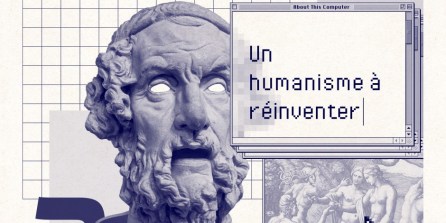
Pour célébrer le 500e anniversaire de l’inauguration du Collegium Trilingue, la Commission de programme « Langues et littératures anciennes » (GLOR), les Archives de l’Université et le Musée L ont organisé deux événements marquants le jeudi 18 octobre 2018 : une conférence du Pr. Nuccio Ordine (Université de Calabre), sur le thème « La culture classique aujourd’hui : éloge de savoirs inutiles » et le vernissage d’une exposition intitulée « Un humanisme à réinventer. 500 ans d’études classiques à Louvain (1518–2018) ».

Le texte de cette conférence est accessible ici

Affiche_500ans 2.1

Publié dans Publications | Laisser un commentaire

Séminaire – Codicologie quantitative et sociologie du livre médiéval : Best sellers médiévaux et modernes. Diffusion et succès des productions manuscrites et imprimées

Séminaire de recherche : Codicologie quantitative et sociologie du livre médiéval

Séminaire, fondé par Ezio Ornato, Jean-Philippe Genet et Carla Bozzolo
Ouvert à tous
Public : Master, Doctorat, Post-Doctorat et Recherche

Le jeudi de 17h à 19h en Sorbonne, salle Perroy (centre Sorbonne, galerie Dumas, escalier R, 2e étage), première séance le 17 janvier 2019

Capture d_écran 2019-01-02 à 00.12.01

Programme :

Jeudi 17 Janvier
Cédric Giraud (Université de Lorraine, Centre de Recherche Universitaire Lorrain d’Histoire)
La circulation des textes spirituels dans l’Occident médiéval (XIIe-XVe siècle). Autour du projet Spiritus
Discutant : Martin Morard (CNRS, IRHT)

Jeudi 7 Février
Géraldine Veysseyre(Sorbonne Université, EA 4509 – Sens, Texte, Informatique, Histoire)
Mesurer le succès des « œuvres pieuses vernaculaires » : méthodes et résultats du projet de recherche Old Pious Vernacular Successes
Discutant : Francesco Siri (CNRS, IRHT)

Jeudi 21 Février
Louis-Gabriel Bonicoli (State University of New York, et Université Normale de Yancheng)
Étude de quelques succès commerciaux de textes illustrés autour de 1500
Discutante : Catherine Kikuchi (Université de Versailles – Saint-Quentin-en-Yvelines, DYPAC)

Jeudi 14 Mars
Antoine Brix (CNRS, IRHT)
Temporalité de la fortune littéraire à la fin du Moyen Âge : le cas des Grandes Chroniques de France (XIIIe-XVIe siècles)
Discutant : Jean-Philippe Genêt (Université Paris 1 Panthéon-Sorbonne, Lamop)

Jeudi 28 Mars
Malcolm Walsby (Université Rennes 2, EA 7468 – Tempora)
Les étapes du développement du marché du livre imprimé en France aux XVe et XVIe siècles
Discutante : Christine Bénévent (École nationale des chartes)

Jeudi 11 Avril
Marion Pouspin (EHESS, GAHOM)
Les pièces gothiques : l’imprimé populaire, vecteur ou fabrique des textes à succès ?
Discutant : Octave Julien (Université Paris 1 Panthéon-Sorbonne, Lamop)

Source : LAMOP

Publié dans Séminaire | Laisser un commentaire

Appel à contribution – Moving Forms: The Transformations and Translocations of Medieval Literature

Athens
11-13 september 2019

The movement of people and books across space and time – mobility and portability – were driving forces of medieval European literary and intellectual culture. Men and women, clerical and secular, constructed extensive social networks and communities through travel, written communication, and the exchange of texts. Shared literary practices and forms occurred at the regional and transregional levels, defining local identities and forging links between people separated by distance and time. Around the North Sea and Baltic littorals, legends from the Norse sagas, for instance, were taken up by writers. On a larger scale, people from north-western Europe to China exchanged stories of Barlaam and Josephat, while tales of Alexander are found from India to Ireland; in both cases, transmission was facilitated by the movement of people along the Silk Road. Rather than a full picture, often we are left with a set of trails, traces and clues that challenge us to create narratives out of the fragments.

This symposium aims to contribute to the understanding of medieval literature through the development of methodologies which examine the intersection of social networks and communities with literary forms. We welcome papers that attend to the agency of people (men and women), genres (literary, scientific, philosophical, legal etc.), modes (verse, poetry, prose), styles, texts and manuscripts (book types, layouts, images) in creating literary links across space and time. Building on the practices of both comparative literature and entangled history, the symposium will open up connections between literary cultures often considered to be separate. At the same time, and of equal importance, it will be alert to the absence of connections, to discontinuities, exposing the diversities and ruptures of medieval literature, as well as the commonalities.

By following the movement of forms and tracing social connections from Antiquity to the Renaissance, we will interrogate both geographies and chronologies of medieval European literature. Always keeping the intersection of the social and the formal in view, the symposium will move back and forth between small and large scales of time and place: the local, the transregional, the European, and the Afro-Eurasian. Issues of morphology, scale and periodization will be central to discussion, enabling conversations across a wide range of material to gain traction. The symposium will bring together methodological and theoretical contributions, addressing the intersection of people and forms; we welcome papers that work on large scale typological models as well as papers that address broader issues though closely-worked case studies.

Questions to consider include:

  • How do we move from specific examples to writing/formulating larger narratives, from the micro to the macro, from the close up to the panoramic, without falling into generalizations?
  • What are the advantages and disadvantages of existing methodologies that account for the movement of objects, texts and people through space (e.g. histoire croisée, actor network theory, global history, etc.)?
  • How does medieval Europe fit into a wider Afro-Eurasian space? How does Europe divide into and participate in regional geographies?
  • How conscious were medieval people of new forms as a dimension of cultural exchange?
  • What role does the modern historical imagination have to play in recreating social networks and formal encounters?
  • How do medieval theories of cultural movement (e.g. translatio imperii et studii, spoliation, etc.) enable us to explain the transmission of literary forms?

Format

The symposium will meet over three days, with each day including 3 panels with three speakers. Papers will last 20 minutes and be followed by 45 minutes of discussion per panel. Since the substantial discussion following the papers is as important as the papers themselves, papers will not be allowed to overrun. Each session will have a respondent/moderator who will read papers in advance of the session and launch the discussion of their session through a short reflective invitation. For this reason, we ask that all papers be given in English. Speakers are asked to frame their research in ways which are simultaneously sophisticated and inviting of exchange with colleagues working across the literatures of medieval Europe (including Byzantium, and Islamic Spain and Sicily) and its neighbours. We welcome proposal for individual papers and for panels.

There will be a modest amount of preparatory theoretical reading in advance of the symposium.

Publication

We anticipate publishing extended versions of a selection of papers from the workshop in a special issue of Interfaces: A Journal of Medieval European Literatures.

Venue

The symposium will take place in the Danish Institute at Athens, conveniently located in the Plaka. There are many tavernas, cafes and restaurants nearby.

Cost

There will be no charge to attend the symposium. There will be a charge to cover the cost of the symposium dinner. Delegates are responsible for covering the cost of their travel and accommodation. A small number of bursaries will be available for PhD students and early career scholars, for further information contact Kristin Bourassa (kristin@sdu.dk).

Abstracts

Please send short abstracts (250 words) and a brief CV (1/2 page) to George Younge (george.younge@york.ac.uk) by 1st March 2019. Panel proposals should include overview (100 words) and abstracts and CVs (as above) for all papers.

Source : The Henri Pirenne Institute

Publié dans Appel à contributions | Laisser un commentaire

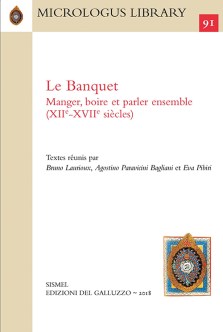
Publication – « Le banquet : manger, boire et parler ensemble (XIIe-XVIIe siècle) », éd. Bruno Laurioux, Agostino Paravicini Bagliani et Eva Pibiri

Bruno Laurioux, Agostino Paravicini Bagliani et Eva Pibiri (éd.), Le banquet : manger, boire et parler ensemble (XIIe-XVIIe siècle), Florence, Sismel, 2018 (Micrologus Library, 91). pp. XVI-342, € 65. ISBN : 978-88-8450-871-3.

ML91

Table des matières :

E. Pibiri, Introduction

J.-Y. Tilliette, La postérité médiévale du genre philosophico-littéraire du Banquet: quelques hypothèses
A. Paravicini Bagliani, Les festins des papes. Cérémonial et auto-représentation (XIe-XIIIe siècles)
J.-C. Mühlethaler, Le banquet à l’épreuve de la satire médiévale et renaissante: du Songe d’Enfer aux Satyres chrestiennes de la cuisine papale
N. Bock, «Edatis et bibatis in regno meo»: Repas d’apparat et représentation royale dans la Naples angevine du XIVe siècle
B. Laurioux, Écrire ce que manger veut dire: la production documentaire des banquets politiques à la fin du Moyen Âge
C. Caby, «Orationes in convivio». Le banquet humaniste entre rhétorique et pratique sociale
Y. Morel, Le banquet à la cour de Bourgogne au XVe siècle: essai de définition
B. Müsegades, Feasting like it’s 1475. Banquets at German Princely Courts in the Late Middle Ages
T. Brero, Soirées festives et vie nocturne à la cour de Savoie
A. Campanini, Narratori di banchetti in Italia tra XV e XVI secolo. Il caso delle nozze Bentivoglio-Este (Bologna 1487)
F. Quiviger, Plis, ombres, lumières et mouvements: l’art du pli et ses ramifications aux arts du dessin
F. Quellier, Le paysage sonore de la grande chère dans la France du XVIIe siècle. Indexes par A. Paravicini Bagliani.

Source : SISMEL

Publié dans Publications | Laisser un commentaire

Offre d’emploi – Postdoctoral Researcher in Medieval Studies (University of Helsinki)

The University of Helsinki is the oldest and largest institution of academic education in Finland, an international scientific community of 40,000 students and researchers. In international university rankings, the University of Helsinki typically ranks among the top 100. The University of Helsinki seeks solutions for global challenges and creates new ways of thinking for the best of humanity.

The Faculty of Arts (https://www.helsinki.fi/en/faculty-of-arts) of the University of Helsinki is Finland’s oldest institution for teaching and research in the humanities and the largest in terms of the structure and range of disciplines. It is also a significant international community fostering research, education and cultural interaction.

The Faculty of Arts invites applications for the position of

POSTDOCTORAL RESEARCHER IN MEDIEVAL STUDIES (3 YEARS)

for a fixed term from 1 April 2019 to 31 March 2022. The position is associated with the ERC project Medieval Publishing from c. 1000 to 1500.

hy_logo_black

The project explores the act of publication. It seeks to establish the key parameters for the process of authorial publishing during the Middle Ages. Its investigations focus on the activities of authors and their circles, as they made preparations for the primary stages of circulation. Its case-studies build on the relevant historical record, text-critical evidence, and the physical evidence of manuscripts. For more information, see https://www.helsinki.fi/en/researchgroups/medieval-publishing.

QUALIFICATIONS

The appointee will study authorial publication in Italy or elsewhere during the later medieval and humanistic periods.

Candidates must hold a doctoral degree and be able to conduct independent scholarly work. Solid knowledge of medieval Latin and manuscript studies is requisite. The appointee is expected to contribute c. 5 peer-reviewed papers (in any of the major European languages) on the subject of authorial publishing in Italy or elsewhere during the later medieval and humanistic periods. Precise research tasks will be defined in collaboration with the PI. The appointee will also contribute to the activities of the research project, such as teaching and assisting to organize an international conference towards the end of the project. Good social skills and a pro-active attitude are naturally assets. The working language is English. The appointee will be based at Helsinki for year 1. The base is negotiable for years 2 and 3 in order to facilitate access to source texts. If needed, the starting date, 1 April 2019, is negotiable.

SALARY AND TRIAL PERIOD

Annual gross salary for a postdoctoral researcher varies between 37,000 and 43,000 euros, depending on the appointee’s qualifications and experience. The contract will include a six-month trial period.

Health care services and standard Finnish pension benefits are provided for the University employees.

HOW TO APPLY

Please submit your application, together with the required documents, through the University of Helsinki Recruitment System via the Apply for the position button below. Applicants who are employees of the University of Helsinki are requested to submit their application via the SAP HR portal.

Applicants are requested to enclose with their applications the following documents as a single pdf file:

1) a curriculum vitae (max. 2 pages) with a list of publications,
2) a short description (max. 2 pages) of the applicant’s relevant methodological skills and how her or his research interests match the Medieval Publishing research project,
3) a sample of c. 10000 words of the applicant’s research (e.g. doctoral dissertation),
4) the contact information of two referees,
5) and optionally other relevant documents.

The deadline for applications is January 23, 2019.

Technical support for using the University’s electronic recruitment system or the SAP HR portal: rekrytointi@helsinki.fi.

FURTHER INFORMATION

For further information please contact Associate Professor Samu Niskanen, samu.niskanen@helsinki.fi.

The decision will be communicated towards the end of January.

Source : University of Helsinki

Publié dans Offre d'emploi | Laisser un commentaire

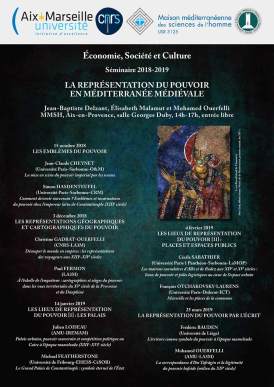
Séminaire – La représentation du pouvoir en Méditerranée médiévale. Séminaire « Économie, société et culture » 2018-2019

Salle Georges Duby – MMSH, 5 Rue du Château de l’Horloge
Aix-en-Provence, France (13094)

Ce séminaire de recherche, coordonné par Jean-Baptiste Delzant, Élisabeth Malamut et Mohamed Ouerfelli, a pour vocation de rassembler autour de thèmes fédérateurs historiens, archéologues et historiens de l’art, spécialistes des mondes médiévaux méditerranéens. Interdisciplinaire et comparatiste, il propose une approche de l’économie et des sociétés du monde méditerranéen. Organisé en cycles de deux ans, il est l’occasion de dresser un tableau des dernières recherches autour de thèmes transversaux, communs aux espaces et disciplines concernées par la Méditerranée médiévale. Cette année sera abordée la question de la représentation du pouvoir en Méditerranée médiévale.

Eco-soc-2018-2019

Programme :

15 octobre 2018 : Emblèmes du pouvoir
Jean-Claude Cheynet (Université Paris-Sorbonne-O&M), La mise en scène du pouvoir impérial par les sceaux
Simon Hasdenteufel (Université Paris-Sorbonne-CRM), Comment devenir souverain ? Emblèmes et incarnations du pouvoir chez l’empereur latin de Constantinople (XIIIe siècle)

3 décembre 2018 : Représentations géographiques et cartographiques du pouvoir
Christine Gadrat-Ouerfelli (CNRS-LA3M), Découper le monde en empires : les représentations des voyageurs aux XIIIe-XIVe siècles.
Paul Fermon (LA3M), À l’échelle de l’enquêteur : cartographies et sièges du pouvoir dans les vues territoriales du XVe siècle de la Provence et du Dauphiné

14 janvier 2019 : Lieux de représentation du pouvoir (I) : les palais
Julien Loiseau (AMU-IREMAM), Palais urbains, pouvoir souverain et compétition politique au Caire à l’époque mamelouke (XIIIe-XVIe siècle)
Michael Featherstone (Université de Fribourg-EHESS), Le Grand Palais de Constantinople : symbole éternel de l’État

4 février 2019 : Lieux de représentation du pouvoir (II) : places et espaces publics
Cécile Sabathier (Université Paris 1 Panthéon-Sorbonne-LaMOP), Les maisons consulaires d’Albi et de Rodez aux XIVe et XVe siècles : lieux de pouvoir et pôles logistiques au cœur de l’espace urbain.
François Otchakovsky-Laurens (Université Paris-Diderot-ICT), Marseille et les places de la commune

25 mars 2019 : Représentation du pouvoir par l’écrit
Frédéric Bauden (Université de Liège), L’écriture comme symbole du pouvoir à l’époque mamelouke
Mohamed Ouerfelli (AMU-LA3M), La correspondance d’Ibn Tafrâgîn et la légitimité du pouvoir hafside (milieu du XIVe siècle)

Source : LA3M

Publié dans Séminaire | Laisser un commentaire

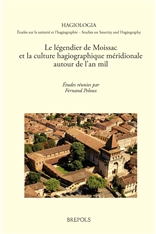
Publication – « Le légendier de Moissac et la culture hagiographique méridionale autour de l’an mil », dir. Fernand Peloux

A l’instar du Livre des Miracles de sainte Foy de Conques, on connaît surtout de l’hagiographie méridionale aux alentours de l’an mil les récits de miracles des saints dont l’actualité est ravivée dans le contexte de la Paix de Dieu, de la constitution de nouveaux pouvoirs et d’une concurrence accrue entre les monastères. Or, à cette époque et avant son affiliation à Cluny, le scriptorium de Moissac, alors en pleine activité, produit, entre autres manuscrits, un grand légendier enluminé dont nous conservons d’importants fragments (BNF, Ms. Lat. 5304 et 17002). Ce légendier, le plus grand de son temps, transmet 150 textes dont certains sont très rares. L’étude collective de ce manuscrit permet de réfléchir à la culture hagiographique méridionale depuis le monde wisigothique jusqu’au XIVe siècle. En abordant tour à tour la genèse, les usages et la diffusion d’une telle collection de textes, ce livre invite à un voyage savant dans l’histoire longue du christianisme. Il permet de mieux comprendre la mémoire des premiers temps chrétiens dans le Midi, mais également dans d’autres espaces, du monde hispanique à la Perse, de l’Afrique à la Gaule du Nord.

dIS-9782503581743-1

Agrégé et docteur en histoire (Université de Toulouse-Jean Jaurès), chercheur en post-doctorat à l’Université de Namur, Fernand Peloux est spécialiste d’hagiographie méridionale à laquelle il a consacré sa thèse (2016). Il poursuit ses travaux en élargissant ses champs géographiques et méthodologiques.

Informations pratiques :

Fernand Peloux (dir.), Le légendier de Moissac et la culture hagiographique méridionale autour de l’an mil, Turnhout, Brepols, 2018 (Hagiologia, 15). 580 p., 52 colour ill., 156 x 234 mm. ISBN: 978-2-503-58174-3. Prix : 95 euros.

Source : Brepols

Publié dans Publications | Laisser un commentaire

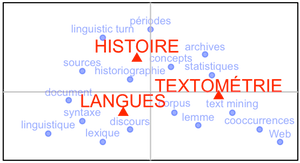
Colloque – Histoire, langues et textométrie

Du 16 au 18 janvier 2019, le Pireh (Pôle informatique de Recherche et d’Enseignement en Histoire – Université Paris 1) organisera à la Sorbonne un colloque international consacré aux rapports entre Histoire, langue et textométrie.

L’objectif de cet évènement est de voir comment les historien·nes se sont appropriés les méthodes informatiques et statistiques, qualitatives ou quantitatives, d’analyse des textes, quelles sont les nouvelles techniques qu’il peuvent mobiliser dans ce sens, et comment elles peuvent s’inscrire dans une démarche de recherche historique.

Ce colloque est pensé comme un moment d’échange entre historien·nes de diverses périodes et spécialités, et plus généralement entre les différentes disciplines intéressées par l’analyse des textes (linguistique, sociologie, critique littéraire, mathématiques, informatique, etc.).
logorsave_2

Programme :

Mercredi 16 janvier :

La textométrie : questions anciennes et nouvelles approches

8h45 – Accueil

9h – Stéphane Lamassé, Léo Dumont, Octave Julien : Introduction
9h20 – Hugo Bonin : La Begriffsgeschichte à l’heure du tournant digital : potentiels théoriques et défis pratiques
9h40 – Magali Guaresi : Logométrie et deep learning. Essai de généalogie politique des discours électoraux aux législatives de 2017
10h – Pause

10h20 – Nicolas Perreaux : In nomine Patris… Enquête sur le champ sémantique de la « paternité » médiévale (CEMA, Patrologie latine)
10h40 – Edgar Lejeune : Un programme de traitement automatique des textes par des médiévistes, pour des médiévistes ? L’exemple de ALINE à l’ERA 713
11h00 – Présentation des posters de Sarah DeMott, Margot Ferrand, Marie-Astrid Hugel, Marc Lasson, Corinne Manchio, Hélène Miesse, Anatole Lucet, Jimena Perry, Anna Plassart, Suzanne Forbes
11h35 – Discussion

Textes brefs et ego-documents

14h – Audrey Vasselin : Apport de la textométrie historique à l’anthropologie religieuse antique : l’exemple de l’étude des noms d’Athéna en Attique (VIe av. -IVe ap.)
14h20 – Giulio Romero Passerin d’Entrèves : Deus IN machina : René de Challant, Dieu et l’ordinateur
14h40 – Claire-Lise Gaillard : « Jeune homme épouserait demoiselle ayant dot » : analyse lexicométrique des annonces matrimoniales de L’Alliance des familles, 1876-1894
15h – Pause

15h20 – Félix Krawatzek, Emma Moreton : Crossing borders: Migrant letters as a source for text analysis
15h40 – Tatiana Fauconnet : Un usage de la textométrie en science politique : Lire les attentes de reconnaissance dans les professions de foi ouvrières du scrutin d’avril 1848 en France.
16h – Discussion

Jeudi 17 janvier :

Données massives et nouveaux algorithmes

9h – Max Beligné, Sabine Loudcher, Isabelle Lefort : Transformation de documents numérisés par la plateforme Persée dans un objectif d’analyses textuelles diachroniques
9h20 – Frédéric Clavert : Si loin, si proche : histoire, mémoire et lecture distante à l’ère des données massives
9h40 – Joffrey Liénart : IMPRESS : enjeux scientifiques autour d’un projet de recherche en histoire de la médecine étudié à travers des outils de text mining
10h – Pause

10h20 – Ewan Jones, Peter De Bolla, John Regan, Paul Nulty : The Conceptual Foundations of Knowledge: A Computational Enquiry
10h40 – Sergio Torres Aguilar : An example of strong data foundations to digital humanities studies from named entities recognition
11h – Thomas Soubiran : Quarante ans de délibérations de la CNIL, analyse thématique de l’évolution d’un corps de doctrine
11h20 – Discussion

La temporalité en textométrie

14h – André Salem : Perspectives sur l’analyse temporelle des textes
14h20 – Miao Jun : Analyse des rapports de congrès du PC Chinois (1982-2017)
14h40 – Serge de Sousa : Les discours de Fidel Castro (1959-2008)
15h – Pause

15h20 – Julien Longhi : L’évolution des référents et les variations du sens au prisme de la textométrie
15h40 – Blake Ewing : The language of time in Britain: An analysis of 150 years of parliamentary debates
16h – Pierre Ratinaud, Pascal Marchand : 1789 : Les mots d’un mythe
16h20 – Discussion

Vendredi 18 janvier :

Langages et concepts / langages du pouvoir

9h – Dima Ayoub : Digitizing Paratexts in Translation: Between Distant and Close Readings
9h20 – Gilles Texier : Le vocabulaire de la domination seigneuriale dans la Chronique du Mont-Cassin, une analyse textométrique.
9h40 – Claire Aslangul, Adrien Barbaresi : Transformation de l’homme et ordre nouveau dans la propagande nazie : pour des approches croisées de la langue du pouvoir
10h – Pause

10h20 – Evgeniya Shelina : Par-delà « auctoritas vs. potestas ». Les pouvoirs médiévaux à travers des expériences linguistiques
10h40 – Anne-Sophie Anglaret : L’idéologie légionnaire : la Légion française des combattants à travers ses textes
11h – Fatma Kamel : Le temps lexical d’un événement historique : l’exemple des printemps arabes
11h20 – Discussion

14h – Ateliers de présentation des logiciels de textométrie

Informations pratiques :

16 au 18 janvier 2019
Paris (France)

L’inscription au colloque est gratuite mais obligatoire.

Comité d’organisation :
Léo Dumont (Université Paris 1 Panthéon Sorbonne)
Octave Julien (Université Paris 1 Panthéon Sorbonne)
Stéphane Lamassé (Université Paris 1 Panthéon Sorbonne)

Comité scientifique :
Benjamin Deruelle (Université du Québec à Montréal)
Jean-Philippe Genet (Université Paris 1 Panthéon Sorbonne)
Octave Julien (Université Paris 1 Panthéon Sorbonne)
Stéphane Lamassé (Université Paris 1 Panthéon Sorbonne)
Virgine Lethier (Université de Franche-Comté)
Aude Mairey (Université Paris 1 – CNRS)
Damon Mayaffre (Université Nice Sophia Antipolis)
Ian Milligan (Université de Waterloo)
Bénédicte Pincemin (CNRS – Université de Lyon)
André Salem (Université Paris 3 Sorbonne Nouvelle)
Max Silberztein (Université de Franche-Comté)

Source : Histoire, Langues et Textométrie

Publié dans Colloque | Laisser un commentaire

Colloque – The Global Turn in Medieval Studies. 94th Annual Meeting of the Medieval Academy of America

The 94th Annual Meeting of the Medieval Academy of America will take place in Philadelphia on the campus of the University of Pennsylvania. The meeting is jointly hosted by the Medieval Academy of America, Bryn Mawr College, Delaware Valley Medieval Association, Haverford College, St. Joseph’s University, the University of Pennsylvania, and Villanova University.

This year’s meeting spotlights the “global turn” in medieval studies, treating the Middle Ages as a broad historical and cultural phenomenon that encompasses the full extent of Europe as well as the Middle East, southern and eastern Asia, Africa, and the Americas. The program will feature three plenary addresses and seventy concurrent sessions, representing a range of threads, including “Expanding Geographies of the Middle Ages,” “Approaches to Historiography,” “Interfaith Encounters: Real and Imagined,” “Gender Matters,” “Intersections Across Disciplines and Borders,” Digitizing the Global Middle Ages,” “Transmission and Technologies of Knowledge,” and cover topics addressing the natural world, the arts, material culture, literary studies, legal traditions, race and ethnicity in the global Middle Ages, to name a few. Roundtables, hands-on workshops, and lightning talks will highlight concepts and practices in K-12 education, diversity and race in the medieval studies, pedagogy and research in global medieval contexts, and practices and ethics of digital scholarship.

Programme : here

ljs_28_7v-8r_

Registration :

Click here to register. Online registration will close 1 February.

On-site registration will be available at the registration desk in the Faculty Lounge (Rm 135) on the 1st floor of Fisher-Bennett Hall, 3340 Walnut St, and will be subject to a $50 surcharge for late registration. The late registration surcharge goes into effect as of 15 January. No refunds will be granted after 15 February.

To receive the MAA member discount, remember to sign in to your Medieval Academy of America account before registering. If you have forgotten your user-name and/or password, please contact <info@themedievalacademy.org> for assistance. Note that student non-members will be offered a free one-year introductory membership to the Academy – stop by the meeting registration desk for details.

Publishers and other organizations looking to advertise in the program, registration packets, and/ or display books at the Annual Meeting of the Medieval Academy of America should submit this form: 2019 Annual Meeting of the Medieval Academy of America Vendor/Exhibitor Form.

Program Committee:
Lynn Ransom & Julia Verkholantsev, University of Pennsylvania (co-chairs)
Daud Ali, University of Pennsylvania
Chris Atwood, University of Pennsylvania
Kevin Brownlee, University of Pennsylvania
Mary Caldwell, University of Pennsylvania
Linda Chance, University of Pennsylvania
Paul M. Cobb, University of Pennsylvania
Catherine Conybeare, Bryn Mawr College
Talya Fishman, University of Pennsylvania
Fr. Allan Fitzgerald, Villanova University
Scott Francis, University of Pennsylvania
Nicholas Herman, University of Pennsylvania
Tom Izbicki, Rutgers University & Delaware Valley Medieval Association
Ada Kuskowski, University of Pennsylvania
Ann Matter, University of Pennsylvania
Maud McInerney, Haverford College
Paul Patterson, St. Joseph’s University
Montserrat Piera, Temple University
Dot Porter, University of Pennsylvania
Jerry Singerman, University of Pennsylvania Press
Emily Steiner, University of Pennsylvania
Eva del Soldato, University of Pennsylvania
Elly Truitt, Bryn Mawr College
David Wallace, University of Pennsylvania (ex officio as MAA president)

Source : The Medieval Academy of America

Publié dans Colloque | Laisser un commentaire