
20/10/2016 – Bologna, Aula Absidale di S. Lucia.
Lectio Magistralis di Chris Wickham in occasione di CONCIVES 1116 – 2016 Nono centenario del Comune di Bologna
20/10/2016 – Bologna, Aula Absidale di S. Lucia.
Lectio Magistralis di Chris Wickham in occasione di CONCIVES 1116 – 2016 Nono centenario del Comune di Bologna
Bienvenue au Museum Hof van Busleyden ! Entrez dans ce grand et magnifique hôtel particulier renaissance à Malines, capitale des Pays-Bas bourguignons. Marchez sur les traces de Jérôme de Busleyden, de Marguerite d’Autriche, d’Erasme et de Thomas More. Échangez des idées et des réflexions sur un monde en plein changement, aujourd’hui comme hier.
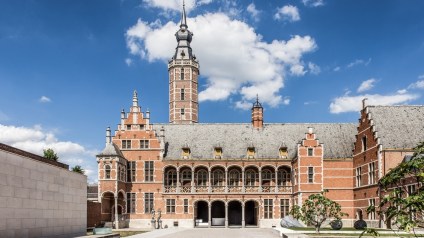
Le monde s’élargit au quinzième et au seizième siècles. Une nouvelle ère s’annonce, la renaissance, et l’être humain en est le centre de gravité. Tout semble possible, ici comme ailleurs. Cette maison redevient aujourd’hui un lieu de rencontres et de débats, un creuset d’idées nouvelles et un haut lieu de l’art.
Revivez l’étonnante saga des ducs de Bourgogne dans nos contrées et imprégnez-vous de l’atmosphère du hôtel particulier de Busleyden, riche de ses trésors et de ses histoires. Vous y découvrirez comment les Bourguignons considéraient la ville, comment ils régnaient et ce que signifiaient pour eux le génie créatif et l’artisanat. Vous évoluez de salles chargées d’histoires et encore vibrantes des échos du passé en lieux plus intimes et plus silencieux. Vous partez en quête de la véritable Marguerite et tombez en contemplation devant les étonnants et fragiles Jardins Clos.
Ce musée retrace la glorieuse histoire de la ville et nous invite tous à réfléchir sur son avenir. C’est donc un voyage d’incessants aller-retour entre présent et passé qu’il vous propose. Expérimentez à votre gré et entrez en dialogue avec le musée et ses collections sans cesse renouvelées.
L’histoire est loin d’être finie.
Informations pratiques :
Museum Hof van Busleyden
Frederik de Merodestraat 65
2800 Mechelen
hvb@mechelen.be
+32 15 29 40 30
Heures d’ouverture
lun-mar-ven-sam-dim: 10h – 17h
Source : Museum Hof van Busleyden
Village communities were the heart of the medieval countryside. But how did they operate? This book seeks to find some answers to that question by focusing on late medieval Drenthe, a region situated in a remote corner of the Holy Roman Empire and part of the prince-bishopric of Utrecht. Drenthe was an overwhelmingly localized, rural world. It had no cities, and consisted entirely of small villages. The social and economic importance of traditionally privileged sections of medieval society (clergy and nobility) was limited; free peasant landowners were the dominant social class.
Based on a careful reading of normative sources (Land charters) and thousands of short verdicts given by the so-called ‘Etstoel’ or high court of justice in Drenthe, this book focuses on three types of conflict: conflicts between villages, feud-like violence, and litigations about property. These three types coincide with three levels of involvement: that of village communities as a whole, that of kin groups, and that of households.
The resulting, comprehensive analysis provides a rigorous interrogation of generalized notions of the pre-industrial rural world, offering a snapshot of a typical peasant society in late medieval Europe.
Peter (P.C.M.) Hoppenbrouwers (1954) is Professor of Medieval History at Leiden University. He is the co-author, with Wim Blockmans of Introduction to Medieval Europe 300-1550 (2014; 2nd ed.). His main fields of interest are peasant communities, household and family, local lordship and military organization, and cultures of violence in the medieval Latin West.
Peter (P.C.M.) Hoppenbrouwers (1954) is Professor of Medieval History at Leiden University. He is the co-author, with Wim Blockmans of Introduction to Medieval Europe 300-1550 (2014; 2nd ed.). His main fields of interest are peasant communities, household and family, local lordship and military organization, and cultures of violence in the medieval Latin West.
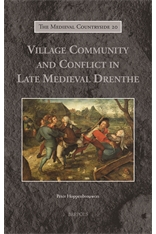
Table des matières :
List of Illustrations
Abbreviations
Glossary
Chapter 1. Introduction
Chapter 2. Law, Jurisdiction, and Courts of Justice
Chapter 3. Village Communities in Court
Chapter 4. Local Violence: Feuds and Feuding
Chapter 5. The Peasant Family and Intergenerational Property Transfer
Epilogue
Appendix. List of Villages and Districts
Bibliography
Index
Informations pratiques :
P. C.M. Hoppenbrouwers, Village Community and Conflict in Late Medieval Drenthe, Turnhout, Brepols, 2018 (The Medieval Countryside, 20). XVIII+384 p., 14 b/w ill., 156 x 234 mm. ISBN: 978-2-503-57539-1. Prix : 100 euros.
Source : Brepols
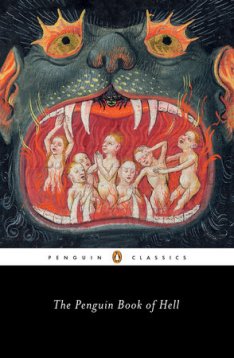
Three thousand years of visions of Hell, from the ancient Near East to modern America
From the Hebrew Bible’s shadowy realm of Sheol to twenty-first-century visions of Hell on earth, The Penguin Book of Hell takes us through three thousand years of eternal damnation. Along the way, you’ll take a ferry ride with Aeneas to Hades, across the river Acheron; meet the Devil as imagined by a twelfth-century Irish monk–a monster with a thousand giant hands; wander the nine circles of Hell in Dante’s Inferno, in which gluttons, liars, heretics, murderers, and hypocrites are made to endure crime-appropriate torture; and witness the debates that raged in Victorian England when new scientific advances cast doubt on the idea of an eternal hereafter. Drawing upon religious poetry, epics, theological treatises, stories of miracles, and accounts of saints’ lives, this fascinating volume of hellscapes illuminates how Hell has long haunted us, in both life and death.
Scott G. Bruce is a professor of medieval history and the director of the Center for Medieval and Early Modern Studies at the University of Colorado, Boulder. An expert on medieval monasticism, he has written two books about the monks of the abbey of Cluny. He worked his way through college as a grave digger.
Informations pratiques :
Scott G. Bruce, The Penguin Book of Hell, Penguin Classics, 2018. 304 Pages | 5-1/16 x 7-3/4 | ISBN 9780143131625. Paperback | $17.00.
Source : Penguin Classics
The Monumenta Germaniae Historica in Munich seek a scholar of medieval canon law for a position of “wissenschaftlicher Mitarbeiter/Mitarbeiterin”.
The candidate should have written a Ph.D. with a topic in medieval legal history that treated some aspect of canonical jurisprudence. Experience and demonstrated competence in textual editing is required, also good knowledge of Latin. Wissenschaftliche Mitarbeiter assume MGH projects. The MGH will consider candidates from all countries but would prefer candidates who have some facility in German. Please send letters of application by email to President Martina Hartmann at martina.hartmann@mgh.de until the 21th of August. Include a curriculum vitae and any other relevant supporting documents.

Die Monumenta Germaniae Historica in München stellen zum nächstmöglichen Zeitpunkt einen wissenschaftlichen Mitarbeiter/Mitarbeiterin (TVL 13) mit Schwerpunkt “Kanonistik” ein.
Bewerber/innen sollten eine abgeschlossene Dissertation, möglichst im Bereich der Kanonistik, vorweisen können sowie editorische Erfahrung, gute grundwissenschaftliche Kenntnisse und gute Lateinkenntnisse sowie, bei Bewerbern aus dem Ausland, gute Deutschkenntnisse. Die MGH streben eine Erhöhung des Frauenanteils bei den den wissenschaftlichen Mitarbeitern an und fordern qualifizierte Frauen auf, sich zu bewerben. Bewerbungen richten Sie bitte bis 21. August per Email mit einem Bewerbungschreiben, Lebenslauf und Schriftenverzeichnis an die Präsidentin, Prof. Dr. Martina Hartmann (martina.hartmann@mgh.de).
Source : Monumenta Germaniae Historica
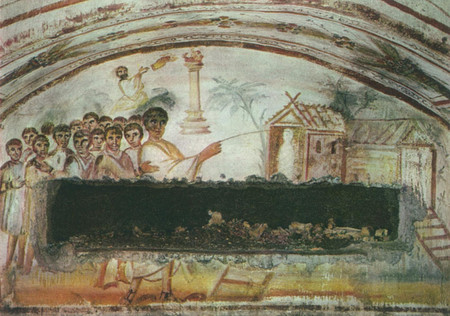
Fondé sur le constat d’une mutation anthropologique du rapport à la mort et aux morts au sein du monde contemporain, ce programme explore les différentes dimensions de cette mutation et rles grandes transformations qui ont caractérisé les pratiques funéraires en Europe et dans les espaces méditerranéens depuis la fin de l’époque protohistorique.
Il s’agit pourtant moins de réécrire une histoire de la mort en Occident que d’appréhender et de comprendre la métamorphose des systèmes funéraires au fil des siècles. Les manifestations et les enjeux en sont multiples : les institutions, les structures sociales, les croyances et les rituels religieux, l’expression matérielle et l’ancrage topographique, l’effet des évolutions démographiques ou des crises de mortalités de masse sont autant de points d’observation envisagés. Pluridisciplinaire et pariant sur l’intérêt comparatiste de la longue durée, ce programme permet d’intégrer la masse considérable de données archéologiques relatives aux sociétés anciennes produites au cours des décennies précédentes et d’appréhender les rites funéraires à l’aune des analyses et des acquis de l’ensemble des sciences sociales. Par ce biais, ce sont aussi les notions de normes, de transformations et de dynamiques sociales et, au-delà peut-être, la notion même de périodisation historique qui seront interrogées à nouveaux frais.
Pour ce programme, l’École française de Rome fédère cinq institutions partenaires (les universités de Paris-Est Créteil, de Côte d’Azur, d’Aix-Marseille, de Padoue et de Bordeaux) ainsi qu’un réseau international de chercheurs travaillant en France, en Italie, en Allemagne ou aux États-Unis.
Ce colloque fait suite à une première rencontre organisée en juin 2017 à l’Université Paris – Est Créteil.
Programme :
JEUDI 6 SEPTEMBRE
9H – 12H45
Accueil
Introduction
Nicolas Laubry, Directeur des études pour l’Antiquité à l’École française de Rome, et Michel Lauwers, Université Côte d’Azur – Transitions funéraires, dynamiques sociales et périodisations dans l’Occident antique et médiéval
Session 1 – D’un système funéraire à un autre : histoire et archéologie des dynamiques de transformation.
Enrico Benelli, CNR – Da Etruschi a Romani. L’aspetto funerario.
10H45 – 11H15 : PAUSE
Priscilla Munzi, Centre Jean Bérard, CNRS-EFR – Dynamiques et modalités des changements dans la nécropole de Cumes, entre Samnites et Romains (IIIe-Ier s. av. J.-C.).
Paola Catalano, Giordana Amicucci, Andrea Battistini, Stefania Di Giannantonio, Cristina D’Agostini – Soprintendenza Speciale Archeologia, Belle Arti e Paesaggio di Roma – Servizio di Antropologia Cambiamenti nei riti funebri a Roma dall’età imperiale al Medioevo.
12H45 – 14H15 : PAUSE DÉJEUNER
14H15 – 18H
Session 1 – D’un système funéraire à un autre : histoire et archéologie des dynamiques de transformation. 2
Frédérique Blaizot, INRAP Rhônes-Alpes-Auvergne et UMR 5199 – Transitions funéraires en Gaule : les données de terrain face aux données historiques.
Irene Barbiera, Cristina La Rocca, Francesco Veronese, Università degli Studi di Padova – Nécropoles et églises patrimoniales dans l’Italie lombarde : ce qui change.
15H45 – 16H : PAUSE
John Pearce, King’s College, London – Out of the shadows? Funerary transitions in Britain from c. 100 BC to c. AD 500.
Elisabeth Lorans, Université de Tours – Habitat, communautés, sépultures dans l’Angleterre anglo- saxonne
VENDREDI 7 SEPTEMBRE
9H30 – 12H45
Session 2 – Discours, rites et commémoration : contextes et mutations des systèmes funéraires
William Van Andringa, Université de Lille et IUF – Rites funéraires à Pompéi et tradition romaine.
Maria-Letizia Caldelli et David Nonnis Sapienza Università di Roma, Ritualità funeraria e prassi : a proposito dell’os resectum.
11H-11H15 : PAUSE
Didier Méhu, Université Laval, Québec – Lieux de culte, images, reliques, soins dus aux morts : un nouveau système chrétien vers 400 ?
Robert Marcoux, Université Laval, Québec – Baptême, mort et eschatologie : Lazare et le discours sur la mort dans l’art et la patristique entre le IIIe et le VIe siècle.
12H45-14H DÉJEUNER 14H15 – 18H
Cecilia Ricci et Donato Fasolini, Università del Molise – Transizioni e trasposizioni della memoria. Testo e immagine nell’epigra a funeraria del Sannio romano.
Cécile Treffort, Université de Poitiers, et Morgane Uberti, Casa de Velázquez – Conception et expression du temps dans les épitaphes tardo-antiques et alto-médiévales.
Considérations conclusives et table ronde – Discussion animée par Valentino Nizzo, Museo Nazionale di Villa Giulia, Eric Rebillard, Cornell University, Andrea Augenti, Università degli Studi di Bologna.
Informations pratiques :
Catégorie : La recherche
Lieu et date :
École française de Rome
Du 06/09/2018 à 09h00 au 07/09/2018 à 18h30
Source : École française de Rome
May 9 to 12, 2019 – Western Michigan University
July 1 – 4, 2019 – University of Leeds
Redefining the Monster
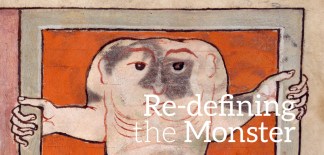
The proposed session will discuss and debate on the various definitions of the concept of the “monster.” Defining the monster is a challenge. Monsters and monstrosity-related aspects have been topics of academic research either connected to identity or cross-cultural encounters, explored as ‘others’ in the context of voyages (real-imagined), as heritage from Antiquity, as races reflected in travellers’ reports inserted into Western art, philosophy, and theology.
What is a monster? What is monstrosity? How is the monster conceptualized by a given community? Can one define it or does the monster define itself? Does it offer any self-description? Did the medieval man write about monsters and how does this define the monster from a cultural perspective? Where and what is the “border” between human, “other,” and monster? This session seeks original research which investigates medieval scholarly debates in philosophical, theological, political, literary, visual contexts and/or sources in order to (re)define the concept of the monster/monstrosity. Reinterpretations of previous definitions are welcome in a debate on re-visualizing medieval monsters.
This session also aims to bring the intellectual outcome of these sessions into the attention of the general public by publishing the proceedings of the debates in the series “Picturing Women in the Middle Ages and Early Modernity” at Trivent Publishing, Budapest, Hungary.
Please submit a 250-word proposal for a 15-20 minute paper presentation by September 15th, 2018.
Deformis Formositas ac Formosa Deformitas. The Ugliness of Beauty and the Beauty of Ugliness: Materializing Ugliness and Deformity in the Middle Ages
The proposed session will discuss and debate on the various definitions and functions of the concept of “ugliness.” What is ugliness and how is it conceptualized? This session seeks original research which investigates debates on the concept of “ugliness” in various contexts:
Spiritual/physical/material ugliness;
Paradoxical nature of ugliness/irony/allegorical discourse;
Emotions and ugliness;
Functional aspects/Contrasts/Status and ugliness;
Didactic/moralistic functions;
Gendered aspects: ugliness belonging to other creatures;
Description/nature/character of ugliness;
Symbolism and patterns of transmission;
Comparative aspects of medieval beauty and ugliness;
Beauty within the context of ugliness in visual and textual sources
This session also aims to bring its intellectual outcomes into the attention of the general public by publishing, contextually, the proceedings of the debates in the series “Picturing the Middle Ages and Early Modernity” at Trivent Publishing, Budapest, Hungary.
Please submit a working title and a 250-word proposal for a 15-20 minute paper presentation by September 15th, 2018, the latest.
Visualizing Women in the Apocrypha
The proposed session is devoted to the construction and visualization of women as reflected in apocryphal sources with the aim of bringing into attention this generally neglected topic/sources which seem to be underrepresented. The existent literature, in the general field of apocrypha, indicates that there is space for debate on issues connected to gender in these sources.
Research in this field concentrates mostly on the textual tradition and transmission of apocryphal texts, yet aspects concerning the construction and function of women and gender still need to be addressed. Hence, we seek to examine issues related to the status, function, and identity of women who may be models and/or background figures in fields pertaining, but not limited to: theology, religious studies, textual studies, manuscript studies, art history in a transdisciplinary perspective.
Original work and research is welcomed starting from the Late Antiquity to the Late Middle Ages, both in the East and West. The sessions refer to the concept of ‘apocrypha/on’ as movable texts whose composition does not end in the fourth – fifth centuries in the context of the establishment and closing of the canon. This permits to address issues concerning the evolution, transmission, adoptation, and adaptation of sources.
This session also aims to bring the intellectual outcome of these sessions into the attention of the general public by publishing the proceedings of the debates in the series “Picturing Women in the Middle Ages and Early Modernity” at Trivent Publishing, Budapest, Hungary.
Please submit a 250-word proposal for a 15-20 minute paper presentation by September 15th, 2018.
Apocryphal Iconography: Integration, Adaptation, and Church Tradition
Call for Papers for Session Proposal at the International Medieval Congress (IMC 2019), July 1 – 4, 2019, University of Leeds.
The proposed session is devoted to the integration and adaptation of apocryphal sources in the construction of medieval iconographies with the aim of bringing into attention this generally neglected and underrepresented field. Research in this field concentrates mostly on the textual tradition and transmission of apocryphal texts, yet certain aspects still need to be addressed, such as:
The construction and function of apocryphal iconographies;
The context of sources for artists due to lack of information on holy lives;
Apocryphal visual representations and church tradition;
Original work and research is welcomed starting from the Late Antiquity to Late Middle Ages, both in the East and West. The session refers to the concept of ‘apochrypha/on’ as movable texts whose composition does not end in the 4th-5th centuries in the context of the establishment and closing of the canon. This permits to address issues concerning the evolution, transmission, adoptation, and adaptation of sources.
This session also aims to bring its intellectual outcomes into the attention of the general public by publishing, contextually, the proceedings of the debates in the series “Picturing the Middle Ages and Early Modernity” at Trivent Publishing, Budapest, Hungary.
Please submit a working title and a 250-word proposal for a 15-20 minute paper presentation by September 15th, 2018, at the latest.
Contact information:
Andrea-Bianka Znorovszky, Ca’Foscari University, Venice, Italy
(andrea.znorovszky@unive.it)
Teodora C. Artimon, Trivent Publishing, Budapest, Hungary
(teodora.artimon@trivent-publishing.eu)
Contact information:
Andrea-Bianka Znorovszky, Ca’ Foscari University, Venice, Italy (andrea.znorovszky@unive.it)
Teodora C. Artimon, Trivent Publishing, Budapest, Hungary (teodora.artimon@trivent-publishing.eu)
Source : Medieval Art Research
Call for Papers, Postgraduate Advanced Training Seminars and Bursary Application Reminder
The Committee of the ANZAMEMS 2019 Conference (5-8 February 2019) invites paper and panel proposals, PATS expressions of interest, and bursary and prize applications to be made by the dates set out below.
Call for Papers Deadline: 31 August 2018
Travel Bursary and George Yule Prize Application Deadline: 30 September 2018
Postgraduate Advanced Training Seminars Application Deadline: 31 August 2018

Call for Papers and Panels
The theme for ANZAMEMS 2019 is Categories, Boundaries, Horizons. Categories and boundaries help us to define our fields of knowledge and subjects of inquiry, but can also contain and limit our perspectives. The concept of category emerges etymologically from the experience of speaking in an assembly, a dialogic forum in which new ways of explaining can emerge. Boundaries and horizons are intertwined in their meanings, pointing to the limits of subjectivity, and inviting investigation beyond current understanding into new ways of connecting experience and knowledge. Papers, panels, and streams are invited to explore all aspects of this theme, including, but not limited to:
Proposals for papers on all aspects of the medieval and early modern are also welcome.
For more information and to submit a proposal, visit the website here: https://anzamemsconference2019.wordpress.com/call-for-papers/
Call for Postgraduate Student & ECR Travel Bursary, Kim Walker Postgraduate Travel Bursary and George Yule Prize Applications
Postgraduate and Early Career Scholars meeting the requirements to apply for bursaries and prizes are encouraged to apply before 30 September 2018.
For more information and to submit an application, visit the website here: https://anzamemsconference2019.wordpress.com/bursaries-prizes/
Call for Applications to Postgraduate Advanced Training Seminars
The PATS will run on 4-5 February 2019, as a two-day training seminar preceding the conference.
Strand 1, Digital Editing and the Medieval & Early Modern Manuscript, will focus on the skills of paleography and codicology as well as digital editing and text encoding as participants collaboratively create an edition of a manuscript.
Strand 2, Doing Digital Humanities: From Project Planning to Digital Delivery, will focus on the skills of digital project management, and aims to assist participants to develop their own digital projects with the support of instructors.
For more information and to submit an application, visit the website here: https://anzamemsconference2019.wordpress.com/pats/
Accès : ici
Durant l’Antiquité tardive, l’épistolaire connaît un renouveau, en particulier sous l’influence du christianisme. Ce genre littéraire, hérité de la période classique, se diversifie en une correspondance très variée, qui va de la missive personnelle à la lettre pontificale. En bénéficiant de l’essor actuel des études épistolographiques, ce volume veut appréhender la lettre comme un fait culturel durant la fin de l’Antiquité et le premier Moyen Âge, avant que les règles de la rhétorique classique ne soient systématisées à partir de 1100. Sans jamais dissocier l’analyse du contenant de celle du contenu, il cherche à mieux comprendre les stratégies littéraires de ce genre protéiforme, qui oscillent entre efficacité et esthétique, et qui font de la lettre un formidable espace de liberté.

Table des matières :
Avertissement de l’éditeur
La série Epistola – Sous la direction de Thomas Deswarte et Klaus Herbers
Remerciements
Thomas Deswarte – Introduction
I. — L’efficacité épistolaire
Préambule I
I.1. — L’affirmation d’une autorité
Philippe Blaudeau – Le Constitutum de Vigile (14 mai 553). Un exemple extrême de décision pontificale par lettre
Cornelia Scherer – Wie wird ein Papstbrief zur Dekretale? Überlegungen zum Gebrauch von Gattungsbezeichnungen im frühen Mittelalter
I.2. — Une écriture en tension entre les correspondants
Shigeto Kikuchi – Prädikate und Epitheta als Anrede und Selbstbezeichnung. Eine Untersuchung zu ihren Bedeutungen in der schriftlichen Kommunikation der Karolingerzeit
Michael I. Allen – Writing to Bishops in the Letter-Book of Lupus of Ferrières
Egbert Türk – Héloïse à Abélard : Rhetorici colores et discours persuasif
I.3. — L’ écriture polémique
Florence Close et Christiane Veyrard-Cosme – Procédés et enjeux de l’écriture polémique. Dossier épistolaire anti-adoptianiste du concile de Francfort (794)
Michaël Cousin – « Nous avons vu ta lettre fétide et boueuse ». La querelle épistolaire entre Alvare de Cordoue et Bodo-Éléazar
II. — L’esthétique épistolaire
Préambule II
II.1. — Les stratégies littéraires : intertextualité et innovation
Elena Marey – Citations des auteurs antiques et chrétiens dans les lettres de Braulion de Saragosse
Thomas Deswarte – Une satire politique. La lettre de Paul à Wamba (672)
II.2. — Les stratégies littéraires : l’exemple de Venance Fortunat
Franca Ela Consolino – Formes et fonctions de la lettre dans la production poétique de Venance Fortunat. Les épîtres en prose
Lionel Mary – Lumen amore meo. Les lettres de Venance Fortunat à Grégoire de Tours
II.3. — La lettre, lieu d’une individualité
Ida Gilda Mastrorosa – Identité royale et individualité culturelle dans les Variae de Cassiodore. La rhétorique de la diplomatie
Micol Long – La lettre « substitut de la personne » au XIe siècle. Pierre Damien, Baudri de Bourgueil et les autres
III. — Aux limites du genre épistolaire
Préambule III
III.1. — Un genre protéiforme
Pierre Descotes – L’épistolarité des lettres-traités d’Augustin d’Hippone
Salvador Iranzo Abellán – La ductilidad del género epistolar en época visigoda
III.2. — Une enveloppe littéraire
Ruth Miguel Franco – Textos epistolares, textos dedicatorios. El caso del en tibi de Isidoro de Sevilla
Vincent Debiais – La poésie dans son enveloppe
Ludwig Vones – «Sermo» in Briefform, Reliquienkult und Klosterpolitik. Das Schreiben des Mönches Garsias an Bischof Oliba von Vic über Gründung und Ausstattung des Klosters Sant Miquel de Cuixà
III.3. — Jouer sur les écarts stylistiques
Enimie Rouquette – Les lettres en vers de Théodulf d’Orléans
Ursula Vones-Liebenstein – Das Manuale der Dhuoda. Ein Fürstenspiegel in Form des Briefes einer Mutter an ihren Sohn
Contrepoint
Fanny Oudin – Les temps nouveaux (XIIe-XIIIe siècles). Dire par escriptures : la pratique épistolaire vernaculaire, entre la lettre et la voix
Conclusion
Klaus Herbers – La lettre du haut Moyen Âge et ses multiples fonctions. Résumé et perspectives
Sources et bibliographie
Sources
Bibliographie
Informations pratiques :
Thomas Deswarte, Klaus Herbers et Hélène Sirantoine (dir.), Epistola 1. Écriture et genre épistolaires, Madrid, Casa de Velázquez, 2018 (Collection de la Casa de Velázquez, 2018). XIV-362 p. ISBN : 9788490961667 ISBN électronique : 9788490961674.
Source : Open Edition
Sous le haut patronage de M. Gilles Pécout, Recteur de la Région académique Île-de-France, Recteur de l’Académie de Paris, Chancelier des Universités de Paris.
Les 19 et 20 septembre 2018, de 9h30 à 19h en Sorbonne, amphithéâtre Louis Liard
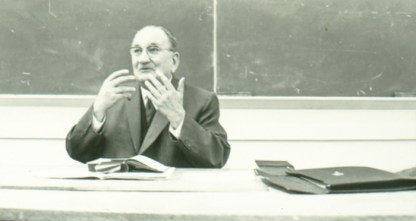
Ce colloque, organisé par Michel Cacouros, est consacré aux différentes facettes de l’activité d’Étienne Gilson. Il s’ouvre le jour du quarantième anniversaire de la disparition du philosophe (19 septembre 1978) et réunit plus de vingt spécialistes venant de plusieurs pays de l’Europe, du Canada et des États-Unis.
Grand historien de la philosophie occidentale au Moyen Âge, auteur d’une œuvre abondante et de notoriété internationale, Étienne Gilson a contribué à la meilleure connaissance de la philosophie médiévale en France, plus généralement en Europe, de même qu’outre-Atlantique, où il est devenu un véritable « constructeur d’institutions ». Il a fait découvrir ou redécouvrir des auteurs très importants pour la culture européenne, tels Bernard de Clairvaux, Bonaventure, Thomas d’Aquin, Dante et Descartes. Il a par ailleurs joué un rôle international dans le domaine humanitaire et social et contribué au renouveau de la pensée chrétienne. Directeur d’études à l’EPHE, section des sciences religieuses (1921-1942), et professeur à l’Université de Paris (1927-1932), il fut élu professeur au Collège de France en 1932 et reçu à l’Académie française en 1946.
Le colloque est organisé avec le concours de Norton Rose Fulbright et de Safe Bulkers Management Limited.
Dates et lieu : 19 et 20 septembre 2018, 9h30-19h, en Sorbonne (amphithéâtre Liard).
Organisé par : Michel Cacouros (michel.cacouros@ephe.psl.eu).
Comité scientifique : Michel Cacouros, EPHE, PSL ; Patrick Henriet, EPHE, PSL ; Christophe Grellard, EPHE, PSL.
Comité d’honneur : Hubert Bost, Président de l’EPHE ; Olivier Boulnois, EPHE, PSL ; James K. Farge, CSB, Pontifical Institute of Mediaeval Studies, Toronto ; Ruedi Imbach, Univ. de la Sorbonne Paris 4 ; Thierry-Dominique Humbrecht, o.p., Institut catholique de Toulouse ; Gilles Pécout, Recteur de la Région académique Île-de-France, Recteur de l’Académie de Paris, Chancelier des Universités de Paris.
Participants : I. Agostini (Centro Internazionale di Ricerca su Descartes et il Seicento, Lecce, Italie) ; J.-Chr. Bardout (Univ. de Rennes 1) ; M. Borghesi (Università di Perugia) ; O. Boulnois (EPHE, PSL) ; M. Cacouros (EPHE, PSL) ; H. Donneaud o.p. (Institut catholique de Toulouse) ; R. J. Fafara (International Gilson Society, États-Unis) ; J. K. Farge CSB (Pontifical Institute of Mediaeval Studies, Toronto) ; M. Fourcade (Univ. Paul-Valéry Montpellier 3) ; Ch. Grellard (EPHE, PSL) ; P. Henriet (EPHE, PSL) ; Th.-D. Humbrecht , o.p. (Institut catholique de Toulouse) ; F. Jacquemain (Paris) ; P.-Ph. Jandin (Collège international de philosophie, Paris) ; J. Lagouanère (Univ. Paul-Valéry Montpellier 3) ; P. Jaroszynski (Univ. de Lublin, Pologne) ; F. Michel (Univ. Panthéon-Sorbonne Paris 1) ; F. A. Murphy (Indiana University, États-Unis) ; J. Prévotat (Univ. Charles-de-Gaulle Lille 3) ; P. Redpath (International Gilson Society, États-Unis) ; M. Veuille (EPHE, PSL).
Inscription au colloque : gratuite et obligatoire (svp, vous adresser à l’organisateur).
Source : EPHE






Vous devez être connecté pour poster un commentaire.