Publication – « History after Hobsbawm. Writing the Past for the Twenty-First Century », éd. John H. Arnold, Matthew Hilton et Jan Rüger

What does it mean – and what might it yet come to mean – to write ‘history’ in the twenty-first century? History After Hobsbawm brings together leading historians from across the globe to ask what being an historian should mean in their particular fields of study. Taking their cue from one of the previous century’s greatest historians, Eric Hobsbawm, and his interests across many periods and places, the essays approach their subjects with an underlying sense of what role an historian might seek to play, and attempt to help twenty-first-century society understand ‘how we got here’. They present new work in their sub-fields but also point to how their specialisms are developing, how they might further grow in the future, and how different areas of focus might speak to the larger challenges of history – both for the discipline itself and for its relationship to other fields of academic inquiry. Like Hobsbawn, the authors in this collection know that history matters. They speak to both the past and the present and, in so doing, introduce some of the most exciting new lines of research in a broad array of subjects from the medieval period to the present.
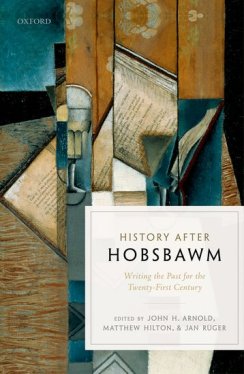
9780198768784

Table des matières :

INTRODUCTION

1: The Challenges of History, John H Arnold, Matthew J Hilton, and Jan Rüger

I. NATION AND EMPIRE

2: Gendering Property, Racing Capital, Catherine Hall
3: Writing Europe into the History of the British Empire, Jan Rüger
4: Indigenous Comparisons, Renaud Morieux
5: Hobsbawm and Researching the History of Nationalism, John Breuilly
6: Decolonisation as Tragedy, Bill Schwarz

II. MATERIAL ECONOMIES

7: Jiangnan style: doing global economic history in the medieval period, Chris Wickham
8: Global history and the transformation of early modern Europe, Maxine Berg
9: Industry, Working Lives, Nation and Empire, viewed through some key Welsh woollen objects, Pat Hudson
10: Social and environmental history in the Anthropocene, Paul Warde
11: Material Histories of the World: Scales and Dynamics, Frank Trentmann

III. PEOPLE AND POLITICS

12: Five swans over Littleport: fenland folklore and popular memory, c. 1810-1978, Andy Wood
13: Rethinking Gender and Labour History, Sonya Rose and Sean Brady
14: Postcolonial History as War History in the Twentieth Century, Yasmin Khan
15: The People’s History and the Politics of Everyday Life since 1945, Jon Lawrence
16: A Visit to the Dead: Genealogy and the Historian, Alison Light

CONCLUSION

17: A ‘Slight Angle to the Universe’: Eric Hobsbawm, Politics, and History, Geoff Eley

Index

Informations pratiques :

John H. Arnold, Matthew Hilton et Jan Rüger (éd.), History after Hobsbawm. Writing the Past for the Twenty-First Century, Oxford, Oxford University Press, 2017. 352 Pages | 32 figures/illustrations. 234x156mm. ISBN: 9780198768784. Prix : 75,00 £.

Source : Oxford University Press

Publié dans Publications | Laisser un commentaire

Séminaire – Cycle de conférences de la Ruusbroecgenootschap

De Voorjaarslezingen vinden in 2018 plaats op vrijdagnamiddagen in februari, maart, mei en juni op de Stadscampus van de Universiteit Antwerpen.

Locatie: Rodestraat 14, lokaal Annexe (via ingang Lange Winkelstraat), 2000 Antwerpen
Tijd: 14.00 -16.00

Inschrijven: bijwonen van de Voorjaarslezingen is gratis, maar gelieve uw aanwezigheid door te geven aan daniel.ermens@uantwerpen.be

Ruusbroecgenootschap

Programma 2018 :

Vrijdag 23 februari
Sander Vloebergs (KULeuven/Ruusbroecgenootschap, UAntwerpen)
Liefde verwondt. Mystieke vrouwen over liefhebben en lijden

Vrijdag 23 maart
Louise Nelstrop (Oxford University)
Translating Models of Female Mysticism: Union and Deification

Donderdag 12 april – 17.00-18.30 (extra Voorjaarslezing)
Peter Jan Margry (Meertens Instituut, KNAW)
Religious Deviancy: Crafting Idiosyncratic Ways of Religious Experience and Ideology
Locatie: Hof van Liere: Prentenkabinet, Prinsstraat 13, Antwerpen

Vrijdag 25 mei
Johanneke Uphoff en Joanka van der Laan (Rijksuniversiteit Groningen)
Leken en religieuze cultuur in de laatmiddeleeuwse Nederlanden

Vrijdag 22 juni
Anna Dlabačová (Universiteit Leiden)
Inspirerend, innovatief en invloedrijk. Het geïllustreerde geestelijke boek uit het fonds van Gerard Leeu (actief 1477-1492)

Source : Ruusbroecgenootschap

Publié dans Séminaire | Laisser un commentaire

Appel à contribution – Martyr et martyre : évolutions et variations dans la Chrétienté de l’Europe occidentale, du haut Moyen Âge au XVIe siècle

La revue Les Cahiers Pourpres, revue du laboratoire IHRIM Clermont-Ferrand, UMR 5317, envisage de publier un numéro d’articles sur la thématique du martyr(e).

Le nom « martyr », dérivé du grec martus, μάρτυς, « témoin qui meurt pour sa foi », lui-même issu d’une racine indo-européenne, smer-, « se souvenir » , signale d’emblée l’importance du processus mémoriel dans ce phénomène à la fois fascinant et inquiétant. De nos jours, l’Église n’exerce plus son monopole cultuel et ce terme, « martyr », qui aux origines s’utilisait afin de désigner le témoin lié au sacré, a recouvré une acception plus large pour renvoyer aux individus qui sont tombés avec héroïsme au nom d’une cause, qu’elle soit nationale, communautaire ou ethnique, comme les martyrs de la Résistance en France ou les martyrs irlandais. Et pourtant, le temps des martyres sacralisants semble n’avoir finalement jamais cessé : des idéologies suscitent encore à présent des passions sacrificielles que l’on considère comme aveugles et barbares, car « il n’y a que les martyrs pour être sans pitié ni crainte » . Notre questionnement portera sur les martyrs qui, en Europe occidentale, ont péri pour défendre leurs convictions religieuses durant le Moyen Âge et la première modernité.

Si l’Église primitive connut une période sanglante lors des dix premières persécutions, l’Europe occidentale essuya une vague exacerbée de répressions religieuses avec l’établissement du tribunal de l’Inquisition au XIIe siècle. Existait depuis Saint Cyprien une distinction entre les « martyrs de Dieu » et les « martyrs du diable » : le supplice ne suffisait pas à faire le martyr, il existait des morts vaines, que l’on repense aux croix du Golgotha. Saint Augustin peaufina un critère discriminatif en un adage suprêmement efficace, Martyrem non facit poena, sed causa. Souffrir la mort, certes, mais pour le Christ. L’un des champs d’investigation portera sur la cause des martyrs, la liturgie du martyre, autrement dit, comment se définissent durant la période d’analyse les lignes de séparation fluctuantes entre orthodoxie et hérésie.

Le martyr reçoit le divin, le ressent, l’éprouve, est par lui éprouvé. Le martyr donne forme à ses paroles, devenant celui par qui Dieu se rend visible et audible à tous. Comme l’annonçait Matthieu, « lorsqu’ils vous livreront, ne vous inquiétez pas de savoir comment parler ou que dire : ce que vous aurez à dire vous sera donné à cette heure-là, car ce n’est pas vous qui parlerez, c’est l’Esprit de votre Père qui parlera en vous » . Inspiré par Dieu, le martyr acquiert une puissance prophétique et sa voix rappelle celles qui criaient avant lui dans le désert. Personnage intermédiaire, transitoire et double, il est à la fois acteur, celui qui agit, qui témoigne en paroles et en actes, et spectateur, car la transcendance agit par son truchement, car il est agi par elle. Le témoin est habité par Dieu et cet hôte l’aide à renoncer à soi-même, la kénose lui permettant de s’anéantir, de « se vider » , pour devenir semblable au Christ . Cet oubli de soi a comme pendant une anamnèse, un ressouvenir, qui « s’opère selon le principe du retournement ou de la metanoia, c’est-à-dire de la conversion du sujet » . On pourra ainsi s’intéresser aux différentes mises en scène du martyre, par les victimes elles-mêmes selon le principe de l’imitatio Christi, ou par les auteurs qui vont instrumentaliser leur vie et trépas dans leurs hagiographies ou leurs martyrologes, grâce à des récits ou à l’iconographie. Les approches littéraires et artistiques sont à ce titre les bienvenues.

Les contributions porteront sur les aires de langues latines, romanes et anglo-saxonnes. Pourront être abordés les axes suivants :

  • Récits et témoignages de martyrs (autobiographies, hagiographies, martyrologes).
  • Réception/ perception du martyr par les contemporains (échanges épistolaires, chroniques urbaines) : le titre de martyr est-il conféré immédiatement ou a posteriori ?
  • Théologie du martyre.
  • Représentation iconographique du martyr(e) dans les œuvres à lire (incunables, manuscrits, éditions) et à voir (vitraux, peinture).
  • Représentation du corps en souffrance.
  • Martyre et sacralisation d’un territoire (liens entre martyre, politique et territorialisation).
  • Vocabulaire usité pour désigner le martyr, la mise à mort, le corps martyrisé.

Consignes : Les contributions à ce projet, qui se veut interdisciplinaire, se feront en français. Une proposition (250-300 mots) accompagnée d’un court CV seront à adresser au plus tard le 30 avril 2018 aux adresses suivantes : sonia.porzi[at]wanadoo.fr et isabelle.fernandes[at]gmail.com

Les articles (format final attendu entre 5000 et 8000 mots) seront à remettre le 1er octobre 2018, pour évaluation (double expertise à l’aveugle) et publication pour les articles retenus courant 2019. Afin de vous aider à la mise en forme de votre article, nous vous renvoyons à notre feuille de style http://ihrim.uca.fr/rubrique75.html

Bien cordialement, l’équipe de rédaction Sonia Porzi (MCF Italien, Littératures médiévales, IHRIM Clermont-Ferrand), Isabelle Fernandes (MCF Anglais, Civilisation britannique 16e et 17e siècles, IHRIM Clermont-Ferrand), et Françoise Laurent (PR Lettres, Langue et littératures médiévales, CELIS Clermont-Ferrand).

Source : Compitum

Publié dans Le réseau | Laisser un commentaire

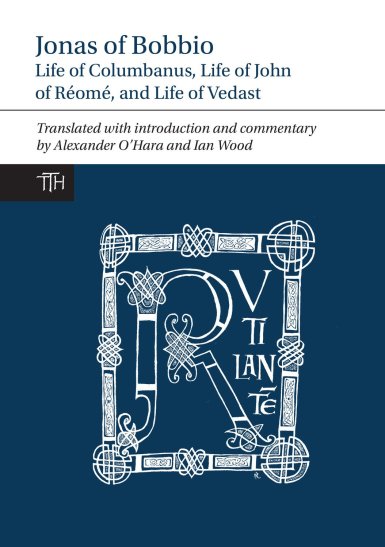
Publication – Jonas of Bobbio, « Life of Columbanus, Life of John of Réomé, and Life of Vedast », trad. Alexander O’Hara and Ian Wood

Jonas of Bobbio was an Italian monk, author, and abbot, active in Lombard Italy and Merovingian Gaul during the seventh century. He is best known as the author of the Life of Columbanus and His Disciples, one of the most important works of hagiography from the early medieval period, that charts the remarkable journey of the Irish exile and monastic founder, Columbanus (d. 615), through Western Europe, as well as the monastic movement initiated by him and his Frankish successors in the Merovingian kingdoms. In the years following Columbanus’s death numerous new monasteries were built by his successors and their elite patrons in Francia that decisively transformed the inter-relationship between monasteries and secular authorities in the Early Middle Ages. Jonas also wrote two other, occasional works set in the late fifth and sixth centuries: the Life of John, the abbot and founder of the monastery of Réomé in Burgundy, and the Life of Vedast, the first bishop of Arras and a contemporary of Clovis. Both works provide perspectives on how the past Gallic monastic tradition, the role of bishops, and the Christianization of the Franks were perceived in Jonas’s time. Jonas’s hagiography also provides important evidence for the reception of classical and late antique texts as well as the works of Gregory the Great and Gregory of Tours.This volume presents the first complete English translation of all of Jonas of Bobbio’s saints’ Lives with detailed notes and scholarly introduction that will be of value to all those interested in this period.

jpg_rgb_1500h_741af863-8ec9-4845-9626-bbf3df43d0ee

Dr Alexander O’Hara is a Research Fellow of the Institut für Mittelalterforschung in the Austrian Academy of Sciences and an Hon. Research Fellow of the School of History, University of St Andrews.

Professor Ian Wood is Professor of Early Medieval History in the Institute for Medieval Studies at the University of Leeds. His research interests focus on the history and historiography of the early Middle Ages. Previous publications include Avitus of Vienne: Letters and Selected Prose (TTH, LUP, 2002).

Table des matières :

Abbreviations

Introduction
1. The works of Jonas of Bobbio.
2. Francia in the Days of Columbanus.
3. The Gallic Church of the Late Sixth Century.
4. Columbanus and his ascetic exile to the continent.
5. Columbanus’s legacy.
6. Jonas of Bobbio: an Italian monk in Merovingian Gaul.
7. The manuscripts of the Life of Columbanus and the structure of the text.
8. Jonas the hagiographer and his Christian sources.
9. The Second Book of the Life of Columbanus and his Disciples.
10. Language and Style.
11. Jonas’s Life of John.
12. The Life of Vedast of Arras. Author and text.
13. Conclusion – the influence of Jonas’s hagiography.
14. A note on the text and translations of the Life of Columbanus.

Jonas, The Life of Columbanus.
Book I.
Verses and Hymn.
Book II.

Jonas, The Life of John.

Jonas (?), The Life of Vedast.

Appendices
1. Textual Variants.
2. Distribution of Biblical Quotations.
3. Parallels between Regula cuiusdam ad virgines and Jonas’s hagiographical works.
4. Three diplomas associated with Bobbio and Faremoutiers in the time of Jonas.

Bibliography

Maps
1. Ireland in the Days of Columbanus,
2. Francia, c. 590.
3. Burgundy c. 590-610.
4. Luxeuil and its environs.
5. Francia, c.610.
6. Early Columbanian foundations.
7. The World of Jonas.
8. The World of the Life of Vedast.
9. Arras in the Merovingian period.

Informations pratiques :

Jonas of Bobbio, Life of Columbanus, Life of John of Réomé, and Life of Vedast, trad. Alexander O’Hara and Ian Wood, Liverpool, Liverpool University Press, 2017(Translated Texts for Historians, 64). 210 x 147 mm, 400 p. ISBN : 9781781381762. Prix : 25 £.

Source : Liverpool University Press

Publié dans Publications | Laisser un commentaire

Offre d’emploi – Wissenschaftliche/n Mitarbeiter/in (University of Freiburg)

Consider making the switch to the University of Freiburg: It is one of the most renowned and strongest research universities in Germany, with a history spanning more than 500 years. You’ll engage in top-notch research and teaching with a unique spectrum of disciplines, perspectives, and people – right in the heart of one of Germany’s most beautiful cities.
The University of Freiburg’s human resources policy is oriented toward the principles of equal opportunity and diversity. The university is committed to the goal of creating a family-friendly university.
Die Universitätsbibliothek Freiburg sucht zum nächstmöglichen Zeitpunkt eine/n
wissenschaftliche/n Mitarbeiter/in
Fulltime position, start date: immediately
zur Mitarbeit in dem von der Deutschen Forschungsgemeinschaft (DFG) geförderten Projekt „Making Mysticism – Mystische Bücher in der Bibliothek der Kartause Erfurt“. Die Universitätsbibliothek arbeitet in diesem Vorhaben in enger Kooperation mit dem Deutschen Seminar – Germanistische Mediävistik. Im Rahmen des Projekts soll an der Universitätsbibliothek in enger Abstimmung mit den mediävistischen FachwissenschaftlerInnen eine fachspezifische, kollaborative Arbeitsumgebung entwickelt werden. Sie umfasst u. a. die Präsentation der digitalen genetischen Edition des Bibliothekskatalogs der Kartause und eine virtuelle Rekonstruktion ausgewählter Signaturengruppen.

Fribiurg

Ihre Kernaufgaben:

  • Entwicklung einer webbasierten Datenbank für die Speicherung und Präsentation der im Projekt bearbeiteten digitalen Edition
  • Entwicklung von integrierten Tools zur Analyse, Bearbeitung und Volltextspeicherung von TEI/XML-Dateien
  • (Weiter-)Entwicklung von geeigneten APIs zum (Meta-)Datenaustausch
  • Präsentation der IT-Ergebnisse auf (Fach-)Workshops
  • Mitarbeit bei der Berichterstattung und Ergebnissicherung

Ihre Qualifikationen:

  • abgeschlossenes wiss. Hochschulstudium (Master, Diplom oder vergleichbar)
  • nach Möglichkeit Erfahrungen im Bereich der Digital Humanities
  • sehr gute Programmierkenntnisse in den Sprachen Angular, PHP, HTML5 und CSS3
  • gute Kenntnisse in der Datenbankprogrammierung (PostgreSQL oder vergleichbar)
  • Kenntnisse von TEI/XML
  • ausgeprägte Kommunikations- und Teamfähigkeit sowie Erfahrung in der Projektarbeit
  • Erfahrungen in den Bereichen Langzeitarchivierung, Metadaten, Graphdatenbanken, Suchmaschinentechnologien (Elasticsearch, Solr) und Python sind von Vorteil

Wir bieten Ihnen eine spannende und anspruchsvolle Aufgabe in einem dynamischen Team mit viel Erfahrung. Sie können Ihre eigenen Ideen einbringen und von dem Wissen der Kolleginnen und Kollegen profitieren. Sie arbeiten mit den mediävistischen FachwissenschaftlerInnen im Projekt eng zusammen.

Bitte sehen Sie von der Einsendung von Originalunterlagen ab. Ihre Bewerbung wird nicht zurückgeschickt, sondern nach Abschluss des Verfahrens datenschutzgerecht vernichtet. Bewerbungsmappen sind entbehrlich. Sie können Ihre Bewerbungsunterlagen gerne elektronisch schicken.

Bei Fragen im Vorfeld einer Bewerbung können Sie sich an die Direktion der Universitätsbibliothek (direktion@ub.uni-freiburg.de) oder den Leiter des Dezernats IT, Hr. Rau (dezernat-it@ub.uni-freiburg.de), wenden. See further informations at http://ub.uni-freiburg.de

The contract is a fixed-term contract for 2 years. The salary will be determined in accordance with TV-L E13. We are particularly pleased to receive applications from women for the position advertised here.
Please send in a complete and convincing application with all relevant supporting documents, including the reference number 10741, by 28.02.2018 at the latest. Please send your application to the following address in written or electronic form:
Universitätsbibliothek Freiburg
Direktion
Postfach 1629
79016 Freiburg
E-Mail:
stellen@ub.uni-freiburg.de
Publié dans Offre d'emploi | Laisser un commentaire

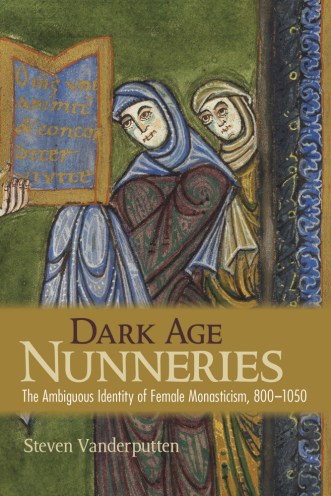
Publication – Steven Vanderputten, « Dark Age Nunneries. The Ambiguous Identity of Female Monasticism, 800–1050 »

In Dark Age Nunneries, Steven Vanderputten dismantles the common view of women religious between 800 and 1050 as disempowered or even disinterested witnesses to their own lives. It is based on a study of primary sources from forty female monastic communities in Lotharingia—a politically and culturally diverse region that boasted an extraordinarily high number of such institutions. Vanderputten highlights the attempts by women religious and their leaders, as well as the clerics and the laymen and -women sympathetic to their cause, to construct localized narratives of self, preserve or expand their agency as religious communities, and remain involved in shaping the attitudes and behaviors of the laity amid changing contexts and expectations on the part of the Church and secular authorities.

80140108428500L

Rather than a « dark age » in which female monasticism withered under such factors as the assertion of male religious authority, the secularization of its institutions, and the precipitous decline of their intellectual and spiritual life, Vanderputten finds that the post-Carolingian period witnessed a remarkable adaptability among these women. Through texts, objects, archaeological remains, and iconography, Dark Age Nunneries offers scholars of religion, medieval history, and gender studies new ways to understand the experience of women of faith within the Church and across society during this era.

Steven Vanderputten is Professor in the History of the Early and Central Middle Ages at Ghent University. He is the author of Monastic Reform as Process: Realities and Representations in Medieval Flanders, 900–1100 and Imagining Religious Leadership in the Middle Ages: Richard of Saint-Vanne and the Politics of Reform, both from Cornell University Press.

Informations pratiques :

Steven Vanderputten, Dark Age Nunneries. The Ambiguous Identity of Female Monasticism, 800–1050, Ithaca, Cornell University Press, à paraître en mai 2018. 330 p., 11 b&w halftones, 3 maps, 11 halftones, black & white, 3 maps. ISBN : 978-1-5017-1595-2. Pré-commande : 95 $ (Hardback) ou 35 $ (Paperback).

Source : Cornell University Press

Publié dans Publications | Laisser un commentaire

Offre d’emploi – Lecturer in Latin and Manuscript Studies (University of Kent)

Location: Canterbury
Salary: £33,518 to £47,722
Hours: Full Time
Contract Type: Permanent
Placed on: 9th February 2018
Closes: 12th March 2018
Job Ref: HUM0833

80

Are you a successful scholar and experienced teacher at MA level in the field of medieval or early modern studies, with an excellent working knowledge of post-classical Latin?

The Centre for Medieval and Early Modern Studies is inviting applications for the ongoing role of Lecturer in Latin and Manuscript Studies. If you can demonstrate a strong submission for REF2021, a flair for teaching and an enthusiasm to participate with public engagement and impact activities, we would welcome an application from you. As Lecturer in Latin and Manuscript Studies you will:

  • develop, teach and convene new MA modules ‘Latin for Beginners’ and ‘Reading the Manuscript Evidence’ as well as contributing to other team taught modules at Canterbury and Paris campuses
  • develop your research area to attract international recognition, research grants and PhD students and have ready for REF2021 a full submission of high-quality research publications
  • contribute to public engagement and impact activities

To be successful in this role you will have:

  • a 1 or high 2:1 undergraduate degree and a PhD in a relevant area, or equivalent experience
  • experience teaching at MA level
  • excellent working knowledge of medieval and/or early modern palaeography and manuscripts
  • a strong submission in the field of medieval or early modern studies for REF2021

The rich resources available at Kent for the study of the pre modern world offer a supportive environment in which to work and opportunities for career development and to help to shape a unique intellectual environment.

Centre for Medieval and Early Modern Studies (MEMS)

The Centre for Medieval and Early Modern Studies was founded in 1996 as an interdisciplinary postgraduate Centre. It has four main purposes: to administer postgraduate teaching for the long-standing MA by Coursework and Dissertation, to promote research through our MA, MPhil and PhD by research, to encourage publications in the Medieval and Early Modern periods, and to develop links with Canterbury Cathedral Archives and Library. Staff members of the Centre are drawn from the constituent Schools of the Faculty (particularly English and History) with a wide variety of research interests, many of which cross traditional disciplinary boundaries.

Further Information

Start date for applications: 9 February 2018
Closing date for applications: 12 March 2018
Interviews are to be held: in week commencing 9 April 2018 (date tbc)

Please see the links below to view the full job description and also to apply for this post. If you require further information regarding the application process please contact The Resourcing Team on jobs@kent.ac.uk quoting ref number: HUM0833. For further information about the role, please contact Dr Ryan Perry at R.Perry@kent.ac.uk

Please note – applications must be made via the University’s online application system. You will be required to fill in the main details section of the application form as well as upload your CV and a cover letter. Your cover letter should clearly and explicitly address the requirements of the Person specification and you should provide clear evidence and examples in your application which back-up any assertions you make in relation to each criterion. We recommend a maximum of 4 x A4 sides for this document.

CVs or details sent directly to the department or via email cannot be considered.

If you are invited for an interview, we will request references for you at that stage. No agencies, thank you.

Source : Jobs.ac.uk

Publié dans Offre d'emploi | Laisser un commentaire

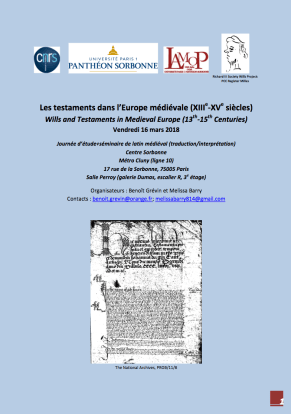
Séminaire – Les testaments dans l’Europe médiévale (XIIIe-XVe siècle)

16 mars 2018

Cet atelier, coorganisé par Benoît Grévin (LaMOP-CNRS) et Melissa Barry (LaMOP-Université Paris 1 Panthéon-Sorbonne), est une formule originale qui combine un workshop/atelier d’une journée avec une séance spéciale du séminaire de traduction médio-latine animé par Benoît Grévin. Il s’agit de faire un bilan d’histoire comparée concernant les pratiques textuelles testamentaires combinant une approche sociohistorique, une approche linguistique, une approche philologique et une approche littéraro-rhétorique.

La journée combine un cycle de communications-débats co-animés par des chercheurs anglais, français et canadiens, et une séance spéciale de traduction médio-latine (avec les participants et les étudiants du séminaire) où seront traduits des textes discutés lors de l’atelier.

TEstaments Europe médiévale

Programme :

9h45 : Accueil

10h-12h30 : Le testament comme type documentaire : formes, rédaction et système d’homologation | Wills as a documentary type: forms, composition and probate system
(présidence Paul Evans, York University, Toronto)

Anne Chiama (LEM-CERCOR / Université Jean Monnet de Saint-Étienne) – Des testaments dans le brouillard. Brouillons et protocoles de testaments dans la région de Toulon au milieu du XIVe siècle | The composition of wills and testaments by notaries public in the region of Toulon according to Mid-14th-Century brouillards or draft books)
Heather Falvey (University of Warwick / DCE, University of Oxford / ICE, University of Cambridge) – Probate registers compiled in England in the Late-15th Century (Prerogative Court of Canterbury and Archdeaconry of Sudbury, Suffolk)
Melissa Barry (LaMOP / Panthéon-Sorbonne University) – ‘Unum standyng pece argenteum’. The relationship between Latin and the Vernacular in Late-15th-Century English wills
12h30-14h00 Pause déjeuner

14h00-16h00 Séminaire de traduction /Translation workshop

Traduction et interprétation d’un choix de testaments en rapport avec le programme de la journée | Translation and interpretation of a selection of wills discussed during the workshop

16h00-17h30 Testaments et intertextualité : testaments royaux et curiaux | Wills and intertextuality: royal testaments and mortuary literature in court circles
(présidence/chair Christopher Fletcher, IRHIS)

Benoît Grévin (LaMOP-CNRS) – De Boncompagno au manuscrit Fitalia : les dimensions rhétoriques du testament dans l’Italie du XIIIe siècle | From Boncompagno to the « Fitalia » Manuscript: the rhetorical aspects of the testament in 13th-Century Italy
Jean-François Moufflet (Archives Nationales / LaMOP) – Saint Louis : un modèle de testament royal ? | Did the testament of King Louis IX of France (1226-1270) set the pattern for subsequent royal wills?

17h30-19H00 Testaments pratiques et littéraires dans le milieu universitaire parisien au XVe siècle | Practical and literary testaments at the University of Paris in the Mid-15th Century
(présidence Claude Evans, Toronto)

Darwin Smith (LaMOP-CNRS) – Le testament de Jean Chuffart, chancelier de l’université de Paris | The will of Jean Chuffart, Chancellor of the University of Paris (1450)
Melissa Barry (LaMOP / Université Paris 1) et Judith Förstel (Service de l’Inventaire d’Île de France / LaMOP) – La réadaptation des codes testamentaires dans l’œuvre de François Villon | The adaptation of testamentary conventions in the poems of François Villon

Source : Calenda

Publié dans Séminaire | Laisser un commentaire

Appel à contribution – Historical Network Research Conference 2018

Masaryk University, Brno, the Czech Republic
10th September 2018 (pre-conference tutorials and workshops), 11th-13th September 2018 (conference)

Conference website: http://religionistika.phil.muni.cz/hnr2018/

The Historical Network Research group is pleased to announce its 5th annual conference. After the previous conferences that which took place in Hamburg in 2013, Ghent in 2014, Lisbon in 2015, and Turku in 2017, the 5th conference will be hosted by Masaryk University in Brno, Czech Republic, on 10th-13th September 2018. The 5th Historical Network Research Conference seeks to foster historians’ awareness of the possibilities of network research and create opportunities for sharing cross- and multidisciplinary approaches to the networked past by bringing together historians, social scientists and computer scientists. The organizers welcome proposals for papers discussing any historical period and geographical area. Topics might include, but are not limited to:

  • Social network analysis in historical research
  • Network analysis in archaeology
  • Network analysis and text mining in historical research
  • Modeling diffusion on historical networks
  • Modeling and simulation in historical research
  • Religious networks
  • Cultural and intellectual networks
  • Networks in economic and business history
  • Technological and research networks, scientific networks and collaborations
  • Social movements and political mobilization
  • Social networks in war, conflict, and peacemaking
  • Methodological and theoretical issues of the network analysis in historical research

The language of the conference is English. There is no conference fee. Those who wish to participate in the optional social event on 12th September 2018 will be asked for a contribution of 25 € (625 CZK) collected at the registration desk during the conference.

The deadline for submissions of abstracts is 31st March 2018. All abstracts are to be submitted through the form in the Registration section. We kindly ask prospective participants without papers to register as well.

The presentations for the conference will be selected, after a peer review process, on the basis of abstracts. Notifications of acceptance/rejection will be announced in the second half of April 2018.

The list of pre-conference tutorials and workshops will be announced in the second half of April 2018. After the announcement, the registration for participation in these tutorials and workshops will be opened.

Types of presentations

  • Regular papers (20 minutes + 10 minutes discussion). Regular papers should present a) results of a completed research; b) innovative research methods and their application; or c) a discussion concerning theoretical questions. An abstract should be 300-500 words long.
  • Short papers (10 minutes + 5 minutes discussion). Short papers should present ideas, approaches and projects that have started only recently or are currently being prepared (e.g. grant projects, research initiatives etc.). A short paper should be audience-friendly and generate conference participants’ interest in the presented topic and/or attract potential partners for future collaboration. An abstract should be 200-400 words long.
  • Posters should inform about completed research, research in progress or present new methods and/or research tools. Posters (format A0 portrait orientation) will be displayed throughout the conference at the venue site and introduced during the poster session. A poster abstract should be 200-400 words long.
  • We welcome proposals for pre-conference tutorials and workshops which are to take place on Monday, 10th September 2018 (a day before the conference) in two time slots: 9-12 am and 2-5 pm. Proposals should include the workshop/tutorial title and a short description of its topic + contact information of the lecturer. An abstract should also include the information about a minimum and maximum number of participants, the type of audience (beginners, intermediate, advanced etc.), length and the type of necessary technical equipment participants should have (the organizers can provide only basic infrastructural support, e.g. suitable classrooms with a projector, whiteboard etc., not technical equipment such as laptops, specialized software etc.). The lecturer will be responsible for communicating necessary information to the registered participants. An abstract should be 200-400 long words.

Program Committee

Dr. Aleš Chalupa (Masaryk University)
Dr. Kimmo Elo (University of Helsinki)
Dr. Ivo Veiga (New University of Lisbon)
Dr. Martin Stark (ILS – Research Institute for Regional and Urban Development)
Dr. David Zbíral (Masaryk University)

Publié dans Appel à contributions | Laisser un commentaire

Appel à contribution – Pierre de Jean Olivi (1248-1298). La construction de la personne humaine : anthropologie, éthique, société

Au début du XIIIe siècle, la tradition théologique reconnaissait deux définitions de la ‘personne’ : celle de Boèce, comme substance individuelle de nature rationnelle et celle de Richard de Saint-Victor, comme existence incommunicable de nature intellectuelle.

Capture d’écran 2018-02-13 à 12.52.13.png

Le franciscain Pierre de Jean Olivi (1248-1298) en propose une nouvelle. Il assigne à la notion de personne la fonction centrale d’une connaissance immédiate et indubitable de soi, en tant que substance individuelle en elle-même absolument consistante, sujet actif (subjectum activum) et maître (dominativum) de sa pensée et de sa volonté : « persona videtur dicere existentiam super se reflexam seu reflexibilem et existentiam seu suppositum in se ipso plene consistens. (…) Quod non est aliud quam potestas plenarie possessiva sui et aliorum sine qua non est intelligere rationem personae ». Cette nouvelle
acception de la personne se décline selon les différentes perspectives de l’anthropologie olivienne : l’unité de l’être humain, la connaissance de soi, les rapports de la volonté et de l’intellect, la conscience morale, la pauvreté volontaire, l’idéal de la perfection évangélique ou encore la théorie sociale. Quelles furent les conditions d’émergence de cette nouvelle conception de la personne ? Comment peut-elle s’analyser selon les différentes perspectives de la pensée olivienne ? Quel en fut l’impact auprès des contemporains d’Olivi et de ses successeurs ?

Dans le cadre d’un projet de recherche du Fonds National Suisse, nous invitons les chercheurs à étudier la philosophie et la théologie de la personne humaine selon Pierre de Jean Olivi, ainsi que son contexte, ses sources et son impact. Ce colloque international aura lieu à Rome du 4 au 6 octobre 2018. Les communications devront durer 40 minutes et les propositions, de 5’000 signes maximum, sont à envoyer à l’adresse suivante : olivi2018@gmail.com.

Date limite d’envoi des propositions : le 15 mars 2018

Une réponse sera donnée aux auteurs avant la fin du mois d’avril 2018 après examen de leur proposition par le comité scientifique. Nous vous remercions de faire circuler cet appel dans vos propres réseaux.

Source : Weebly

Publié dans Appel à contributions | Laisser un commentaire