Appel à contribution – Benedictine Cultures

Benedictines carry on a monastic tradition that stems from the origins of the Christian monastic movement in the late third century, regarding Benedict as their founder and guide even though he did not establish a Benedictine Order as such. He wrote a Rule for his monastery at Monte Cassino in Italy and he foresaw that it could be used elsewhere. The Rule found its way to monasteries in England, Gaul, and elsewhere. At first it was one of a number of rules accepted by a particular monastery but later, especially through its promotion by Charlemagne and his son Louis, it became the rule of choice for both male and female monasteries of Europe from the ninth century onwards.

This interdisciplinary conference will examine all aspects of Benedictine life in the period 800 – 1900 and welcomes papers from researchers in fields including History, Literary Studies, Theology, Philosophy, Musicology and Art History. Proposals (c. 200 words) for papers of 20 minutes should be emailed to sparsons@downside.co.uk by 29th July, 2016. Panel proposals consisting of three speakers are also encouraged, as are papers from postgraduates.

Source : Ordensgeschichte

Publié dans Appel à contributions | Laisser un commentaire

Appel à contribution – : Direct and Collateral Impacts of Warfare on the Medieval Environment

ESEH Conference, Zagreb, Croatia

June 28th – July 2nd, 2017

Eseh

In recent decades, as modern societies inevitably turned their attention towards the growing environmental crisis, medievalists have become increasingly interested in the complex interactions between humans and their natural environment. Recent scholarship has underlined the undeniable significance of environmental history in our understanding of the medieval world by providing ample evidences of the impacts of environmental and biological factors on human societies, as well as on the effect of human activity, whether positive or negative, on the natural world. While it is perhaps more apparent in modern conflicts, warfare, one of humanity’s oldest activities, had long-lasting impacts on both medieval landscapes and societies. This panel proposal aims to explore the dynamics between warfare and natural environment during the Middle Ages. We welcome proposals for 20-minutes papers on all methodological approaches related to the impacts of medieval conflicts on landscapes, natural resources or cities, whether they were deliberate devastations or the collateral results of military operations, and also on the influence of the environment on warfare during the Middle Ages

Applicants should submit a 250-words proposal along with a 1-page CV to rptucker@umich.edu and danny.lake-giguere@umontreal.ca before September 1st.

Feel free to contact us to discuss your ideas.

Publié dans Appel à contributions | Un commentaire

Colloque – The Norman Conquest of England in European perspective

Thirty-ninth conference on Anglo-Norman Studies
Battle Abbey School, Battle (Sussex)
Friday, 29th July – Tuesday, 2 August, 2016

Commemorating the 950th anniversary of ‘1066’
‘The Norman Conquest of England in European perspective’

39th

Programme :

Friday 29 July 2016

2:00pm-4:00pm Registration
Tea/Coffee

5:00pm Christopher Lewis (Allen Brown Memorial Lecture ) – The Magnitude of the Conquest: Audacity and Ambition in Early Norman England
6:00pm Drinks
7:30pm Dinner

Saturday 30 July 2016

9:00am Julie Barrau (University of Cambridge) – Post-Conquest Circulation of Biblical and Patristic Manuscripts across the Channel
10:15am Coffee

10:30am Laura Cleaver (Trinity College, Dublin) – Forging the Battle Abbey Chronicle (British Library, Cotton MS AII)
11:45am Elisabeth Ridel (University of Caen- CNRS) slot fine – Les préparatifs nautiques de la Conquête: un héritage viking? Les mots ont la parole…
1:00pm Lunch

2:00pm Public History Forum in collaboration with English Heritage – Chris Lewis, Lindy Grant, Roy Porter, Jeremy Ashbee
4:00pm Visit Battle Abbey and battle field

6:00pm Reception
7:30pm Conference Dinner

Sunday 31 July 2016

9:30am Simon Keynes (University of Cambridge) – Earl Harold and the Foundation of Waltham Holy Cross
10:45am Coffee
11:00am Sir Christopher Clark (University of Cambridge) – Why battles do matter
12:30pm Lunch
2:00pm Brigitte Meijns (University of Leuven) – England and Flanders Around 1066: Ecclesiastical Relations and Influences
3:15pm Tea
3:30pm Marjorie Chibnall Essay Prize winner
7:30pm Dinner

Monday 1 August 2016

9:00am Alheydis Plassmann (Bonn) – England and Germany in the Eleventh Century
10:15am Coffee
10:30am Stephen Baxter (University of Oxford)
11:45am Brian Golding (independent scholar) – Remembering Battle and the Entente Cordiale
1:00pm Lunch

2:00pm Ann Williams (London) – Of Danes and Thegns and Domesday Book: the Danish settlement of Berkshire in the early eleventh century
3:15pm Tea

3:30pm Chris Whittick (East Sussex County Archives) – Battle Abbey and the Vellomaniacs – locating the monastic archive

7:30pm
Dinner

Tuesday 2 August 2016

9:00am Mark Philpott (University of Oxford) – The Coronation(s) of the Conqueror
11:00am Coffee

11:15am Thomas O’Donnell (Fordham University, New York) – William the Conqueror and his Life in Verse: Politics and Poetics in the High Middle Ages
12:30pm Lunch and departure

Source : The Battle Conference

Publié dans Colloque | Laisser un commentaire

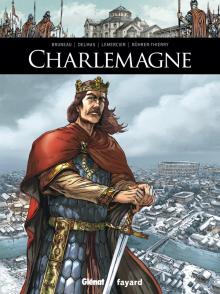
Bande-dessinée – « Charlemagne », Clotilde Bruneau, Vincent Delmas et Geneviève Thierry

Le roi qui devint empereur

L’épopée de Charlemagne est celle d’un fils de grand seigneur parvenant au sommet du pouvoir en Europe en construisant un nouveau système politique, dont il occupe la place la plus élevée. Chrétien convaincu, il poursuit constamment un objectif affiché comme religieux : promouvoir partout et le plus loin possible la société chrétienne, par tous les moyens (militaires, culturels, administratifs, etc.), se plaçant d’autorité comme le protecteur de la papauté. Conquérant charismatique et homme politique sachant s’entourer des grands intellectuels de son époque, il incarne un moment unique de l’Europe dont l’apogée est le sacre impérial.

9782723495561-t

Clotilde Bruneau et Vincent Delmas font appel à l’expertise de l’historienne Geneviève Thierry pour dresser le destin de cette figure emblématique de la monarchie française, enluminé de fort belle manière par le dessin épique de Gwendal Lemercier.

Informations pratiques :
Clotilde Bruneau, Vincent Delmas et Geneviève Thierry, Charlemagne, Paris, Fayard, 2014. 56 pages. 240 x 320 mm. ISBN : 9782723495561. Prix : 14.50 €.

Source : Fayard

Publié dans Bande dessinée | Laisser un commentaire

Podcast – « Histoire, roman et fiction », dialogue avec Patrick Boucheron et Laurent Binet

Débat organisé à la BNF (Paris) le 9 décembre 2011 dans le cadre du cycle « Chemins d’accès : Quelle(s) médiation(s) pour l’Histoire ? ».

Logo_BnF.svg

Comment rencontrer le passé quand il a disparu et qu’on ne dispose pour s’en approcher que de traces, d’empreintes ou d’objets souvent lacunaires et toujours ambigus ? Dans le champ de la médiation, l’Histoire serait-elle lestée d’une difficulté, voire d’une impossibilité particulière ?

A quelles conditions la médiation peut-elle permettre à chacun de construire son propre lien au passé ?

Que peut apporter la fiction à la connaissance et à la transmission de l’Histoire ? Sous quelles formes ? Quelle est la part de l’invention dans la démarche de l’historien ? On interrogera le désir de l’historien d’utiliser la narration romanesque comme écriture de l’Histoire quand celle-ci permet d’éclairer des aspects restés inaperçus dans son travail : ressources et pièges…Comment exploiter la fiction littéraire dans la médiation de l’Histoire auprès des publics scolaires ?

Dialogue animé par Emmanuel Laurentin, avec Patrick Boucheron, historien, médiéviste, et Laurent Binet, écrivain, professeur de Lettres.

Voir ou écouter le débat : ici

Source : Bibliothèque nationale de France

Publié dans Podcast | Laisser un commentaire

Appel à contribution – « Jouer à la flamme bien moyenâgeuse » : médiévisme dans la culture populaire contemporaine

Échéance : 31 juillet 2016
INU Champollion, Albi, France

Cette journée d’étude aura lieu les 25 et 26 novembre 2016 à l’Institut National Universitaire Jean-François Champollion dans la ville épiscopale d’Albi dans le Tarn. Les propositions de communications (250-500 mots, en anglais ou français) sont à envoyer accompagné d’un court CV à john.ford@univ-jfc.fr avant le 31 juillet 2016.

Présentation :

La culture populaire d’aujourd’hui est riche en allusions au Moyen Age, non seulement dans la littérature et les arts visuels – comme elle l’a toujours été dans les siècles passés (par exemple, les préraphaélites ou Connecticut Yankee dans la cour du roi Arthur de Twain, Idylles du roi de Tennyson, ou le Hobbit et le Seigneur des Anneaux de Tolkien, etc.) – mais aussi dans les romans graphiques et dans les bandes dessinées, sur le petit comme sur le grand écran, ainsi que sur les écrans d’ordinateur des amateurs de jeux vidéos, les parcs d’attractions, les festivals et les foires.

Mais combien de ces références dont le contexte est médiéval – présentées comme de nouvelles versions de vieux récits ou tout simplement utilisant de manière plus libre un cadre ou un thème médiéval – reflètent fidèlement le Moyen Age ? Et de quelle manière et dans quelle mesure ces références médiévales modifient-elle ou déforment-elle la réalité de cette époque ? A quel point cette époque est-elle romancée comme, par exemple, dans un Camelot idéalisé où «la pluie ne peut tomber qu’après le coucher du soleil »? Dans quelle mesure est-elle, comme l’atteste l’expression « Jouer à la flamme bien moyenâgeuse » qui implique la menace d’une vengeance féroce, diabolisée, vilipendée? Dans quelle mesure et à quel point ces constructions, ces références, influencent-elles sur notre compréhension du Moyen Age? Est-il donc important d’être exact ? Enfin, dans quelle mesure ces modifications mettent-elles à jour les textes et les récits en leur permettant de rester en vie et en constante évolution ? Et pourquoi le Moyen Age est-il l’éternel sujet favori, exploité année après année, décennie après décennie, siècle après siècle?

Cette journée d’étude va tenter de répondre à ces questions en ouvrant le dialogue par le biais de différentes disciplines : histoire, littérature, linguistique diachronique, arts visuels, cinéma, théâtre, télévision, mais aussi via les jeux vidéos et les parcs d’attraction, etc. Il s’agira d’étudier la popularité durable des thèmes médiévaux et la manière dont les récits et les textes médiévaux sont transmis, conservés, déformés, renouvelés et utilisés pour construire la nouvelle culture populaire résolument moderne, de l’Europe, de l’Amérique du Nord et du monde du 21ème siècle.

Il est important de considérer l’importance de la précision dans les représentations prétendument basées sur des textes réels, comme par exemple la série Vikings, ou les divers remakes de Beowulf. Et, dans quelle mesure ce libre traitement est-il acceptable, ou même à encourager? Dans quelle mesure les idées reçues, souvent douteuses, sont-elles employées dans des œuvres originales au contexte médiéval, mais pas forcément dans un cadre véritablement médiéval comme Game of Thrones ou Harry Potter?

Outre les ouvrages mentionnés ci-dessus, la conférence est ouverte à toute proposition portant sur l’utilisation des œuvres ou des thèmes médiévaux dans tous les aspects de la culture populaire actuelle ou antérieure, les conduisant à une place ancrée dans la culture populaire moderne – non seulement dans la fiction et l’art, mais dans toute forme de divertissement ou de représentation. Enfin, la valeur de la littérature et de la culture médiévales, de la culture populaire, ainsi que leur interdépendance, sera étudiée.

Source : Fabula

Publié dans Appel à contributions | Laisser un commentaire

Appel à contribution – Readjusting the Middle Ages

Utrecht, 11 November 2016

For as long as we can remember, the idea of the ‘Middle Ages’ has been under review. As medievalists we have accepted, if only for practical purposes, the periodisation of European history in Antiquity, the Middle Ages, and the (Pre-) Modern Age. In doing so, we have unwittingly allowed negative connotations of the ‘Middle Ages’ to persist in education, politics, and the received ideas of the public at large. Yet, through our research we have come to a set of rather different views. We no longer hold to the established periodisation of Western civilisation. Indeed, we are coming to question the very notion of ‘the West’, and are slowly beginning to react in our research and in our teaching to the study of the western Middle Ages in isolation. Neither do we see the story of our continent as one of unfettered progress from the ‘cradle’ of the Middle Ages to the blessings of contemporary modernity. Nor do we see the Middle Ages as a thousand-year-long hiccup in the advance of civilisation from Greek and Roman Antiquity to our own age. We have come to realise that in the panoply of developments taking place during the Middle Ages there were some we might be tempted to applaud, whereas there were others that we have reservations about – as with developments in any other period of history, including our own. And we are keenly aware that we have to understand both the developments and our judgement of them.

These are some of the considerations that inform the continuing readjustment of the study of the Middle Ages, and, as a result, of the Middle Ages themselves. What are the Middles Ages? When did they take place? Where did they take place? And: how do they relate to the periods that went before and followed? One thing is certain: the Middle Ages, no matter how we wish to define them, were no Dark Ages.

At the Mediëvistendag of 11 November 2016, we will address some of these problems. During the morning’s general session, we will ask prominent medievalists to reflect on key issues in medieval developments and their continuation later on. During the afternoon’s sessions, we have a chance to hear about research currently carried out, which will in time help further adjustments of the Middle Ages. We will then move to Museum het Catharijneconvent for a lecture on St Martin and a visit to the exhibition ‘Heilige Schrift – Tanach – Bijbel – Koran’. The Mediëvistendag will end with a borrel.

The definitive programme will be made available in September. Those who wish to present their current research are asked to read the attachment and send their proposal by 1 September to M.Mostert@uu.nl.

All lectures and papers will be presented in English, to allow all scholars, PhD students and Research MA students, irrespective of their linguistic abilities, to take part.

Source : Vlaamse Werkgroep Medievistek

Publié dans Appel à contributions | Un commentaire

Offre d’emploi – Departmental Lecturer in Early Medieval History (University of Oxford)

Location: Oxford
Salary: £30,738 p.a. (pro rata)
Hours: Part Time
Contract Type: Contract / Temporary
Placed on: 20th June 2016
Closes: 22nd July 2016
Job Ref: 123980

George Street, Oxford

102

We are seeking a part-time Departmental Lecturer in Early Medieval History, tenable from 1 October 2016 for a fixed-term of 1 year. This post is offered by the History Faculty in association with Balliol College and Brasenose College.

Applications are invited from scholars with active research and teaching interests in any area of Early Medieval History. The successful candidate will demonstrate an ability and willingness to give tutorials, lectures, classes and supervision at both undergraduate and graduate level across a range of papers in Early Medieval History. The Lecturer will also be required to undertake examining and administrative work, and will engage in advanced study and original research in Early Medieval History.

The successful candidate will hold a doctorate in a relevant field or show evidence that a doctorate is imminently expected. S/he will have a strong research record and a record of successful teaching within the field, the ability to teach and lecture at an appropriate level in an interesting and engaging manner for both undergraduate and graduate students, and a willingness to undertake examining and administrative duties.

Applications are particularly welcome from women and black and minority ethnic candidates who are under-represented in academic posts in Oxford.

Applications for this vacancy are to be made online. To apply for this role and for further details, including the job description and selection criteria, please click on the link below.

The deadline for applications is 12.00 noon on 22 July 2016.

Source : Jobs.ac.uk

Publié dans Offre d'emploi | Laisser un commentaire

École d’été – Shaping, Representing and Using the Medieval City

Autumn School in Medieval Languages and Culture 2016
Ghent, 18 – 21 October 2016

Participants in the specialist course Shaping, Representing and Using the Medieval City will explore the development, use, shaping and portrayal of the medieval city from several perspectives.

The cross-disciplinary programme is structured around two main elements: seminars and workshops. Participants will receive reading material before the start of the course. Each of the lecturers will develop a specific theme during the seminar through a case study. The workshops have been designed to encourage discussion between lecturers and course participants. Students may be invited to complete small assignments in order to start the debate.

This Autumn School is organized for MA and PhD-students in any discipline of medieval studies (archaeology, art history, history, literature, music …) with a research interest in medieval cities: emigration and immigration, urban public spheres, urban space, urban elites (civil or religious), urban rebellion …

English is the language of instruction and discussion.

Autumn School - Henri Pirenne

Programme :

Tuesday 18 october 2016
Ghent, Blandijnberg, Meeting Room English (130.007)

8.30 – 9.00: registration
9.00 – 10.30: Fabrizio Nevola (University of Exeter), seminar: Portraits of the city in literature
10.30 – 10.50: coffee break

10.50 – 12.30: workshop under the direction of Fabrizio Nevola
12.30 – 13.30: lunch

13.30 – 15.00: Presentation of ongoing research by PhD-students
15.00 – 15.20: coffee break
15.20 – 17.00: Presentation of ongoing research by PhD-students

Wednesday 19 october 2016
Ghent, Blandijnberg, Meeting Room English (130.007)

9.00 – 10.30: Peter Stabel (University of Antwerp), seminar: The city is the market, the market is the city. Constructing economic space in the medieval city in Europe and the Islamic World
10.30 – 10.50: coffee break

10.50 – 12.30: Workshop under the direction of Peter Stabel
12.30 – 13.30: lunch

13.30 – 15.00: Ethan Matt Kavaler (University of Toronto), seminar: The city as stage: funeral sculpture in the 16th C. Netherlands
15.00 – 15.20: coffee break

15.20 – 17.00: Workshop under the direction of Ethan Matt Kavalar

Thursday 20 october 2016
Ghent, Blandijnberg, Meeting Room English (130.007)

9.00 – 10.30: Catherine Clarke (University of Southampton), seminar: Walking in the city: Itineraries and perspectives in the medieval urban environment
10.30 – 10.50: coffee break

10.50 – 12.30: Workshop under the direction of Catherine Clarke
12.30 – 13.30: lunch + walk to the STAM
Ghent City Museum, STAM

13.30 – 15.00: Silvia Beltramo (Politecnico di Torino), seminar: Portraits of the city: iconography
15.00 – 15.20: coffee break

15.20 – 17.00: visit of the STAM under the guidance
of Jeroen Deploige (Ghent University)

Friday 21 october 2016
Ghent, Blandijnberg, Meeting Room English (130.007)

9.00 – 10.30: Bram Vannieuwenhuyze (University of Amsterdam), seminar: Mapping the medieval city
10.30 – 10.50: coffee break

10.50 – 12.30: Workshop under the direction of Bram Vannieuwenhuyze
12.30 – 13.30: lunch

13.30 – 15.00: Gerrit Jasper Schenk (TU Darmstadt), seminar: The city as stage: using the stage
15.00 – 15.20: coffee break 15.20 – 17.00: city walk in Ghent

Informations pratiques :

Application
The application deadline is September 15, 2016. There will be a maximum of 20 participants. Applications should be sent to Martine.DeReu@UGent.be and must contain the following information: university where your MA or PhD will be obtained, mother tongue, level of English, research topic for your master’s or doctoral thesis.

Accomodation and transport
Participants need to provide for their own accommodation and transport.

Useful information can be found on the following websites:

for accommodation:
http://www.jeugdherbergen.be/en/youth-hostels/city-hostels/gent-de-draecke (Youth Hostel) http://www.hosteluppelink.com/en/welkom (Youth Hostel)
http://www.backstayhostels.com/ (Youth Hostel)
http://www.visitgent.be/
http://www.gent-hotels.eu/en http://www.hostelbookers.com/hostels/belgium/ghent/ http://www.hotelspecials.be/be/oost-vlaanderen/gent.html for trains:
http://www.b-rail.be/nat/E/

Meals
Lunches from Tuesday till Friday will be organized by the H. Pirenne Institute for Medieval Studies. Evening meals are not provided by the organizers.

Registration fee :
There is a registration fee of 100 EUR. This fee is to be paid – after confirmation has been received of acceptance in the Autumn School – into the account of Ghent University, Sint-Pietersnieuwstraat 25, B-9000 GHENT. Account details: IBAN: BE59-3900-9658-0026 – SWIFT: BBRU BE BB 900. The VAT-number of Ghent University is BE 0248.015.142. The bank transfer should mention “Medieval Languages and Culture 2016”. Payment of this fee is considered as confirmation of registration.

The registration fee is waived for MA and PhD students from Ghent University, from the Onderzoekschool Mediëvistiek (Netherlands) and from the University of Oxford.

This project is organized by the Henri Pirenne Institute for Medieval Studies at Ghent University and funded by the Ghent Doctoral School for Arts, Humanities and Law, by the Dutch Research School for Medieval Studies, by the Society for the Study of Medieval Languages and Literature and by the Ghent educational project Internationalisation@home.

Organizing committee :
Jeroen Deploige (Department of History, Faculty of Arts, Ghent University)
Jan Dumolyn (Department of History, Faculty of Arts, Ghent University)
Catrien Santing (Nederlandse onderzoekschool Mediëvistiek)
Helen Swift (Faculty of Medieval and Modern Languages, University of Oxford)
Anne-Laure Van Bruaene (Department of History, Faculty of Arts, Ghent University)
Wim Verbaal (Department of Literature, Faculty of Arts, Ghent University)
Martine De Reu (Secretary for the MA in Historical Linguistics and Literature, Faculty of Arts, Ghent University)

Source : Henri Pirenne Institute for Medieval Studies

Publié dans École d'été, Enseignement | Laisser un commentaire

Colloque – Horizontal Learning within High Medieval Religious Communities

September 1st and 2nd, 2016
Royal Flemish Academy of Belgium for Science and the Arts, Brussels

This conference will center on the medieval practices of learning within a community, understood as a body of people who practice communal living and share an understanding of what binds them together, even though this understanding is constantly being renegotiated. Our aim is to focus on the ways in which co-habiting peers learned from one another. This “horizontal learning” has received much less attention than the vertical master/student approach, and yet it emerges as an important part of the learning experience, especially as we are interested in “learning” in a broad sense: not only acquiring factual knowledge or skills, but also developing ideas and beliefs and adapting to behavioral patterns. In short, everything that could make a monk a better and more efficient member of the community.

Whereas other projects thematize the institutional history of learning, the transmission of propositional knowledge in formalized educational contexts, or the importance of networks of learning, this project distinguishes itself through its focus on day-to-day interactions by community members.

Our starting point is the investigation of communal learning in the practices of high medieval religious communities. Progressing beyond the old view that they were closed, homogeneous, and fairly stable social groups, we intend to approach these communities as the product of a continuous process of education and integration of new members. Contributions will investigate the way in which inter-personal exchanges of knowledge between peers concretely functioned, and what this teaches us about medieval learning within the context of a community.

Horizontal Learning

Programme :

September 1st 2016

10.30 Introduction – Steven Vanderputten (UGent, BE)

10.45 Theme 1: Theoretical frameworks
Chair: Veerle Fraeters (Universiteit Antwerpen, BE)

Tjamke Snijders (UGent, BE) – Definitions of ‘community’ and their implications for a theory of communal learning
Micol Long (UGent, BE) – “Condiscipuli sumus”: the roots of horizontal learning in monastic culture
discussion
12.10 lunch break

14.00 Theme 2: Learning through oral exchanges
Chair: Patricia Stoop (Universiteit Antwerpen, BE)

Mia Munster-Swendsen (Roskilde Universitet, DK) – Benedictine Conversations: Teaching and Learning through Dialogue in Eleventh-and Twelfth-Century Monasteries.
Jay Diehl (Long Island University, USA) – Truth as Teaching: Lies, Deceit and the Ethics of Learning in Twelfth- Century Monastic Culture
Babette Hellemans (University of Groningen, NL) – Heloise’s Echo: Vocality in the Letter Correspondence with Abelard, Bernard of Clairvaux and Peter the Venerable
discussion
16.00 coffee break

16.30 Theme 3: Learning through the physical environment
Chair: Brigitte Meijns (KU Leuven, BE)

Marc Saurette (Carleton University, CA) – ‘Spaces of Learning’ at Cluny under the Abbacy of Peter the Venerable
Karl Patrick Kinsella (University of Oxford, UK) – Teaching through Architecture: Honorius Augustodunensis and the Medieval Church
discussion

Friday September 2nd 2016

9.00 Theme 4: The dynamics of learning between equality and hierarchy
Chair: Steven Vanderputten (UGent)

Nicolangelo D’Acunto (Università cattolica del Sacro Cuore, IT) – Forms of Transmission of Knowledge at Saint Gall (IX-XI century)
Cédric Giraud (Université de Lorraine, FR) – « Ut fiat aequalitas ». Spiritual Pedagogy and Education of the Inner-Men in XII Century Cloisters
discussion
10.20 coffee break

10.40 Theme 5: Comparatives perspectives
Chair: Micol Long (UGent)

Neslihan Senoçak (Columbia University, USA) – Training of Canons in the Collegiate Churches as an Example of Horizontal Learning
Keynote – Stephen Jaeger (University of Illinois, USA) – Men and Women in the Life of the Schools, 10th to 12th Century

11.50 Conclusion and final discussion – Micol Long and Tjamke Snijders (UGent, BE)

Informations pratiques :

September 1st and 2nd, 2016
Royal Flemish Academy of Belgium for Science and the Arts, Brussels

Please register at horizontal.learning@UGent.be by August 15th, 2016

Organizing committee :
Veerle Fraeters (Universiteit Antwerpen, BE)
Micol Long (UGent, BE)
Brigitte Meijns (KU Leuven, BE)
Mia Münster-Swendsen (Roskilde Universitet, DK)
Tjamke Snijders (UGent, BE)
Steven Vanderputten (UGent, BE)

Scientific committee :
John van Engen (University of Notre Dame, USA)
Gert Melville (Research Centre for the Comparative History of Religious Orders, Dresden, DE),
Nicole Beriou (Institut de recherche et d’histoire des textes, Paris, FR)
Enrico Artifoni (University of Turin, IT)
Mette Birkedal Bruun (University of Copenhagen, DK).
Elisabeth van Houts (Emmanuel College, Cambridge, UK)
Mary Garrison (University of York, UK)
Elisabeth Tyler (University of York, UK)
Steven Vanderputten (UGent, BE)

Sponsors
FWO Research Foundation – Flanders (FWO)
The Henri Pirenne Institute for Medieval Studies
Ghent University (UGent), Department of History
Ghent University (UGent), Faculty of Arts and Philosophy
Research Unit ‘Religion and Society in the Early and Central Middle Ages’ (UGent)
Royal Flemish Academy of Belgium for Science and the Arts
Lectio. Leuven Centre for the Study of the Transmission of Texts and Ideas in Antiquity, the
Middle Ages and the Renaissance

Source : UGent

Publié dans Colloque | Laisser un commentaire