Publication – La mémoire des pierres. Mélanges d’archéologie, d’art et d’histoire en l’honneur de Christian Sapin

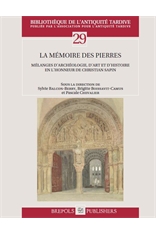
Directeur de recherche émérite au CNRS, Christian Sapin est un acteur essentiel de la recherche archéologique consacrée au Moyen Âge. Depuis plus de trente ans, ses travaux ont enrichi de façon considérable la connaissance des édifices religieux au travers d’études sur le bâti mêlant fouilles, analyse fine des élévations et de leurs décors, ainsi que les apports de l’archéométrie et des textes. Il a ainsi posé des jalons méthodologiques montrant la voie à de fructueuses recherches fondées sur le croisement d’analyses minutieuses et œuvrant au décloisonnement disciplinaire. Ses recherches concernent en premier lieu la Bourgogne, mais il a également étendu son expertise à bien d’autres régions, et même à d’autres pays. Sa conviction intime dans le bien-fondé d’une approche globale du monument l’a conduit à développer tout un réseau de relations à l’échelle européenne, socle du rayonnement de ses travaux et de son action humaniste de passeur des savoirs. Les contributions de la trentaine de collègues qui sont réunies dans ce livre témoignent de leur amitié et bien souvent de leur dette à son égard.

dIS-9782503553344-1

Table des matières : ici

Informations pratiques :
La mémoire des pierres. Mélanges d’archéologie, d’art et d’histoire en l’honneur de Christian Sapin, éd. S. Balcon-Berry, B. Boissavit-Camus, P. Chevalier, Turnhout, Brepols, 2016 (Bibliothèque de l’Antiquité Tardive, 29). 392 p., 73 b/w ill. + 235 colour ill., 1 b/w tables, 216 x 280 mm. ISBN: 978-2-503-55334-4. Prix : 80 euros.

Source : Brepols

Publié dans Publications | Laisser un commentaire

Journée d’étude – Belgian numismatics in perspective

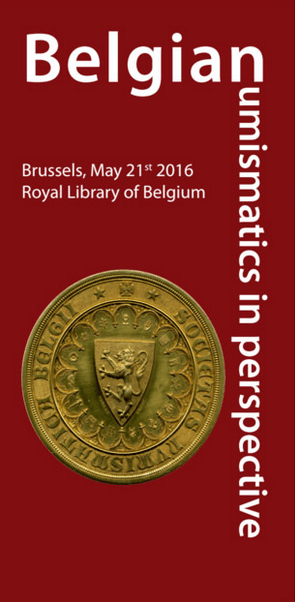
Founded in 1841, the Royal Numismatic Society of Belgium celebrates 175 years of its existence in 2016. To mark the event, a conference entitled “Belgian numismatics in perspective” will be held on Saturday, May 21st, 2016 at the Royal Library of Belgium (Brussels). Sketching the outlines of numismatic studies and their developments in Belgium from the 16th century till today, this conference will be concluded with an anniversary reception (only on registration).

Fondée en 1841, la Société royale de Numismatique de Belgique célèbre les 175 ans de son existence en 2016. Pour marquer l’événement, un colloque intitulé « Belgian numismatics in perspective » sera organisé le samedi 21 mai 2016 à la Bibliothèque royale de Belgique (Bruxelles). Esquissant les contours des études numismatiques et de leurs développements en Belgique depuis le XVIe siècle jusqu’à nos jours, cette journée d’étude se clôturera par une réception d’anniversaire (sur inscription).

Opgericht in 1841, viert het Koninklijk Belgisch Genootschap voor Numismatiek in 2016 zijn 175ste verjaardag. Ter gelegenheid hiervan zal een symposium getiteld “Belgian numismatics in perspective” worden georganiseerd op zaterdag 21 mei 2016 in de Koninklijke Bibliotheek van België (Brussel). Na een schets van de numismatische studies en hun ontwikkelingen in België vanaf de 16de eeuw tot nu, zal deze studiedag afsluiten met een verjaardagsreceptie (inschrijving verplicht).

Belgian Numismatics in Perspective

Programme :

09:30-10am Welcome

10-10:30am Welcome address by Patrick Lefèvre, Director general of the Royal Library of Belgium

Introduction by Johan van Heesch, President of the Royal Numismatic Society of Belgium

10:30-11am Inaugural Conference by Peter Spufford : Philip Grierson among Belgian Historians and Numismatists
11-11:15am Coffee break

11:15-11:45am François de Callataÿ : Belgian numismatics from the 16th to the 18th c. A general sketch with a special focus on private correspondences
11:45-12:15pm Johan van Heesch : Coin Collecting in Belgium since 1800: Coin dealers and Auction Houses
12:15-12:45pm Liesbeth Claes : Docendo discimus: het onderwijs in de numismatiek in België
12:45-2pm Lunch break

2-2:30pm Cécile Arnould : Les études numismatiques au coeur des premières sociétés archéologiques belges au XIXe siècle
2:30-3pm Hugo Vanhoudt : Numismatische genootschappen in België, 19de-21ste eeuw
3-3:15pm Coffee break

3:15-3:45pm Jean-Marc Doyen : Numismatique et archéologie : approche bibliométrique des apports de la Revue belge de Numismatique (1842-2015)
3:45-4:15pm Stefan De Lombaert : De Belgische penningproducenten, 19de-21ste eeuw

Informations pratiques :

The conference will be held in the Royal Sky Room, at the 6th floor of the Royal Library of Belgium Royal Library of Belgium

Bibliothèque royale de Belgique Koninklijke Bibliotheek van België
2, Keizerslaan / Boulevard de l’Empereur
B-1000 Brussels

Free admission on registration: cecile.arnould@mnha.etat.lu

The Royal Numismatic Society of Belgium invites you to celebrate its 175 years during a gala dinner which will be held at the Fondation Universitaire/Universitaire Stichting (11, Rue d’Egmont/Egmont- straat – 1000 Brussels; Room Félicien Cattier) from 6pm only on registration (cecile.arnould@mnha.etat.lu). The dinner fee is 40 euro/guest. Please register and pay your dinner fee by Friday, 6th May 2016 by bank transfer.

Account name:
Koninklijk Belgisch Genootschap voor Numismatiek/Société Royale de Numismatique de Belgique
N° IBAN : BE07 3100 9200 2566
BIC Code : BBRU BE BB

Source : Société royale de Numismatique

Publié dans Colloque | Laisser un commentaire

Journée d’étude – Journée Serge Lusignan

Quatrième journée du LAMOP
Organisée par le Laboratoire de Médiévistique Occidentale de Paris
Mercredi 18 mai 2016, 10H00-17H00

Salle Marc Bloch
Centre Sorbonne
17 rue de la Sorbonne, 75005 Paris

En raison des difficultés d’accès récurrentes à la Sorbonne depuis les attentats, prière à toute personne intéressée ne disposant pas d’un accès facilité (carte d’étudiant, professionnelle, etc…) de contacter benoit.grevin@orange.fr, et dans tous les cas de se munir d’une pièce d’identité et du programme ci-joint.

Depuis de nombreuses années, Serge Lusignan est sans doute l’historien médiéviste canadien le plus connu en France. Professeur à l’université de Montréal de 1972 à 2008, membre de la Société Royale du Canada de 1989 à 2006, il a entre autres distinctions reçu la bourse Killam du Conseil des arts du Canada pour la période 2002-2004 (la bourse Killam, attribuée chaque année à un nombre réduit de personnalités scientifiques canadiennes, toutes disciplines confondues, distingue une recherche de qualité exceptionnelle au moyen d’un financement important et d’une double année sabbatique).

Serge Lusignan n’est pas seulement un historien qui a bâti une œuvre importante en abordant de nombreuses questions touchant à la culture médiévale, entendue dans son sens le plus large : cultures textuelles et linguistiques bien sûr, de l’encyclopédisme au choix des langues et à la formularisation, mais aussi cultures institutionnelles du monde universitaire, des milieux urbains, cultures pratiques des métiers. C’est surtout un chercheur qui a construit une méthode originale, une méthode cherchant à ancrer un questionnement sur le choix de la langue, en particulier, du français, comme moyen d’expression des sociétés médiévales, dans la pratique historique. C’est sans doute l’aspect le plus connu de son œuvre d’avoir, de Parler vulgairement. Les intellectuels et la langue française aux XIIIe et XIVe siècles (première éd. 1986) jusqu’à l’Essai d’histoire sociolinguistique. Le français picard au Moyen Âge (2012), en passant par le fameux La langue des rois au Moyen Âge (2004), élaboré une véritable méthode pour aborder l’étude des choix linguistiques des sociétés médiévales, une méthode qu’il prend soin de définir comme « histoire sociolinguistique », en la distinguant de la plus classique « sociolinguistique historique ».

En quoi le fait d’être né au Québec au mitan du XXe siècle, dans une société où le français tenait une place différente de celle qui était la sienne dans la France d’alors, a-t-il conditionné cette approche ? Quel regard un historien canadien porte-t-il sur l’histoire médiévale ? Quelles possibilités pour une nouvelle histoire sociale et culturelle, tentant de dépasser les clivages disciplinaires, au vingtième-et-unième siècle ? Autant de questions que la présentation et la discussion en sa compagnie de l’oeuvre accomplie et en cours de Serge Lusignan permettront d’aborder, en dialogue avec les recherches des étudiants du Laboratoire de Médiévistique Occidentale de Paris.
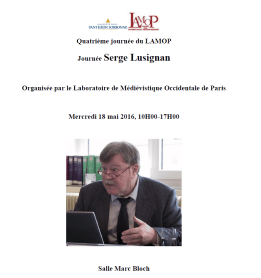
Serge Lusignan

Programme :

Matinée, 10h00-12h00 :

Benoît Grévin : accueil
Serge Lusignan : « L’histoire sociolinguistique. Itinéraire d’un historien et genèse d’une méthode »

Après-midi, 14h00-17H00 :

Présentation-discussion du travail de quatre doctorants du laboratoire, dialogue avec Serge Lusignan

Mélissa Barry : « Langues des sources et langues de l’Autre : la langue comme élément identitaire dans l’Angleterre de la fin du Moyen Age (XIIIe-XVe siècles) »
Evgeniya Shelina, « Comparer le comparable et l’incomparable. Les champs sémantiques du pouvoir dans le latin et les langues vernaculaires du XIIIe siècle »
Cécile Sabathier, « La gestion des travaux publics dans le Midi Toulousain aux XIVe et XVe siècles : la figure de l’artisan qualifié et de l’expert »
Marie-Emeline Sterlin, « ‘D’icelles lettres aux gens lais avoir plus clere congnoissance’. Cartularisation et traduction dans le Livre Blanc d’Abbeville (XIIIe-XVe siècles) ».

Source : LAMOP

Publié dans Colloque | Laisser un commentaire

Appel à contribution – Relics at the lab

27 & 28 October 2016 – Brussels

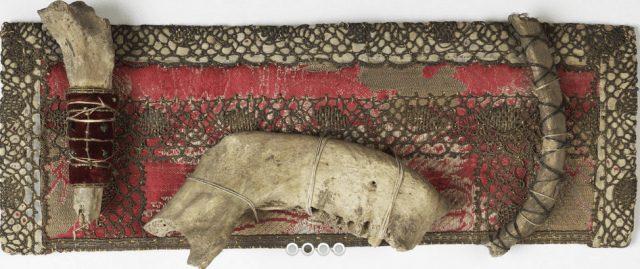
Over the past decade the scientific interest in relics and kindred artefacts has grown enormously. Without any doubt relics as well as relic shrines and associated objects have played a prominent role in European history since the introduction of Christianity. While in the past primary, secondary as well as tertiary relics were merely studied in relation to their religious and (art) historical background, recently the rise of a more scientific and archaeological approach is noticed. Nowadays researchers become more interested in the origin and nature of these sacred objects and ask different questions:
  • What information can relics give us about the people buried in the shrines? Who were these people? What do we know about the way they lived? When did they live? What about diseases and other disabilities?
  • What information can be retrieved from the objects kept with the relics and made of textile, wood, stone or metal. What was their purpose? Are they contemporaneous to the relic or are they older or younger additions? Why would they have been added? How should we preserve them?

Relics at the Lab

Scientists of many different disciplines are involved in the study of relics and kindred artefacts, but till now there was no real forum for these people to exchange ideas and discuss methods. Therefore the Royal Institute for Cultural Heritage (KIK-IRPA, Brussels) is organising a two-day workshop on the scientific study of relics.
During this meeting we want to give analytical scientists, textile specialists, conservators, anthropologists, historical researchers, people involved in 3D-reconstruction as well as radiocarbon dating specialists a forum to exchange ideas about relics.

We fully realize that, since no such meeting has ever taken place, the organisation of this symposium is a leap in the dark. We are however convinced of its necessity and cordially invite you to join us at the KIK-IRPA on 27-28 October 2016.

The registration fee is €75. This includes two lunches, coffee, tea and refreshments during the breaks and a book with the summaries of all the oral presentations and posters.

Proposals for oral and poster presentations will be accepted until 15 June 2016. The program sessions will be chosen based on the submitted summaries. Proposals should be sent to: relicsatthelab@kikirpa.be.

A book with all summaries will be given to the participants, which will contain the contributions/lectures/posters

The conference will be held in English, each lecture will be a maximum of 20 minutes.
By the 15th of August we will publish a list of presentations.
Poster size should have a heigth of 100cm and a width of 70cm.

For the online registration, payment and submission of abstracts (max. 2 pages), please use the following template.

Scientific committee

Mathieu Boudin, Royal Institute for Cultural Heritage
Anique de Kruijf, Museum Catharijneconvent Utrecht
Anton Ervynck, Flanders Heritage Agency
Georges Kazan, University of Oxford
Caroline Polet, Royal Belgian Institute of Natural Sciences
Jeroen Reyniers, Royal Institute for Cultural Heritage
Fanny Van Cleven, Royal Institute for Cultural Heritage
Mark Van Strydonck, Royal Institute for Cultural Heritage

Organising committee

Jeroen Reyniers, Royal Institute for Cultural Heritage, Documentation department
Mark Van Strydonck, Royal Institute for Cultural Heritage, Radiocarbon dating laboratory
Fanny Van Cleven, Royal Institute for Cultural Heritage, Textiles laboratory
Mathieu Boudin, Royal Institute for Cultural Heritage, Radiocarbon dating laboratory

Sourc : KIK-IRPA

Publié dans Appel à contributions | Laisser un commentaire

Publication – « Agrarian Technology in the Medieval Landscape », éd. J. Klapste

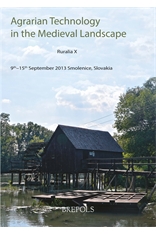
Ruralia X includes 27 papers dealing with agrarian technologies in the medieval landscape as seen in different European countries. The subject areas include cultivation, livestock husbandry, gardening, viticulture and woodland management – interpreting the concept of agrarian production in a broad sense – studied mainly on the basis of archaeology, but also using iconography, documentary evidence and archaeo-environmental approaches.

Ruralia X, marks an important step on the way towards interpreting innovation, as well as understanding the varieties of agrarian activity from a Europe-wide perspective.

Authors from 14 countries provide a broad overview of the current issues, complemented by extensive bibliographies. Ruralia X represents one of the current fields of European archaeological research and offers a solid foundation for further comparative studies.

r5z21iil

Table des matières :

Alan Aberg – Ruralia – a retrospect: 1994–2014

Stephen Moorhouse – James Bond – An approach to understanding medieval field systems across Europe: the structure and anatomy of township field systems
Stephen Moorhouse – Features within medieval township farming landscapes in Yorkshire and their function
James Bond – Continental plant introductions to medieval monastic gardens in Britain
Piers Dixon – Mukked and folded land: the evidence of field data for medieval cultivation techniques in Scotland
Alice Forward – John Hines – Cosmeston, South Wales: Conquest, colonisation and material culture change
Niall Brady – What the plough can reveal about the role of agrarian technology in the changing nature of early medieval Ireland
Ingvild Øye – Agrarian technology and land use in Scandinavian landscapes c. 800-1300 AD
Vibeke Vandrup Martens – North Norwegian farm mounds – economic resources and landscape conditions
Janicke Larsen – Archaeological investigations of an agrarian landscape in western Norway – the fjord farm Indre Matre
Catarina Karlsson – Increase in iron production – a prerequisite for change in the medieval landscape
Janken Myrdal – Alexandra Sapoznik – Spade cultivation and intensification of land use 1000–1300: written sources, archaeology and images
Lars Agersnap Larsen – The mouldboard plough in the Danish area 200-1500 AD
Peter Steen Henriksen – Norse agriculture in Greenland? Farming in a remote medieval landscape
Johan P. W. Verspay – Structuring landscape, shaping community
Hans Renes – Landscape history and archaeology of open fields in Europe
Philippe Mignot – Nicolas Schroeder – Agrarian practices and landscape in the estate of Wellin (Belgium) from the Early Middle Ages to the Modern Period: Archaeology and History
Nicolas Poirier – Archaeological evidence for agrarian manuring: Studying the time-space dynamics of agricultural areas with surface-collected off-site material
Margarita Fernández Mier – Pablo Alonso González – Medieval north-west Spain: What can agrarian archaeology tell us about living rural landscapes?
Josep Torró – Agricultural drainage technology in medieval Mediterranean Iberia (13th–16th centuries)
Paolo de Vingo – The material culture and agricultural traditions in the early medieval eastern Merovingian areas: a new study proposal
Rainer Schreg – Mittelalterliche Feldstrukturen in deutschen Mittelgebirgslandschaften – Forschungsfragen, Methoden und Herausforderungen für Archäologie und Geographie
Iris Nießen – Perspectives of the analysis of toponyms in the framework of settlement and environmental archaeology. Methods and research practice at the Stubersheimer Alb (Swabian Alb, Southern Germany)
Miklós Takács – The archaeological investigation of medieval agrarian tools and techniques in Hungary – an overview of some rarely quoted analyses
Szabina Merva – Potential husbandry strategies in 10th-century settlements in the Carpathian Basin. A case study: Two early medieval sites along the River Danube
Rozália Bajkai – On the agrarian technology of the Avar Period in Hungary. Grinding stones and quern-stones from Hajdúnánás – Mácsi-dűlő
Zdeňka Měchurová – Das Bauernjahr vom Mittelalter zur Neuzeit – Feldarbeiten und Landwirtschaftsgeräte dem Kalender nach. Archäologische Funde aus mittelalterlichen Ortswüstungen im Vergleich mit bildlichen Quellen und ethnographischen Belegen

Informations pratiques :
J. Klapste (ed.), Agrarian Technology in the Medieval Landscape. Agrartechnik in mittelalterlichen Landschaften. Technologie agraire dans le paysage médiéval. 9th – 15th September 2013 Smolenice, Slovakia, Turnhout, Brepols, 2016 (Ruralia, 10). XVIII+448 p., 210 x 297 mm, 2016. ISBN: 978-2-503-55137-1. Prix : 90 euros.

Source : Brepols

Publié dans Publications | Laisser un commentaire

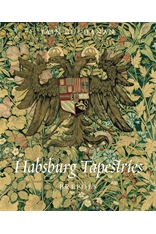
Publication – I. Buchanan, « Habsburg Tapestries »

This publication presents a descriptive catalogue of the Flemish tapestries collected by the Habsburg rulers of the Low Countries, that examines their historical and cultural context.

dIS-9782503516707-1

The Flemish tapestries collected by the Habsburg rulers of the Low Countries are among the most beautiful art works of the Renaissance period. This book places these important tapestries in their historical and cultural context. Part I of the book examines the relationship between the Habsburgs and the tapestry industry in the Low Countries, the roles of the artists who designed the tapestries, the weavers who made them, and of the tapissiers, the court officials who looked after the royal tapestry collections. This is followed by four chapters which document and survey the collections formed by the Habsburg rulers of the Low Countries: Margaret of Austria, the Emperor Charles V, Mary of Hungary and Philip II of Spain. Part II of the book is a detailed catalogue of thirteen of the most important surviving Habsburg sets. These include such important tapestries as the Honours, the Hunts of Maximilian, the Armorials of Charles V, the Seven Deadly Sins, the History of Vertumnus and Pomona and the Apocalypse. Every tapestry of each set is given detailed analysis and all are reproduced in full colour in over 100 colour plates. An extensive Appendix gives many of the original documents concerning the tapestries as well as the most important surviving Habsburg tapestry inventories from the period.

The author is a specialist in Northern Renaissance art who has published widely on the patronage and collecting of renaissance painting and tapestries.

Informations pratiques :
I. Buchanan, Habsburg Tapestries, Turnhout, Brepols, 2015 (Studies in Western Tapestry, 4). 374 p., 21 b/w ill. + 150 colour ill., 245 x 297 mm. ISBN: 978-2-503-51670-7. Prix : 150 euros.

Source : Brepols

Publié dans Publications | Laisser un commentaire

Journée d’étude – Histoire des femmes et du genre (Histoire médiévale et moderne)

Journée des Masterants (Master 2) et Doctorants
Organisée par Geneviève Bührer-Thierry (Paris 1), Didier Lett (Paris 7) et Sylvie Steinberg (EHESS)

9 mai 2016, 10 h-16 h
Salle Perroy (Sorbonne ; prendre Galerie Dumas et Escalier R)

Programme :

Matin

Serena Galasso (M2) (Mathieu Arnoux (EHESS), dir.), « Ces femmes qui comptent. Les livres de comptabilité privée des femmes Salviati (XVe-XVIe siècles) ».
Elodie Chaudet (M2) (Carole Avignon (Univ. d’Angers) dir) : « Femmes de pouvoir, femmes au pouvoir en Bretagne au XVème siècle »
Manon Demonfort (M2), (Geneviève Bührer-Thierry, Univ. Paris1, dir.) : « Les femmes dans les relations entre les royaumes anglo-saxons et le continent, de la fin du VIe siècle à la première moitié du XIe siècle »

Après-midi

Sarah Hanson (D) (Sharon Farmer, Univ de Santa Barbara, Californie, dir.), « Les femmes et le travail à Douai à la fin du Moyen Âge »
Marie Brassel (D) (Sophie Cassagnes-Brouquet, Univ. Toulouse le Mirail dir) : « Sicut Angelus domini. La déconstruction du genre en milieu monastique à la fin du Moyen Âge ».
Chloé Bonnet (D) et Sarah Maugin (M2) (Claude Denjean, Univ. de Perpignan), dir.) « Les femmes des maîtres juifs à Perpignan au XVe siècle »
Aurore Arnault (M2), (Geneviève Bührer-Thierry, Univ. Paris1, dir.) : « La place des femmes scandinaves et islandaises dans l’économie du don entre le VIIIe et le XIIe siècle »

Source : LAMOP

Publié dans Colloque | Laisser un commentaire

Offre d’emploi – Lecturer in Latin and Palaeography (Teaching and Scholarship Focused)

University of Kent – School of History
Location: Canterbury

Salary: £32,600 to £46,414 per annum
Hours: Full Time
Contract Type: Contract / Temporary
Placed on: 15th April 2016
Closes: 16th May 2016
Job Ref: HUM0698

Do you have the ability to teach Latin and palaeography and the commitment to contribute to the work of our vibrant Centre for Medieval and Early Modern Studies?

In this teaching and scholarship focused lectureship role, you will teach and convene postgraduate modules in Latin in collaboration with colleagues in Classical and Archaeological Studies, and in Palaeography, as well as input into curriculum development in these areas.

To succeed in this role, you will need:

  • A PhD or equivalent in a relevant discipline.
  • Sufficient breadth or depth of specialist knowledge in the discipline to develop teaching programmes and the provision of learning support.
  • The ability to teach a range of Latin and palaeography modules at undergraduate and postgraduate levels.
  • A willingness to contributing fully and flexibly to the community of the Centre.

This is a three year fixed term position, and a part-time contract of 0.65, amounting to 22.75 hours per week.

If you have the skills and experience we are looking for, this is a great opportunity to develop your career within a stimulating and supportive environment.

The University of Kent is one of the country’s leading academic institutions producing world-class research, rated internationally excellent and leading the way in many fields of study. It is among the best universities in the world according to the QS World Rankings 2015-16 and has been shortlisted for University of the Year by both the Times Higher Education (THE) Awards 2015 and the Times/Sunday Times Good University Guide 2016.

The Centre for Medieval and Early Modern Studies was founded in 1996 for the promotion and facilitation of research in the Medieval and Early Modern periods. Our 30+ teaching staff are drawn from English, History, Architecture, Classics and Archaeology, History and Philosophy of Art, and the Canterbury Archaeological Trust. They have a wide range of research interests, many of which cross traditional disciplinary boundaries.

Further Information

Interviews are to be held: 3 June 2016.

Please see the links on the vacancy page to view the full job description and also to apply for this post. If you require further information regarding the application process please contact Teresa Bubb, Resourcing Adviser, at T.C.Bubb@kent.ac.uk.

Please note – applications must be made via the University’s online application system. You will be required to fill in the main details section of the application form as well as upload your CV and a summary document. Your summary should provide clear evidence and examples demonstrating where you meet the essential criteria for the post. We recommend a maximum of 4 x A4 sides for this document.

CVs or details sent directly to the department or via email cannot be considered.

If you are invited for an interview, we will request references for you at that stage.

Source : jobs.ac.uk

Publié dans Offre d'emploi | Laisser un commentaire

Colloque – Pilgrimage, Shrines and Healing in Late Medieval and Early Modern Europe

A one day symposium at the University of Chester
24 June 2016

Chester

Programme :

09:00 Welcome & Coffee

09:15 Plenary I

Anthony Bale (Birkbeck): Pilgrimage and Collective Memory: The Flowery Field near Jerusalem
Chair: Dale Copley (Chester)

10:15 Panel 1: Pilgrims, Shrines and Materiality
Chair: Ruth Nugent (Chester)

Diane Heath (Canterbury Christ Church): Tokens of Affection? Pilgrim Tokens Sewn into a fifteenth-century French Horae
Sam Johnson (Birmingham City): ‘“He Who Would Valiant Be”: Exploring Pilgrimage and Hospitality in Early Modern Florence
Michael Tavinor (Hereford Cathedral): Shrines of the Saints: Annihilation at the Reformation?
11:30 Coffee

11:45 Panel 2: Pilgrimage and Healing in Early Modern Europe
Chair: Clare Hickman (Chester)

Annie Thwaite (Cambridge): Pilgrimage and Healing in Early Modern England
Kathryn Hurlock (MMU): ‘St Silin will cast a spell for you’: Local Pilgrimage and Healing in fifteenth and sixteenth-century North Wales and the March
Jenny Hillman (Chester): Healing Body and Soul: Spiritual Journeys in seventeenth-century France
13:00 Lunch

13:45 Panel 3: Devotion to the Saints: Pilgrimage and Gender
Chair: David Harry (Chester)

Ella Kilgallon (QMUL): The Pilgrimages of Angela of Foligno: The Road to Assisi
Einat Klafter (Geneva): Man as the Goal of Pilgrimage in the Book of Margery Kempe
Rose-Marie Peake (Helsinki): The Patroness of Paris and Moral Management: Saint Geneviève and the ideal semi-religious woman in seventeenth-century France
15:00 Tea

15:15 Panel 4: Spiritual Pilgrimage, Devotional Experiences & Agency
Chair: Patricia Murrieta-Flores (Chester)

Cynthia Neville (Dalhousie): Penitence, Reconciliation and Remission: The King’s Pardon in Thirteenth-Century Scotland
Matthew Coneys (Warwick): ‘Pensa bene, anima intellectiva’: Devotional Approaches to the Book of John Mandeville in fifteenth-century Italy
Alison Stedman (North Carolina): Pilgrimage and Individual Agency in seventeenth-century France

16:30 Plenary II

Elizabeth Tingle (DMU): Long-Distance Pilgrimage and the Counter Reformation in France: Sacred Journeys to the Mont Saint-Michel 1520 to 1750.
Chair: Jenny Hillman (Chester)

17:30 Discussion & Future Directions
18:00 Close
19:00 Dinner

Source : University of Chester

Publié dans Colloque | Laisser un commentaire

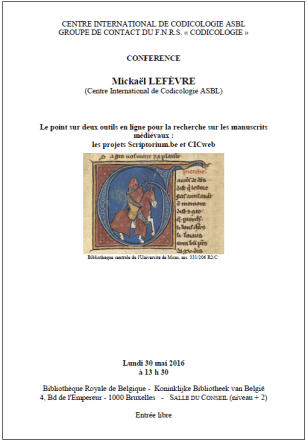
Conférence – Mickaël Lefèvre, « Le point sur deux outils en ligne pour la recherche sur les manuscrits médiévaux : les projets Scriptorium.be et CICweb »

Le lundi 30 mai 2016, M. Mickaël Lefèvre (Centre International de Codicologie ASBL) présentera une communication intitulée Le point sur deux outils en ligne pour la recherche sur les manuscrits médiévaux : les projets Scriptorium.be et CICweb dans le cadre des conférences organisées par le Centre International de Codicologie et le Groupe de contact F.R.S.-FNRS « Codicologie ».

CIC - Lefèvre

Informations pratiques :
Lundi 30 mai 2016
à 13 h 30
Bibliothèque Royale de Belgique – Koninklijke Bibliotheek van België
4, Bd de l’Empereur – 1000 Bruxelles – SALLE DU CONSEIL (niveau + 2)
Entrée libre

Illustration : Bibliothèque centrale de l’Université de Mons, ms. 331/206 R2/C

Publié dans Le réseau | Laisser un commentaire