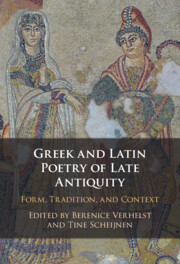
Publication – « Greek and Latin Poetry of Late Antiquity Form, Tradition, and Context », dir. Berenice Verhelst et Tine Scheijnen

Although Greek and Latin poetry from late antiquity each poses similar questions and problems, a real dialogue between scholars on both sides is even now conspicuously absent. A lack of evidence impedes discussion of whether there was direct interaction between the two language traditions. This volume, however, starts from the premise that direct interaction should never be a prerequisite for a meaningful comparative and contextualising analysis of both late antique poetic traditions. A team of leading and emerging scholars sheds new light on literary developments that can be or have been regarded as typical of the period and on the poetic and aesthetic ideals that affected individual works, which are both classicizing and ‘un-classical’ in similar and diverging ways. This innovative exploration of the possibilities created by a bilingual focus should stimulate further explorations in future research.

Table des matières :

Introduction. Walking the wire. Towards an inclusive approach to Latin and Greek late antique poetry Berenice Verhelst and Tine Scheijnen
Part I:

  1. Rivaling song-contests and alternative Typhonomachies in Ovid and Nonnus: revisiting the issue of Latin influence on Greek poetry in Late Antiquity Katerina Carvounis and Sophia Papaioannou
  2. Greek and Roman epigrammatists in the later imperial period: Ausonius and Palladas in dialogue with the classical past Silvio Bär
  3. Allusion and referentiality in late antique epic Calum Maciver
  4. Speaking from the margins: paratexts in Greek and Latin poetry Aaron Pelttari
    Part II:
  5. The implosion of poetic genre in Late Antiquity Helen Kaufmann
  6. Common texts, (un)common aesthetics: the Greek and Latin cento in dialogue Brian Sowers
  7. A ‘revival’ of the ‘epyllion’ as a ‘genre’? Genre awareness in short epic narrative from Late Antiquity Berenice Verhelst
    Part III:
  8. Saying the other. The poetics of personification in late antique epic Emma Greensmith
  9. Internal audiences in the New Testament epics of Juvencus and Nonnus Laura Miguélez-Cavero
  10. Colluthus and Dracontius: mythical traditions and innovations Marcelina Gilka
  11. Objects of the lusting gaze: viewing women as works of art in late antique poetry Sophie Schoess
  12. Metamorphosis and mutability in late antique epic Philip Hardie.

Informations pratiques :

Greek and Latin Poetry of Late Antiquity Form, Tradition, and Context, éd. Berenice Verhelst, Tine Scheijnen, Cambridge, Cambridge University Press, 2022 ; 1 vol., 300 p. ISBN : 978-1-31651-605- 8. Prix : GBP 75,00.

Source : Cambridge University Press

Publié dans Publications | Laisser un commentaire

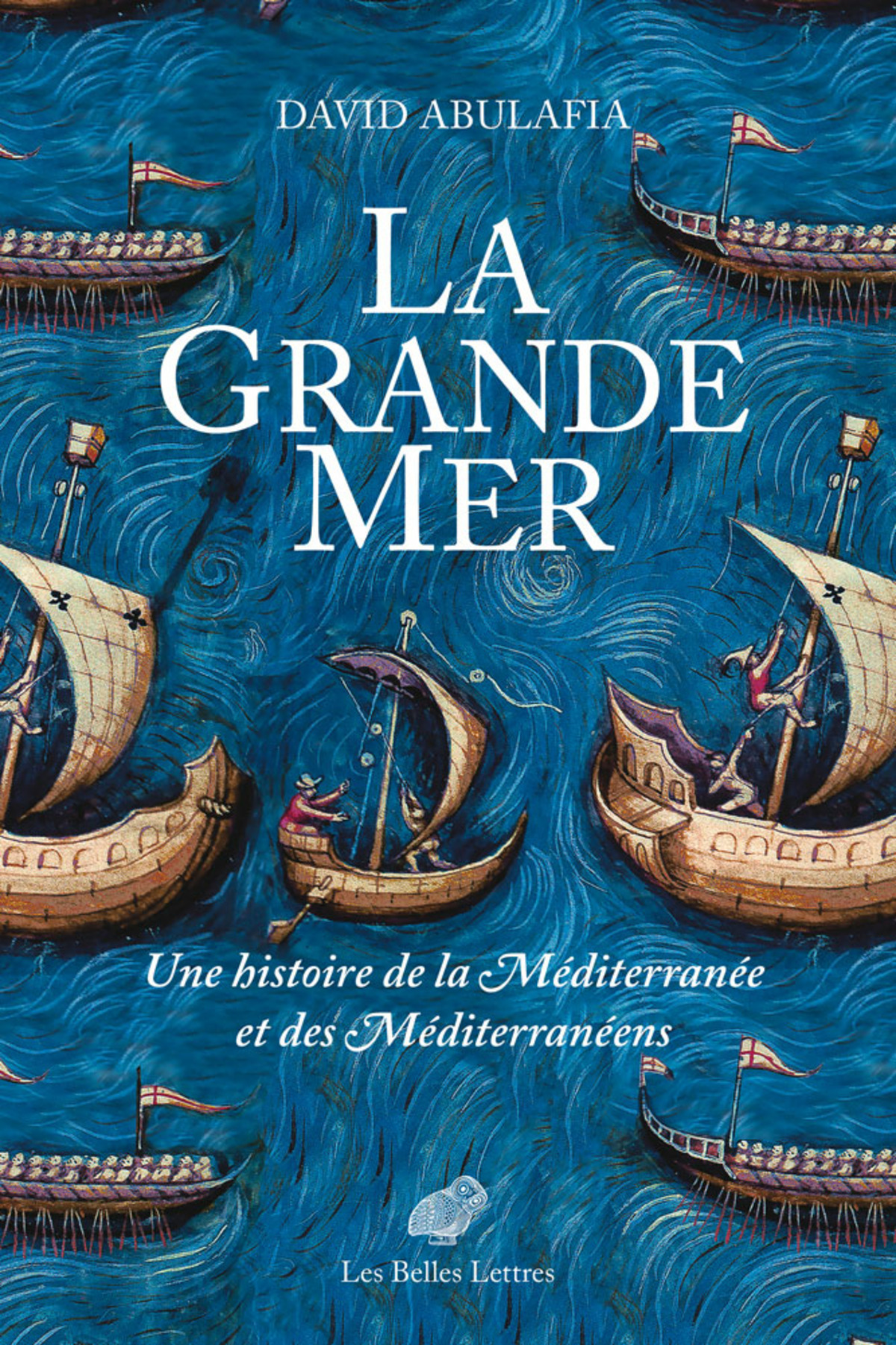
Publication – David Abulafia, « La Grande Mer. Une histoire de la Méditerranée et des Méditerranéens »

Pendant quelque trois mille ans, le bassin méditerranéen a été un foyer de civilisation de premier ordre. Il a exercé une influence majeure sur les affaires du monde.

David Abulafia retrace ici l’histoire d’une mer à hauteur d’homme, de la guerre de Troie à la piraterie, des batailles navales entre Carthage et Rome à la diaspora juive des mondes hellénistiques, de la montée de l’Islam aux Grands Tours du XIXe siècle jusqu’au tourisme de masse du XXe siècle.
Plutôt que d’imposer une unité artificielle à l’activité foisonnante qui se déroule à la surface de la « Grande Mer », David Abulafia insiste sur sa diversité, qu’elle soit ethnique, linguistique, religieuse ou politique.

Au cœur de sa thèse se trouve l’idée que la prospérité de cités maritimes telles qu’Alexandrie, Trieste, Salonique, Venise et beaucoup d’autres, a reposé pour une large part sur leur capacité à accueillir peuples, religions et identités et à leur permettre de coexister : la Méditerranée a incarné pendant des millénaires ce lieu exceptionnel où religions, économies et systèmes politiques se sont rencontrés, affrontés, influencés et finalement assimilés.

David Abulafia combine la recherche historique la plus exigeante avec le style enlevé du conteur. Son histoire de très longue durée a été unanimement saluée comme une splendide réussite.

Professeur émérite d’histoire méditerranéenne à l’université de Cambridge, David Abulafia en a présidé la faculté d’histoire. Son travail porte sur l’Espagne, l’Italie et la Méditerranée médiévales. La Grande mer. Une Histoire de la Méditerranée et des Méditerranéens a reçu le prix de la British Academy ainsi que le Mountbatten Maritime Award.

Table des matières :

Préface 

Introduction. La mer aux cent noms 


Partie I. La première Méditerranée, 22000‑1000 av. J.-C.
1. Isolement et insularité, 22000‑3000 av. J.-C. 
2. Cuivre et bronze, 3000‑1500 av. J.-C. 
3. Marchands et héros, 1500‑1250 av. J.-C. 
4. Peuples de la mer et Peuples de la terre, 1250‑1100 av. J.-C. 
 

Partie II. La deuxième Méditerranée, 1000 av. J.-C.-600 apr. J.-C.
5. Marchands de pourpre, 1000‑700 av. J.-C. 
6. Descendants d’Ulysse, 800‑550 av. J.-C. 
7. Le triomphe des Tyrrhéniens, 800‑400 av. J.-C. 
8. Vers le jardin des Hespérides, 1000‑400 av. J.-C. 
9. Thalassocraties, 550‑400 av. J.-C. 
10. Le phare de la Méditerranée, 350‑100 av. J.-C. 
11. « Il faut détruire Carthage », 400‑146 av. J.-C. 
12. « Mare Nostrum », 146 av. J.-C.-150 apr. J.-C. 
13. Anciennes et nouvelles croyances, 1‑450 
14. Désintégration, 400‑600 


Partie III. La troisième Méditerranée, 600‑1350
15. Fosses méditerranéennes, 600‑900 
16. Par-delà les frontières de la chrétienté et de l’islam, 900‑1050 
17. Bouleversements dans la Grande Mer, 1000‑1100 
18. « Le profit que Dieu voudra accorder », 1100‑1200 
19. Les routes de la mer, 1160‑1185 
20. Mort et renaissance des empires, 1130‑1260 
21. Marchands, mercenaires et missionnaires, 1220‑1300 
22. « Serrata », le grand verrouillage, 1291‑1350 


Partie IV. La quatrième Méditerranée, 1350‑1830
23. Empereurs romains en herbe, 1350‑1480 
24. À l’Ouest, du nouveau, 1391‑1500 
25. Saintes ligues et alliances inavouables, 1500‑1550 
26. « Akdeniz », la bataille de la mer Blanche, 1550‑1571 
27. Intrusions en Méditerranée, 1571‑1650 
28. Les diasporas aux abois, 1560‑1700 
29. Encouragements à d’autres, 1650‑1780 
30. À travers le prisme russe, 1760‑1805 
31. Deys, beys et pachas, 1800‑1830 


Partie V. La cinquième Méditerranée, 1830‑2014
32. Et toujours ils se rencontreront, 1830‑1900 
33. Grecs et non-Grecs, 1830‑1920 
34. Fin de partie ottomane, 1900‑1918 
35. Un conte des quatre villes et demie, 1900‑1950 
36. « Mare Nostrum », le retour, 1918‑1945 
37. Une mer fragmentée, 1945‑1990 
38. La Dernière Méditerranée, 1950‑2014 


Conclusion. La traversée 

Notes 
Sources citées 
Table des illustrations 
Index 

Informations pratiques :

David Abulafia, La Grande Mer. Une histoire de la Méditerranée et des Méditerranéens, Paris, Les Belles Lettres, 2022 ; 1 vol., XXIV–744 pages. ISBN : 978-2-25145-306-4. Prix : € 35,00.

Source : Les Belles Lettres

Publié dans Publications | Laisser un commentaire

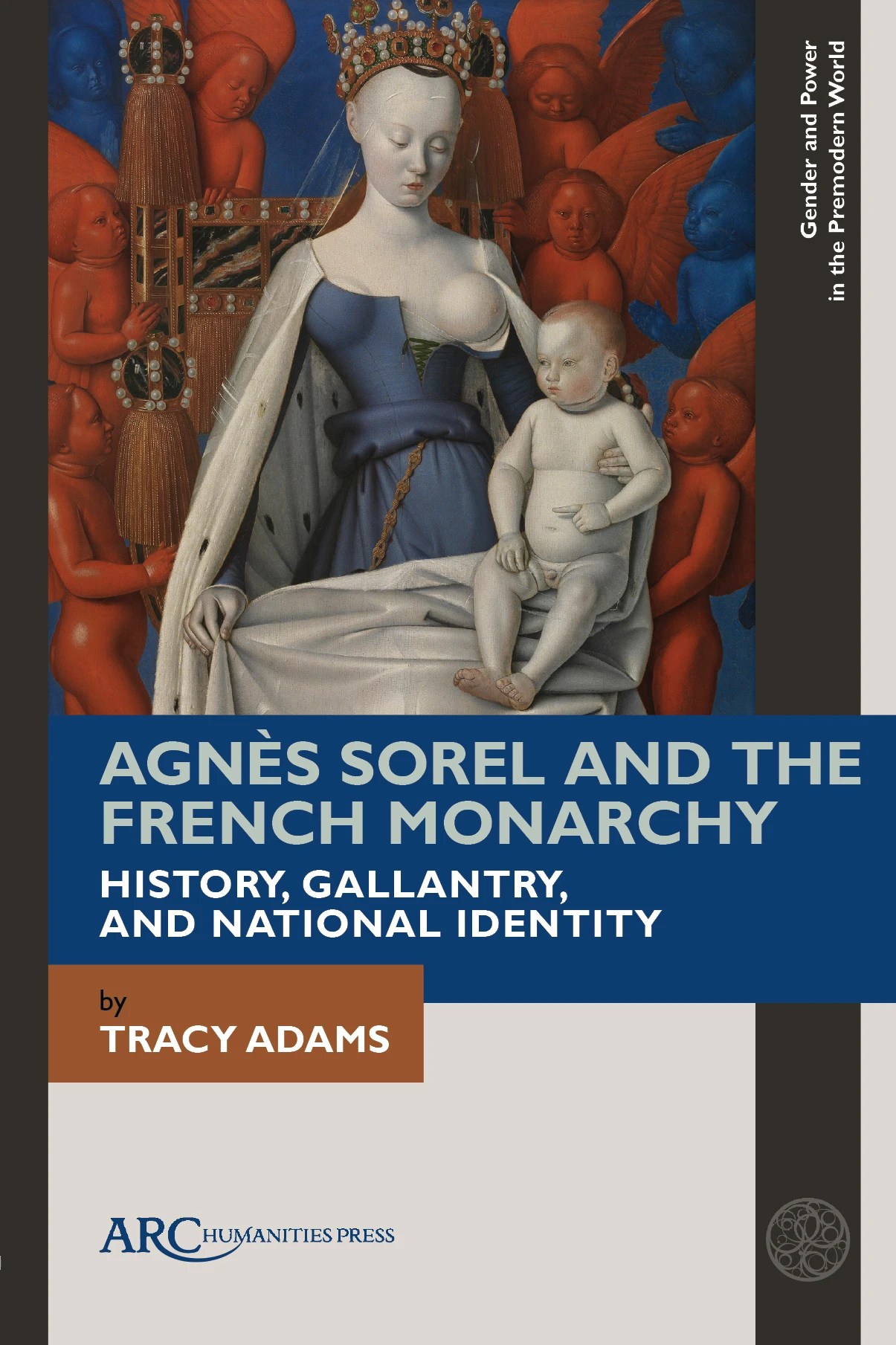
Publication – Tracy Adams, « Agnès Sorel and the French Monarchy. History, Gallantry, and National Identity »

Agnès Sorel (1428–1450), beautiful favourite of Charles VII of France and first in the long genealogy of French royal mistresses, was mysteriously poisoned in the prime of life. Agnès, part of a network of royal « favourites, » is equally interesting for her political activity. And yet, no scholarly study in English of her exists. This study brings her story to an English-speaking audience, examining her in her historical context, that is, the factional struggle for power waged against Charles VII by the dauphin Louis and the king’s final routing of the English. It then traces Agnès’s afterlife, exploring her roles as founding mother of the tradition of the French royal mistress and foil for the less popular holders of the « office »; as erotic fantasy figure for nineteenth-century historians « re-inventing » the Middle Ages; and, most recently, as poignant victim for fans of the true crime genre.

Tracy Adams is Professor in European Languages and Literatures at the University of Auckland, New Zealand. She is the author of Violent Passions: Managing Love in the Old French Verse Romance(2005), The Life and Afterlife of Isabeau of Bavaria (2010), Christine de Pizan and the Fight for France (2014), and co-author with Christine Adams of The Creation of the French Royal Mistress: From Agnès Sorel to Madame Du Barry (2020).

Informations pratiques :

Tracy Adams, Agnès Sorel and the French Monarchy. History, Gallantry, and National Identity, Leeds, ARC Humanities Press, 2022 ; 1 vol., 172 p. (Gender and Power in the Premodern World – ARC). ISBN : 978-1-64189-352-7. Prix : € 92,00.

Source : ARC Humanities Press

Publié dans Publications | Laisser un commentaire

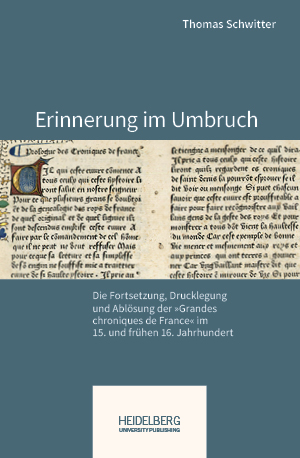
Publication – Thomas Schwitter,  » Erinnerung im Umbruch. Die Fortsetzung, Drucklegung und Ablösung der »Grandes chroniques de France« im 15. und frühen 16. Jahrhundert »

Accès en ligne : ici

Die Studie zeichnet die Entwicklung der herrschaftsnahen Historiografie Frankreichs im 15. und frühen 16. Jahrhundert nach. Im Fokus steht dabei in den zwei ersten Teilen die Fortsetzung und Drucklegungen der »Grandes Chroniques« im 15. Jahrhundert bis hin zur Ablösung dieses Leittextes durch die neuen, humanistisch geprägten Werke von Robert Gaguin und Paulus Aemilius. Dazwischen werden zahlreiche Entwicklungsstufen rekonstruiert und auch bislang kaum untersuchte Werke thematisiert. Das Hauptthema der französischen Historiografie war in jener Zeit lange die damals jüngere Vergangenheit, das heißt der französische Bürgerkrieg (1407–1435) und der damit verbundene Konflikt mit den englischen Königen. Das Ringen verschiedener Parteien um die Deutungshoheit über jene Jahrzehnte prägte deshalb die Entwicklung der französischen Historiografie im 15. und frühen 16. Jahrhundert maßgeblich, was im dritten Teil der Arbeit untersucht wird.

Thomas Schwitter (*1983) studierte in Bern und Paris Geschichte, Kunstgeschichte und Philosophie. Mit der vorliegenden Arbeit hat er 2015 an der Universität Bern promoviert. Er unterrichtet Geschichte und Politik am Gymnasium Hofwil (CH) und ist auch als Schulbuchautor tätig. Sein Forschungsschwerpunkt ist die französische Historiografie des 15. und frühen 16. Jahrhunderts.

Informations pratiques :

Thomas Schwitter, Erinnerung im Umbruch. Die Fortsetzung, Drucklegung und Ablösung der Grandes chroniques de France im 15. und frühen 16. Jahrhundert, Heidelberg, Heidelberg University Publishing, 2022 ; 1 vol., 334 p. (Pariser Historische Studien). ISBN : ‎ 978-3968220925. Prix : € 49,90.

Source : Heidelberg University Publishing

Publié dans Publications | Laisser un commentaire

Séminaire – Les Ymagiers, 2022-2023

Fondé en 1972 à l’initiative du Père dominicain Philippe-Martin Hubert (1908-1976), le groupe des « Ymagiers » se proposait à l’origine de réunir « de temps à autre » les quelques chercheurs qui, au CNRS, à l’Université et dans les métiers de la conservation, s’intéressaient à « l’étude des documents non écrits ».

D’abord « amicales et informelles », ces réunions prirent un tour plus institutionnel à partir de 1976, lorsqu’elles bénéficièrent de l’hospitalité de l’IRHT. Sous l’impulsion de Gaston Duchet-Suchaux puis de Michel Pastoureau, elles se spécialisèrent dans les questions d’iconographie médiévale et contribuèrent à mieux faire connaître cette discipline. À partir de 1999, une nouvelle équipe, animée par Claudia Rabel et Patricia Stirnemann, ouvrit plus largement les séances, notamment vers le public étudiant, et leur donna une assise et une périodicité plus stables. Désormais les « Ymagiers » se réunissent cinq fois par an, d’octobre à juin, à l’École du Louvre, amphithéâtre Dürer (Palais du Louvre, place du Carroussel, porte Jaujard, 75001 Paris), pour entendre un orateur parler de ses recherches récentes ou en cours. L’exposé est suivi d’une discussion générale.

Les séances ont lieu le lundi à 17h30 à l’École du Louvre – Amphithéâtre Dürer et durent environ deux heures ; elles réunissent de trente à cinquante personnes.

Programme 2022-2023 :

10 octobre 2022
Laurence Terrier Aliferis
« Les bénéfices de l’étude de particularités iconographiques: l’exemple de la Fuite en Égypte »

5 décembre 2022
« 5, 10, 50… et plus encore : séance surprise pour le 50e anniversaire des Ymagiers »

13 févier 2023
Marion Maine
« La représentation de l’Arche d’Alliance à la fin du Moyen Âge »

17 avril 2023
Olga Vassilieva-Codognet
« L’iconographie de la Fortune dans l’enluminure médiévale »

12 juin 2023
Stéphane Lecouteux
« Les apports des analyses physico-chimiques à la connaissance du manuscrit 50 d’Avranches, provenant du Mont Saint-Michel (Blois-Orléans, vers 1020) »

Publié dans Séminaire | Laisser un commentaire

Colloque (en ligne) – Monumental Medievalism: Public Monuments and the (Mis)Use of the Medieval Past

Swansea
05.10.2022 – 06.10.2022
FREE REGISTRATION VIA EVENTBRITE HERE: https://www.eventbrite.co.uk/e/monumental-medievalism-public-monuments-the-misuse-of-the-medieval-past-tickets-385605214577?keep_tld=1

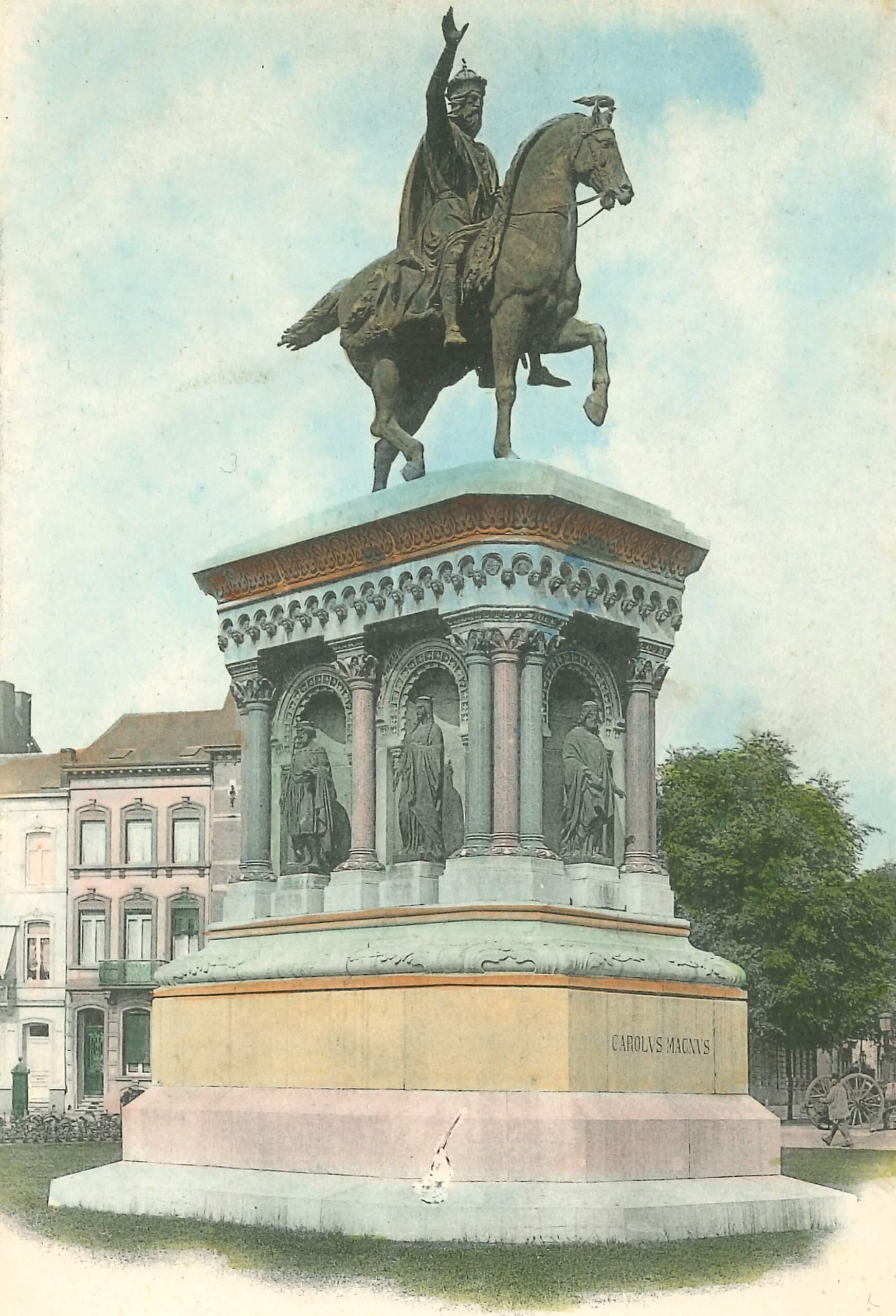
In the summer of 2020, one of several dozen protests organised throughout the world in response to the murder of George Floyd in Minneapolis (USA) culminated in the statue of the slave trader Edward Colston being dumped into the water of Bristol Harbour (England). The ripples were felt across the globe. In the ensuing days, weeks and months, scores of other monuments depicting historical figures were variously defaced, toppled, removed from view, or placed under new scrutiny. Many of these had played prominent roles in the slave trade and/or in European colonialism. Some of these monuments were of medieval figures, while others were evocative – to varying degrees of credibility – of the (faux-)chivalric codes and rose-tinted regalia of the medieval past. Of course, to medievalists, the convergence of civic and civil statuary with protest and activism was nothing new. In fact – from the damnatio memoriae of later Roman Emperors to Saints Florus and Laurus smashing statues in Kosovo; Byzantine Eikonomachía; Aniconism in medieval Islam; the Huichang Persecution of Buddhist images; the Ghaznavid plundering of Mathura and Somnath; the Khmer intolerance of Jayavarman monuments in Angkor; the Strigólnik stripping of Pskov and Novgorod; and the First and Second Suppression Acts of the 1530s – many of its roots actually lie in the medieval world. What use then, or advantage, might the study of the Middle Ages hold in evaluating these modern political struggles? This workshop will address precisely this question.

The workshop has three aims. Firstly, it will explore examples of statues, monuments and related forms of public sculpture which speak to the ongoing making and unmaking of medieval figures, images and histories: what we term “Monumental Medievalism”. Secondly, in addition to considering the “when”, “how” and “why” of monuments’ original production, it will interrogate the varied and often contested meanings that monuments later acquired over time. Of special interest, moreover, will be papers that address not only the use but the misuse of the Middle Ages, in connection to questions of local identity, gender, sexuality, race, religion and/or marginalisation. Thirdly, it will take the measure of nostalgia for the Middle Ages in the twenty-first century, asking questions of appropriation, anachronism, authenticity, nationalism and reflecting upon the possibilities and pitfalls of conscripting medieval images to serve as contemporary cultural conduits.

Programme :

Wednesday 5 October

12:45–13:00
Welcome
Euan McCartney Robson and Simon John

13:00–14:45
Session 1: Monumental Medievalism in Modern Japan
Chair: Simon John, Swansea University, UK

Sven Saaler (Sophia University, Japan): The medieval roots of imperial loyalty: the cult of Kusunoki Masashige in modern Japan

Judith Vitale (University of Zurich, Switzerland): The “Movement for the Establishment of a Monument for the Mongol invasions”

Ran Zwigenberg (Pennsylvania State University, USA): Date Masamune: In (and off) the Saddle of History on Japan’s Periphery

Oleg Benesch (University of York, UK), A Japanese Monument to Global Medievalism: The Origins of the Yasukuni Shrine Yushukan Military Museum

14:45–15:15 BREAK

15:15–16:15
Session 2: Encountering the Middle Ages through Monuments: approaches and debates
Chair: Euan McCartney Robson, Paul Mellon Centre, UK

Laura S. Harrison (Independent Scholar, UK) & Andrew B.R. Elliott (University of Lincoln, UK): “Set in Stone”: The Participatory Function of Medieval Statues

Sarah Gordon (Utah State University, USA): “Tear it Down”: Controversial Statues of Medieval Figures in the US (Joan of Arc and St. Louis)

16:15–17:15 BREAK

17:15–18:45
Session 3: Monuments and the Medieval Past in Ukraine and Russia
Chair: Leonie Exarchos, University of Mainz, Germany

Emma Louise Leahy (Independent Scholar, Germany): The Kyivan Rus’ as Origin Story in Soviet and National Historiographies: The Changing Meanings of Medieval Images in the Monumental Mosaic Art of Ukraine (1960s to 2010s)

Anastasija Ropa (Latvian Academy of Sport Education, Latvia), Edgar Rops (Independent Scholar, Latvia), and Maria Inês Bolinhas (Catholic University of Portugal): The Contested Statue of Knyaz Vladimir/Volodimir

Aleksandr Vitalievich Rusanov and Olga Alekseevna Makridina (both National Research University Higher School of Economics, Russia): Russian monumental medievalism: cases of Moscow and Ryazan

Thursday 6 October

12:00–13:30
Session 4: Monuments, Medieval History and Nation-Building
Chair: Christoph Laucht (Conflict, Reconstruction and Memory research group, Swansea University)

Anna Lidor-Osprian and Romedio Schmitz-Esser (both Heidelberg University, Germany): Between Medievalism and Baroque Maternalism: The Multifaceted Historical Monumentalism of nineteenth-century Austria

Len Scales (Durham University, UK): Unsettled Memories: Henry I (r. 919–936) in Quedlinburg

Tommaso Zerbi (Bibliotheca Hertziana, Max Planck Institute for Art History, Italy): A Tale of Two Monuments: Making, Remaking, and Unmaking the Myth of Amadeus VI of Savoy from the Nineteenth to the Twenty-First Century

13:30–14:00 BREAK

14:00–15:00
Session 5: National Histories and the (ab)uses of the Middle Ages
Chair: TBA

Gethin Matthews (Swansea University, UK): The use and abuse of the medieval past in Wales in the age of the Great War

Omer Merzić (Institute of Historical Research, UK): The use and misuse of medieval monuments in Bosnia and Herzegovina

15:00–15:30 BREAK

15:30–17:00
Session 6: Monumental Women
Chair: TBA

Julia Faiers (University of St Andrews, UK): The invention and reinvention of Clémence Isaure in modern Toulouse

Christopher Crocker (University of Manitoba, Canada): Ásmundur Sveinsson’s “The First White Mother in America”: Guðríðr Þorbjarnardóttir as a (white-) feminist icon

Caroline Bourne (University of Reading, UK): The Gwenllian Monument at Kidwelly: Issues of Gender and a Contested Landscape in Commemorating Medieval Welsh History

17:00–17:30 BREAK

17:30–19:00
Session 7: The Monumental Heritage of the Middle Ages
Chair: TBA

Teresa Soley (Columbia University, USA): Sculpting Portugal’s Golden Age: Tombs and the Image of the “Age of Discovery”

Jessica Barker (The Courtauld Institute, UK): Anachronic Empire: The Afterlives of the Padrões of Diogo Cão

Ethel Sara Wolper (University of New Hampshire, USA): Lessons from Mosul: ISIS, UNESCO, and the Spectacle of Definition

19:00 Concluding remarks

Publié dans Colloque | Laisser un commentaire

Publication – « Annales du Royaume des Francs », trad. sous la dir. de Michel Sot et Christiane Veyrard-Cosme

Pendant près d’un siècle, de 741 à 829, des auteurs proches des souverains carolingiens, Pépin III le Bref, Charlemagne et Louis le Pieux, ont écrit et réécrit, pour chaque année, des textes relatant les évènements qu’il leur paraissait important de confier à la mémoire. Ces Annales permettent de suivre comment Pépin, maire du Palais du dernier roi mérovingien, obtint la royauté des Francs en 751/754, comment son fils Charles put être reconnu et couronné empereur d’Occident en 800, fonction et dignité que son fils Louis exerça après sa mort en 814. 

Il s’agit donc d’une histoire officieuse, sinon officielle, du gouvernement et des efforts d’unification des pays francs, des luttes pour la soumission des peuples lombard, bavarois et saxon, des affrontements avec les Slaves et les Avars à l’est, avec les Scandinaves au nord et avec les Maures au sud, sans négliger les relations avec le pape de Rome, l’empereur de Byzance et le calife de Bagdad. Le tout inscrit dans une perspective d’histoire universelle chrétienne, scandée par le retour annuel des fêtes de Noël et de Pâques.

Les éditeurs ont distingué deux versions. D’abord une version brève couvrant les années de règne de Pépin III et de Charlemagne jusqu’en 801. Cette version brève a ensuite été réécrite et continuée en une version longue jusqu’à l’année 829. Ce sont ces deux versions des Annales du royaume des Francs qui sont ici présentées et traduites séparément dans les volumes I et II aux fins de comparaison.

Michel Sot, professeur émérite à Sorbonne Université, est spécialiste d’histoire culturelle et religieuse du Haut Moyen Âge, en particulier de l’écriture de l’histoire dans cette période.

Christiane Veyrard-Cosme, professeur de langue et littérature latines à l’Université Sorbonne Nouvelle, s’intéresse particulièrement à l’hagiographie et au genre épistolaire à l’époque carolingienne.

Table des matières :

Avant-propos 

Introduction générale aux Annales du royaume des Francs 
I. Les annales comme genre historiographique : tables pascales et écriture de l’histoire 
Annales mineures et annales majeures 

II. Les Annales du royaume des Francs : édition des Monumenta Germaniae Historica et enseignement des manuscrits 
Construction du texte : les cinq classes de manuscrits 

III. Critiques de l’édition des Monumenta Germaniae Historica 
Lire les Annales dans leur contexte codicologique 

IV. À la recherche d’une chronologie des rédactions et d’éventuels auteurs 
Les ARF de 741 à 788 
Les ARF de 789 à 801 
Les ARF de 801 à 829 
D’autres propositions de chronologie 
Le remaniement des ARF pour les années 741-801 

V. Le projet historiographique des Annales du royaume des Francs 

VI. Pour une approche littéraire des Annales du royaume des Francs (par Christiane Veyrard-Cosme) 
Procédés et enjeux de la réécriture dans l’écriture annalistique 
La mise en œuvre du récit annalistique 
Historiographie, discours épidictique et inflexion épique 
Un Miroir de l’art de bien gouverner 
Une écriture de circonstance pour un « effet-monde » 

VII. Partis pris de traduction 

VIII. Bibliographie sélective 
Éditions critiques 
Choix de traductions 
Travaux sur les Annales du royaume des Francs  
Éléments de bibliographie générale 

IX. Cartographie des lieux mentionnés 
– 1. Carte générale 
– 2. Sud-Ouest 
– 3. Centre 
– 4. Nord-Est 
– 5. Sud-Est 


Annales du royaume des Francs, version brève (741-801) 
Annales regni Francorum (AnnalesLaurissenses maiores) 
Annales du royaume des Francs (Annales majeures de Lorsch) 


Annales du royaume des Francs, version longue (741-829) 
Annales regni Francorum 
Annales qui dicuntur Einhardi 
Annales du royaume des Francs
Annales dites d’Éginhard 


Indices (pour les deux volumes)
Index des noms de lieux 
Index des noms de personnes 
Index des noms de peuples

Informations pratiques :

Annales du Royaume des Francs, trad. Michel Sot et Christiane Veyrard-Cosme, Paris, Les Belles Lettres, 2022 ; 1 vol., CIV + 354 pages (Classiques de l’histoire au Moyen Âge, 58). ISBN : 978-2-25145-313-2. Prix : € 45,50.

Source : Les Belles Lettres

Publié dans Publications | Laisser un commentaire

Publication – Marc Morris, « The Anglo-Saxons A History of the Beginnings of England »

Sixteen hundred years ago Britain left the Roman Empire and swiftly fell into ruin. Grand cities and luxurious villas were deserted and left to crumble, and civil society collapsed into chaos. Into this violent and unstable world came foreign invaders from across the sea, and established themselves as its new masters.

The Anglo-Saxons traces the turbulent history of these people across the next six centuries. It explains how their earliest rulers fought relentlessly against each other for glory and supremacy, and then were almost destroyed by the onslaught of the Vikings. It explores how they abandoned their old gods for Christianity, established hundreds of churches and created dazzlingly intricate works of art. It charts the revival of towns and trade, and the origins of a familiar landscape of shires, boroughs and bishoprics.

It is a tale of famous figures like King Offa, Alfred the Great and Edward the Confessor, but also features a host of lesser known characters – ambitious queens, revolutionary saints, intolerant monks and grasping nobles. Through their remarkable careers we see how a new society, a new culture and a single unified nation came into being.

Drawing on a vast range of original evidence – chronicles, letters, archaeology and artefacts – renowned historian Marc Morris illuminates a period of history that is only dimly understood, separates the truth from the legend, and tells the extraordinary story of how the foundations of England were laid.

Dr Marc Morris is a historian who specializes in the Middle Ages. He studied and taught at the universities of London and Oxford and is a Fellow of the Royal Historical Society. His other books include a bestselling history of the Norman Conquest and highly acclaimed biographies of King John and Edward I (A Great and Terrible King). He also presented the TV series Castle and wrote its accompanying book. He contributes regularly to other history programmes on radio and television and writes for numerous journals and magazines.

Informations pratiques :

Marc Morris, The Anglo-Saxons A History of the Beginnings of England, Londres, Penguin Books, 2022 ; 1 vol., 528 p. ISBN : 978-1-52915-698-0. Prix : GBP 9,49.

Source : Penguin Books

Publié dans Publications | Laisser un commentaire

Publication (en ligne) – La cartographie ecclésiastique. Héritage patrimonial et innovation géomatique

Face aux outils développés aujourd’hui par la géomatique, l’historien du religieux est invité à réviser ses modes de collecte, de documentation, de production, de visualisation et de diffusion des données historiques. Le chercheur ou la chercheuse s’appuie toujours sur les archives et les cartes patrimoniales, mais dispose de nouveaux outils pour les exploiter, les interroger, redessiner des circonscriptions territoriales disparues et matérialiser sur ces fonds des stratégies et des pratiques de maîtrise du territoire, traitant des données diverses ayant trait à l’histoire culturelle, politique ou religieuse. La construction de bases de données concourant à une représentation dans l’espace assistée par l’informatique ne va pas sans interroger l’élaboration de la stratégie de recherche. Les chercheurs doivent tout à la fois veiller à ne pas rompre le fil de la connaissance héritée et accepter une mutation professionnelle profonde, qui les place en situation d’apprentissage méthodologique et technique permanent. Ces évolutions s’accompagnent d’un mode de production et de diffusion ouvert, collectif et interactif. C’est la vocation première de cette publication que d’établir un état des lieux à partir d’études de cas et d’ouvrir des perspectives, s’agissant de pratiques associant exploitation des sources et systèmes d’information géographique.

Table des matières :

Informations pratiques :

La cartographie ecclésiastique. Héritage patrimonial et innovation géomatique, numéro spécial de siècles, t. 52, 2022 [en ligne]. ISSN : 2275-2129. URL : https://journals.openedition.org/siecles/

Source : siècles

Publié dans Publications, Web | Laisser un commentaire

Publication – « A Chivalric Life. The Book of the Deeds of Messire Jacques de Lalaing », trad. Rosalind Brown-Grant et Mario Damen

Jacques de Lalaing (c.1421-53) was undoubtedly the most famous knight at the court of the Burgundian duke, Philip the Good, one who was celebrated in his own lifetime for the dazzling feats of arms that he performed in jousts across Europe during the 1440s. Serving the duke first as a councillor and ambassador to launch a new crusade and then as a fearless military leader on a campaign to put down a revolt by the town of Ghent, Lalaing tragically met his death at the siege of Poeke at a relatively young age.

The chivalric biography of Lalaing, written in the early 1470s, offers an entertaining and informative account of the life of a late medieval knight. Drawing on a variety of sources, it was designed not only to commemorate Jacques’s deeds for posterity but also to encourage other young noblemen to imitate his shining example, with lavishly illuminated copies being made for members of his own family and other noble readers.

This first English translation of the text, accompanied by an introduction and extensive notes based on new research into both archival and literary sources, aims to offer the reader an in-depth portrayal of Lalaing in the context of the chivalric, dynastic and political culture of his day.

Rosalind Brown-Grant is Professor of Late Medieval French Literature at the University of Leeds.

Mario Damen is Senior Lecturer in Medieval History at the University of Amsterdam.

Table des matières :

Introduction
Note to the Translation
The Book of the Deeds of Messire Jacques de Lalaing
Bibliography
Index

Informations pratiques :

A Chivalric Life. The Book of the Deeds of Messire Jacques de Lalaing, trad. Rosalind Brown-Grant, Mario Damen, Woodbridge, The Boydell Press, 2022 ; 1 vol., 390 p. ISBN : 978-1-78327-721-6. Prix : GBP 75,00.

Source : Boydell Brewer

Publié dans Publications | Laisser un commentaire