Publication – Benoît de Sainte-Maure, « Three Anglo-Norman Kings: The Lives of William the Conqueror and Sons by Benoît de Sainte-Maure With an introduction and notes »

Best known as a Medieval French romance writer, Benoît de Sainte-Maure was the author of the pioneering and widely copied Roman de Troie, composed, it is thought, around 1165. This consisted of a 30,000-verse reworking, in twelfth-century terms, of Latin narratives purporting to describe the siege of Troy, enlivened by what the poet refers to as “bons dits” (apposite amplifications). All that is known of him, apart from what can be deduced from his two works, is that he was a learned monk from the region of Tours in North-West France. His reputation as a poet must have reached the ears of Henry II who, sometime in the 1170s, commissioned him to compose a verse history of the English king’s Norman ancestors. Benoît thus found himself successor to the Norman historiographer Wace whose vernacular French Roman de Rou, named after Normandy’s founder Rollo, was abandoned in favour of Benoît’s Histoire des ducs de Normandie.

In their quest to generate an ethnic identity for themselves, the Normans celebrated their expansionist activities in a corpus of historiographic texts in which the multi-authored and chameleon-like Gesta Normannorum Ducum claims pride of place. This and other histories, both vernacular and Latin, were what Benoît de Sainte-Maure adapted into his secular poetic narrative. One of the motivations behind Benoît’s royal patronage could have been to tie the Anglo-Norman aristocracy of late twelfth-century England into a cultural homeland from which they were growing increasingly remote. The sense of Norman history that Benoît imparts through his French verse was the one that Henry II and his Anglo-Norman contemporaries must have assimilated as part of their courtly entertainment.

Informations pratiques :

Benoît de Sainte-Maure, Three Anglo-Norman Kings: The Lives of William the Conqueror and Sons by Benoît de Sainte-Maure With an introduction and notes, Turnhout, Brepols, 2018 (Mediaeval Sources in Translation, 57). VIII+228 p., 150 x 230 mm. ISBN: 978-0-88844-307-6. Prix : 25 euros.

Source : Brepols

Publié dans Publications | Un commentaire

Publication – « Orson de Beauvais », trad. fr. Jean-Pierre Martin

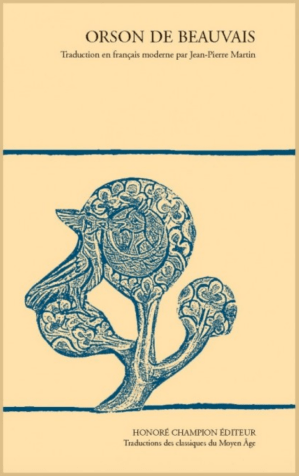
La chanson d’Orson de Beauvais, en reprenant à sa manière et dans une perspective thématique originale le sujet de la chanson anglo-normande de Beuve de Hamptone, célèbre les valeurs traditionnelles de l’autorité paternelle, du lignage et des liens féodaux, et les oppose aux dangers que représentent les menaces pesant sur la famille, composante essentielle de l’ordre social, lorsque le traître Hugues, parrain du jeune Milon, cherche à se débarrasser de l’enfant et de son père le duc Orson pour s’accaparer la duchesse Aceline et le fief de Beauvais. À peu près totalement exempte des motifs merveilleux qui émaillaient son modèle, elle se centre essentiellement sur les tribulations parallèles et complémentaires du père, de la mère et du fils, qui conduisent notamment ce dernier à combattre les Sarrasins en Orient tandis qu’Aceline, identifiée à la terre où elle est restée, y endure de multiples sévices à cause de sa fidélité. Tout en relatant le sort distinct de chacun des trois protagonistes, le texte ne perd jamais de vue les deux autres. Le résultat est une chanson apparemment conventionnelle par rapport à la tradition du genre, mais qui, dans un récit bien mené, propose quelques figures hautes en couleurs, au premier rang desquelles celle du traître.

Table des matières : ici

Capture d_écran 2018-09-02 à 18.50.33

Jean-Pierre Martin, professeur émérite de l’Université d’Artois, est un spécialiste de l’épopée, et plus particulièrement de la chanson de geste, genre auquel il a consacré plusieurs ouvrages, tant d’ordre théorique que philologique. Il a notamment édité la chanson d’Orson de Beauvais dans les Classiques français du Moyen Âge, et lui a consacré une étude littéraire, « Orson de Beauvais » et l’écriture épique à la fin du XIIe siècle, dans la Nouvelle Bibliothèque du Moyen Âge.

Informations pratiques :

Orson de Beauvais, trad. fr. Jean-Pierre Martin, Paris, Honoré Champion, 2018 (Classiques français du Moyen Âge – Traductions). 101. 11 X 17,5 cm, 234 pages. ISBN : 9782745348906. Prix : 22,50 euros.

Source : Honoré Champion

Publié dans Publications | Laisser un commentaire

Publication – « Die Briefe des Erzbischofs Hinkmar von Reims, Teil 2: 868–872 », éd. Rudolf Schieffer

Der VIII. Epistolae-Band, der insgesamt für die Edition der Briefe Erzbischof Hinkmars von Reims vorgesehen ist, begann 1939 mit einem ersten Faszikel zu erscheinen, der schon längere Zeit ausgedruckt war und in Erwartung einer baldigen Fortsetzung ohne Titelei und somit anonym herauskam. Dass er das Werk von Ernst Perels (1882–1945) war, der als „Halbjude“ 1935 seine Berliner Professur verloren hatte und Ende 1938 genötigt war, auch die Arbeit an der Hinkmar-Ausgabe offiziell niederzulegen, wurde schon in der nachträglichen Vorbemerkung zum Nachdruck des ersten Faszikels von 1975 hervorgehoben.

6697598cc0

Der nun vorliegende zweite Faszikel enthält die Briefnummern 207 bis 341, wobei für die Briefe bis Nr. 328 die Editionsmaterialien von Ernst Perels und Nelly Ertl genutzt wurden, die es zu überprüfen, zu ergänzen und zu aktualisieren galt. Für die in den Faszikel aufgenommen Nr. 329–341 aus dem Jahr 872 lagen hingegen keinerlei Vorarbeiten vor.

Im dritten Faszikel sollen in absehbarer Zeit die Briefe der Jahre 873 bis 882 vorgelegt werden, ferner die Einleitung zur Gesamtausgabe samt den erforderlichen Konkordanzen und Registern.

Informations pratiques :

Die Briefe des Erzbischofs Hinkmar von Reims, Teil 2: 868–872, éd. Rudolf Schieffer, Wiesbaden, Harrassowitz Verlag, 2018 (Epistolae 8,2). VIII und 236 S. (S. 229–464). 4°. ISBN 978-3-447-10074-8 br. EUR 45,—.

Source : Monumenta Germaniae Historica

Publié dans Publications | Laisser un commentaire

Conférence – Kristine Tanton, « Architecture du pèlerinage : le cas de Sainte-Marie-Madeleine de Vézelay »

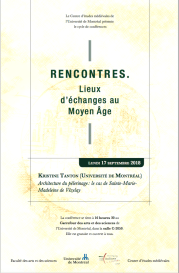
Le lundi 17 septembre 2018, à 16h30, Kristine Tanton (Université de Montréal) donnera une conférence intitulée Architecture du pèlerinage : le cas de Sainte-Marie-Madeleine de Vézelay. Cette conférence est gratuite et ouverte à tous. Elle est organisée dans le cadre du cycle « Rencontres. Lieux d’échanges au Moyen Âge ».

Capture d_écran 2018-09-13 à 19.09.52

Informations pratiques :

La conférence se tient à 16 heures 30 au Carrefour des arts et des sciences de l’Université de Montréal, dans la salle C-2059. Elle est gratuite et ouverte à tous.

Publié dans Colloque | Laisser un commentaire

Publication – « Château Gaillard 28 : l’environnement du château », éd. K. O’Conor, A.-M. Flambard Héricher, P. Ettel

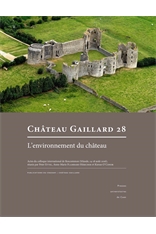
Le XXVIIIe colloque Château Gaillard s’est tenu au mois d’août 2016 à Roscommon (Irlande), site qui fournit un cadre de comparaison fort utile et bien exploité au thème retenu, « L’environnement du château ». Les contributions confirment les grandes avancées de la recherche européenne dans le domaine de l’archéologie du milieu. Reprenant et dépassant les études récentes qui ont montré comment la seigneurie a pu construire, avec des objectifs bien précis de valorisation du pouvoir, le paysage qui entoure le château, les études qui composent cet ouvrage s’attachent également à l’implantation initiale de la forteresse dans un paysage choisi, à une altitude bien définie, ou près de certains lieux symboliques ou économiquement utiles, et à la signification de ces choix. Les contributions réunies évoquent aussi la mise en place d’un réseau de communications et l’évolution dans le temps long de cette maîtrise du paysage environnant. Elles s’attachent enfin à la restitution actuellement possible de ce paysage, avec les moyens que cela suppose.

dIS-9782841338917-1

Les articles qui composent ce volume émanent de chercheurs de dix états principalement d’Europe du Nord-Ouest, mais évoquent également l’exemple de Kaboul (Afghanistan). Ils mettent en évidence les moyens d’investigation nouveaux (modélisation, images 3D, radar, géophysique et LiDAR) qui permettent de reconstruire et de mieux comprendre l’organisation des châteaux.

Informations pratiques :

K. O’Conor, A.-M. Flambard Héricher, P. Ettel (éd.), Château Gaillard 28 : l’environnement du château, Turnhout, Brepols, 2018 (Château Gaillard. Etudes de castellologie médiévale, 28). 364 p., 220 x 280 mm. ISBN: 978-2-84133-891-7. Prix : 42,45 euros.

Source : Brepols

Publié dans Publications | Laisser un commentaire

Colloque – Many Antwerp Hands. Collaborations in Netherlandish Art, 1400-1750

In the early modern Low Countries, distinctive patterns of collaboration developed. Not only legal agreements but also relationships of trust fostered an artistic culture in which collaboration was a central practice – seemingly as important to the participating artists as to their works’ viewers. The Temptation of St. Anthony (Madrid, Prado), painted in Antwerp in about 1520–24, was described a half a century later and far from its geographical origins as a collaboratively painted work: a 1574 list of works that King Philip II of Spain sent to the monastery of El Escorial expressly described the painting as having figures by Quinten Metsijs and a landscape by Joachim Patinir.

Rubens, considered the ‘genius’ of the Flemish Baroque, is mainly associated with two types of collaborative relationships: on the one hand, as a friend and equal of other masters, such as Jan Brueghel I; and on the other hand, as the supervisor of his pupils, workshop assistants and affiliates working in other media, such as tapestry weavers, sculptors and printmakers, who executed his designs. Yet Rubens also collaborated in ways that are perhaps less often considered collaborations: his ‘autograph’ works undoubtedly benefited from dialogue with colleagues, friends and patrons; in reworking objects in his own collection, Rubens ‘collaborated’ with artists from earlier periods. Rubens was not exceptional in working so collaboratively with his colleagues, as the prevalence and variety of artistic collaboration in the early modern Low Countries attests.

Collaboration has long been a critical component of artistic practice, employed in different periods, places and media. Yet the early modern Low Countries saw particularly rich elaborations of this practice, with not only artists but also dealers and collectors involved in shaping collaborative artistic relationships, the products they spawned and how these works were viewed. This conference takes artistic collaboration to be the process of two or more individuals contributing substantively to a work’s conception and production, such that the end result is something different from what these individuals could have produced alone. A wide range of motives prompted such collaborations, and they occurred within particular historical circumstances.
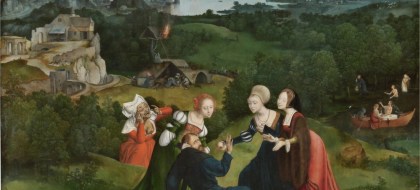
collaborations

Programme :

5 November

08:30 Registration and coffee
09:00 Welcome: Véronique Van de Kerckhof, Rubenianum
09:05 Opening Remarks: Lieneke Nijkamp, Rubenianum and Abigail Newman, Universiteit Antwerpen/Rubenianum

SESSION I: Shaping the Image of Collaboration

09:15 Introduction by session chair: Max Martens, Universiteit Gent
09:30 Katharine Campbell, University of Michigan, Composite Traditions: Metsys and Patinir’s Temptation of Saint Anthony and Antwerp’s Artistic Heritage
09:55 Dorien Tamis, Independent Scholar, The Critical Appreciation and Reception of Collaboration in the Low Countries
10:20 Discussion
10:30 Coffee break (45 minutes)

SESSION II: Antwerp Workshops as Sites of Collaboration

11:15 Introduction by session chair: Sabine Van Sprang, Koninklijke Musea voor Schone Kunsten van België
11:30 Jan Van der Stock, Illuminare / KU Leuven, The Antwerp Altarpiece Enterprise of Dierick Proudekin (ca. 1442–ca. 1507). Assessing the Archival Evidence
11:55 Elisabeth van Eyck, Royal Institute for Cultural Heritage (KIK-IRPA), From Telde to Ringsaker: Antwerp Sculpted Altarpieces with Painted Wings from 1530 to 1540
12:20 Discussion
12:30 Lunch (1 hour and 30 minutes)

SESSION III: Collaboration through Shared Knowledge

14:00 Introduction by session chair: Manfred Sellink, Koninklijk Museum voor Schone Kunsten Antwerpen
14:15 Oliver Kik, KU Leuven, Art as Science: The Art of Geometry and Netherlandish Artists’ Mapmaking Collaborations 1480–1560
14:40 Julia Grace Lillie, Bard Graduate Center, Collaboration in Exile: Print Publications by Crispijn de Passe and Matthias Quad, Made in Cologne, 1589–1604
15:05 Ruth Noyes, John Atkinson House Foundation, Artistic-Epistemic Collaborations Beyond Netherlandish Art and Science: The Case of Opticorum Libri Sex and the astrolabium aequinoctiale
15:30 Discussion
15:45 Coffee break (45 minutes)
16:30 Introduction: Arnout Balis, Centrum Rubenianum
16:45 Keynote: Anne Woollett, J. Paul Getty Museum

6 November

SESSION IV: Artists’ Networks

09:00 Introduction by session chair: Eric Jan Sluijter, Universiteit van Amsterdam
09:15 Alice Zamboni, The Courtauld Institute of Art, Making Contact: Collaborative Engraving Production in the Circle of Netherlandish Artists at the Munich Court of Wilhelm V, c. 1588–1595
09:40 Rudy Jos Beerens, KU Leuven, Mapping Professional Networks of Painters in Seventeenth-Century Brussels
10:05 Discussion
10:15 Coffee break (30 minutes)

SESSION VI: Comparative Cases in Southern Europe

10:45 Introduction: Bernard Aikema, Università di Verona
11:00 Stefan Halikowski Smith, Swansea University, The Chafariz d’el Rei: A Luso-Flemish Partnership?
11:25 Eduardo Lamas-Delgado, Royal Institute for Cultural Heritage (KIK-IRPA), Many Italian and Flemish Hands among Spaniards: Francisco Rizi and Artistic Collaboration in Baroque Spain
12:50 Matteo Fioravanti, Università degli Studi di Genova, Collaborations Outside Antwerp. Jan Roos’ Genoese workshop: Artistic Personalities, Specialisations, and Collaborations
12:15 Discussion
12:30 Lunch (1 hour and 30 minutes)

SESSION V: Typical Antwerp Collaborative Techniques?

14:00 Introduction by session chair: Elizabeth Honig, University of California, Berkeley/Universiteit Utrecht
14:15 Uta Neidhardt and Konstanze Krüger, Staatliche Kunstsammlungen Dresden, Van Balen and Brueghel in Collaboration: A Group of Works from Dresden
14:40 Ursula Härting, Independent Scholar, Collaboration – Addition: Alexander Keirincx (1600–1652) in Antwerp, Utrecht, Britain, Amsterdam
15:05 Discussion
15:15 Coffee break (45 minutes)
16:00 Keynote: Filip Vermeylen, Erasmus Universiteit Rotterdam
17:00 Closing Remarks: Elizabeth Honig, University of California, Berkeley/Universiteit Utrecht

Informations pratiques :

November 5-6, 2018
Rubenianum, Antwerp

Source : Rubenianum

Publié dans Colloque | Laisser un commentaire

Colloque – Le roi Salomon au Moyen Âge : savoirs et représentations

Le Centre d’Études Supérieures sur la Fin du Moyen Âge (CESFIMA) et l’IRHT organisent, les 18 et 19 octobre 2018, un colloque international sur le roi Salomon au Moyen Âge: savoirs et représentations. À l’époque médiévale, en Orient et en Occident, se conjuguent en effet sur cette figure mythique de l’Antiquité des aspects variés et parfois contradictoires touchant aussi bien au secret (magie, mystique nuptiale, connaissance sapientiale, symbolique cosmologique du temple, etc.) qu’à une diffusion d’idées et de représentations visant à un consensus social et politique (concernant notamment l’idéologie du pouvoir royal, l’exercice de la justice, etc.).

Ce colloque s’inscrit dans une optique comparative dans la mesure où la place qu’occupe Salomon dans les trois religions du Livre (judaïsme, christianisme, islam) n’a fait que croître et embellir durant la période médiévale, dans le cadre d’une symbolique du pouvoir en partie commune et de ce que l’on pourrait qualifier une «culture de l’équivoque» (Bruno Roy). Paradigme du roi sage et juste d’après le texte biblique (3 Reg. 3, 10-28 et 4, 29-34; Prov. 8, 12-21; Sap. 6, 24-26 et 8, 9-15), Salomon est en effet également, rappelons-le, un souverain dépravé, pourvu de 700 épouses et de 300 concubines, femmes qui, au temps de sa vieillesse, détournèrent son cœur pour l’inciter à suivre d’autres dieux et à sombrer dans l’idolâtrie (3 Reg. 11, 1-13). Son sort dans l’au-delà a ainsi fait l’objet de nombreuses spéculations. En outre, plusieurs traités pseudépigraphiques grecs des premiers siècles de notre ère, ainsi que la tradition juive rapportée par Flavius Josèphe et abondamment exploitée dans l’Occident médiéval (notamment à partir du XIIe siècle), en font un roi exorciste et magicien, capable de contraindre les démons à lui obéir. Salomon joue également un rôle fondamental dans la littérature magique byzantine, copte et arabo-musulmane, dont certains spécimens ont été traduits ou adaptés en latin. À l’instar d’Hermès et d’Aristote, il est donc l’un des grands héros emblématiques du vaste mouvement de transfert culturel entre l’Orient et l’Occident qu’a connu la seconde moitié du Moyen Âge.

roisalomon

Programme :

Jeudi 18 octobre

9h. Ouverture du colloque et accueil des participants
9h30. Jean-Patrice Boudet (Université d’Orléans), Introduction

I. Le roi Salomon, sa sagesse et son temple

10h. Kristina Mitalaité (CNRS, Laboratoire d’études sur les Monothéismes, Paris), Le traité De templo Salomonis de Bède le Vénérable et son influence
10h30. Guylène Hidrio (Université Charles de Gaulle-Lille 3), Images et symbolique du temple dans l’Occident médiéval, du temple de la sagesse au temple de Jérusalem
11h00. Danielle Buschinger (Université d’Amiens), Le roi Salomon dans la littérature médiévale allemande
11h30. Discussion
12h. Pause déjeuner

14h. Anne-Orange Poilpré (Université Paris I-Panthéon-Sorbonne), Le roi Salomon dans l’iconographie carolingienne et ottonienne

II. Salomon auteur spirituel, figure de la sagesse et de la connaissance mystique

14h30. Angela Guidi (Università della Svizzera italiana), La sagesse de Salomon et le savoir philosophique dans la culture juive médiévale
15h00. Roy Rosenstein (The American University, Paris), Le savoir proverbial de Salomon au Moyen Âge
15h30. Discussion
15h45. Pause café

16h. Pierre Lory (École Pratique des Hautes Études, Paris), Salomon dans la mystique musulmane
16h30. Sumi Shimahara (Université Paris-Sorbonne), Salomon dans l’exégèse biblique à l’époque carolingienne
17h. Christian Heck (Université Charles de Gaulle-Lille 3), L’idolâtrie de Salomon dans l’art de la fin du Moyen Âge
17h30. Discussion

Vendredi 19 octobre

III. Salomon et les savoirs secrets : magie, divination, démonologie, exorcisme

9h30. Emma Abate (CNRS-IRHT), L’héritage de Salomon : techniques de convocation des démons à toute heure de la nuit dans un manuscrit hébreu de la BnF
10h. Jean-Charles Coulon (CNRS-IRHT), Salomon dans les traités de magie islamiques médiévaux
10h30. Discussion
10h45. Pause café

11h. Tamara Andrucovici (Université Paris-Sorbonne), φεũγε μεμισιμένι Σολομόν σε διόκι : Salomon, roi, exorciste et thaumaturge dans le monde byzantin
11h30. Julien Véronèse (Université d’Orléans), Salomon exorciste et magicien dans l’Occident médiéval
12h. Discussion
12h15. Pause déjeuner

14h30. Philippe Faure (Université d’Orléans), Salomon prototype du Christ dans l’iconographie médiévale.

IV. Salomon et ses orients : savoir cosmologique et représentations

15h. Allegra Iafrate (Kunsthistorisches Institut in Florenz/Max-Planck-Institut), La longue vie des objets magiques de la tradition salomonienne
15h30. Anna Caiozzo (Université Bordeaux-Montaigne), Salomon et ses images en Orient : magicien, roi et prophète (XIVe-XVIe siècle).
16h. Discussion.
16h15. Pause café

16h30. Sonia Fellous (CNRS-IRHT), Salomon dans l’iconographie juive médiévale.
17h. Epilogue : Le savoir du constructeur. Imaginaire symbolique et réalités monumentales. Autour du livre d’Hugues Berton et Christelle Imbert, Les enfants de Salomon. Approches historiques et rituelles sur les compagnonnages et la franc-maçonnerie.
17h30. Discussion.

18h. Fin des travaux

Informations pratiques :

Centre Dupanloup
Rue Dupanloup, 45000 Orléans

18-19 octobre

Source : IRHT

Publié dans Colloque | Laisser un commentaire

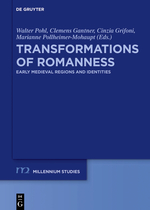
Publication – « Transformations of Romanness. Early Medieval Regions and Identities », éd. Walter Pohl, Clemens Gantner, Cinzia Grifoni, Marianne Pollheimer-Mohaupt

Roman identity is one of the most interesting cases of social identity because in the course of time, it could mean so many different things: for instance, Greek-speaking subjects of the Byzantine empire, inhabitants of the city of Rome, autonomous civic or regional groups, Latin speakers under ‘barbarian’ rule in the West or, increasingly, representatives of the Church of Rome. Eventually, the Christian dimension of Roman identity gained ground. The shifting concepts of Romanness represent a methodological challenge for studies of ethnicity because, depending on its uses, Roman identity may be regarded as ‘ethnic’ in a broad sense, but under most criteria, it is not. Romanness is indeed a test case how an established and prestigious social identity can acquire many different shades of meaning, which we would class as civic, political, imperial, ethnic, cultural, legal, religious, regional or as status groups. This book offers comprehensive overviews of the meaning of Romanness in most (former) Roman provinces, complemented by a number of comparative and thematic studies. A similarly wide-ranging overview has not been available so far.

9783110598384

Table des matières :

Aspects of Romanness in the early Middle Ages

Walter Pohl, Introduction: Early medieval Romanness – a multiple identity
Guy Halsall, Transformations of Romanness: The northern Gallic case
Yitzhak Hen, Compelling and intense: the Christian transformation of Romanness

The Late Antique and Byzantine Empire

M. Shane Bjornlie, Romans, barbarians and provincials in the Res Gestae of Ammianus Marcellinus
Richard Corradini, A stone in the Capitol: Some aspects of res publica and romanitas in Augustine
Johannes Koder, Remarks on linguistic Romanness in Byzantium
Ioannis Stouraitis, Byzantine Romanness: From geopolitical to ethnic conceptions

The City of Rome

Rosamond McKitterick, ‘Romanness’ and Rome in the early Middle Ages
Paolo Delogu, The post-imperial Romanness of the Romans
Veronica Ortenberg West-Harling, The Roman past in the consciousness of the Roman elites in the ninth and tenth centuries

Italy and the Adriatic

Giorgia Vocino, Looking up to Rome: Romanness through the hagiography from the duchy of Spoleto
Thomas Granier, Rome and Romanness in Latin southern Italian sources, 8th-10th centuries
Annick Peters-Custot, Between Rome and Constantinople: the Romanness of Byzantine southern Italy (9th-11th centuries)
Francesco Borri, Dalmatian Romans and their Adriatic friends: Some further remarks

Gaul

Ralph W. Mathisen, ‘Roman’ identity in Late Antiquity, with special attention to Gaul
Ian Wood, Roman barbarians in the Burgundian province
Helmut Reimitz, Histories of Romanness in the Merovingian kingdoms
Jamie Kreiner, Romanness in Merovingian hagiography: A case study in class and political culture
Stefan Esders, Roman law as an identity marker in post-Roman Gaul (5th‒9th centuries)
Lukas Bothe, From subordination to integration: Romans in Frankish law

The Iberian Peninsula

Javier Arce, Goths and Romans in Visigothic Hispania
Ann Christys, ‘Made by the ancients’: Romanness in al-Andalus

Northern peripheries: Britain and Noricum

Ingrid Hartl, Walchen, Vlachs and Welsh: A Germanic ethnonym and its many uses
Robin Fleming, Four communities of pot and glass recyclers in early post-Roman Britain
Katharina Winckler, Romanness at the fringes of the Frankish Empire: the strange case of Bavaria

From Roman provinces to Islamic lands

Roland Steinacher, When not in Rome, still do as the Romans do? Africa from 146 BCE to the 7th century
Jack Tannous, Romanness in the Syriac East

Informations pratiques :

Walter Pohl, Clemens Gantner, Cinzia Grifoni, Marianne Pollheimer-Mohaupt (éd.), Transformations of Romanness. Early Medieval Regions and Identities, De Gruyter, 2018 (Millennium Studies, 71). xi, 586 pages. ISBN : 978-3-11-059838-4. Prix : 129,95 euros.

Source : De Gruyter

Publié dans Publications | Laisser un commentaire

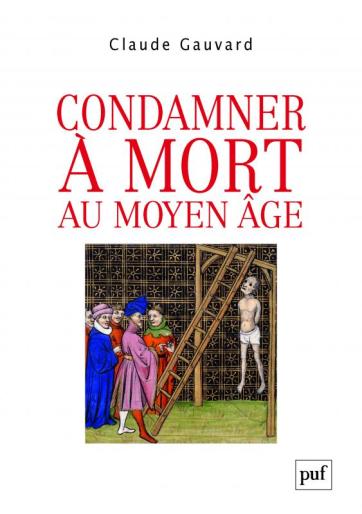
Publication – Claude Gauvard, « Condamner à mort au Moyen Âge. Pratiques de la peine capitale en France XIIIe-XVe siècle »

« Digne de mourir, comme inutile au monde » : c’est en ces termes que les archives ont conservé la trace de la condam­nation à mort d’un valet déclaré coupable de vol, à Paris, en 1391. Cette sentence glacée conforte-t-elle la vision d’un Moyen Âge sanguinaire où la peine capitale aurait été fréquente ? Révèle-t-elle la puissance d’un roi qui affirme ainsi sa domination sur ses sujets, ou la dérive de l’Église qui ne considère plus que, selon l’enseignement de saint Augustin, le criminel peut être racheté ?

Condamner à mort au Moyen Âge n’est pas un acte plus anodin qu’aujourd’hui, et si, en ces siècles de construction de la justice, la condamnation est un outil d’affirmation du pouvoir royal, ce n’est pas par sa nature coercitive ou arbitraire, mais par l’encadrement des juges et la pratique de la grâce. C’est là l’autre pan d’un Moyen Âge rénové que Claude Gauvard révèle depuis plusieurs décennies, avec cette volonté d’approcher au plus près, par un examen minutieux et clairvoyant de sources inédites, la cohérence d’une société médiévale qui nous apparaît à la fois étrangère et fondatrice.

Professeur émérite d’histoire du Moyen Âge à l’université Paris 1 Panthéon-Sorbonne, membre senior honoraire de l’Institut universitaire de France, Claude Gauvard est spécialiste de l’histoire de la justice et de la criminalité, et plus généralement d’histoire politique et sociale des XIIIe-XVe siècle.

Aux Puf, elle est notamment l’auteure de La France au Moyen Âge, du Ve au XVe siècle, a dirigé le recueil Une histoire de France, et codirige la Revue historique ainsi que la collection « Le Noeud gordien ».

1534901417_9782130540380_v100

Table des matières :

1. Une peine fréquente ?
2. Une peine fantasmée
3. Une peine redoutée
4. Une peine justifiée
5. Une peine encadrée
6. Une peine régalienne ?
7. Une peine graciée
8. Une peine acceptée ou imposée ?
9. Une peine ciblée

Informations pratiques :

Claude Gauvard, Condamner à mort au Moyen Âge, Paris, PUF, 2018. 368 pages, 15 x 21.3 cm. ISBN : 978-2-13-054038-0. Prix : 24 euros.

Source : PUF

Publié dans Publications | Laisser un commentaire

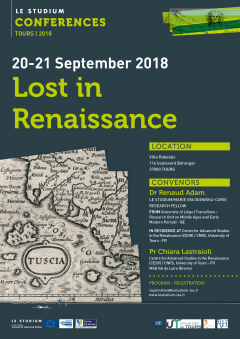
Colloque – Lost in Renaissance

The debate about the concept of Renaissance is certainly old, but has met for some years now a certain revival with questions relating to its temporality, particularly in France, following questions from Patrick Boucheron on the duration of a « short long medieval period » beginning in the 12th-13th centuries and ending in the 16th century. One can also point to Jacques Le Goff’s essay entitled Faut-il vraiment découper l’histoire en tranches? (Paris, Seuil, 2014) who defended the thesis that the Renaissance would not represent a particular period, but that it would be the last rebirth of a long medieval period that would end in the mid-18th century. Regardless of whether or not one adheres to this demonstration, the great medievalist nevertheless has the merit of questioning the relevance of the concept of periodization of history and, more specifically, that of the Renaissance chrononym.

With the Lost in Renaissance symposium, we would like to explore this period by reversing the paradigm that defines it. Indeed, if the scientific community agrees to characterize the Renaissance as the time of rediscovery of Antiquity, we would like to explore it through the prism of disappearance. The aim is not to draw up a list of the different points of rupture with previous times, but rather to concentrate on the losses encountered by Europe’s intellectual, literary, artistic and material heritage during the 15th-17th centuries as a result of the great religious, political, cultural and technical upheavals that affected this territory. The angle of approach chosen for this colloquium is that of the book, considered in its materiality or for its content as a witness, victim or vector of the offenses made against the heritage during the Renaissance.

sc80_affichea3_0

Programme :

Thursday September 20th 2018

14:00 Welcome coffee & registration
14:20 Official Opening

14:30 Dr Luca Rivali – Une multiplicité perdue. Peut-on parler de standardisation du livre entre le Moyen Age et la Renaissance ?
14:55 Dr Benito Rial Costas – Experiences, dislocations and losses: The complex mechanisms of fiteenth-century book technology
15:20 Coffee break

16:00 Dr Shanti Graheli – Losing touch with customers: Making books in the Renaissance from custom to mass-produced
16:25 Pr Frédéric Barbier – La Renaissance, critique de l’imprimerie
16:55 Dr Goran Proot – Transitions in the design of handpress books published in the Southern Netherlands during the 15th–18th centuries
17:20 Discussions
18:30 Public Lecture in French : Pr Jean-Marie Le Gall – Comment parle-t-on de la Renaissance aujourd’hui ? Entre fétichisation patrimoniale et Renaissance bashing
20:00 Social dinner

Friday September 21st 2018

09:00 Welcome coffee

09:30 Pr Tania Van Hemelryck – Le (dé)goût du Moyen Âge dans les paratextes des éditions de textes littéraires au XVIe siècle
09:55 Pr Hubert Meeus – The obliteration of community art or how the art of printing created the individual author
10:20 Dr Alexandre Vanautgaerden – Vide : « allez voir », perte de la mémoire et perte des manuscrits chez Érasme
10:45 Coffee break

11:30 Pr Chiara Lastraioli – Lost and found : some empirical tests on losses and survivals in Renaissance private libraries
11:55 Dr Renaud Adam – “Faire casser, abolir et anéantir tous livres deffendus et réprouvez”, mise en scène et théâtralisation de la censure des livres au XVIe siècle dans les anciens Pays-Bas
12:20 Pr Marie-Luce Demonet
12:45 Conclusion
13:00 Lunch

Informations pratiques :

Villa Rabelais
116 boulevard Béranger 37000 Tours

September 20, 2018 – September 21, 2018

Organisateurs :

Dr Renaud Adam, LE STUDIUM / Marie Skłodowska-Curie Research Fellow
FROM University of Liège (Transitions – Research Unit on Middle Ages and Early Modern Period) – BE
IN RESIDENCE AT Centre for Advanced Studies in the Renaissance (CESR) / CNRS, University of Tours – FR
Pr Chiara Lastraioli, Centre for Advanced Studies in the Renaissance
(CESR) / CNRS, University of Tours – FR
MSH Val de Loire Director

Source : Le Studium

Publié dans Colloque | Laisser un commentaire